DAY 5 – FRIDAY, MAY 8, 2026
We learned an important lesson during our first night in the “stable room” at the inn: old stone buildings may look charming in photos, but with windows that don’t easily open, they can also double as a medieval sauna. After a somewhat restless night of tossing, turning, we headed to the dining room for breakfast.
Neither of us was quite brave enough to tackle the full English breakfast complete with eggs, sausage, bacon, mushrooms, tomatoes, baked beans, black pudding, and toast. We did, however, enjoy a hearty meal that gave us plenty of fuel for the day ahead.
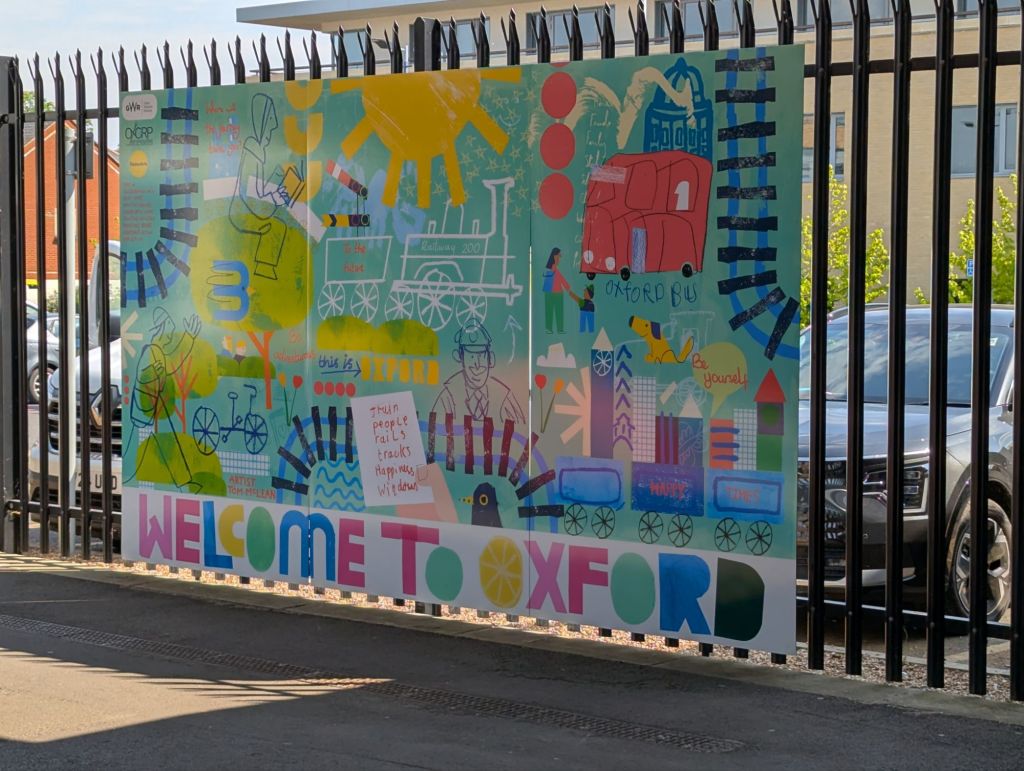
After breakfast, we walked about 10 minutes to the train station and boarded an easy 30-minute ride to Oxford. From there, it was about a 15-minute walk into the city center where we joined a free walking tour that turned out to be one of the highlights of the day.
Over the next two hours, we learned how Oxford University is actually made up of 39 individual colleges, each with its own traditions, rivalries, dining halls, and personalities. Our guide shared stories of legendary student pranks between the colleges, many of which sounded exactly like what would happen if brilliant academics had too much free time.
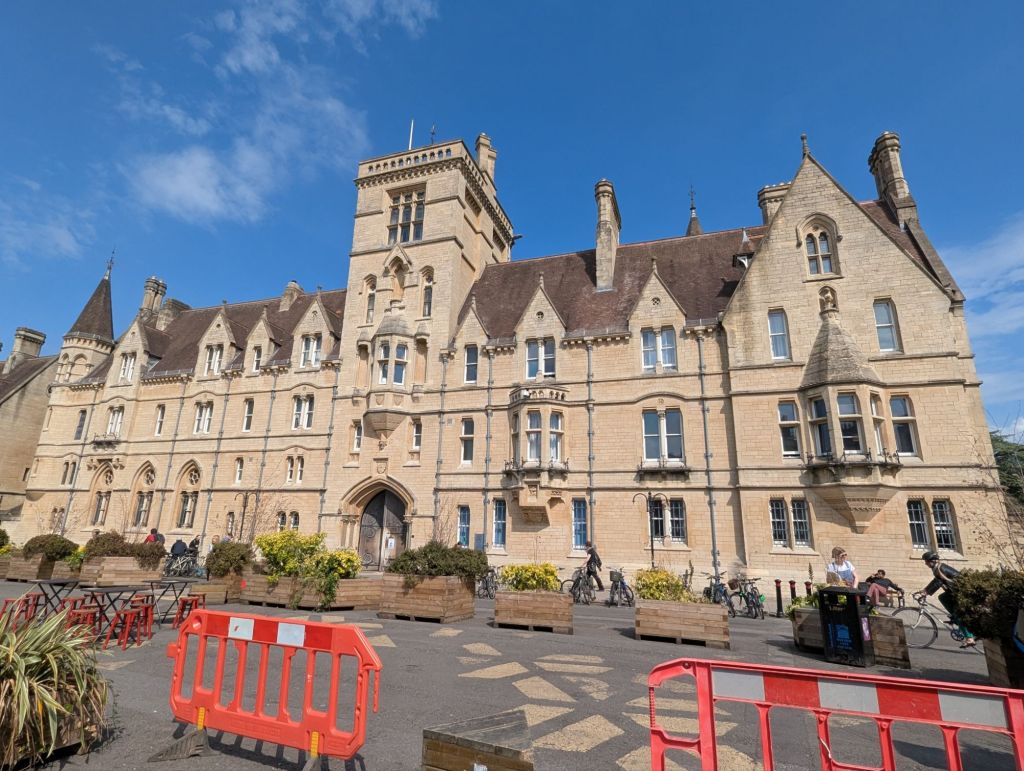
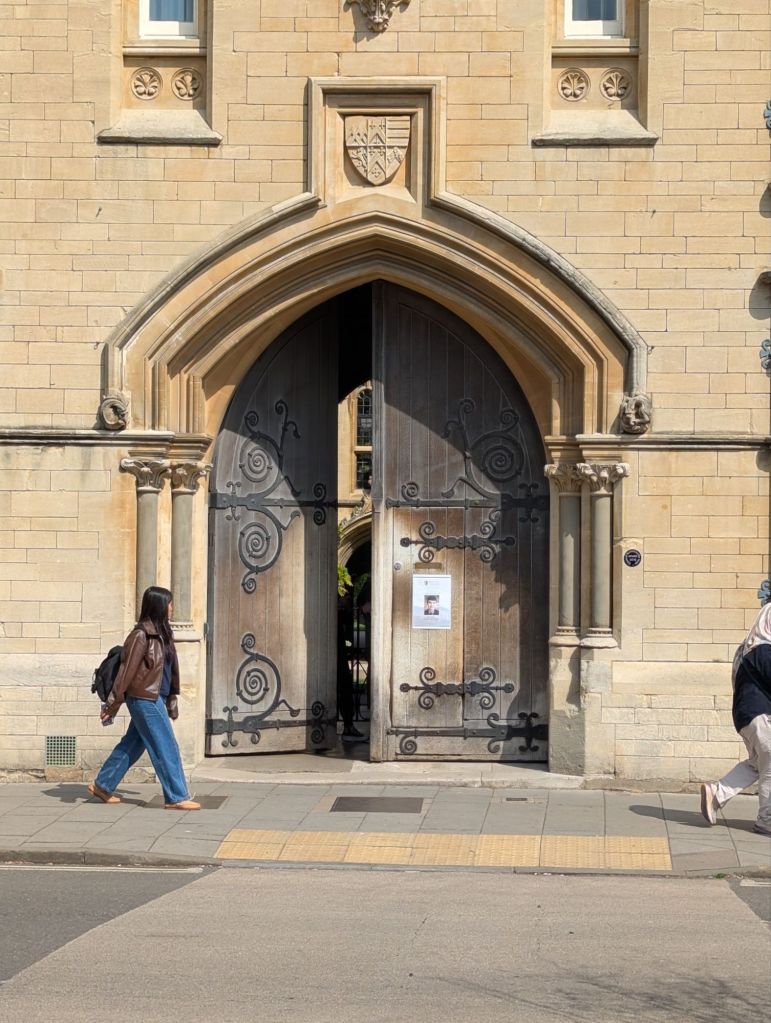
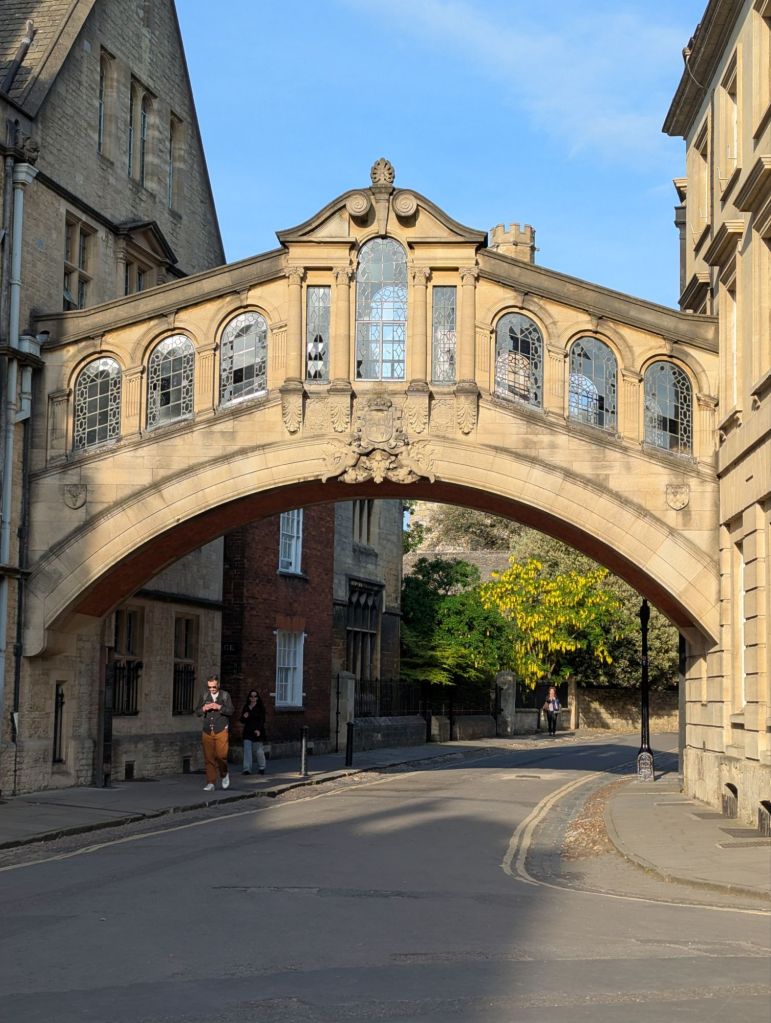
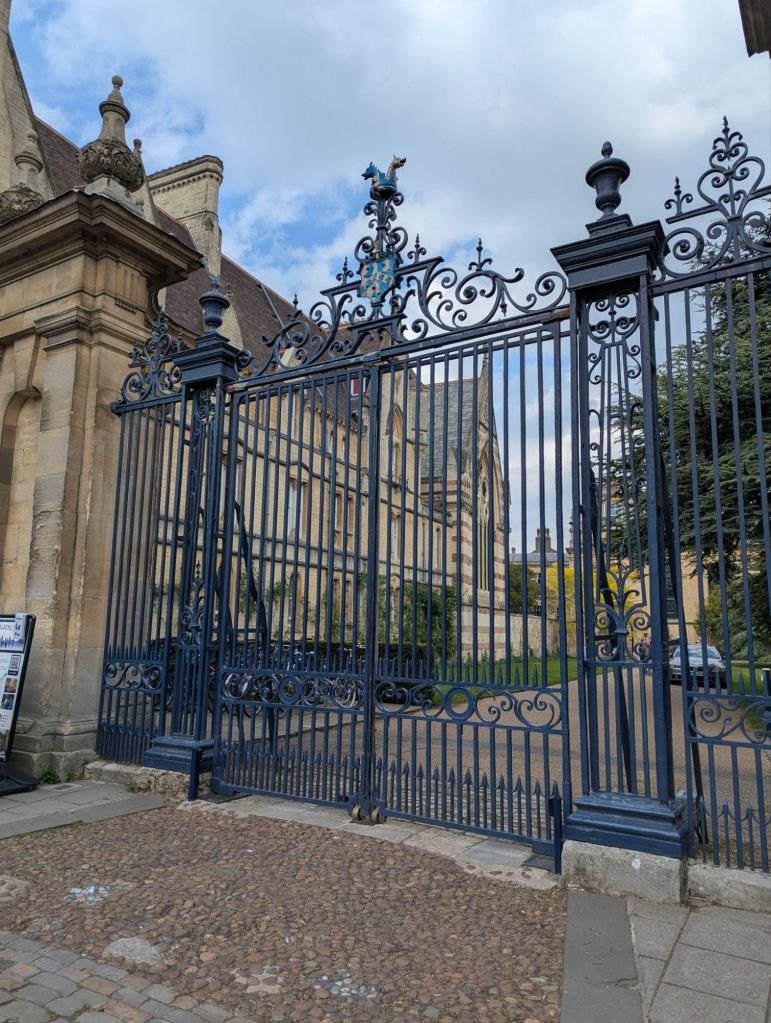
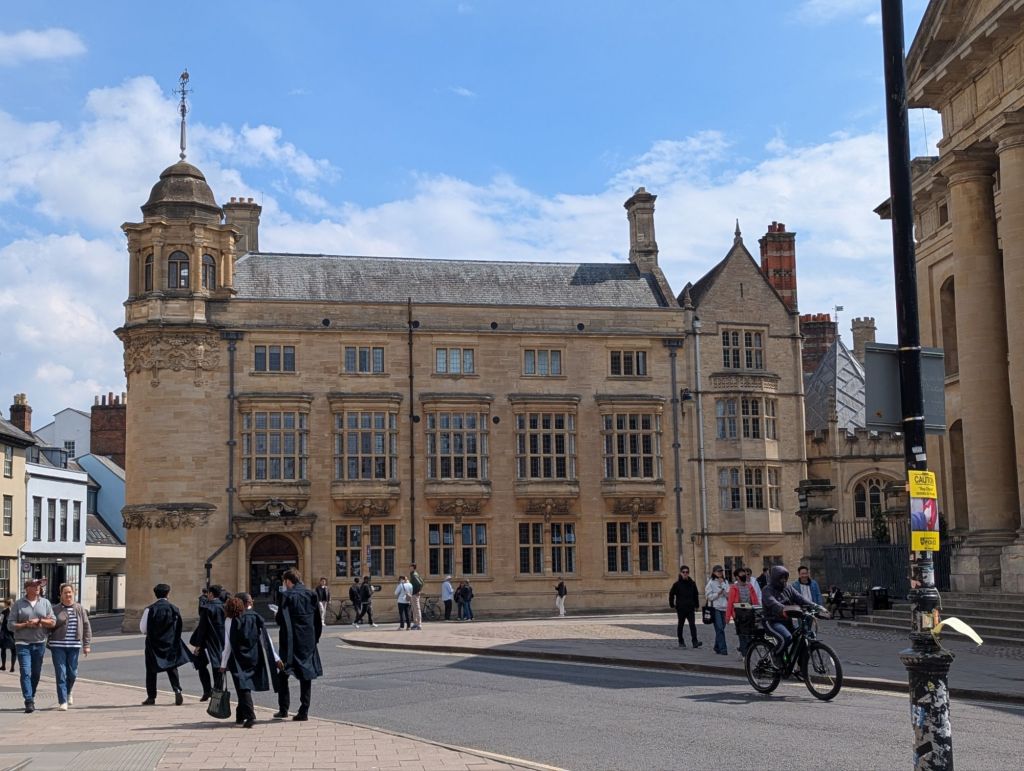
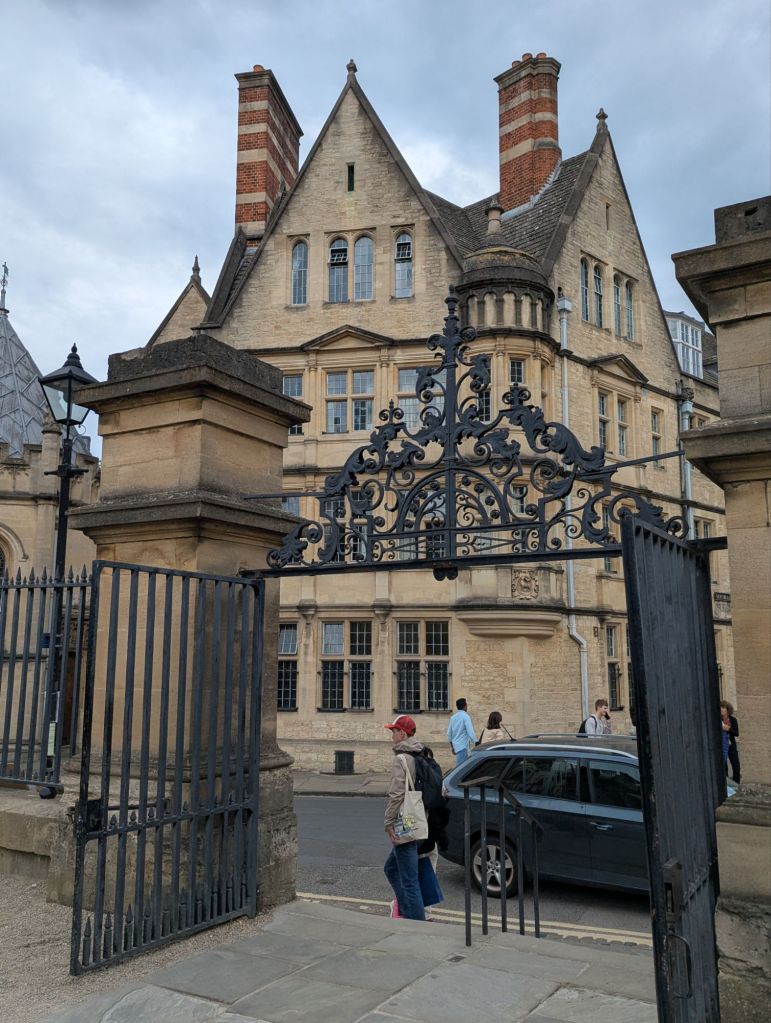
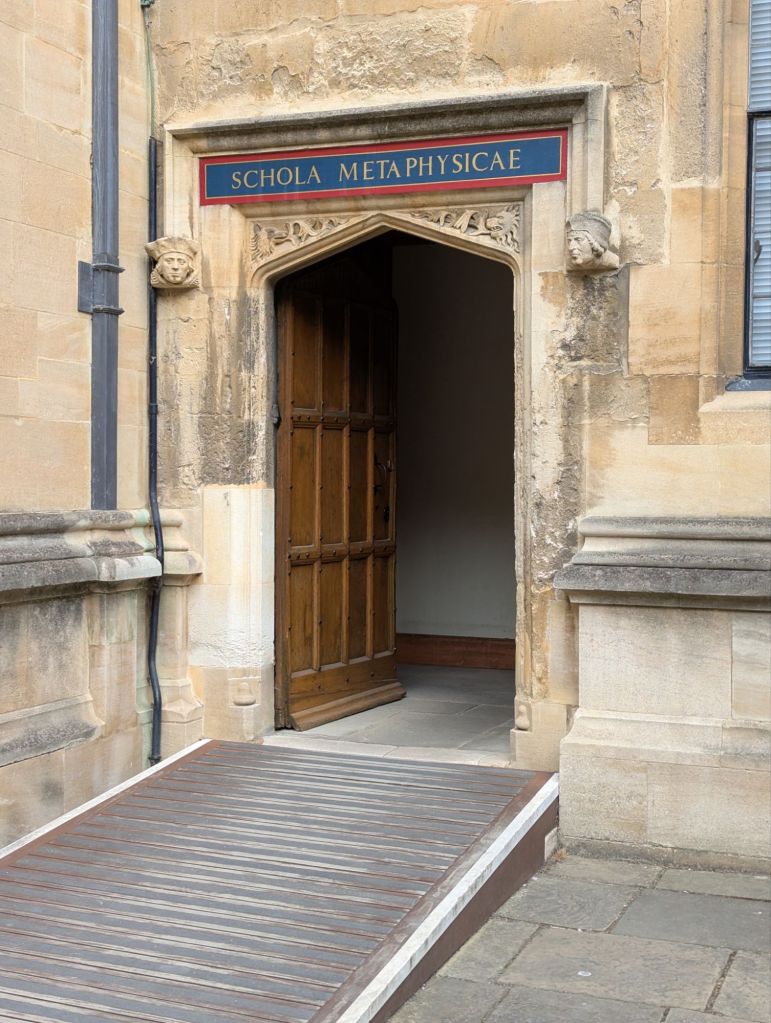
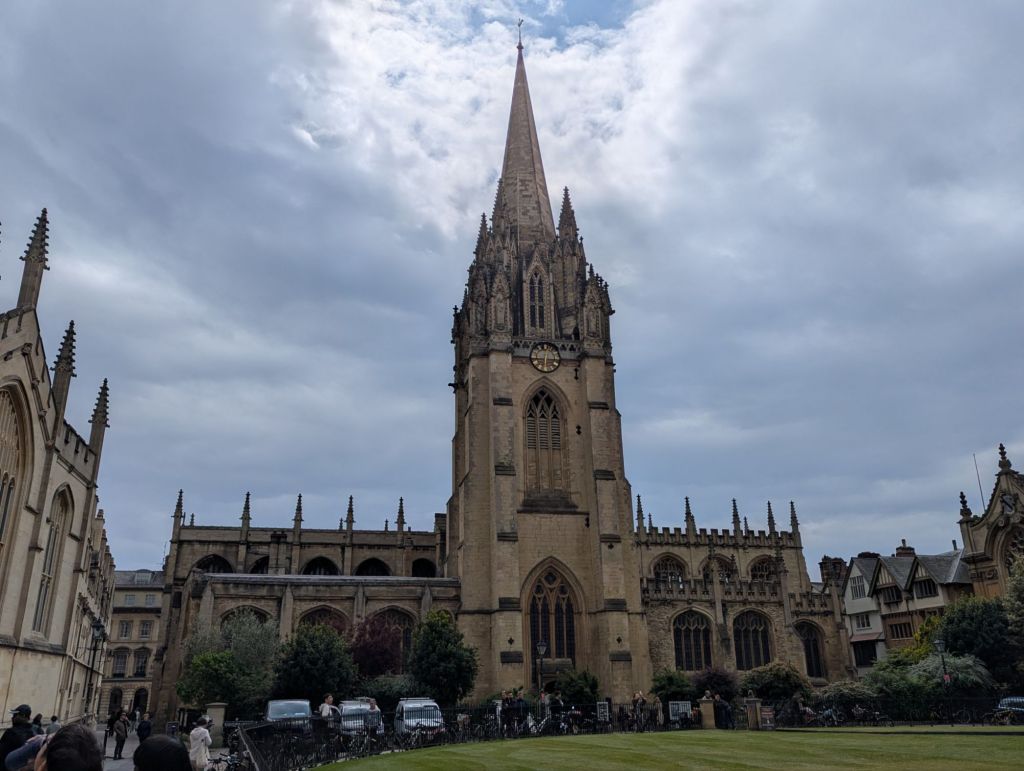
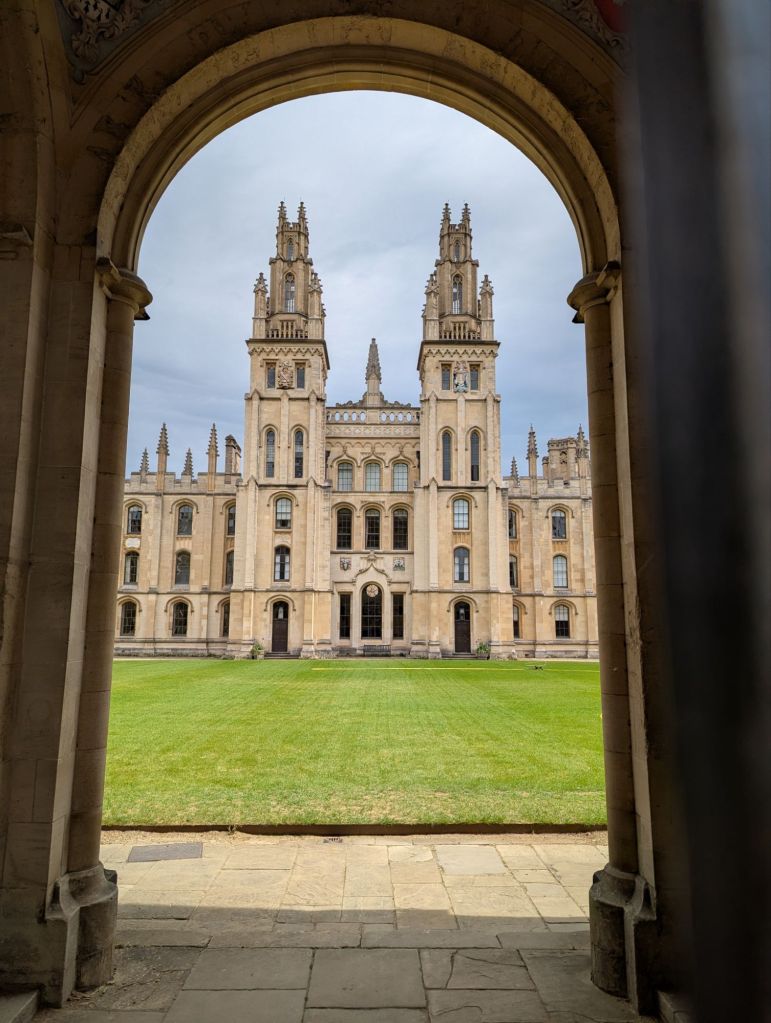
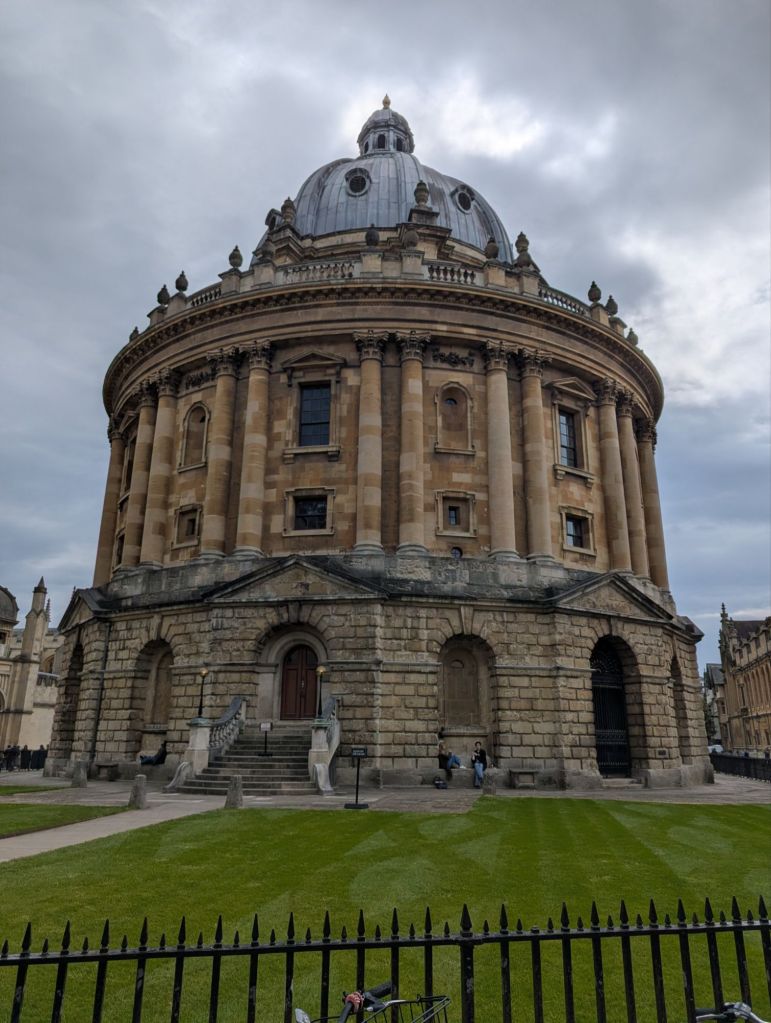
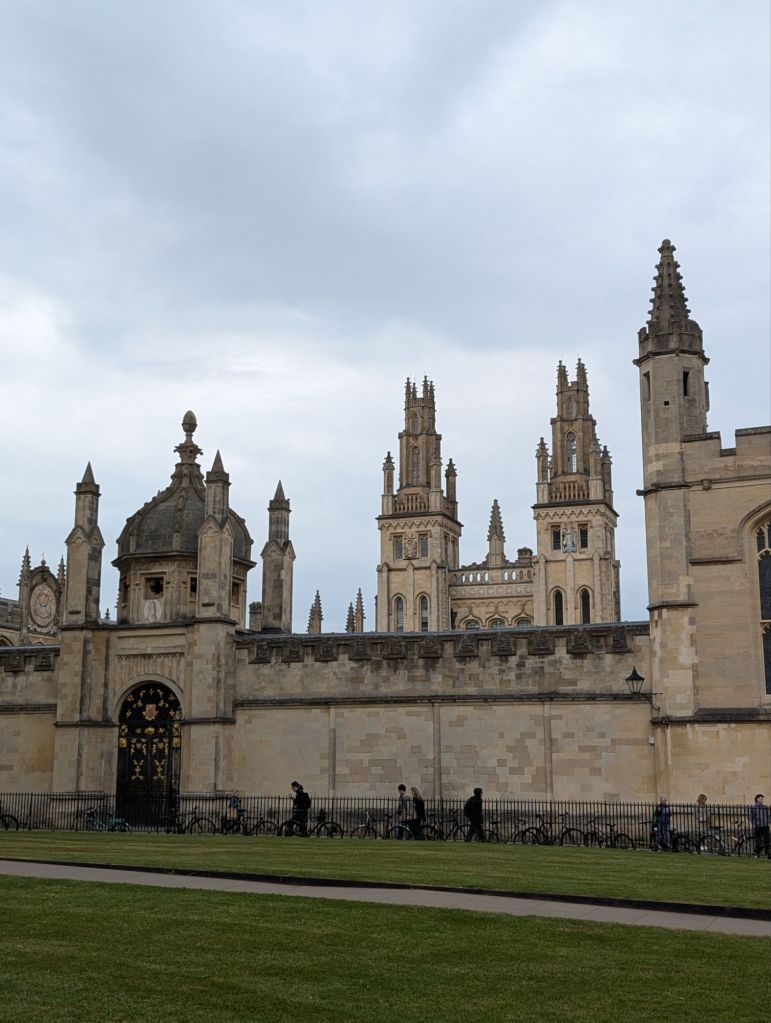
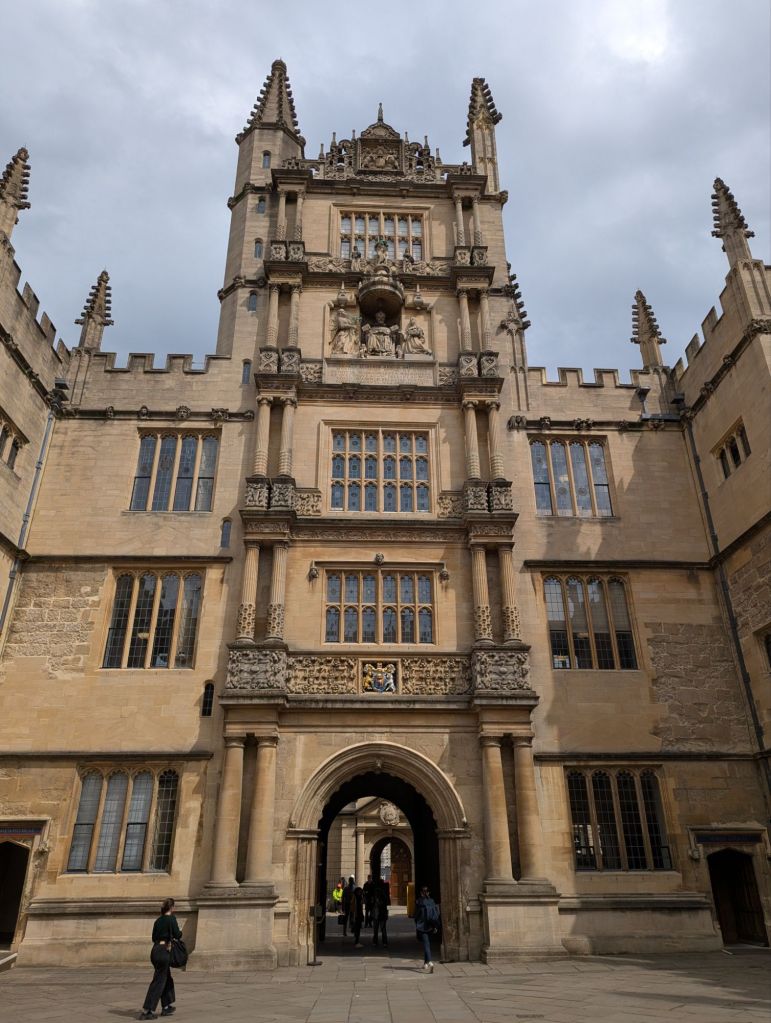
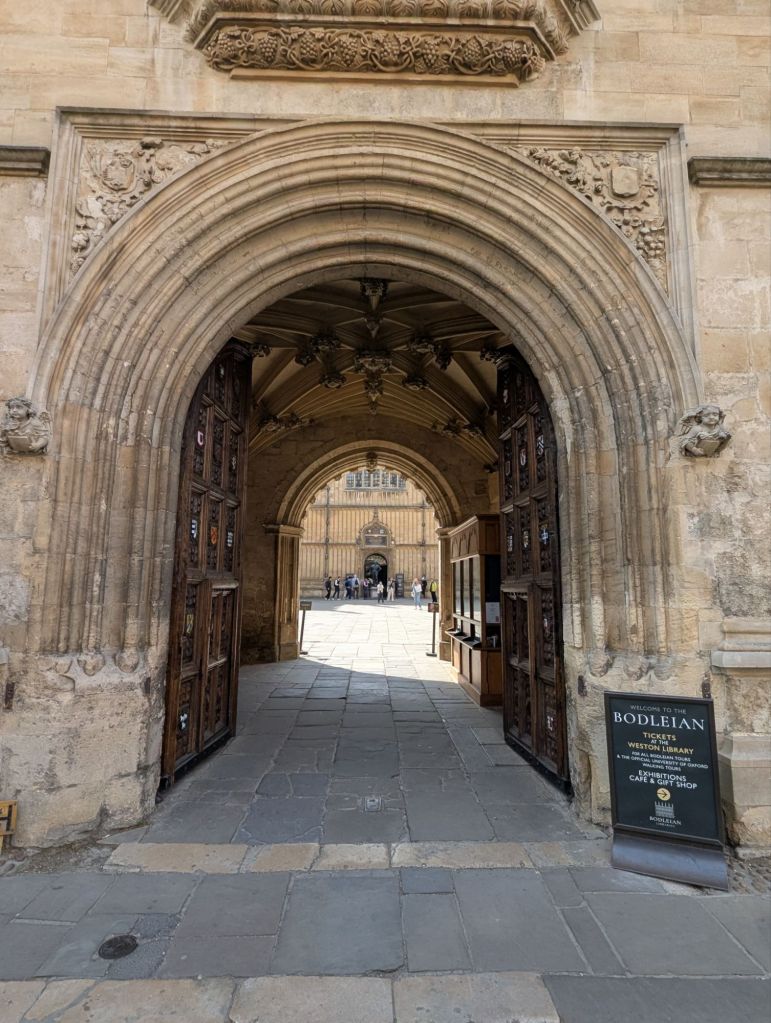
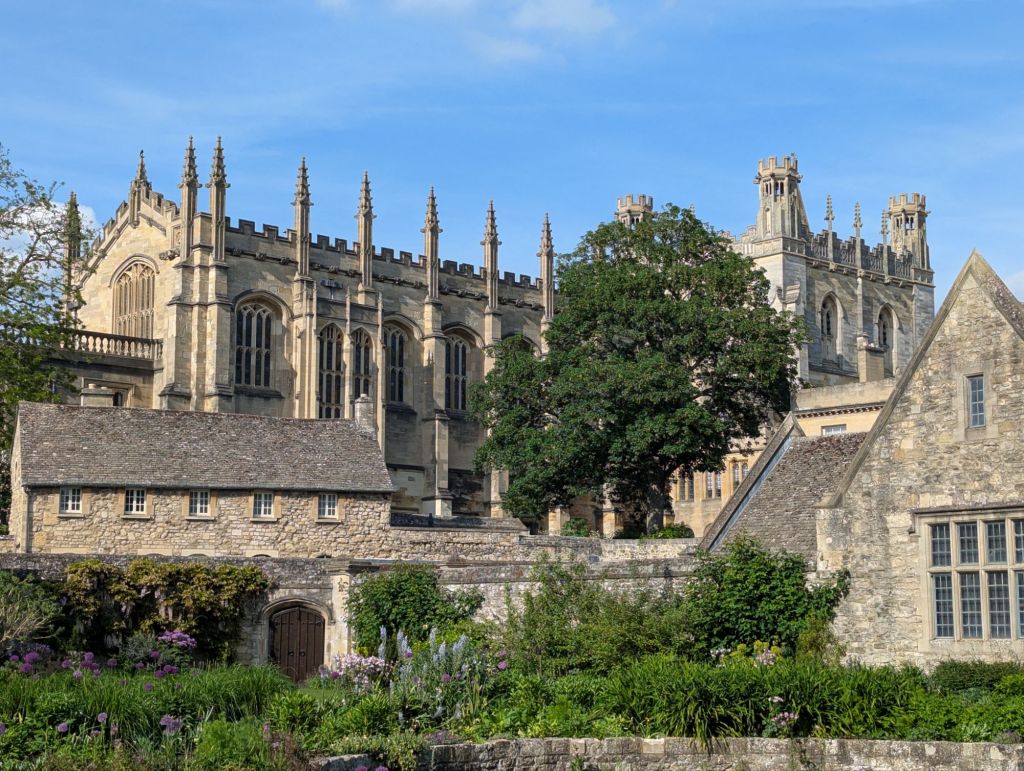
If you are not familiar with free walking tours, we highly recommend them. We have used them in several cities during our travels. The tours are led by knowledgeable local guides who work for tips, so you simply pay what you think the tour was worth or what fits your budget. We’ve found they are one of the best ways to get oriented in a city and figure out where you want to spend more time exploring later.
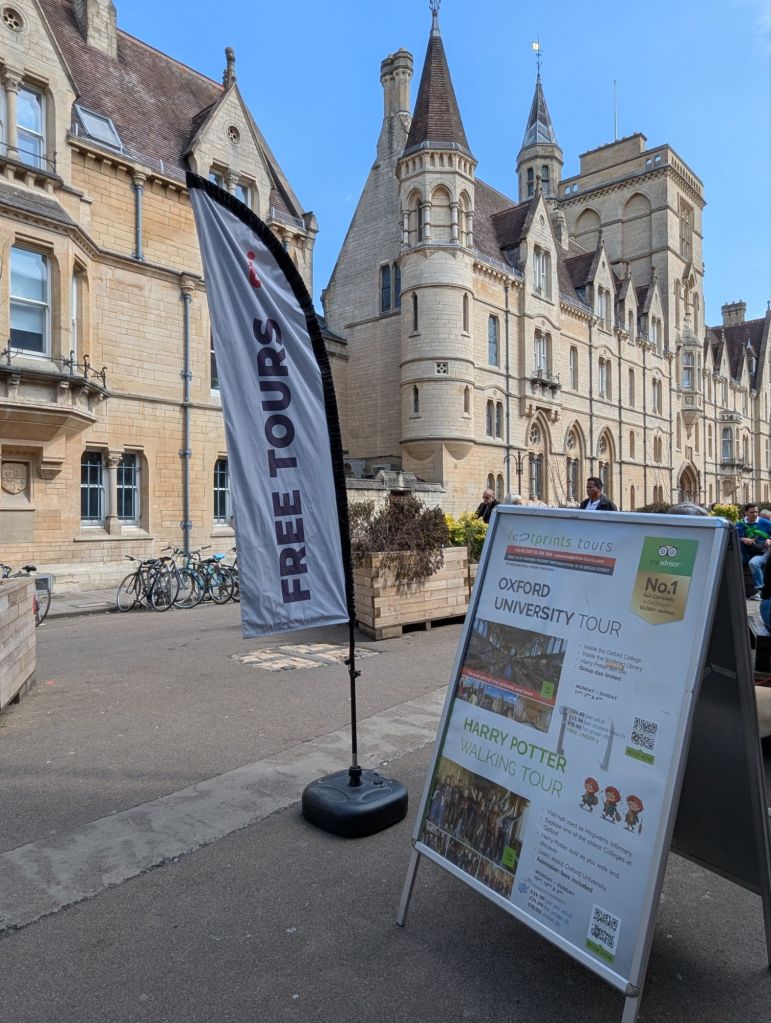
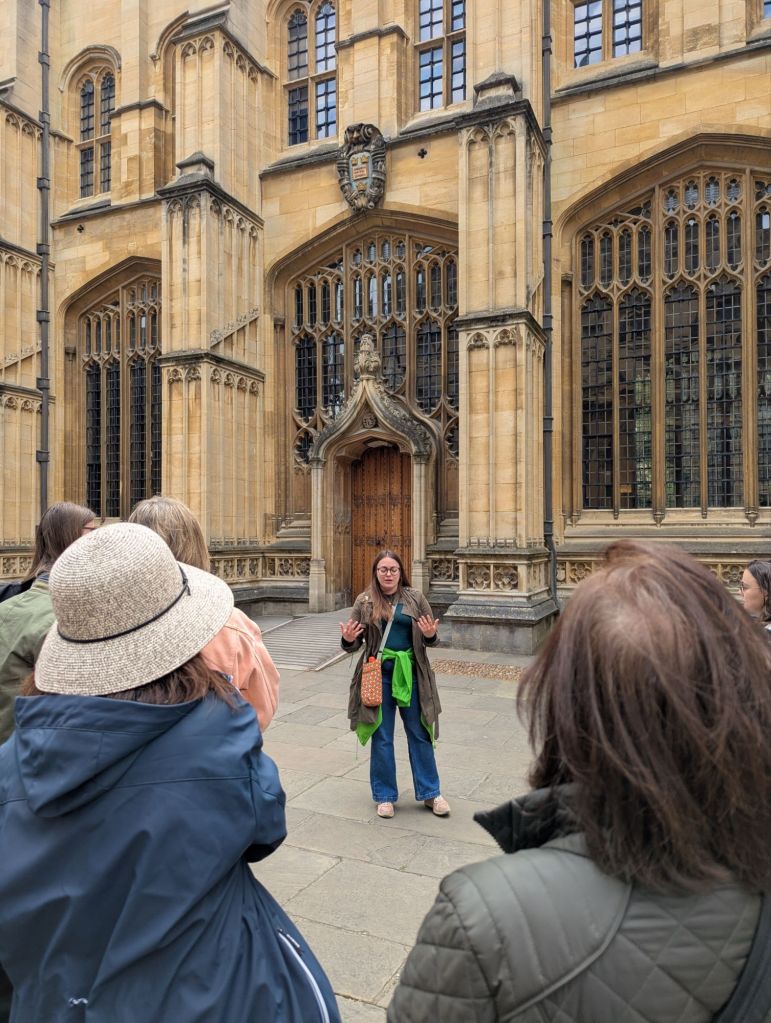
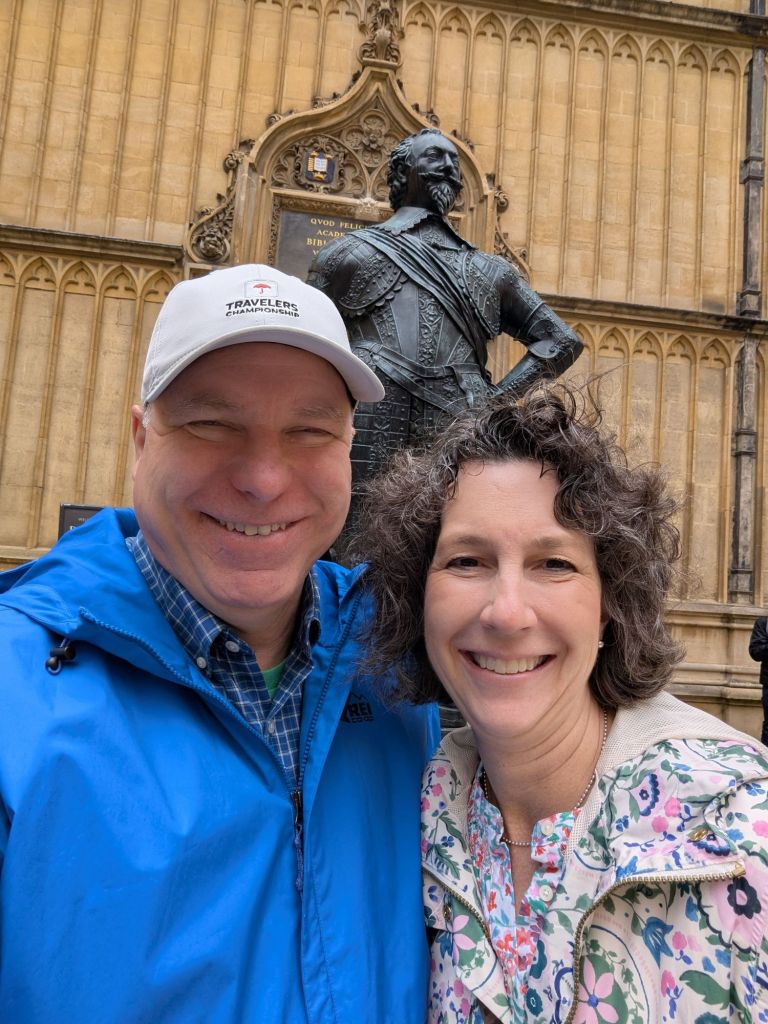
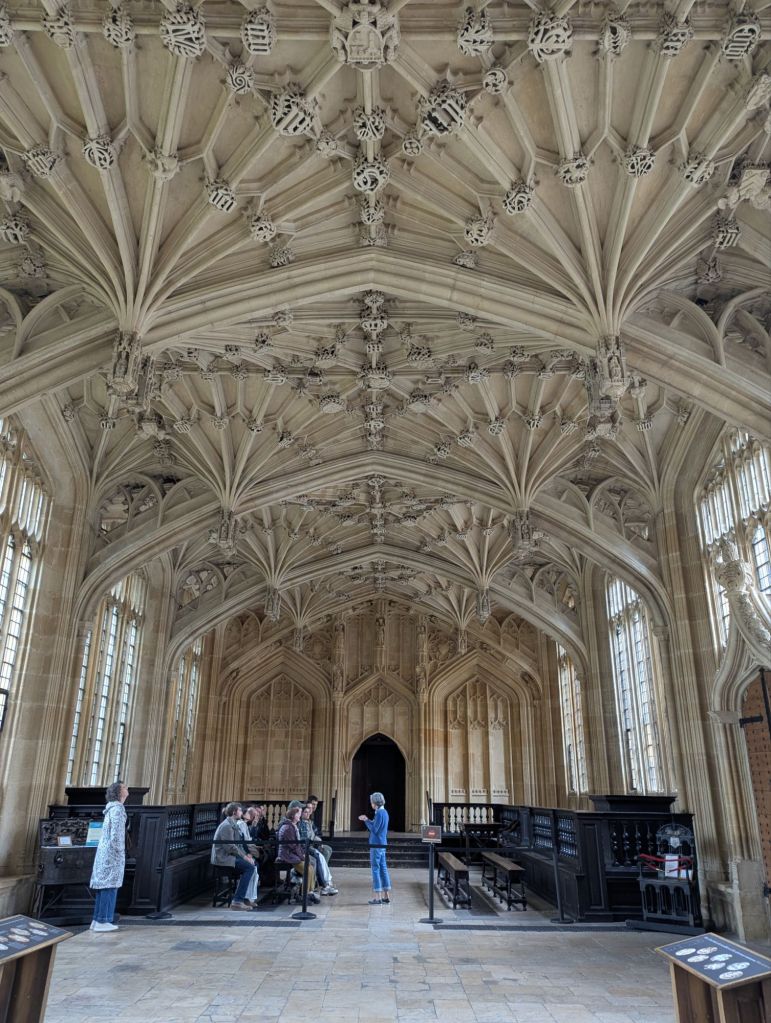
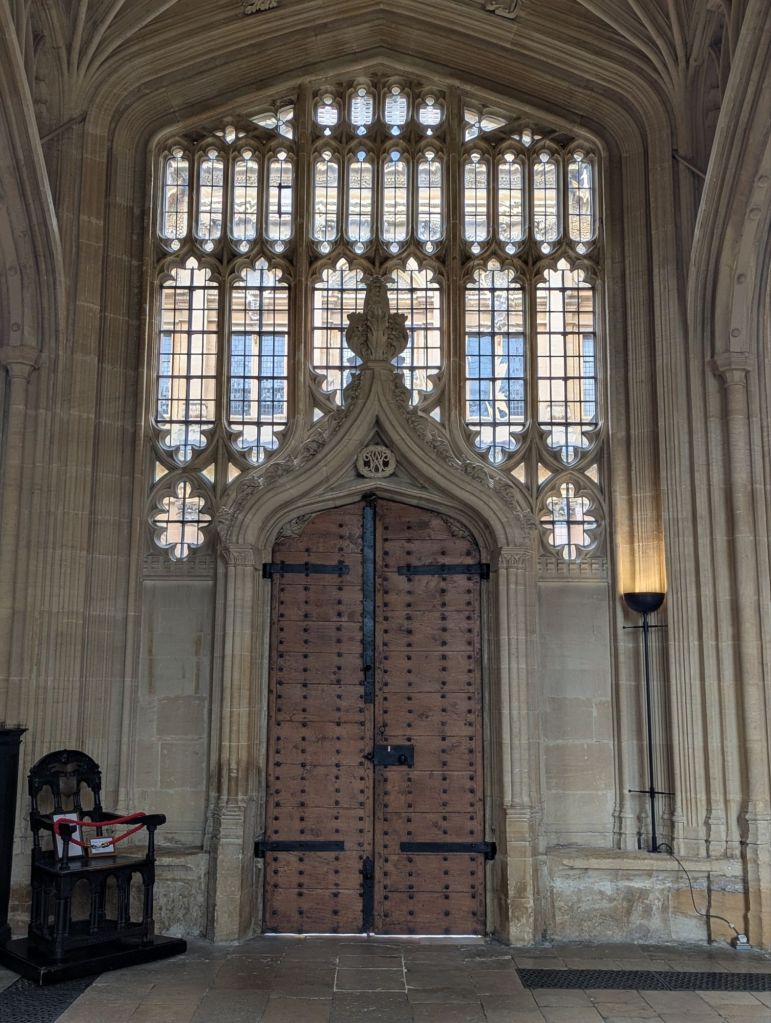
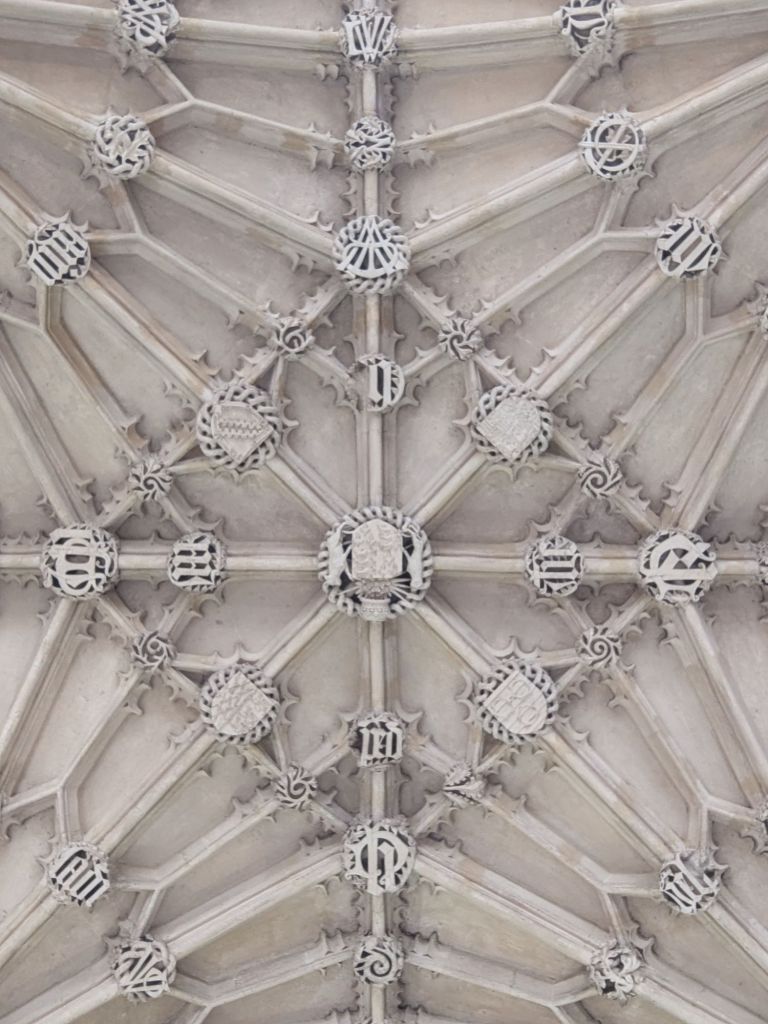
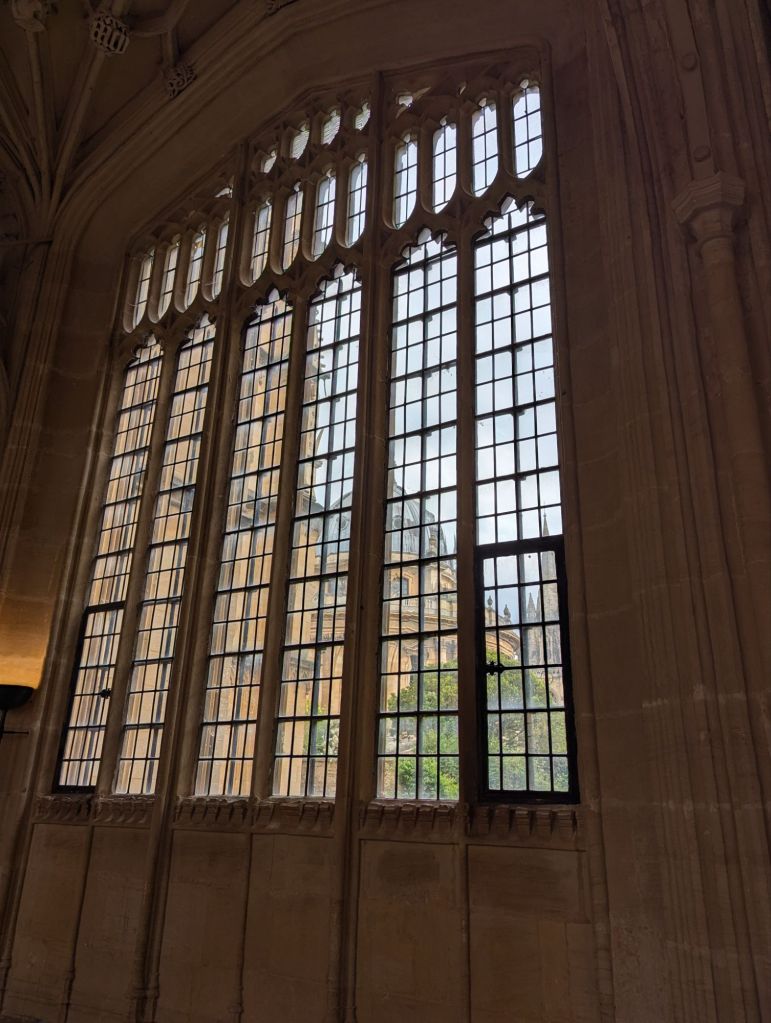
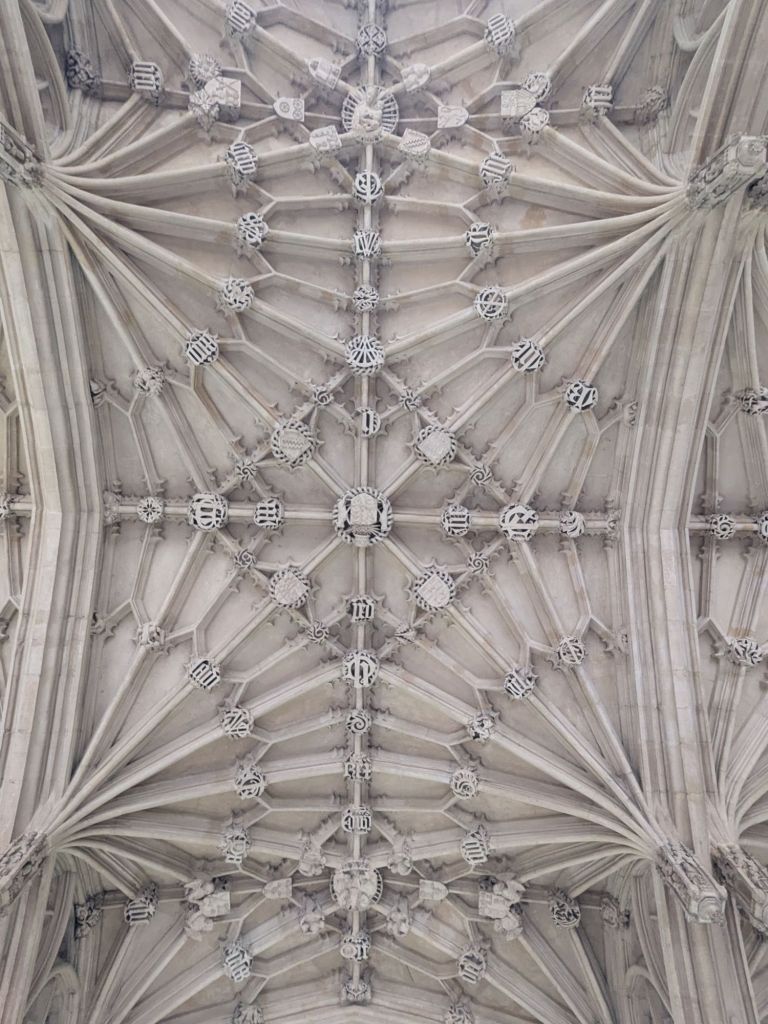
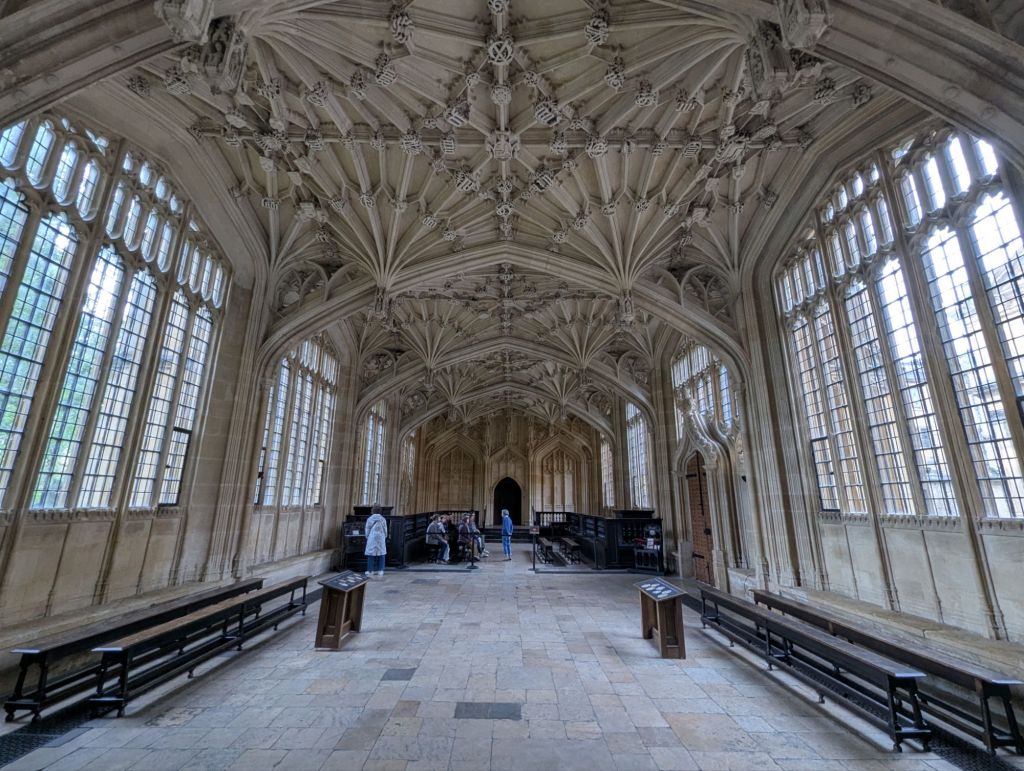
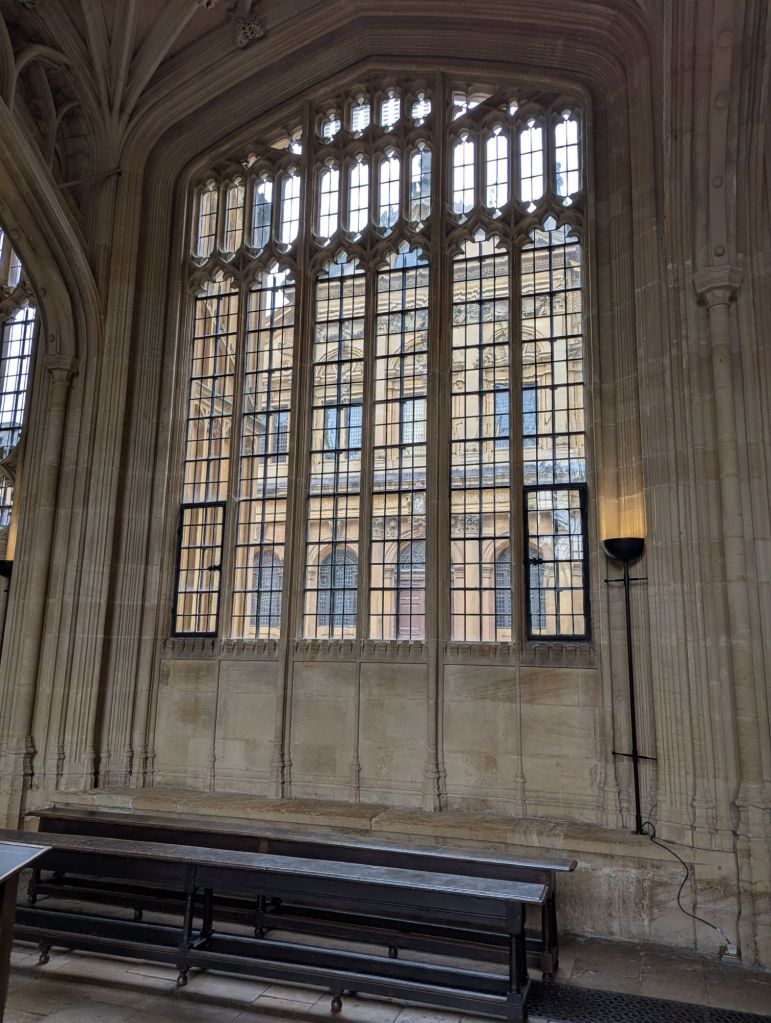
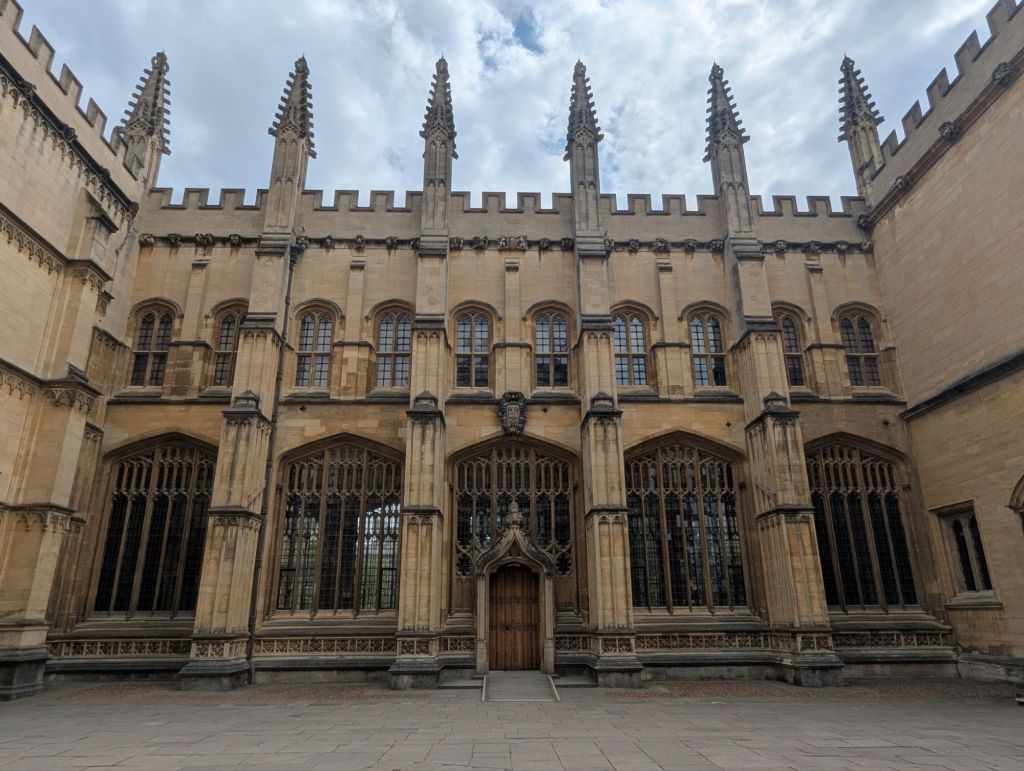
After the tour, we stopped for lunch before revisiting some of the sites that had caught our attention. One of the highlights was the Divinity School at University of Oxford. Despite the name, it is not a modern classroom building but a spectacular medieval hall completed in 1483 with an intricately carved stone ceiling that somehow looks both impossibly delicate and incredibly heavy at the same time. Originally used for oral examinations and lectures, it is now perhaps best known to many visitors as the filming location for Hogwarts’ infirmary in several Harry Potter movies.
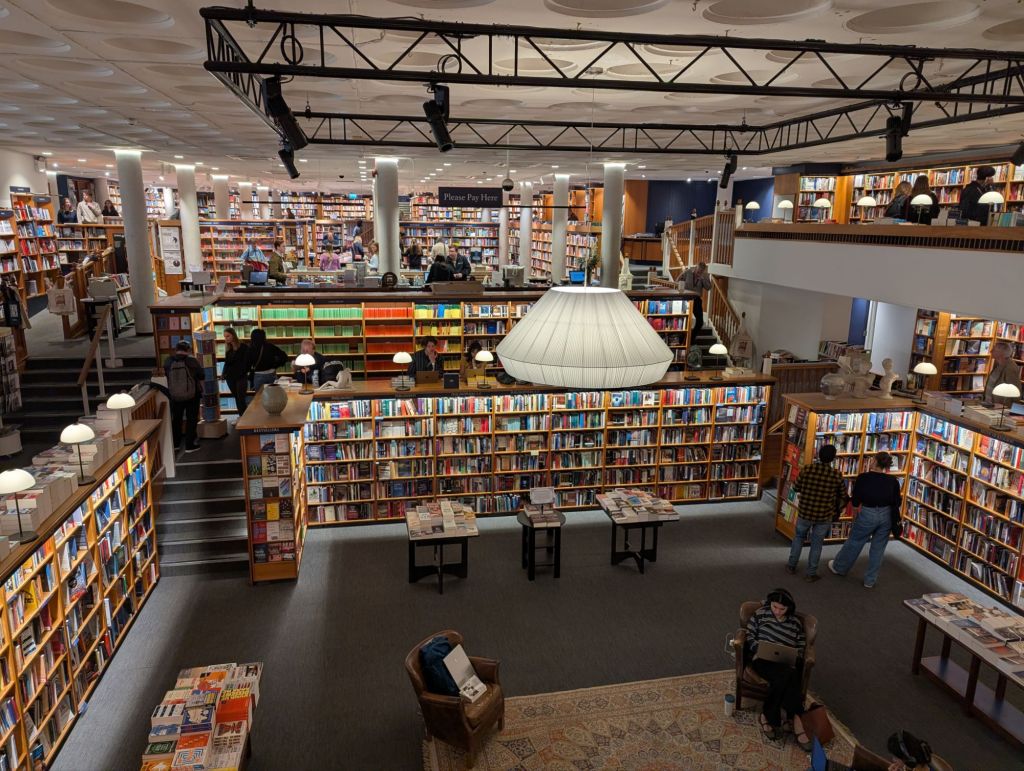
We also spent time wandering through Blackwell’s Bookshop, which first opened in 1879. Beneath the bookstore is the famous Norrington Room, a massive underground space containing more than three miles of shelving. It once held the Guinness World Record for the world’s largest single room devoted to selling books. For people who love bookstores, this place feels a little dangerous. You walk in thinking, “We’ll browse for a few minutes,” and suddenly you’re contemplating how many books can fit in a suitcase.
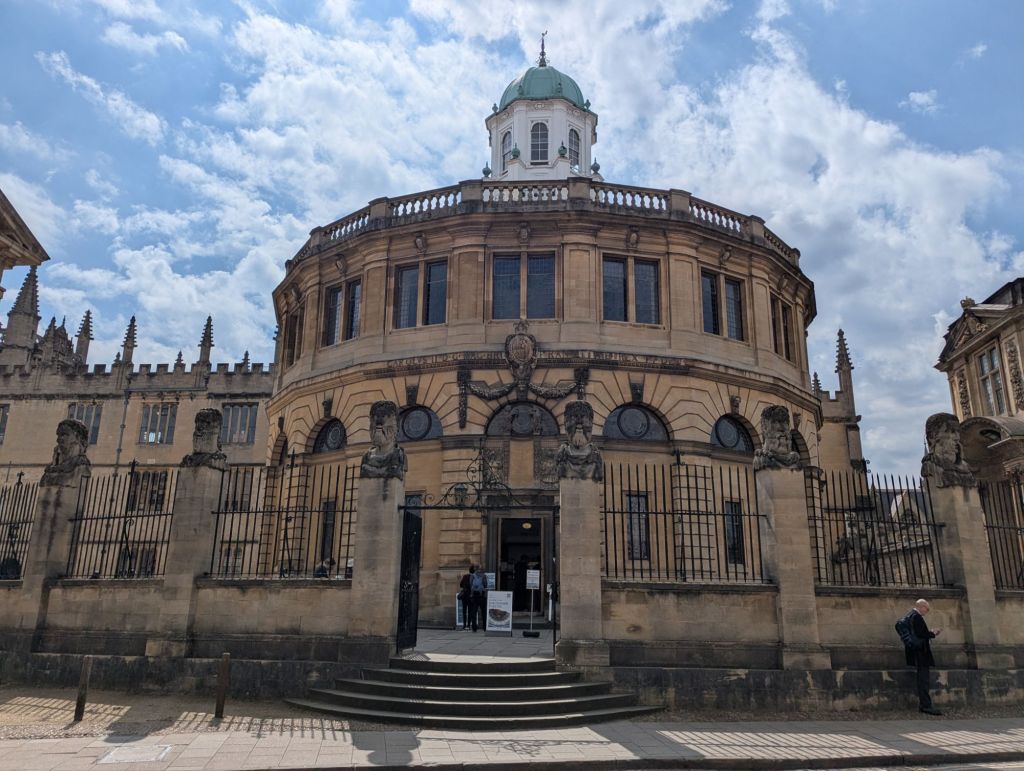
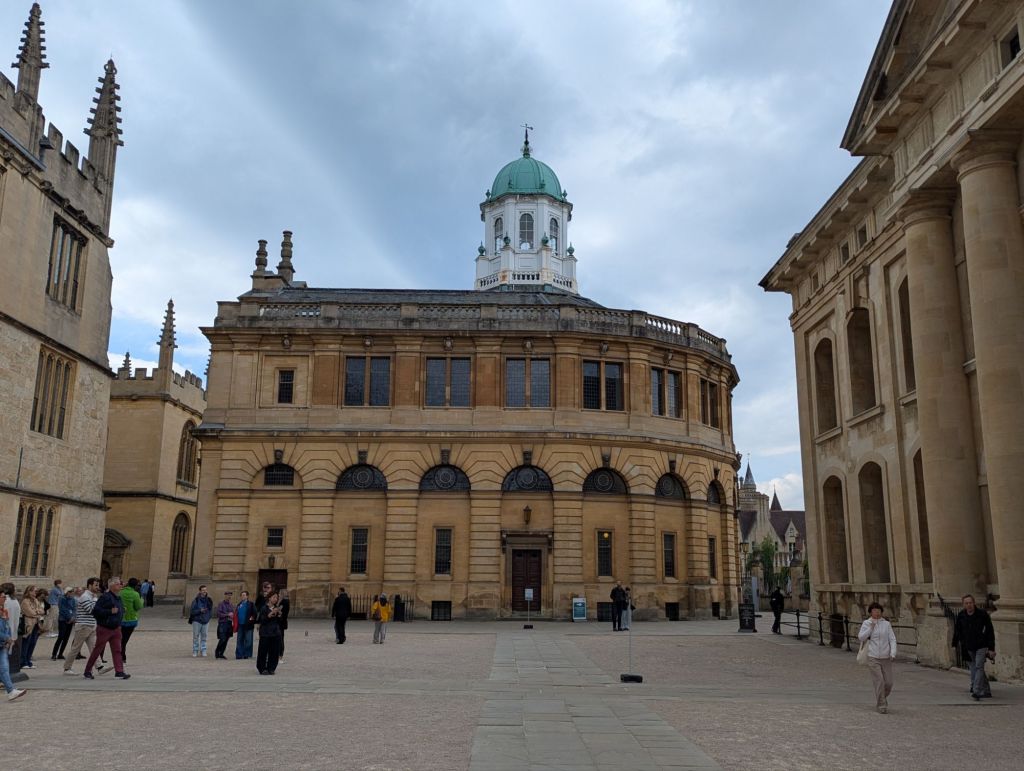
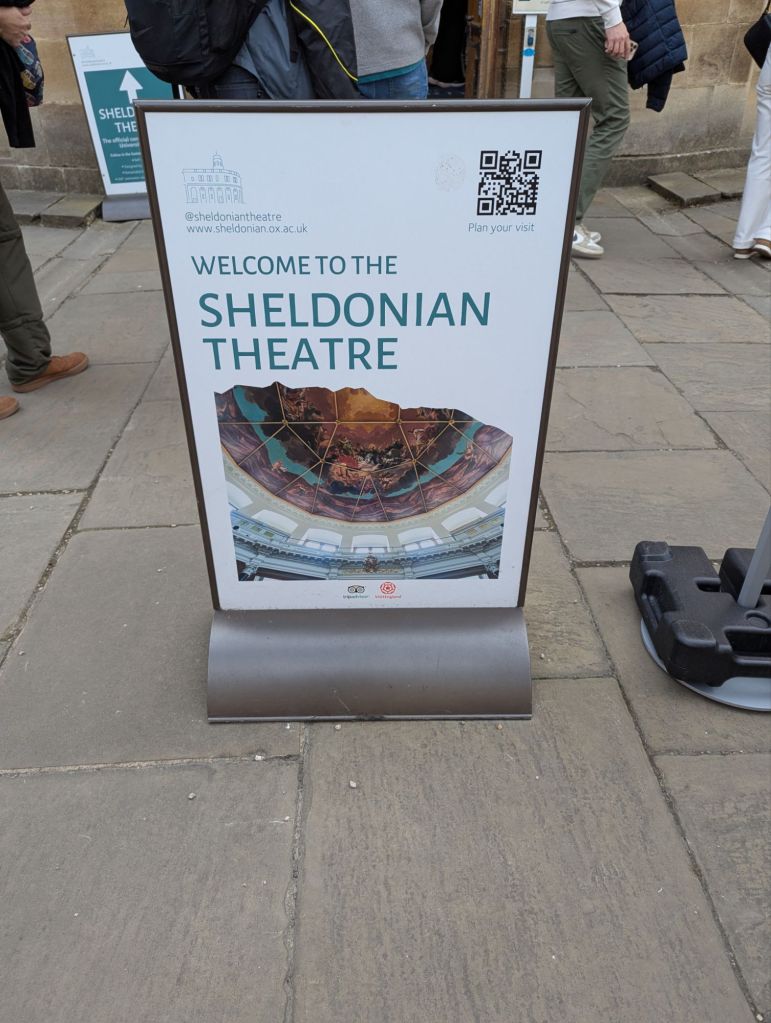
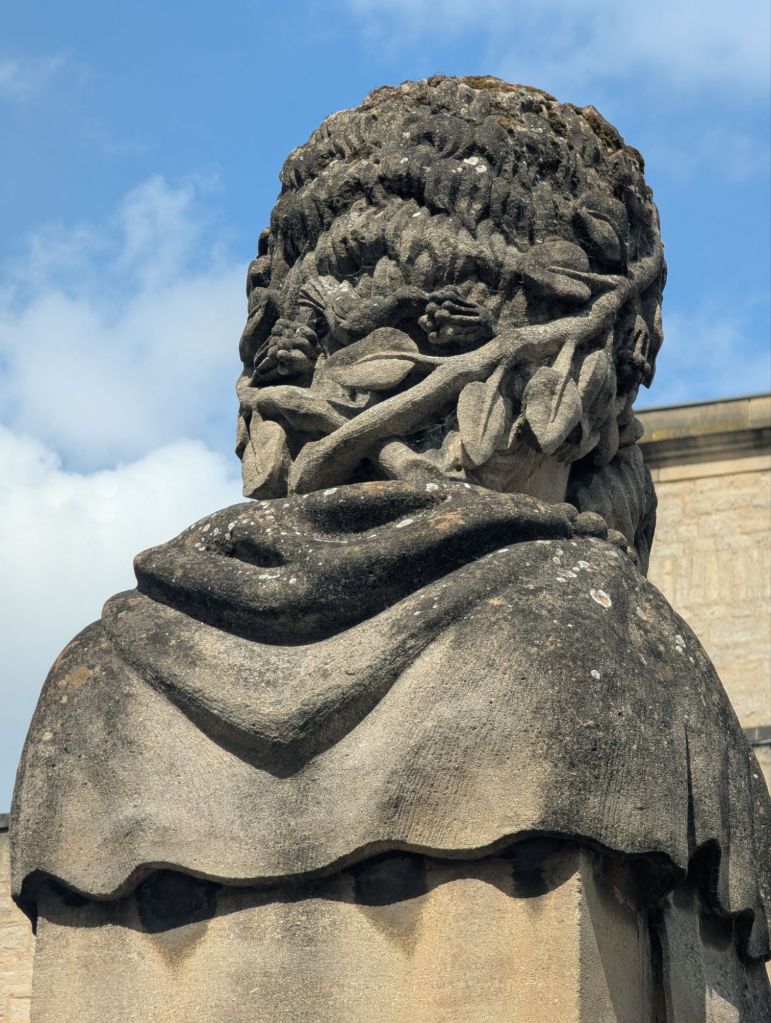
Sir Christopher Wren, whose work we had already admired throughout London, also left his mark on Oxford by designing the Sheldonian Theatre. Completed in 1669, it was one of Wren’s earliest major projects. The theater’s unusual roof design allowed for a large open interior without support pillars blocking the audience’s view, an impressive engineering achievement for the time. As a small signature detail, a tiny carved wren bird can still be spotted hidden on one of the decorative heads near the entrance.
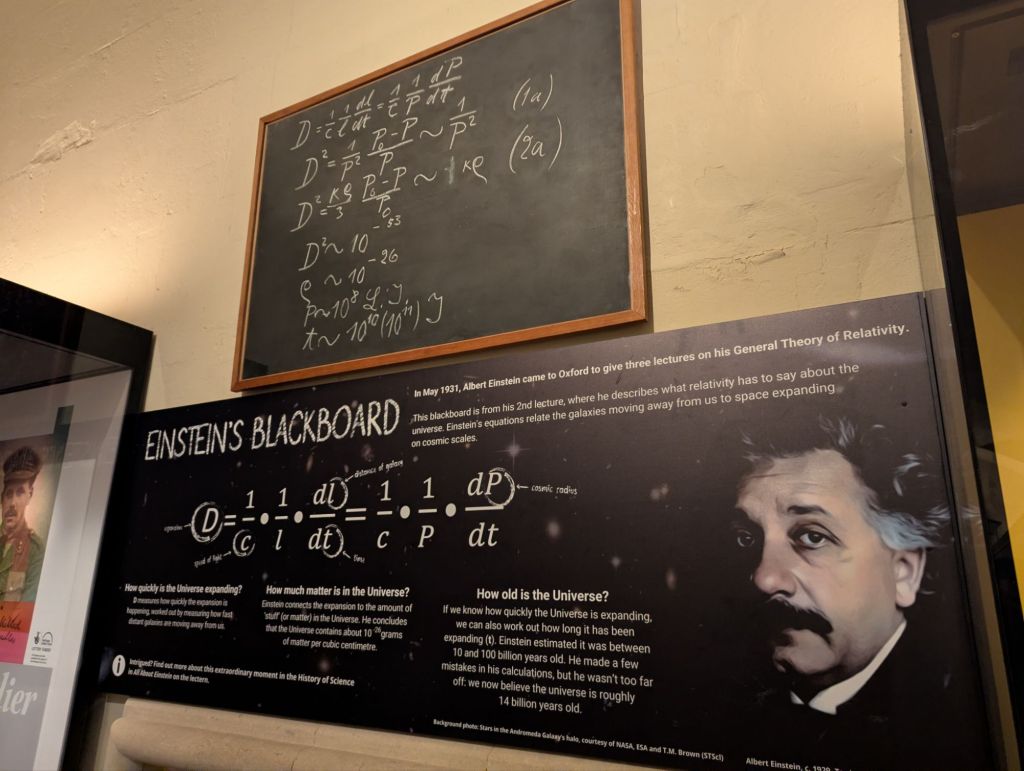
We also made a quick stop at the History of Science Museum to see one of its most famous artifacts: the blackboard used by Albert Einstein during a 1931 lecture at Oxford. Amazingly, the equations he wrote remain preserved exactly as he left them. While we could not begin to understand the mathematics, it was still fascinating to stand in front of something personally used by one of history’s greatest scientific minds. We stared at the equations just long enough to confirm that we were definitely not theoretical physicists.
When we emerged from the museum, the sun had finally decided to make an appearance, so we revisited a few spots for better photos before stopping for one of Britain’s finest traditions: afternoon cream tea. We enjoyed tea, warm scones with jam and clotted cream, and a slice of Victoria sponge cake. Honestly, the British may be onto something with this daily pause for tea and cake. Productivity might actually improve if every afternoon included baked goods.
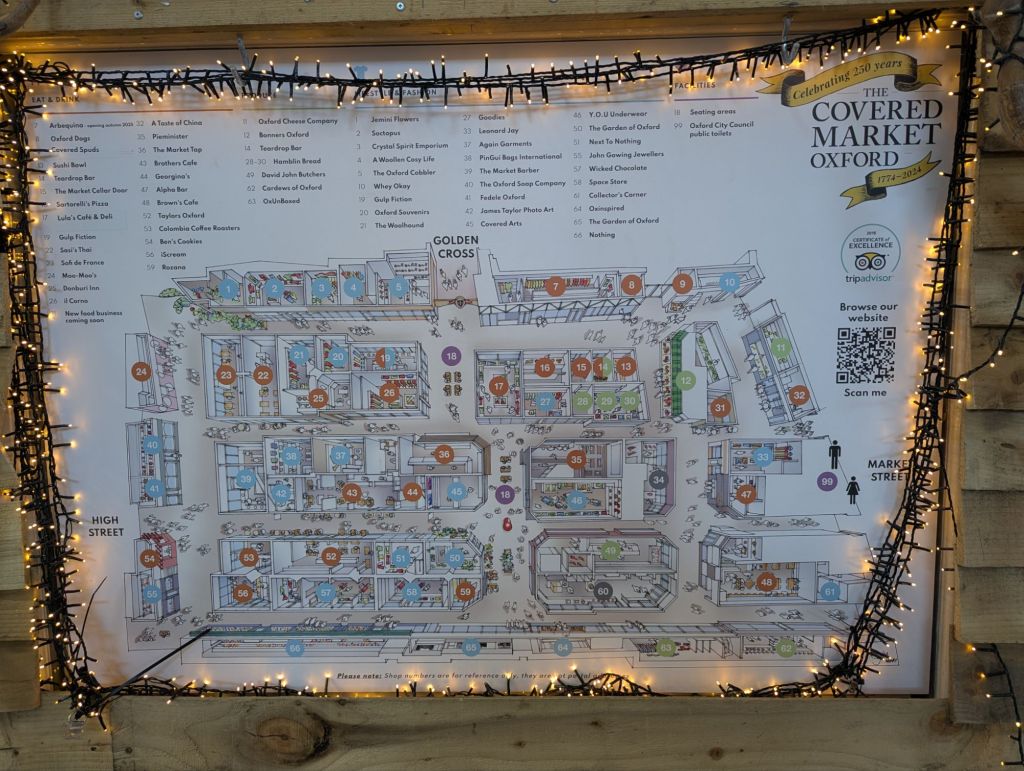
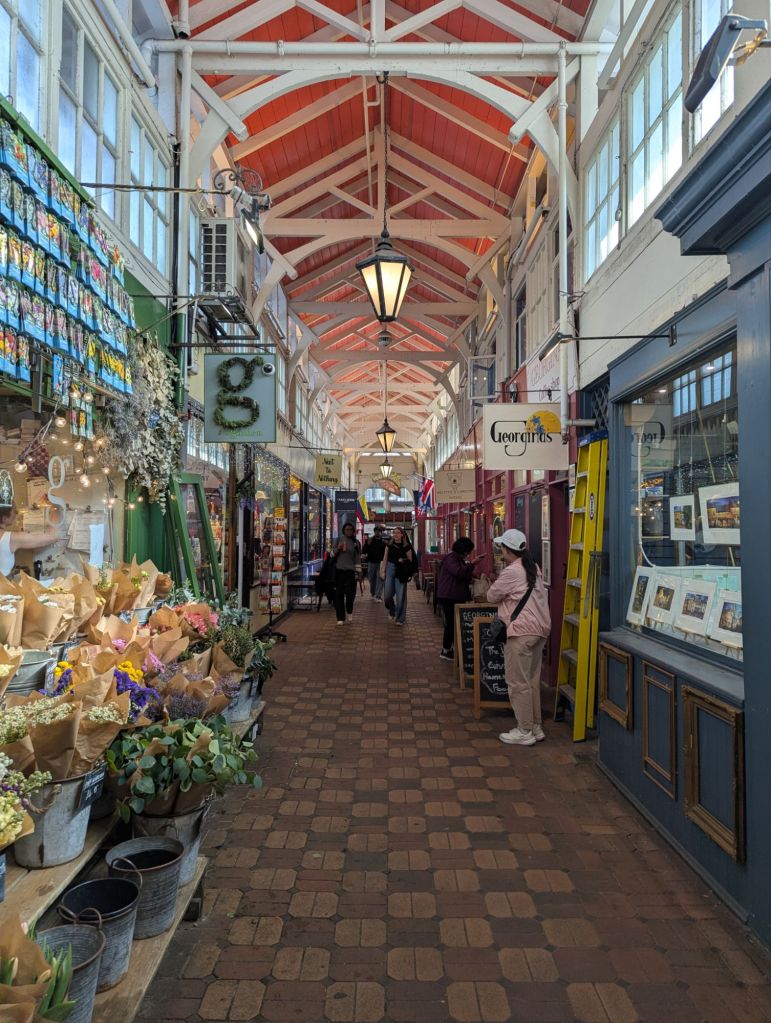
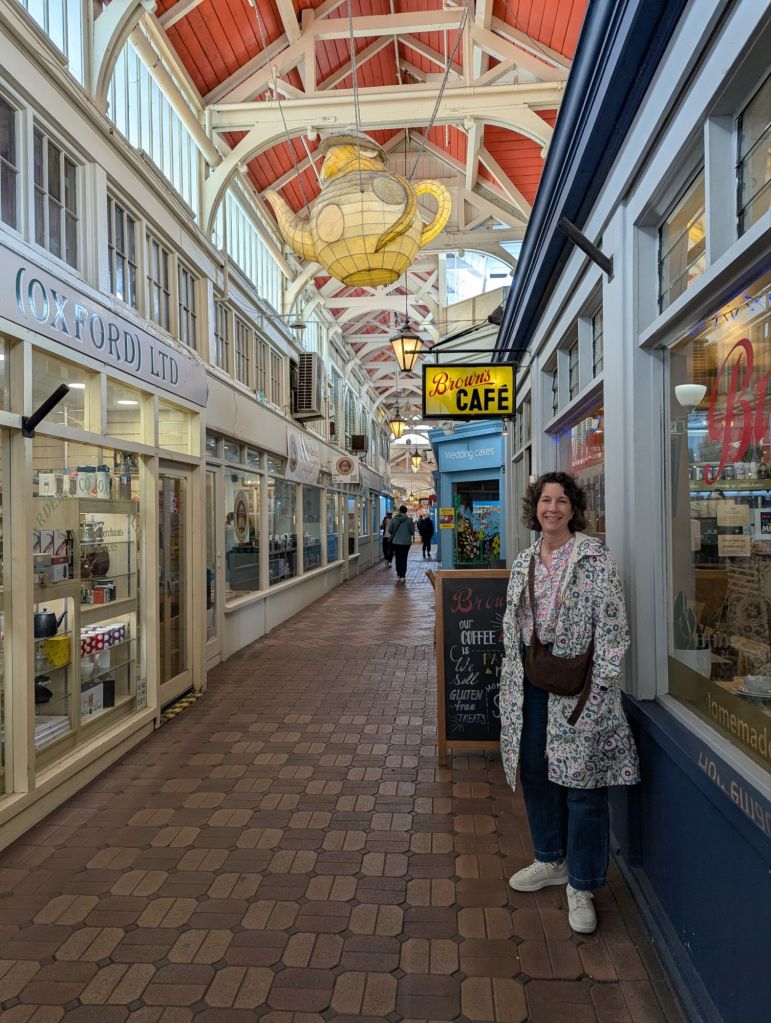
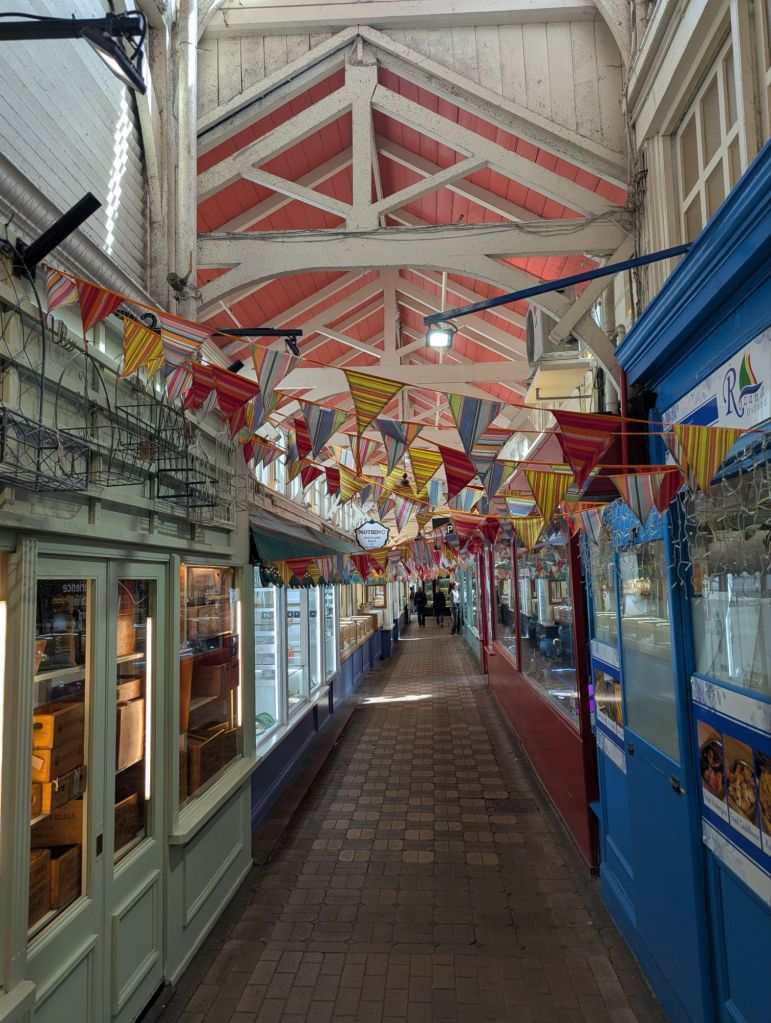
Reenergized, we continued exploring Oxford, including the historic Oxford Covered Market. Established in 1774, the market was originally created to move messy butcher stalls and street vendors off the city’s main roads. Today, it houses everything from bakeries and coffee shops to florists, butchers, and specialty stores. Walking through it, it was hard to believe this bustling space has been serving shoppers continuously for more than 250 years.
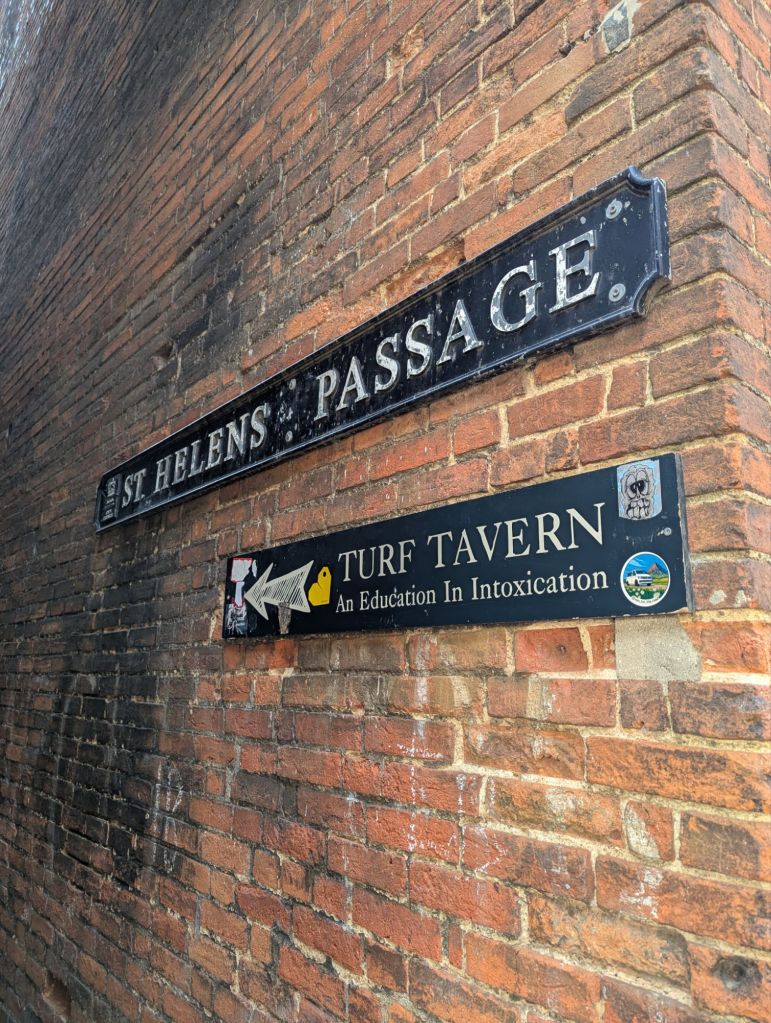
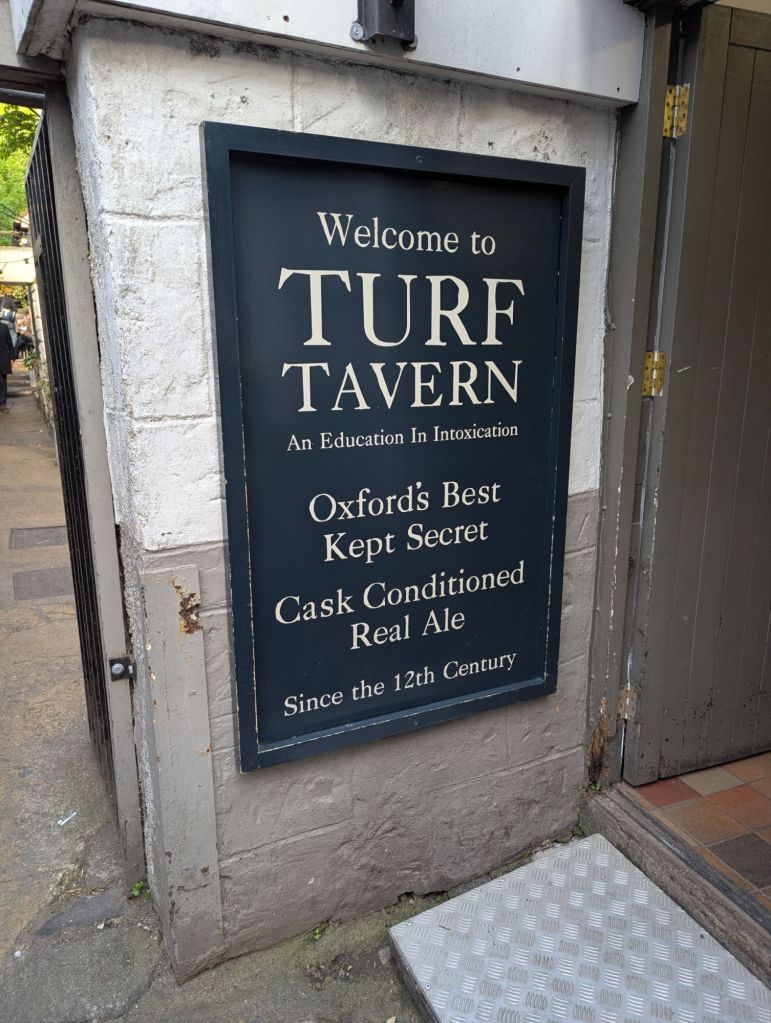
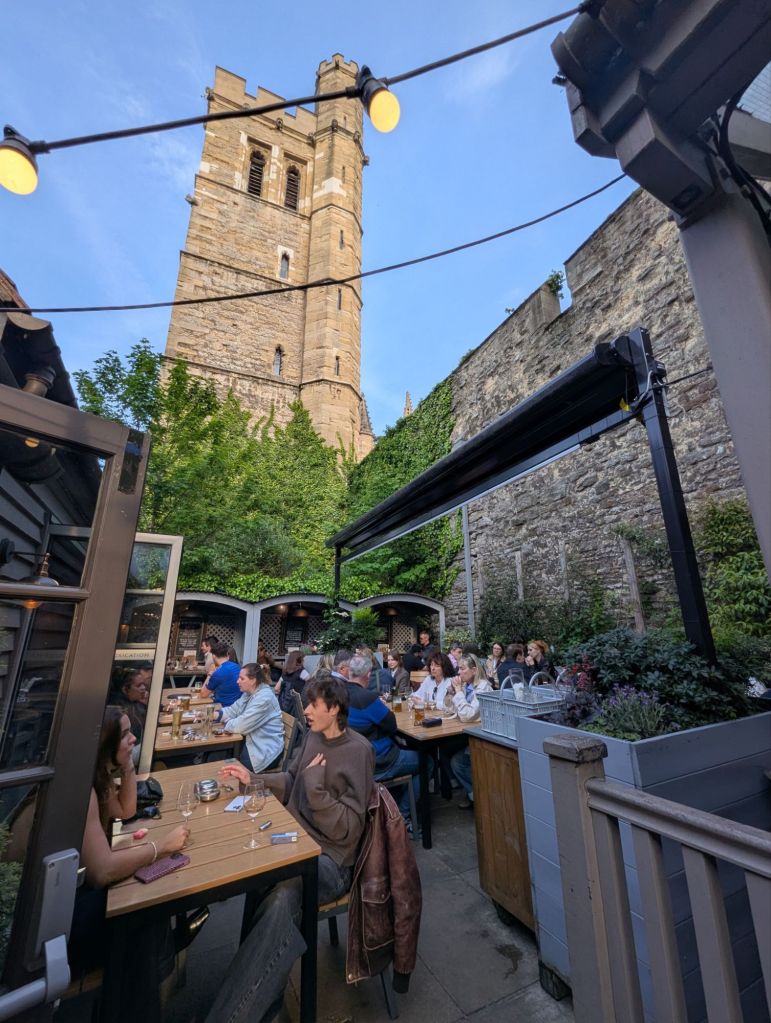
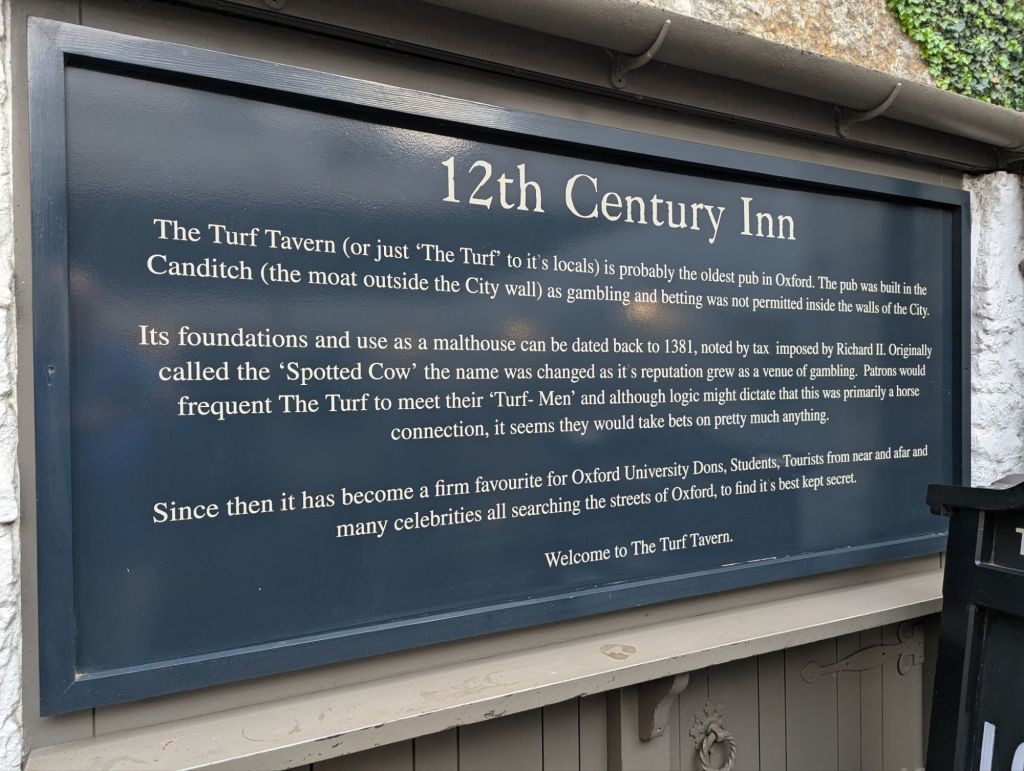
By late afternoon, our feet informed us that it was time for a break. We found a riverside bar and enjoyed a drink in the sunshine. Eventually, we wandered back into town for dinner at the famous Turf Tavern, a hidden pub tucked down a narrow alleyway that has been serving students, professors, locals, and tourists for centuries. Its secluded location makes it feel like you have stumbled upon a secret gathering place that somehow everyone already knows about.
After dinner, we made the quick walk back to the train station and caught the 7:45 train to Moreton-in-Marsh. Once back at the hotel, we got organized for the next day and headed to bed early to rest up for our first 10-mile walk through the Cotswolds.

