Posts Tagged With: England travel blog

Day 15 in England – Changing of the Guard, Westminster Abbey, and The Devil Wears Prada

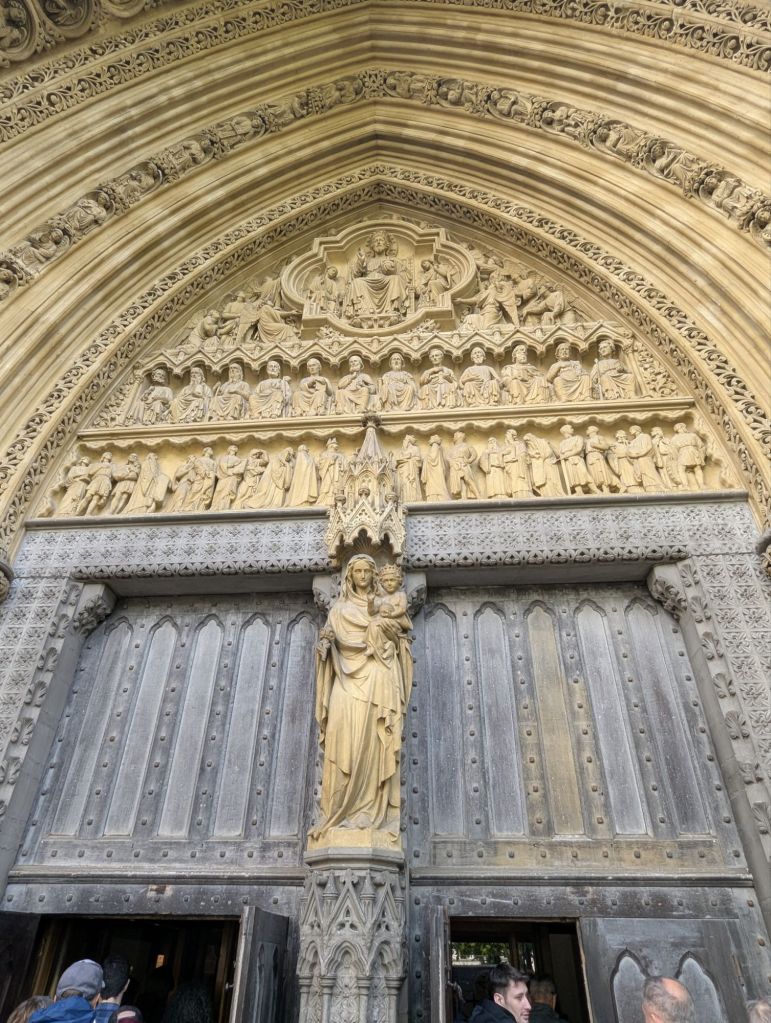
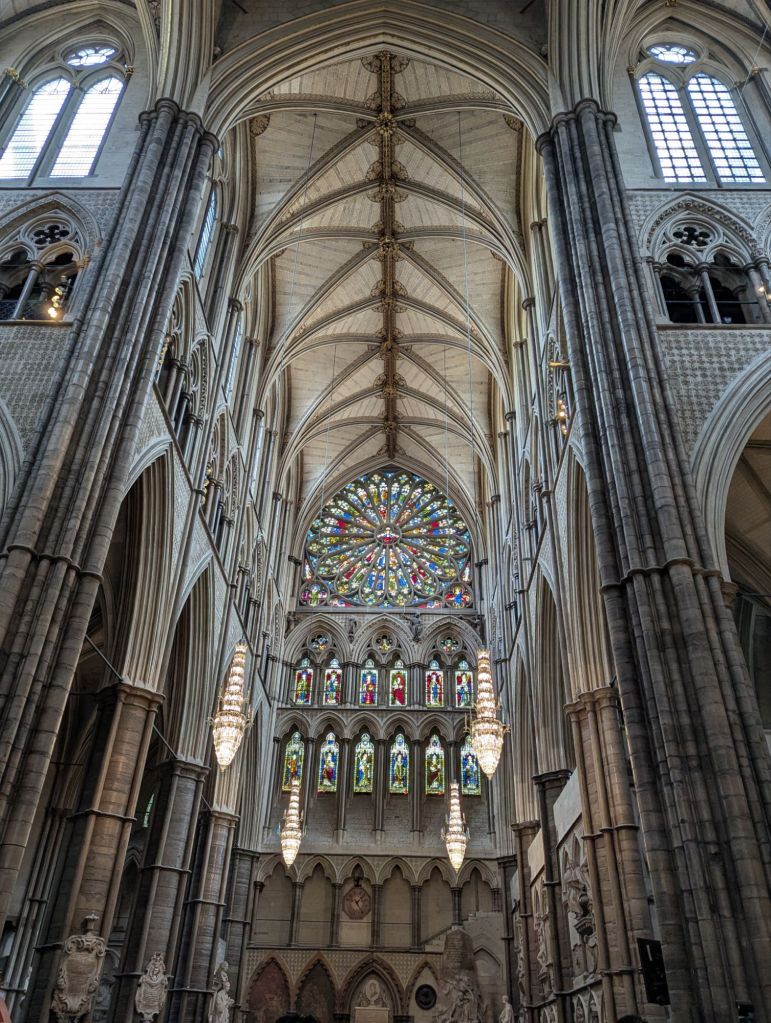
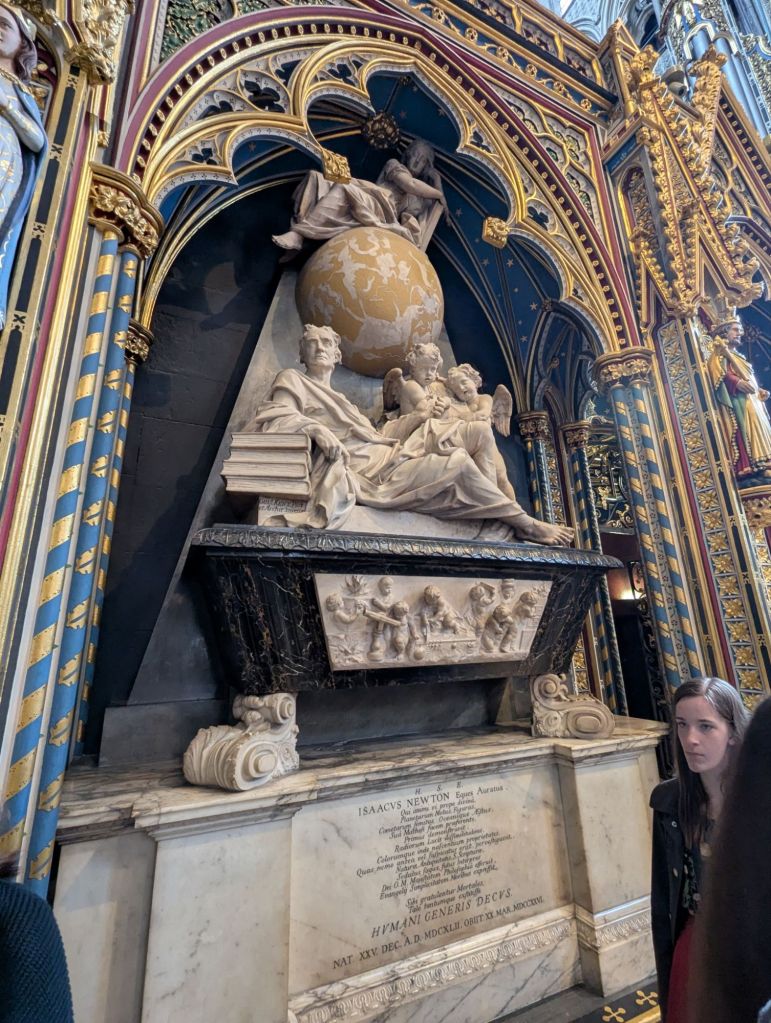
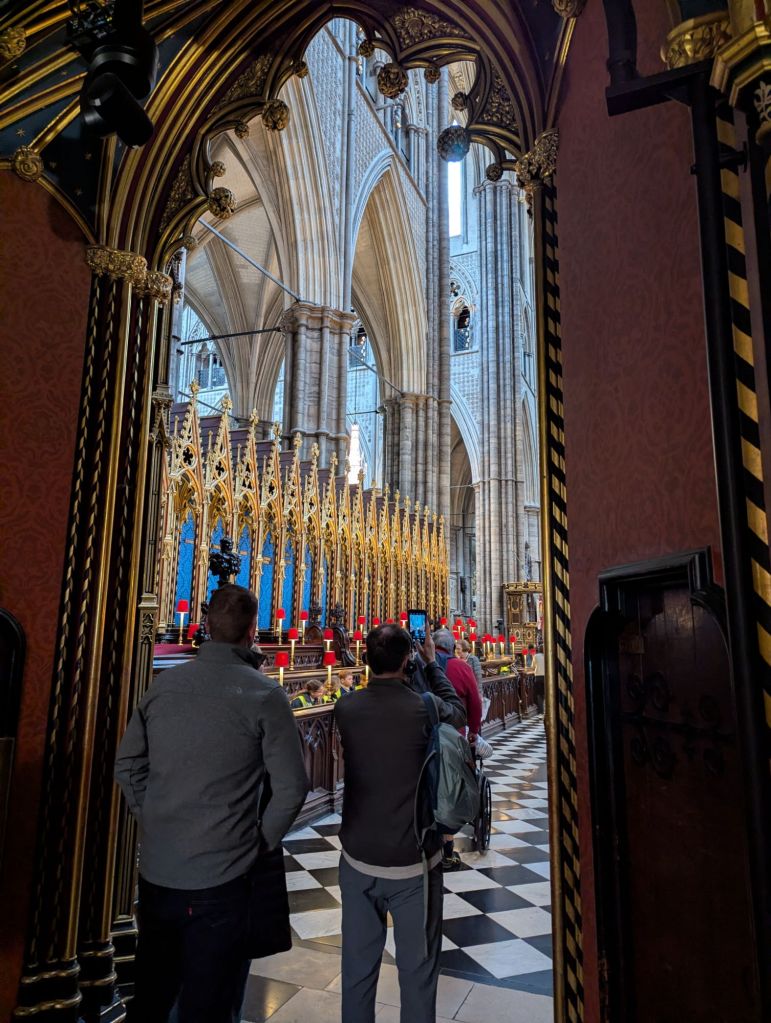
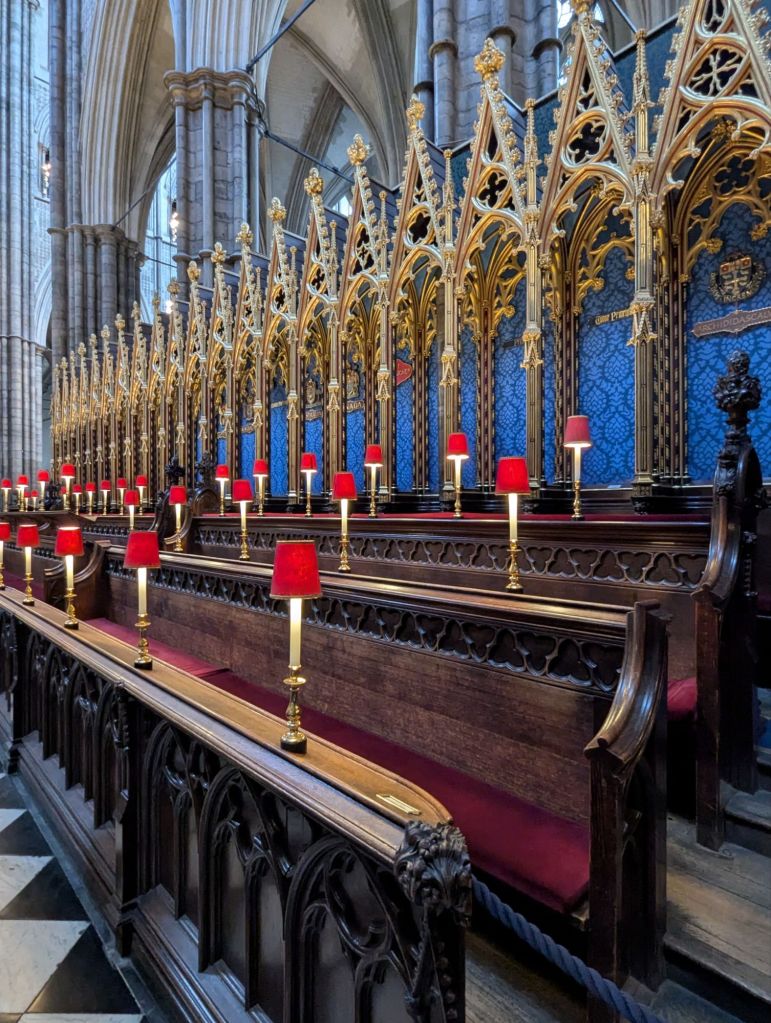
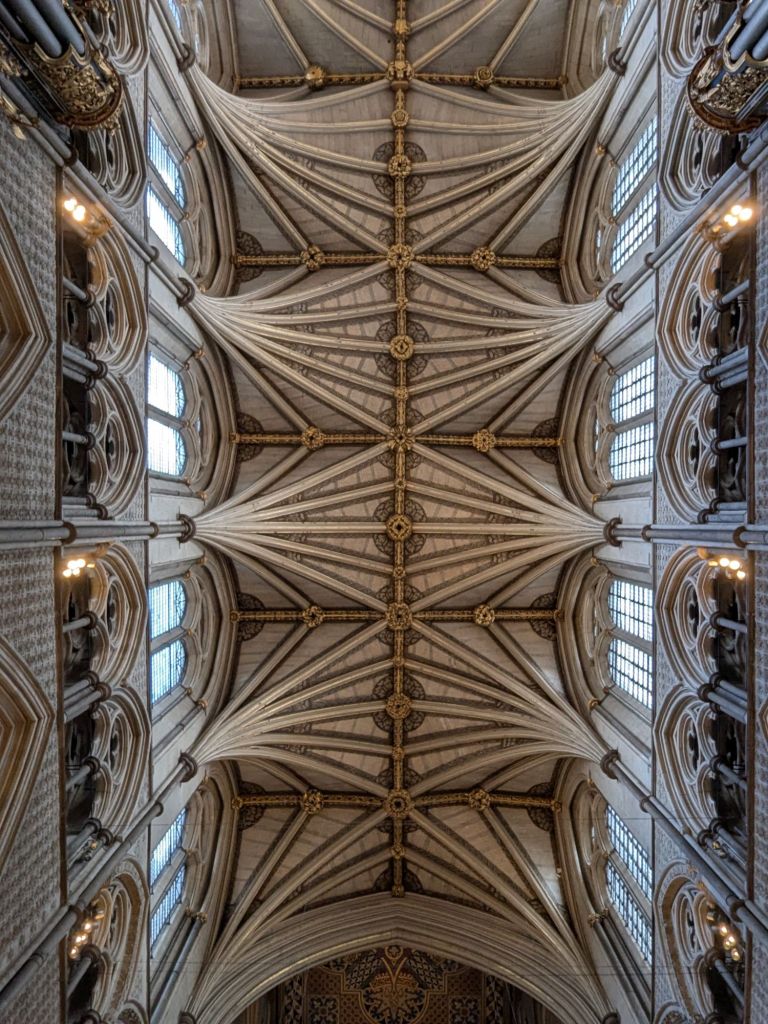
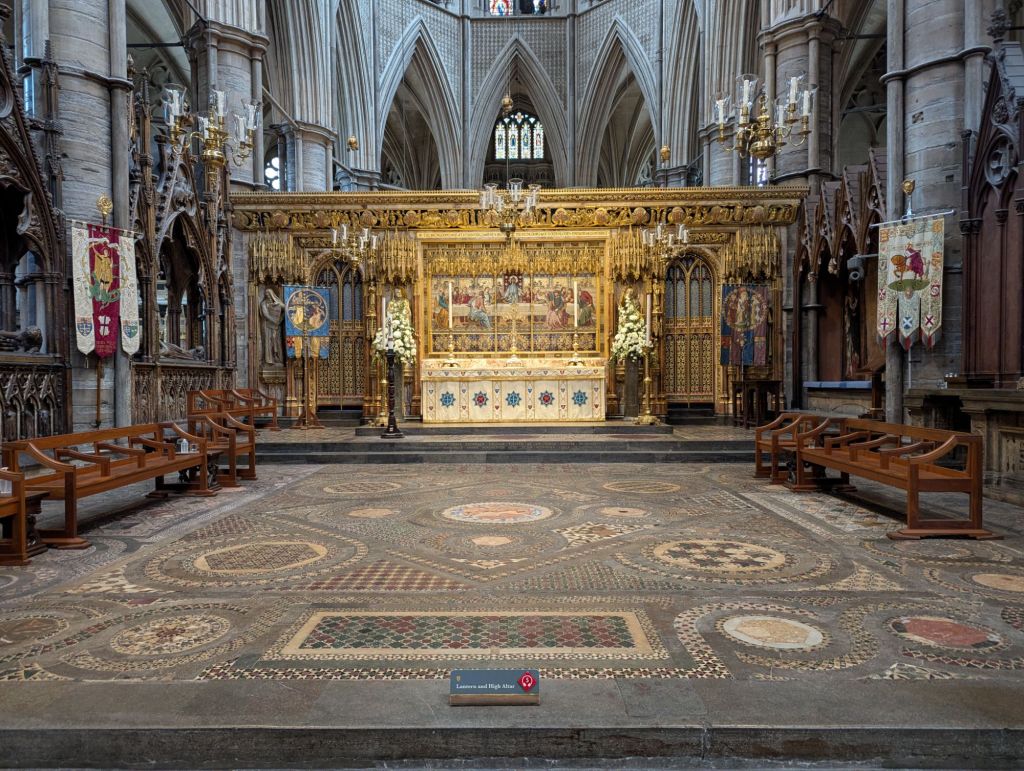
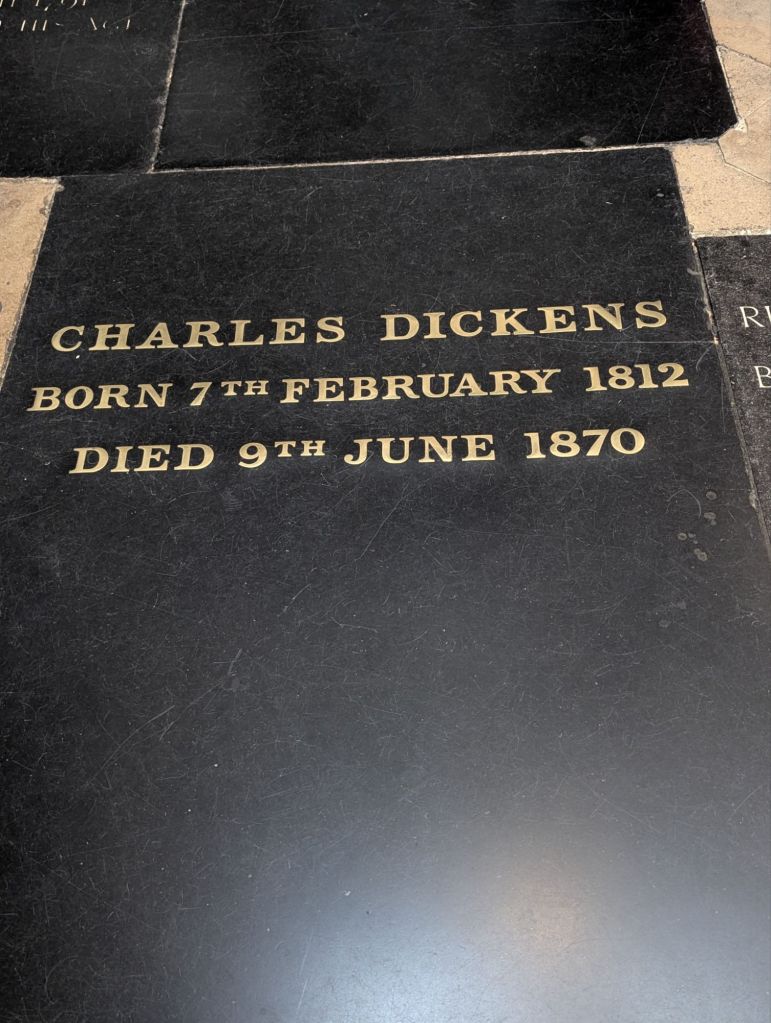
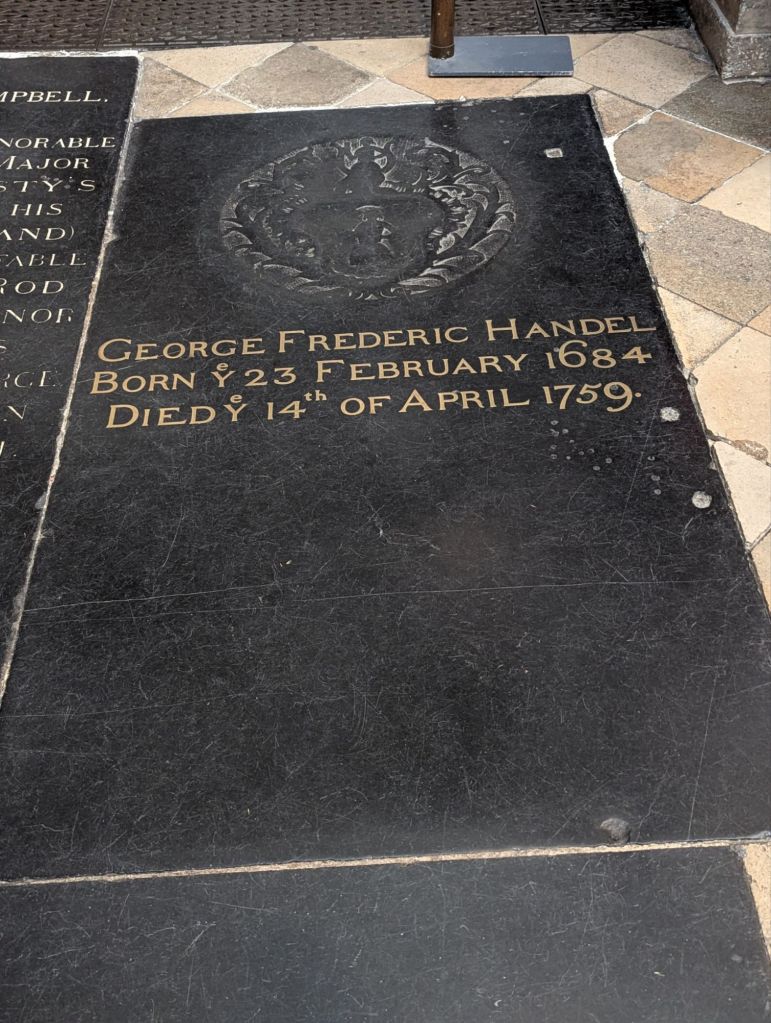
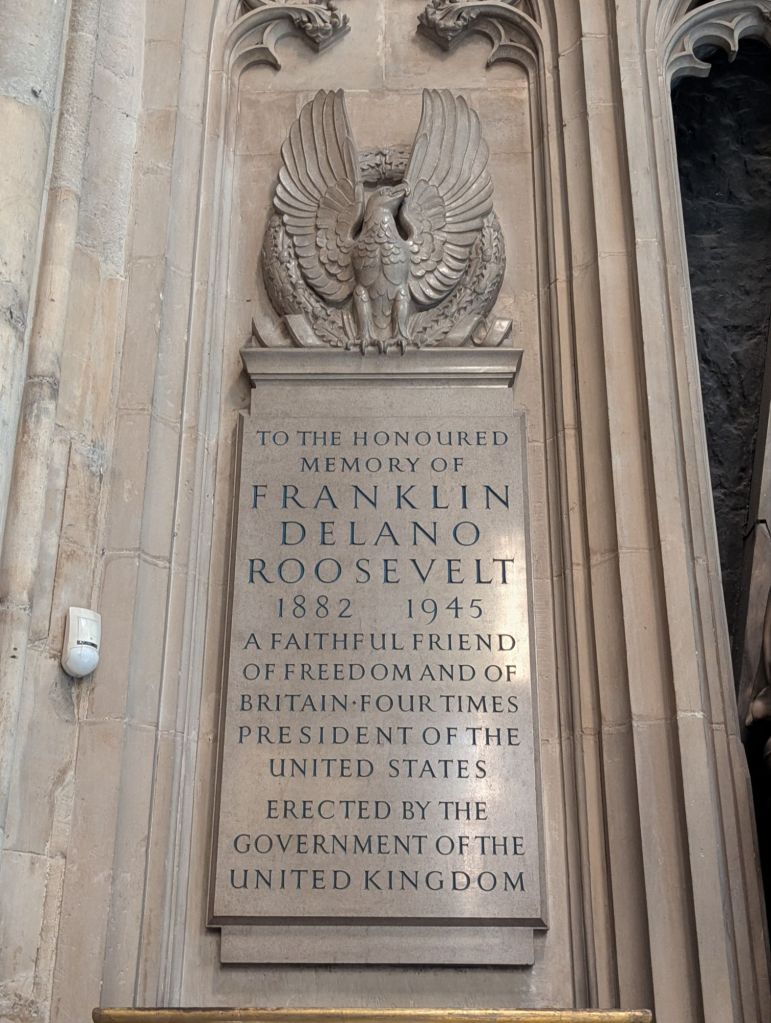
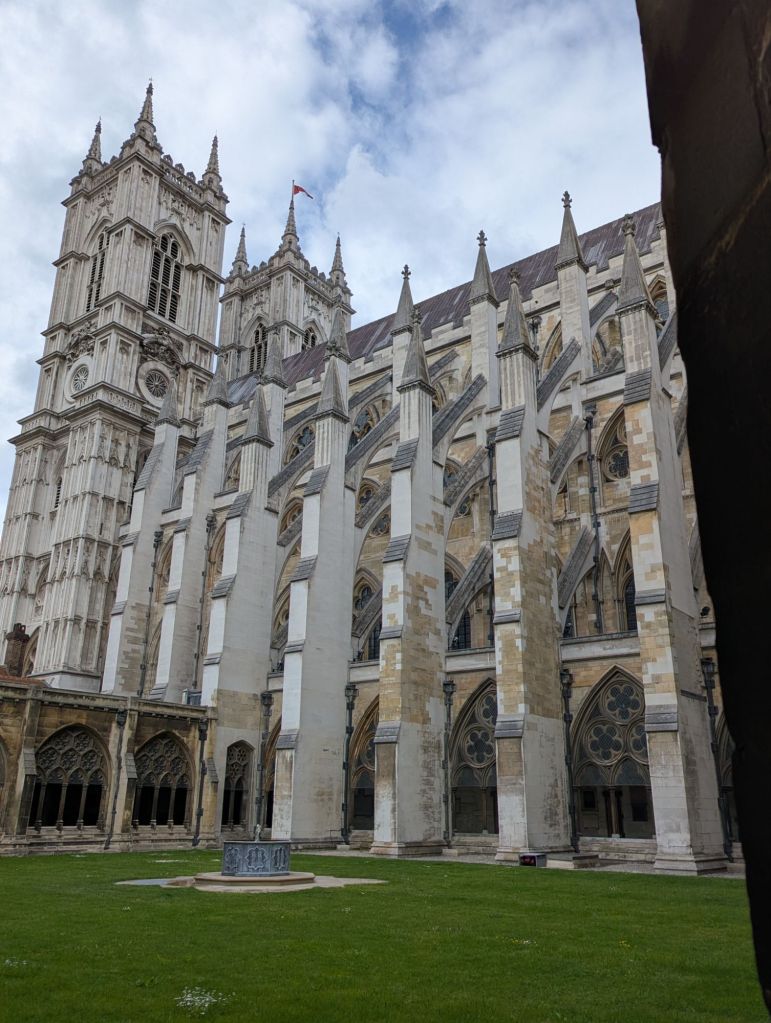
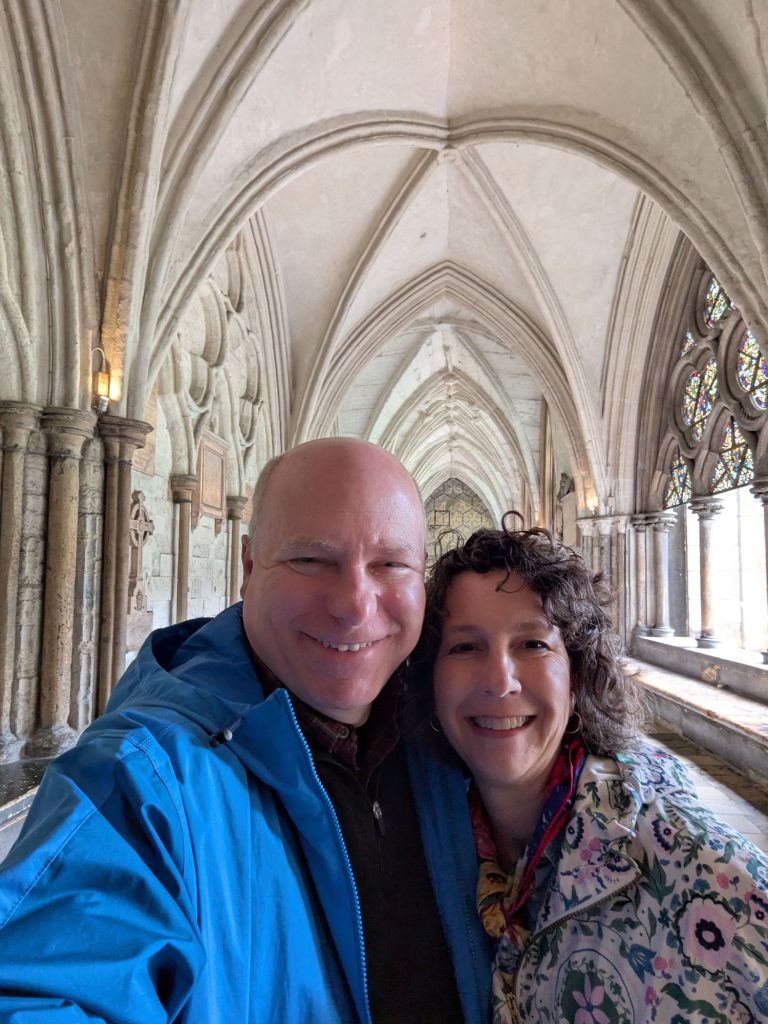
Photo at Westminster Abbey

DAY 15 – MONDAY, MAY 18, 2026

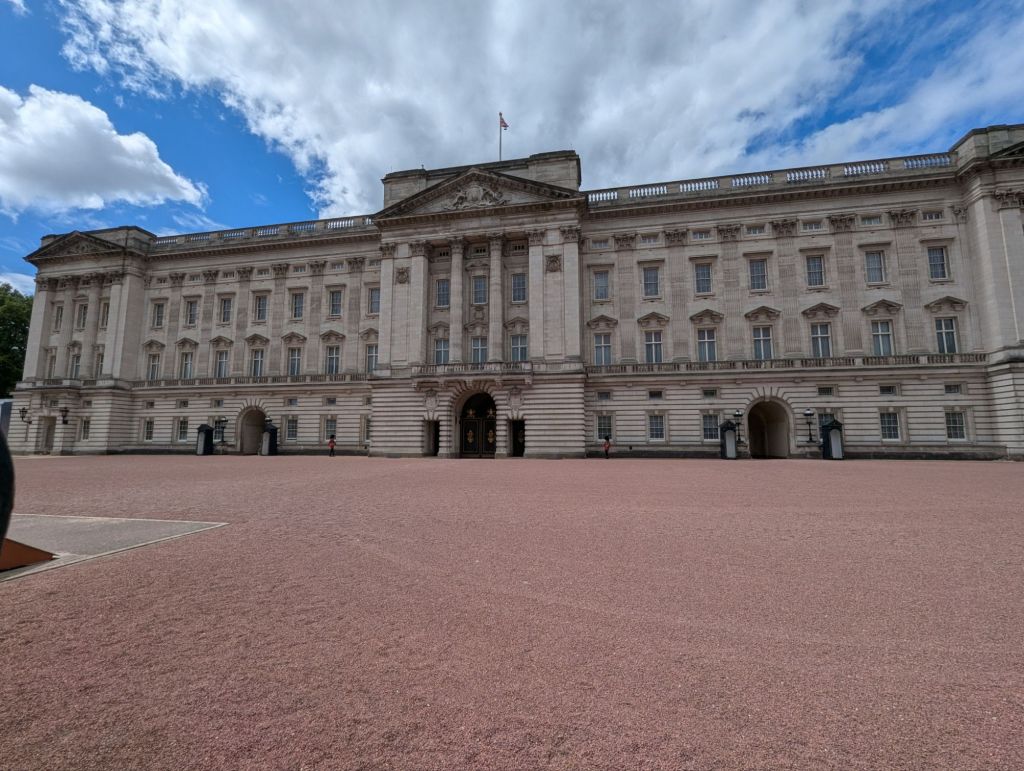
After a good night’s sleep, we were up and ready to tackle another full day in London. We left our hotel and grabbed a quick pastry and coffee/tea from a nearby café before making our way to Buckingham Palace.

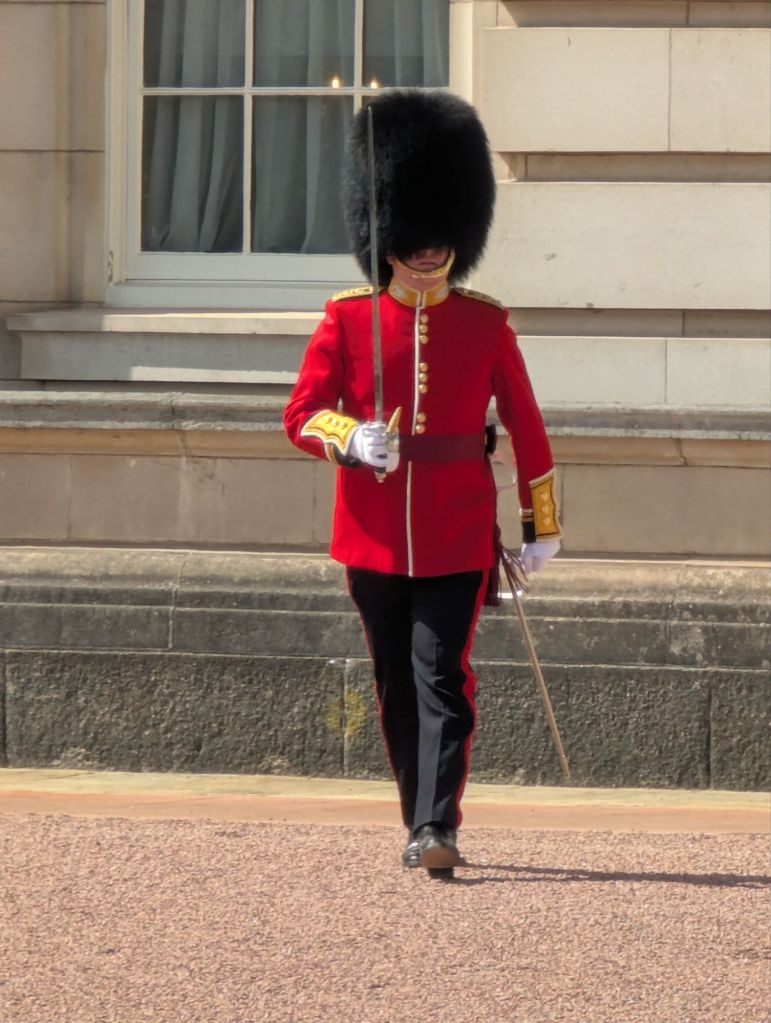
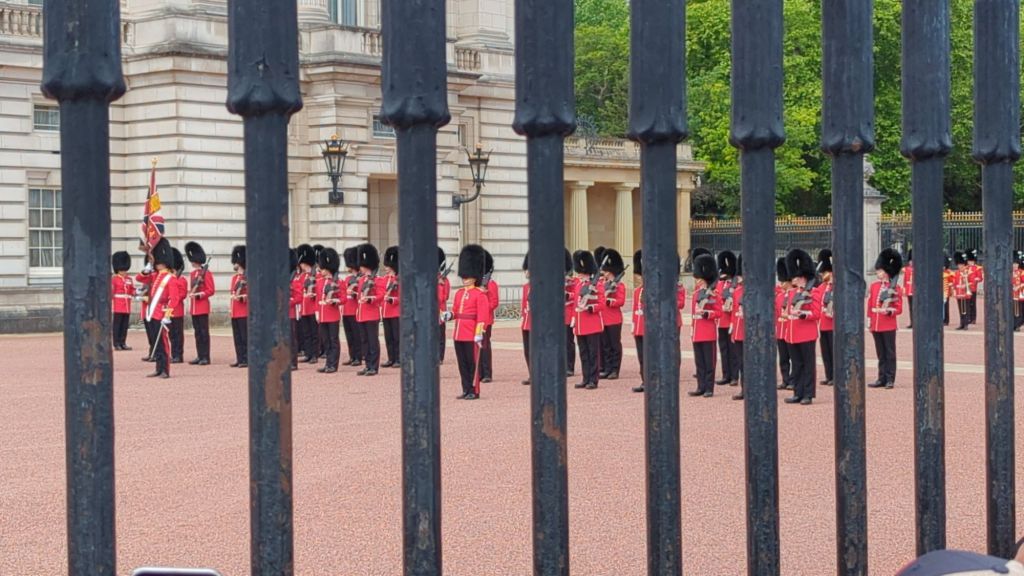
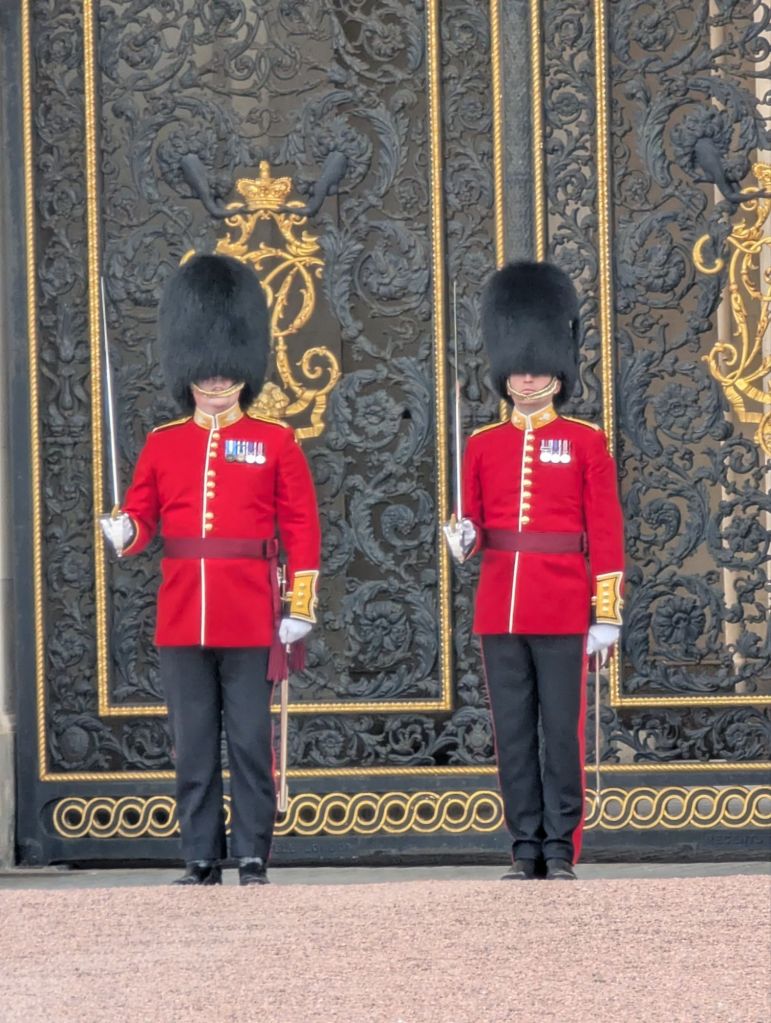
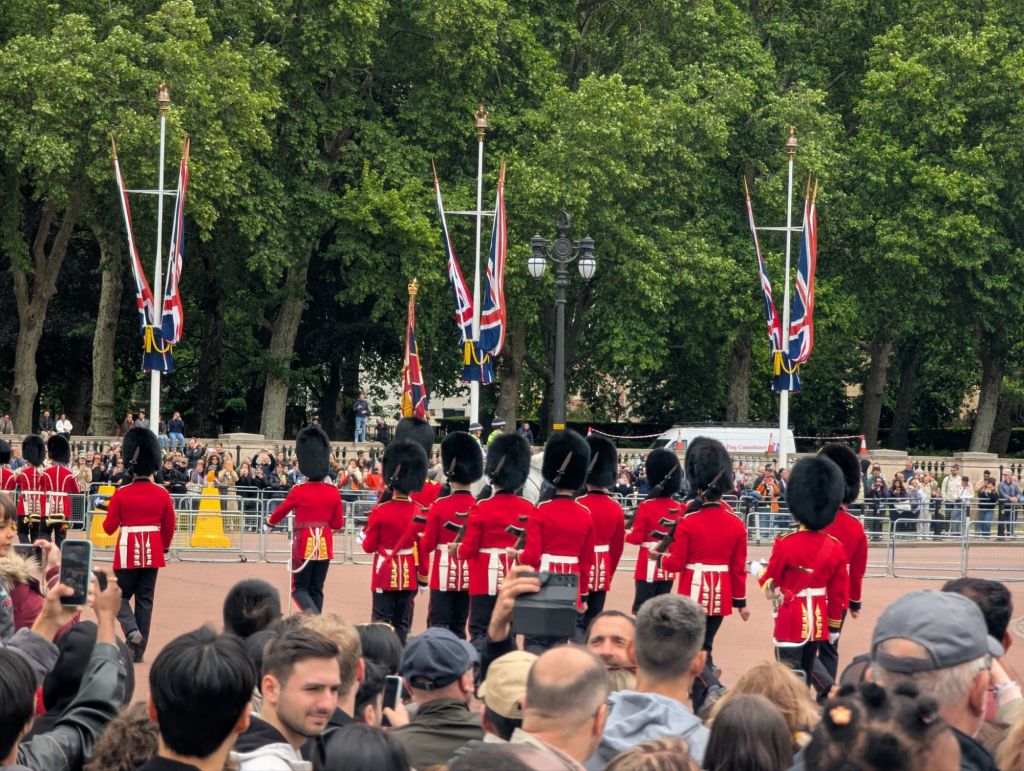
Even though we arrived well before the 11:00 AM Changing of the Guards ceremony, apparently several hundred other tourists had the exact same plan. We slowly worked our way along the fence line until we finally secured a spot with a decent view into the palace courtyard. In the end, the effort paid off.

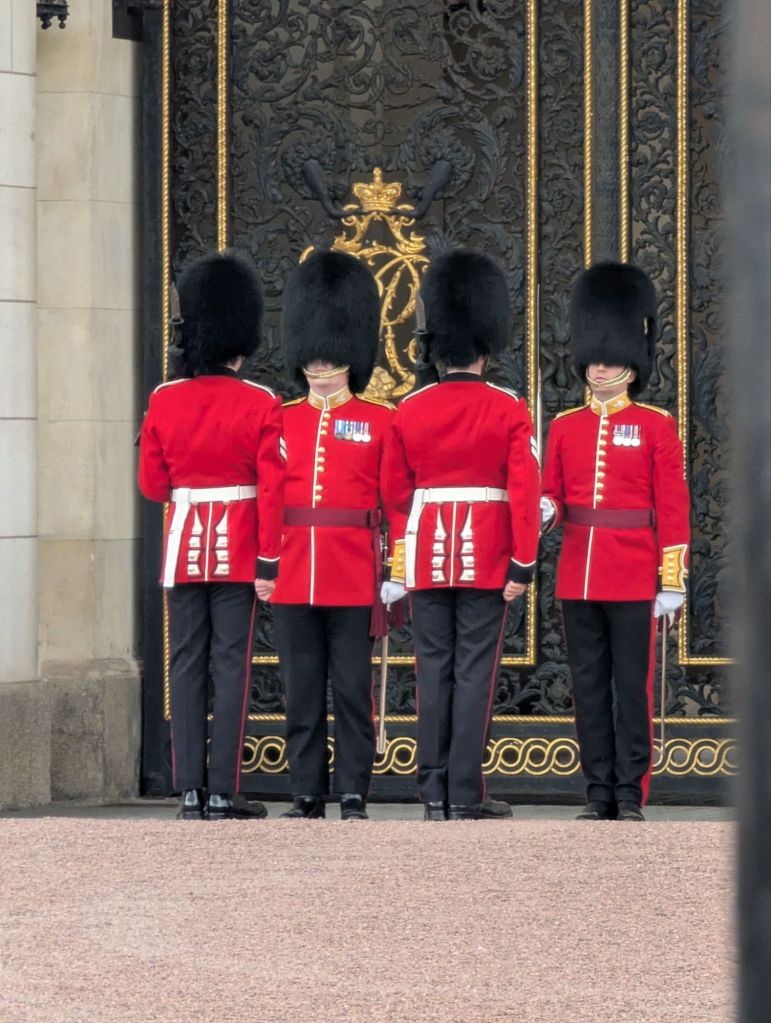
The ceremony itself was impressive to watch. The incoming guards marched in with military precision while the outgoing guards prepared to end their shift. One of the funniest surprises came from the band, which mixed traditional music with a very unexpected rendition of “Danger Zone” from Top Gun. Hearing that while standing in front of Buckingham Palace was not something we had anticipated, but the crowd absolutely loved it.

Another thing we found interesting was that the actual changing of the guards was far less dramatic than we expected. While the band and marching formations drew everyone’s attention, the real exchange of the guards happened rather quietly and efficiently in the background. It turns out the spectacle is as much about ceremony and tradition as the actual shift change itself.
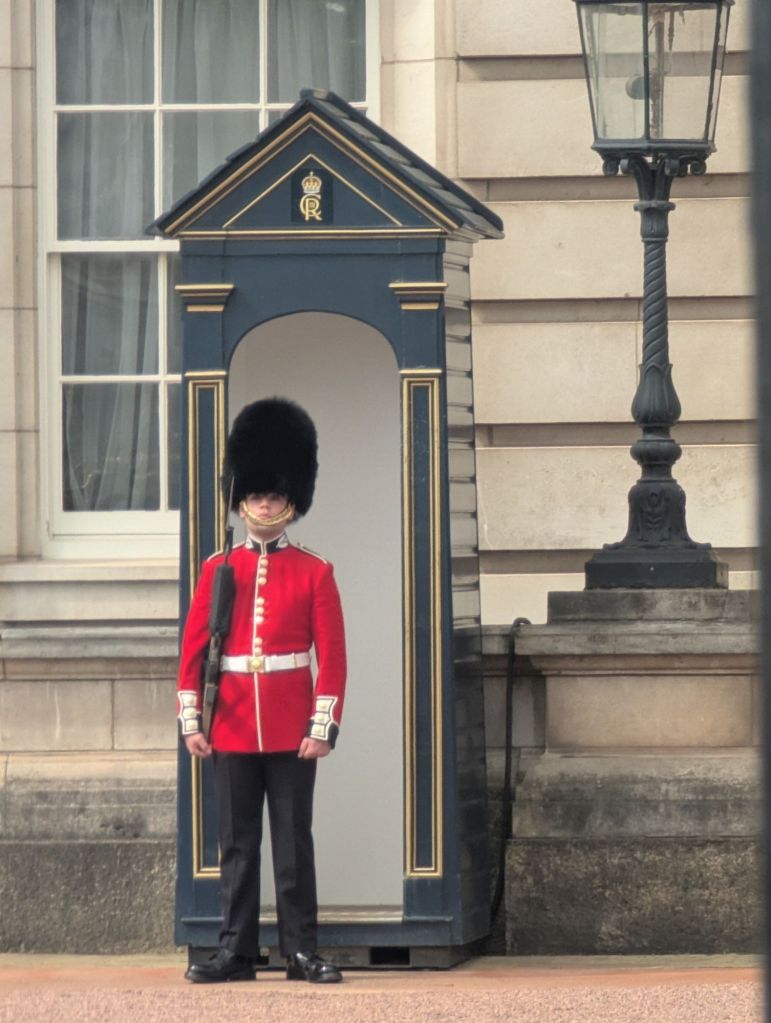
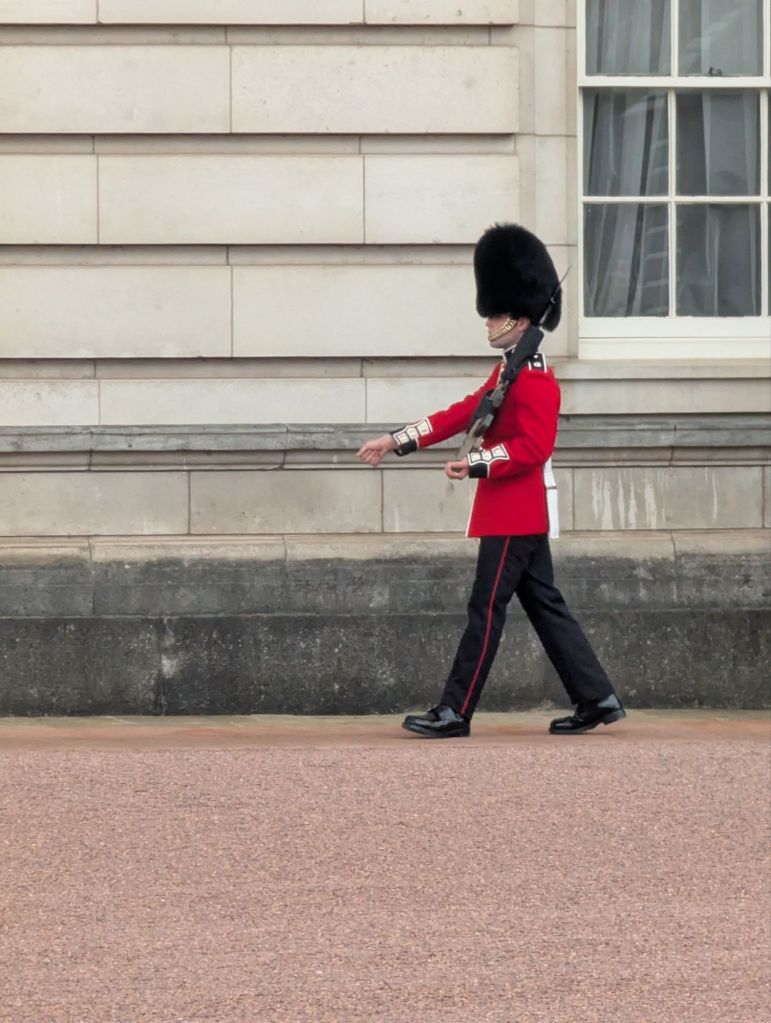
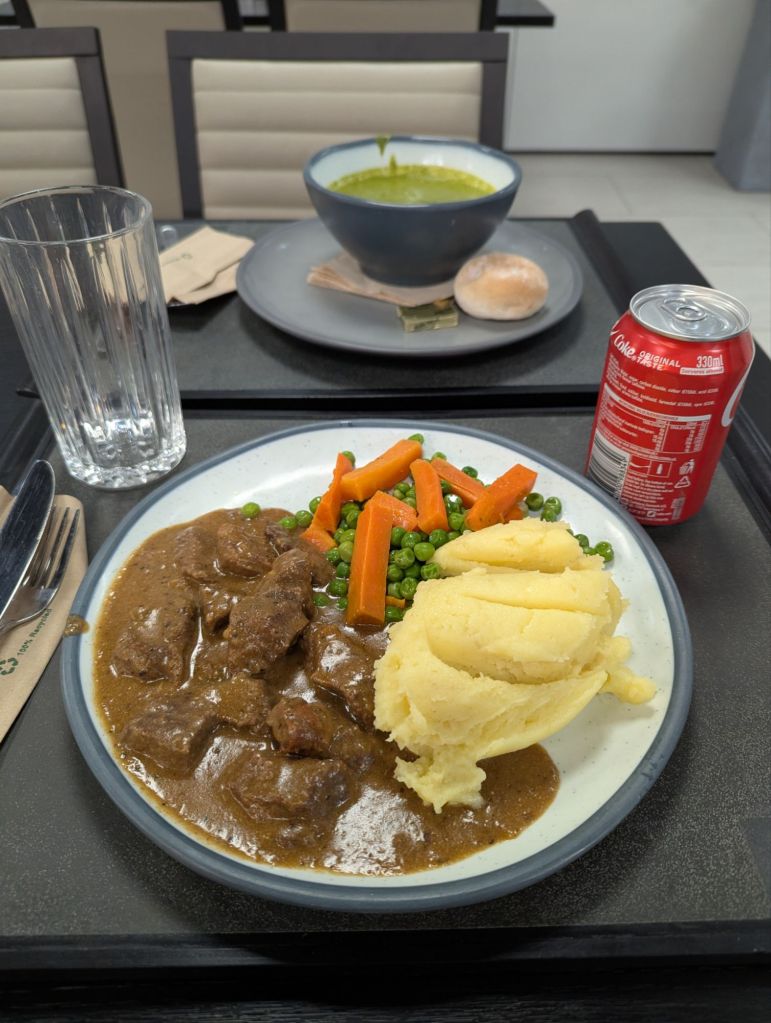
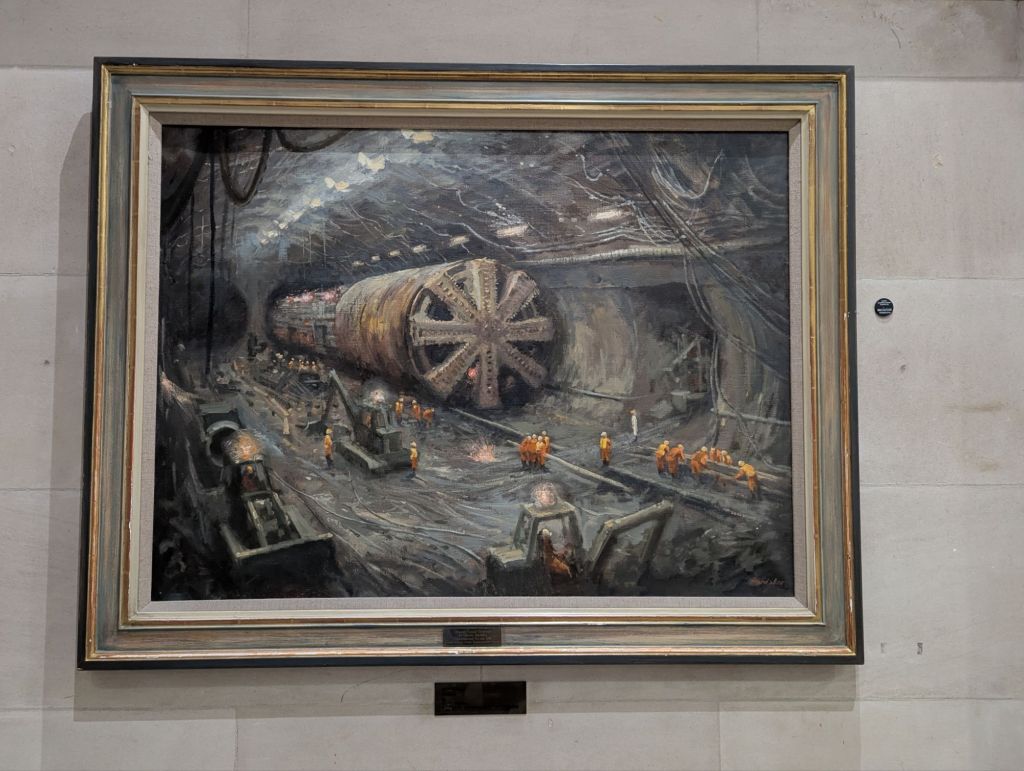
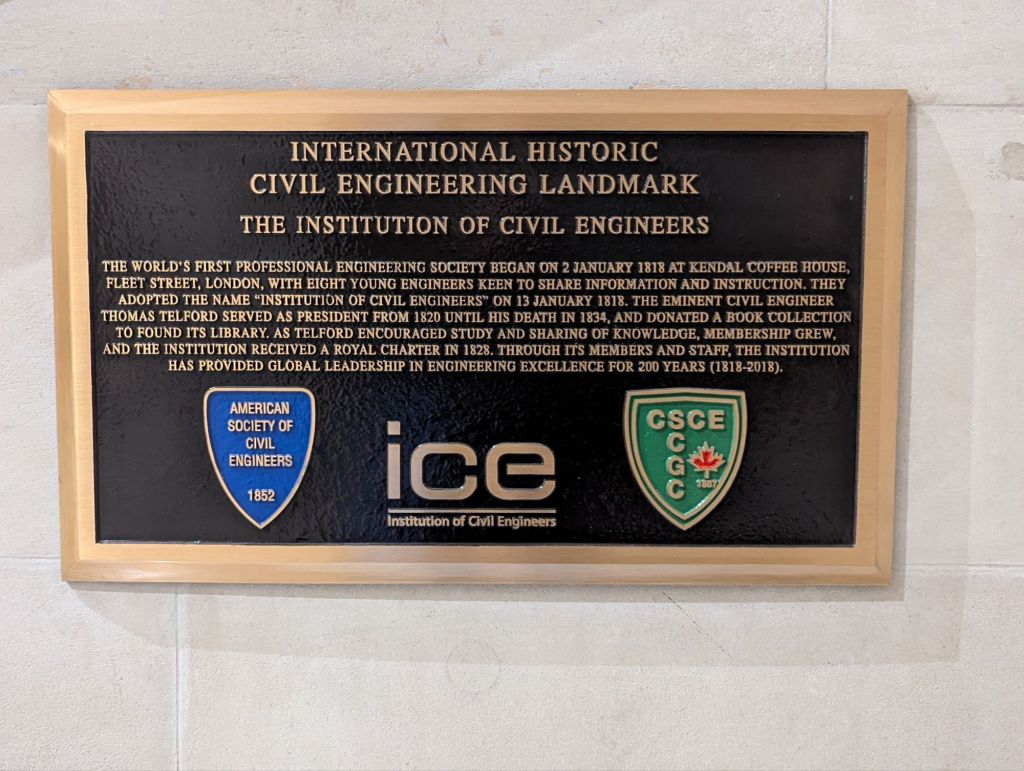
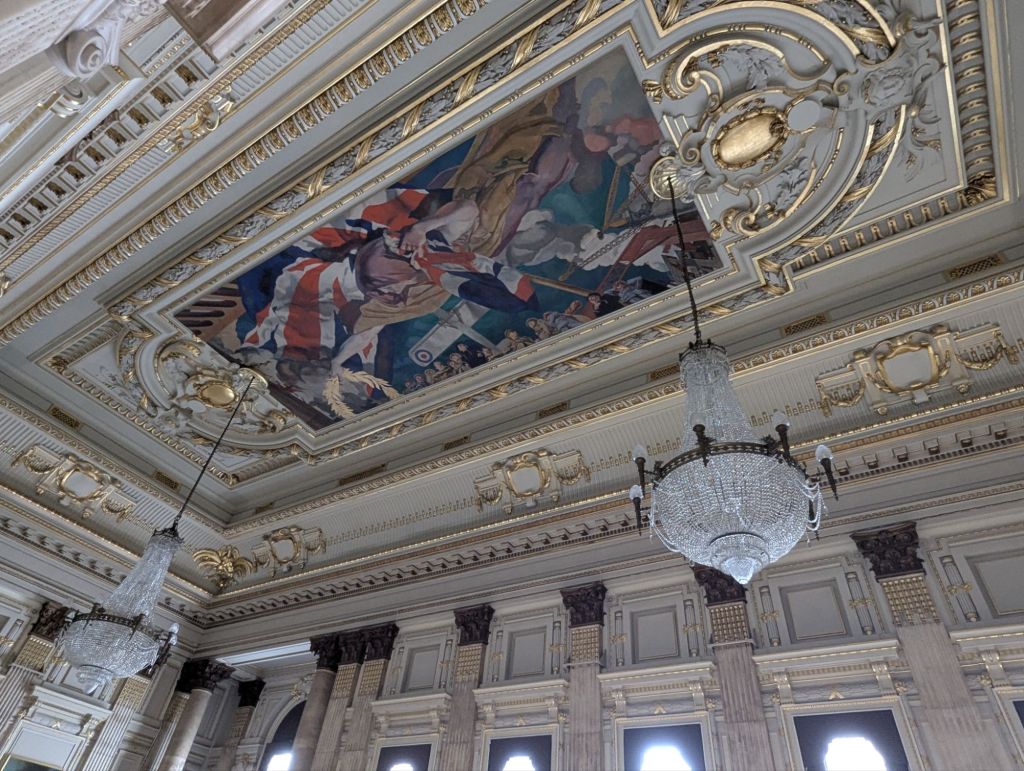
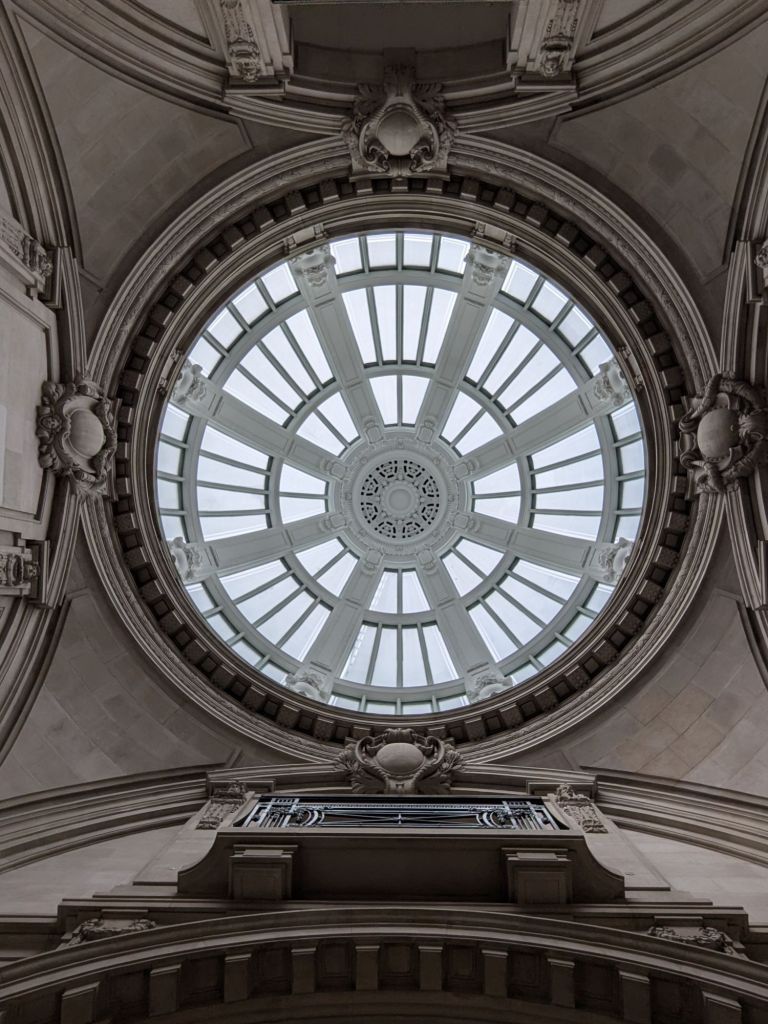
After the ceremony ended and the guards paraded away, we wandered toward Westminster Abbey for our 1:30 PM tour. Since we had a little extra time, we decided to stop for lunch nearby. A Google search led us to One Great George Street, which turned out to be a hidden gem. The building serves as the headquarters for the Institution of Civil Engineers and also contains a café open to the public.

We poked our heads into the stunning Great Hall and admired the beautiful domed atrium before heading downstairs to the café. It ended up being one of our favorite lunch stops of the trip. The cafeteria-style café offered delicious and surprisingly inexpensive food in a quiet and comfortable setting. Better yet, while we were eating, a rain shower rolled through London. By the time we finished lunch, the rain had stopped and the sun was beginning to reappear. Perfect timing.
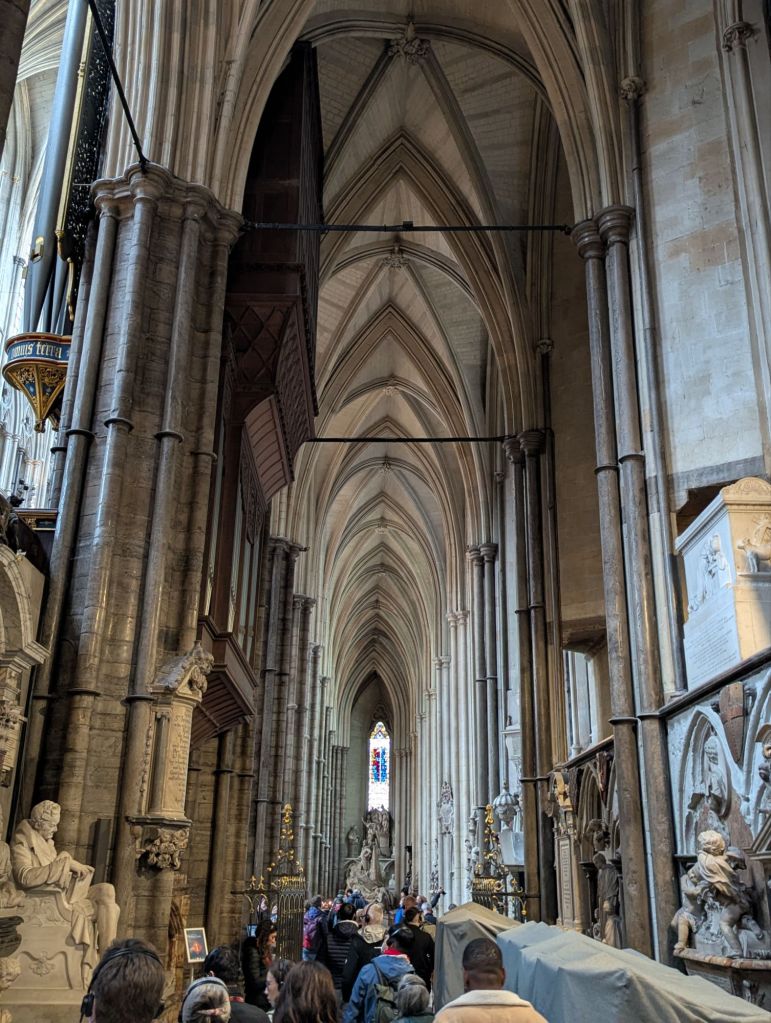
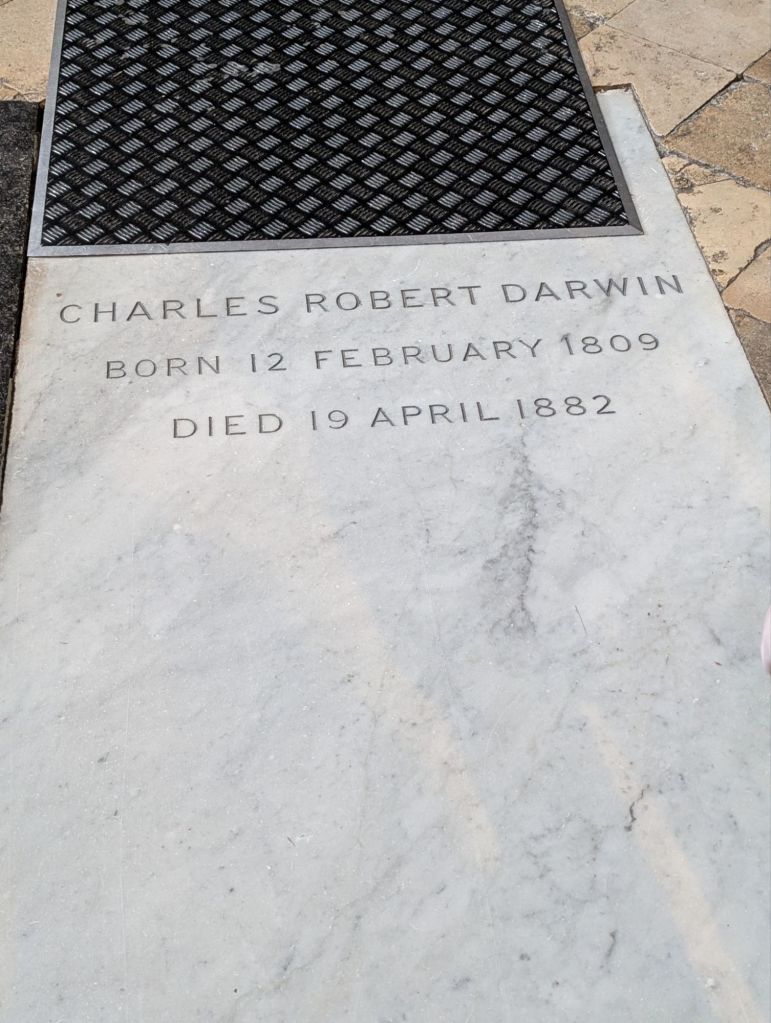
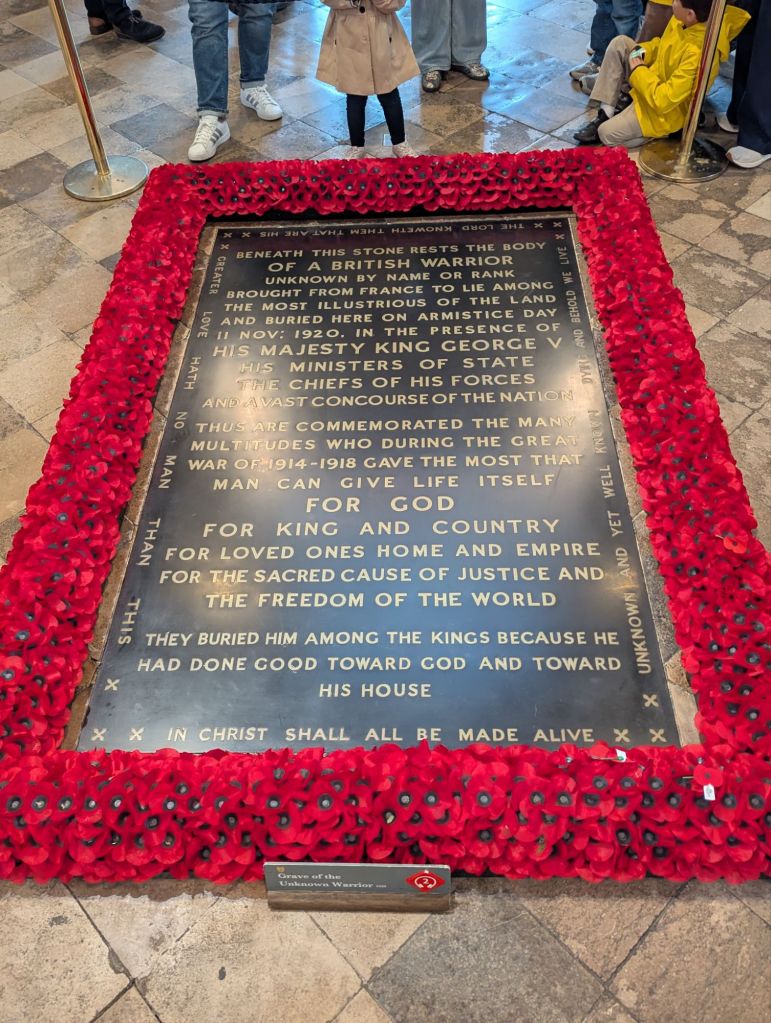
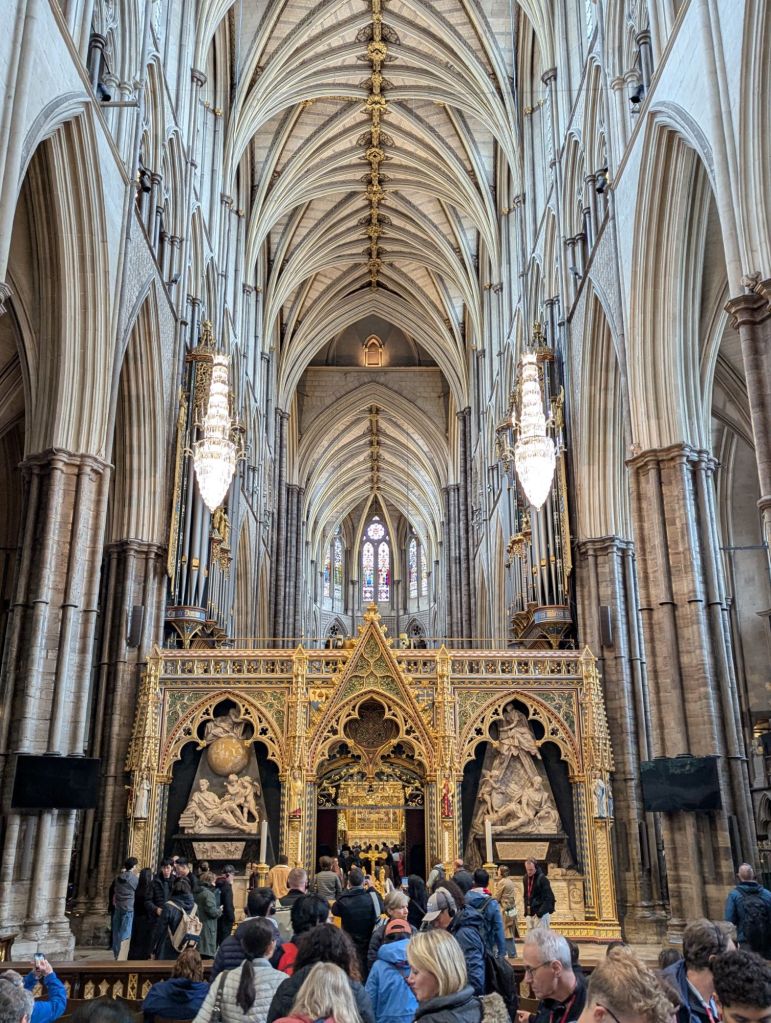
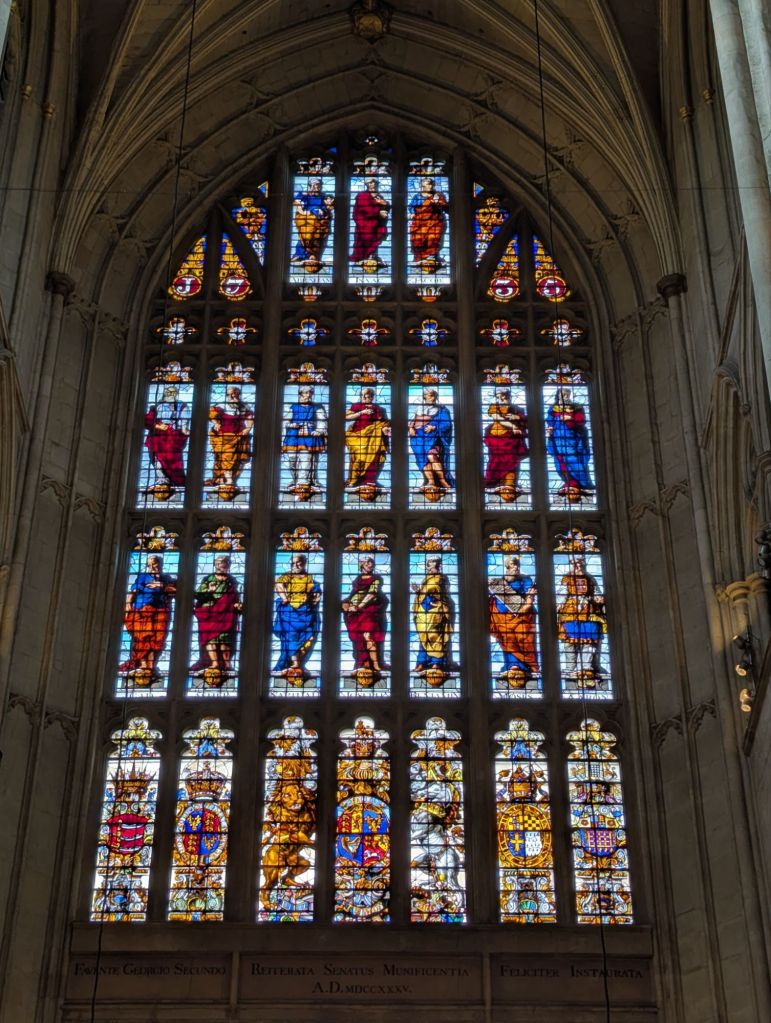
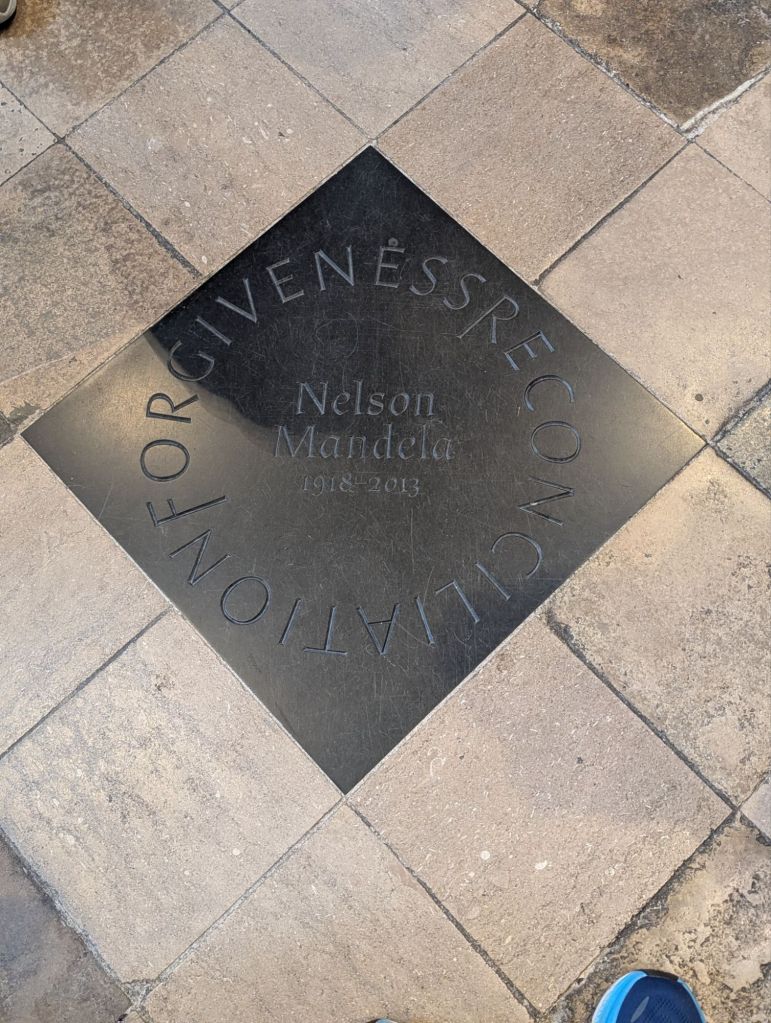
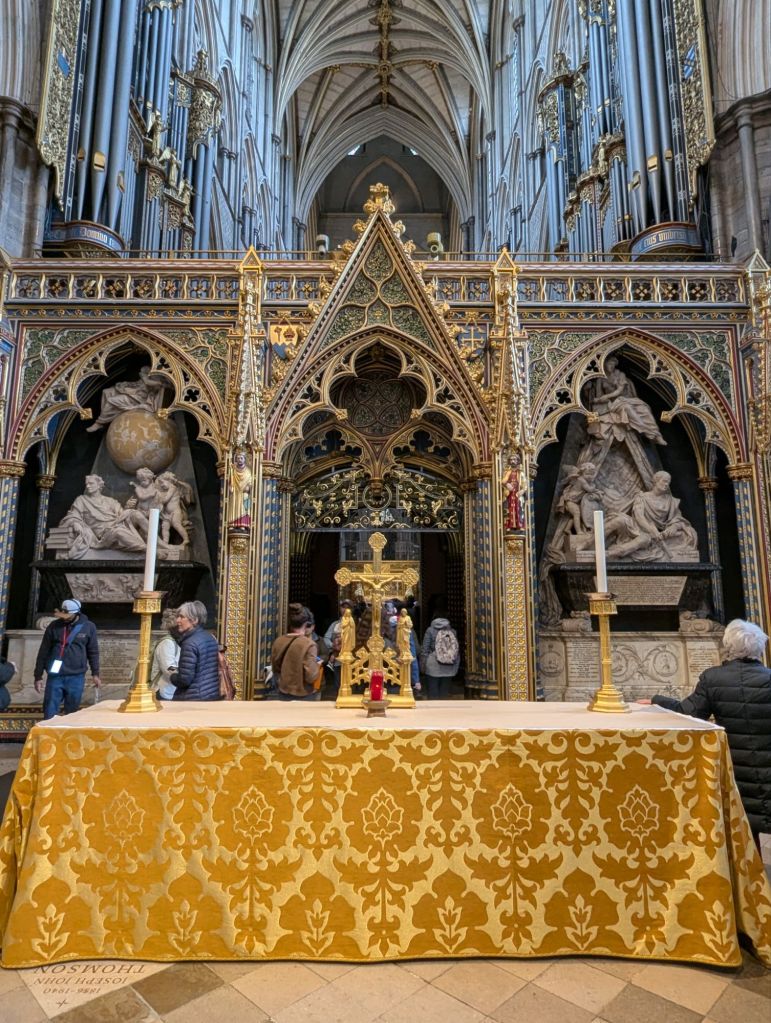
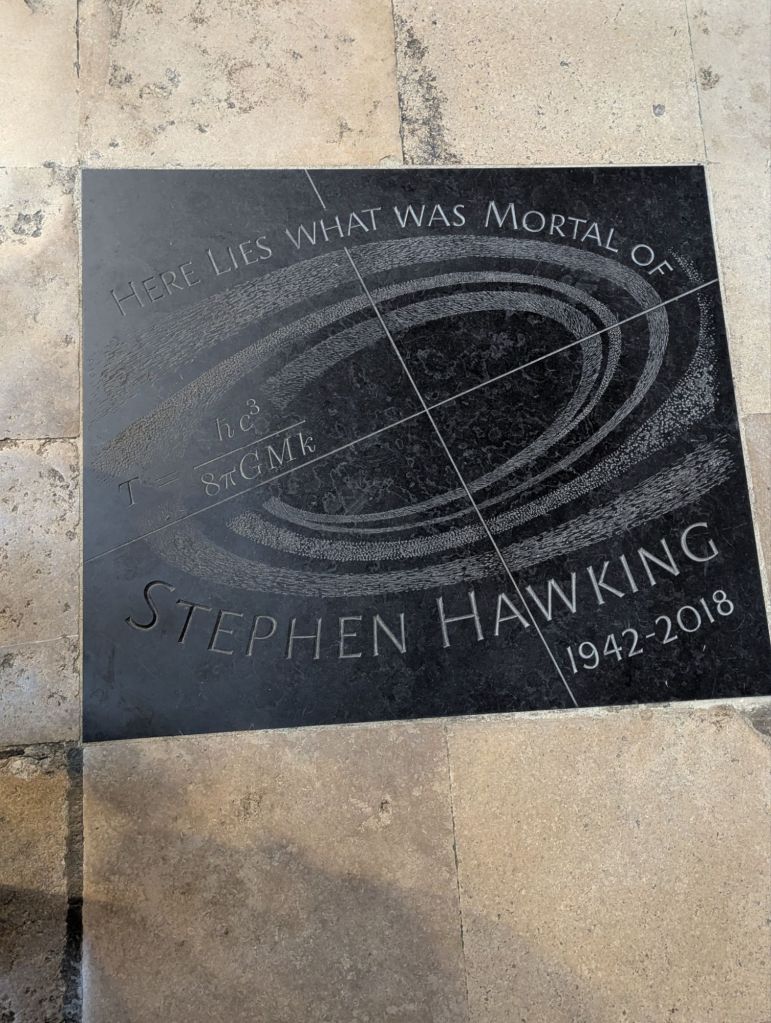
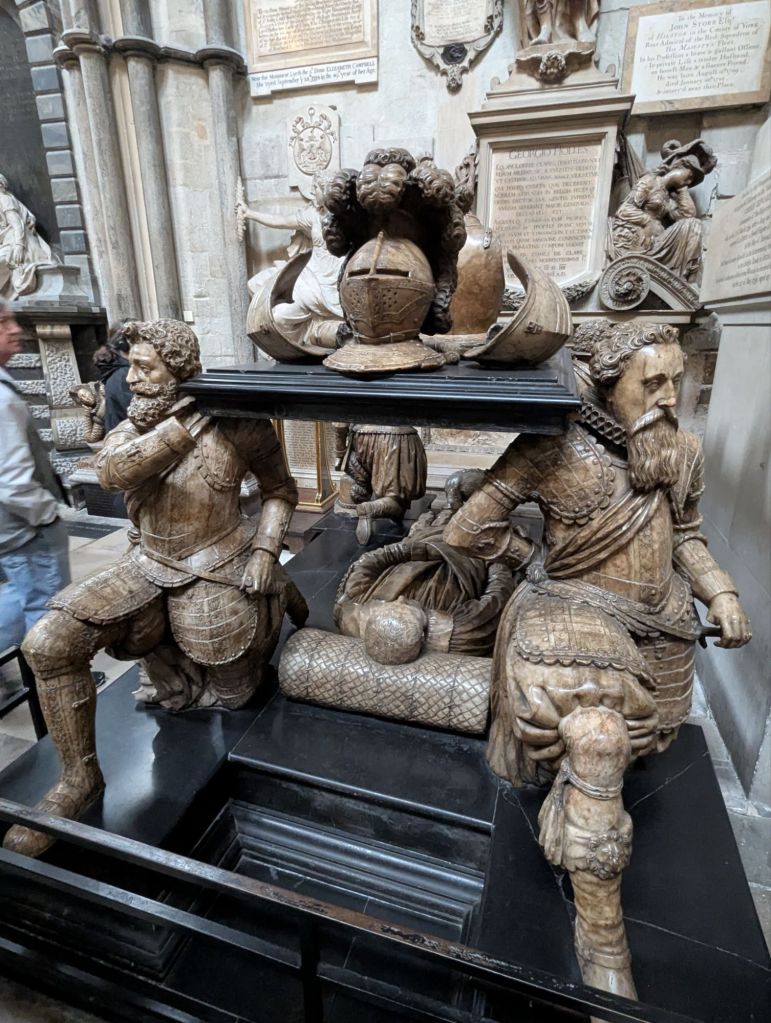
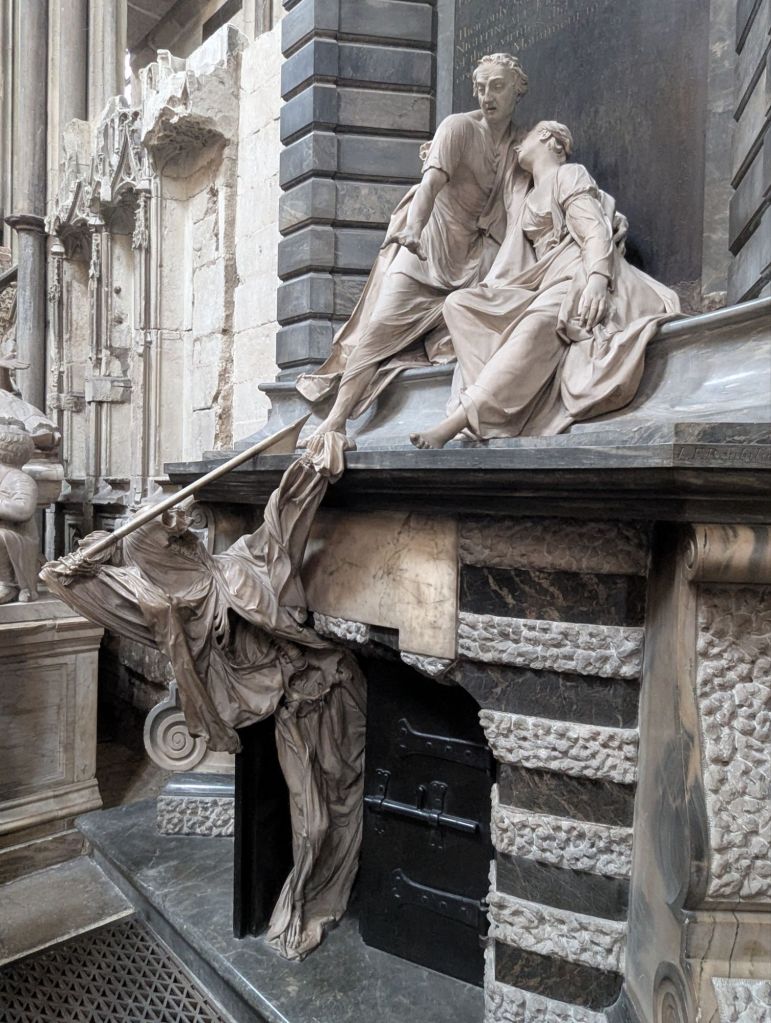
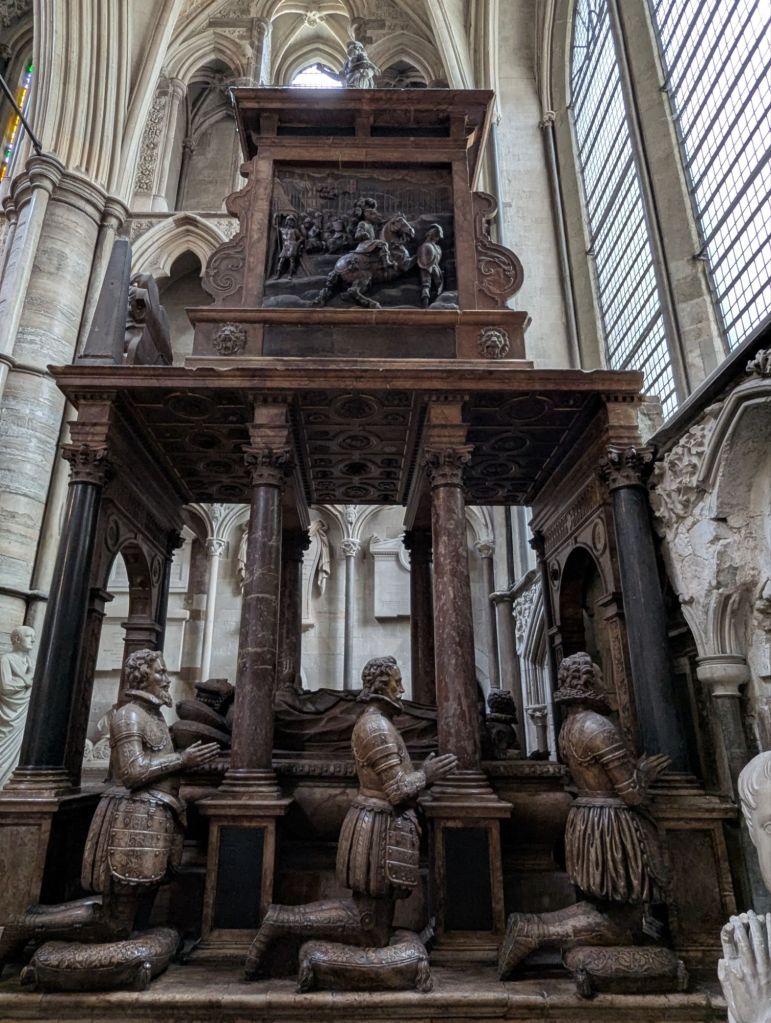
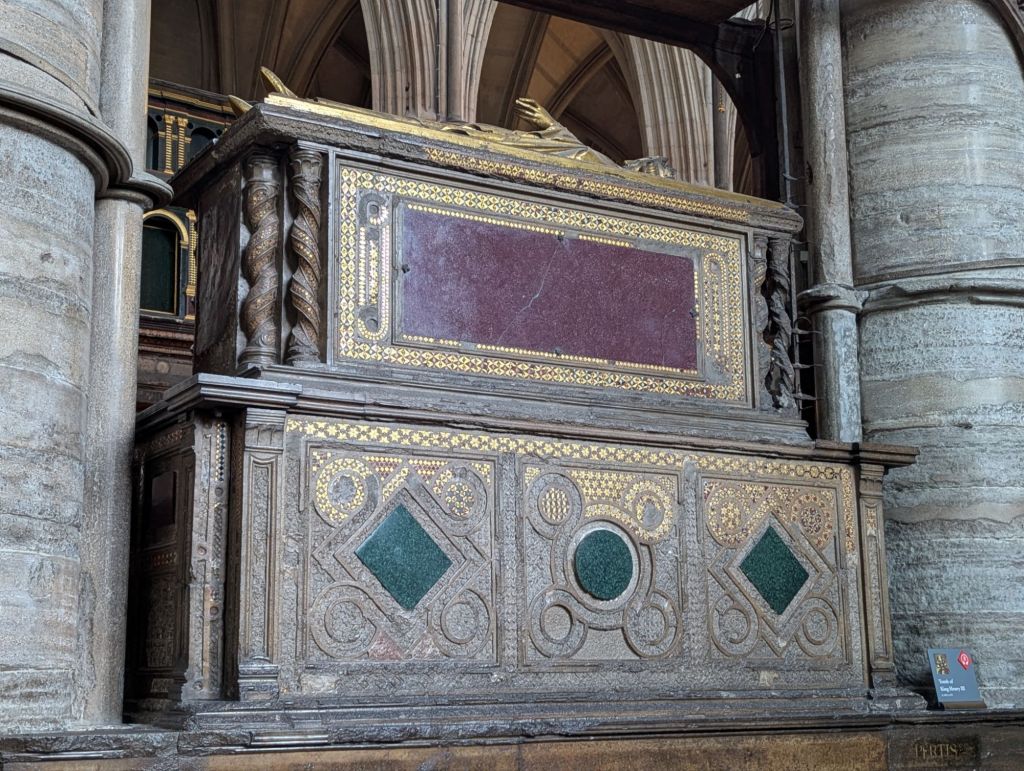
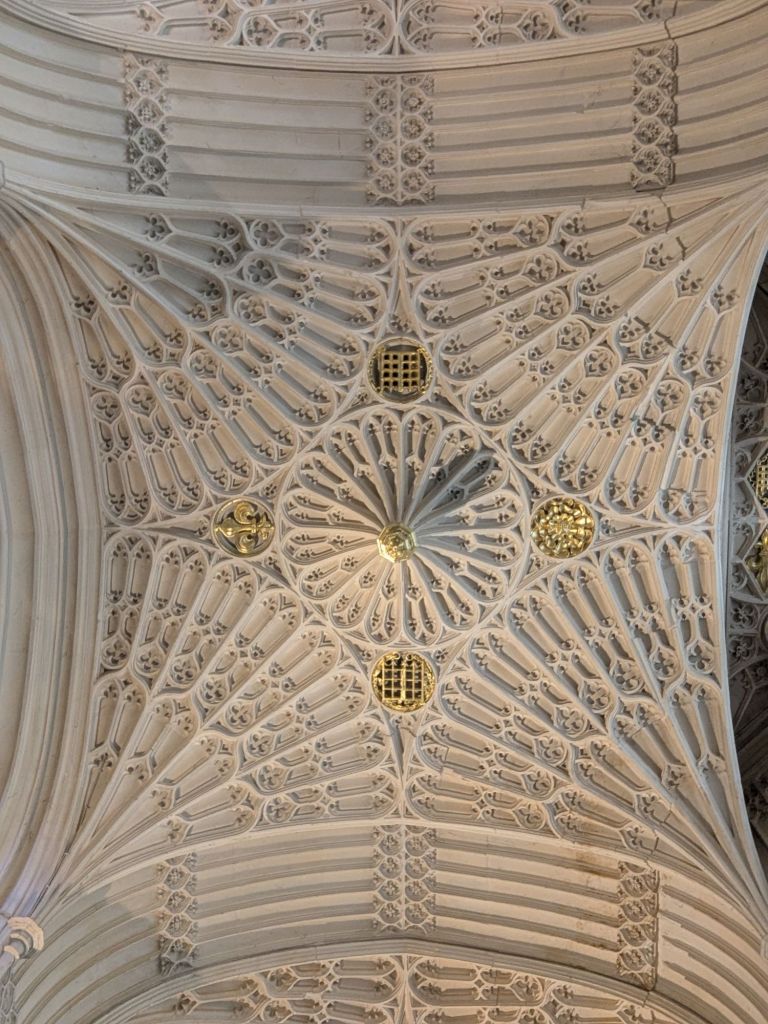
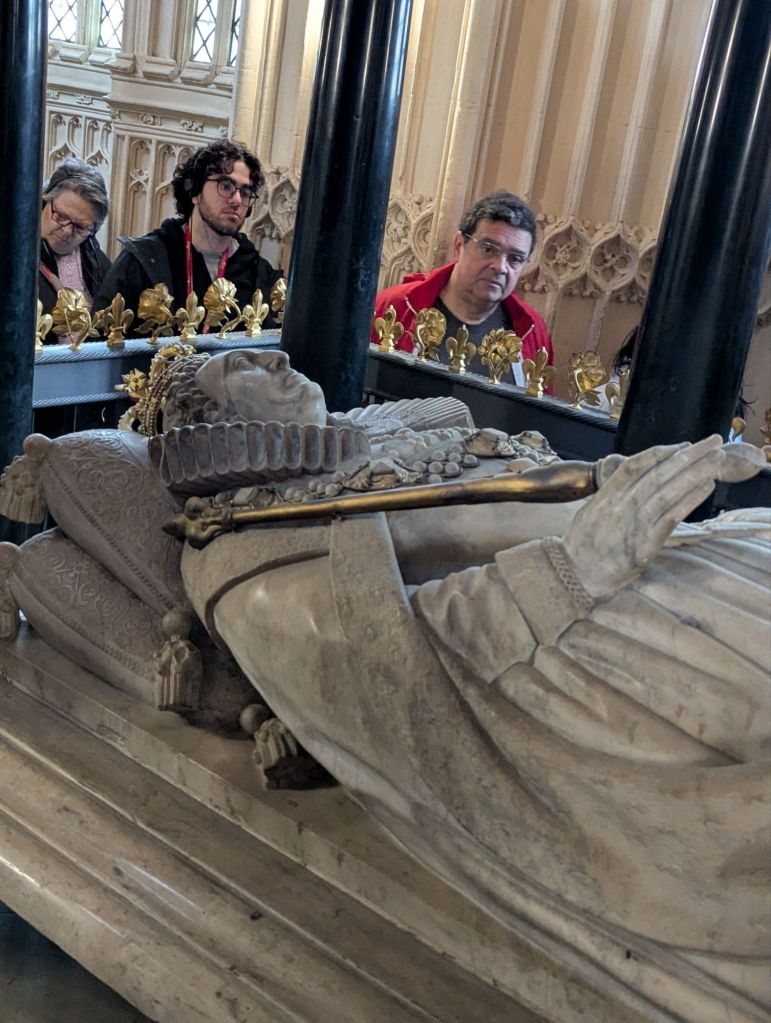
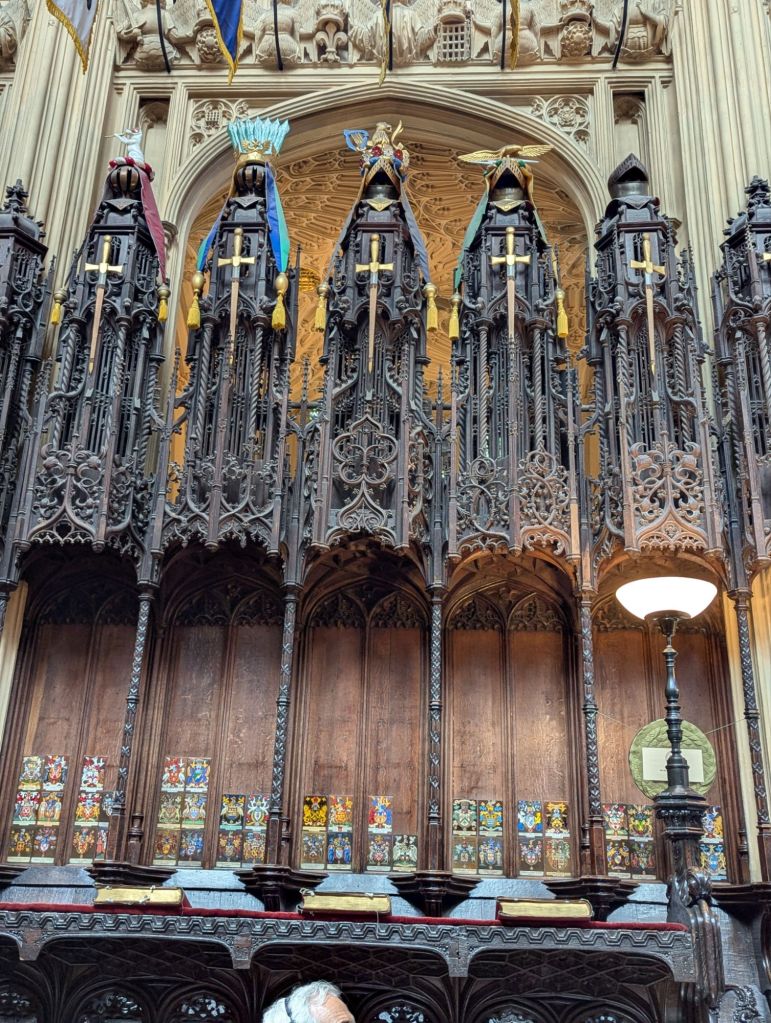
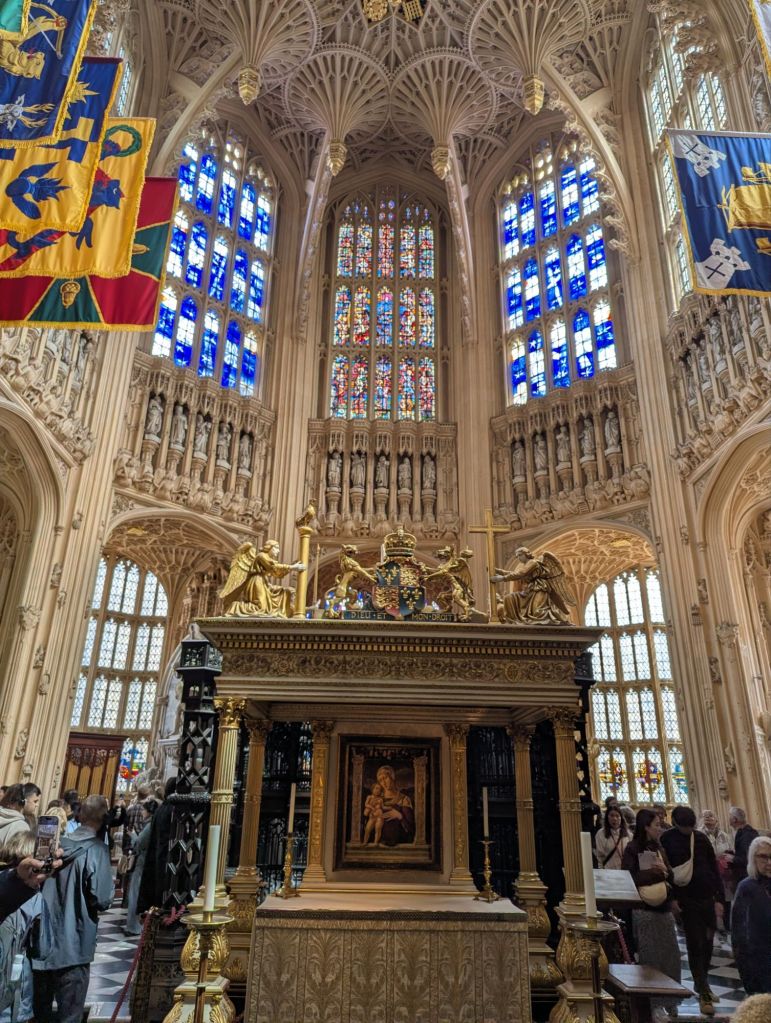
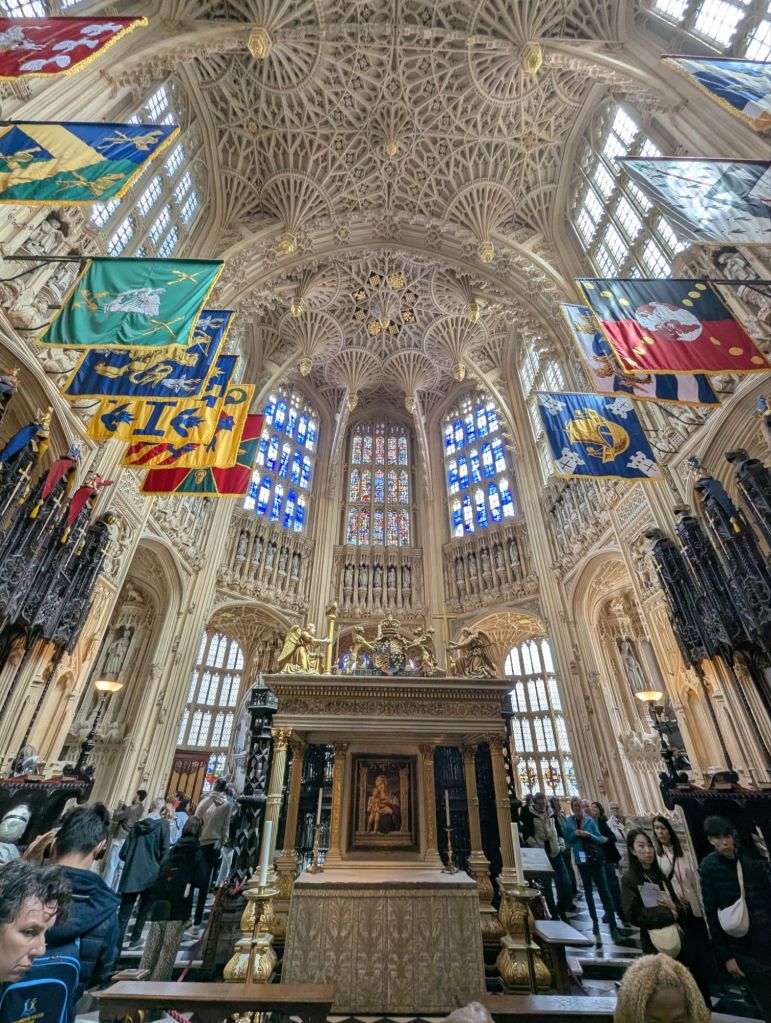
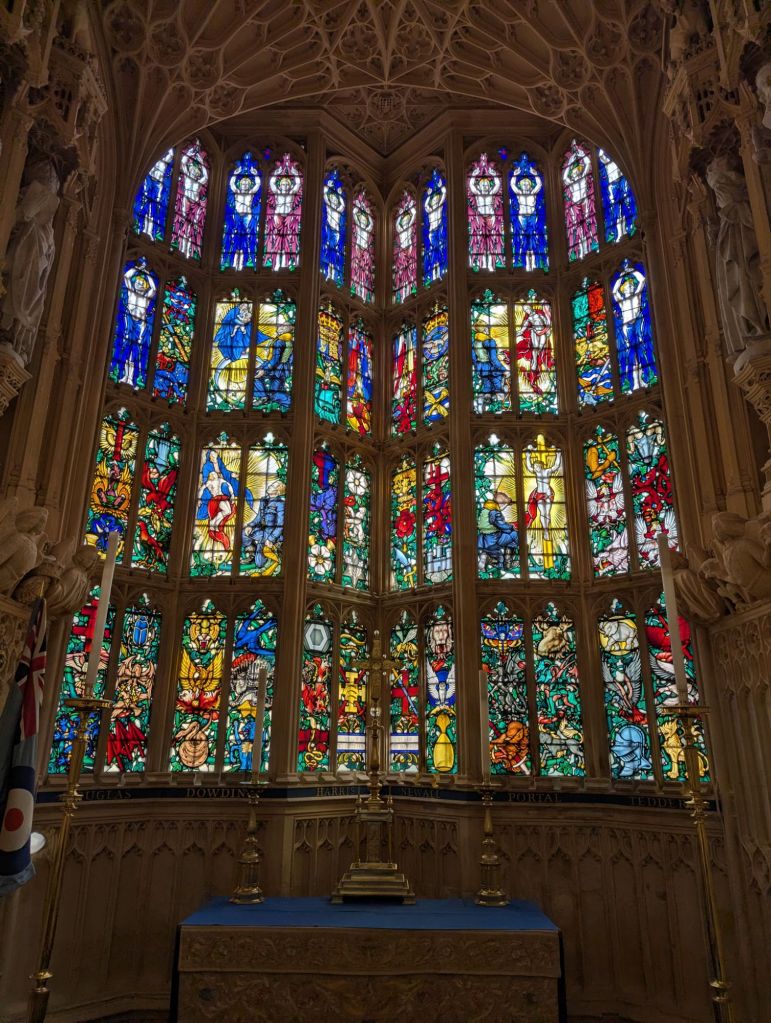
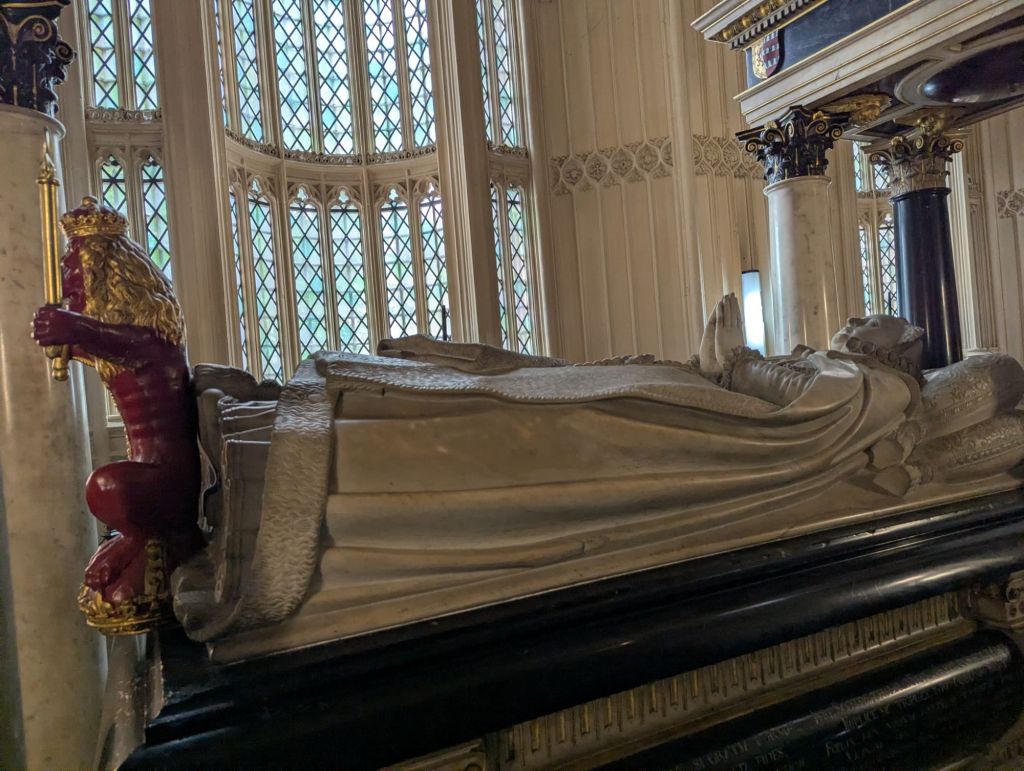
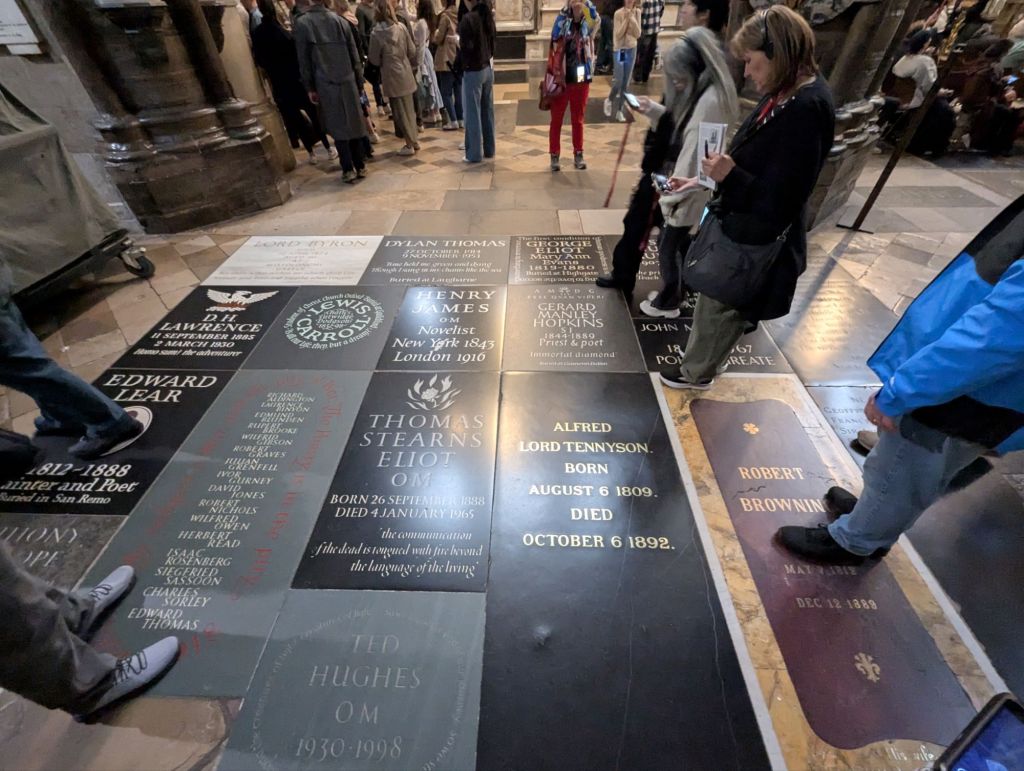
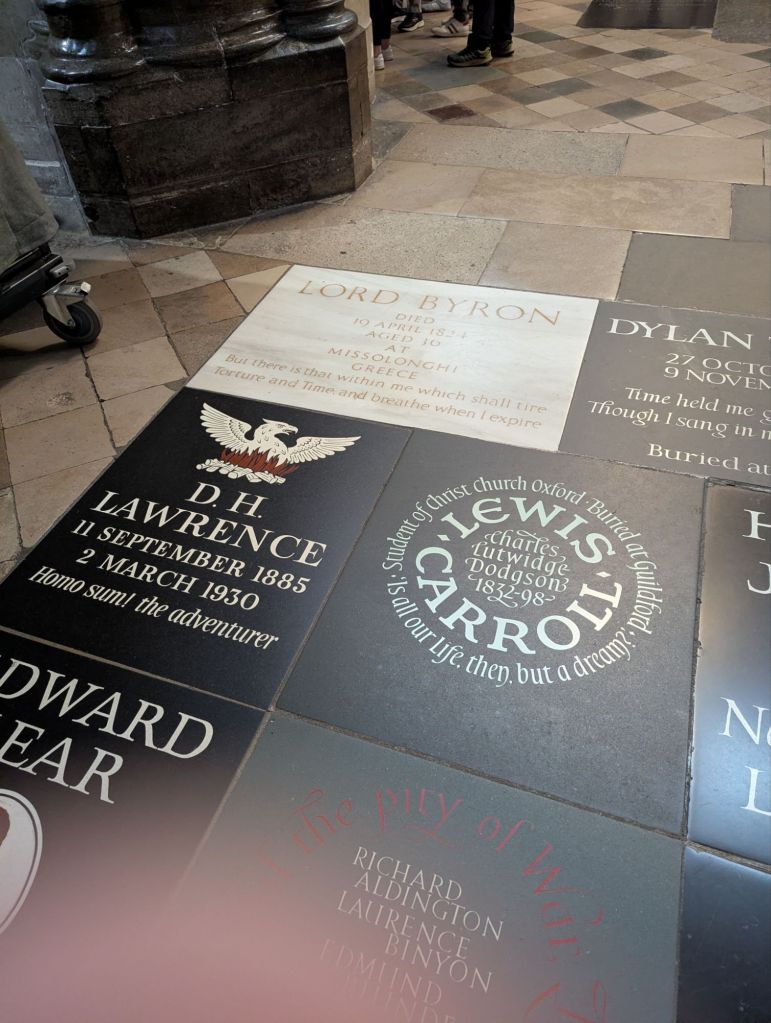
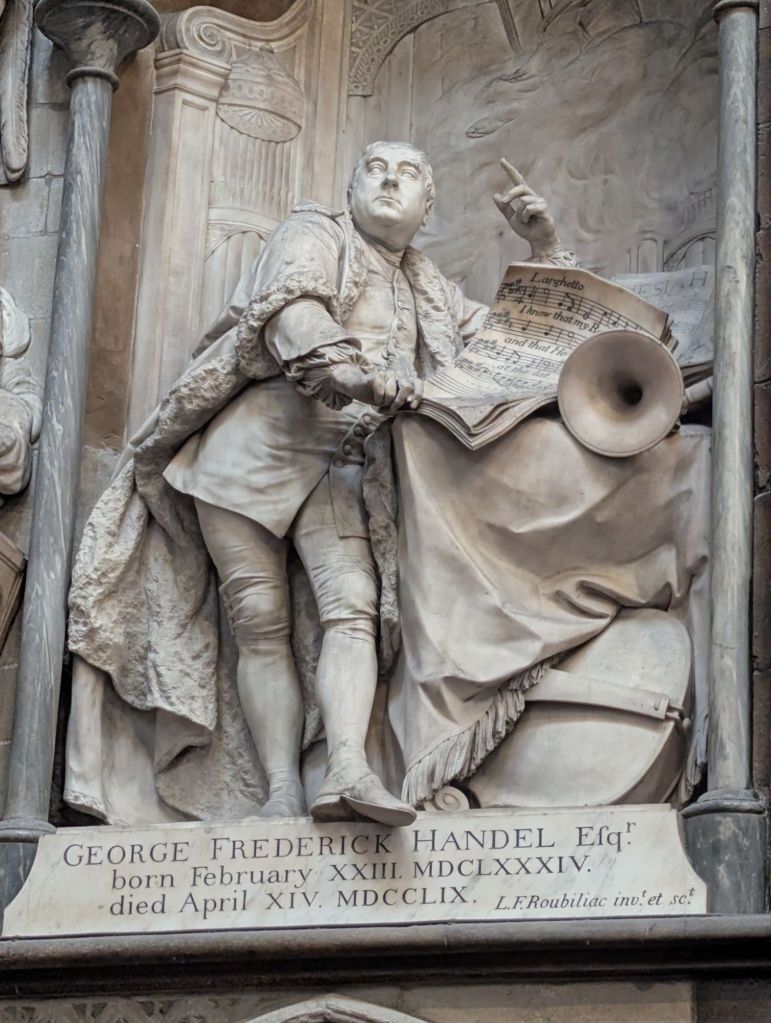
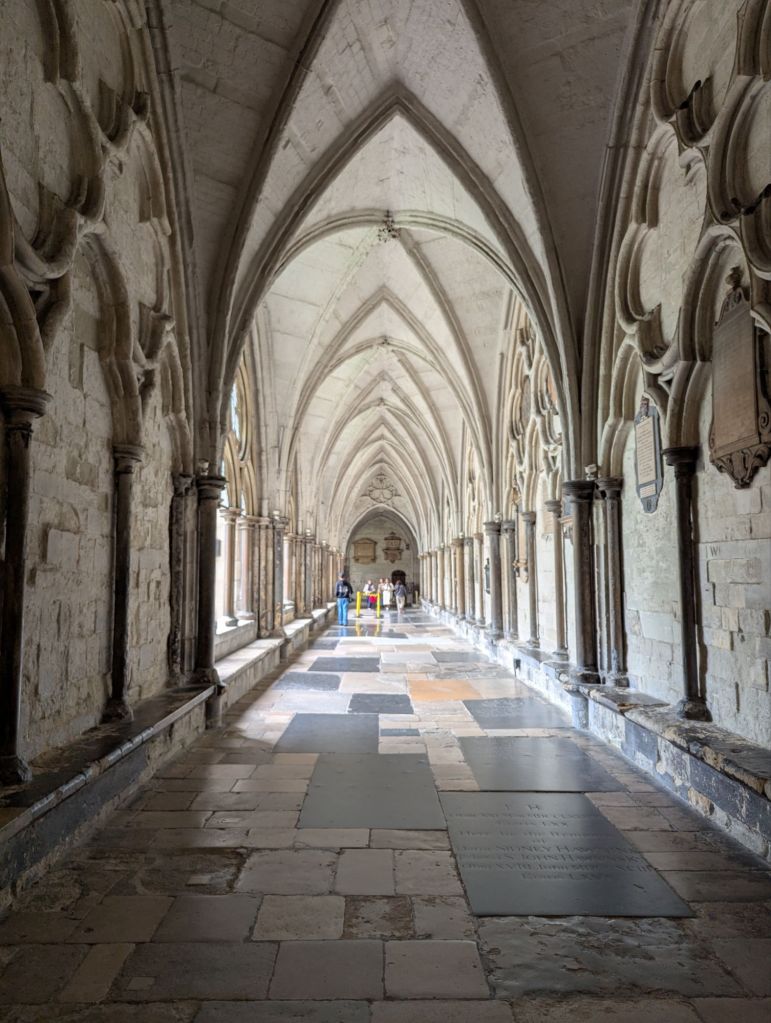
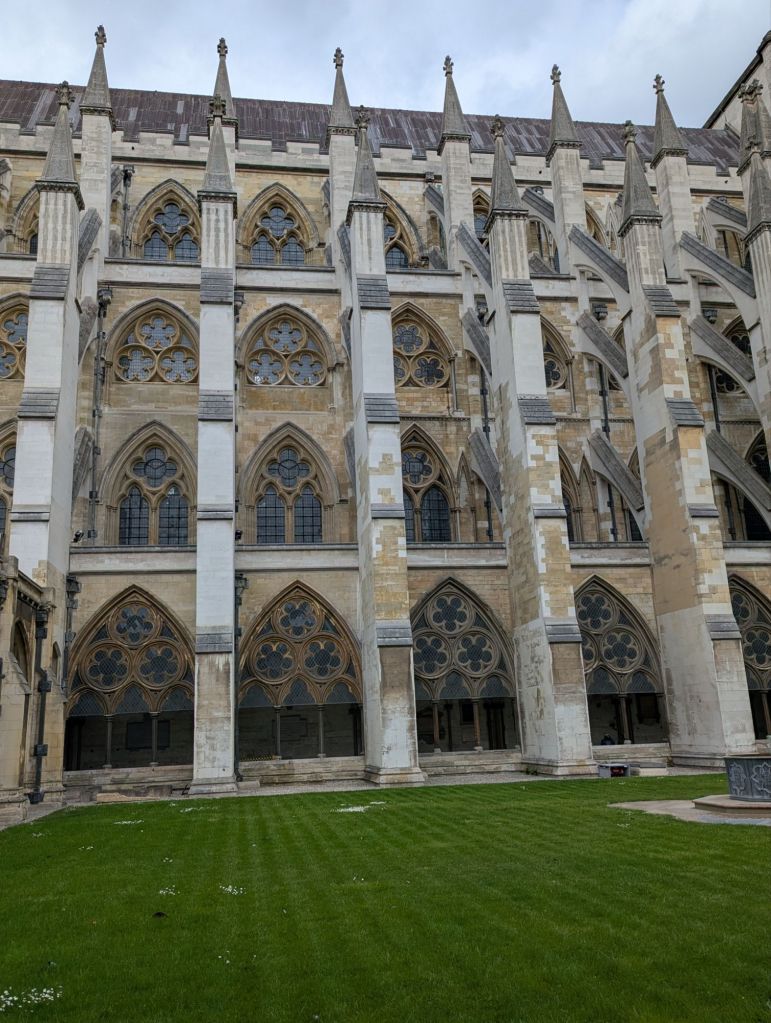
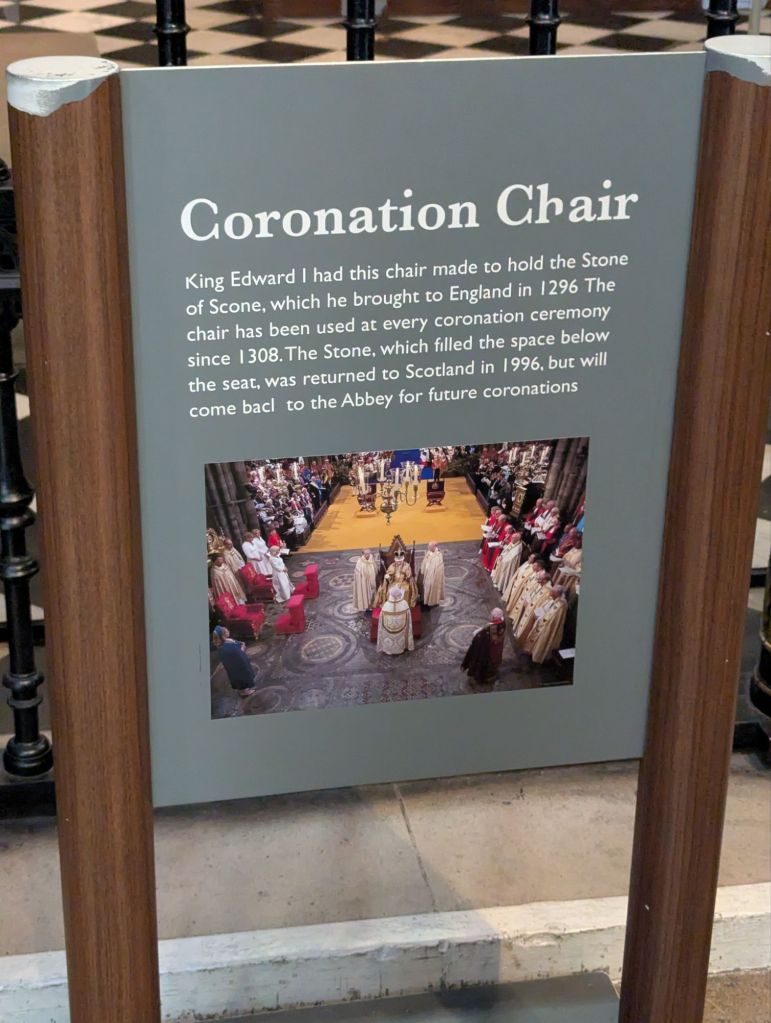
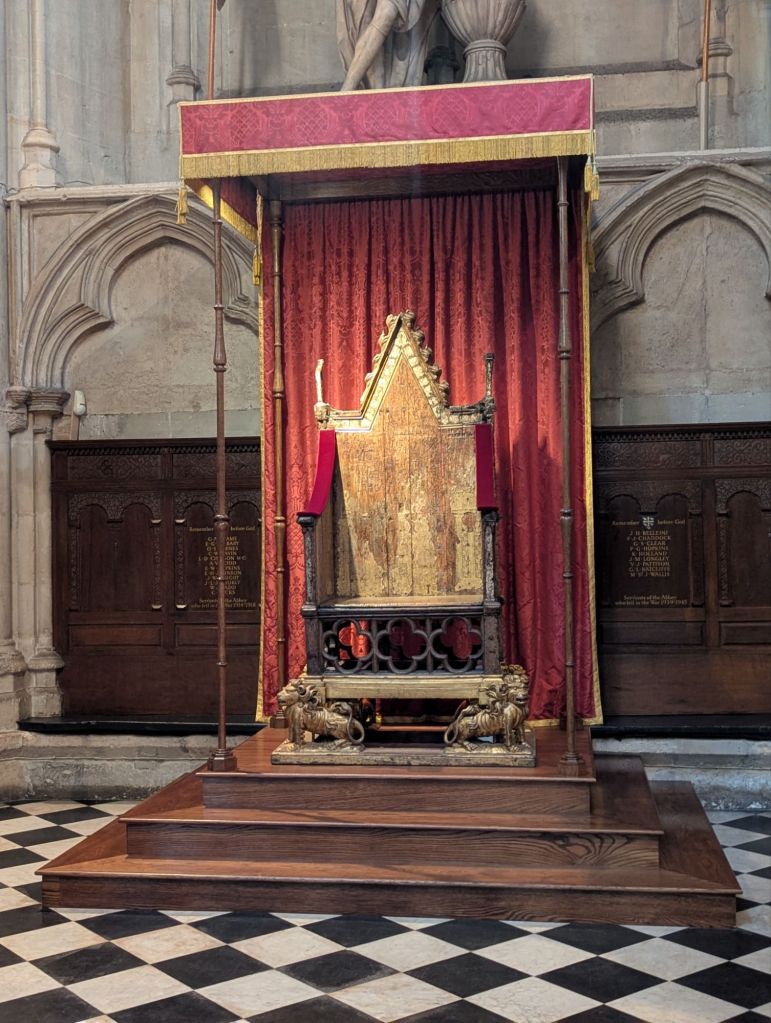
From there it was just a short walk to Westminster Abbey, where our timed-entry tickets allowed us to walk right in. We spent the next couple of hours exploring this enormous and historically significant church. Everywhere you looked there were memorials, statues, and tombs honoring Britain’s most famous figures. It truly felt like a who’s who of British history.

Several kings and queens are buried within the Abbey, along with scientists, military leaders, politicians, writers, and artists. One of our favorite areas was Poet’s Corner, filled with memorials to literary legends including Geoffrey Chaucer, Charles Dickens, Rudyard Kipling, and many others.
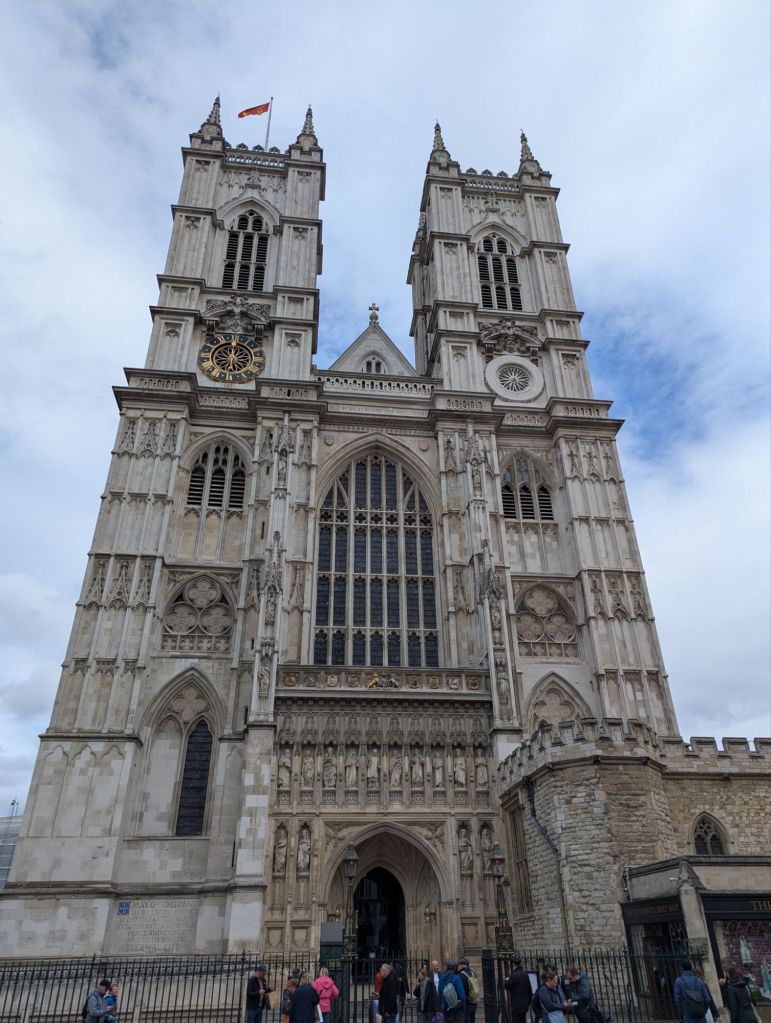
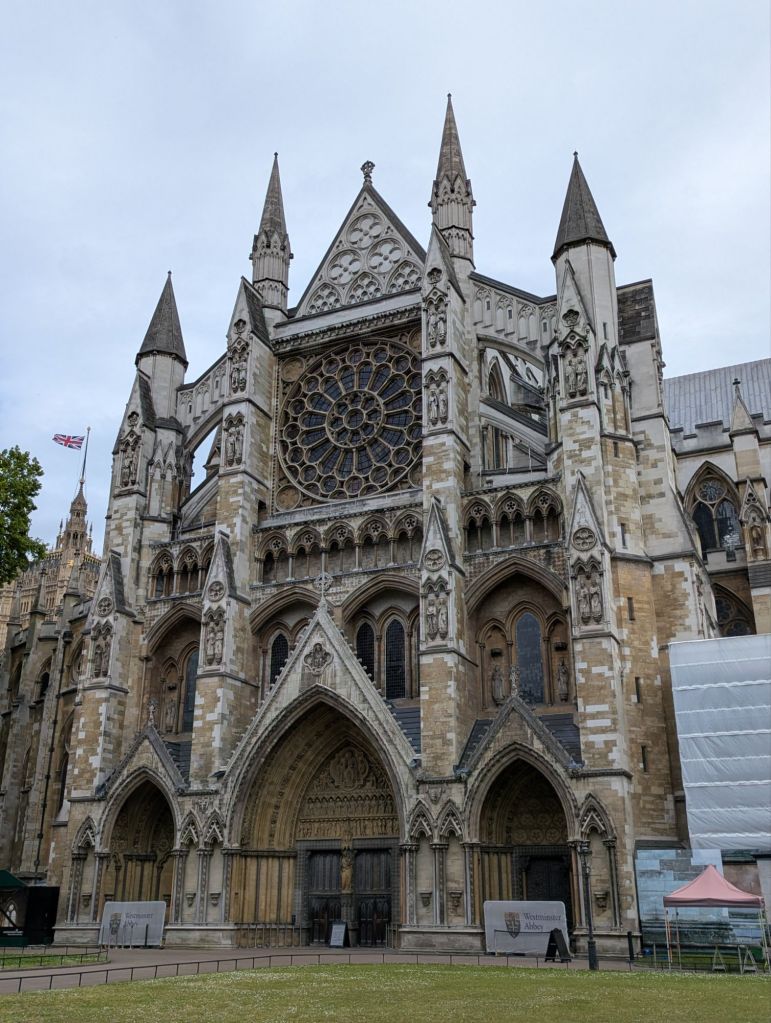
We had also purchased tickets for access to the Queen’s Diamond Jubilee Galleries, located high above the Abbey near the roofline. After climbing several flights of stairs, we were rewarded with incredible views overlooking the interior of the Abbey along with fascinating exhibits about its history and treasures. The galleries contained a number of historical artifacts, including a copy of the Magna Carta. Unfortunately, photography was not allowed, so you will just have to trust us when we say it was absolutely worth the extra ticket.

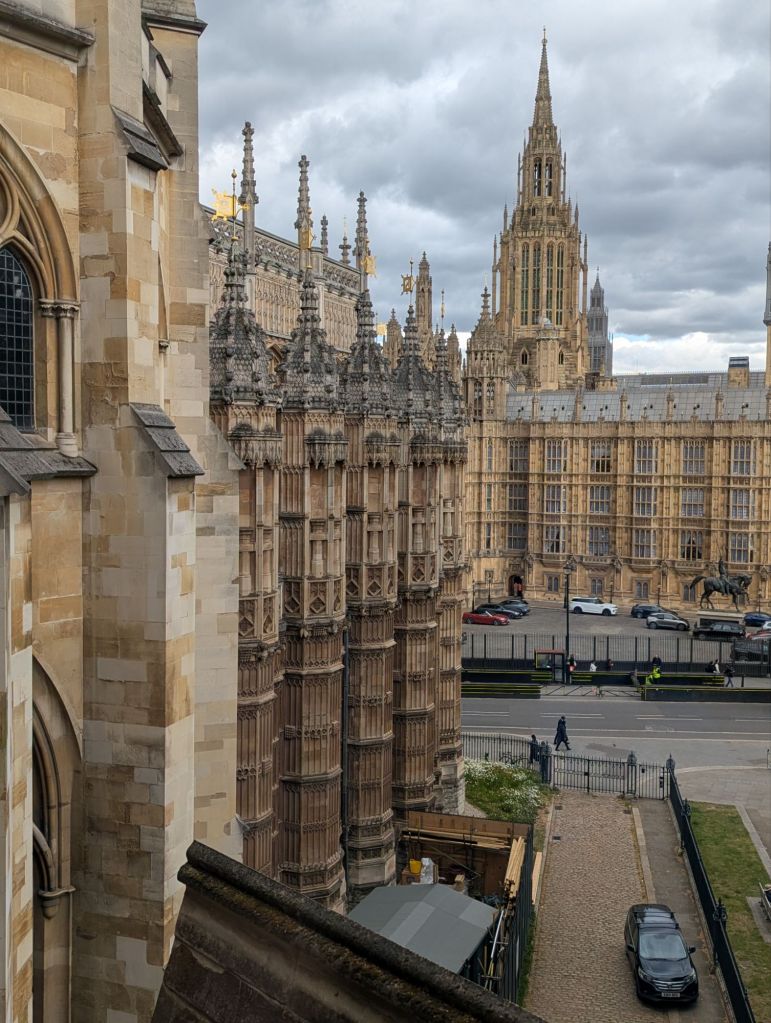
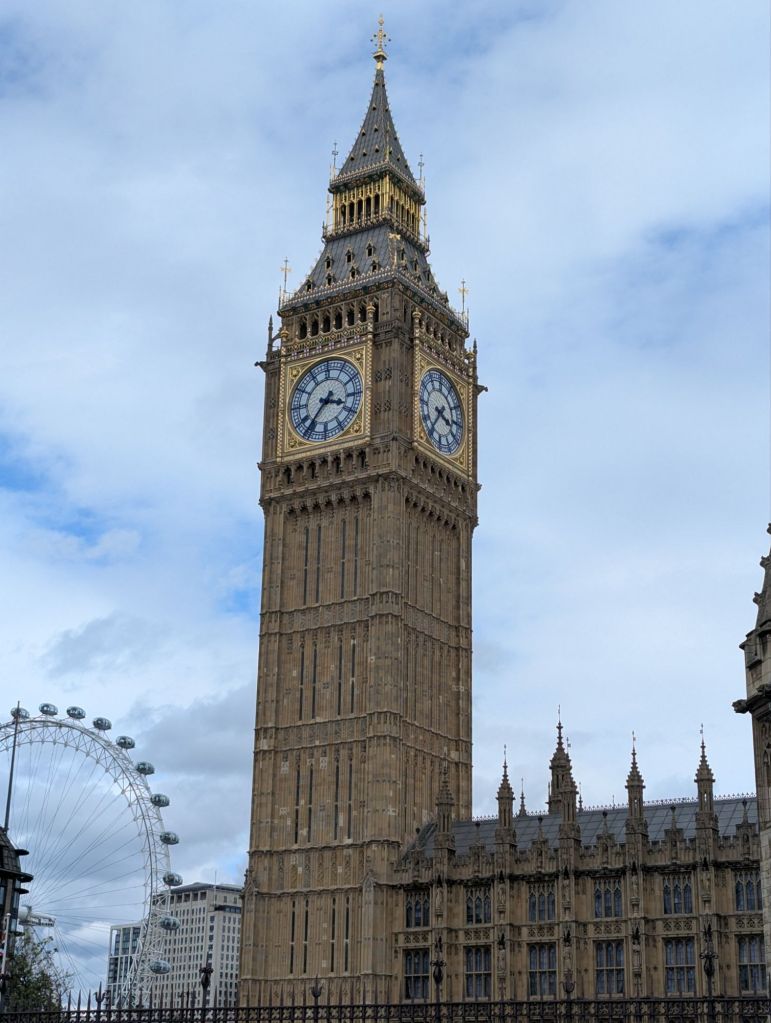
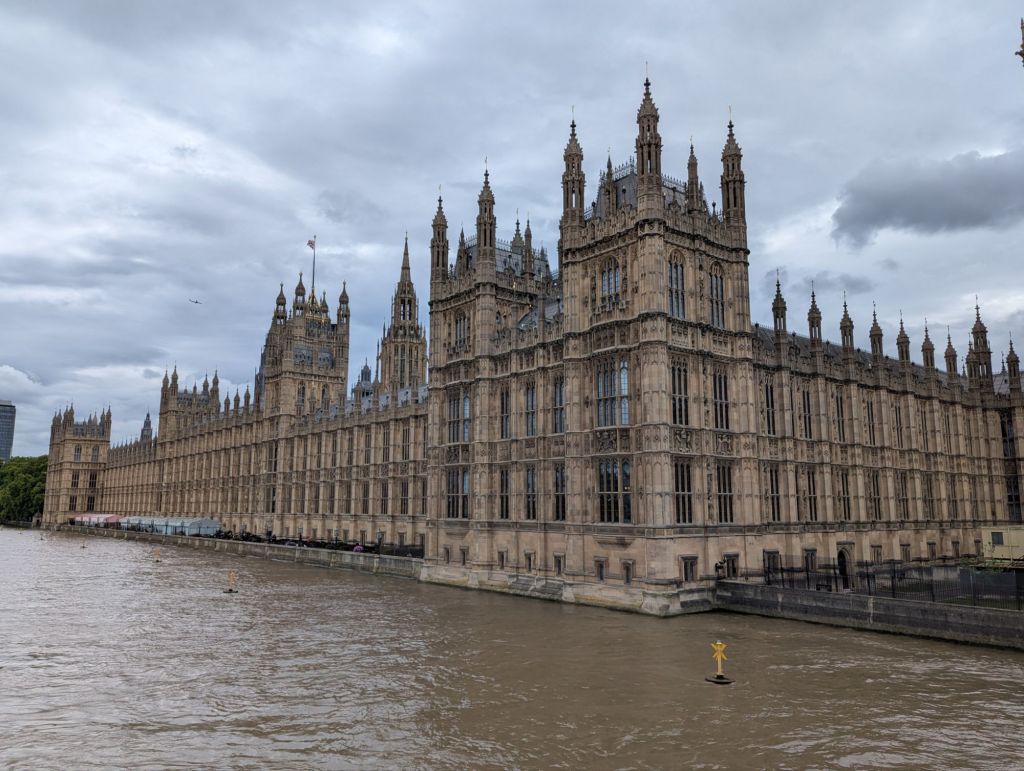
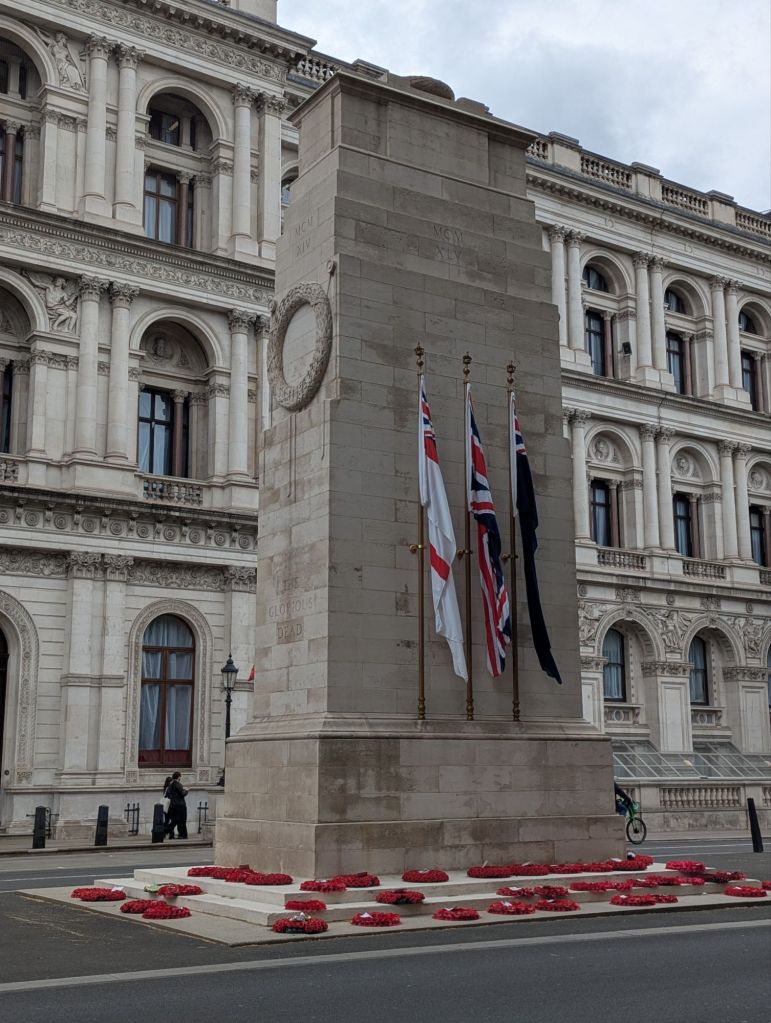
When we finished at the Abbey, we realized we were perfectly positioned to follow another Rick Steves walking tour, this one through Westminster. The route took us past Big Ben, the Houses of Parliament, Parliament Square, and up Whitehall past numerous monuments and government buildings.

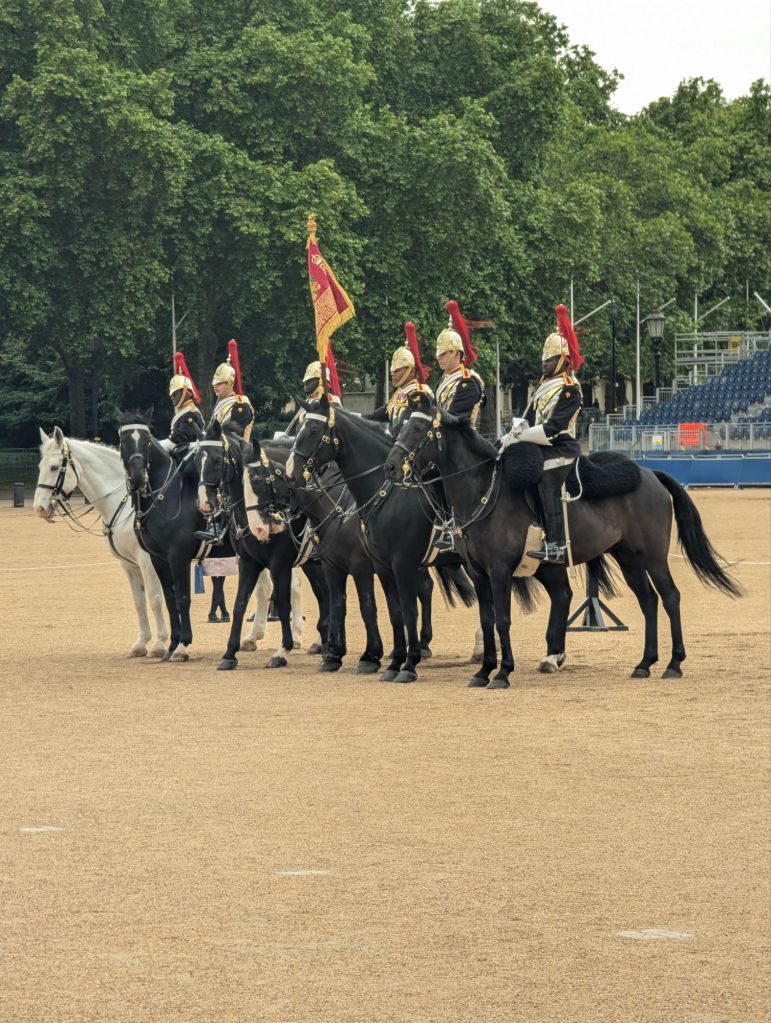
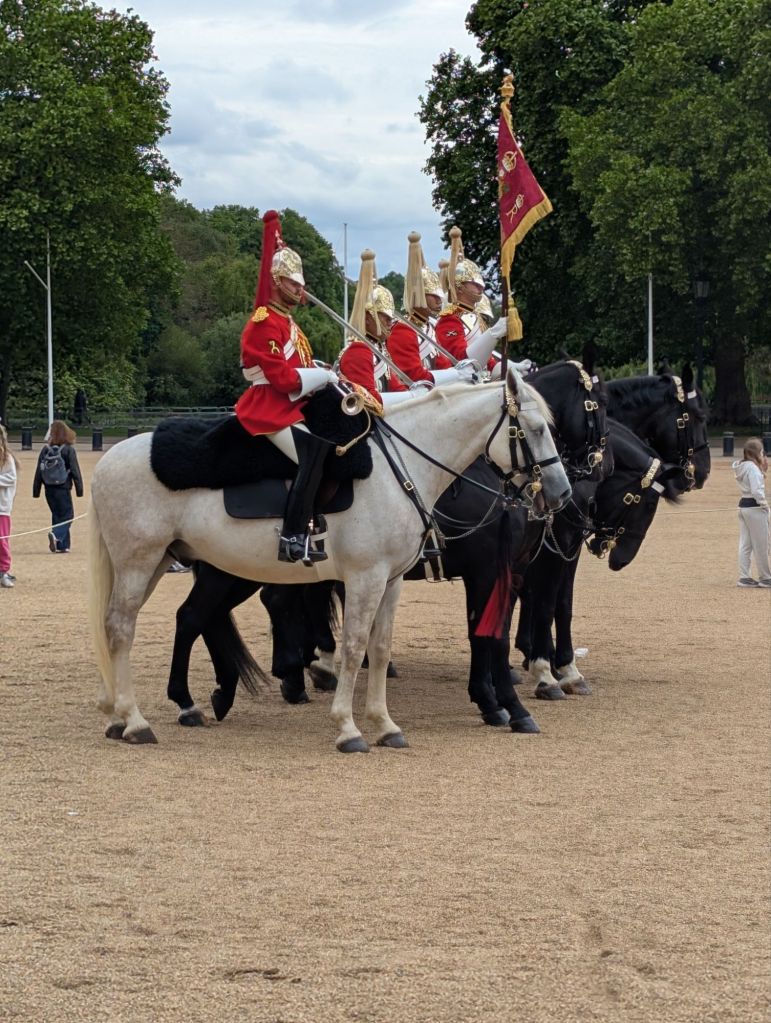
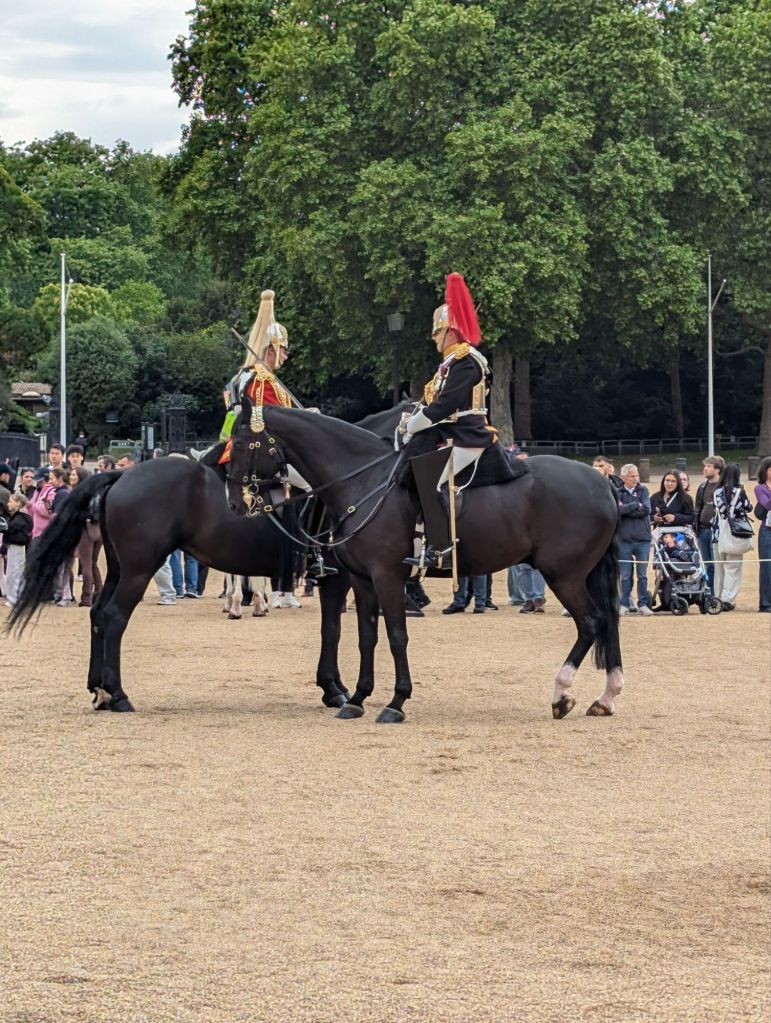
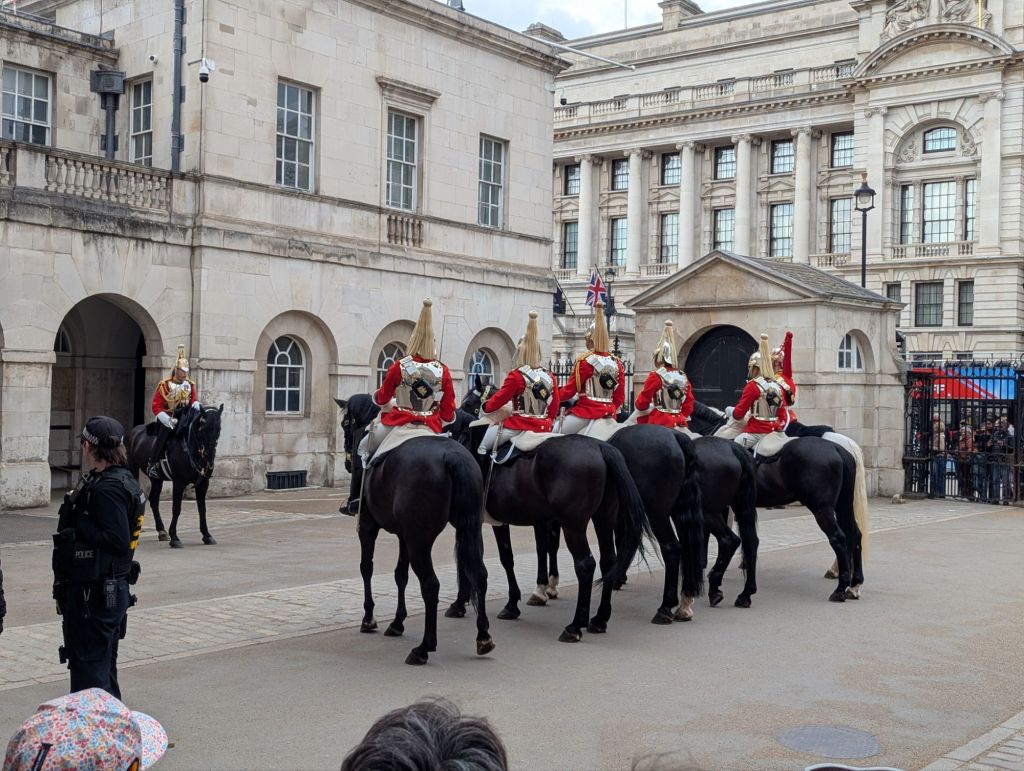
Quite by accident, our timing once again worked out perfectly. We arrived at the Royal Horse Guards just as the Dismounting Ceremony was beginning for the day. We watched as the mounted guards were relieved of duty, dismounted, and led their horses back in for the evening. It felt like one of those unexpected travel moments you could never really plan for.

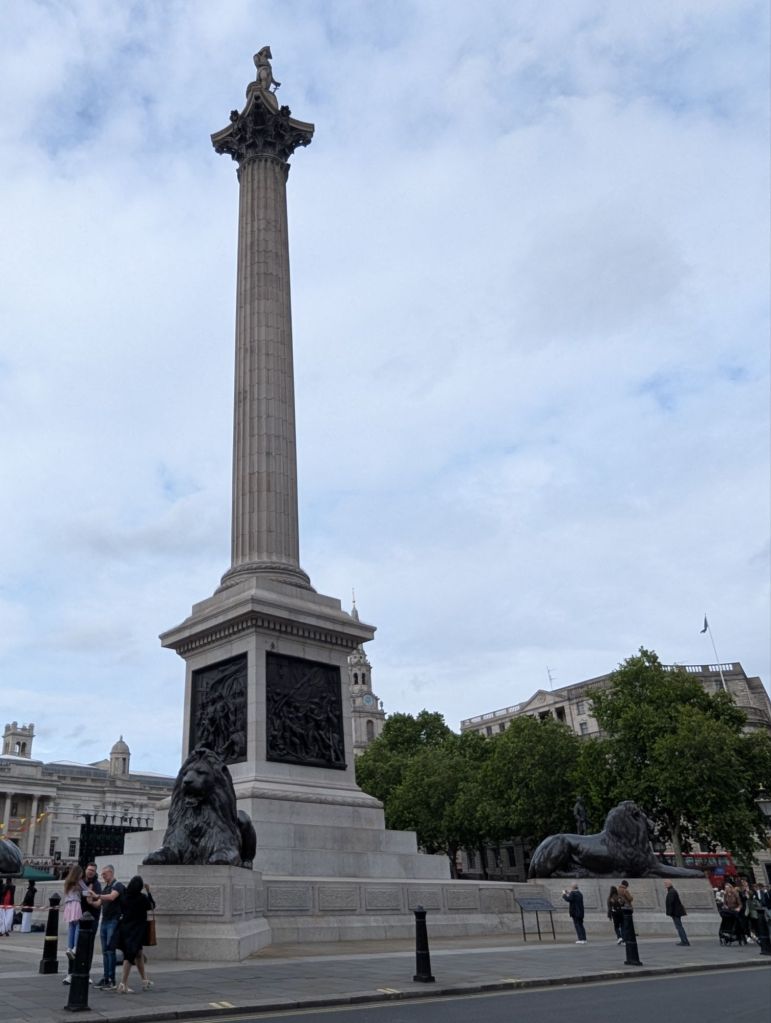
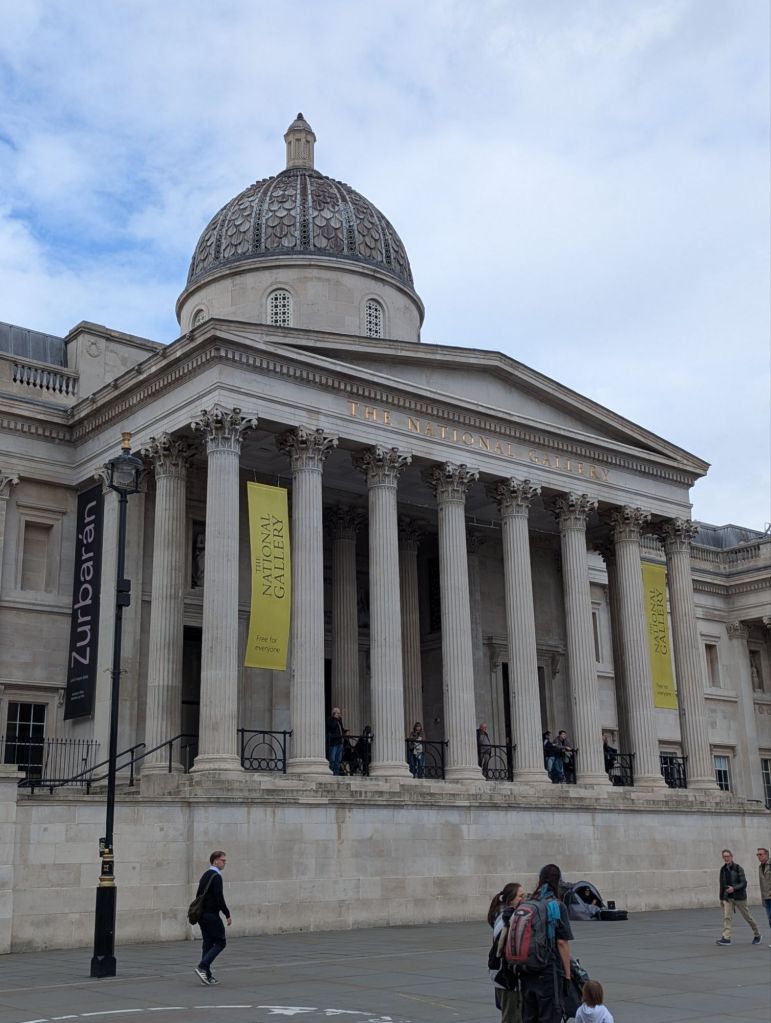
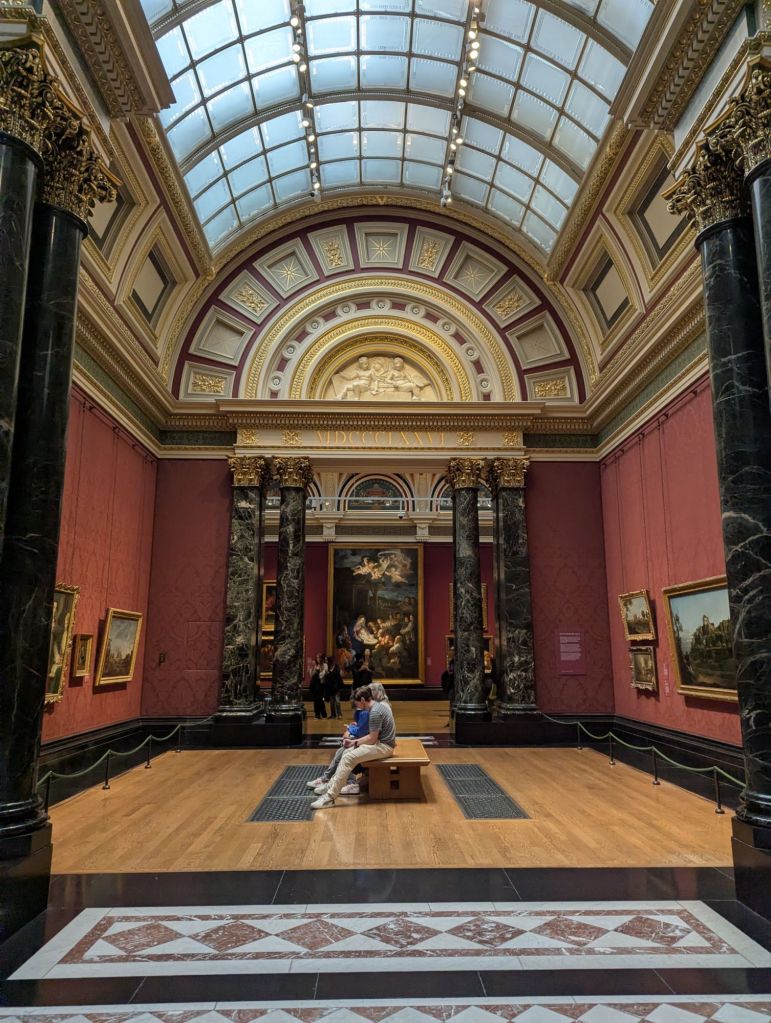
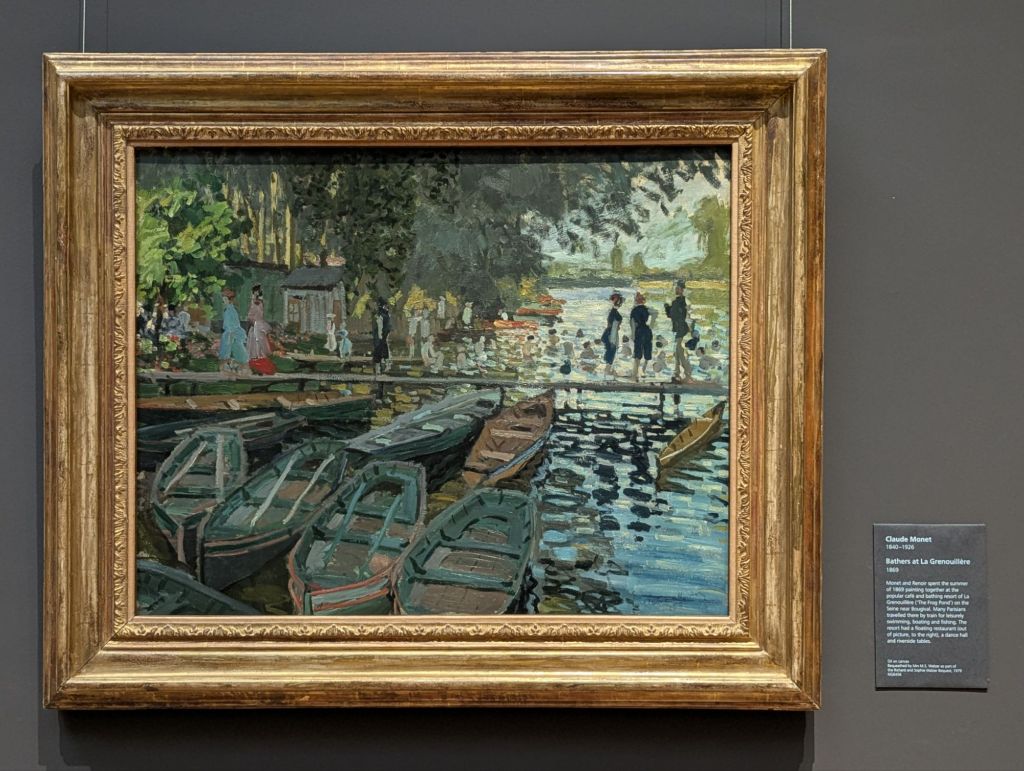
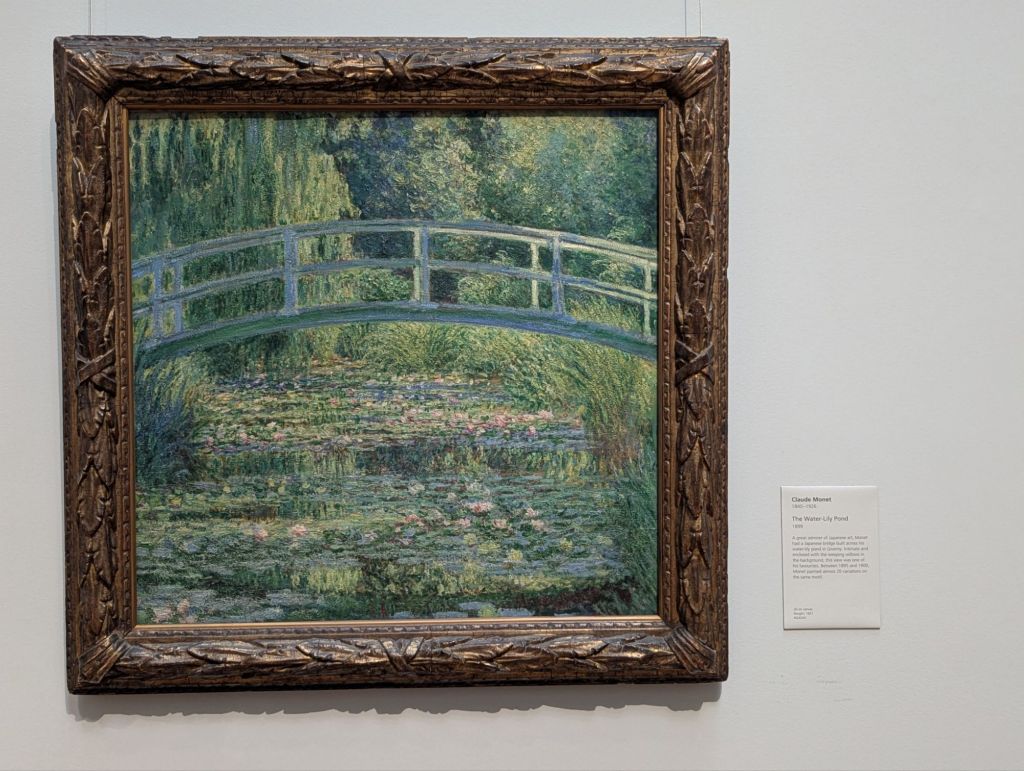
Our walk eventually brought us to Trafalgar Square, where we still had a little time before dinner. Since the National Gallery sits right on the square and offers free admission, we decided to spend about 45 minutes exploring. We headed directly to the Impressionist and Post-Impressionist rooms and enjoyed seeing works by artists whose paintings we instantly recognized. It was a quick visit, but a wonderful one.

For dinner, we stopped at a pub in London’s West End before heading to the Dominion Theatre to see The Devil Wears Prada. The musical follows the same basic storyline as the movie and features music by Sir Elton John. It was a fun and entertaining production and seemed especially timely with the sequel now playing in movie theaters.
After the show, we enjoyed a final 20-minute walk back to our hotel through the London streets, adding a few more steps to an already full day before calling it a night and getting ready for another day of adventures in London.

Categories: 2026 England Adventure | Tags: , , , , , , , , , | Leave a comment

Day 14 in England – A Perfectly British Day: Stonehenge, Scones, and Rain

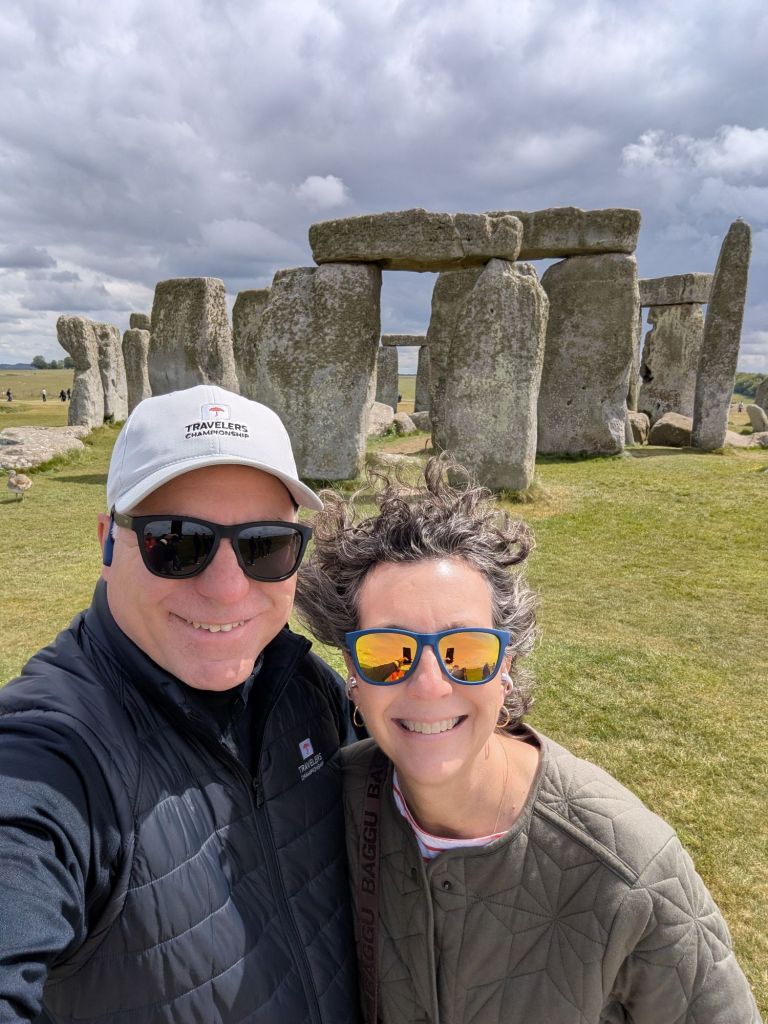
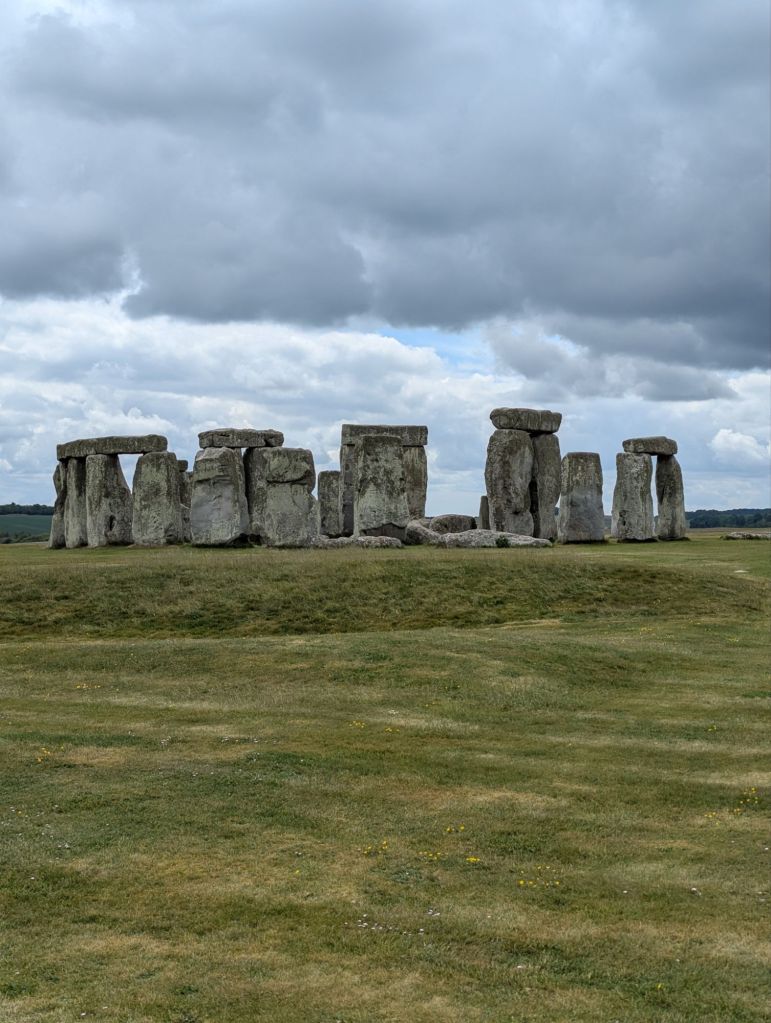
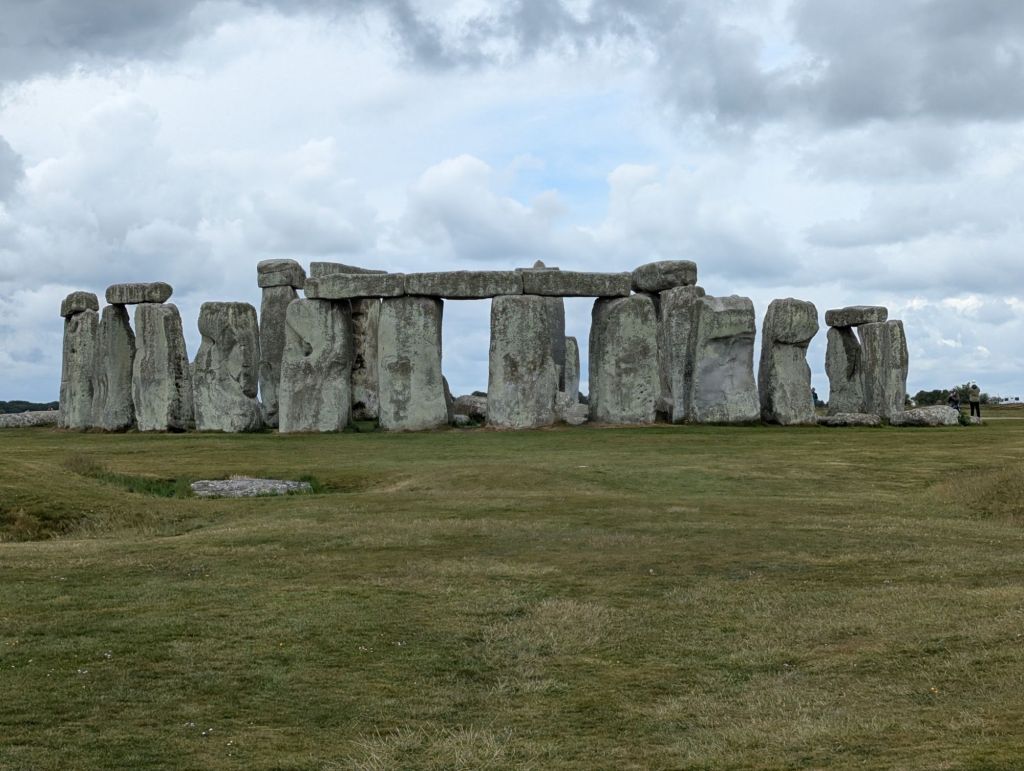
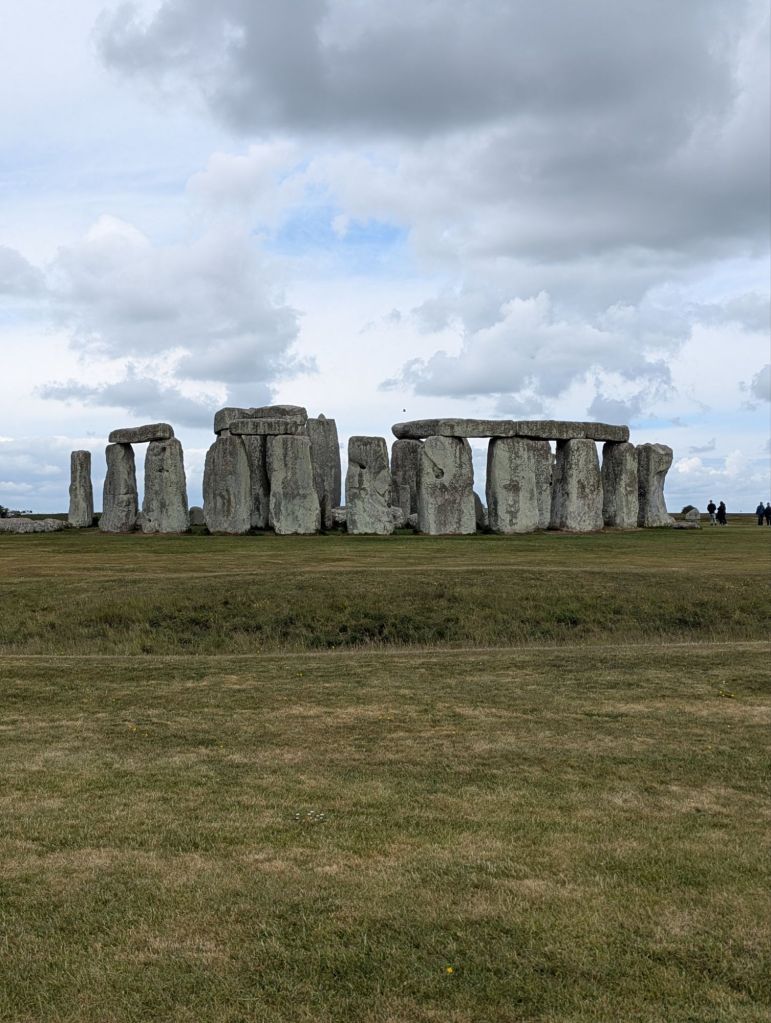
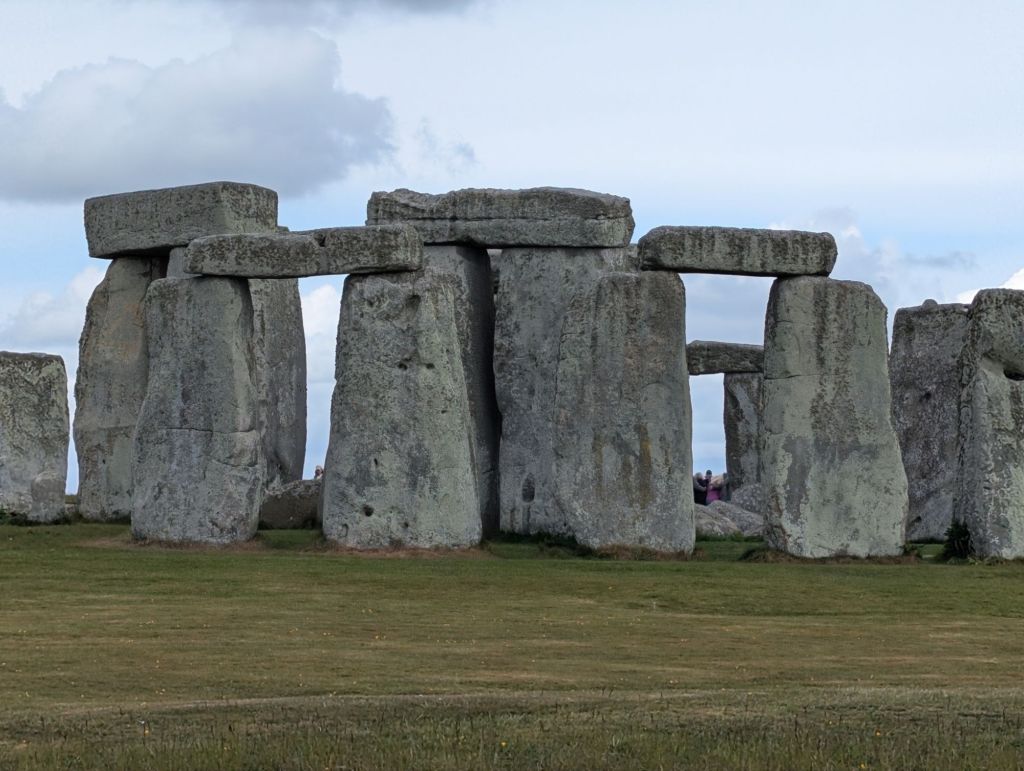
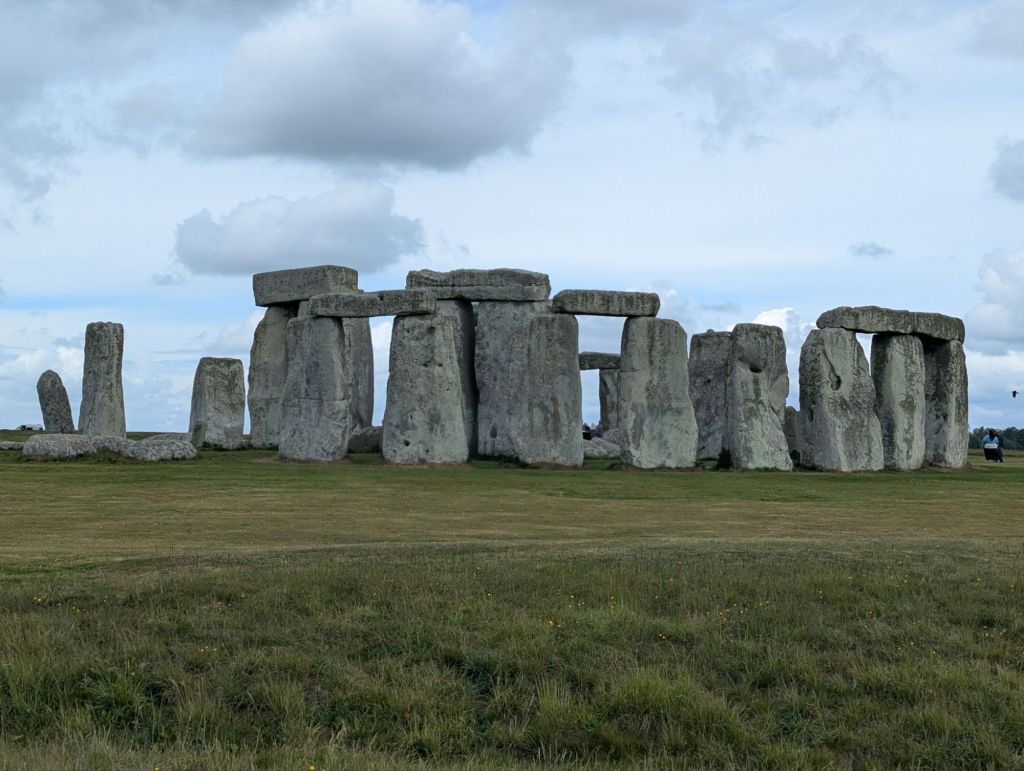
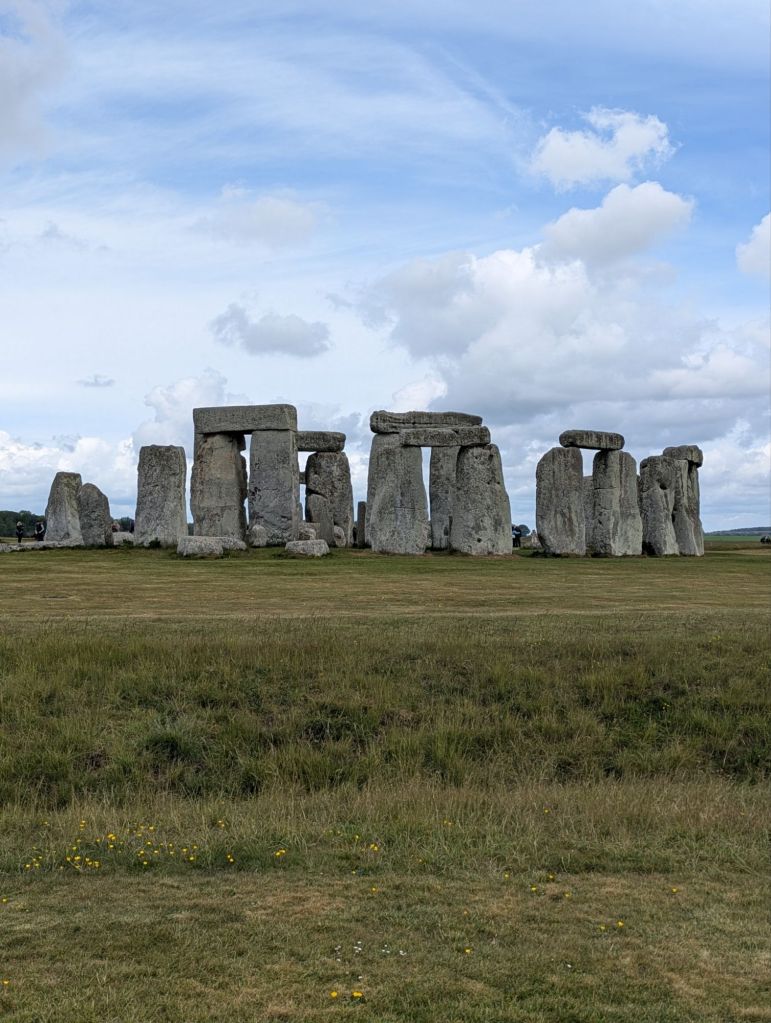
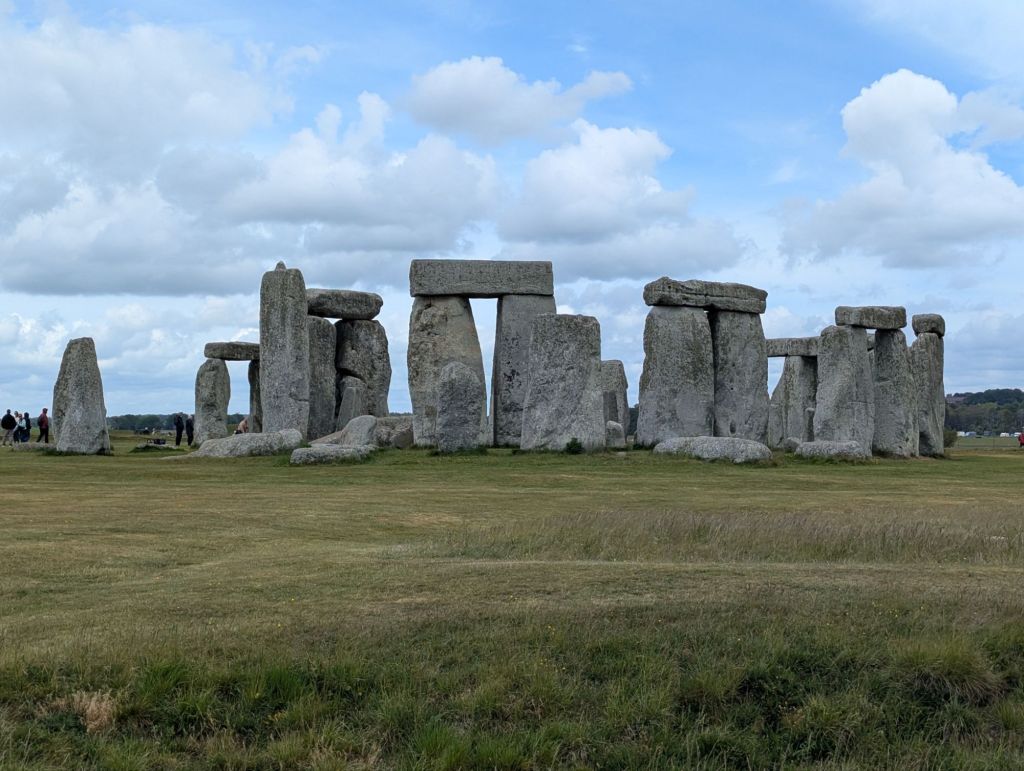
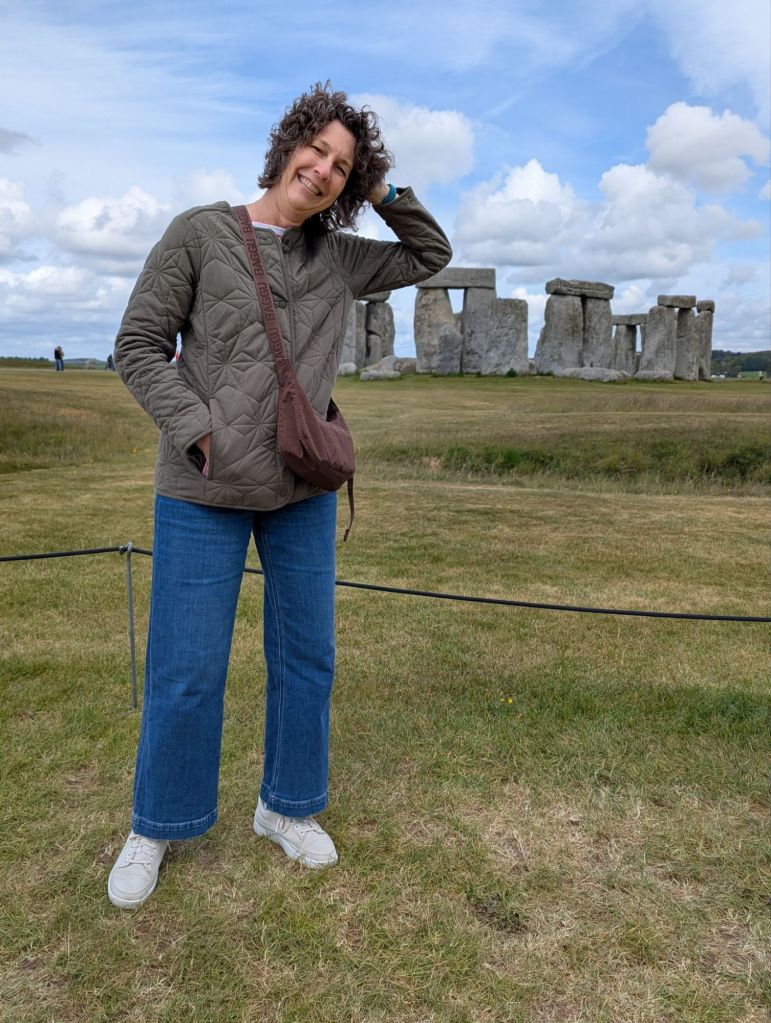
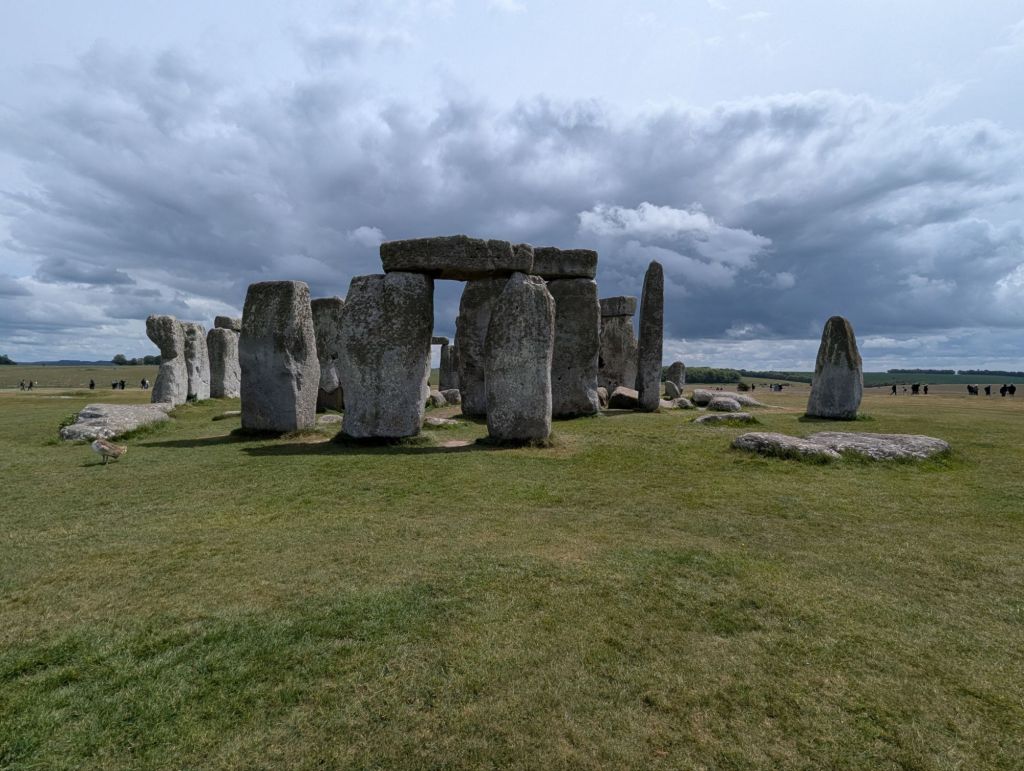
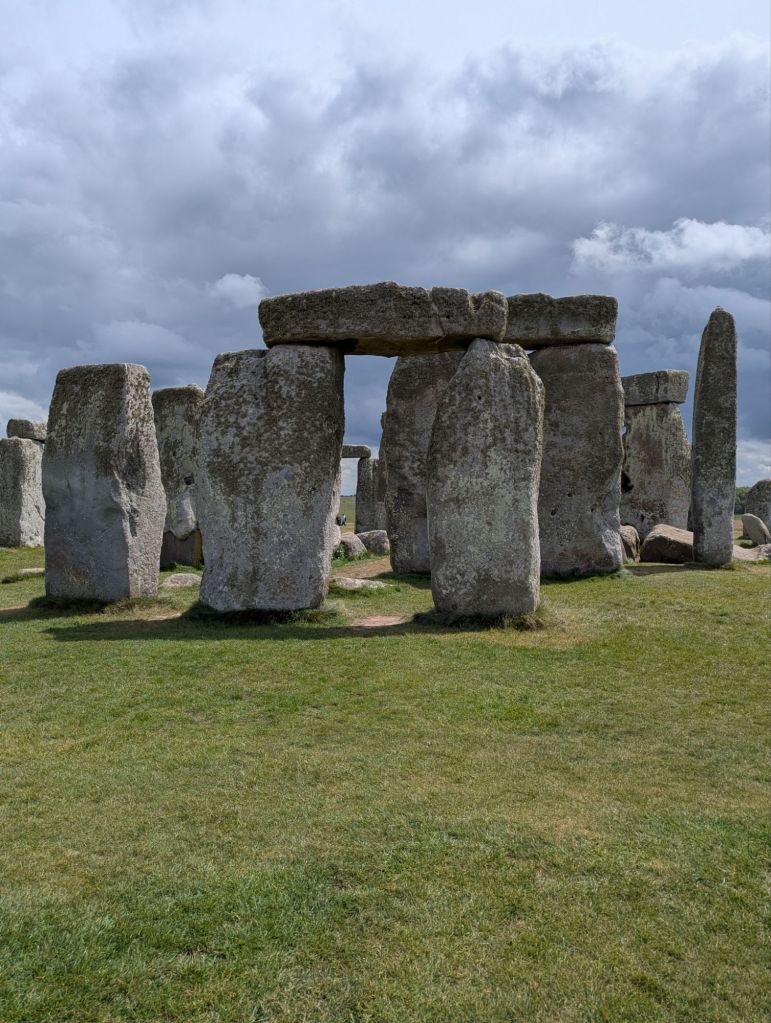
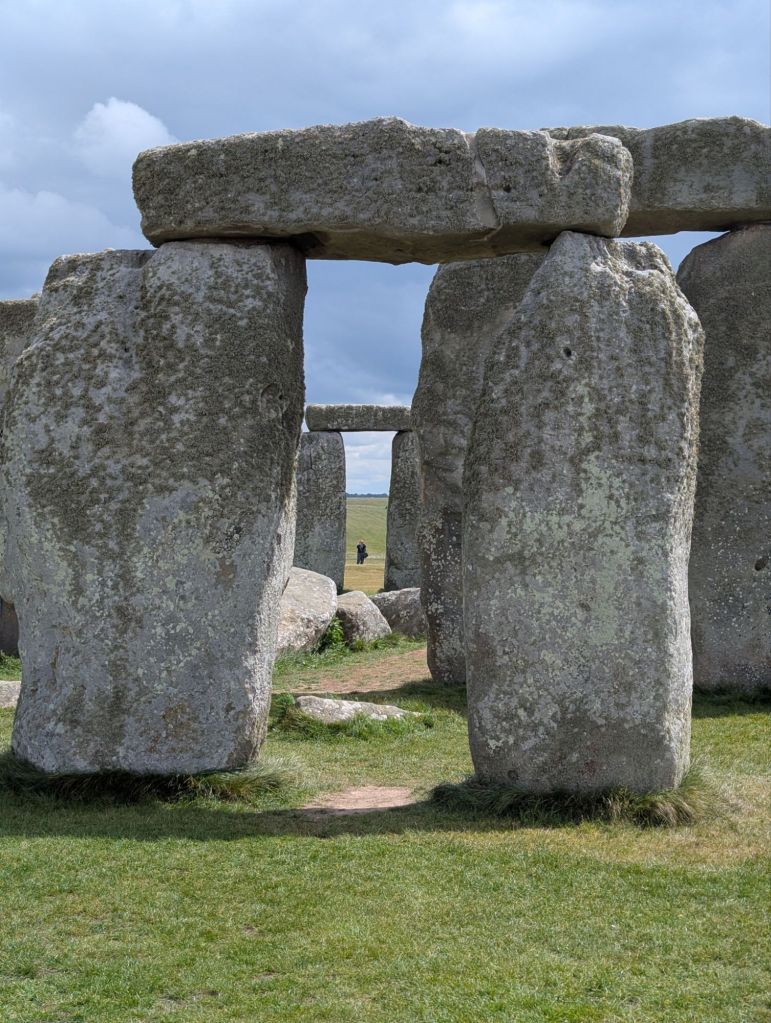
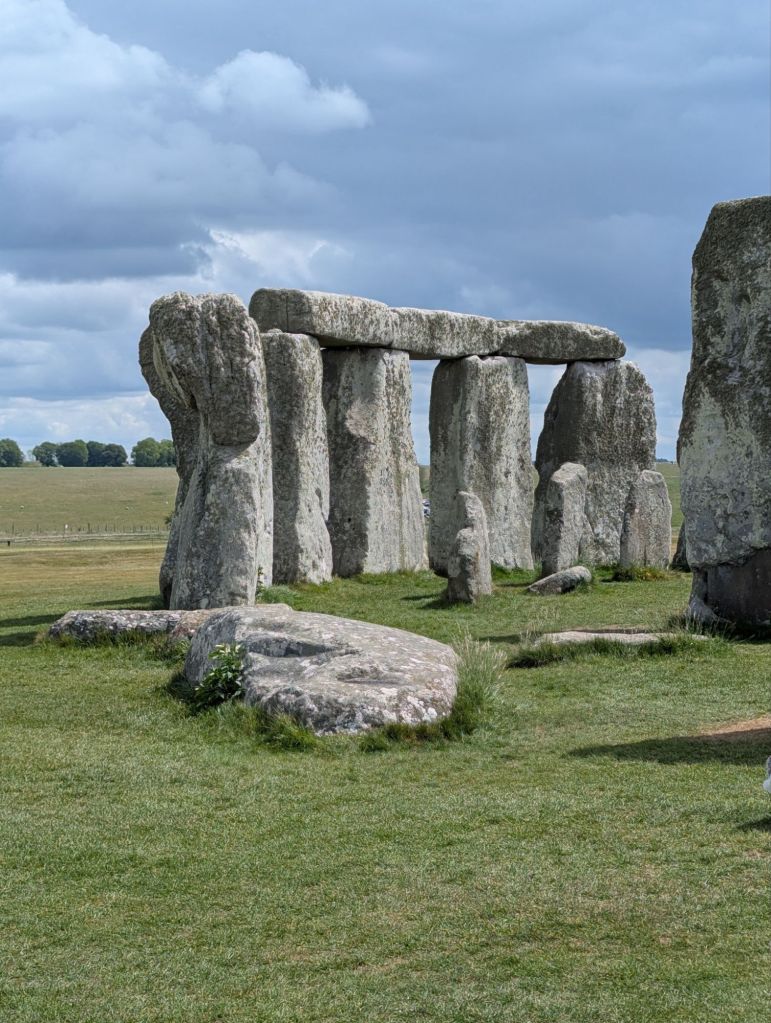
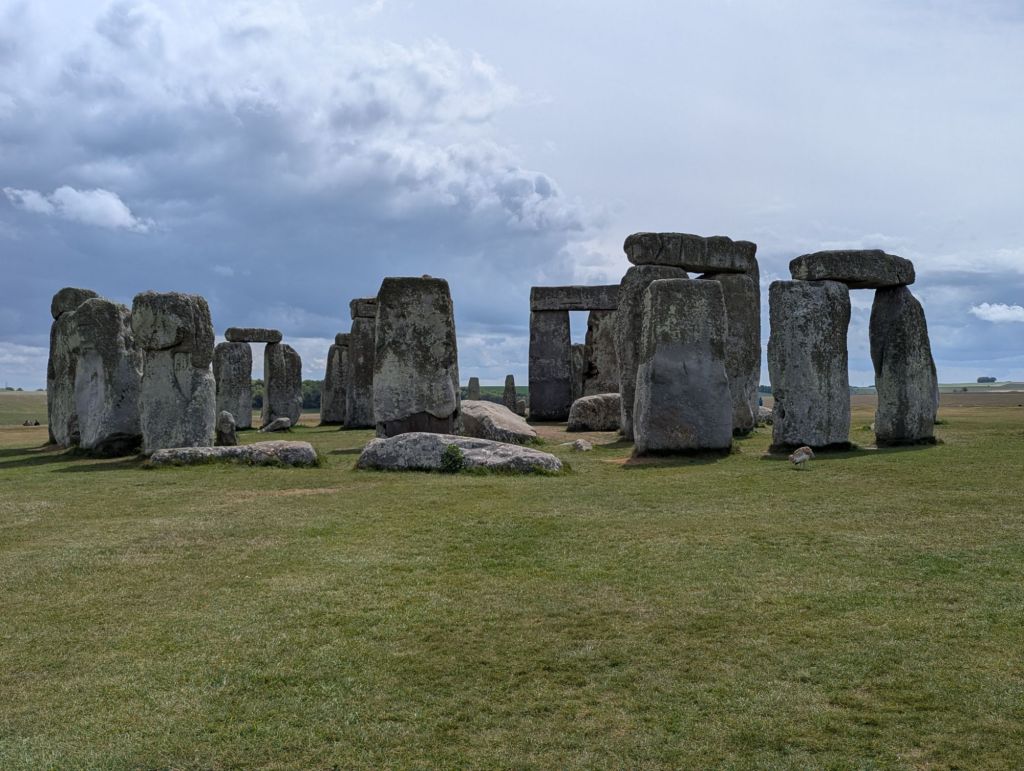
Photo at Stonehenge

DAY 14 – SUNDAY, MAY 17, 2026

We enjoyed a slower start to the day with breakfast at our hotel before packing up and getting ready for our 10:30 AM taxi pickup. After several days of hiking, sightseeing, and constantly repacking our bags, a relaxed morning felt nice.

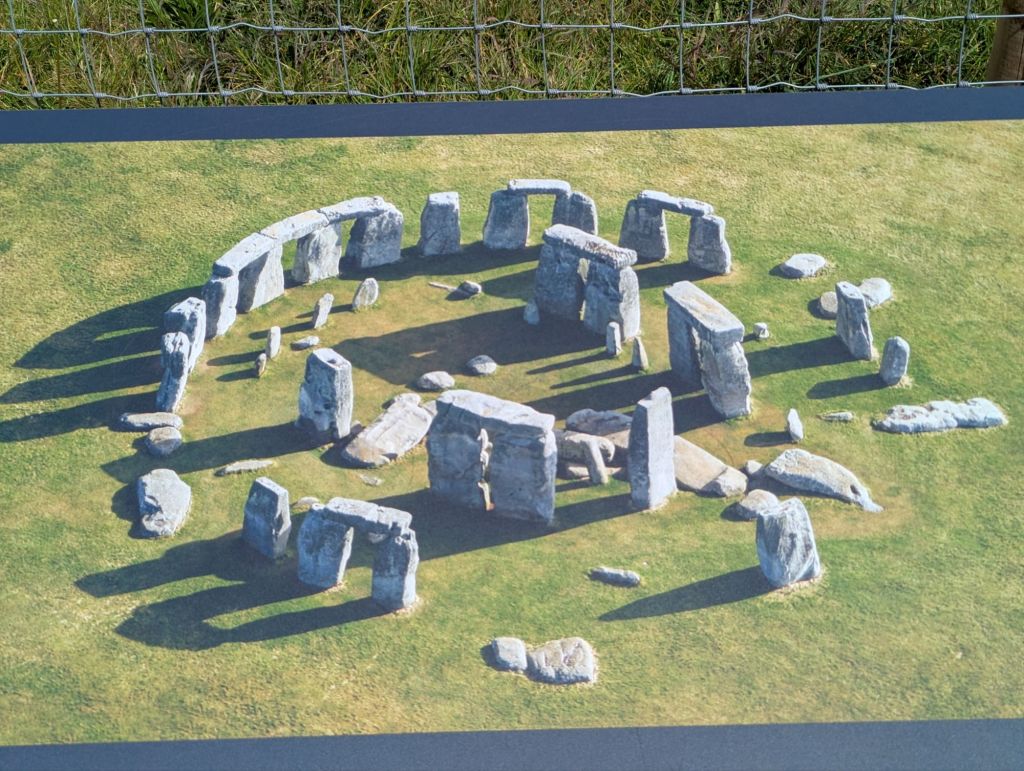
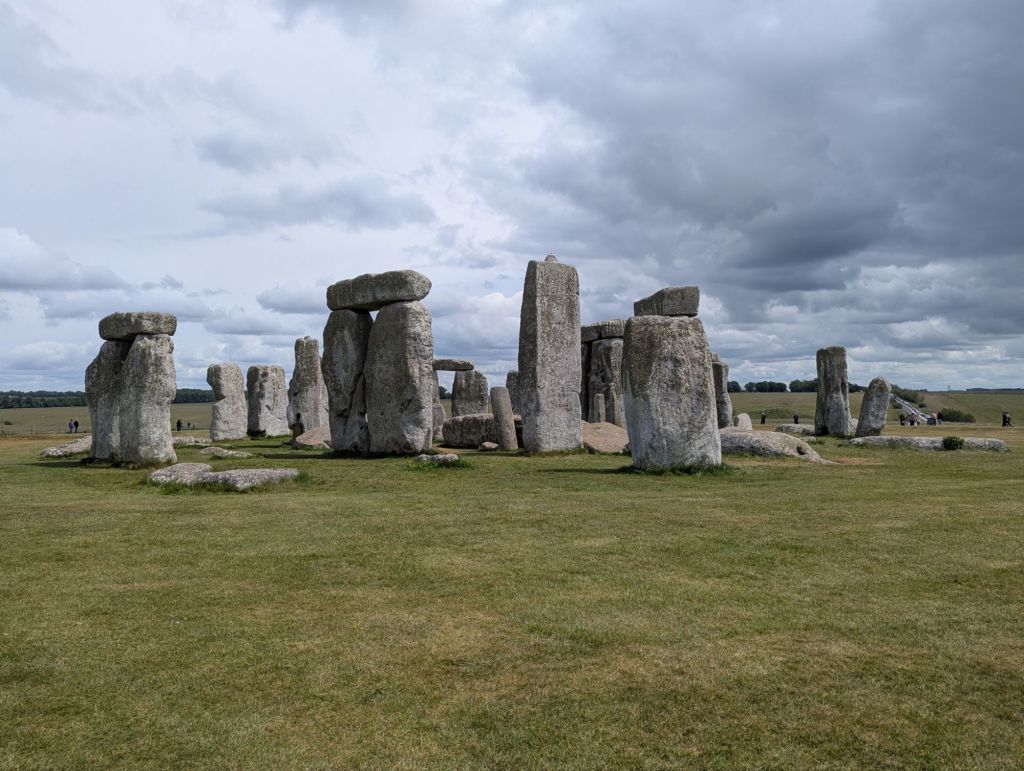
Our driver first brought us to Stonehenge, about an hour from Bath. Before arriving, we had downloaded the audio tour provided by English Heritage Society, which added a lot to the experience. Standing in front of Stonehenge in person is one of those moments where you suddenly realize just how ancient human history really is.

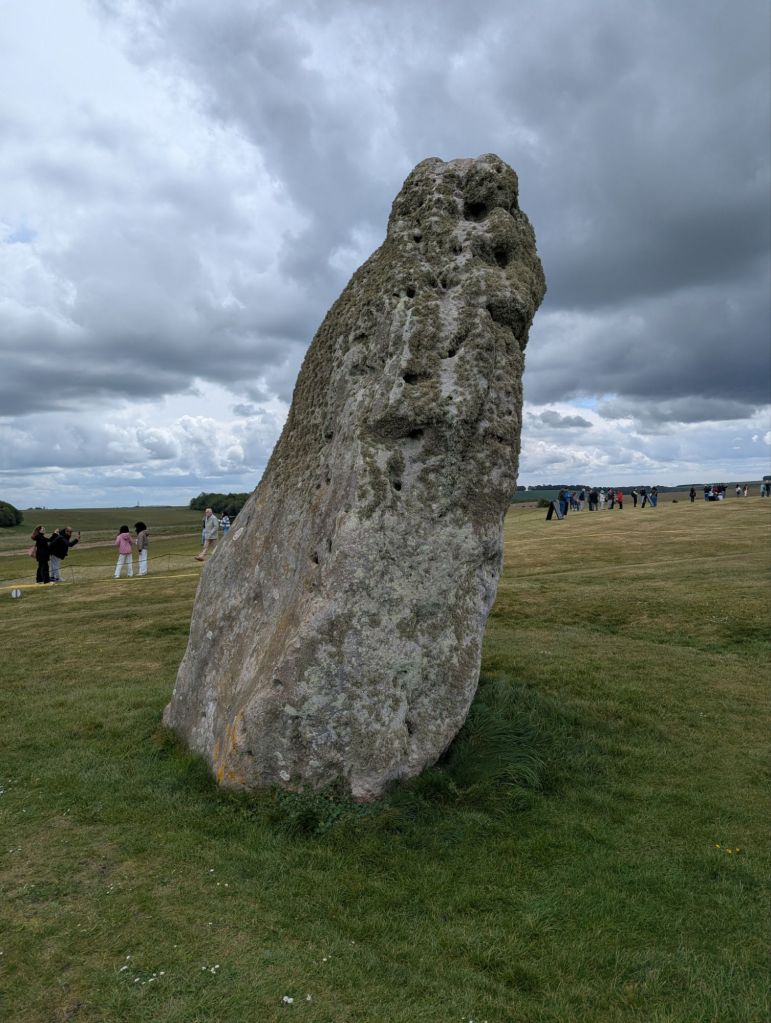
The monument dates back roughly 4,500 years ago, with the earliest construction believed to have begun around 3,000 BC and the larger standing stones added later around 2,500 BC. Historians and archaeologists still debate exactly how the stones were transported and assembled, especially considering some of the smaller “bluestones” were brought from Wales, over 150 miles away. It is incredible to think about the planning, engineering, and sheer effort required to create something so massive without modern tools or machinery.

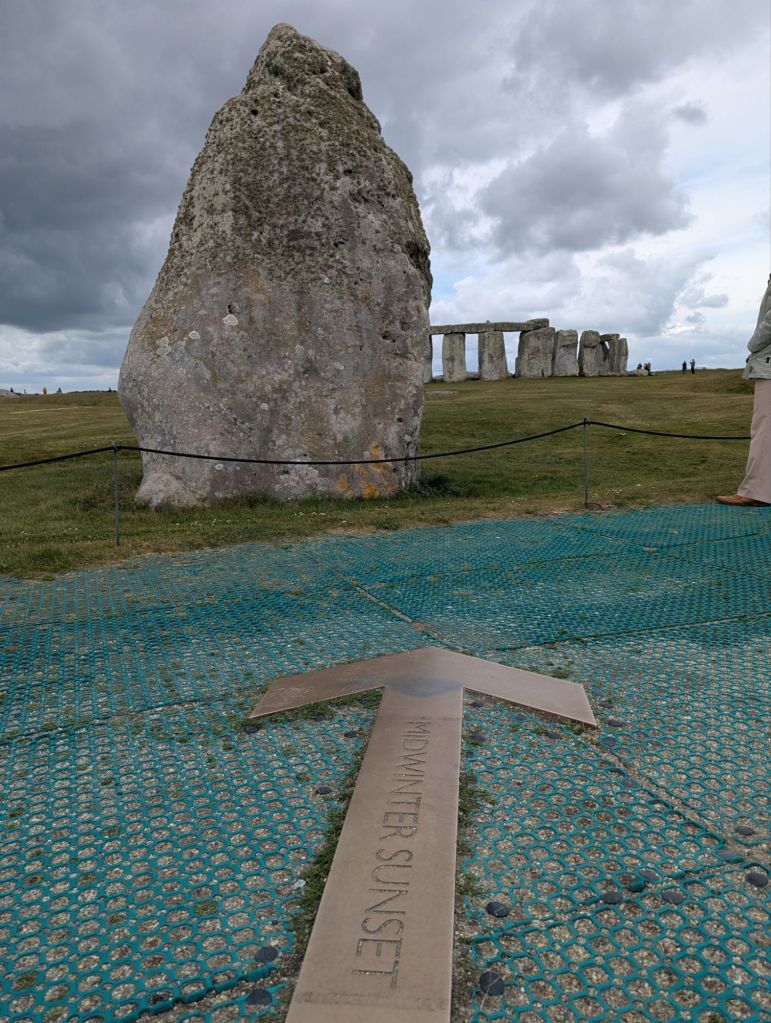
While many details remain unknown, Stonehenge is widely believed to have served ceremonial and burial purposes, with strong connections to the summer and winter solstices. The stones are carefully aligned with the movement of the sun, particularly sunrise on the summer solstice and sunset on the winter solstice. Even thousands of years later, the precision of the layout is remarkable.

We spent quite a while walking the path around the monument, listening to the stories and theories through the audio guide, and simply taking it all in. It really is one of those places that feels both mysterious and awe-inspiring at the same time.

After our visit, and a quick lunch in the café, we climbed back into the taxi for the just-over-two-hour drive to London. We arrived at our hotel shortly before 4:00 PM and decided we should get out and explore our new neighborhood for this part of the trip: Marylebone.

We wandered along Marylebone High Street, which was lined with cafés, bakeries, bookstores, and stylish shops. Along the way we passed Marylebone Town Hall and counted four different wedding parties coming and going. Apparently Sunday is a very popular wedding day in London!

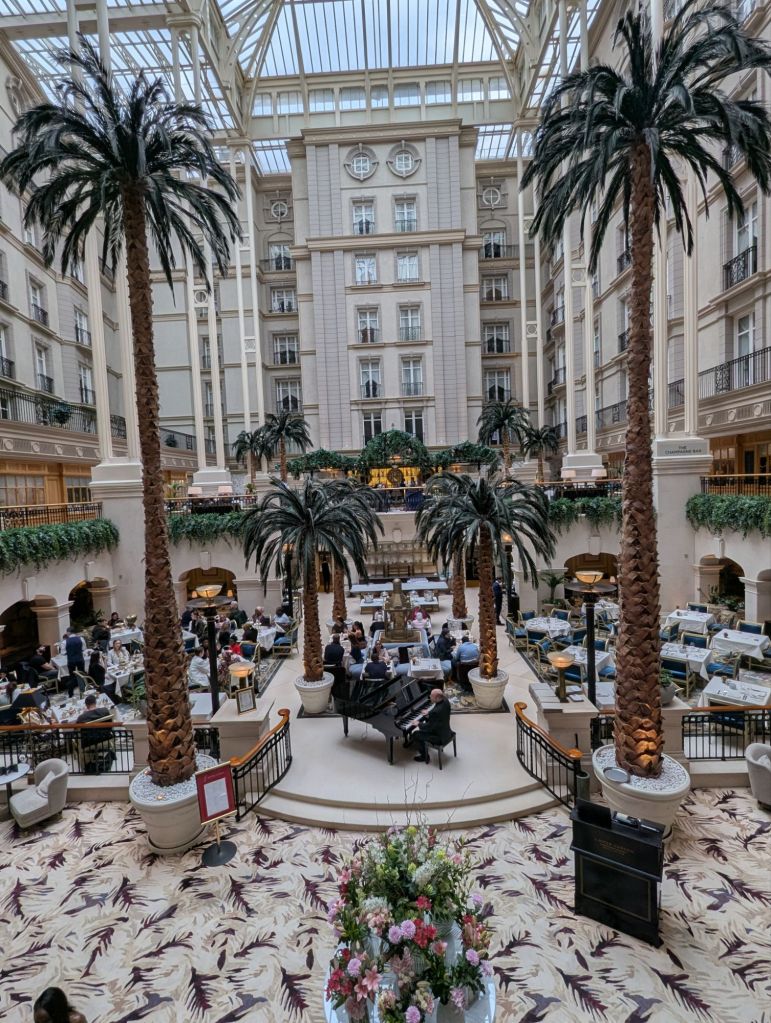
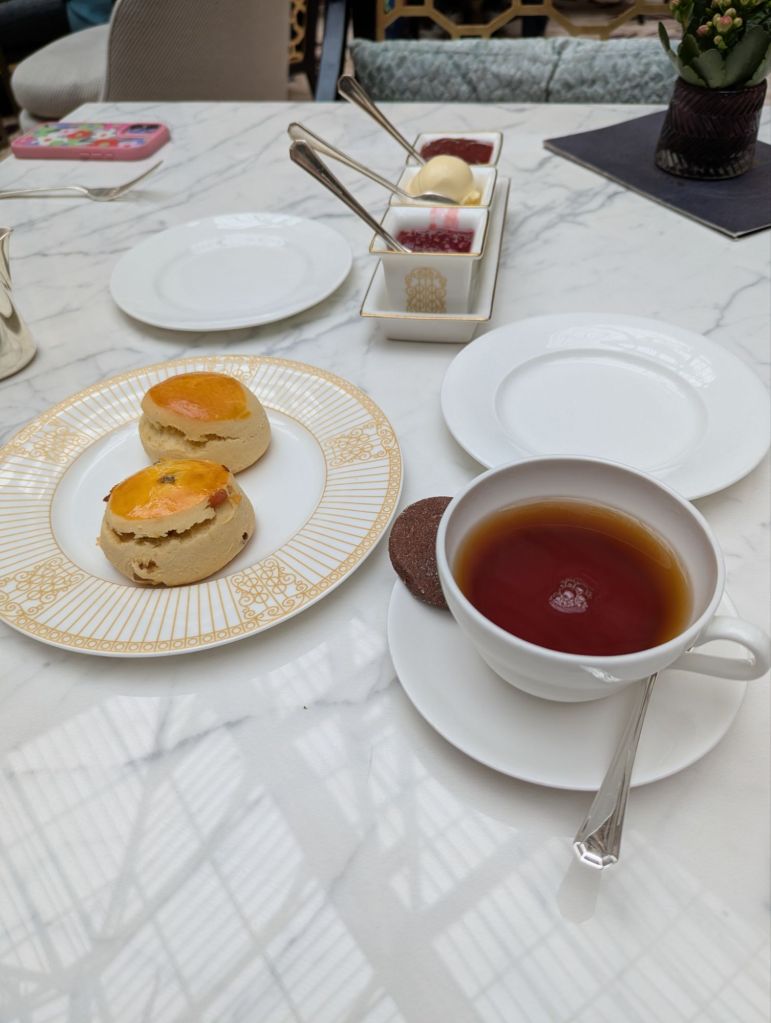
A little farther down the street we found ourselves outside the elegant Landmark London hotel. We stepped inside “just to look around” and immediately found ourselves admiring the hotel’s stunning glass-covered atrium filled with towering palm trees and natural light. Since it was well past our normal tea time, we decided it only made sense to stay for tea and scones. Sometimes you simply have to make sacrifices for the sake of the travel experience.

After our snack break we attempted to continue toward Regent’s Park, but the weather had other ideas. Rain arrived unexpectedly and, unfortunately, neither of us had packed raincoats for the evening stroll. With our plans officially dampened, we headed back toward the hotel.

A cocktail and dinner at the restaurant connected to our hotel, followed by a quiet evening to relax, turned out to be the perfect ending to another wonderful day in England.

Categories: 2026 England Adventure | Tags: , , , , , , , , , | Leave a comment

Day 13 in England – From Roman Baths to Rooftop Views: Exploring Bath

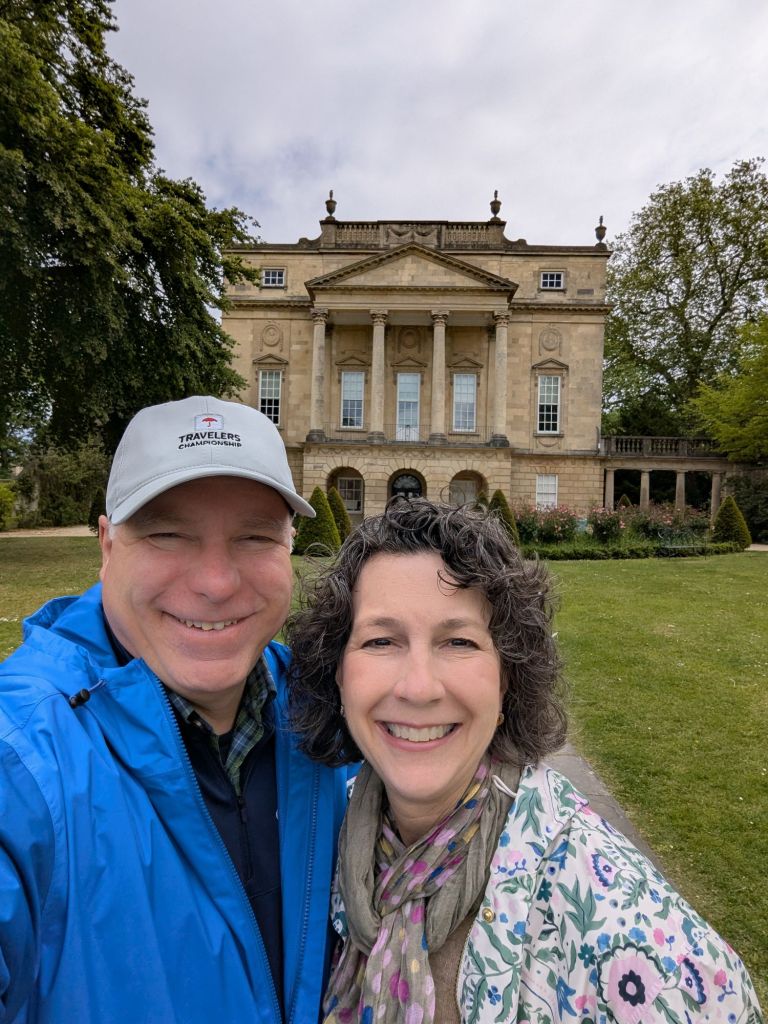
Photo in front of The Holbourne Museuem

DAY 13 – SATURDAY, MAY 16, 2026

After a week of packing our bags every morning in the Cotswolds, it felt wonderful to wake up knowing we were staying put for two nights. We happily slept in a bit, still catching up on rest after our hiking adventure.

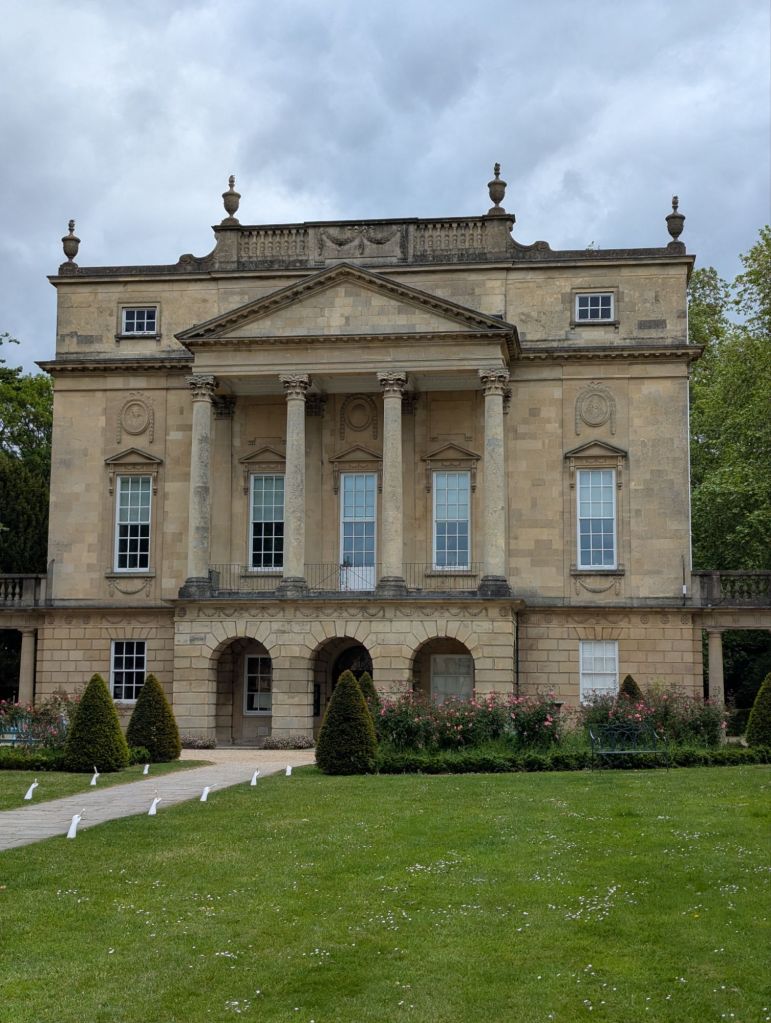
Our first stop of the day was one final Bridgerton filming location. The beautiful Holburne Museum is just a block from our hotel and serves as the exterior of Lady Danbury’s house in the series. While we did not tour the museum itself, we did enjoy breakfast in the lovely café.

The Holbourne Museum

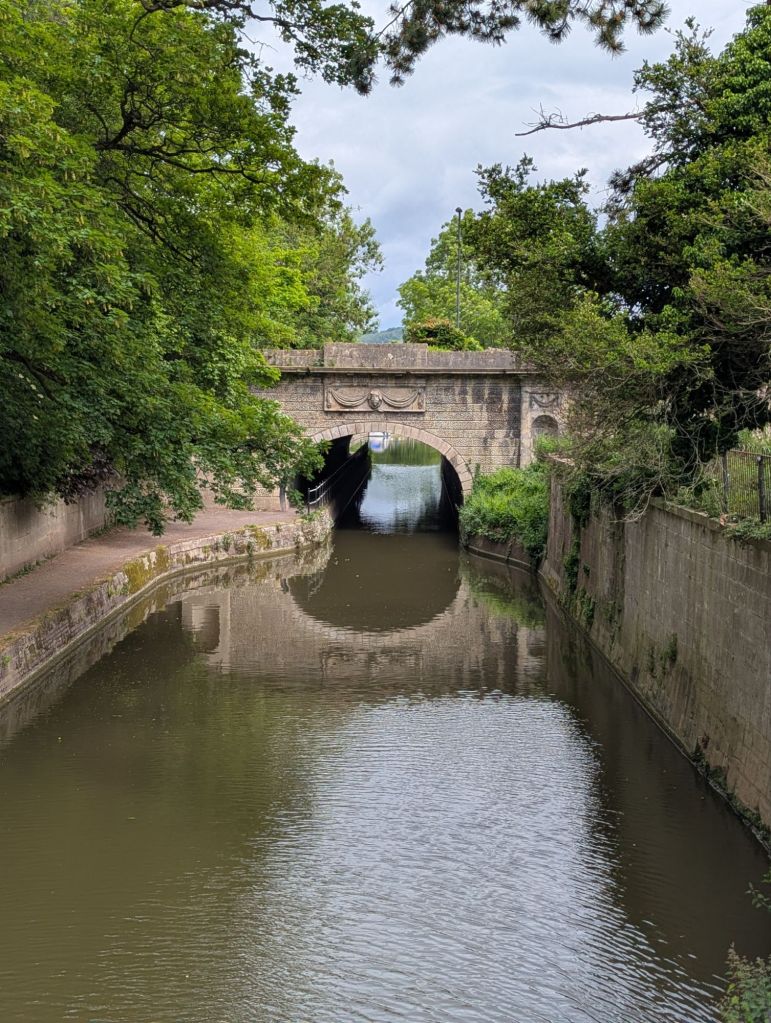
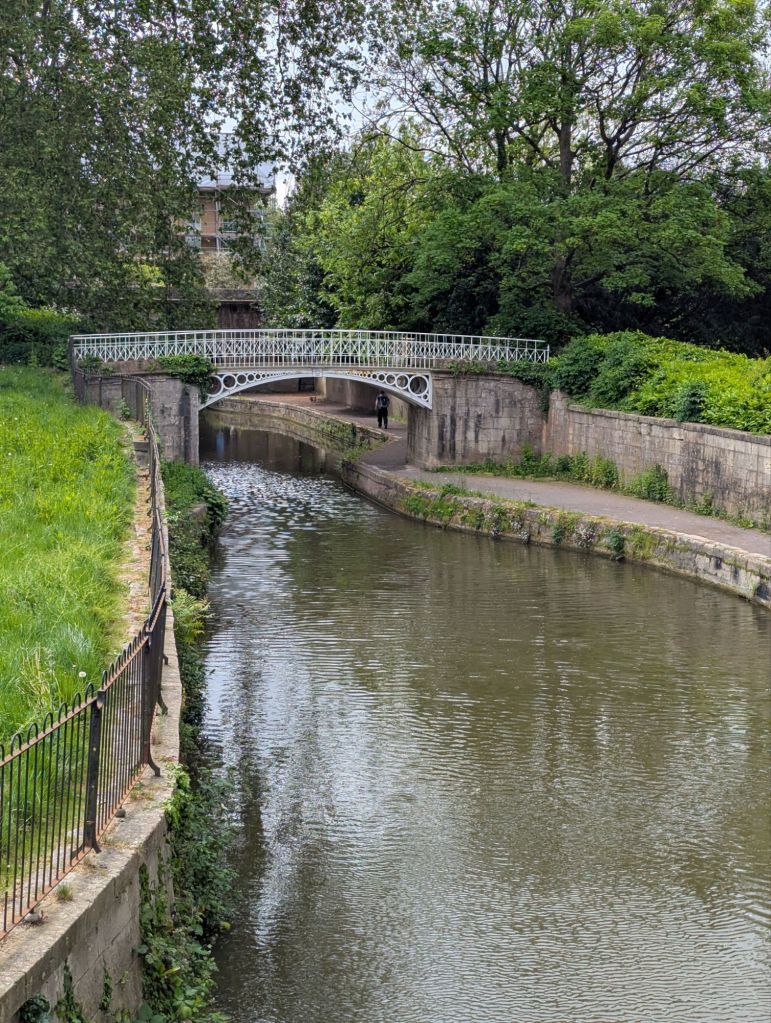
After breakfast we wandered through Sydney Gardens, the historic park located just behind the museum. Dating back to the late 1700s, it is one of England’s few surviving Georgian pleasure gardens and was a favorite walking spot of Jane Austen during the years she lived in Bath. With tree-lined paths, flowers blooming, and the Kennet & Avon Canal passing nearby, it was easy to see why she enjoyed spending time there.

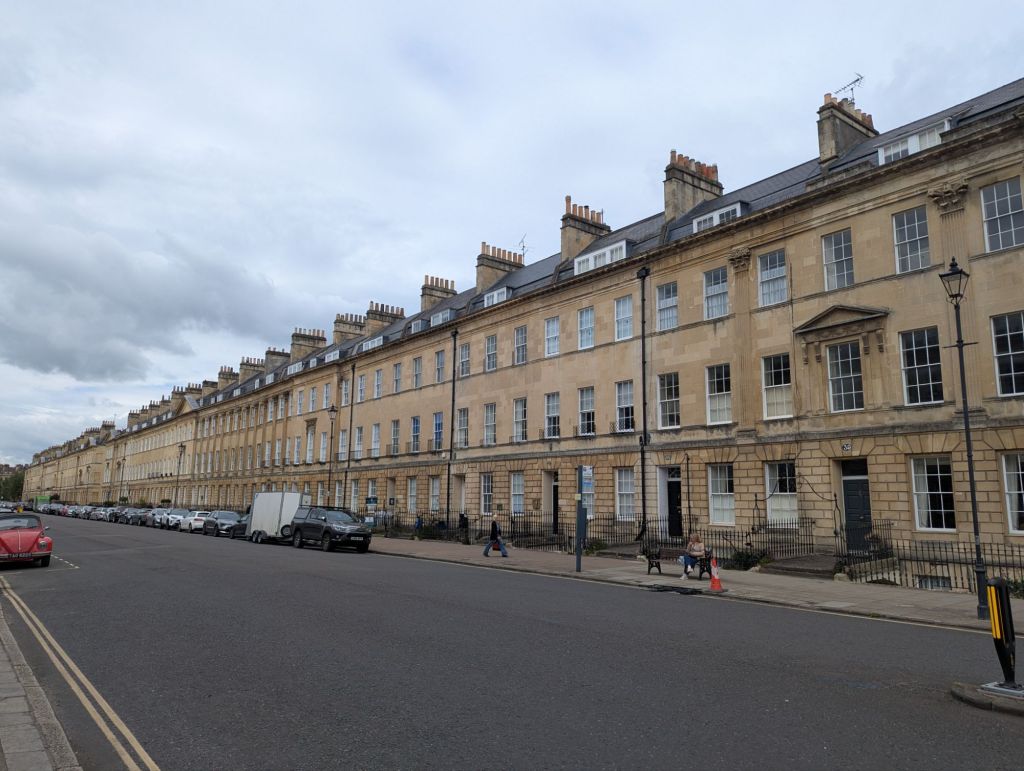
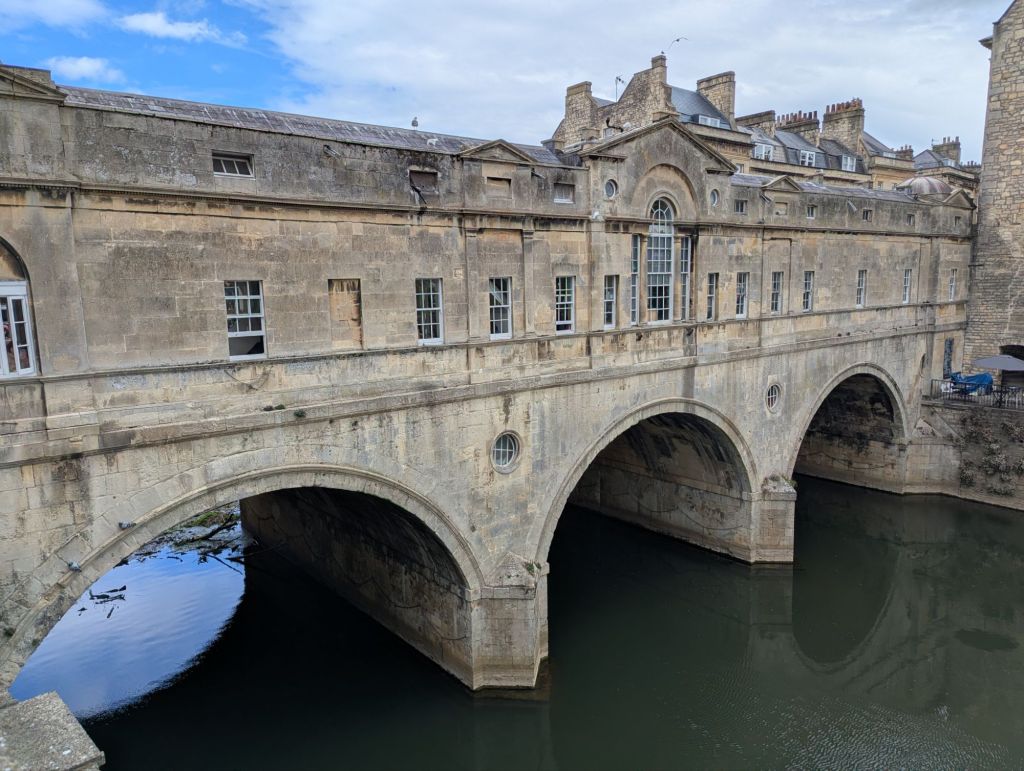
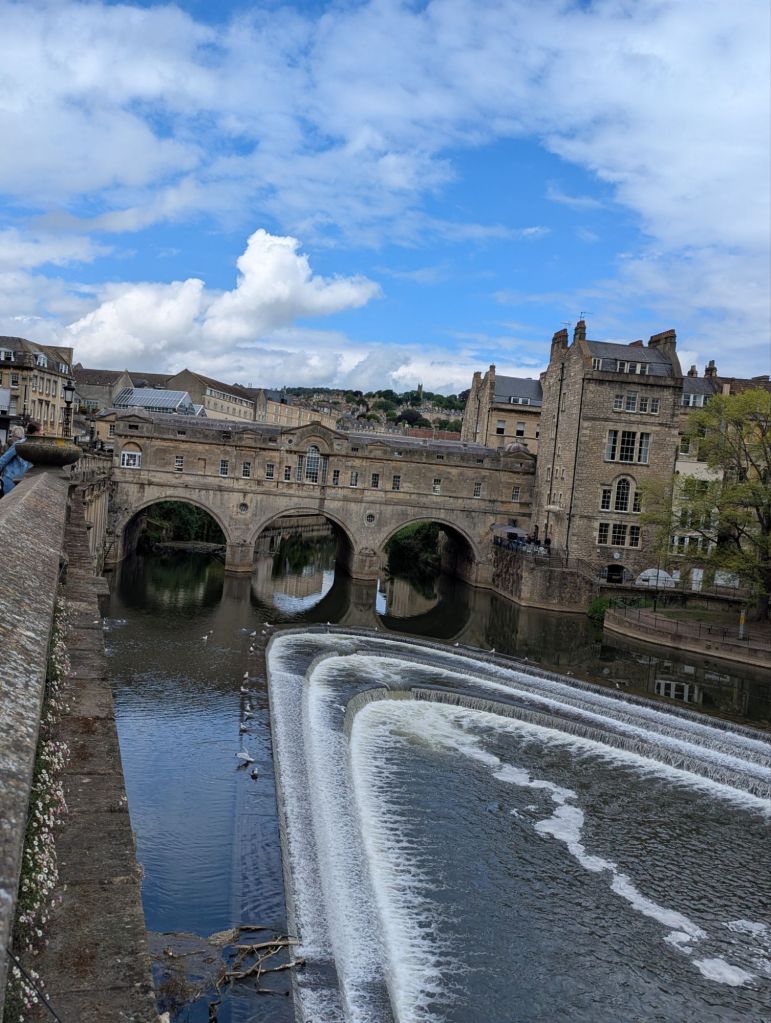
From the gardens we walked down the grand Great Pulteney Street, lined with long rows of elegant Georgian townhouses. Designed in the late 1700s to rival the grand boulevards of Paris, the street feels incredibly wide and stately compared to many of Bath’s smaller lanes. We crossed the iconic Pulteney Bridge, one of only a handful of bridges in the world built with shops lining both sides.

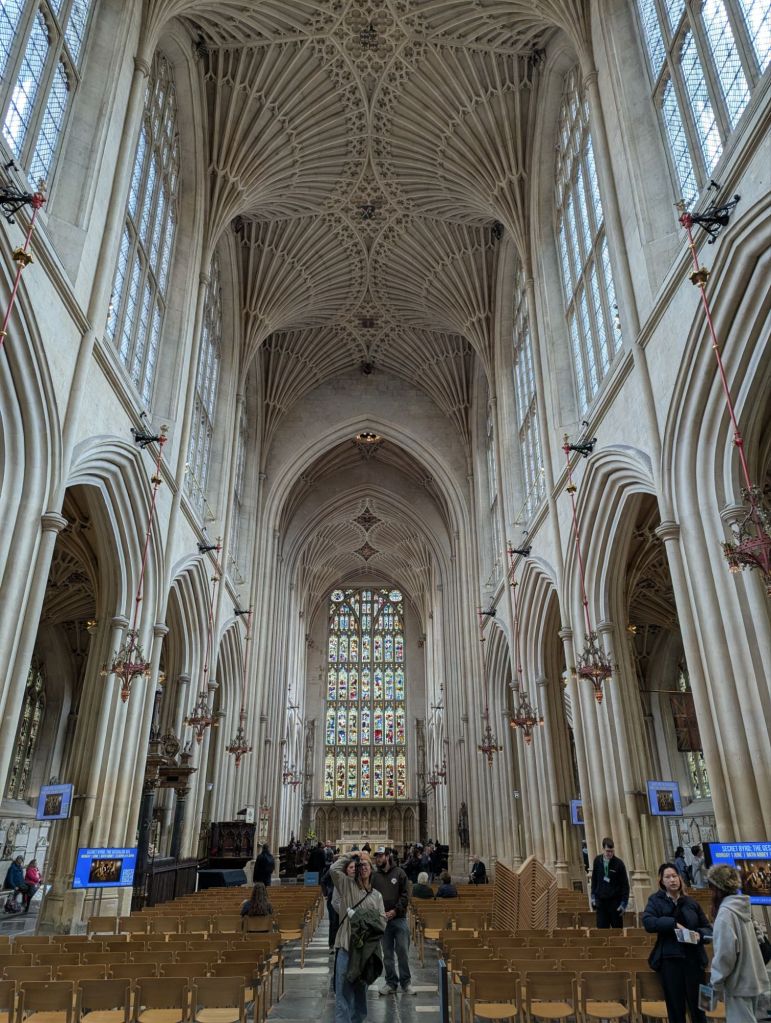
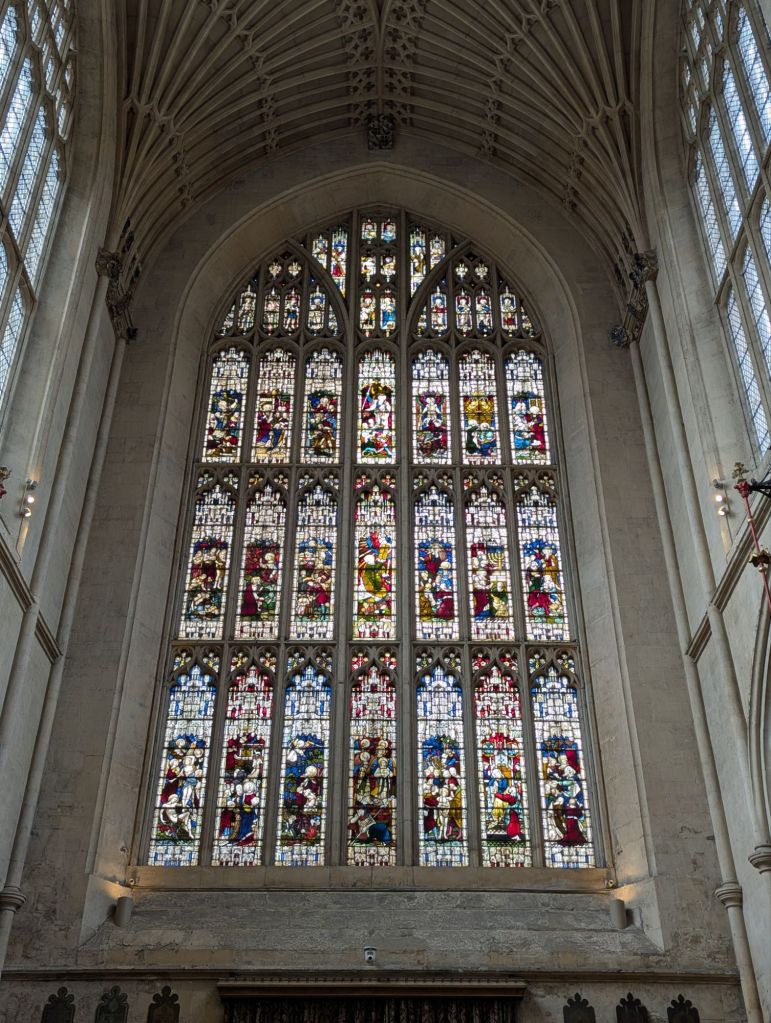
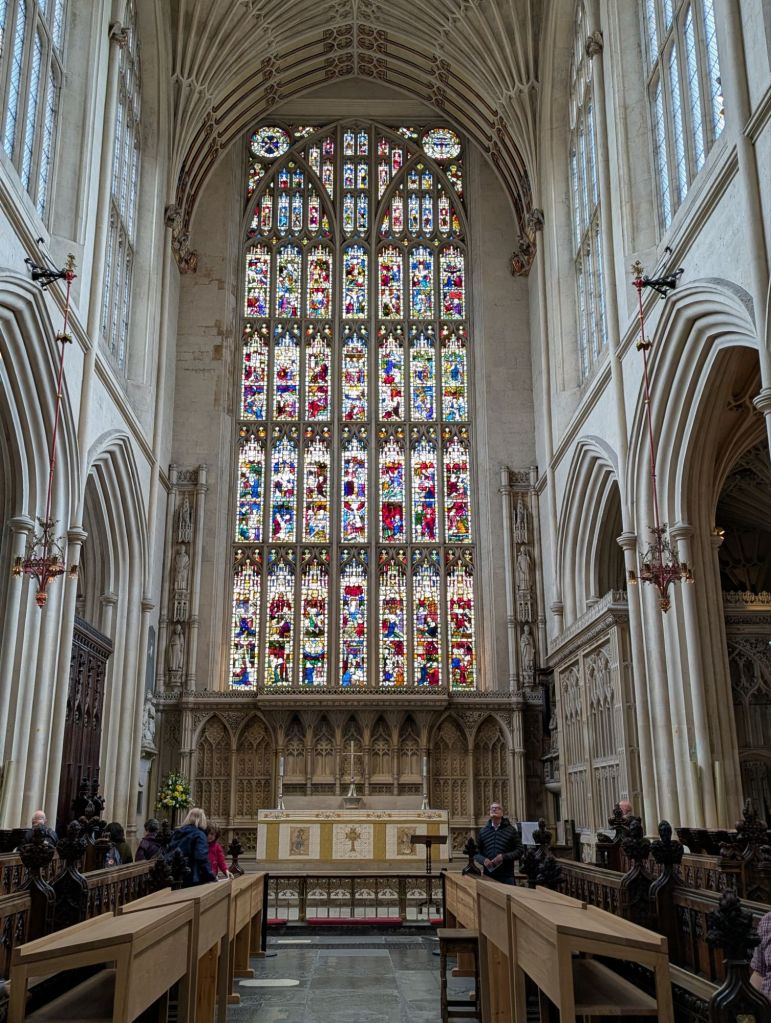
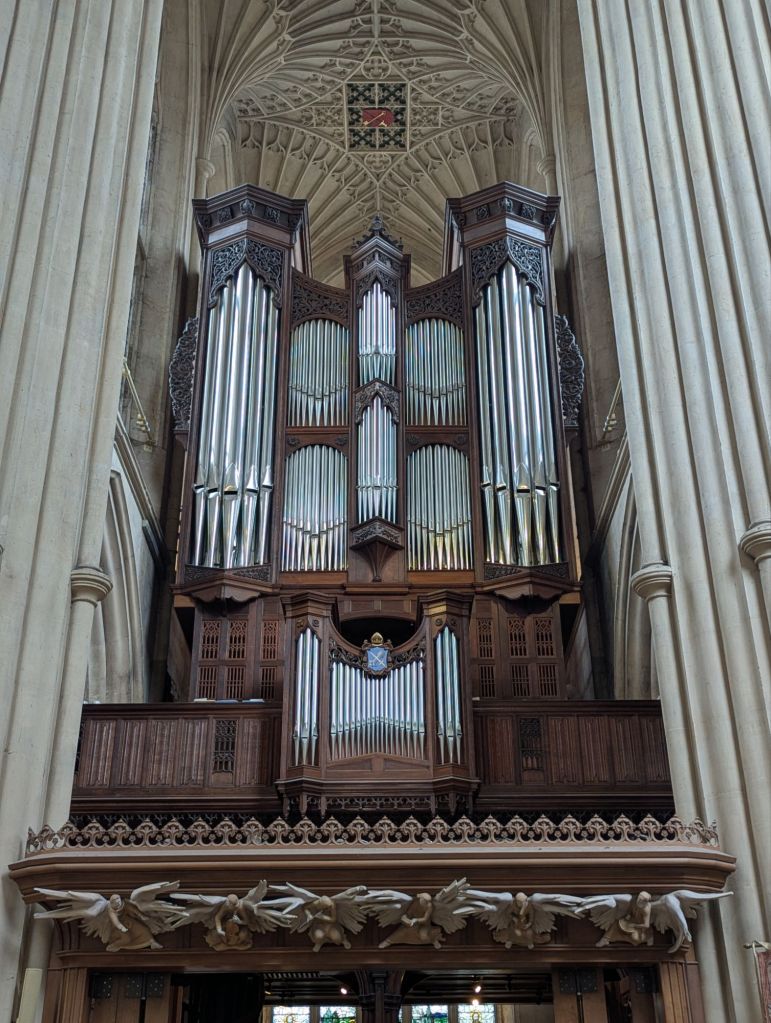
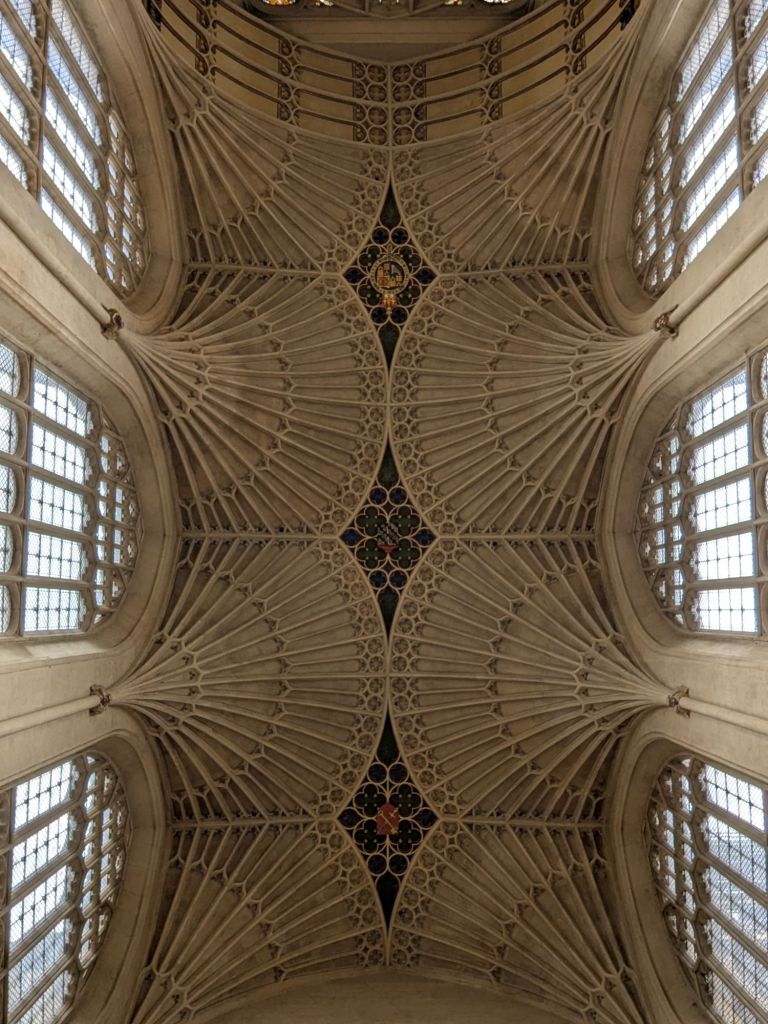
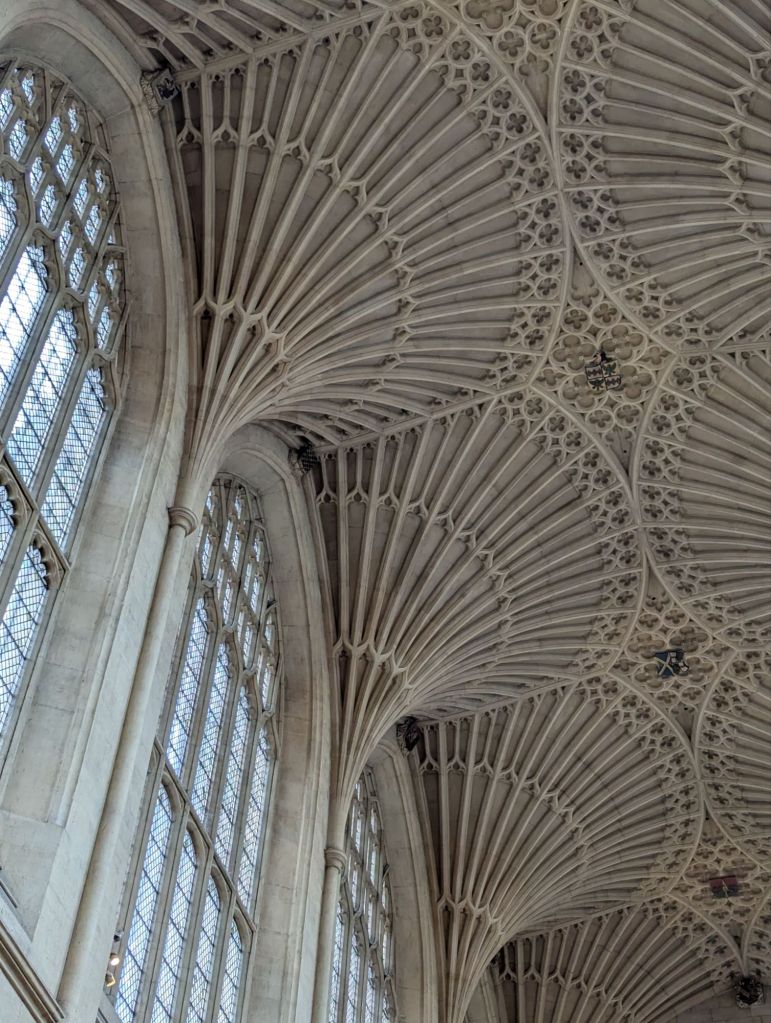
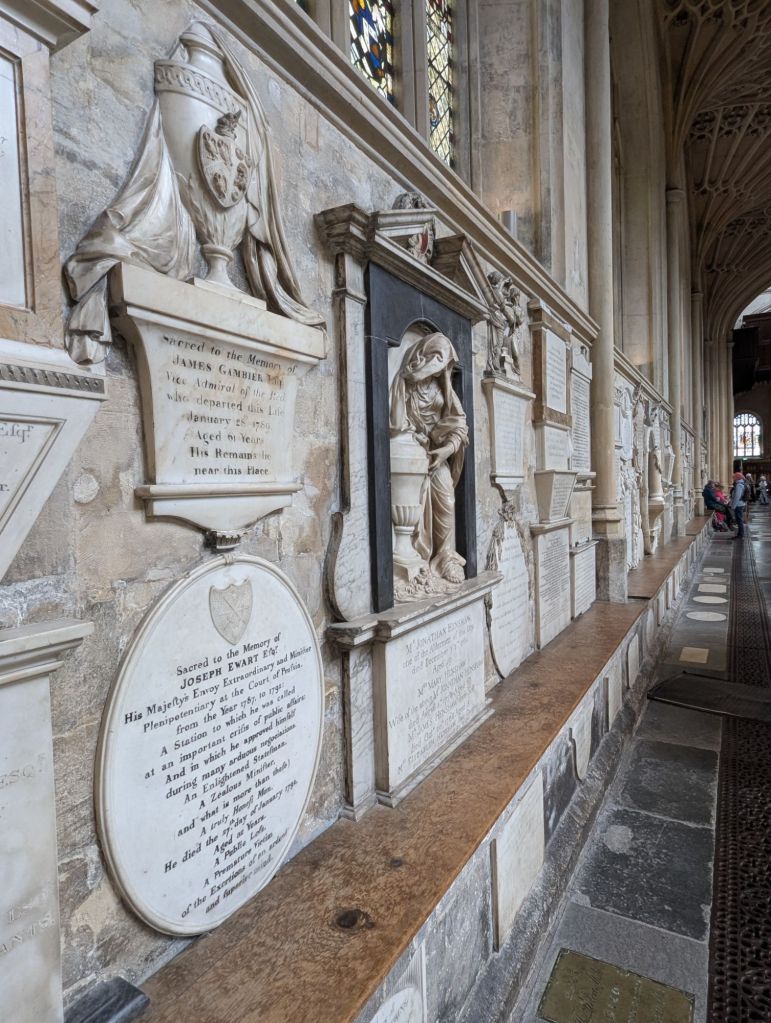
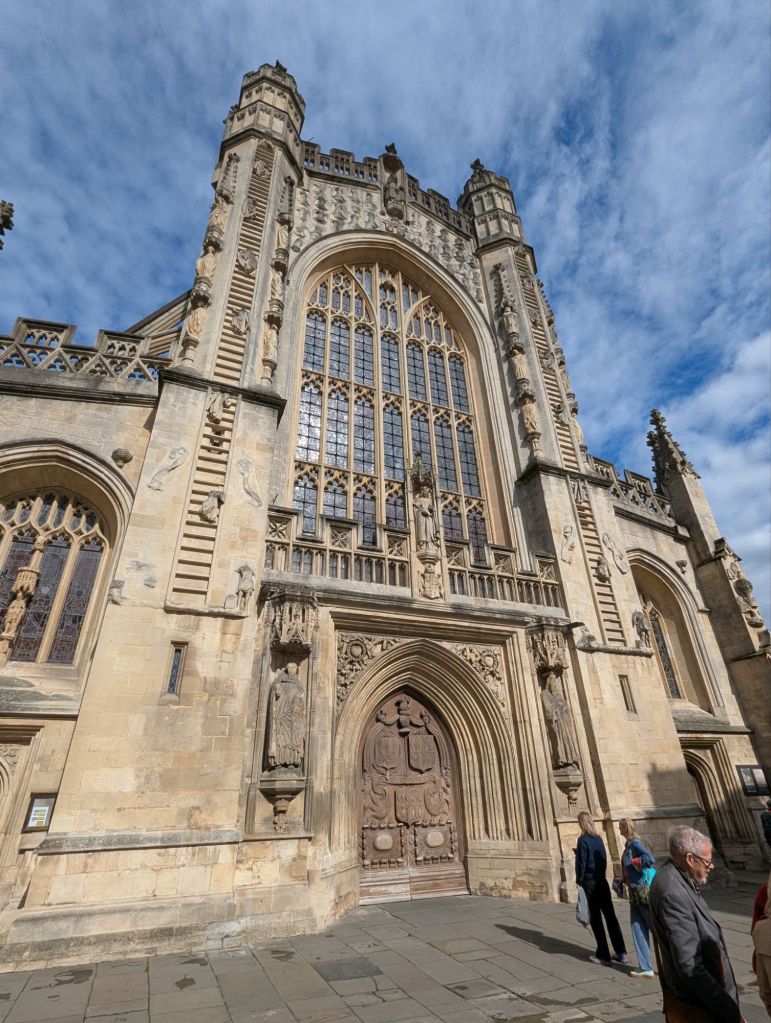
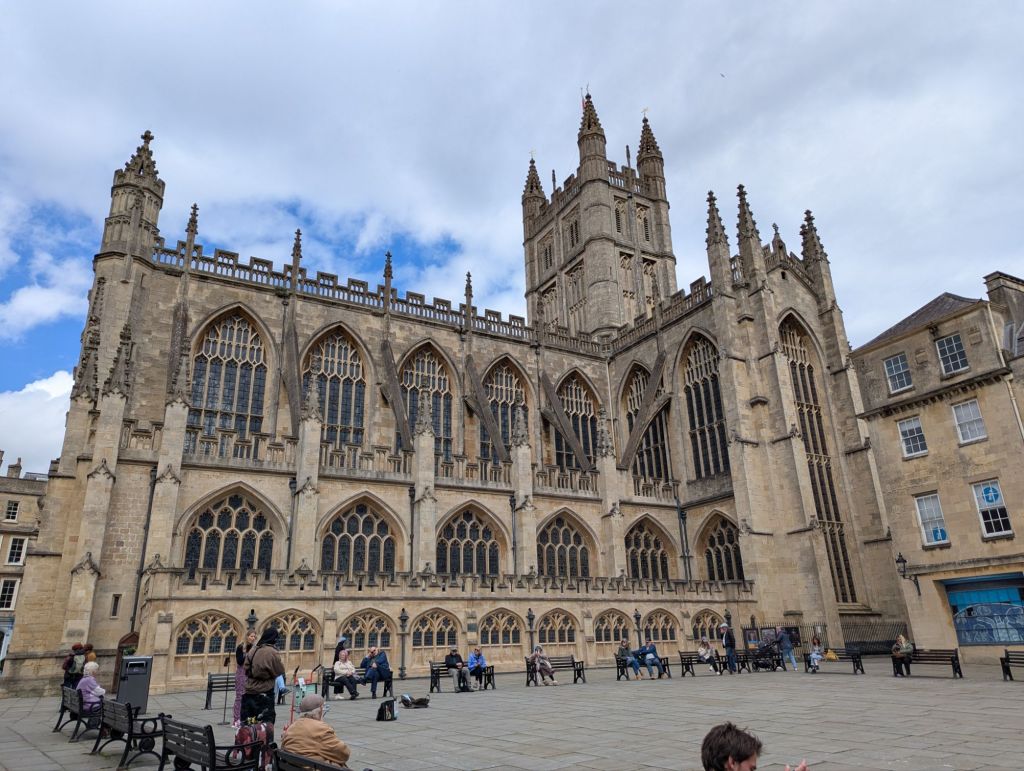
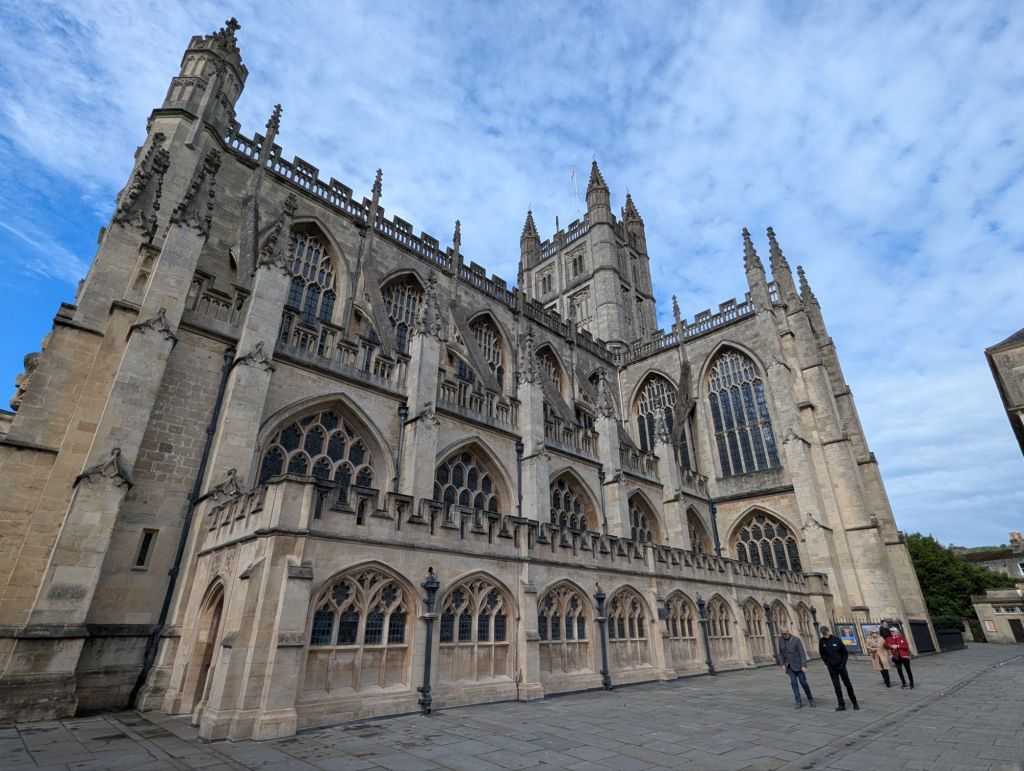
Our next destination was Bath Abbey. For a small admission fee, valid all day, we were able to explore the inside of this stunning church at our own pace. The soaring fan-vaulted ceiling immediately caught our attention. The stonework creates an intricate web overhead that somehow looks both impossibly delicate and incredibly massive at the same time. If you look closely at the ceiling, there really are no corners, which gives the entire space a unique appearance.

The Abbey itself has stood on this site in some form for over 1,200 years, though most of the current structure dates to the late 1400s. It is also the site where the first King of England, King Edgar, was crowned in 973 AD.

After spending some time admiring the architecture and memorials, we purchased additional tickets to return later in the afternoon for the tower tour.

Leaving the Abbey, we had just enough time to grab a pasty, a warm savory pastry filled with meat, potatoes, and vegetables, and enjoy some people watching in the main square. Bath was bustling on this Saturday afternoon. Between tourists, street musicians, and multiple hen parties roaming through town in coordinated outfits, there was never a dull moment.

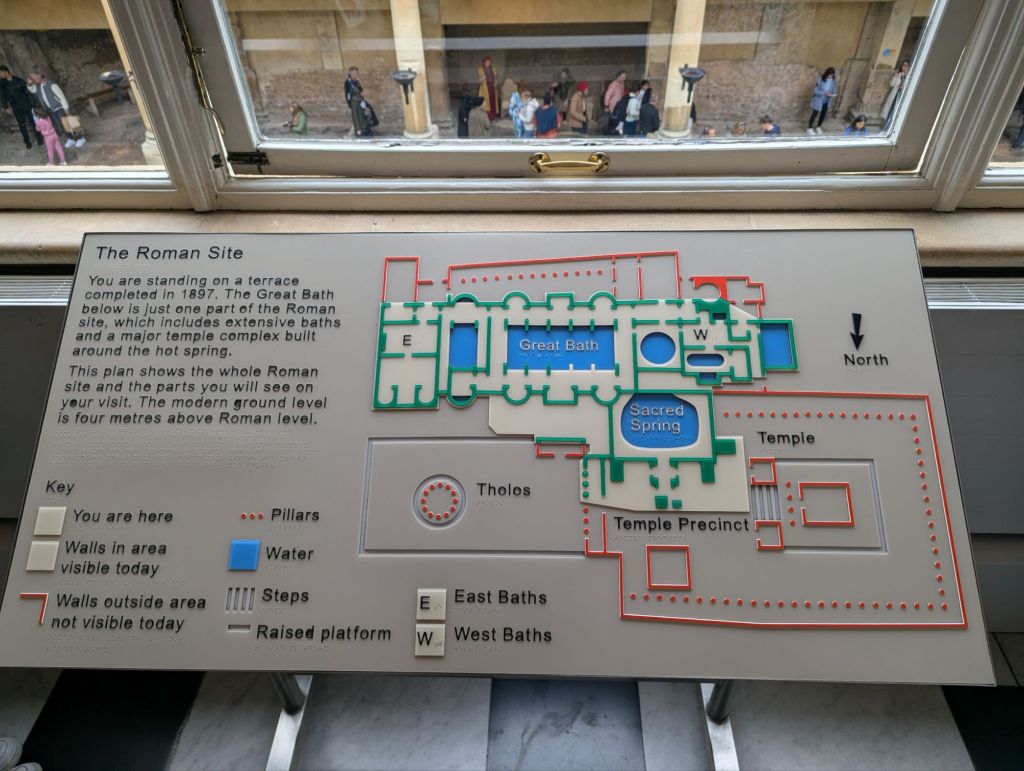
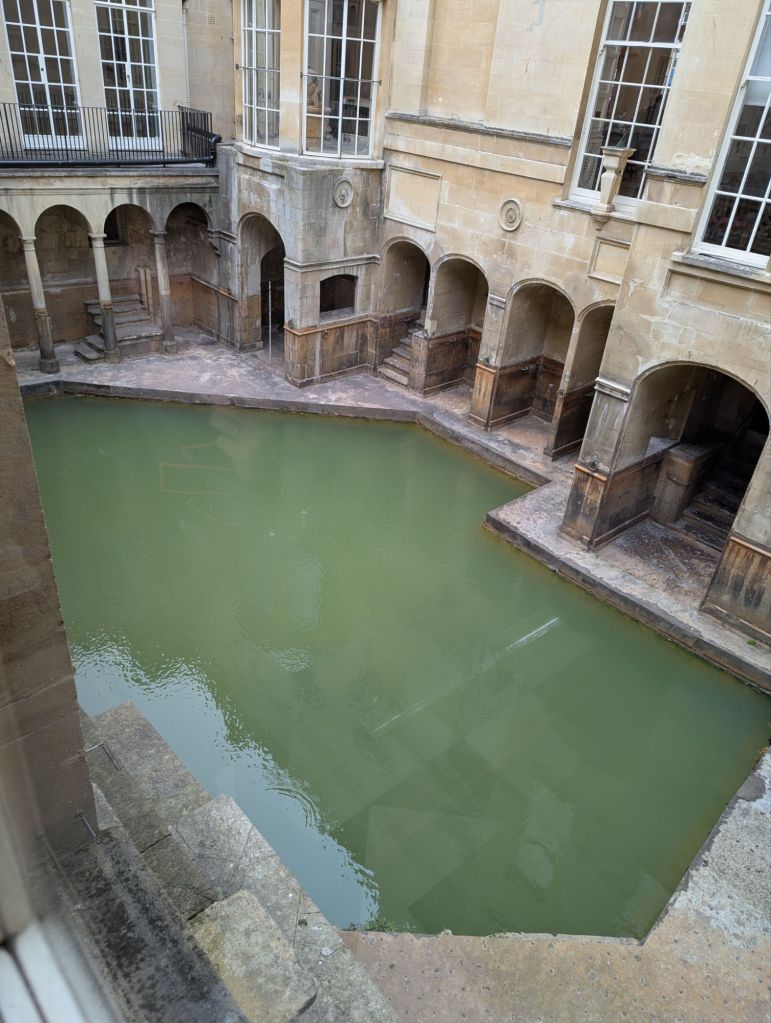
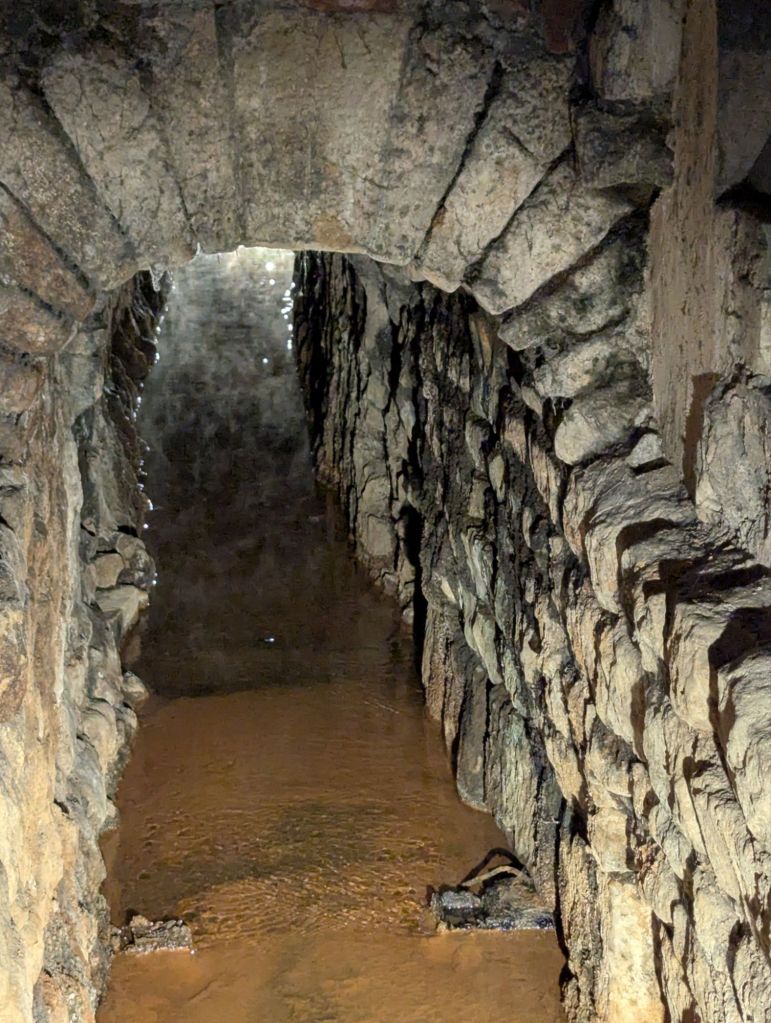
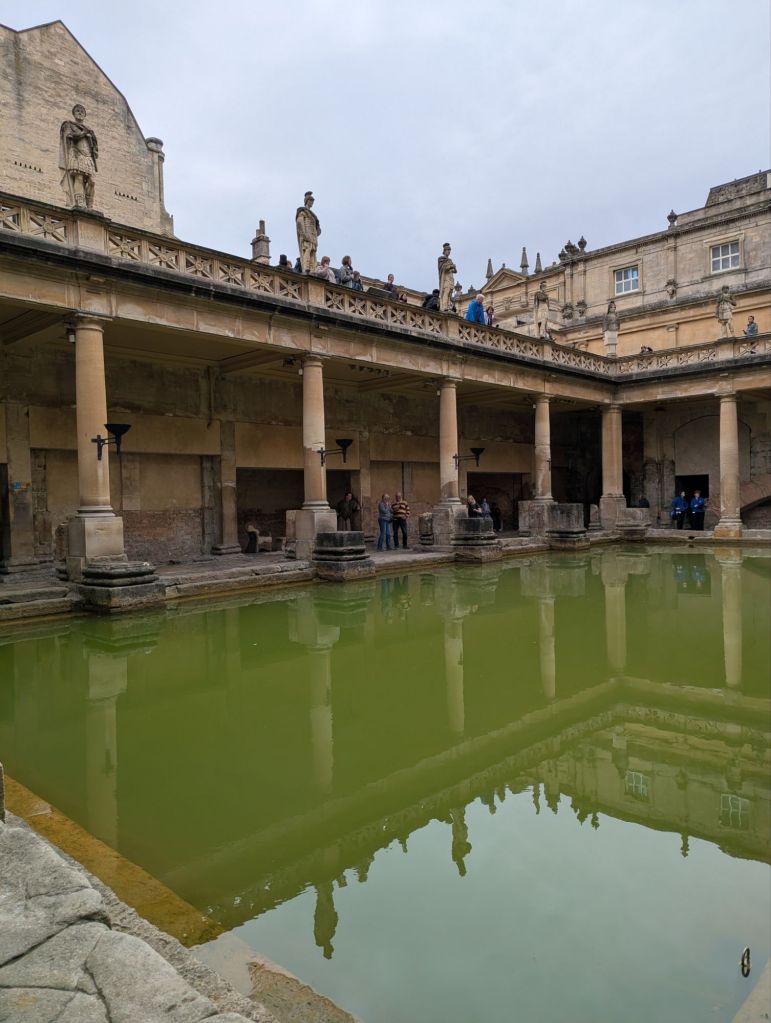
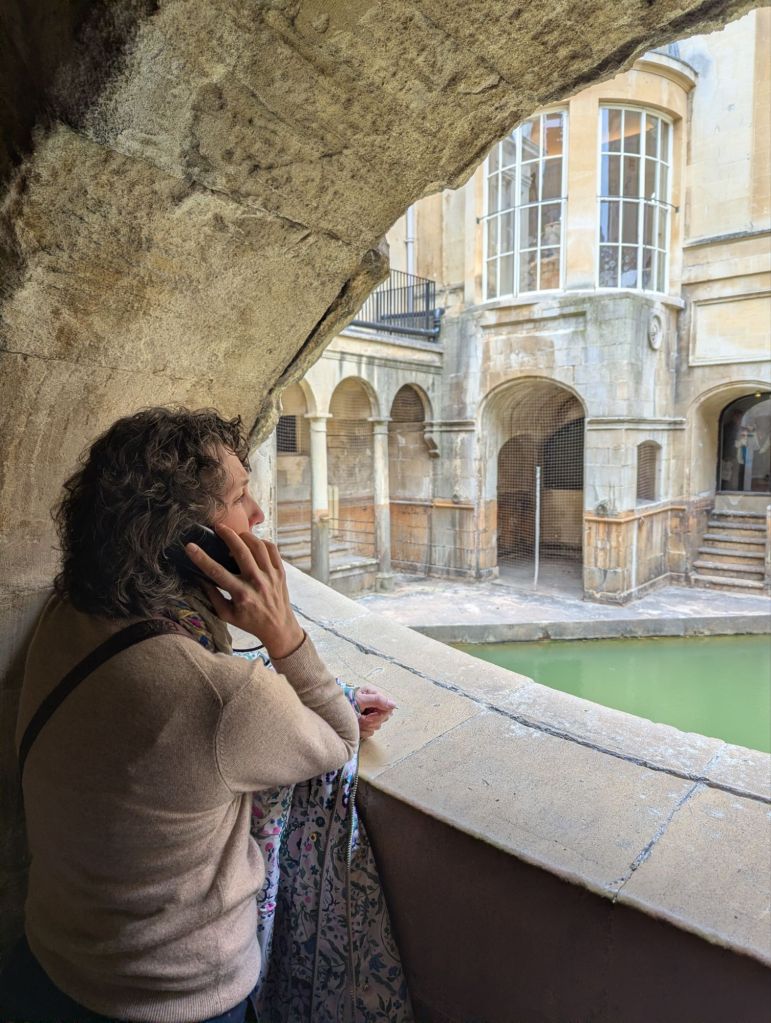
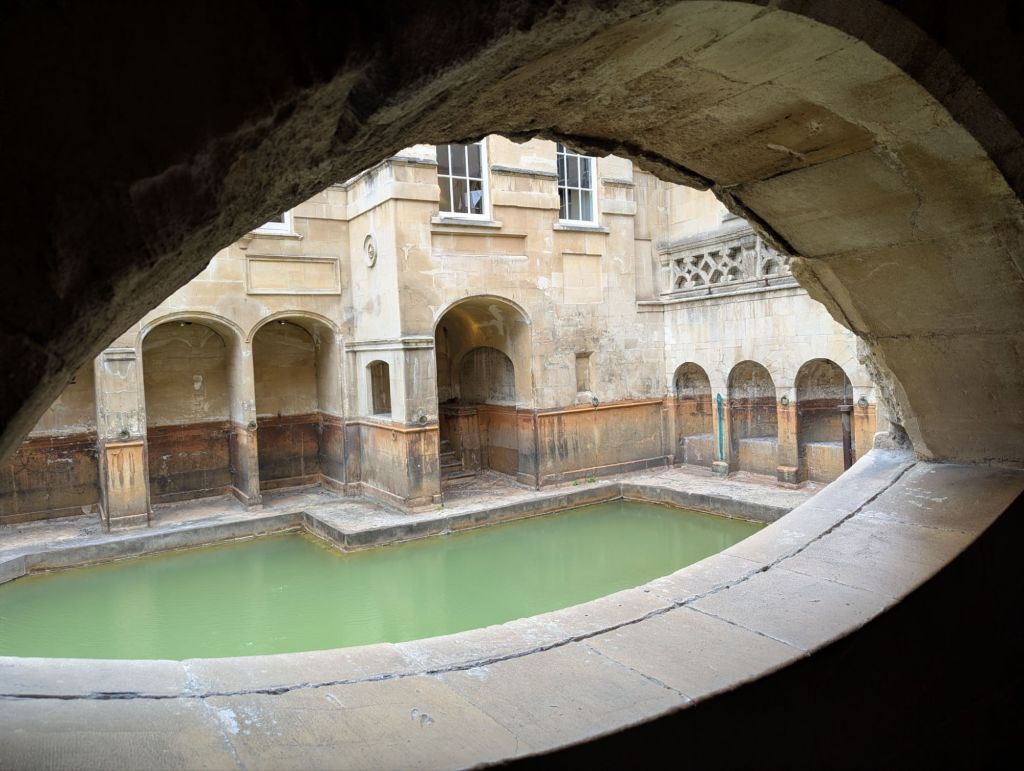
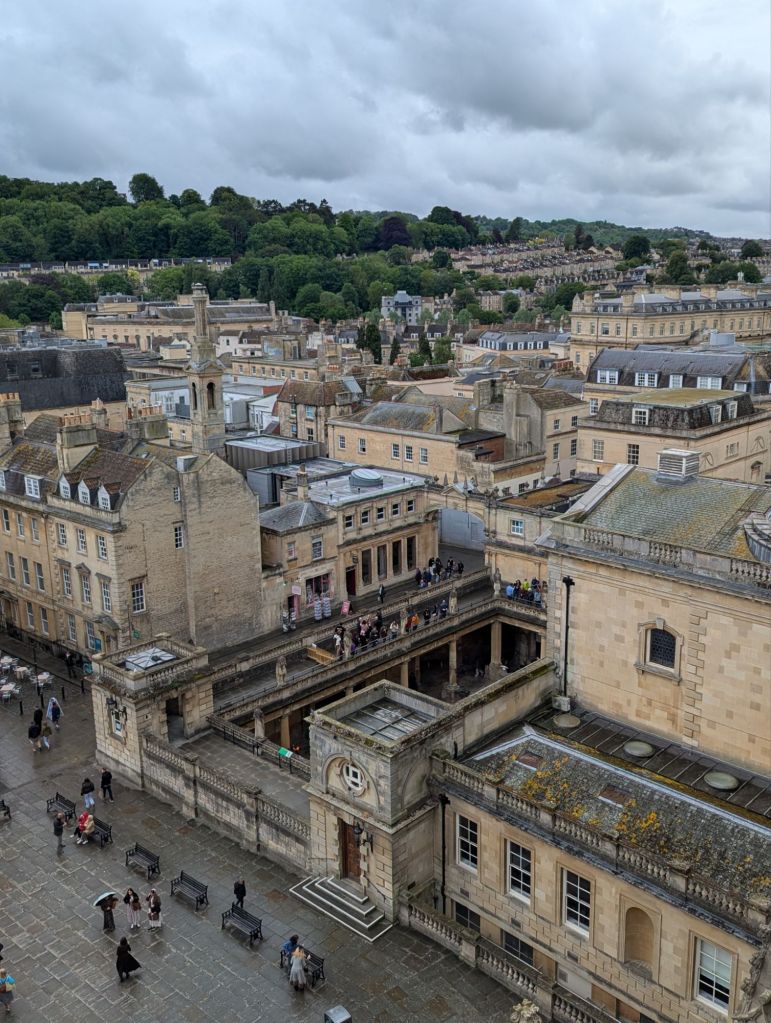
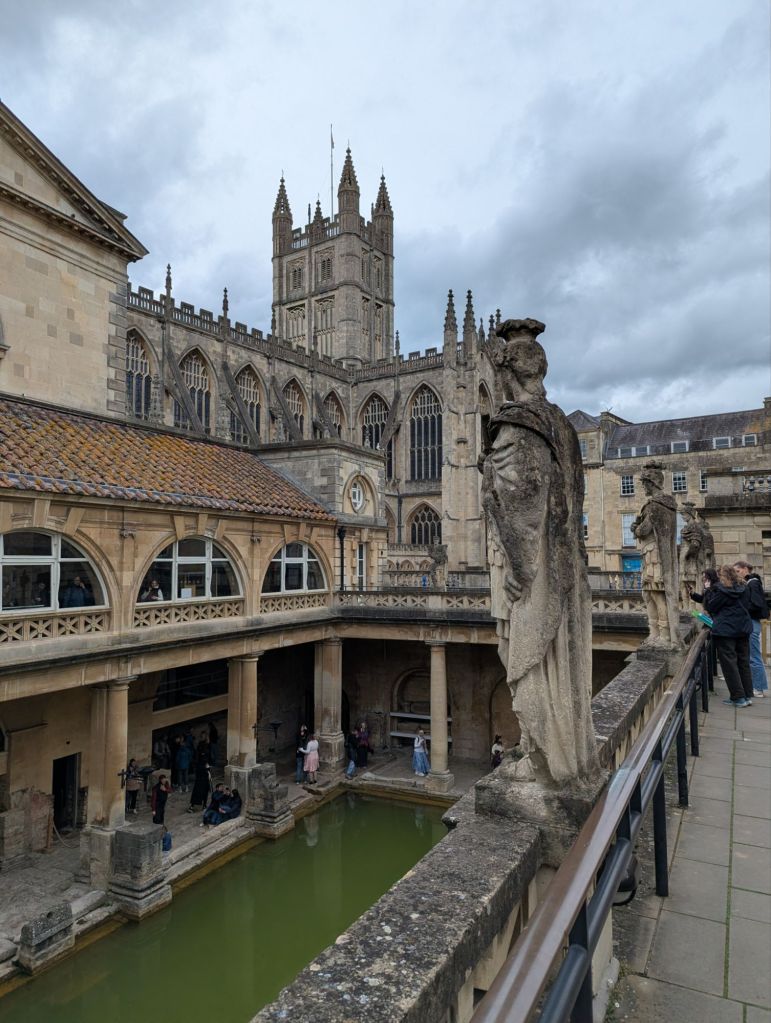
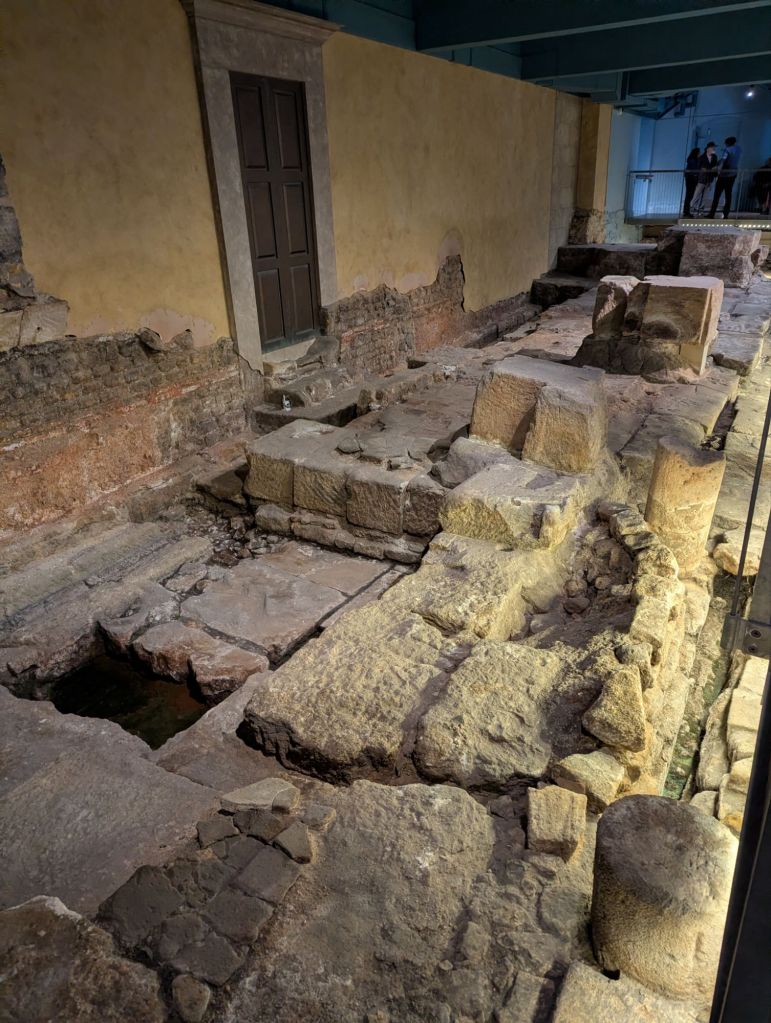
At 1:00 PM we entered the fascinating Roman Baths. The excellent audio guide walked us through three underground levels that were part museum and part ancient ruins. It is remarkable to think about the engineering required to build and maintain this enormous bathing complex nearly 2,000 years ago.

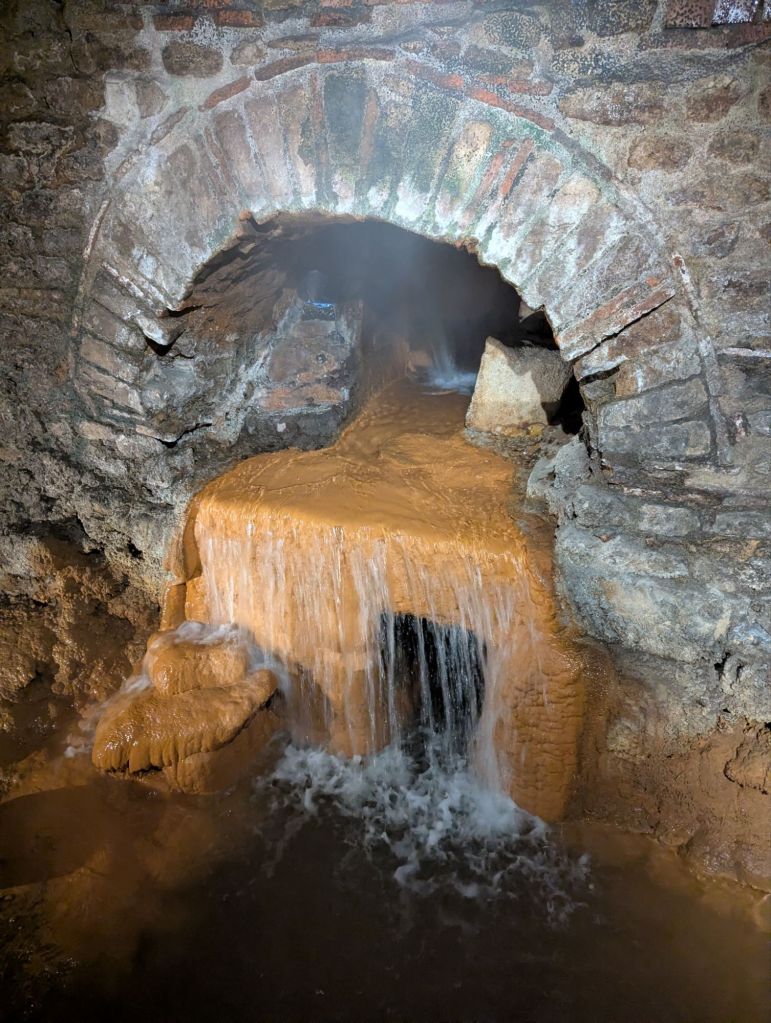
The “King’s Spring” still produces roughly 257,000 gallons of mineral-rich hot water every day. When the water emerges from underground, it is naturally heated to about 115°F (46°C). Today, the spring water helps supply modern spas and even geothermally heats local buildings, including Bath Abbey, which now has radiant heating beneath its floor.

As we toured the baths, we learned that the Romans strongly believed in the health benefits of alternating hot and cold temperatures. The complex included not only the main hot bath, but also cold plunge pools, steam rooms, heated chambers with fires beneath raised floors, and even exercise areas. Apparently wellness trends, recovery routines, and hot-cold therapy are not nearly as modern as we sometimes think.

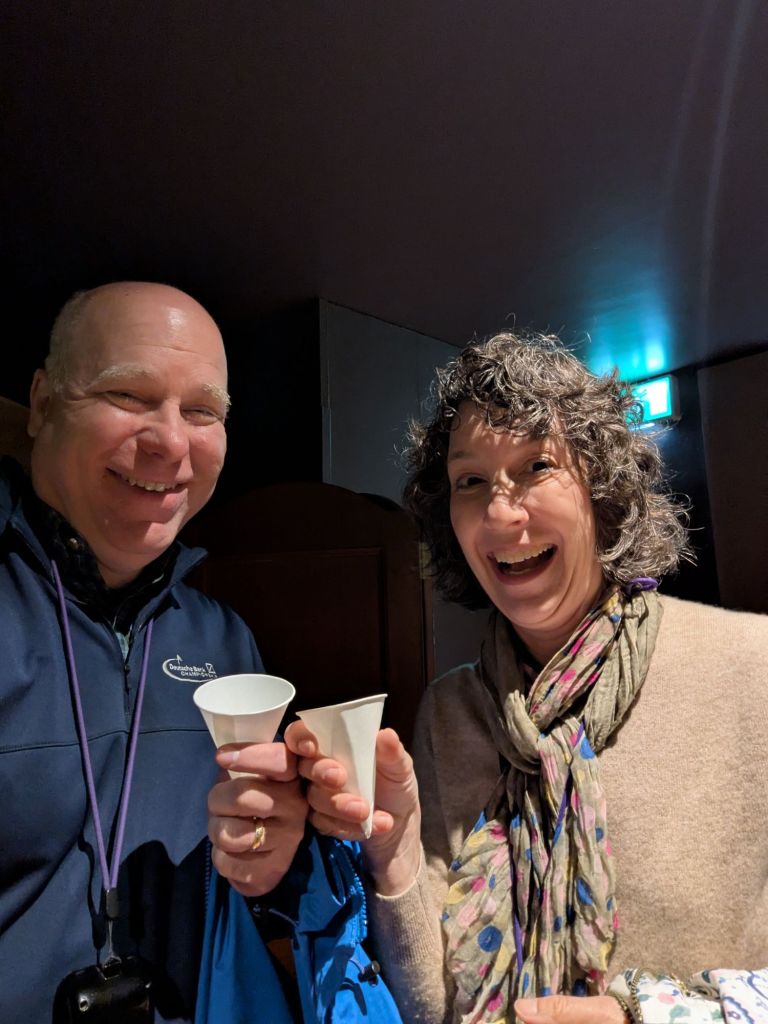
We ended our visit by tasting the mineral water ourselves. While the Romans bathed in it, many visitors in the 1700s and 1800s believed drinking the water promoted good health. We hope they are right.

After a couple of hours exploring the Baths, we were more than ready for afternoon tea, which has quickly become one of our favorite daily routines. We found a small Georgian tea room where Karen enjoyed a traditional cream tea while Greg opted for lemon lime cake alongside his tea. Absolutely delicious.

Refreshed and renergized, we returned to Bath Abbey for our “tower tour.” Calling it a tower tour turned out to be slightly misleading because the tower itself is currently under renovation and visitors cannot actually go into it. Still, the tour ended up being one of the most unique experiences of the day.

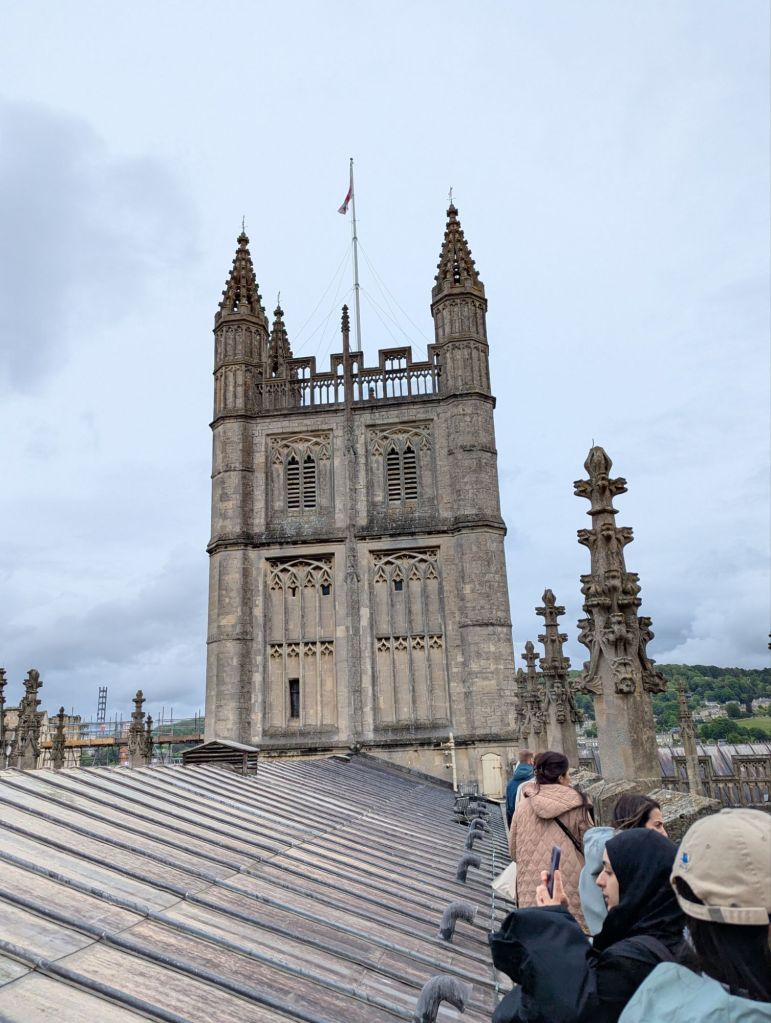
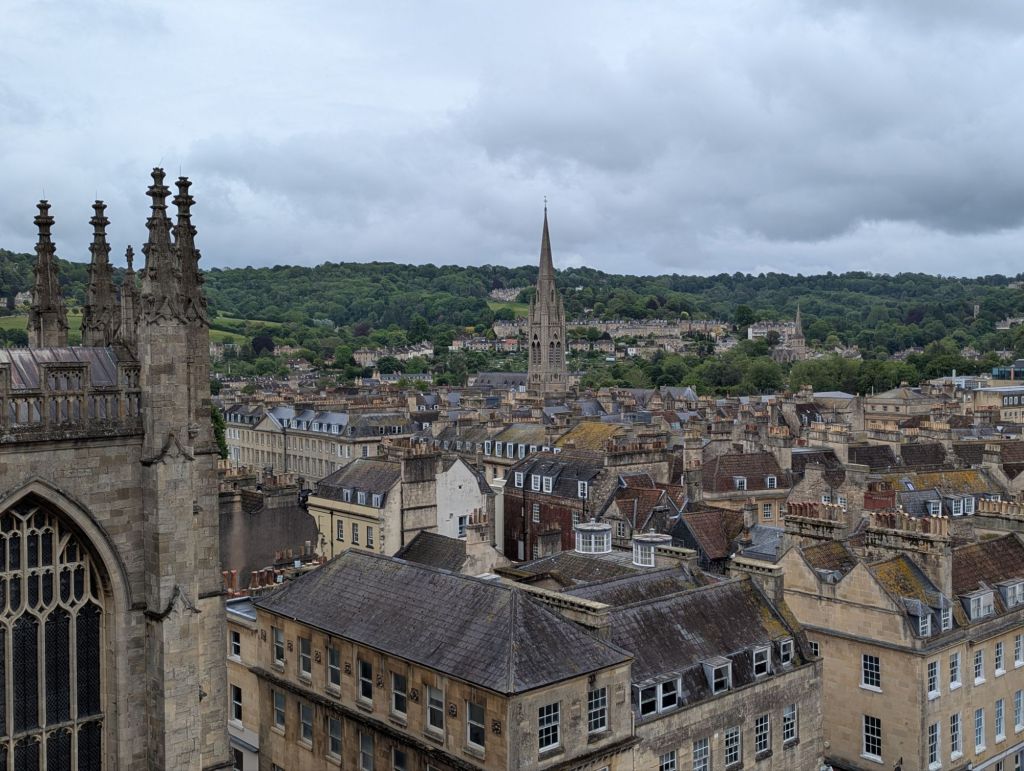
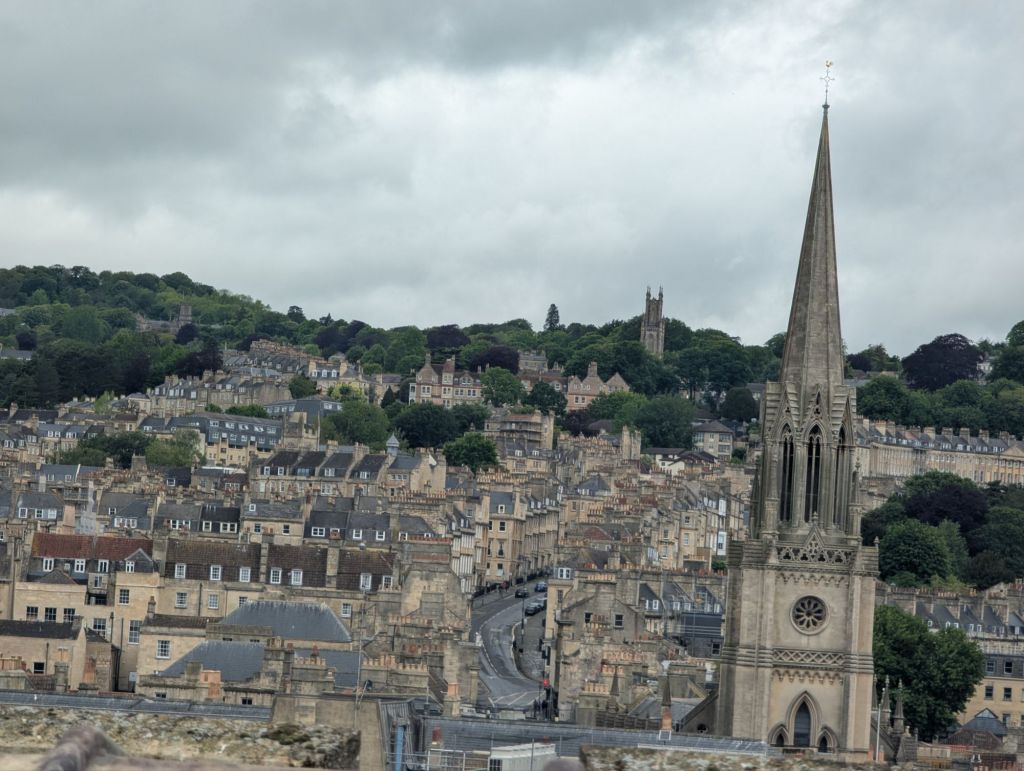
We climbed a narrow circular staircase to the Bishop’s Gallery, where visiting bishops historically could wave to crowds gathered below. From there we continued up another spiral staircase and carefully crossed a narrow rooftop walkway with wonderful views across Bath.

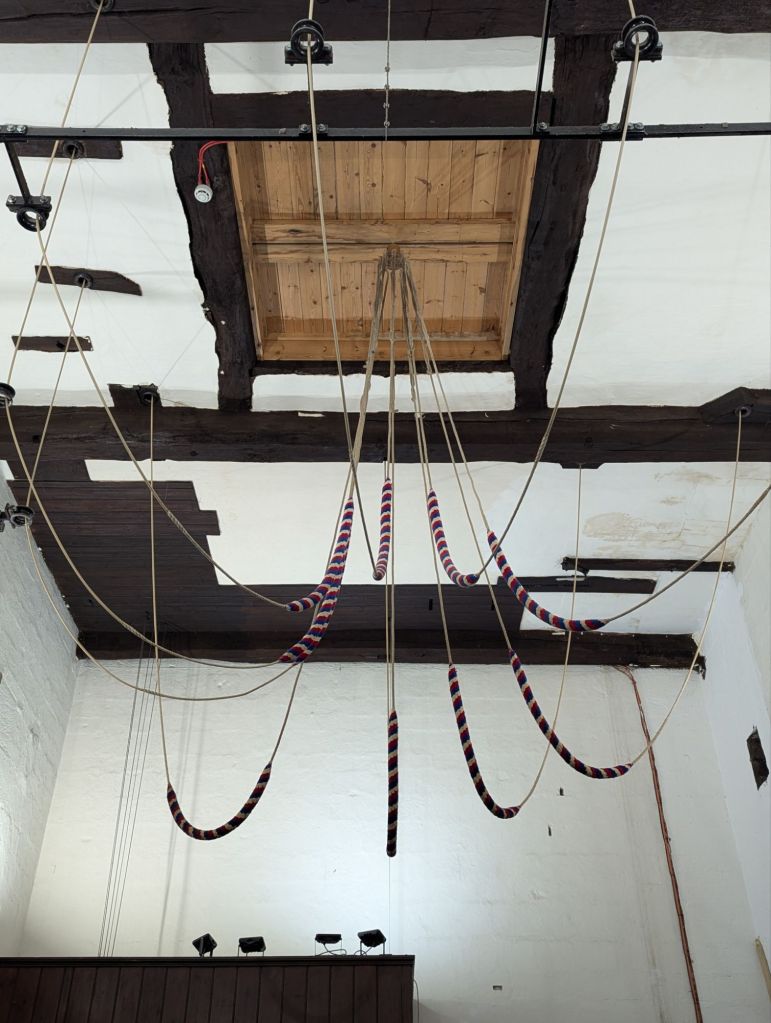
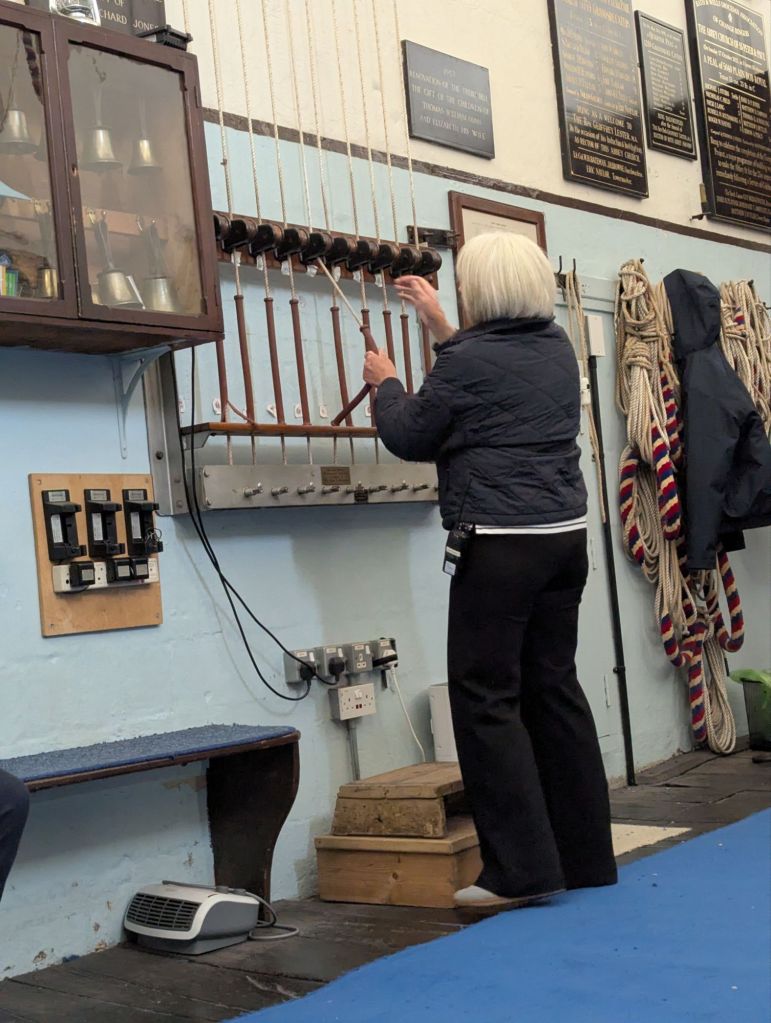
Eventually we reached the bell room. While we could not see the bells themselves because they are housed higher in the tower, our guides provided information about English change ringing, where teams of people pull ropes in precise mathematical patterns to create constantly changing bell sequences, and the various other ringing mechanisms in the tower.

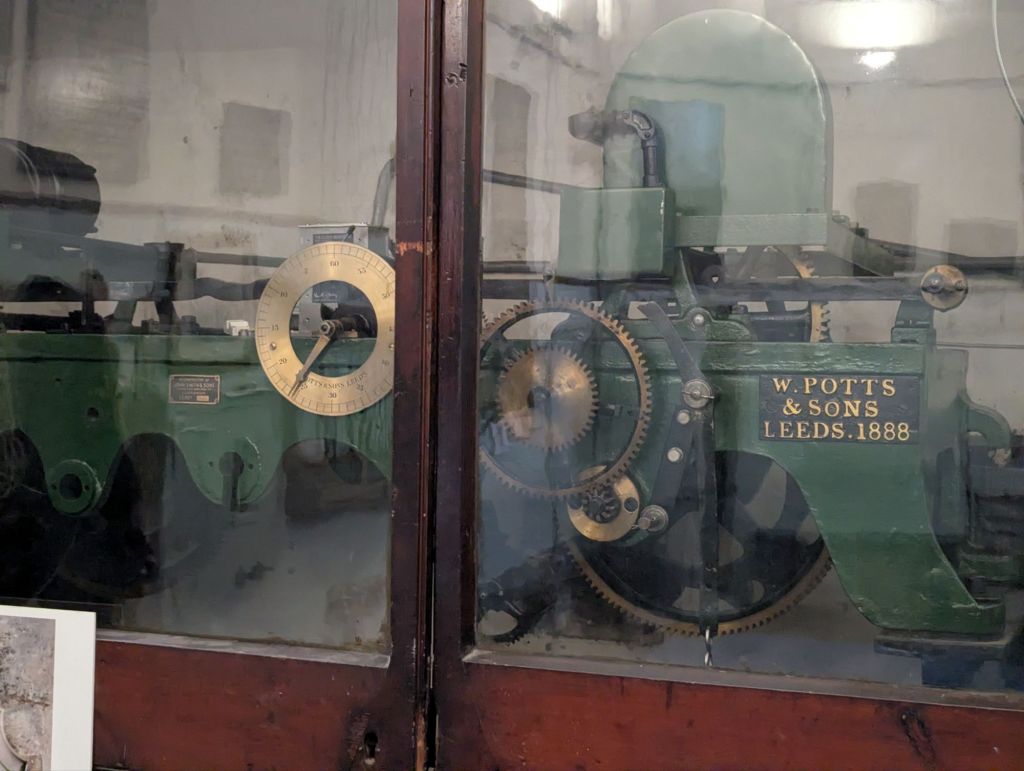
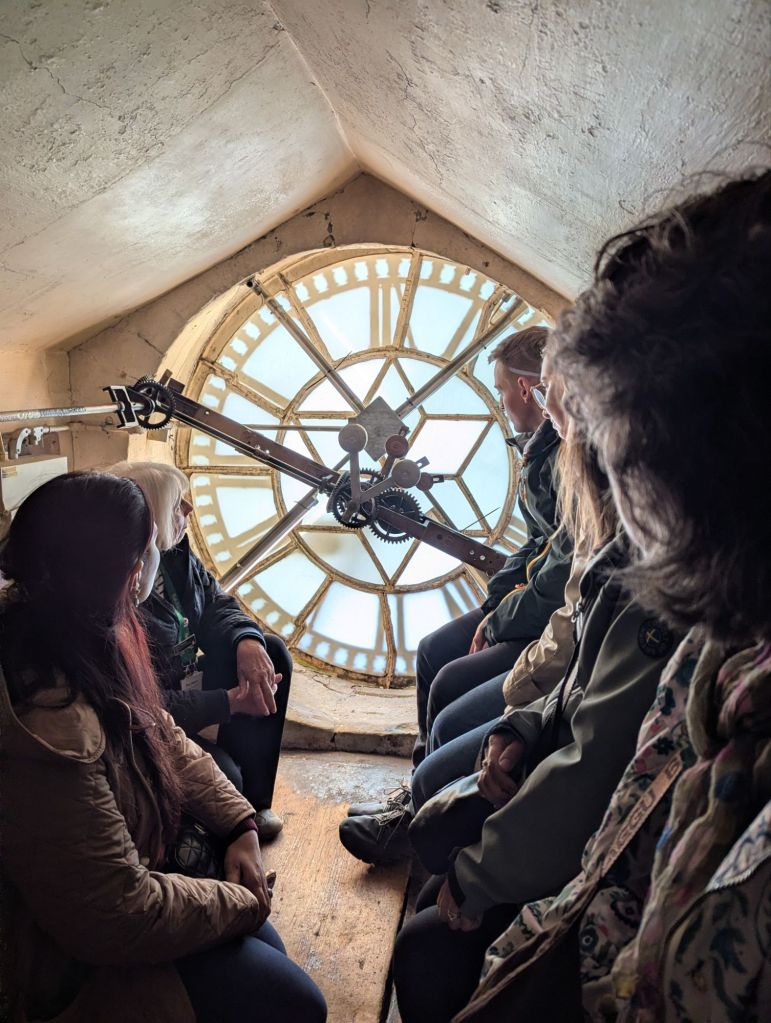
We also squeezed into tiny spaces to see the Abbey’s clock mechanism and even viewed a ventilation hole cut into the ceiling centuries ago because conditions inside the church had become, well… unpleasant. With people buried beneath the Abbey floor, warmer weather apparently created some challenges.

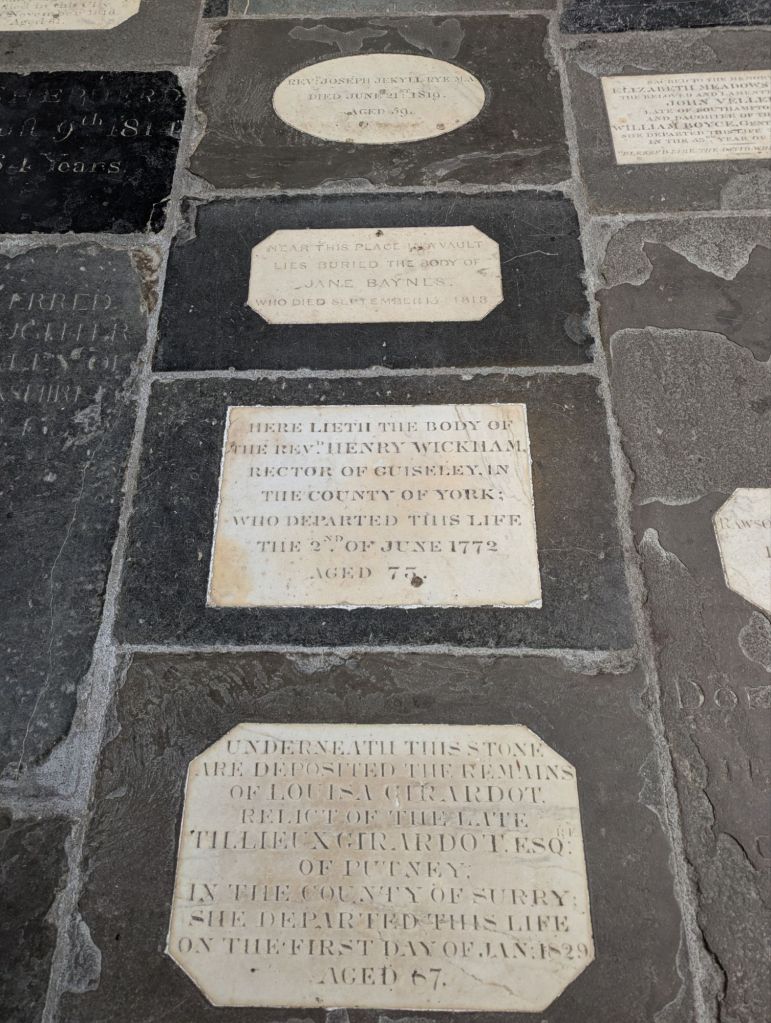
And there are a lot of people buried there. In total, more than 6,000 bodies lie beneath the Abbey floor, with over 1,500 memorials throughout the church. You could spend hours simply reading the plaques, inscriptions, and engraved floor tiles imagining the stories behind them.

Once back on the street, we wandered through a few shops before the light rain gradually became a steadier drizzle. That seemed like the perfect excuse to stop at Bath Brew House, where Greg sampled a couple of local beers while Karen tried a berry cider from Sweden.

After dinner on the way back to the hotel, we settled into our room for a relaxing evening and, naturally, watched a little more Bridgerton before bed.

Tomorrow begins Part 4 of our trip!

Categories: 2026 England Adventure | Tags: , , , , , , , , , | Leave a comment

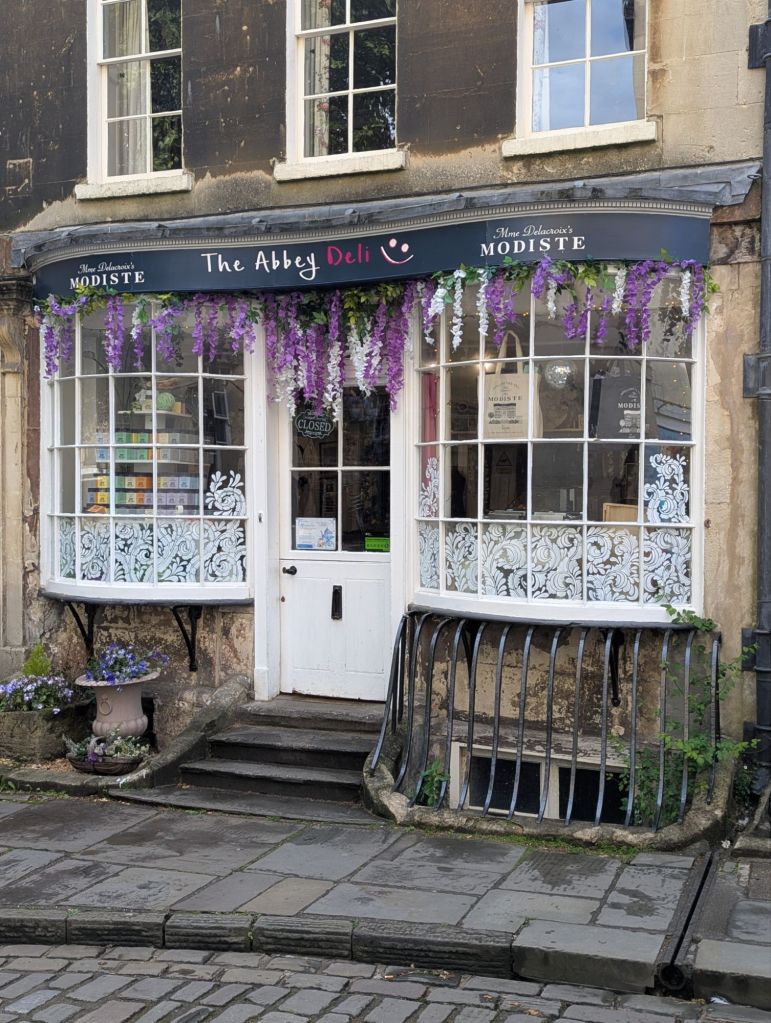
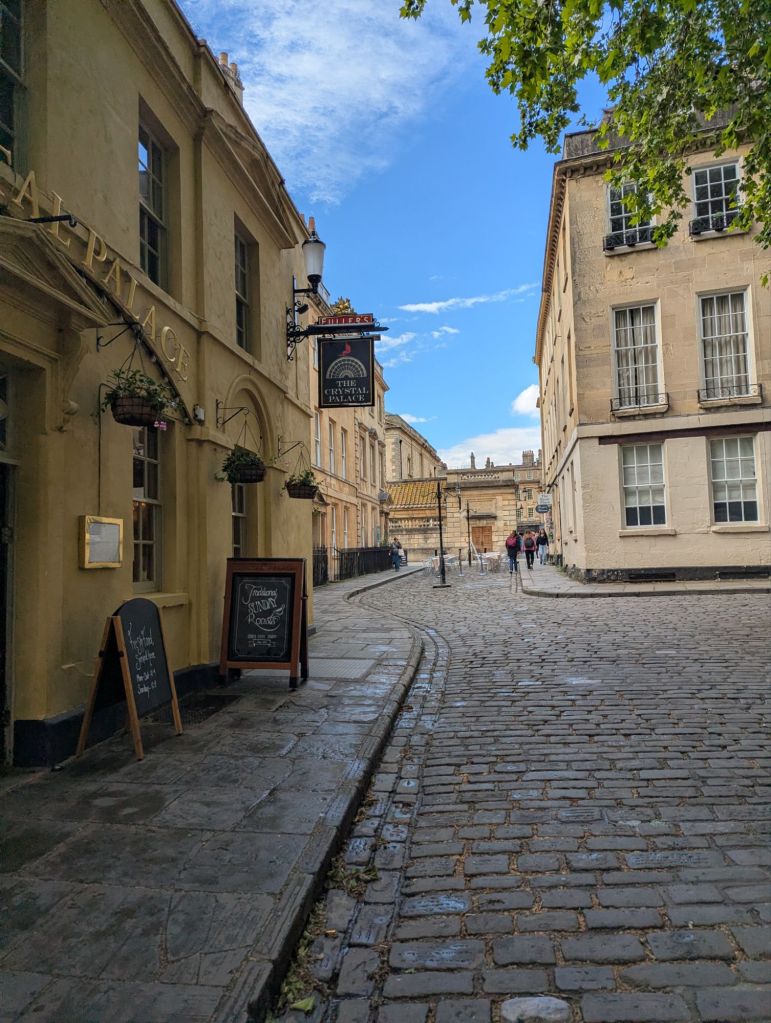
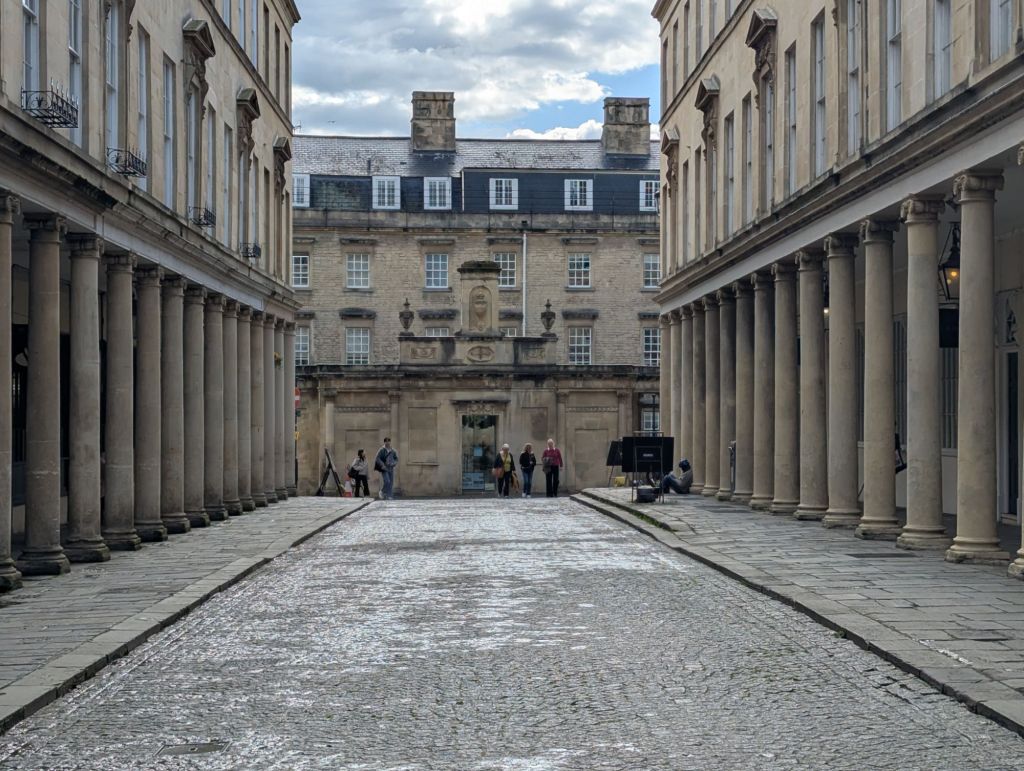
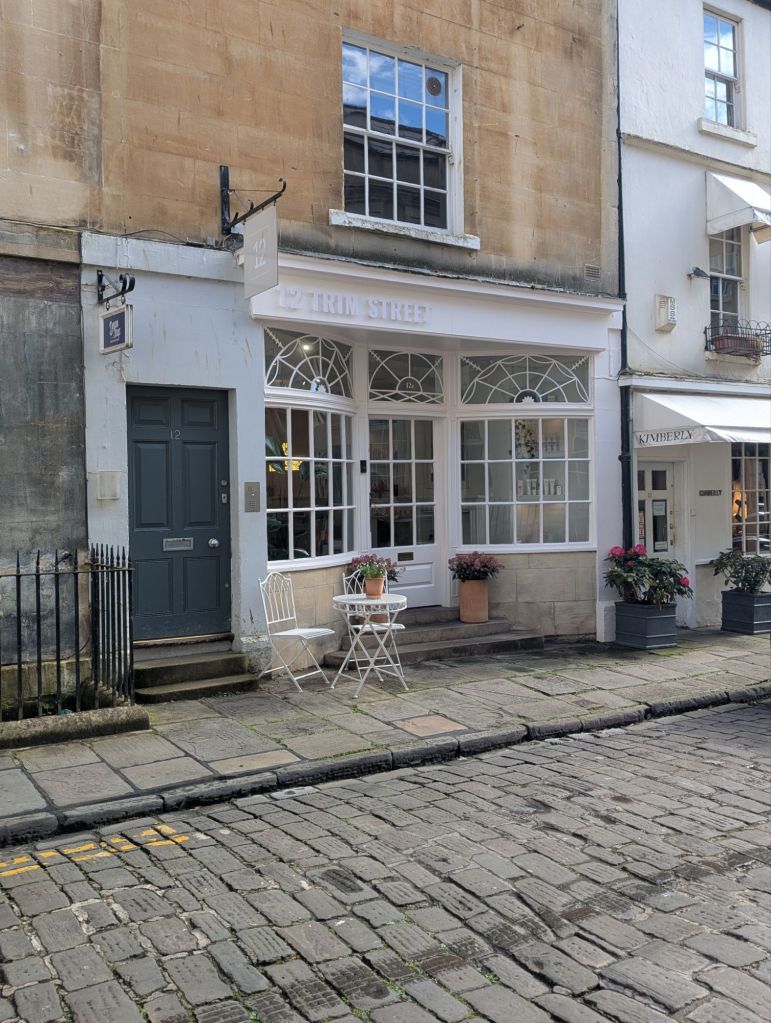
Day 12 in England – Exploring Bath: Roman History, Bridgerton, and Bath Buns

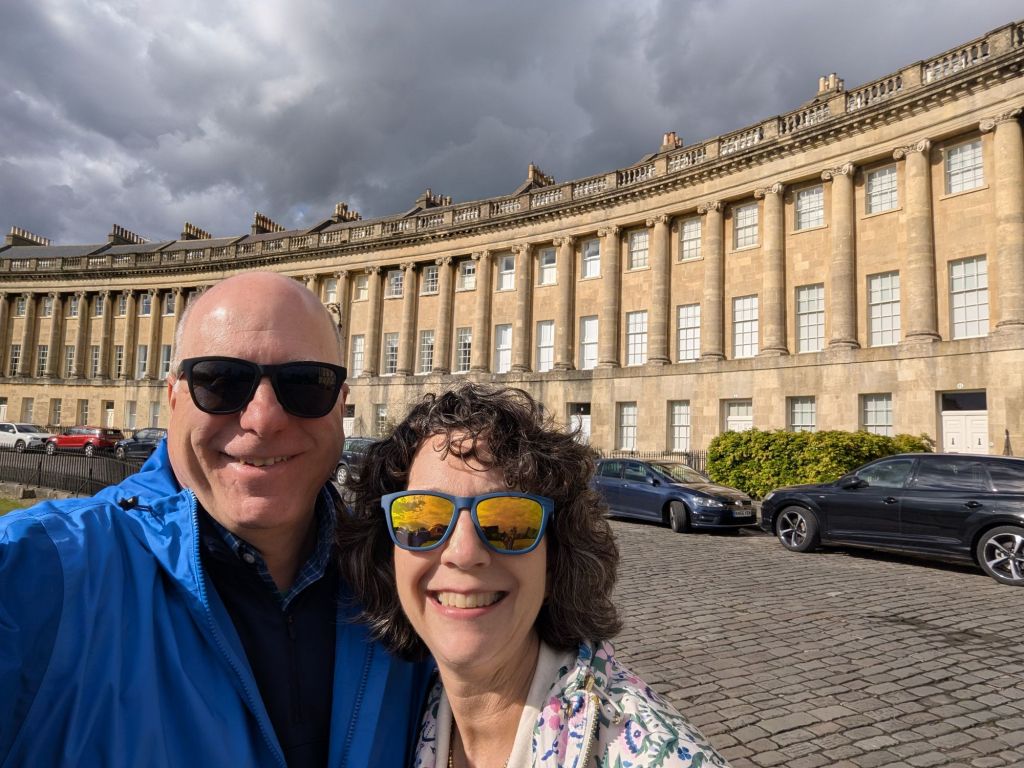
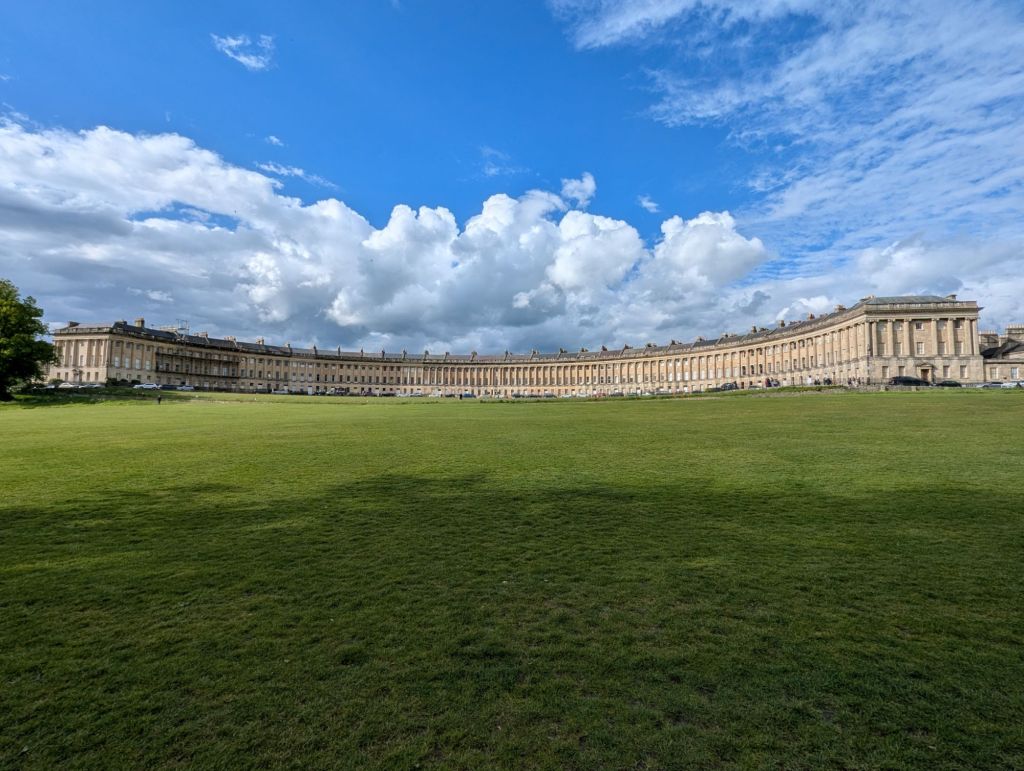
Photo in front of the Royal Crescent in Bath

DAY 12 – FRIDAY, MAY 15, 2026

Today marked the beginning of Part 3 of our trip. With a different pace ahead of us, the morning felt much more relaxed. After breakfast at our hotel, we packed our suitcases, loaded them into a taxi, and were on our way.

As we drove along, we said goodbye to the Cotswolds. We absolutely loved spending time in this beautiful part of England, though we were surprised at how quickly the towns passed by when driving. Places that had taken us hours of walking, climbing hills, and crossing fields suddenly seemed only minutes apart by car!

About 90 minutes later we arrived in Bath. After quickly dropping our luggage at the hotel, we headed out to explore. Within a 10-minute walk we found ourselves right in the city center. It took a moment to adjust to the hustle and bustle after a week in the quiet countryside. We probably saw more people standing in the square near Bath Abbey than we had seen on our walk in the Cotswolds over the previous week!

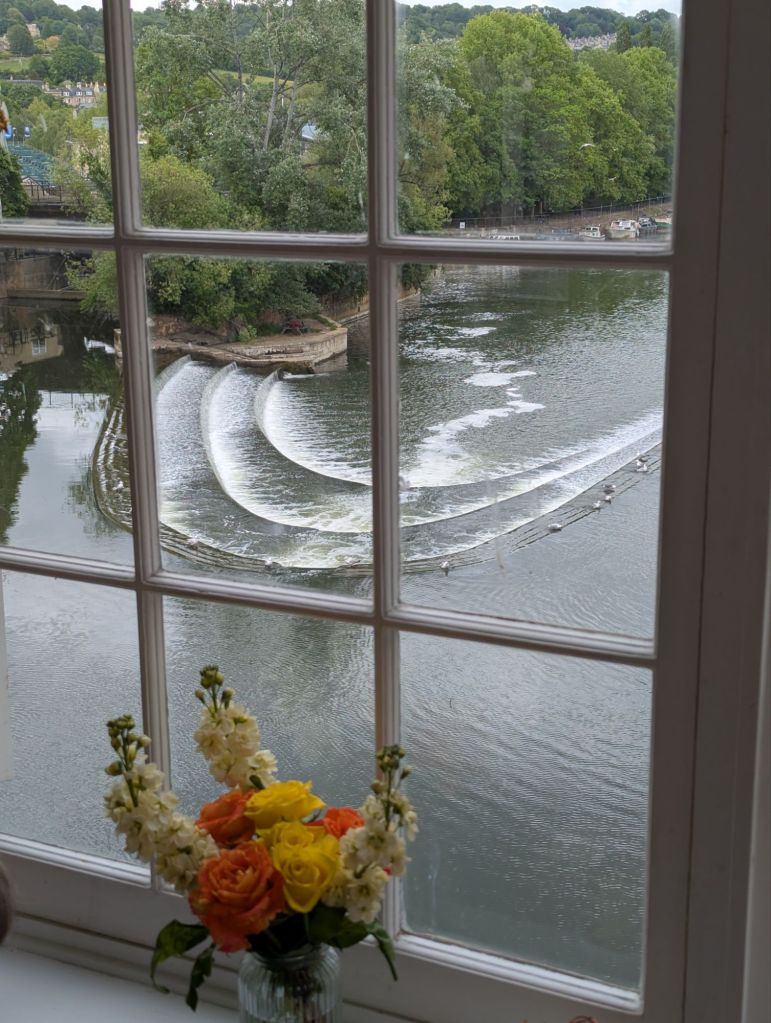
Our first priority was lunch. We ducked into a coffee shop right on Pulteney Bridge so we could enjoy a pasty, a handheld meat pie, while overlooking the River Avon.

Later in the day we learned from our tour guide that “Avon” comes from an ancient Brittonic word simply meaning “river.” That explains why there are several different rivers throughout England all named River Avon. Apparently centuries ago, distinguishing one river from another was not considered especially important.

After lunch we headed to the square in front of Bath Abbey, where we found one of the city’s famous free walking tours. Bath has approximately 100 volunteers known as the Mayor’s Honorary Guides who lead free two-hour tours throughout the week. No tips are accepted. As our guide Martin explained, “We’re just a group of people who love our city.”
The tour was excellent and gave us both a great overview of Bath and plenty of historical context. Because of the area’s geothermal hot springs, Bath has been a destination since the Romans settled here around 60 AD. Much of the city we see today, however, dates to the Georgian and Regency periods of the 1700s, when Bath became a fashionable resort town designed to attract wealthy visitors seeking the therapeutic benefits of the baths.
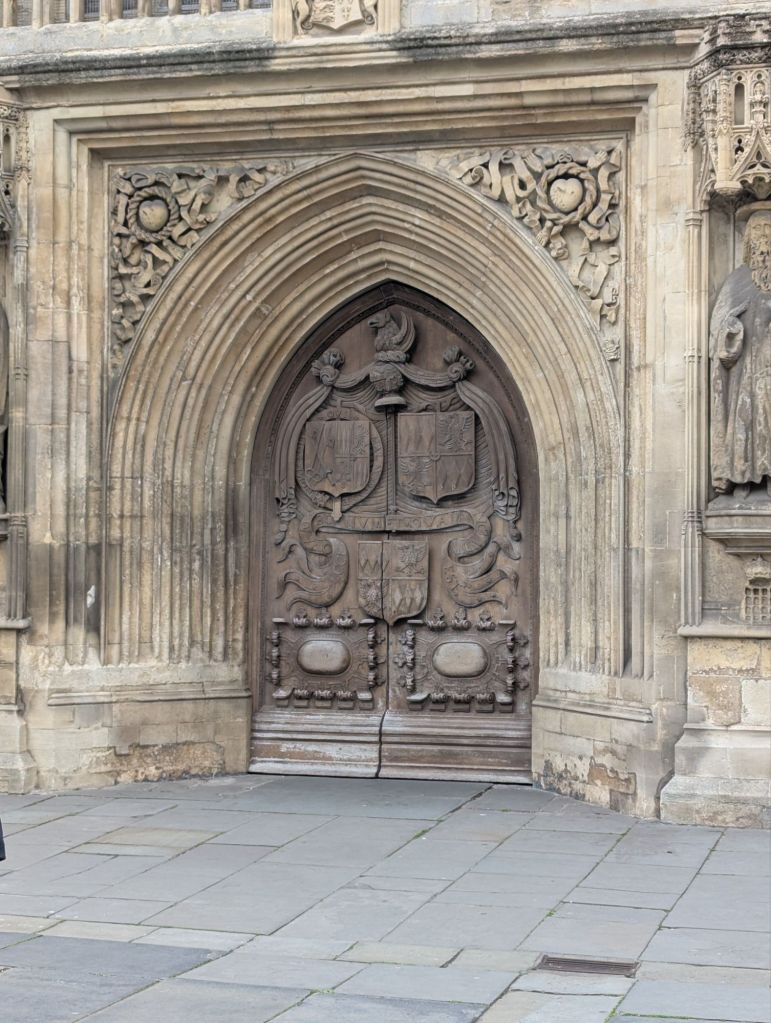
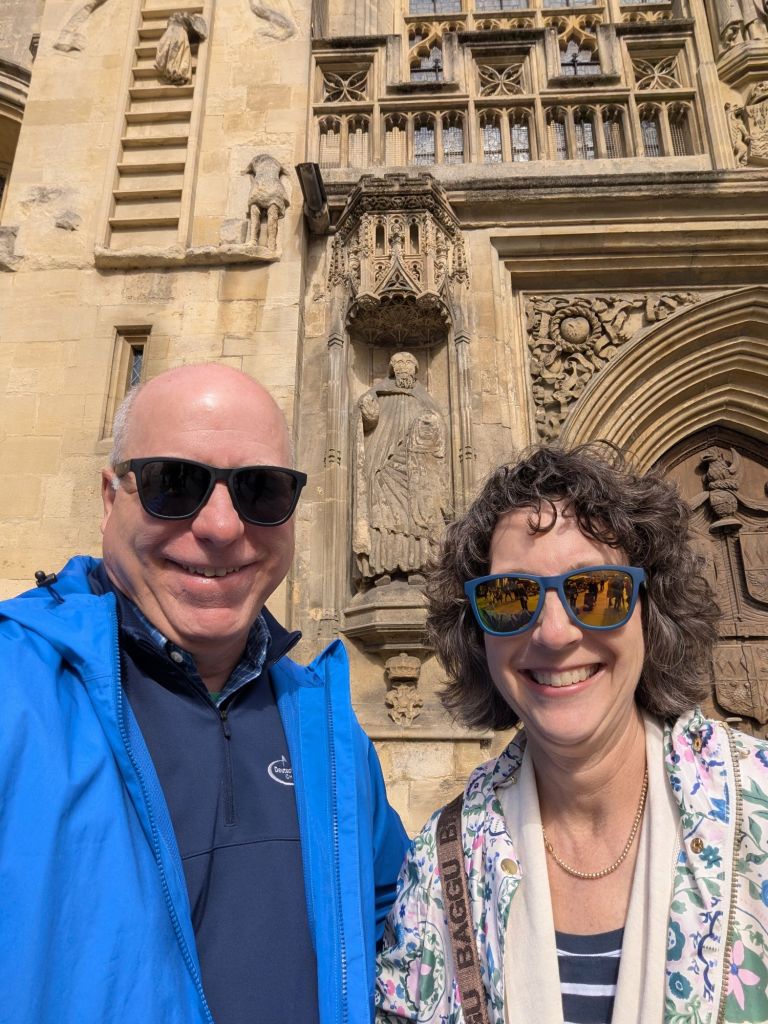
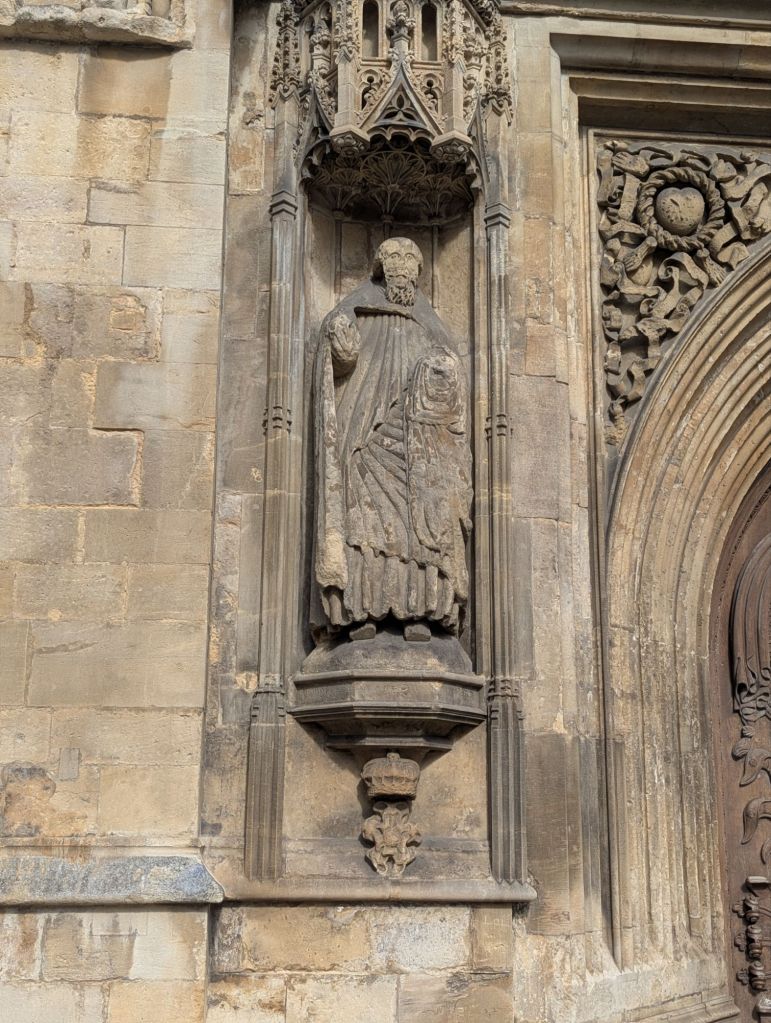
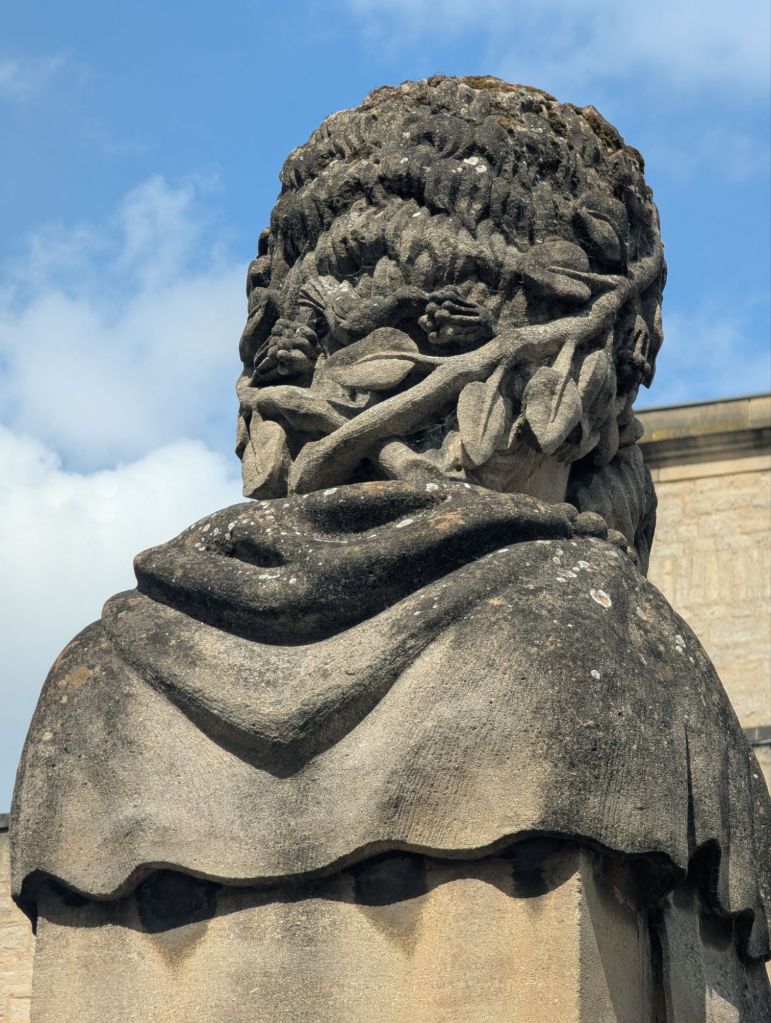
One amusing detail we learned on our walking tour involved one of the statues to the left of the front entrance of Bath Abbey. According to our guide, the statue’s head was shot off during the civil war centuries ago. When stone carvers later restored it, they supposedly carved the replacement head out of the remaining beard, giving the figure some very unusual proportions. Whether entirely true or slightly embellished over the years, the result definitely looks a bit funny once you notice it, which naturally made it the perfect spot for a photo.
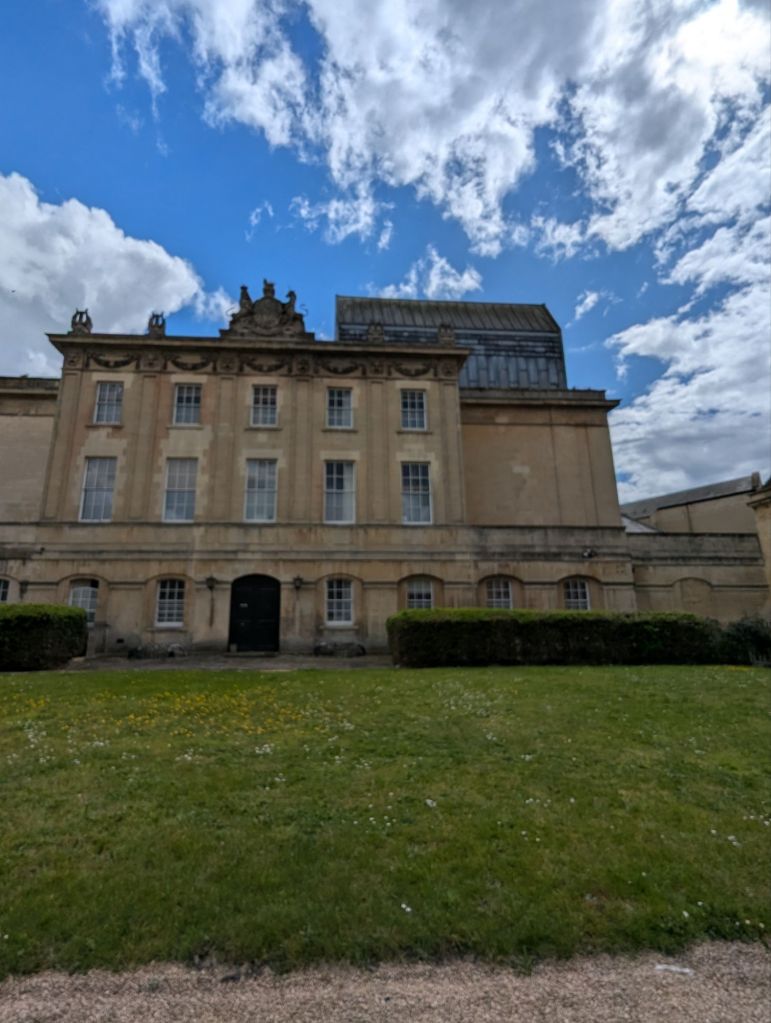
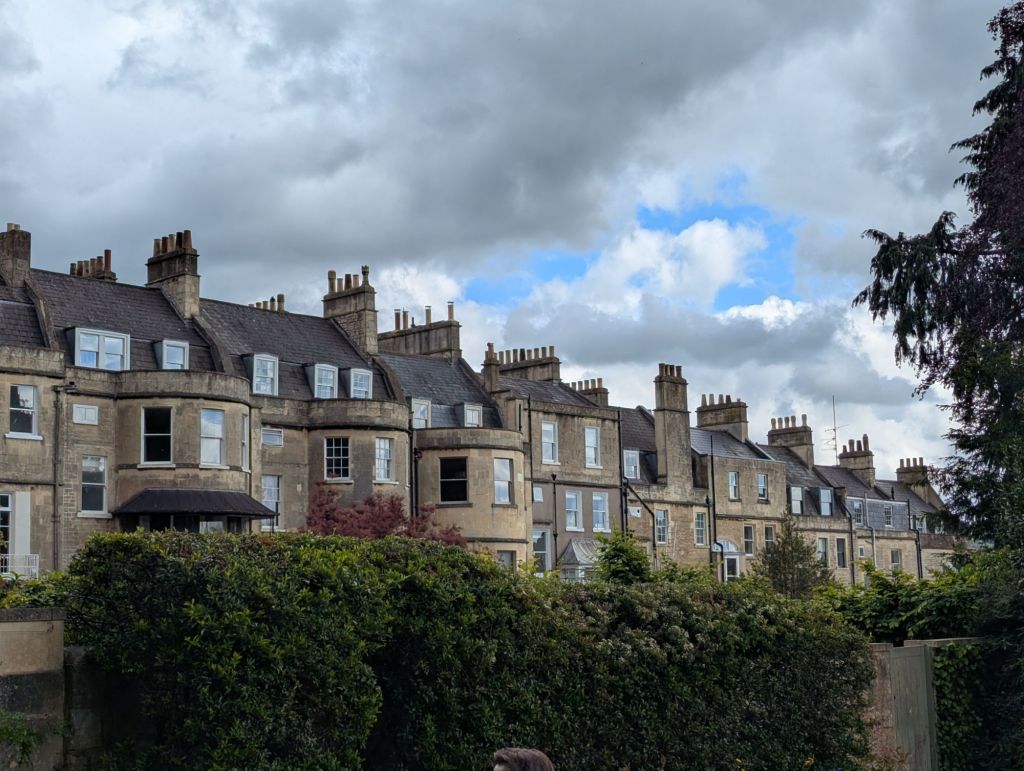
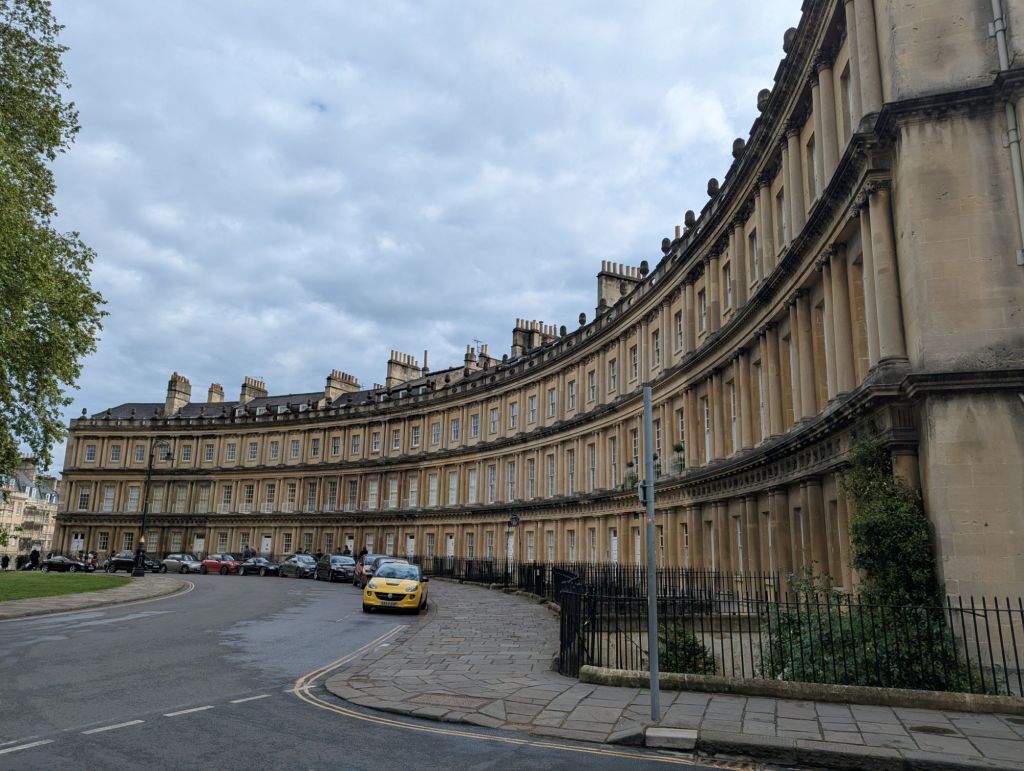
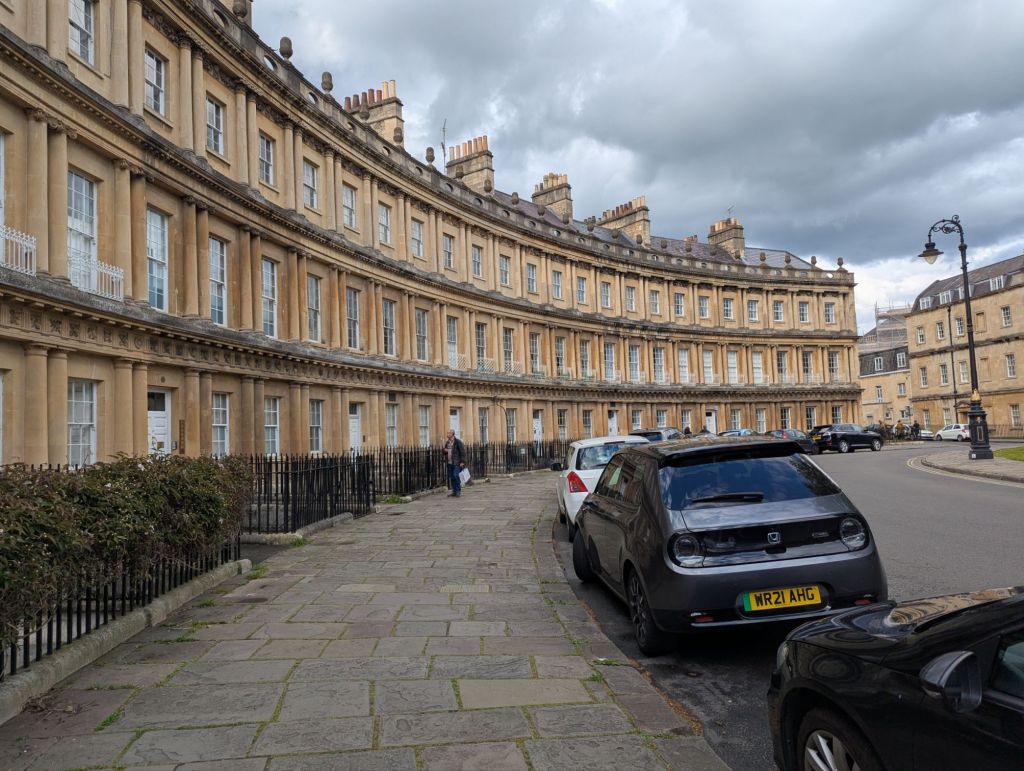
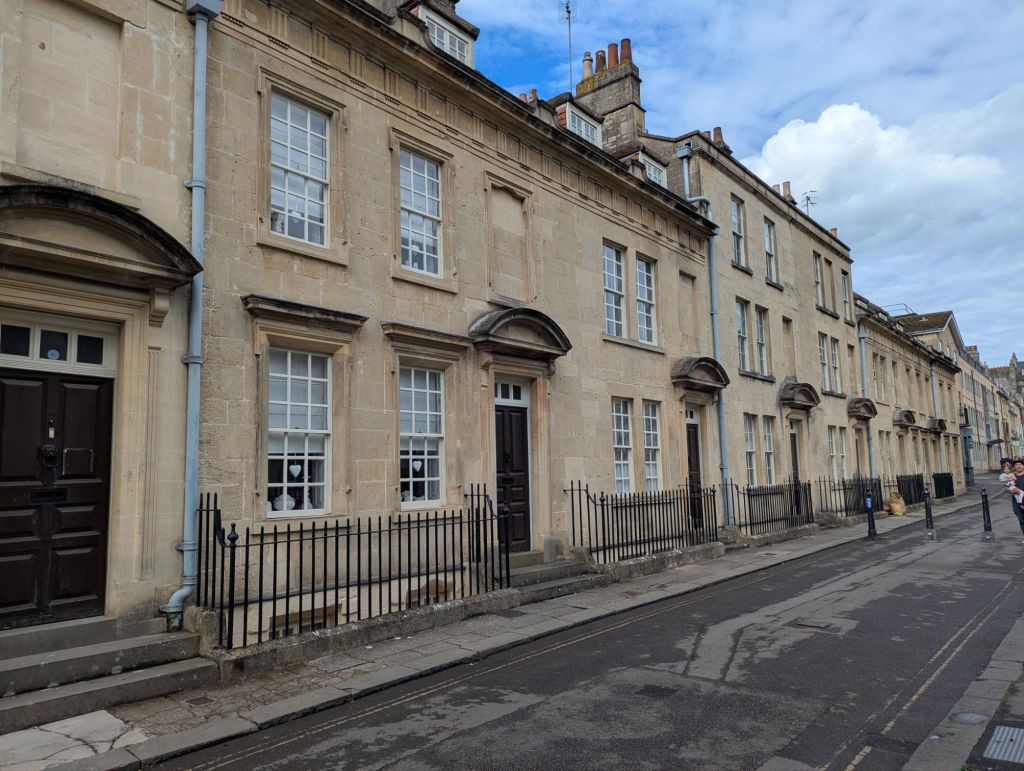
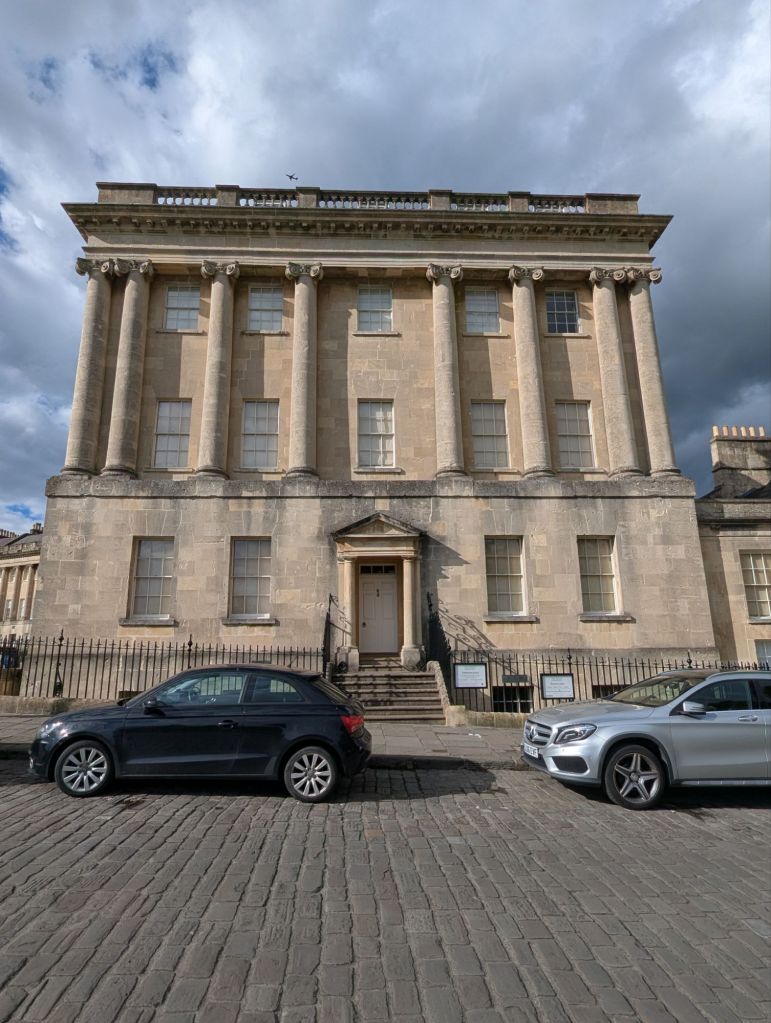
Beautiful Georgian architecture is everywhere in Bath. In addition to Bath Abbey, we visited landmarks including the Royal Crescent and The Circus. Both were revolutionary architectural concepts for their time, using sweeping curved rows of homes to create elegant communal living spaces centered around open green areas. Even today they feel remarkably modern and visually striking.

Unfortunately, about an hour into the tour, the skies opened up and the rain arrived. The tour ended about 25 minutes early, which naturally meant it was the perfect excuse for a tea break.

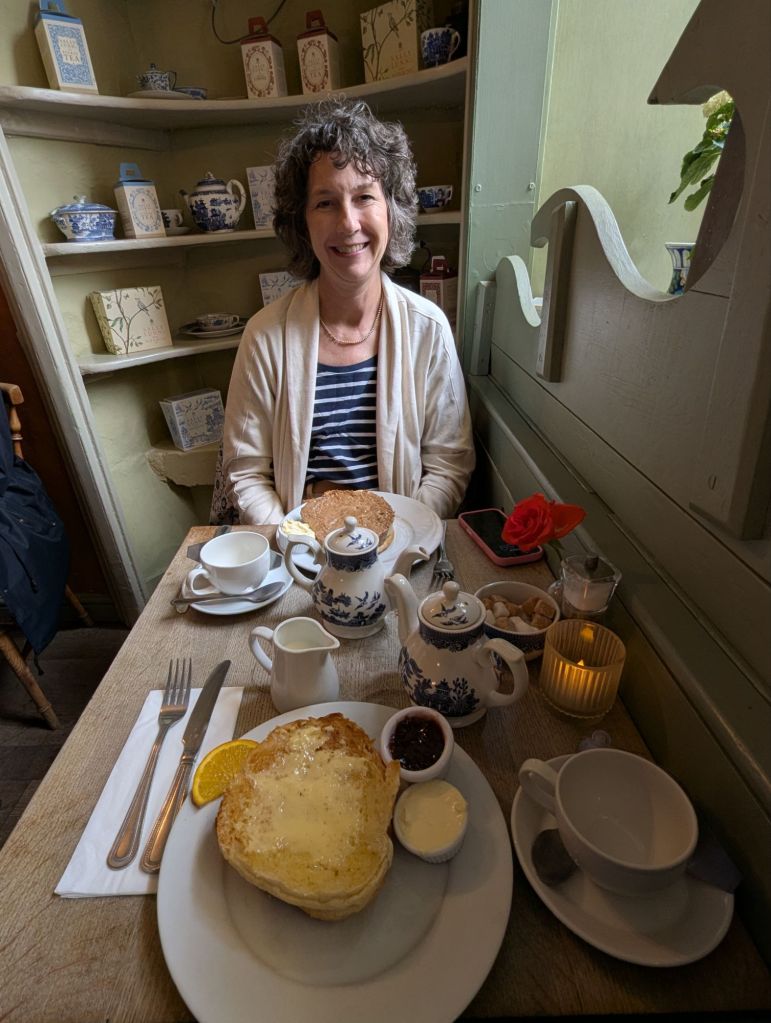
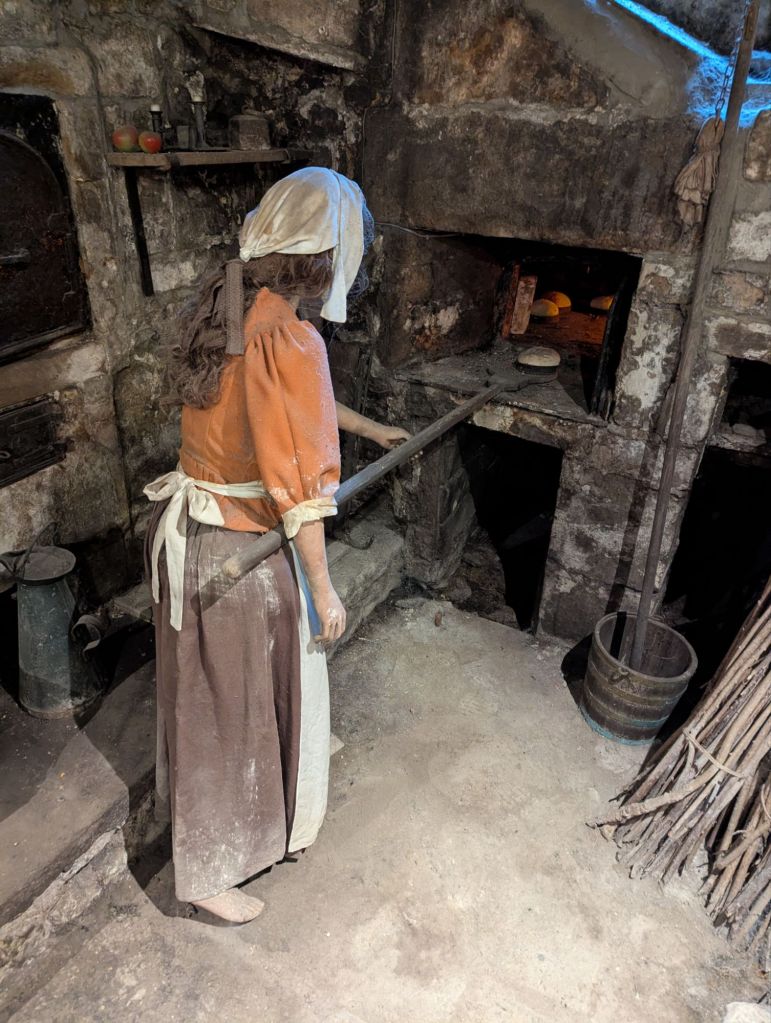
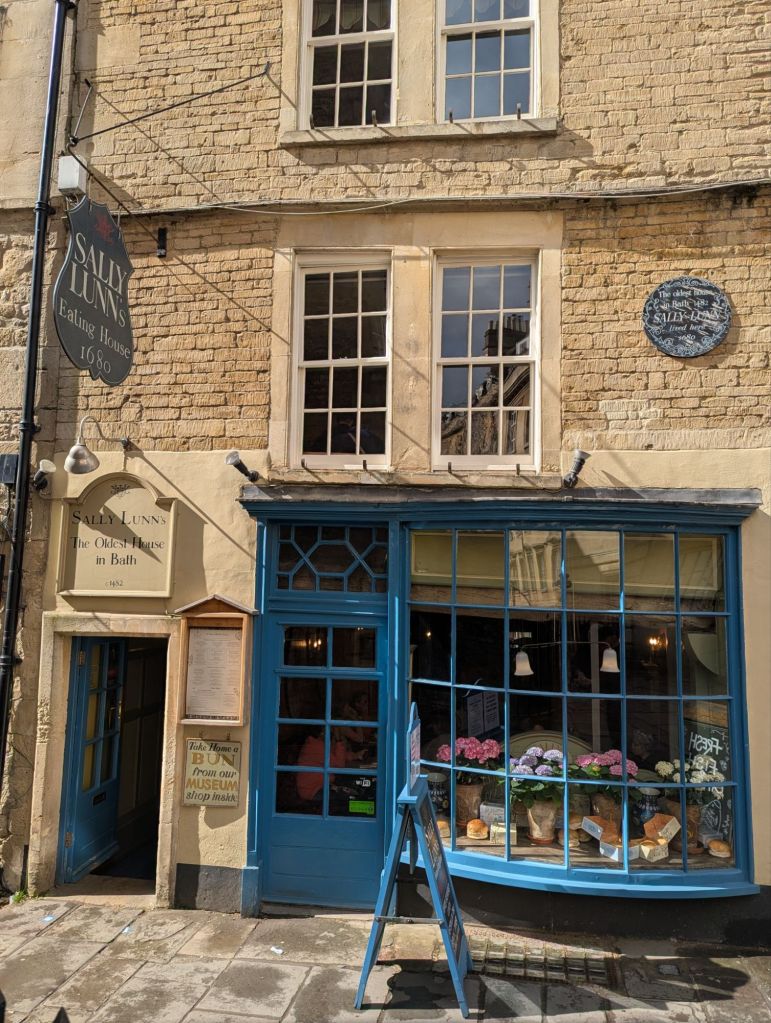
We headed to Sally Lunn’s, one of the oldest tea rooms in Bath. Sally Lunn is credited with creating the famous Bath Bun, which we quickly discovered is less “bun” and more “giant toasted hamburger roll.” Due to its enormous size, each order comes with only half a bun. Greg ordered the traditional version with clotted cream and strawberry jam, while Karen chose one topped with cinnamon butter. Both were delicious, though we agreed that traditional scones still hold the top spot in our rankings.

By the time we finished tea, the rain had stopped. We had planned to tour Bath Abbey, but learned it had closed early because the city was preparing for Party in the City, a huge annual music festival featuring dozens of performers scattered throughout Bath.

So we pivoted to Plan B: a self-guided Bridgerton tour.

It turns out much of the popular Netflix series was filmed in Bath, and we had a great time walking through locations we immediately recognized from the show. Even though we had already covered many of the same streets during our walking tour, seeing them through the lens of Bridgerton gave us a completely different perspective. Plus, the sunshine had returned, making it a perfect time for photos.

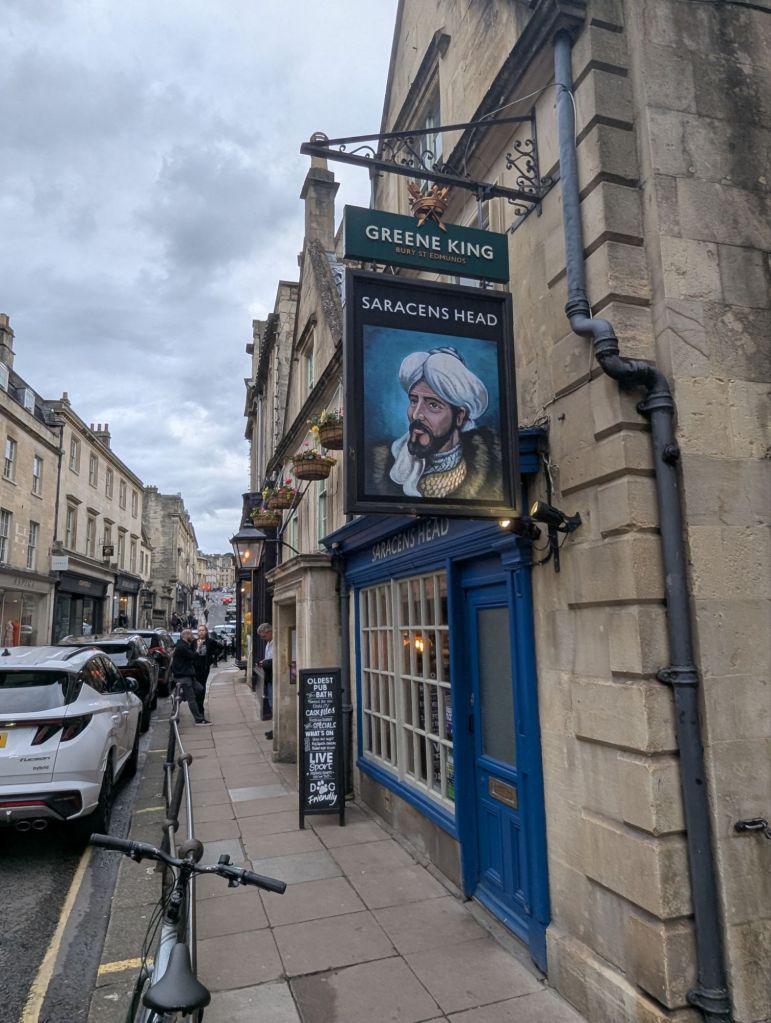
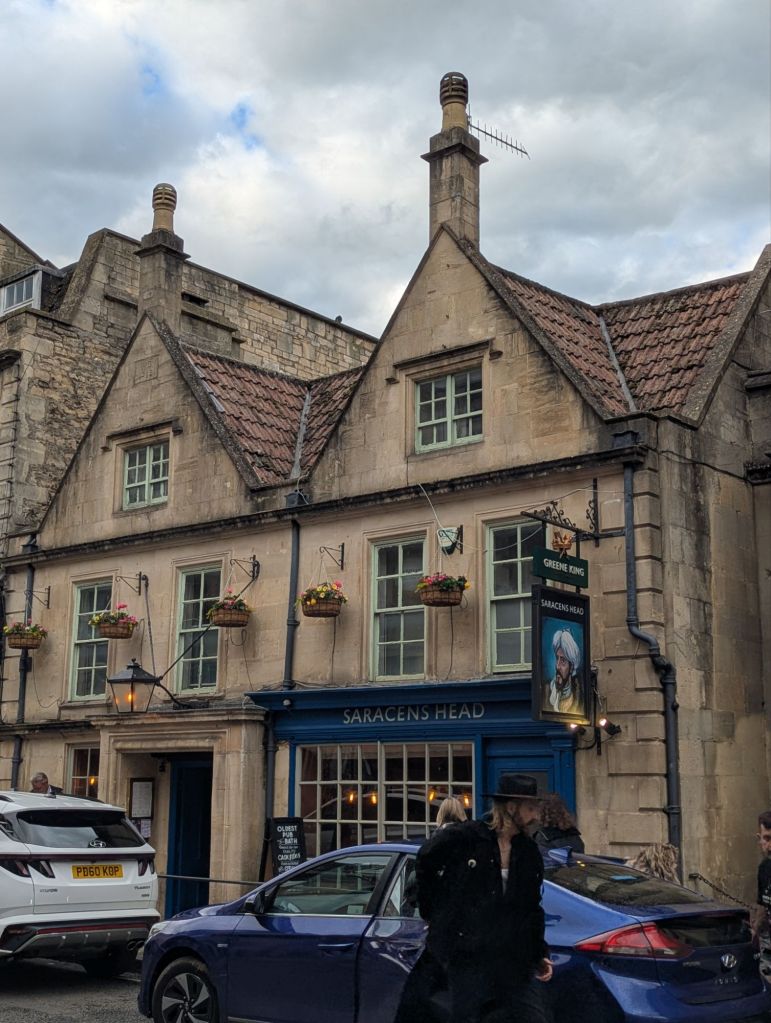
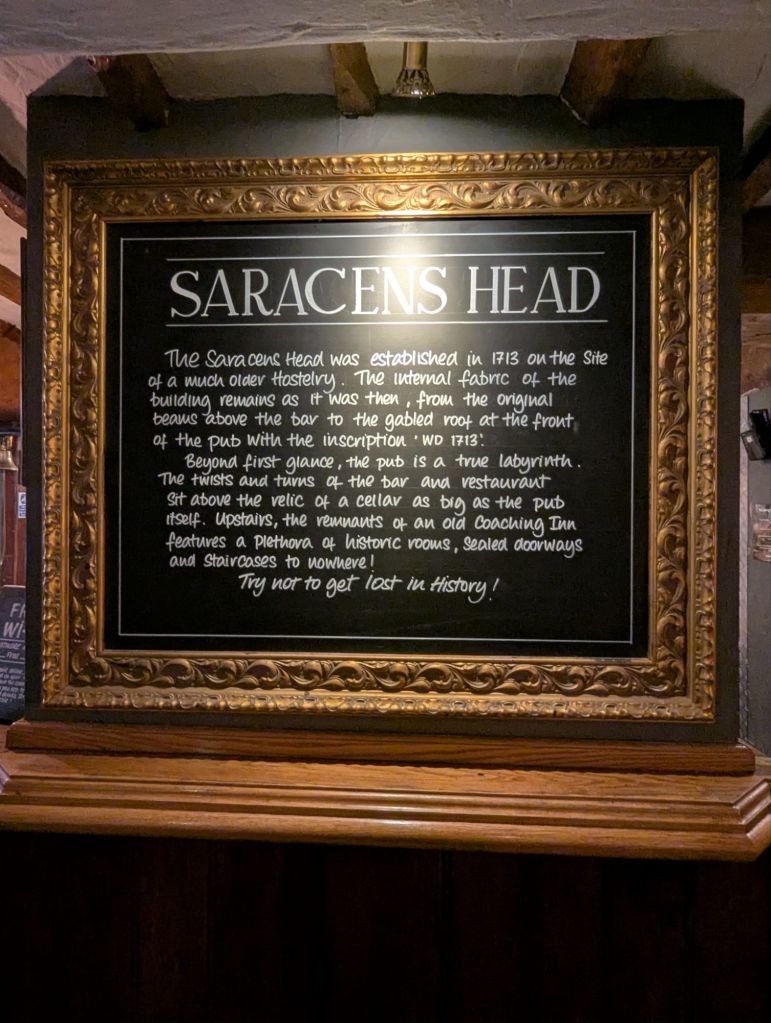
As we wrapped up the tour, we happened to pass the oldest pub in Bath, the Saracen’s Head. Since we were fully committed to absorbing as much Bath history as possible, stopping in felt like the responsible thing to do.

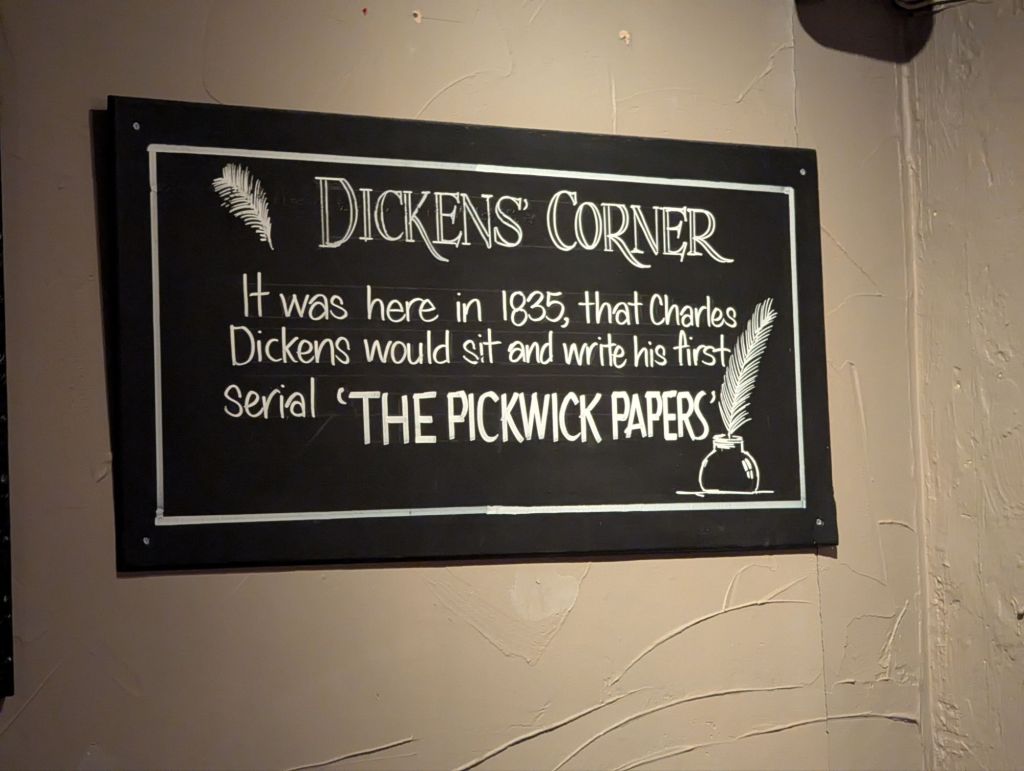
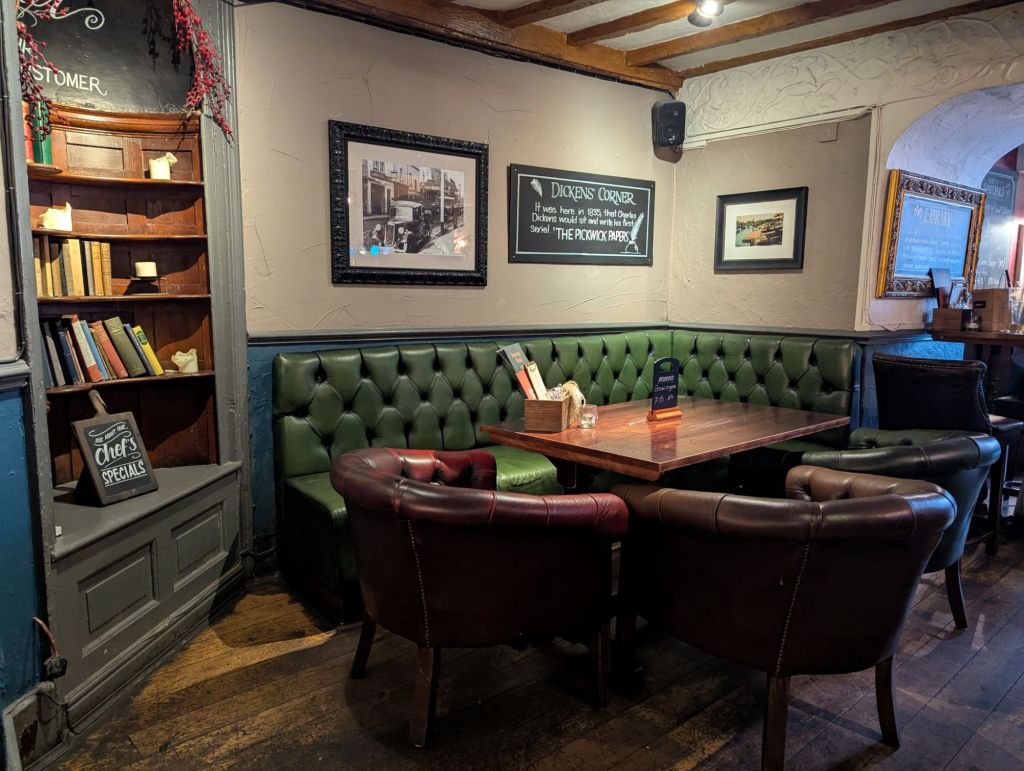
We found a quiet table tucked away from the live music that was starting. Apparently Charles Dickens appreciated this quieter corner as well. He was known to frequent the pub and reportedly worked on portions of The Pickwick Papers while sitting at a table directly across from where we were sitting.

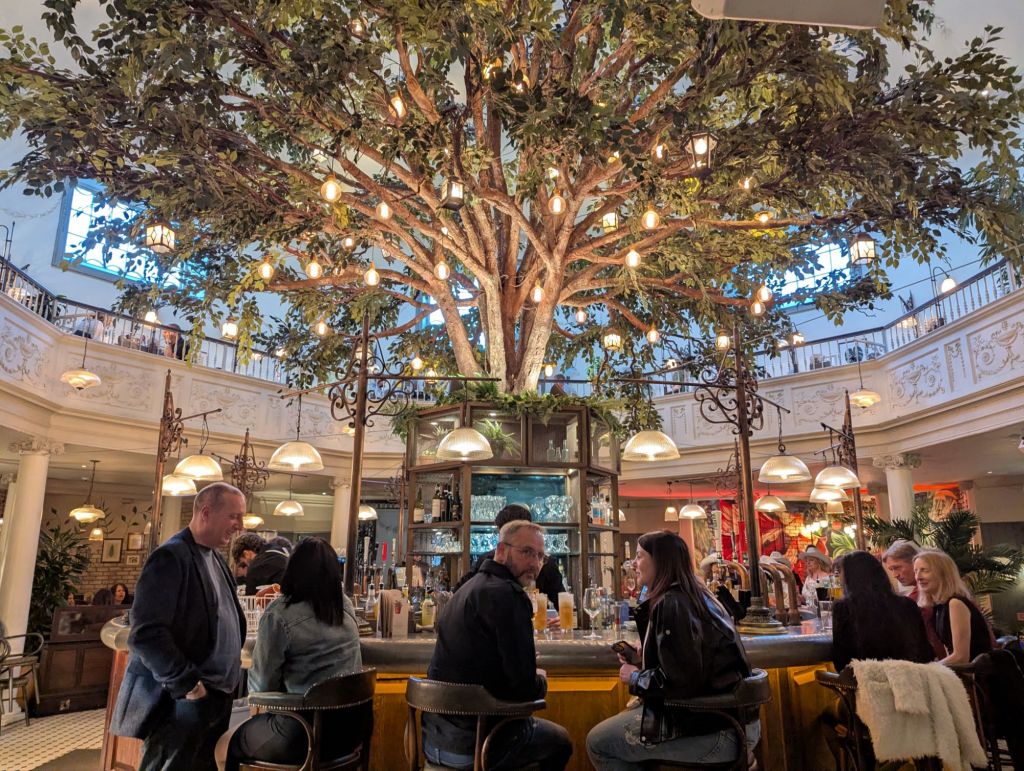
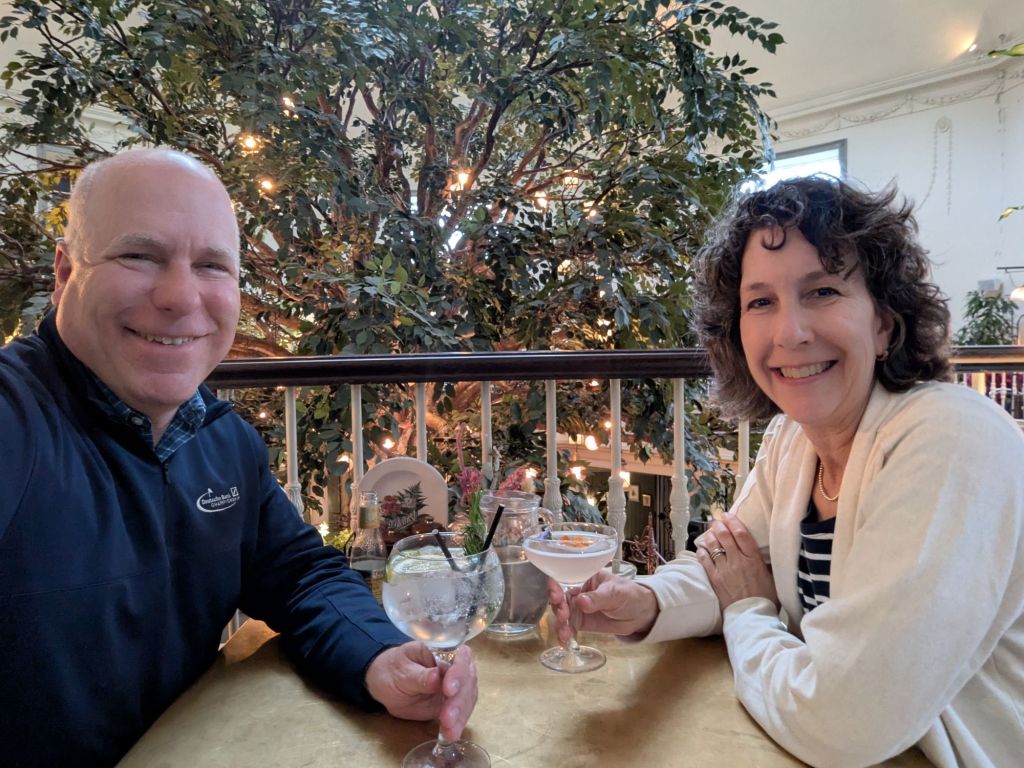
For dinner, Karen’s research led us to a fun cocktail bar and restaurant called The Botanist. From the street, you enter through a narrow hallway that gives little hint of what is inside. Suddenly the space opens into a huge atrium with a massive tree rising through the center. The bar occupies the ground floor while the restaurant wraps around the second-floor balcony overlooking the lively scene below. We enjoyed both our meal and the entertainment of simply watching the crowd and activity around the bar.

Earlier in the day we had received a brochure listing all the Party in the City performances happening throughout Bath. Since we were already out exploring, we decided to check out some of the free music.

We eventually settled into a pub with seating downstairs and the band performing on an upper level. We grabbed drinks and found a table downstairs, which was still more than close enough to fully experience the volume of the music. While the band’s style was not exactly what we expected, we did recognize a few songs and enjoyed soaking in the festive atmosphere before finally calling it a night.

Back at the hotel, we ended the day by rewatching a couple episodes of Bridgerton. It was surprisingly fun recognizing many of the locations we had walked through earlier that day and seeing how Bath had been transformed into Regency London on screen.
Categories: 2026 England Adventure | Tags: , , , , , , , , , | Leave a comment

Day 10 in England – Hail, Hills, and Cream Tea: A Wild Day in the Cotswolds

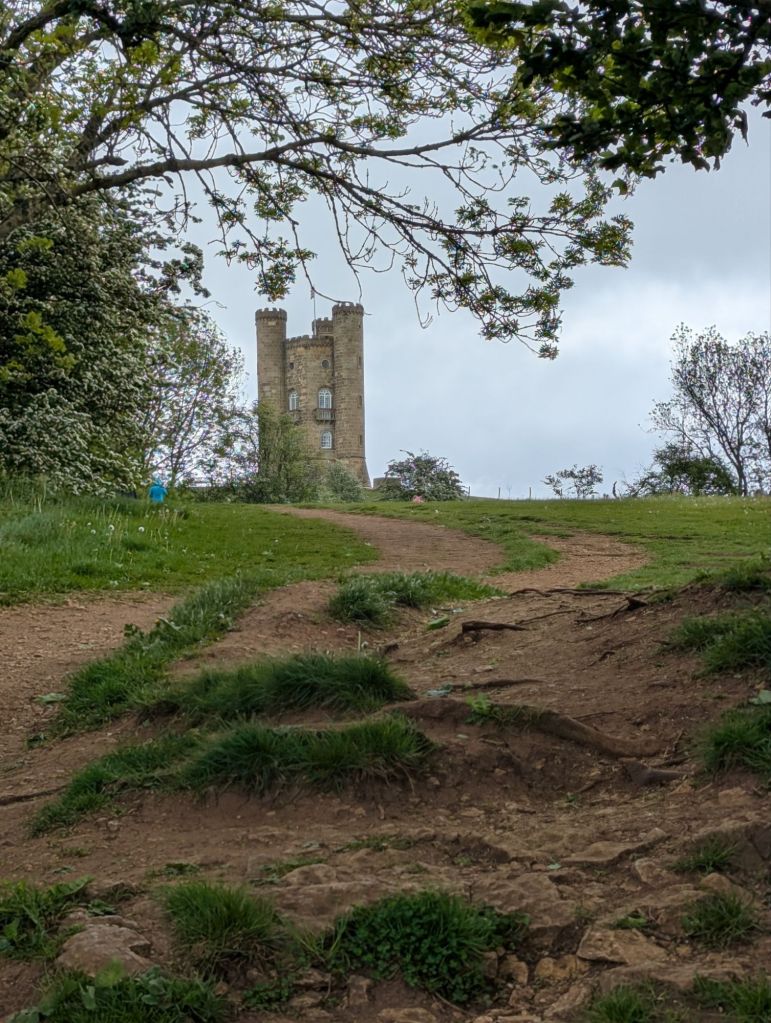
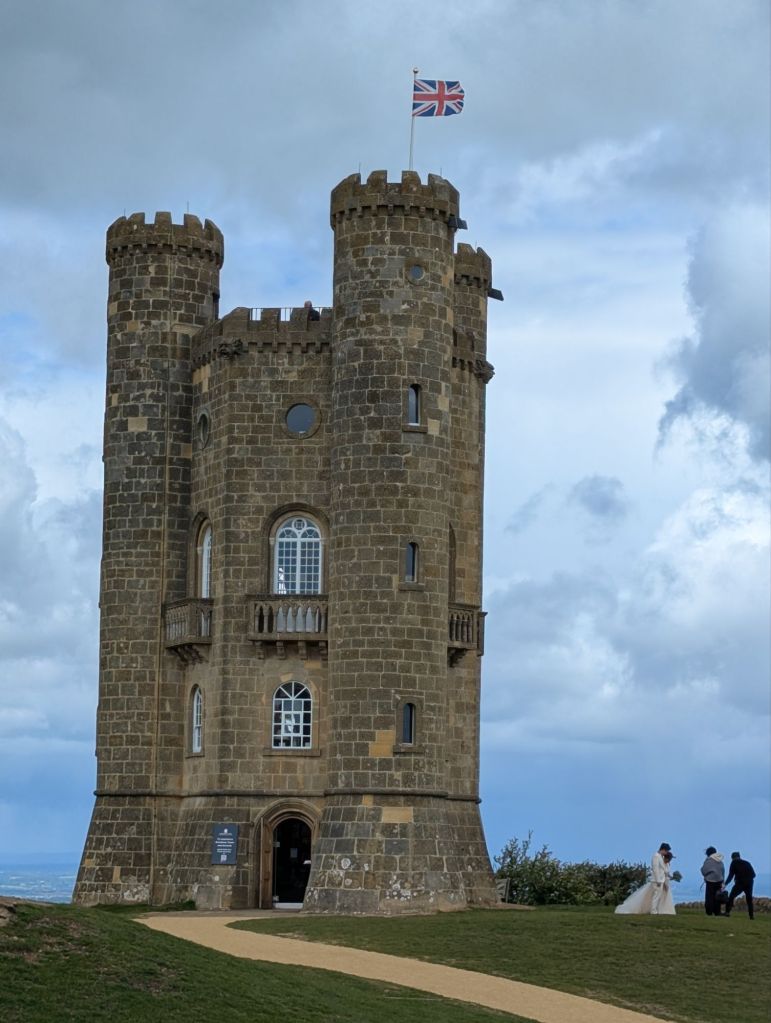
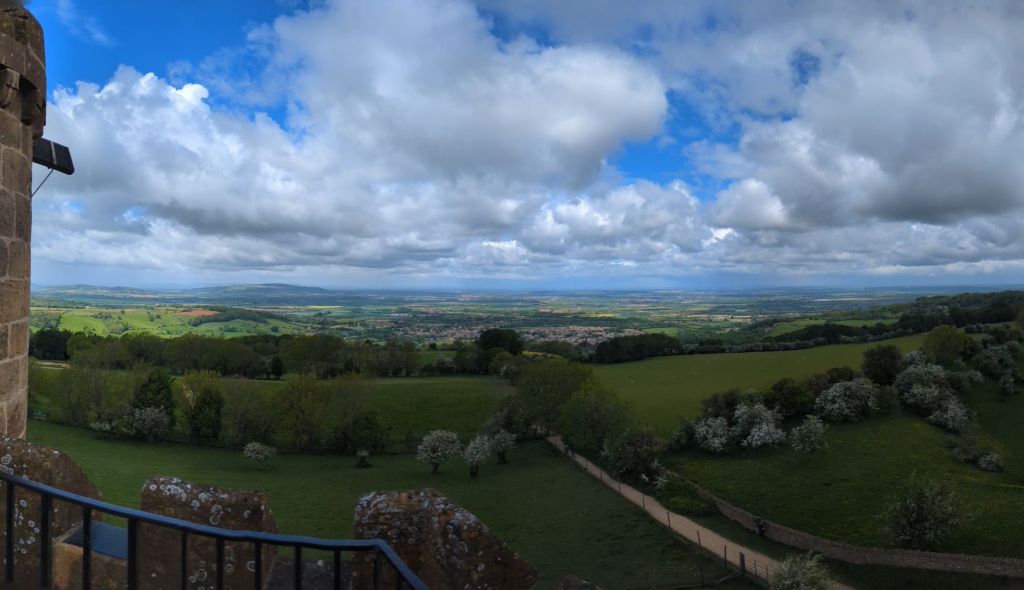
Broadway Tower

DAY 10 – WEDNESDAY, MAY 13, 2026

We woke up a little stiff, but reasonably rested after yesterday’s long hike. Our bags had to be out by 8:30 AM, but knowing today’s walk was a bit shorter, we did not feel quite as rushed getting out the door.
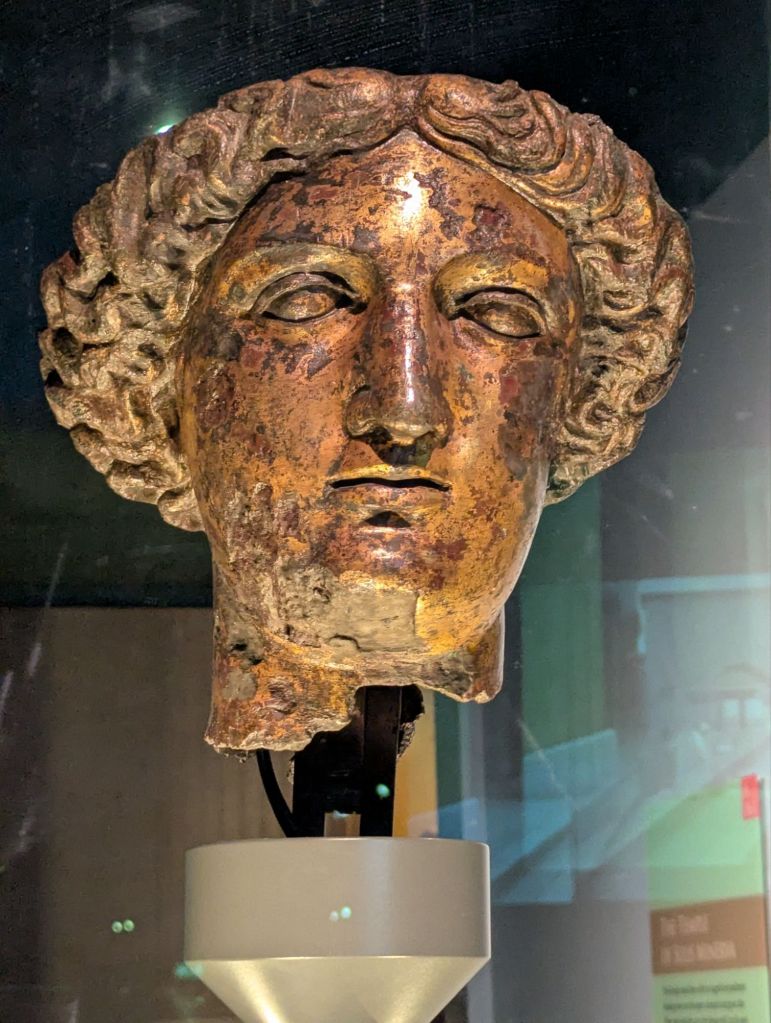
After breakfast at our inn, we packed up our backpacks and headed out into the very cute village of Broadway. It really is a delightful little place. Some tour books even call it the “Jewel of the Cotswolds,” and honestly, that feels pretty accurate. We poked into a couple of shops, mailed some postcards, and then officially started the day’s hike.

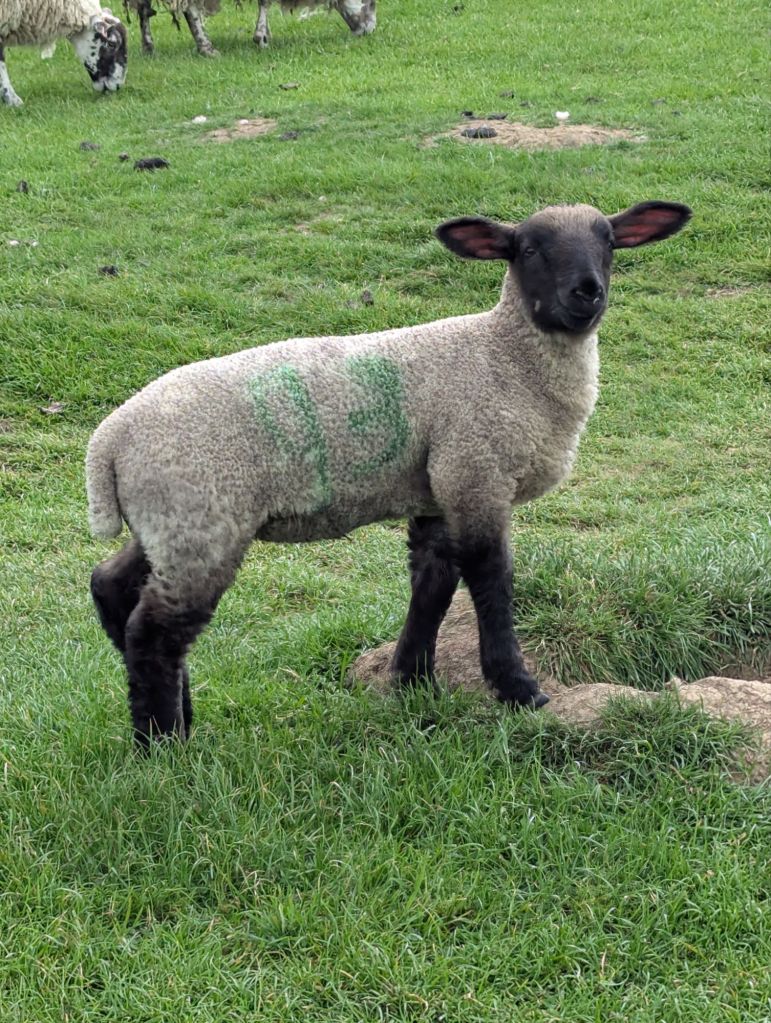
Almost immediately after leaving town, we began a steady uphill climb with plenty of sheep along the way to wish us a  good morning.

We also noticed far more hikers than we had seen on previous days, although most seemed to be heading downhill while we climbed upward. Our guess was that many were simply making the trek out to Broadway Tower, our first major stop of the day.

As we climbed, the wind picked up and a light rain started to fall, though it was nothing dramatic. We easily pulled our raincoats out of our backpacks and kept going.

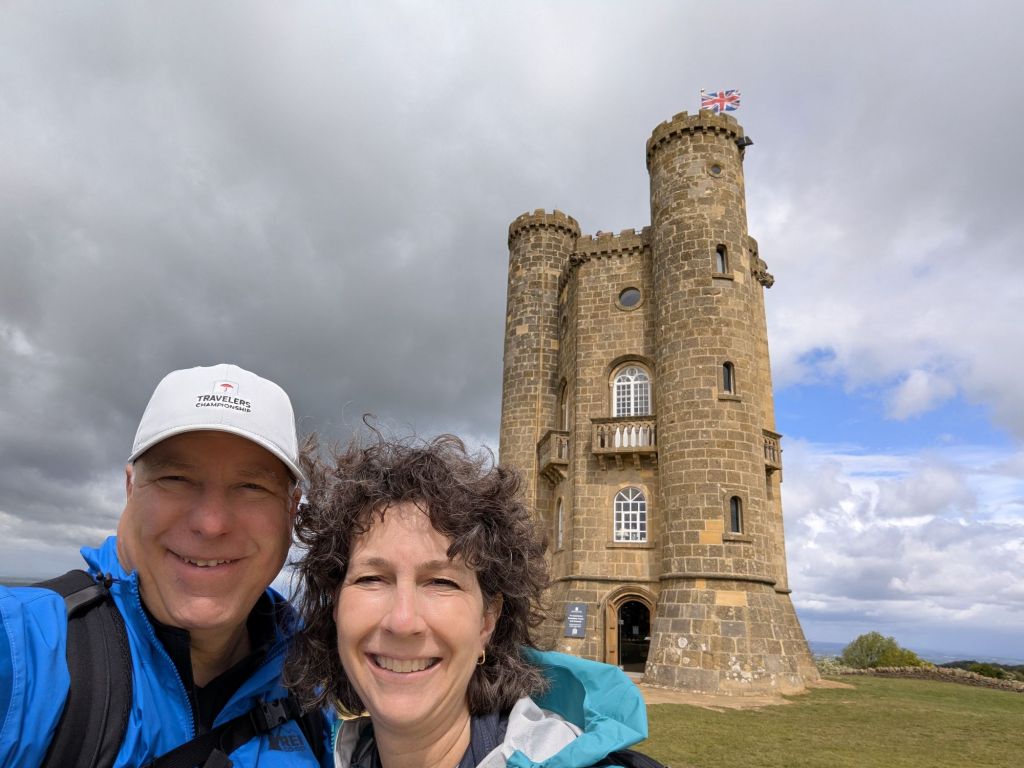
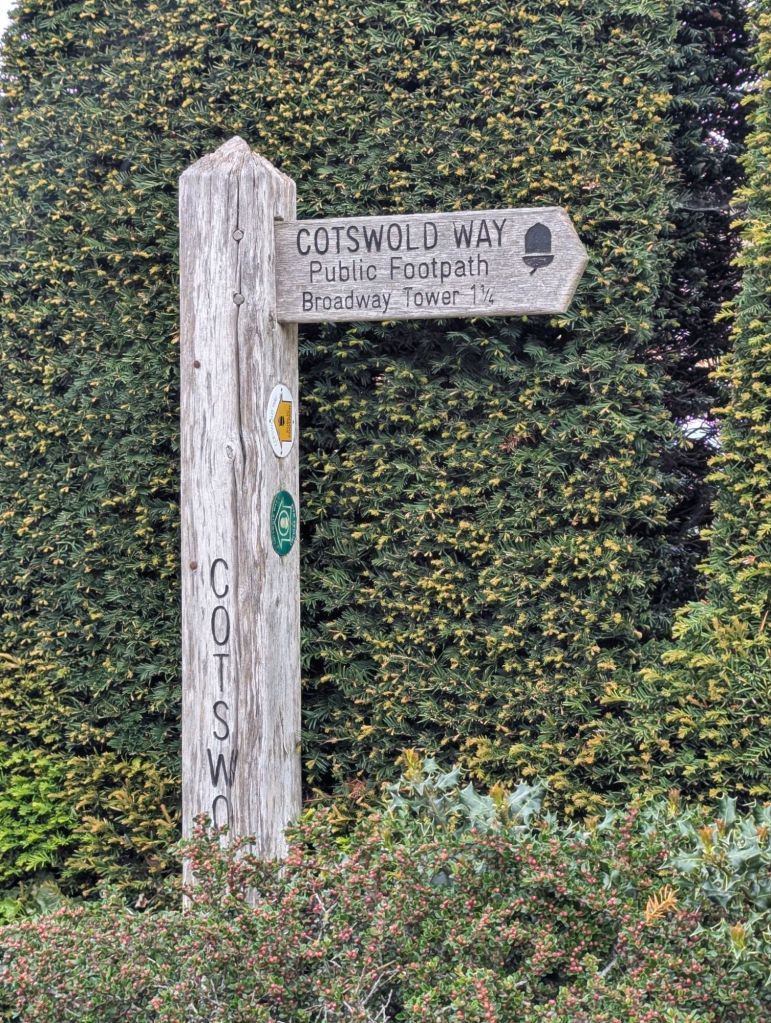
After about 1.5 miles of fairly continuous uphill climbing, we reached Broadway Tower. We decided to pay the admission fee to tour it, and we are glad we did. The tower is what is known as a “folly,” meaning it was originally built purely as an ornamental structure with no real practical purpose. According to the story, the owner built it because his wife wondered whether something on top of this hill could be seen from their home. Apparently, it could.

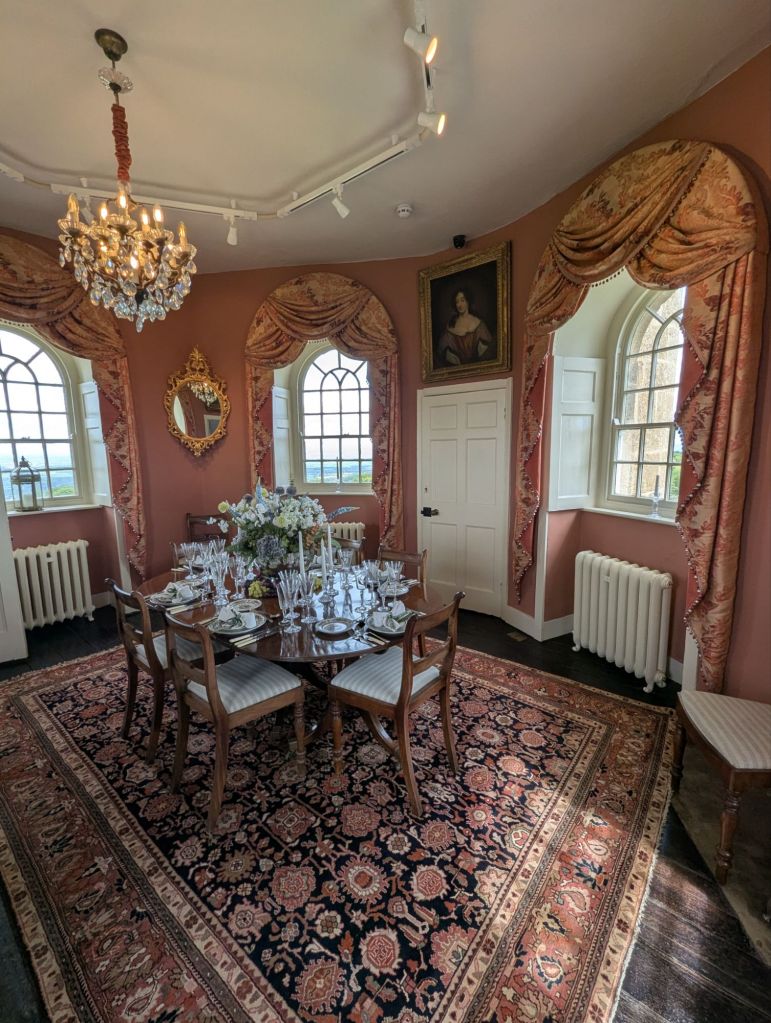
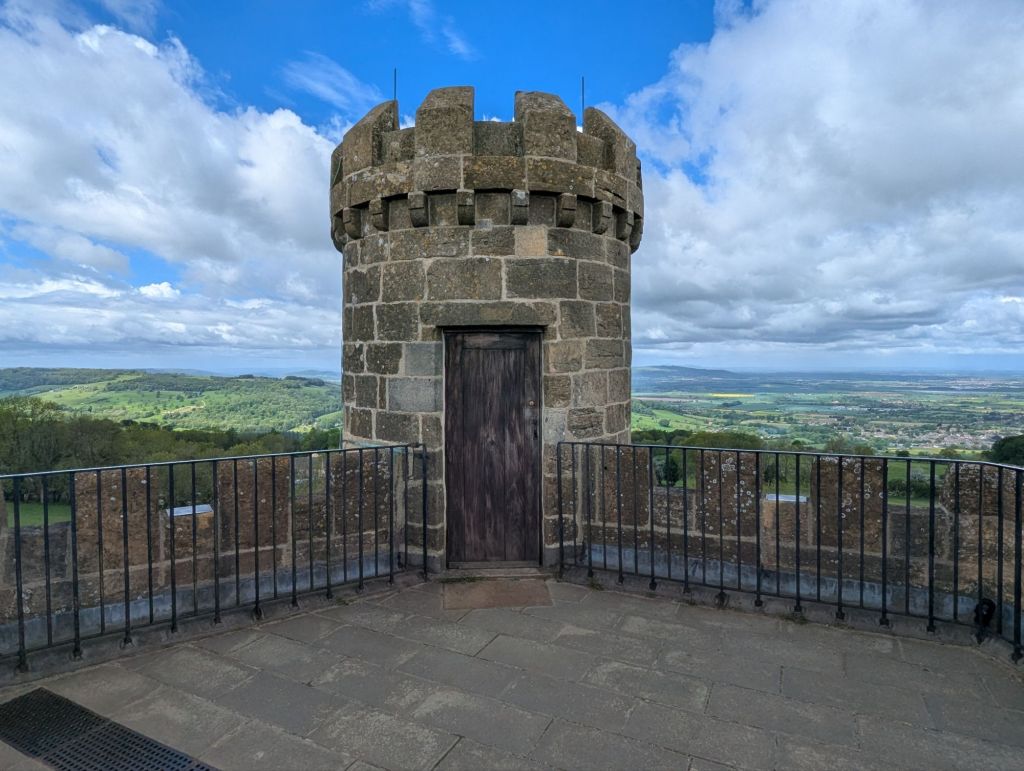
The tower itself is wonderfully quirky with three turrets, each with a spiral staircase. It has rounded sides, three floors, and a rooftop terrace. Early owners simply admired it from afar, though later it was actually lived in by a writer, his wife, a painter friend, and a caretaker couple. That must have made for some very close quarters.

We enjoyed climbing through the tower and listening to the audio tour. By the time we reached the rooftop terrace, the sun had returned, though the wind was still fierce. We even got to watch a couple taking wedding photos with the tower as their backdrop, which felt appropriately dramatic given the weather.

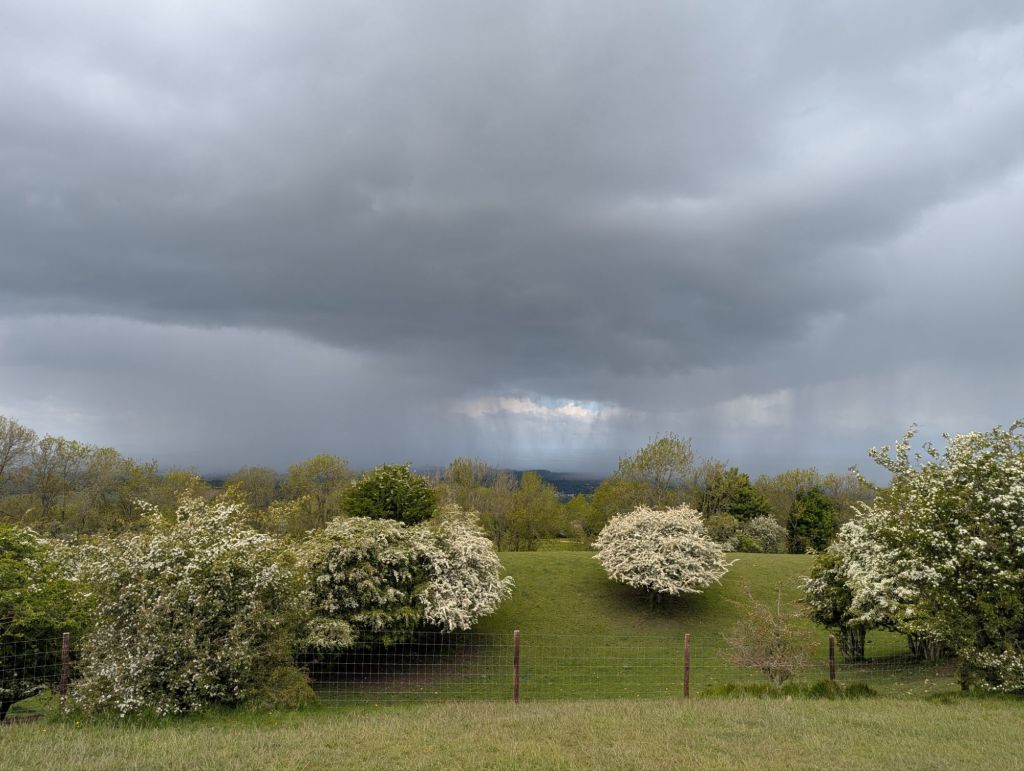
As we descended from the tower, we decided to stop at the café for a quick lunch since there were no other food stops along today’s route. When we came back outside, we noticed dark clouds and falling rain in the distance. A few minutes later we heard thunder and decided it was probably wise to prepare for whatever might be coming our way.

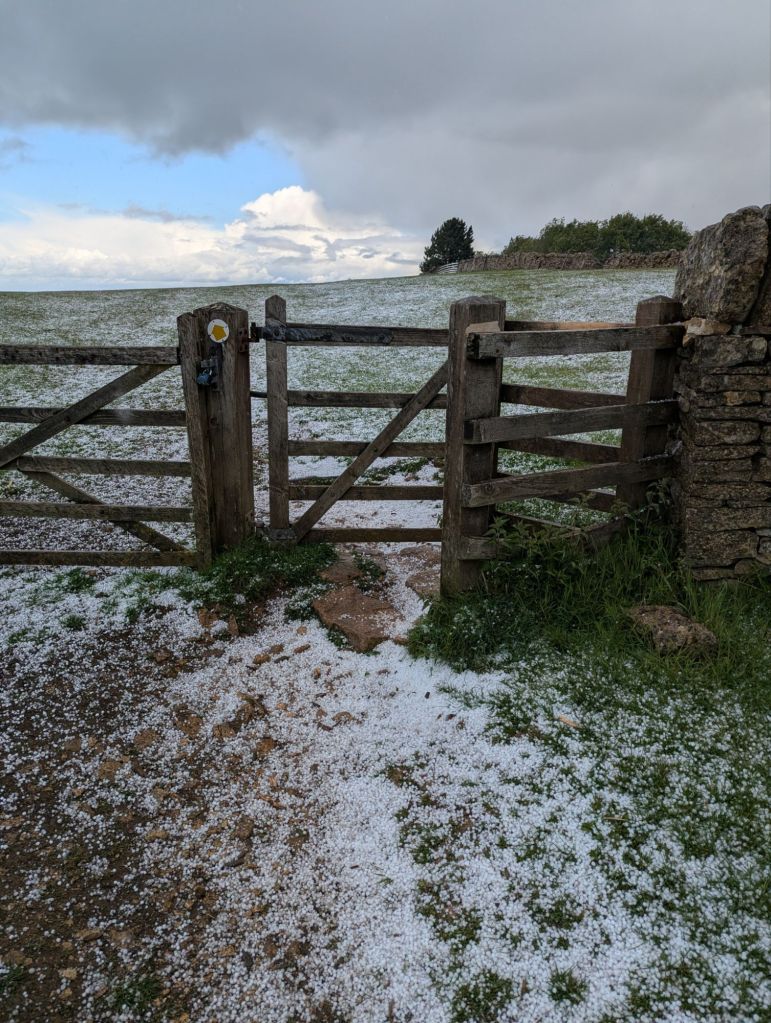
We put on raincoats, rain pants, and backpack covers and headed out. Five minutes later, while walking across a wide open ridge, it started hailing. Not tiny little hailstones either. This was pea-sized hail that quickly upgraded itself to garbanzo bean status.

Walking through the hail storm

We turned our bodies sideways to protect our faces, but it turns out that hail mixed with strong wind really stings when it smacks into you repeatedly. We half laughed in disbelief and half questioned our choice to continue, but with no trees or shelter nearby, the only real option was to keep walking.

Then, almost as quickly as it started, the hail stopped. Fifteen minutes later the sun was shining brightly again as though none of it had happened.

Nearby, we noticed a herd of sheep sheltering under a tree during the storm. Once it cleared, they began crossing our path toward a wooded area, perhaps wisely deciding they were done trusting the weather forecast for the day. Our pace slowed behind them as we carefully picked our way across a layer of hail covering the trail. The last thing we wanted at that point was to slip and fall into something unpleasant.

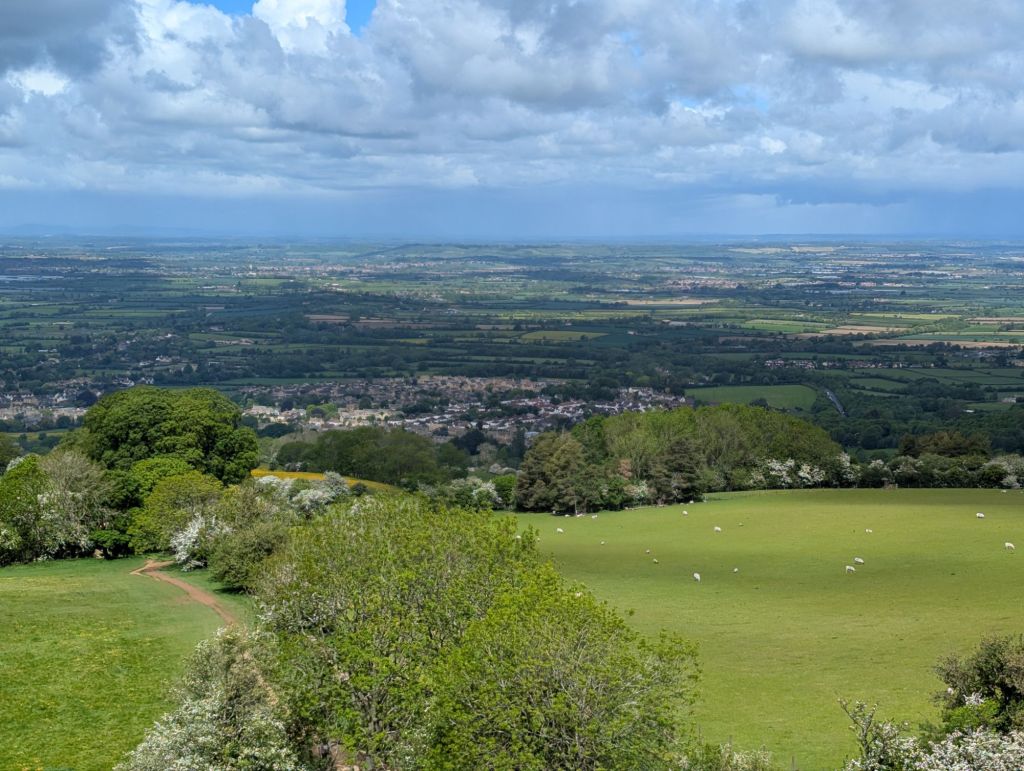
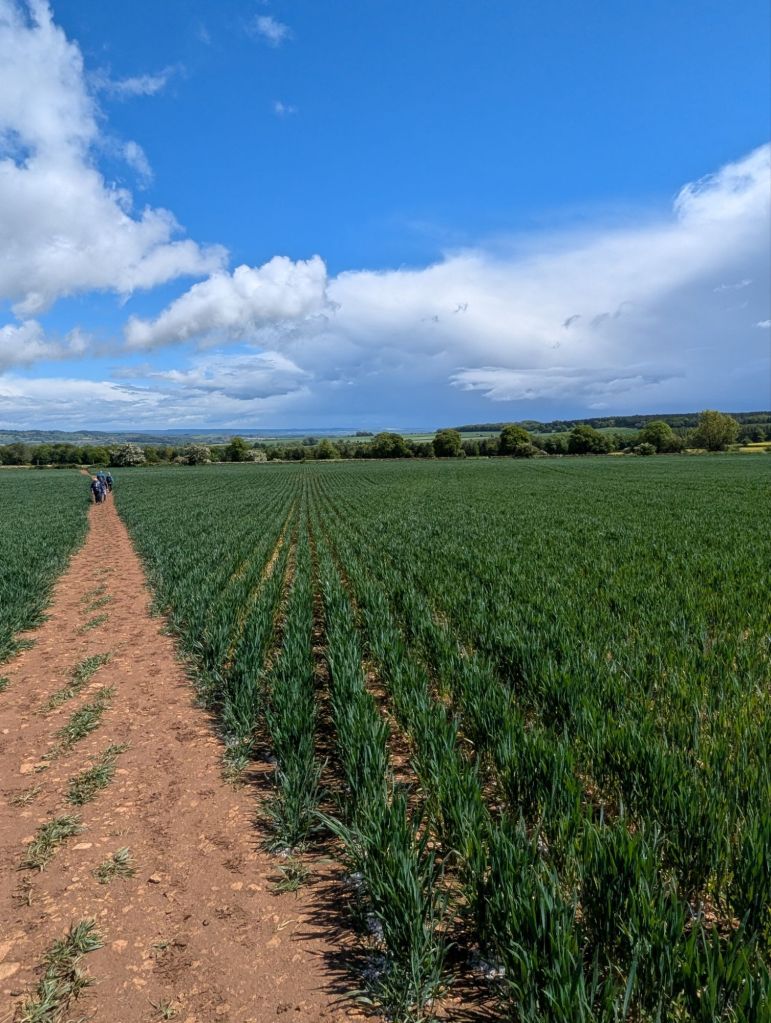
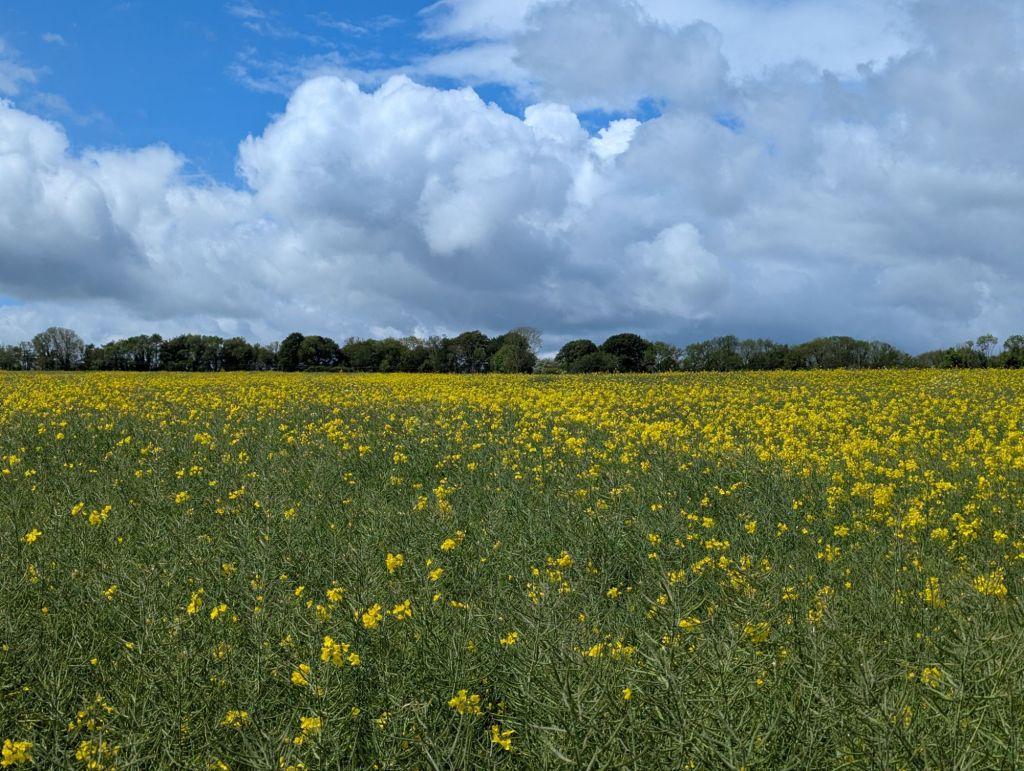
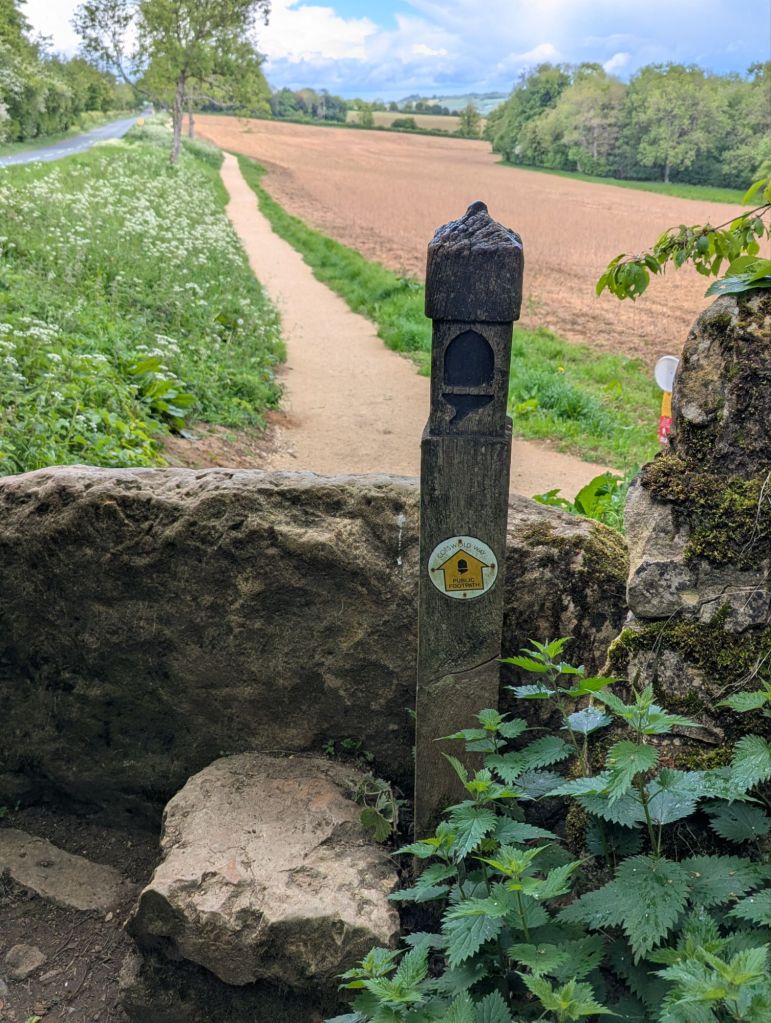
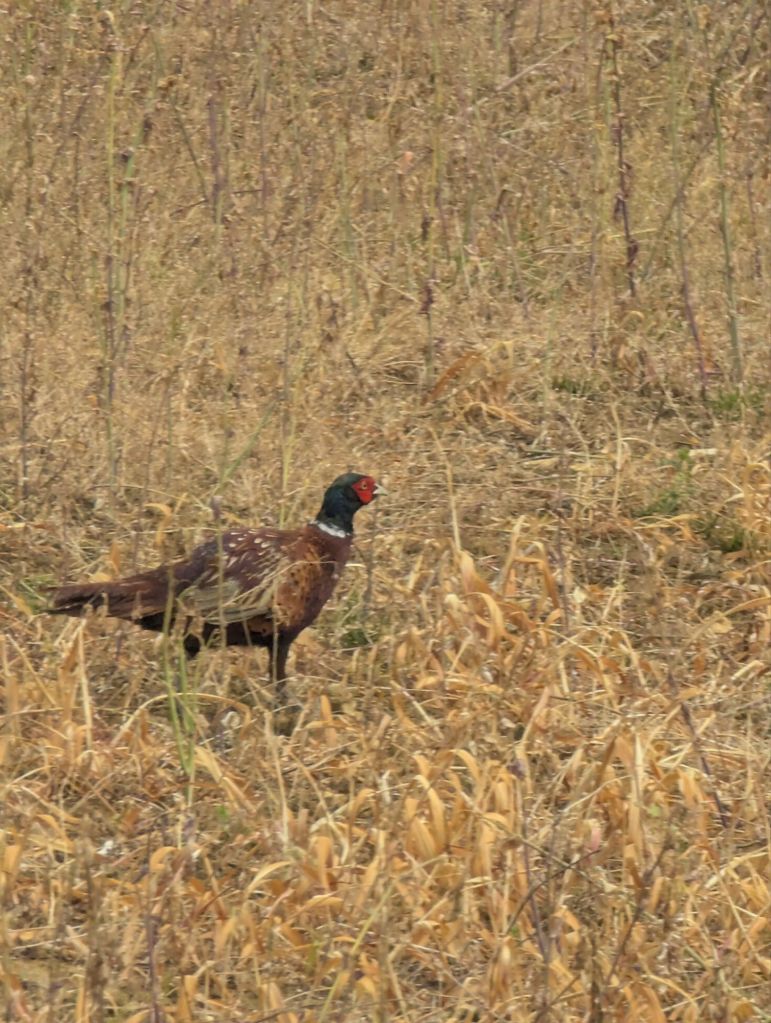
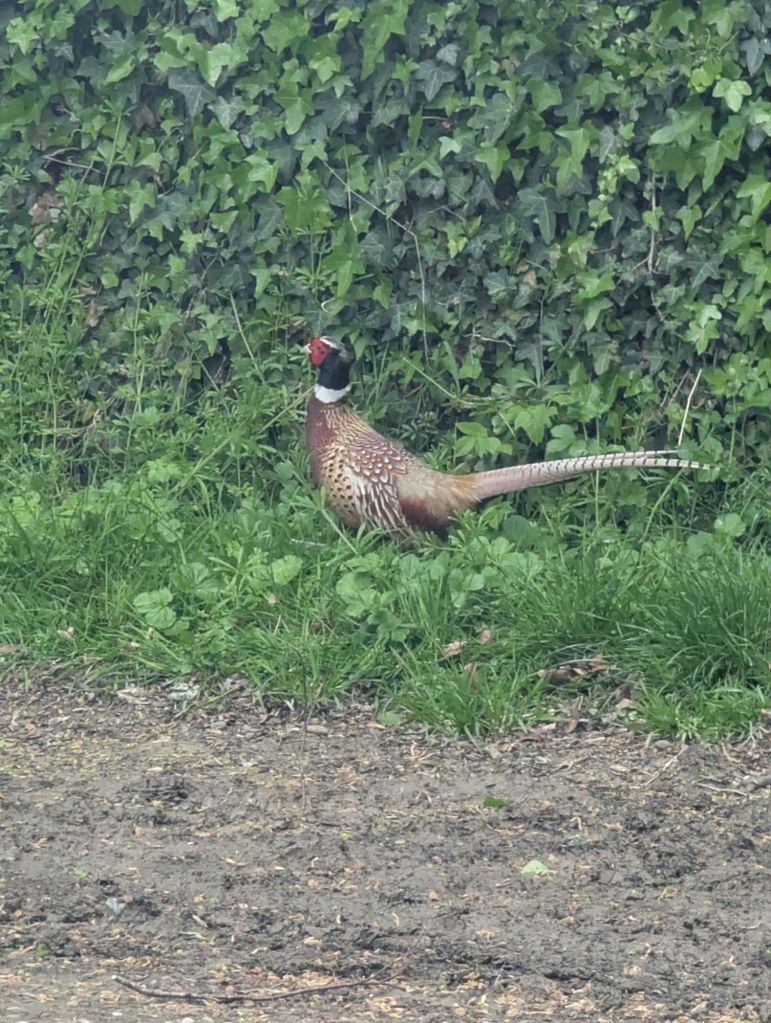
The rest of the afternoon took us through more fields of bright yellow rapeseed and barley, wooded stretches, and open pastures. We passed through 19 gates, saw countless sheep, and spotted several pheasants along the way. Although the sun appeared fairly often, we kept our rain gear on because brief showers continued to pop up throughout the afternoon.
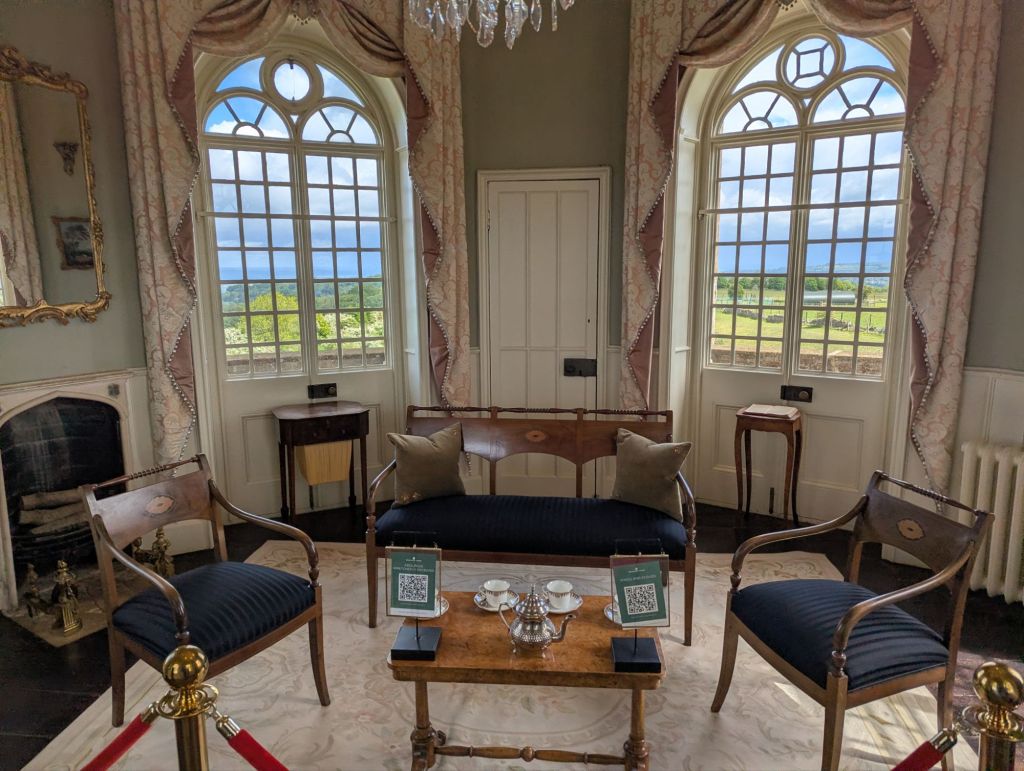
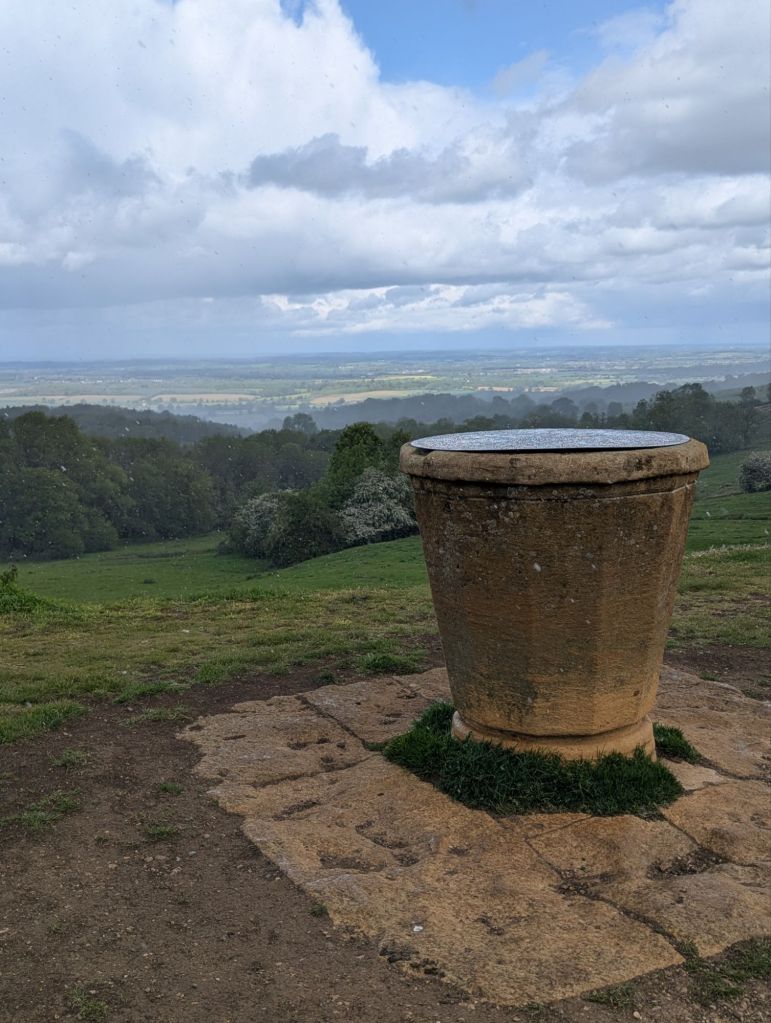
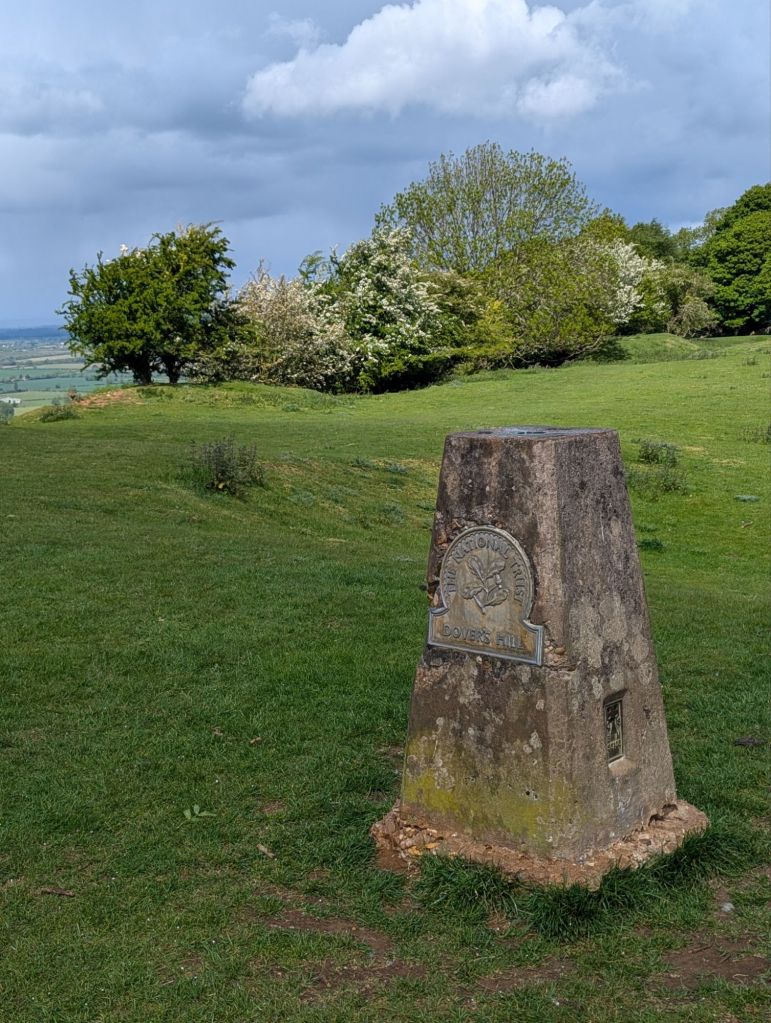
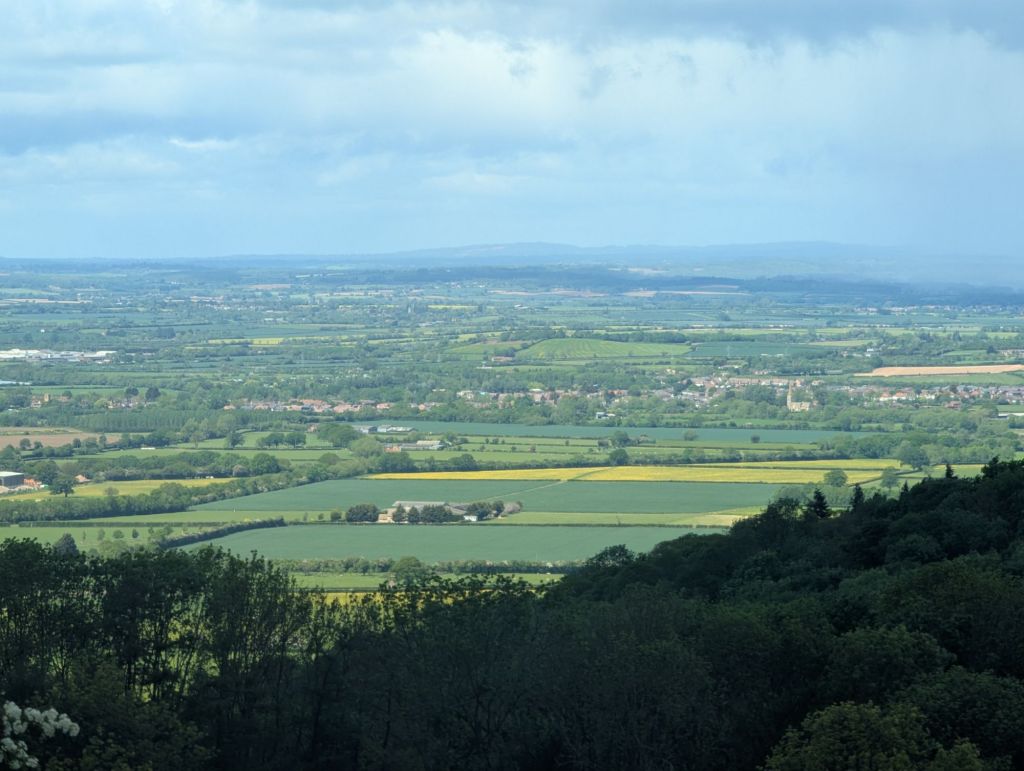
Near the end of the hike, our route detoured slightly so we could walk across the ridge at Dover’s Hill for more panoramic views. Sure enough, just as we stepped out into the wide open space, we heard an eerily familiar tap tap tap against our raincoats.

Hail. Again.
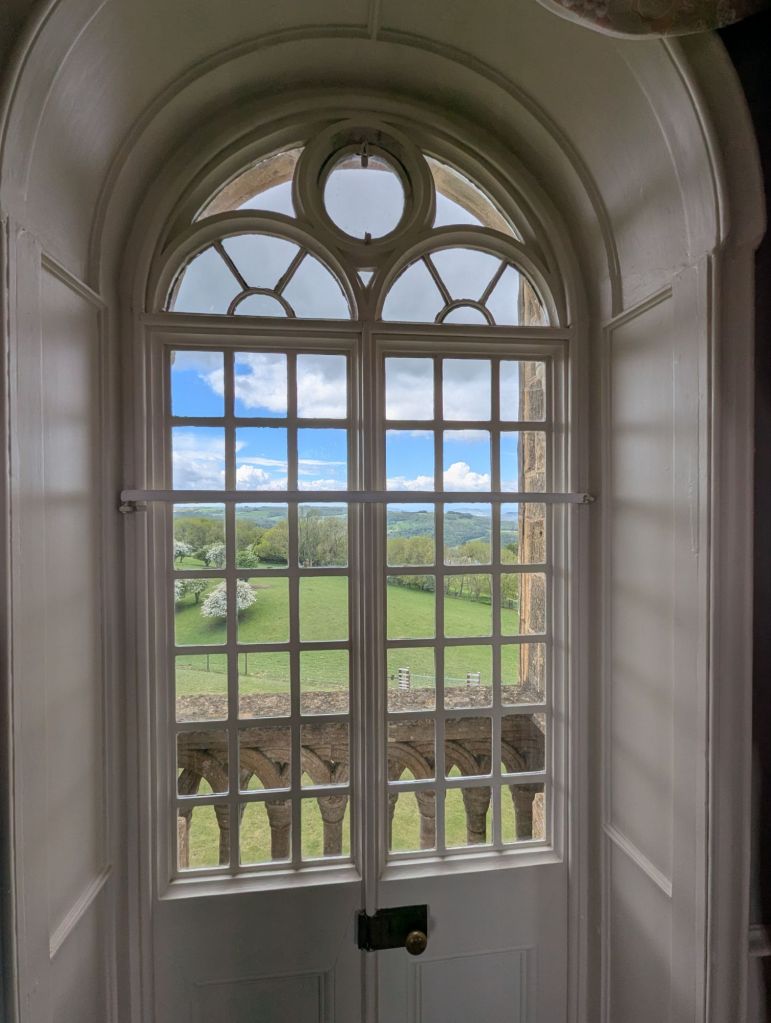
Apparently lightning may not strike twice, but hail certainly can.
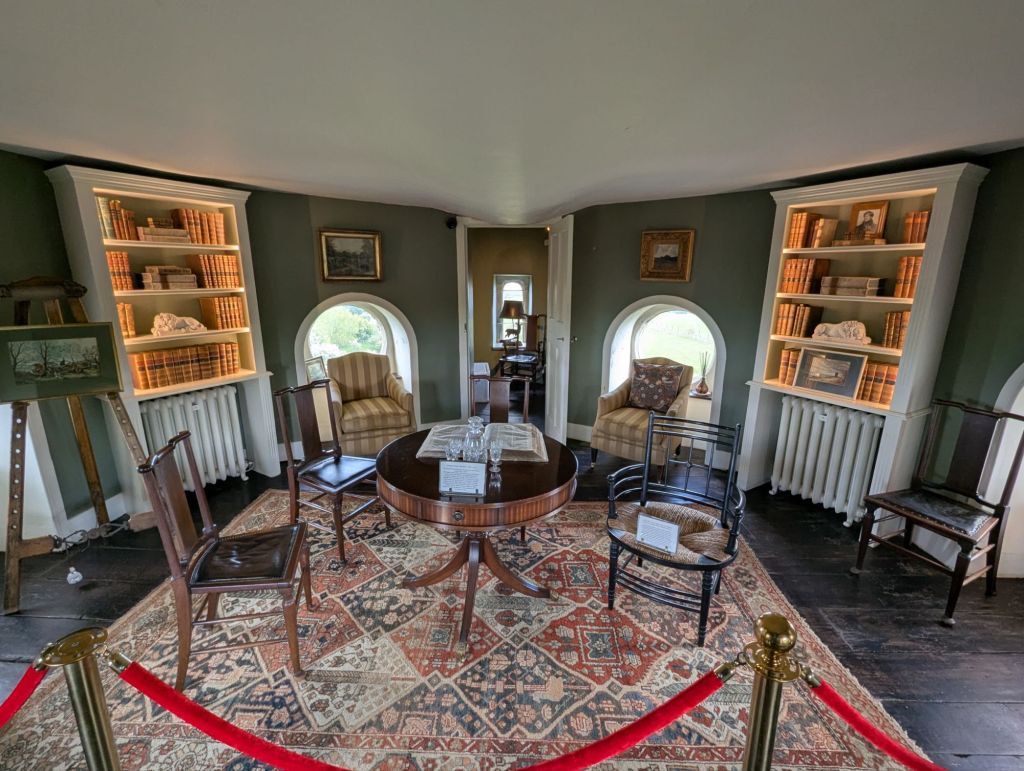
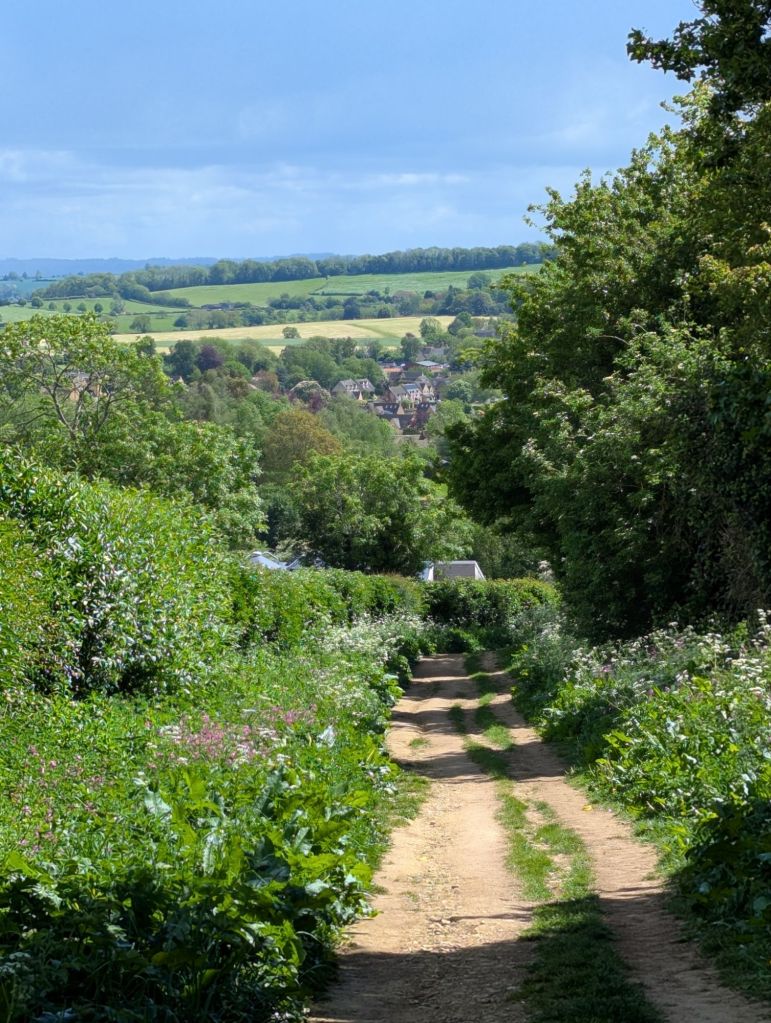
Thankfully, this second round was much shorter and less aggressive than the first. Soon enough, the skies cleared and we finished our walk in sunshine as we arrived in the lovely village of Chipping Campden. Fun fact: the prefix “Chipping” indicates that it was historically a market town.

We found our hotel, though it was still too early to check in and our luggage had not yet arrived. Naturally, with time to spare, we found a local café and ordered a cream tea. This turned out to be an excellent decision, partly because we have grown very fond of scones, and partly because it started raining again while we sat inside enjoying them.

Once the rain eased up, we made our way to the spa at our hotel. Thinking ahead, we had booked treatments to help with recovery after several long hiking days. It was the perfect place to relax sore muscles, rest, and wait out the off-and-on rain showers.

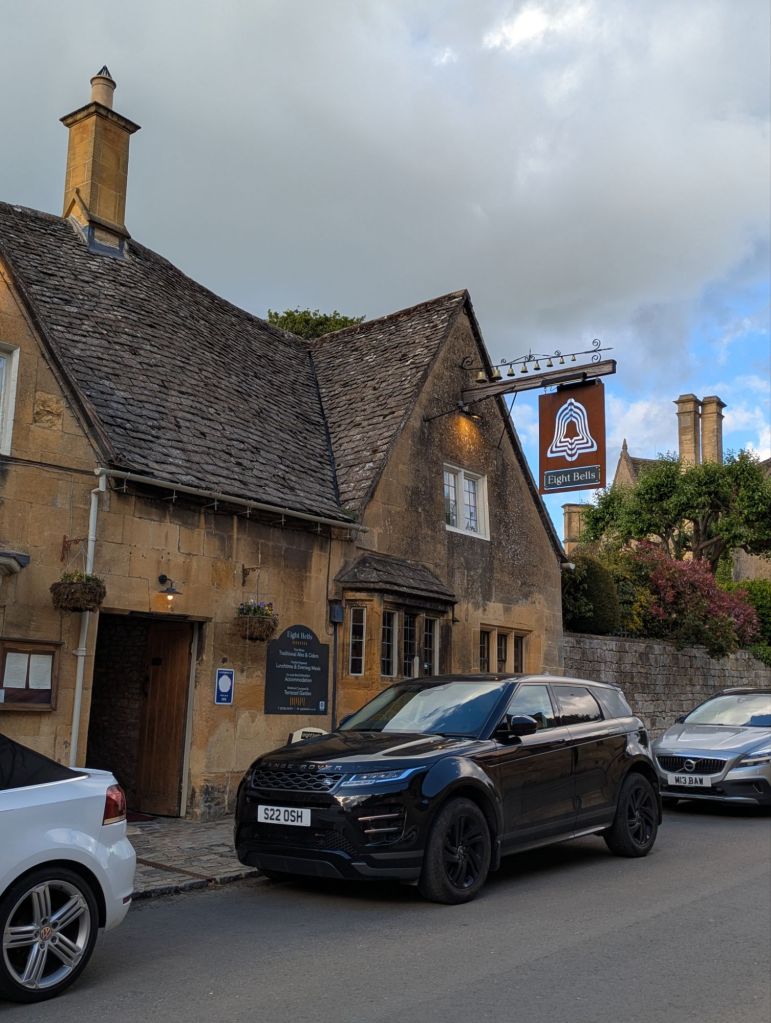
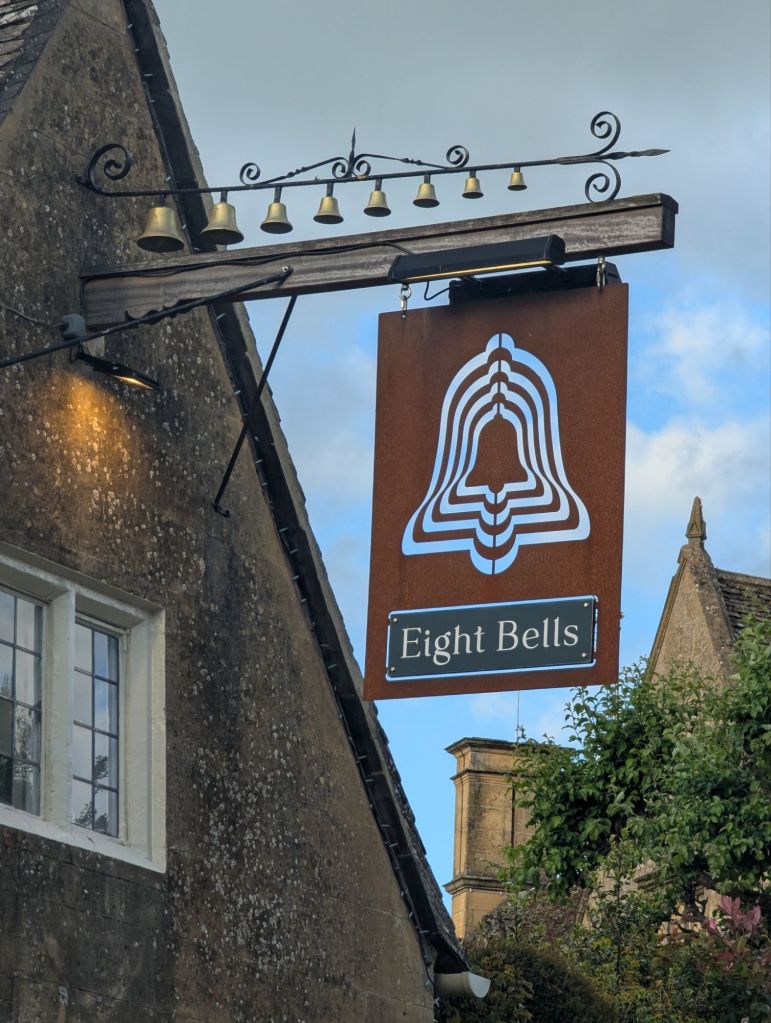
Eventually we checked into our hotel, showered, changed clothes, and headed out to dinner at the Eight Bells Inn. It is the oldest public house in Chipping Campden and appears on many lists of the “Best Pubs in the Cotswolds.” It absolutely lived up to the reputation as we had a truly delicious dinner.

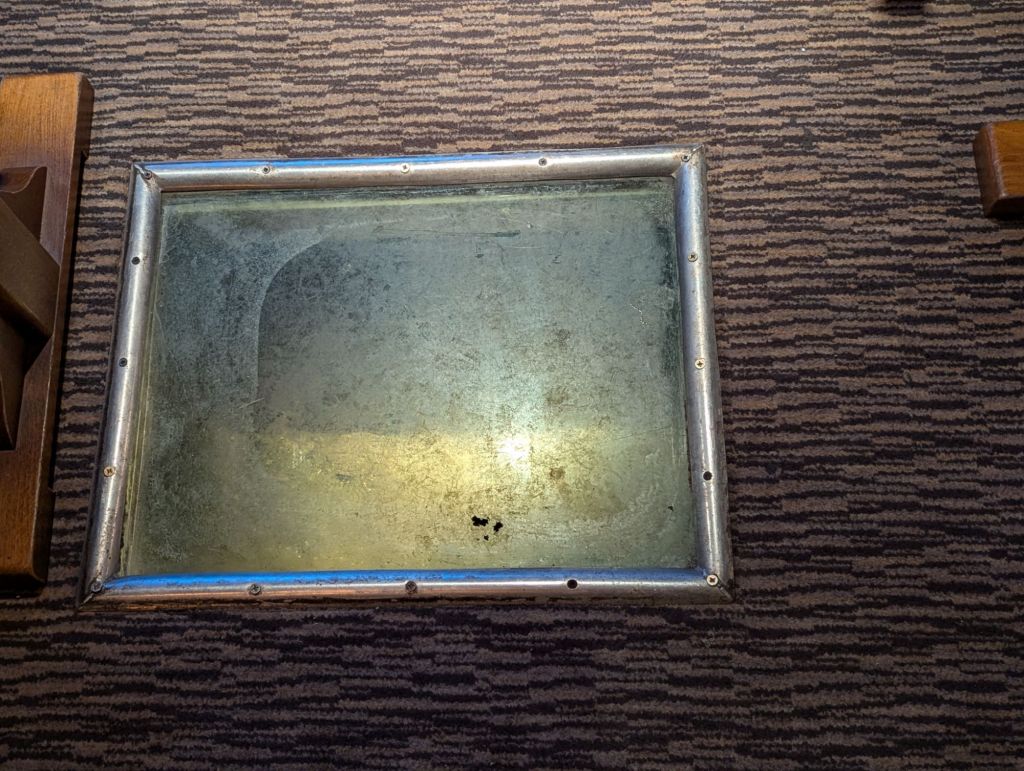
One especially interesting feature of the pub is a priest hole located right in the middle of the dining room floor, covered with plexiglass and softly illuminated below. During the reign of Henry VIII and the dissolution of the Catholic Church, priests often feared for their lives. Hidden spaces like these were built into homes and buildings so clergy could hide during searches.

After dinner, we made the short five-minute walk back to our hotel and settled into our now traditional evening routine of stretching and a hot bath.

Only one more day of hiking to go!

Categories: 2026 England Adventure | Tags: , , , , , , , , , , | Leave a comment

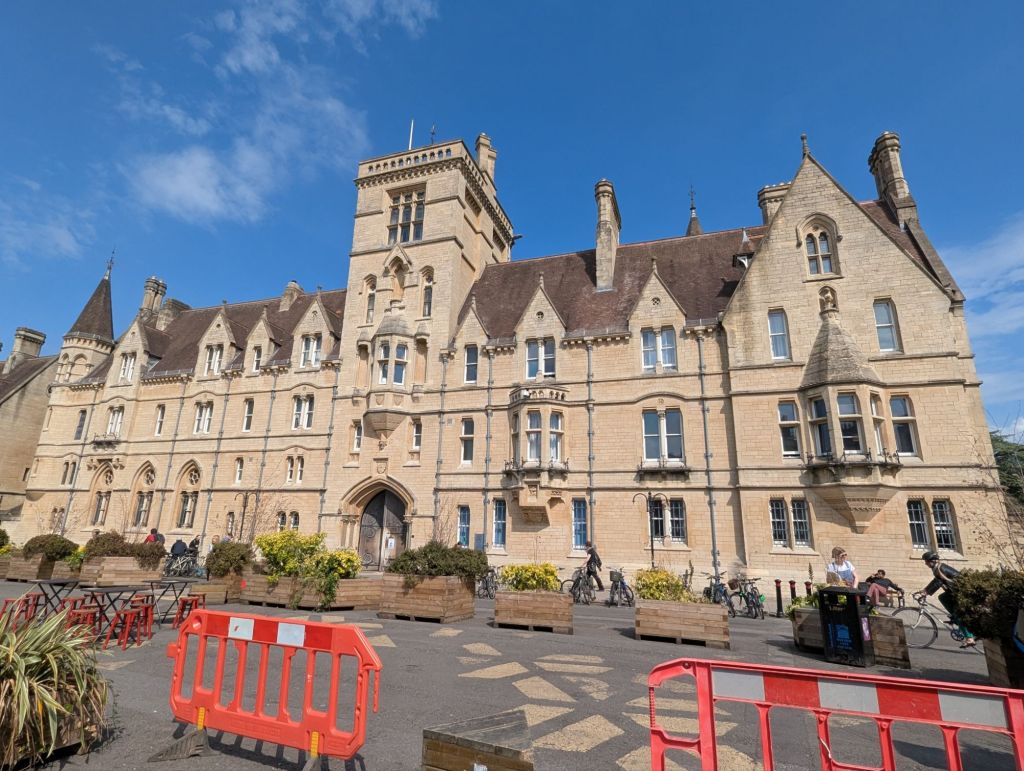
Day 5 in England – From Einstein to Scones: Exploring Oxford in a Day

DAY 5 – FRIDAY, MAY 8, 2026

We learned an important lesson during our first night in the “stable room” at the inn: old stone buildings may look charming in photos, but with windows that don’t easily open, they can also double as a medieval sauna. After a somewhat restless night of tossing, turning, we headed to the dining room for breakfast.

Neither of us was quite brave enough to tackle the full English breakfast complete with eggs, sausage, bacon, mushrooms, tomatoes, baked beans, black pudding, and toast. We did, however, enjoy a hearty meal that gave us plenty of fuel for the day ahead.

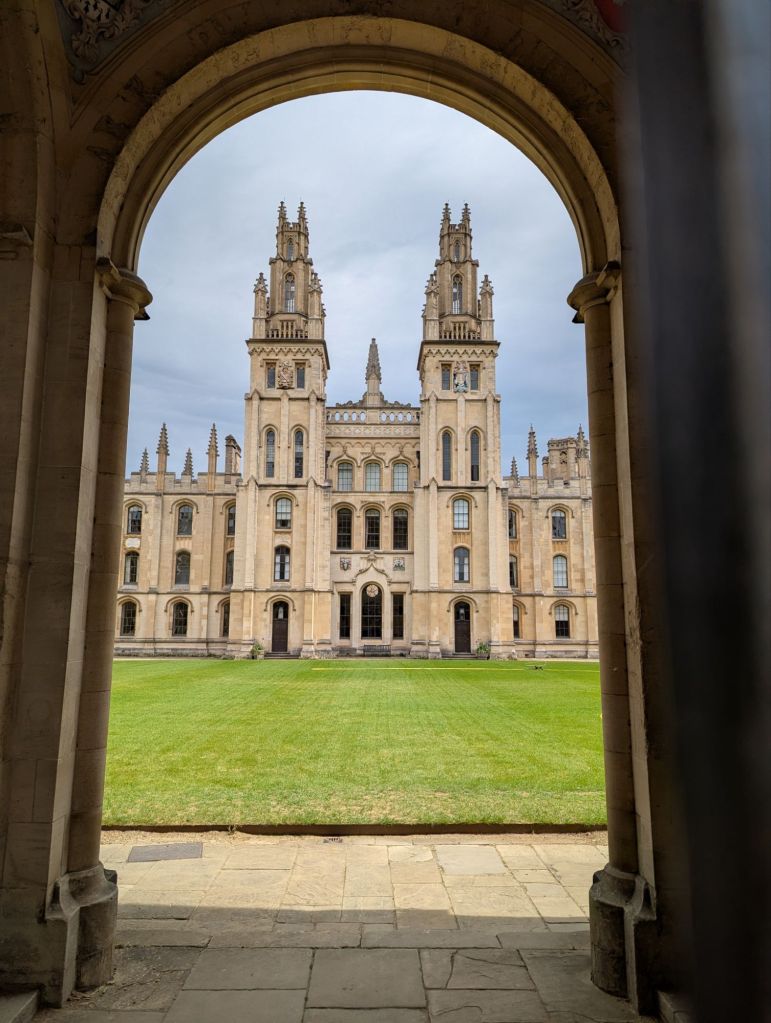
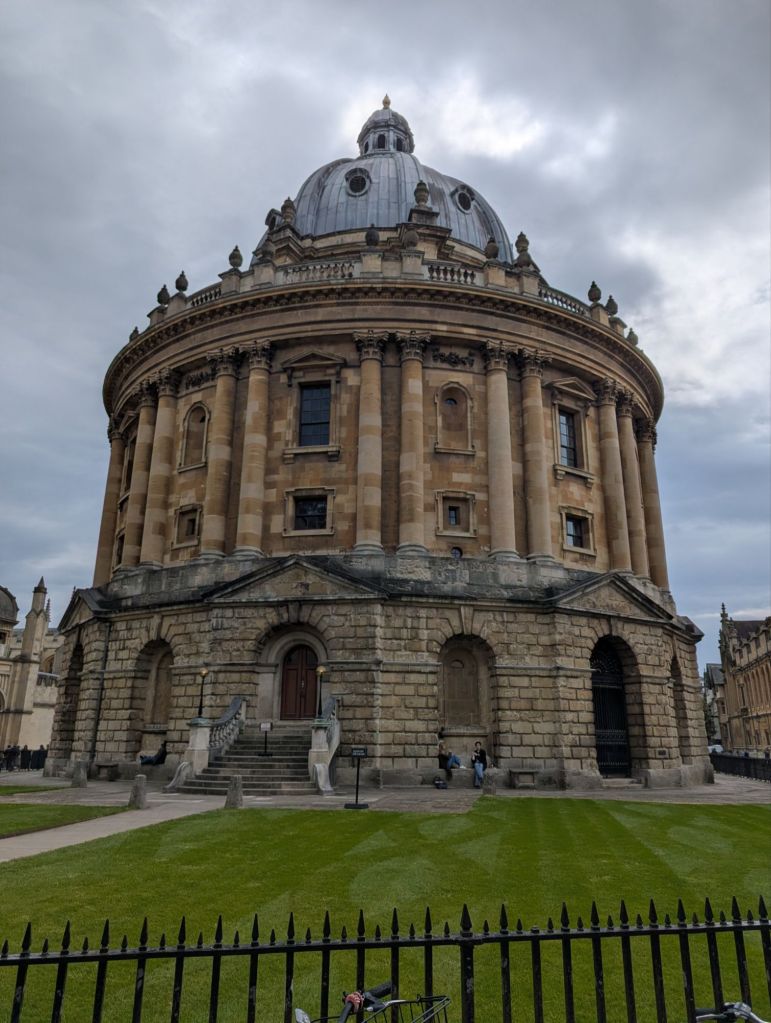
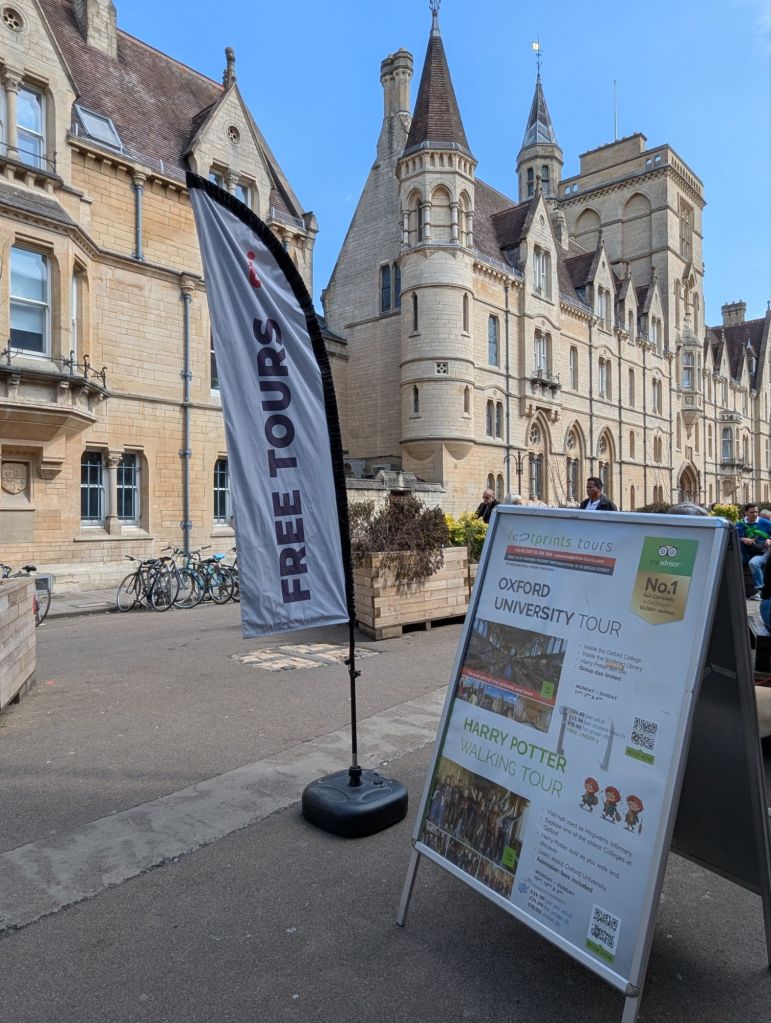
After breakfast, we walked about 10 minutes to the train station and boarded an easy 30-minute ride to Oxford. From there, it was about a 15-minute walk into the city center where we joined a free walking tour that turned out to be one of the highlights of the day.

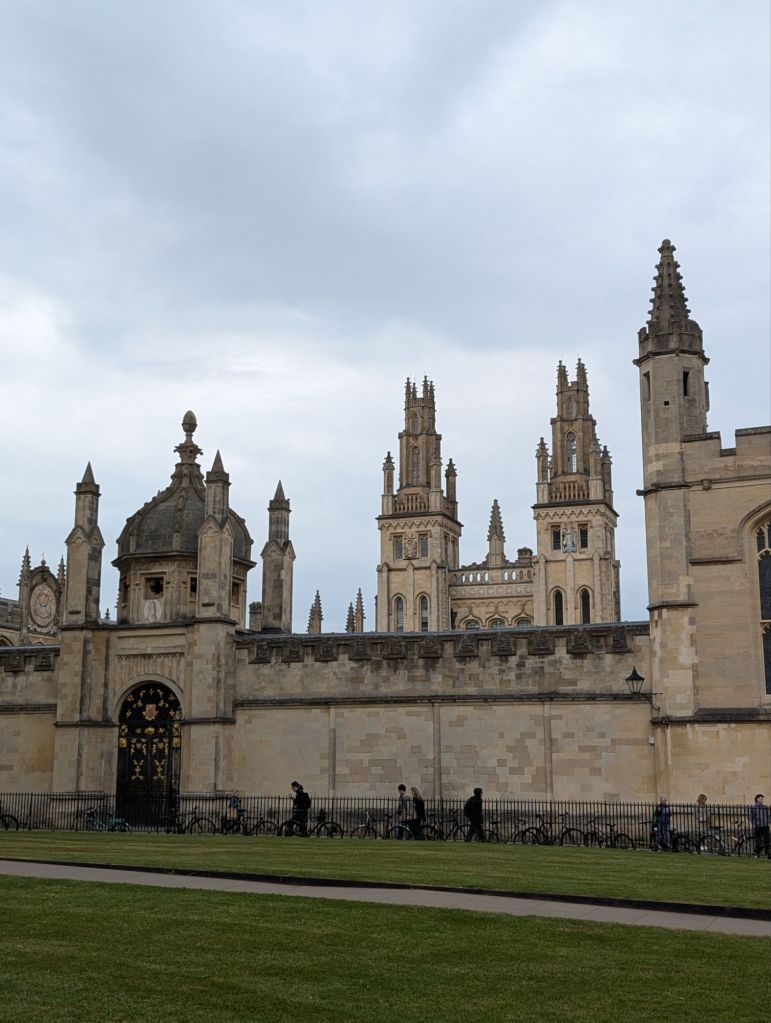
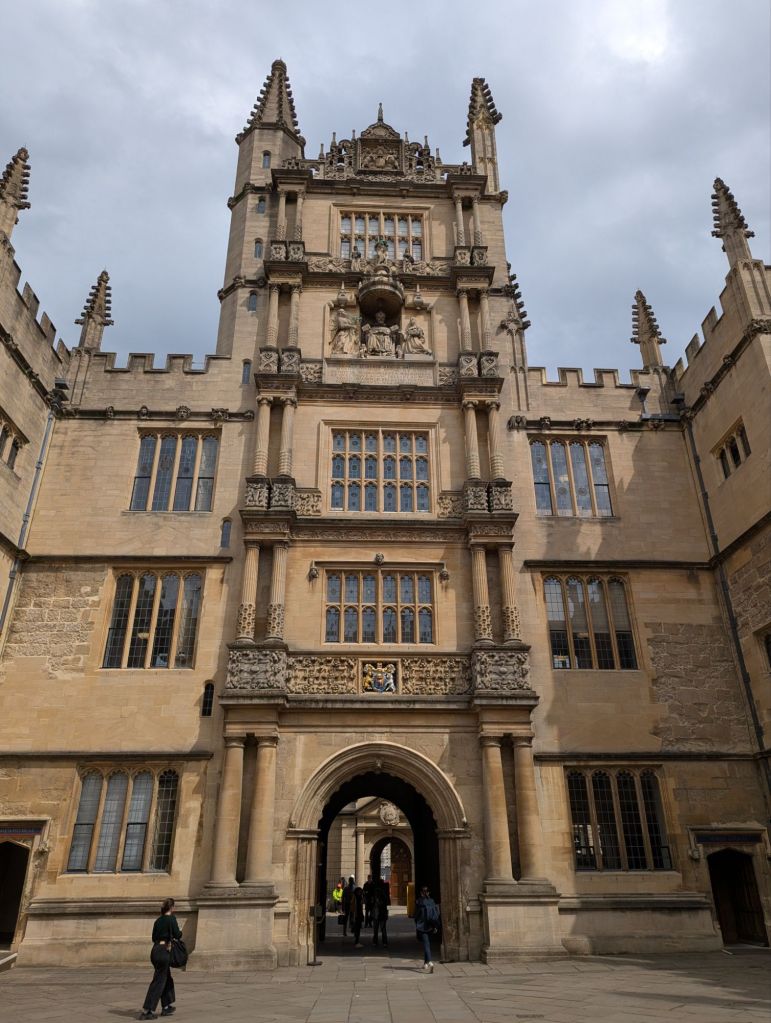
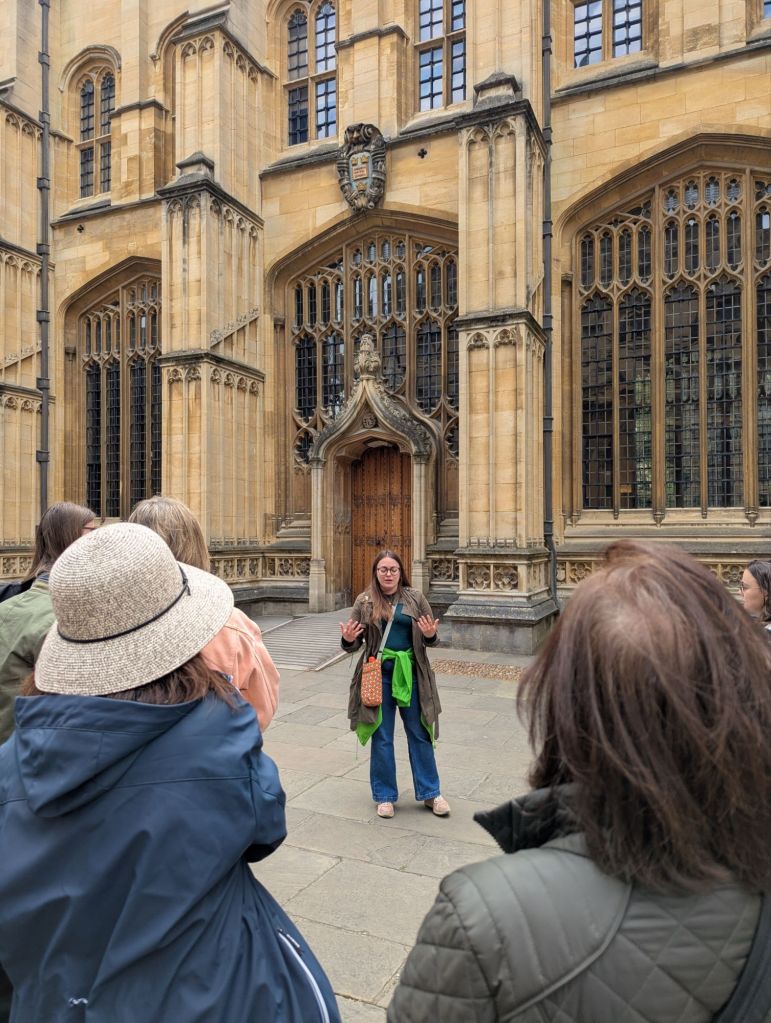
Over the next two hours, we learned how Oxford University is actually made up of 39 individual colleges, each with its own traditions, rivalries, dining halls, and personalities. Our guide shared stories of legendary student pranks between the colleges, many of which sounded exactly like what would happen if brilliant academics had too much free time.

If you are not familiar with free walking tours, we highly recommend them. We have used them in several cities during our travels. The tours are led by knowledgeable local guides who work for tips, so you simply pay what you think the tour was worth or what fits your budget. We’ve found they are one of the best ways to get oriented in a city and figure out where you want to spend more time exploring later.

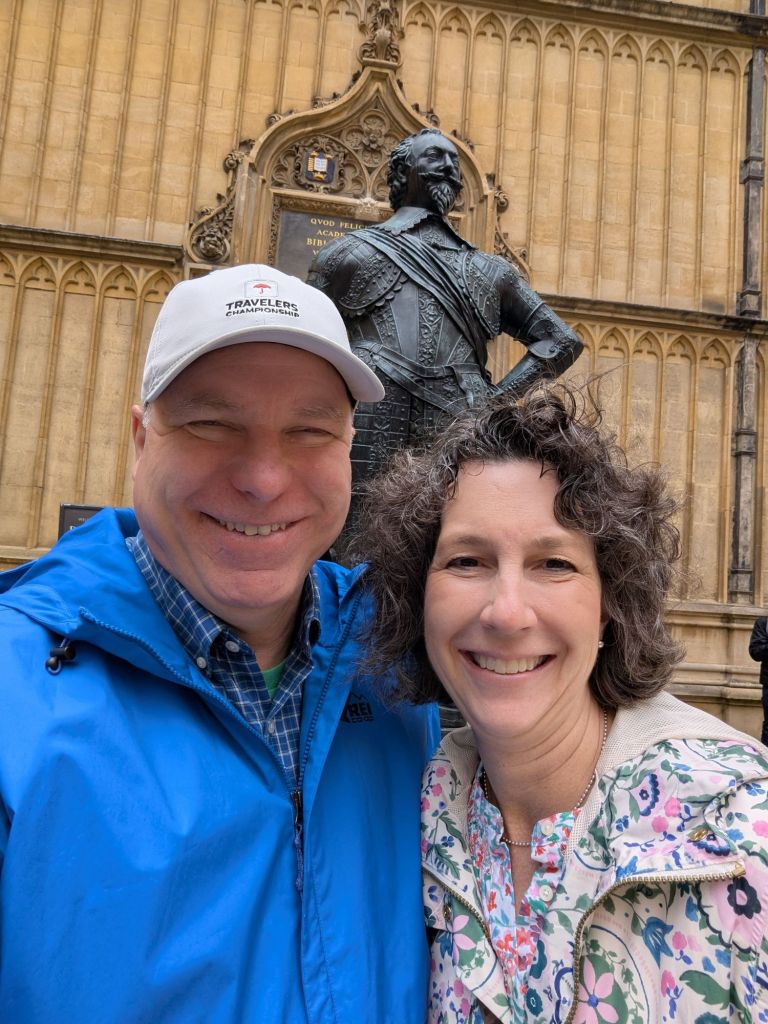
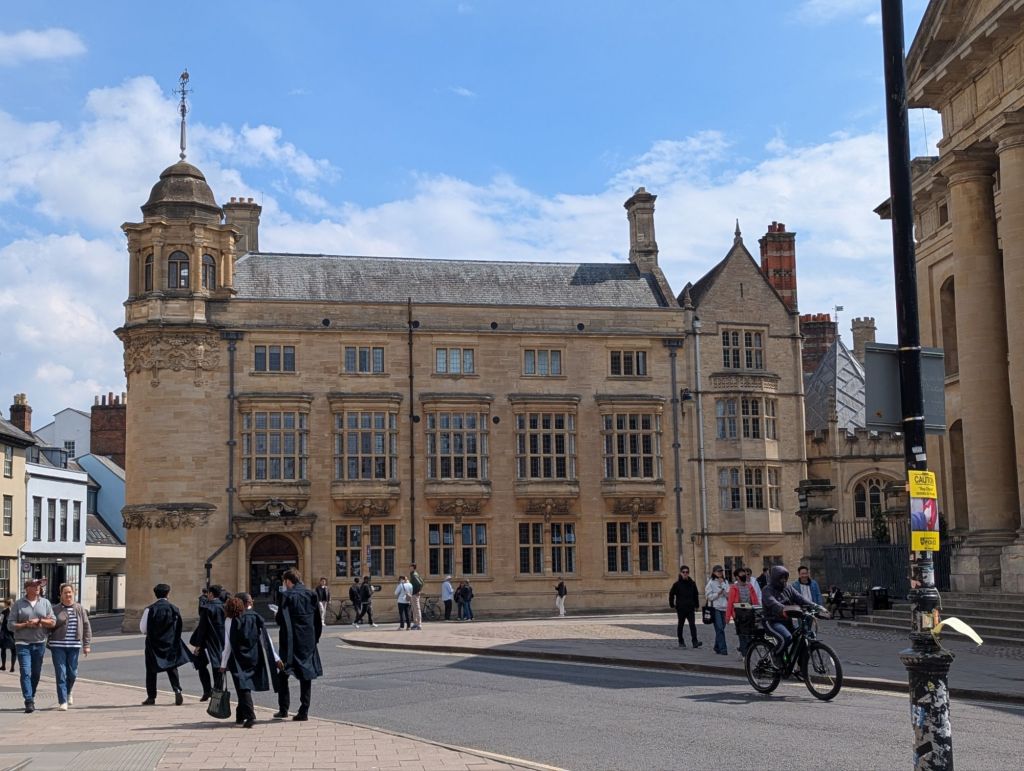
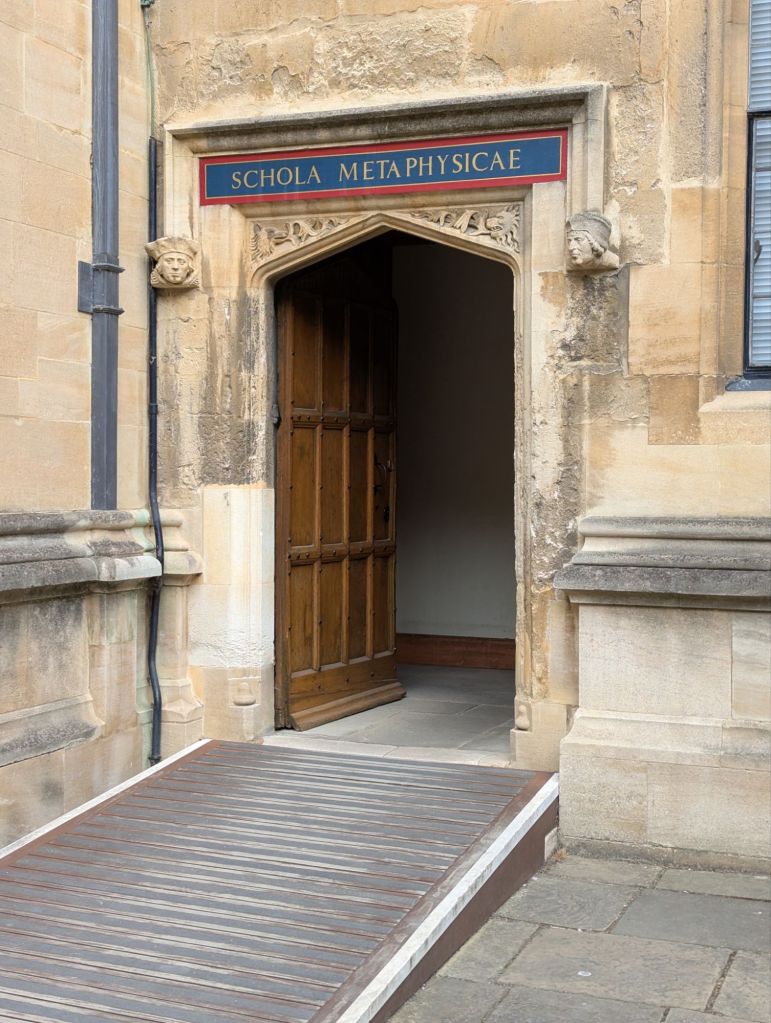
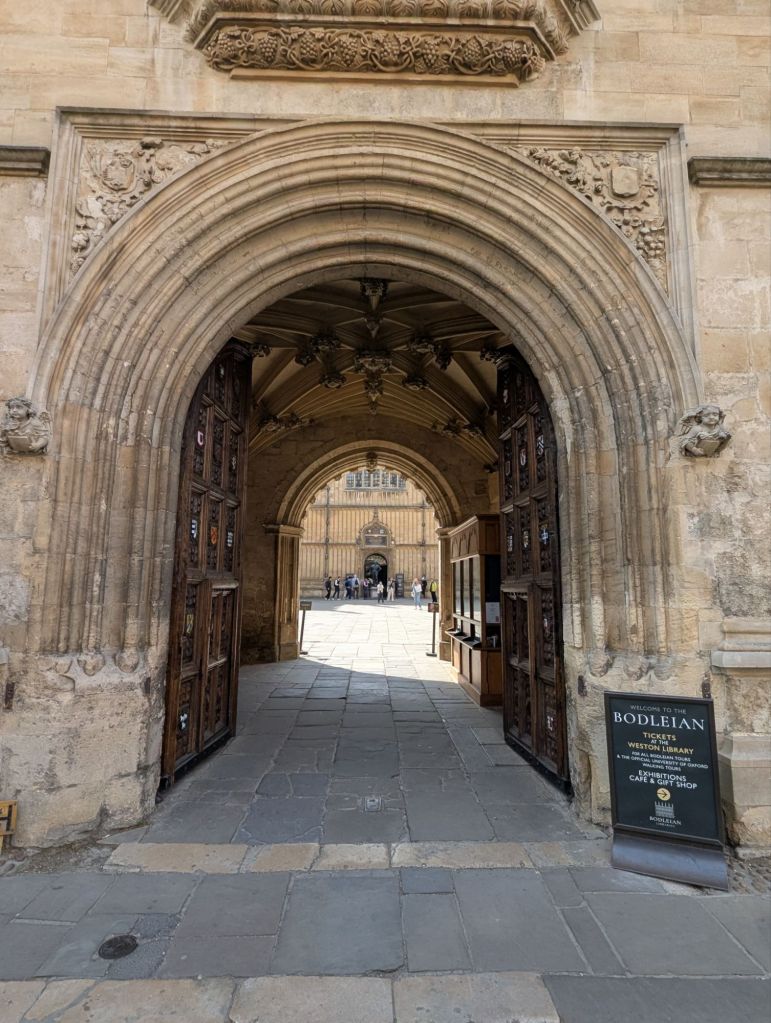
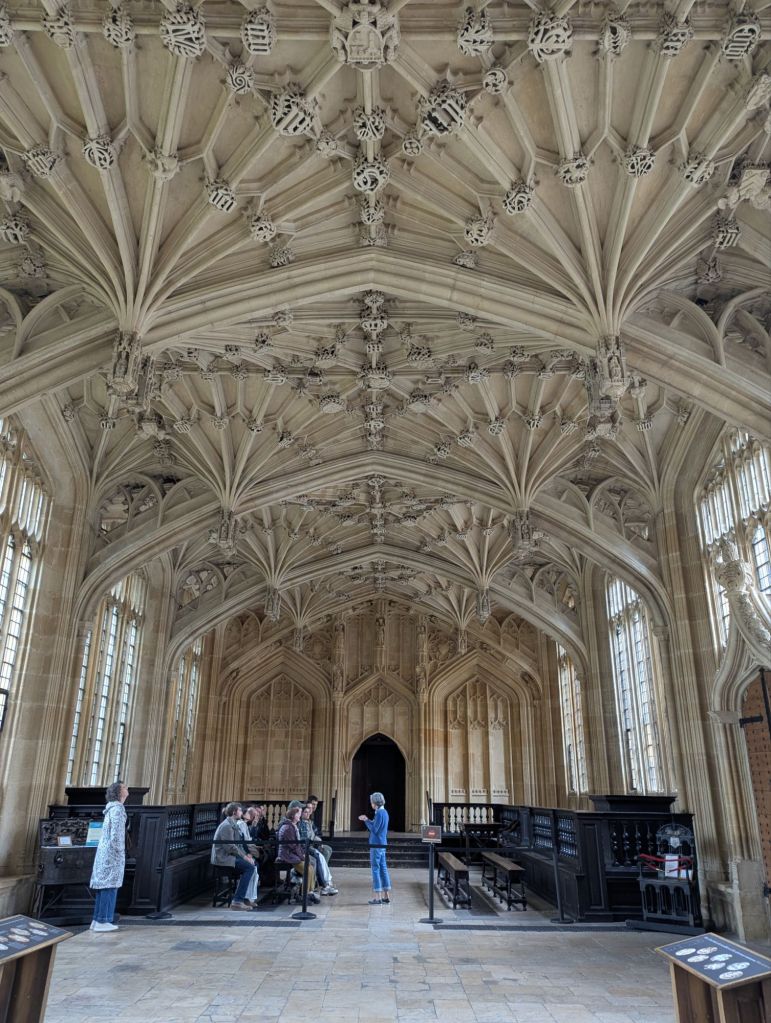
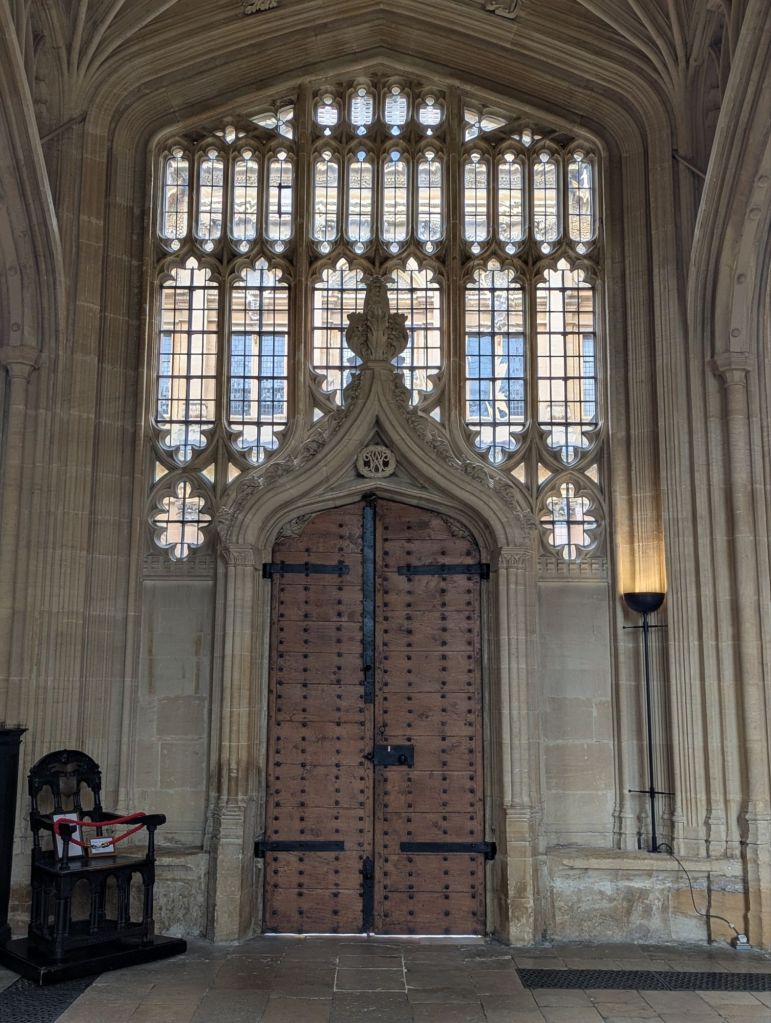
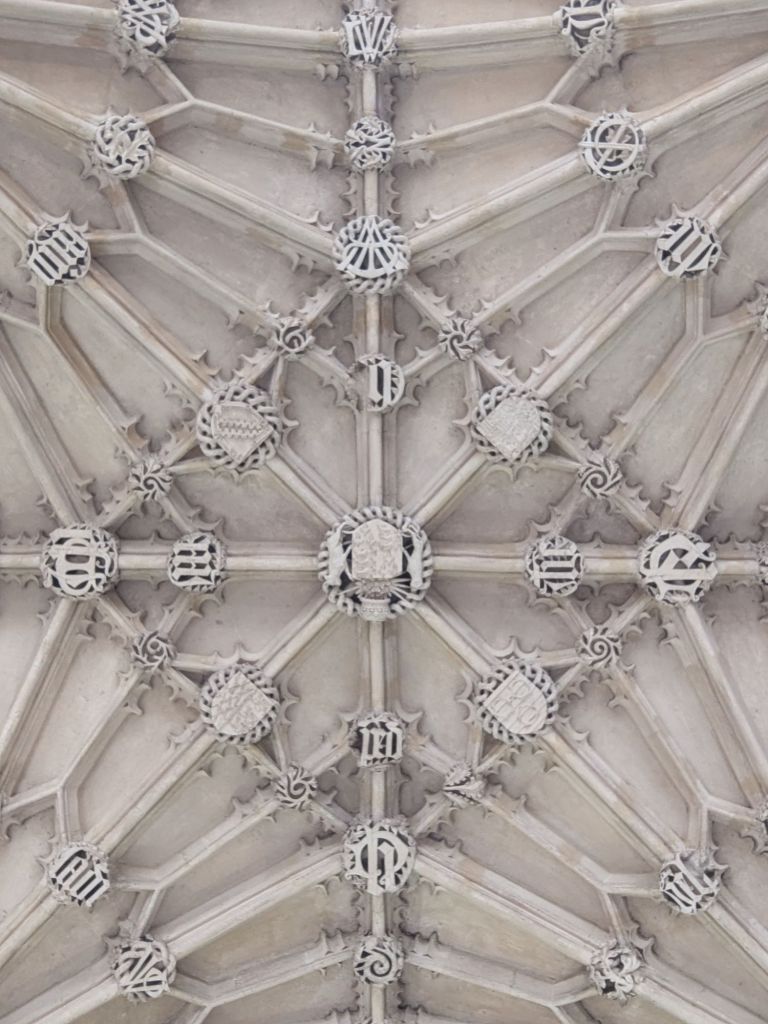
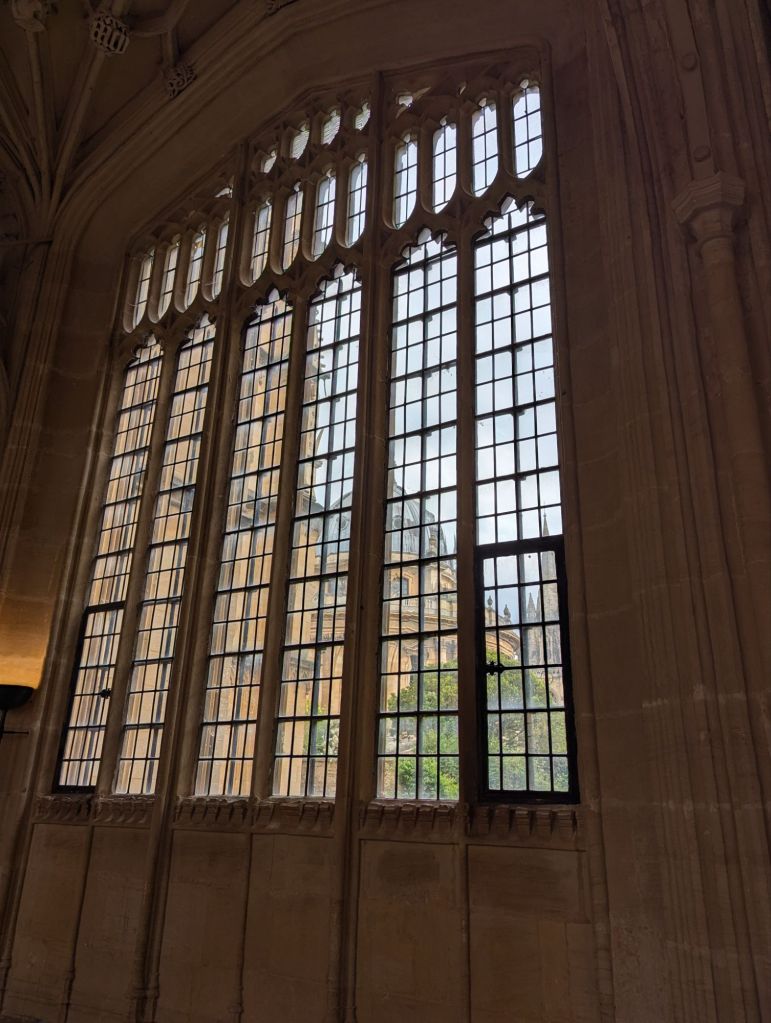
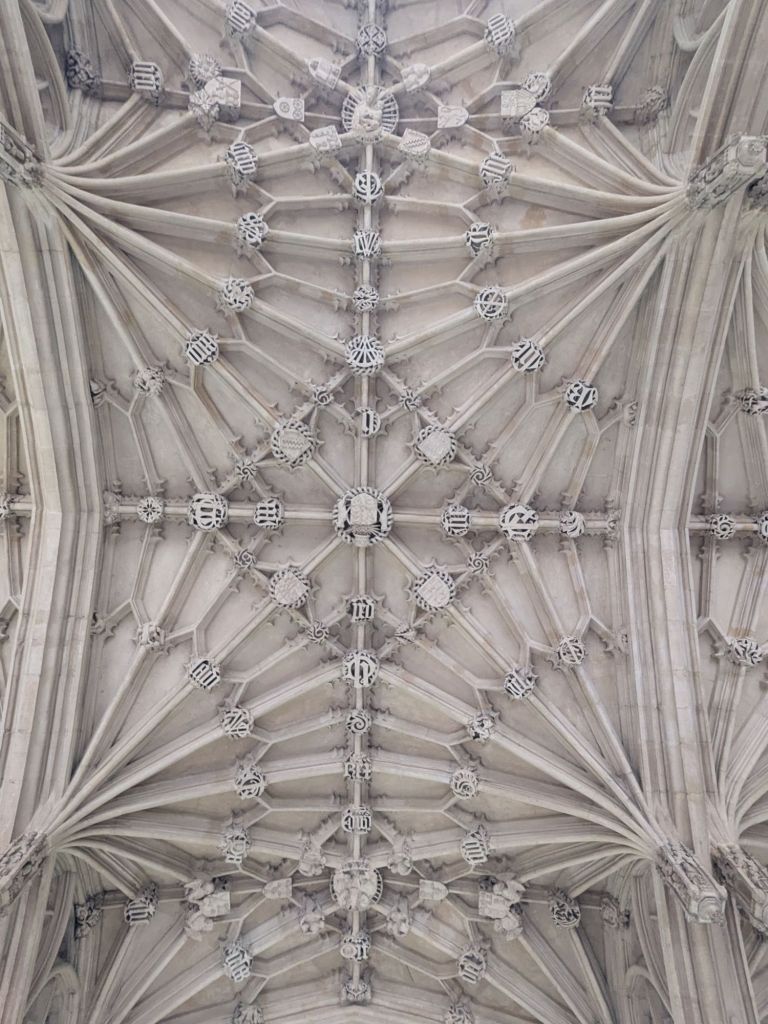
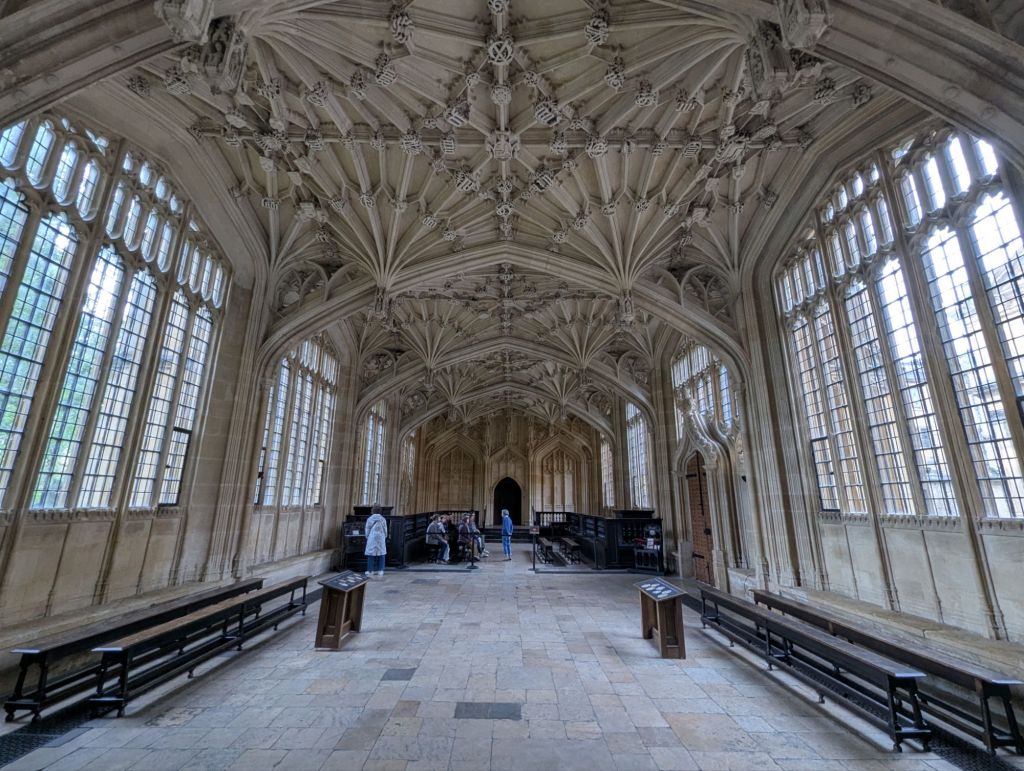
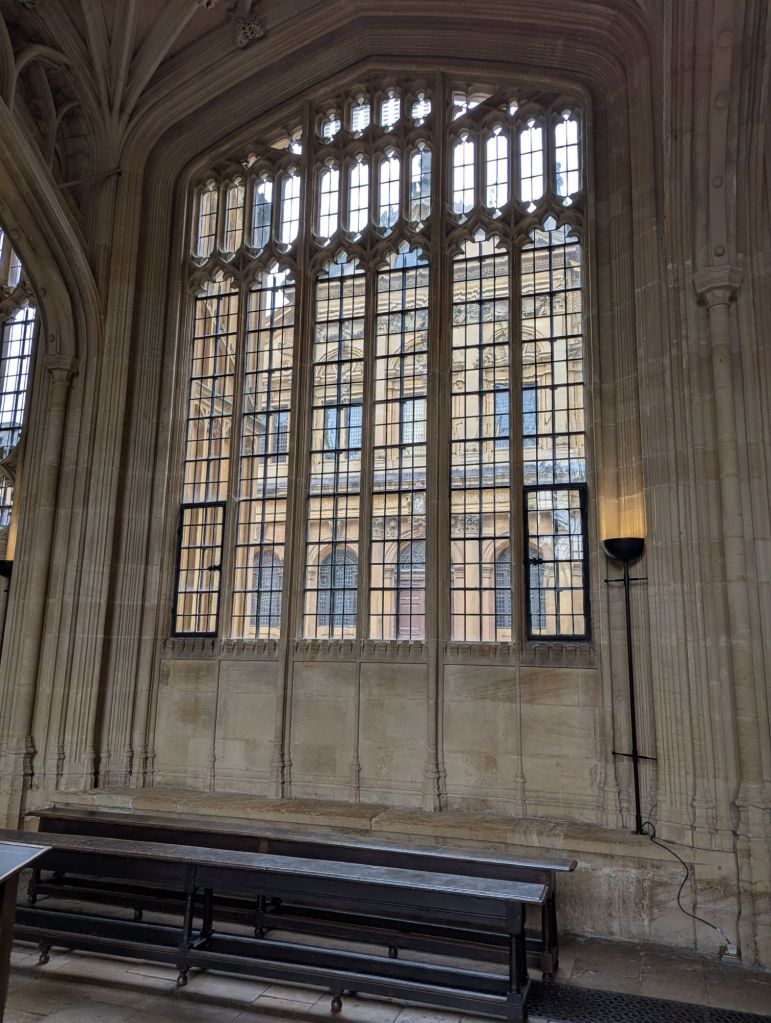
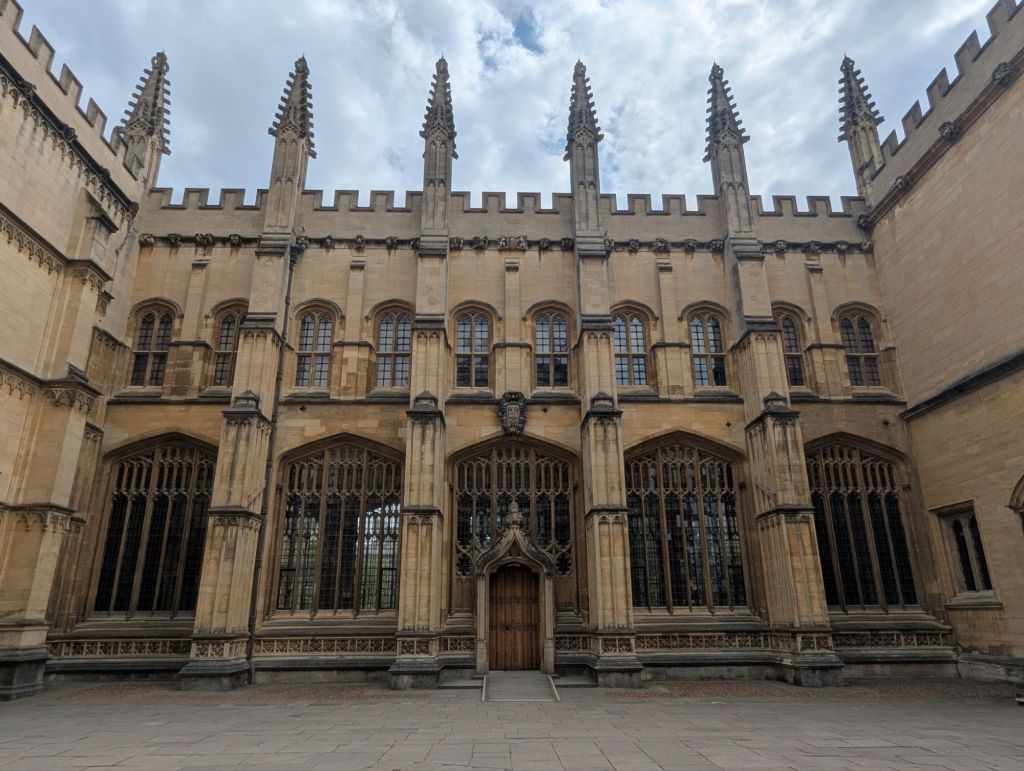
After the tour, we stopped for lunch before revisiting some of the sites that had caught our attention. One of the highlights was the Divinity School at University of Oxford. Despite the name, it is not a modern classroom building but a spectacular medieval hall completed in 1483 with an intricately carved stone ceiling that somehow looks both impossibly delicate and incredibly heavy at the same time. Originally used for oral examinations and lectures, it is now perhaps best known to many visitors as the filming location for Hogwarts’ infirmary in several Harry Potter movies.

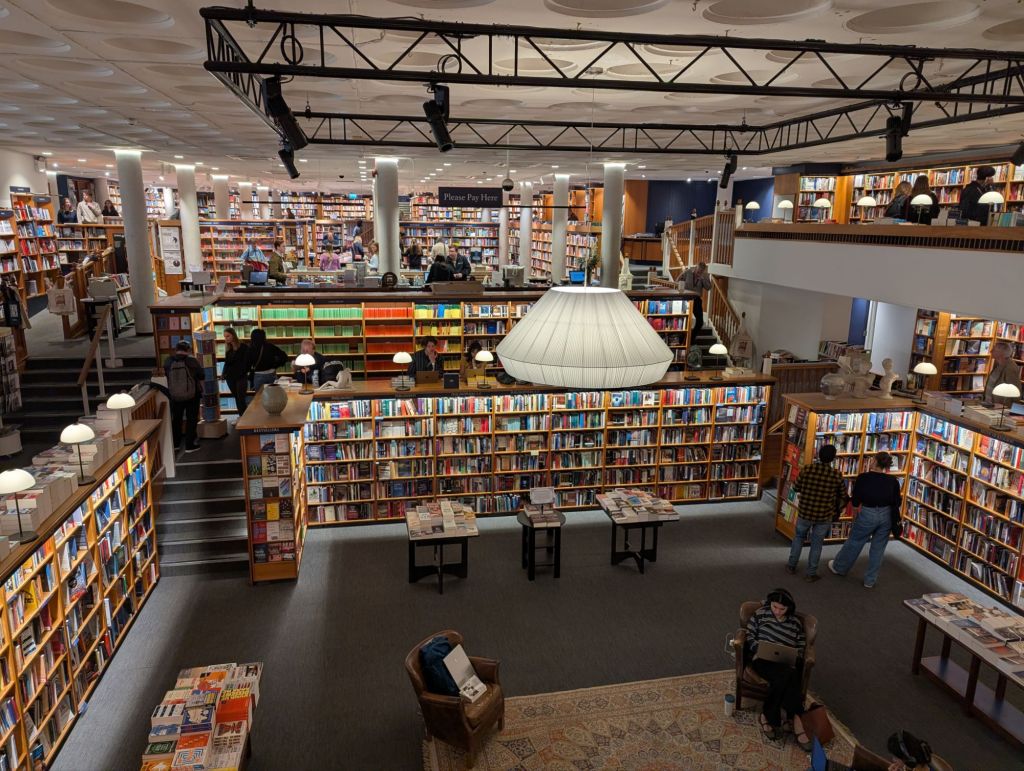
We also spent time wandering through Blackwell’s Bookshop, which first opened in 1879. Beneath the bookstore is the famous Norrington Room, a massive underground space containing more than three miles of shelving. It once held the Guinness World Record for the world’s largest single room devoted to selling books. For people who love bookstores, this place feels a little dangerous. You walk in thinking, “We’ll browse for a few minutes,” and suddenly you’re contemplating how many books can fit in a suitcase.

Norrington Room at Blackwell’s Bookshop

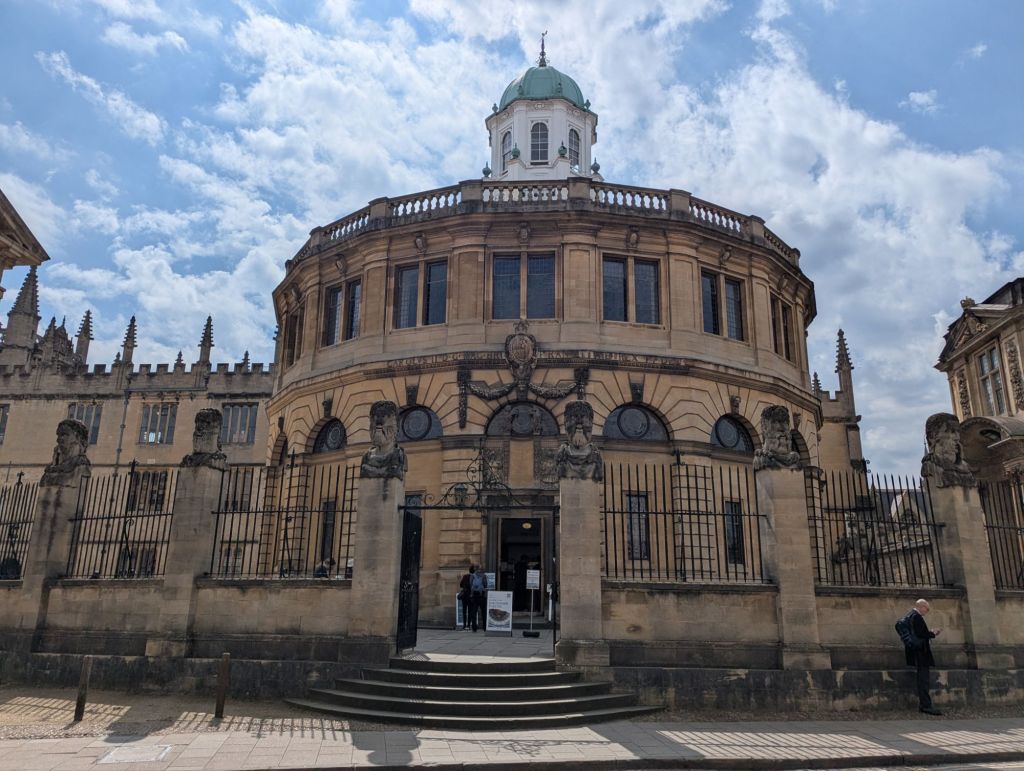
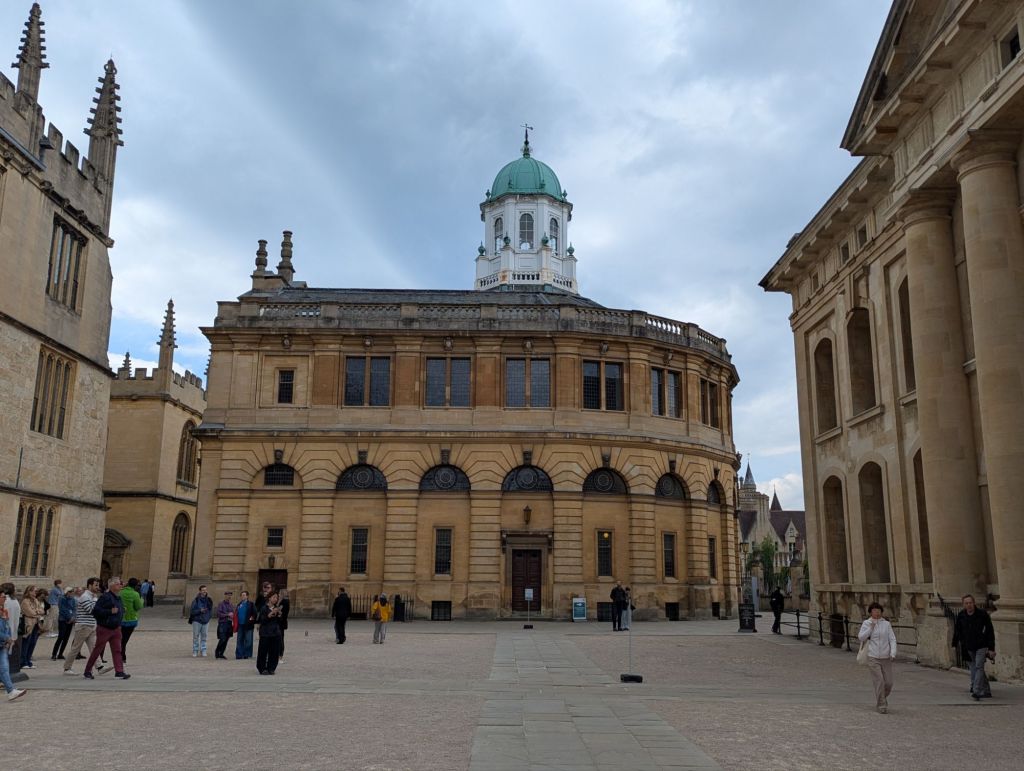
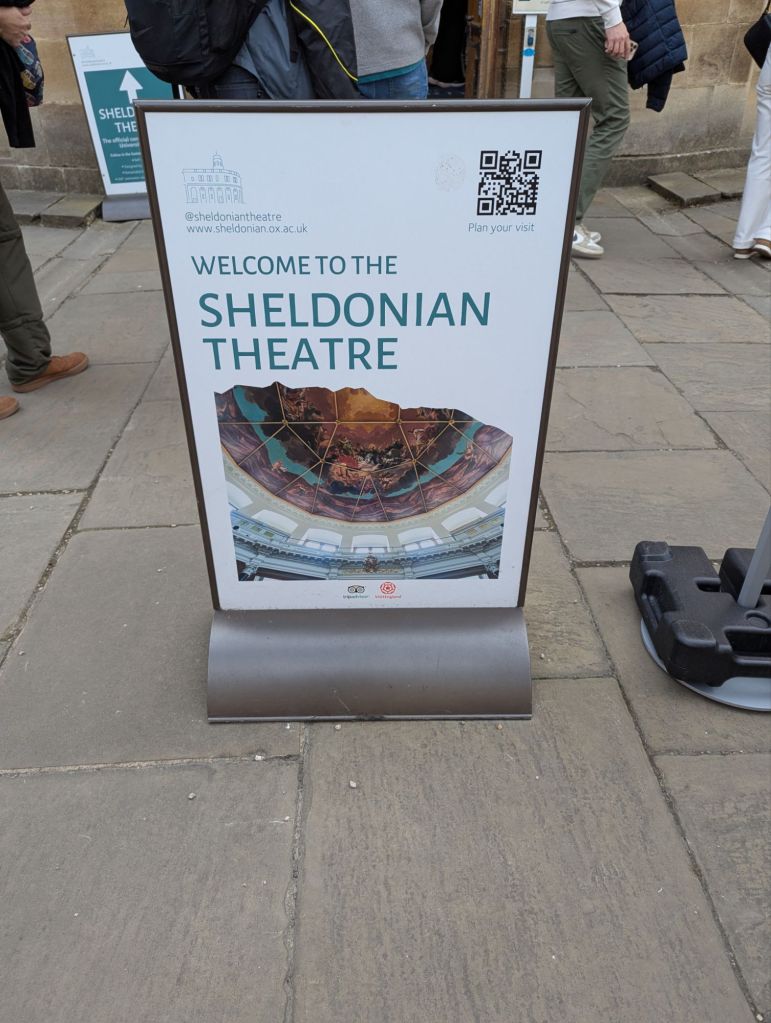
Sir Christopher Wren, whose work we had already admired throughout London, also left his mark on Oxford by designing the Sheldonian Theatre. Completed in 1669, it was one of Wren’s earliest major projects. The theater’s unusual roof design allowed for a large open interior without support pillars blocking the audience’s view, an impressive engineering achievement for the time. As a small signature detail, a tiny carved wren bird can still be spotted hidden on one of the decorative heads near the entrance.

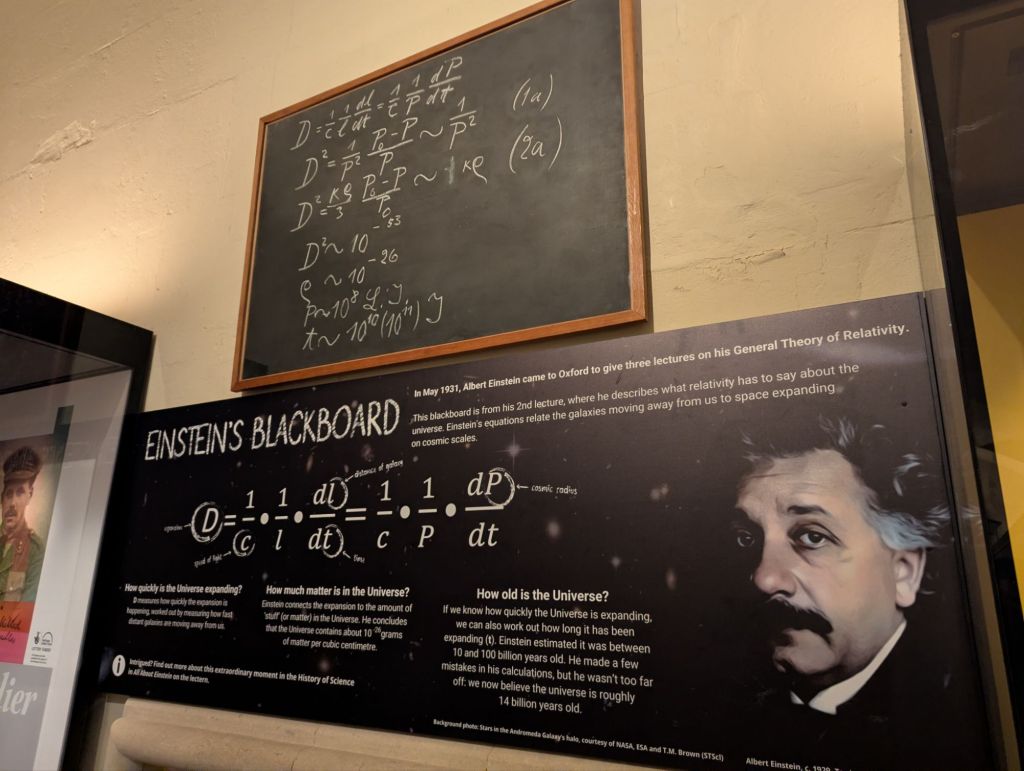
We also made a quick stop at the History of Science Museum to see one of its most famous artifacts: the blackboard used by Albert Einstein during a 1931 lecture at Oxford. Amazingly, the equations he wrote remain preserved exactly as he left them. While we could not begin to understand the mathematics, it was still fascinating to stand in front of something personally used by one of history’s greatest scientific minds. We stared at the equations just long enough to confirm that we were definitely not theoretical physicists.

Einstein’s Blackboard

When we emerged from the museum, the sun had finally decided to make an appearance, so we revisited a few spots for better photos before stopping for one of Britain’s finest traditions: afternoon cream tea. We enjoyed tea, warm scones with jam and clotted cream, and a slice of Victoria sponge cake. Honestly, the British may be onto something with this daily pause for tea and cake. Productivity might actually improve if every afternoon included baked goods.

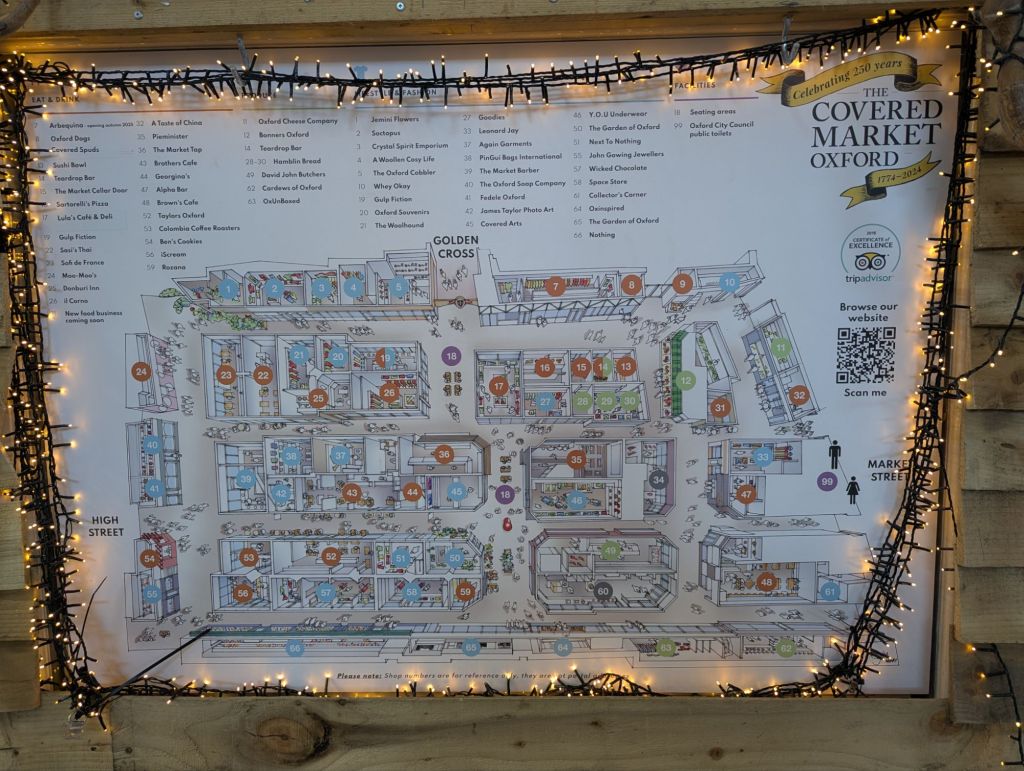
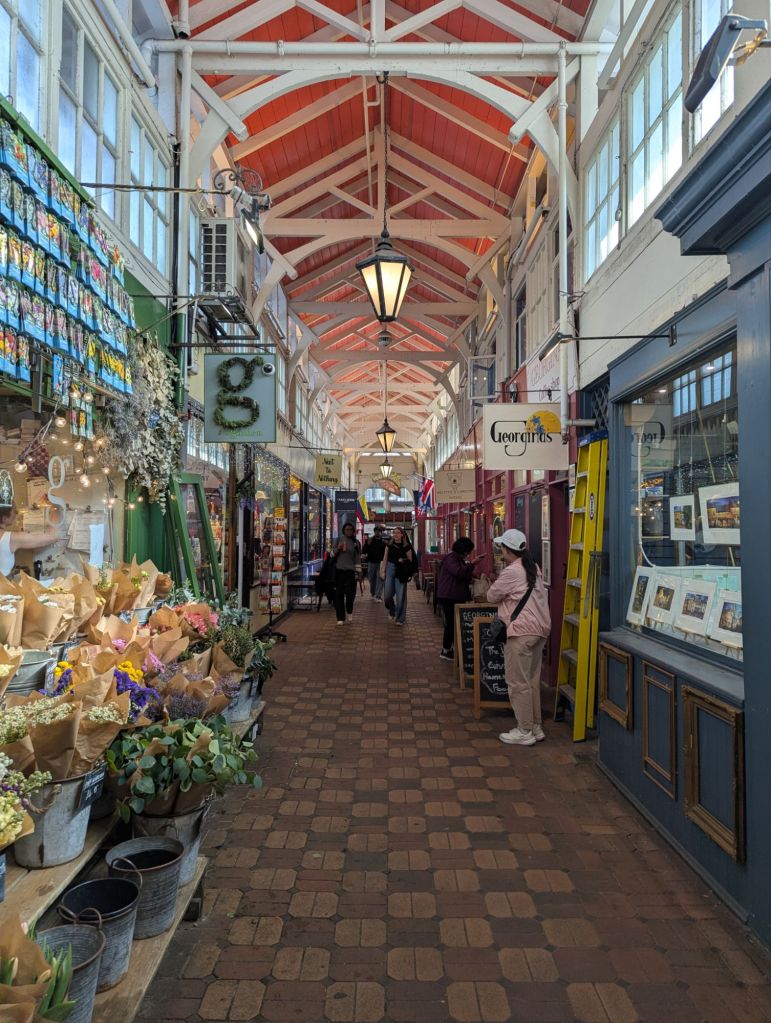
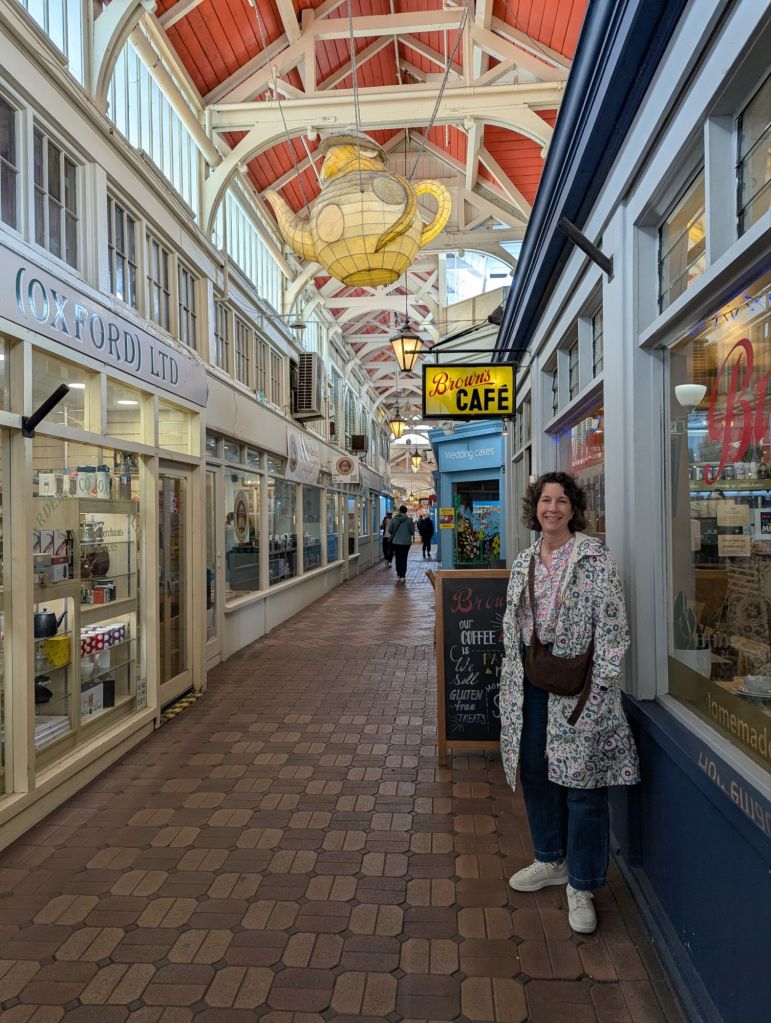
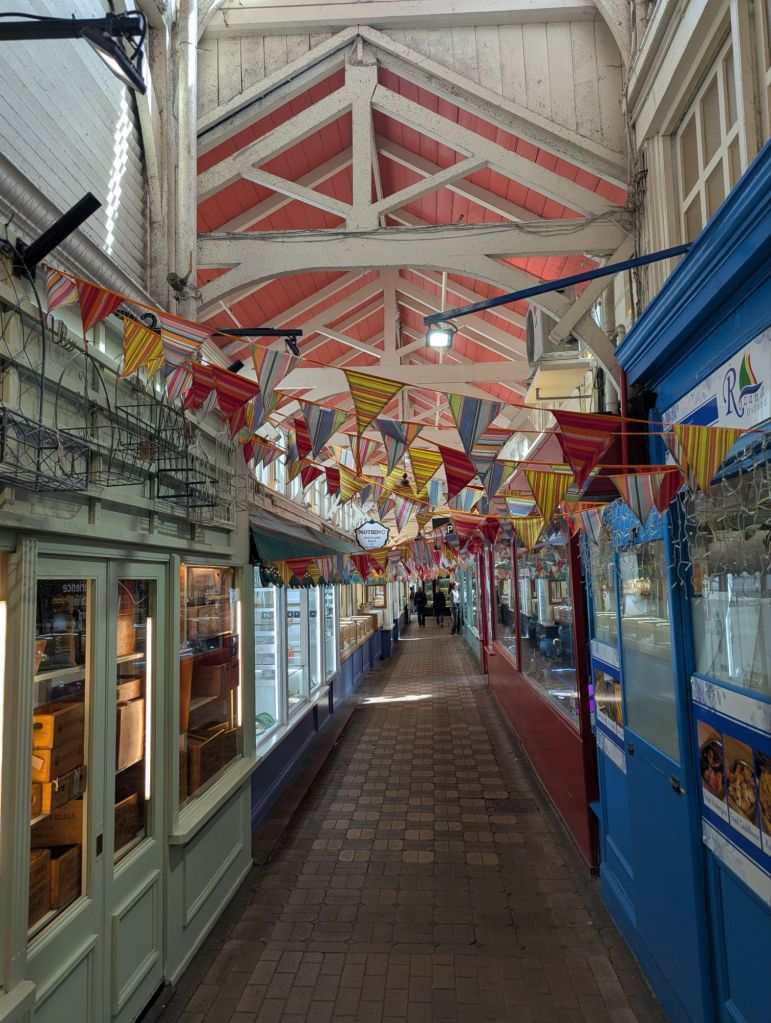
Reenergized, we continued exploring Oxford, including the historic Oxford Covered Market. Established in 1774, the market was originally created to move messy butcher stalls and street vendors off the city’s main roads. Today, it houses everything from bakeries and coffee shops to florists, butchers, and specialty stores. Walking through it, it was hard to believe this bustling space has been serving shoppers continuously for more than 250 years.

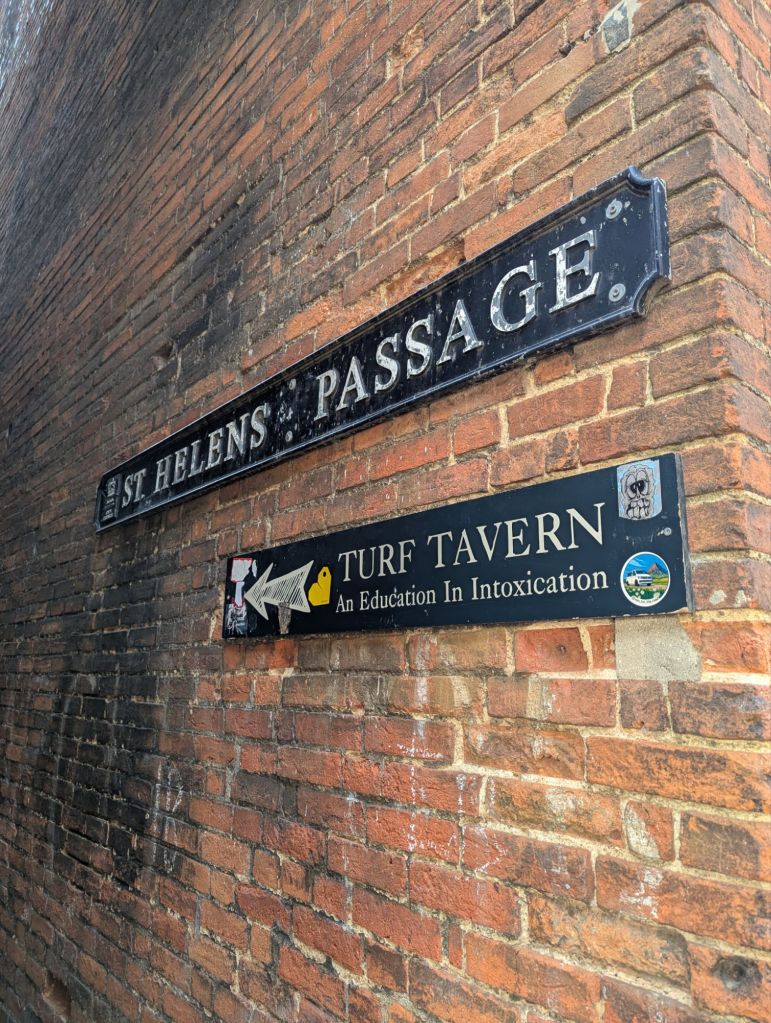
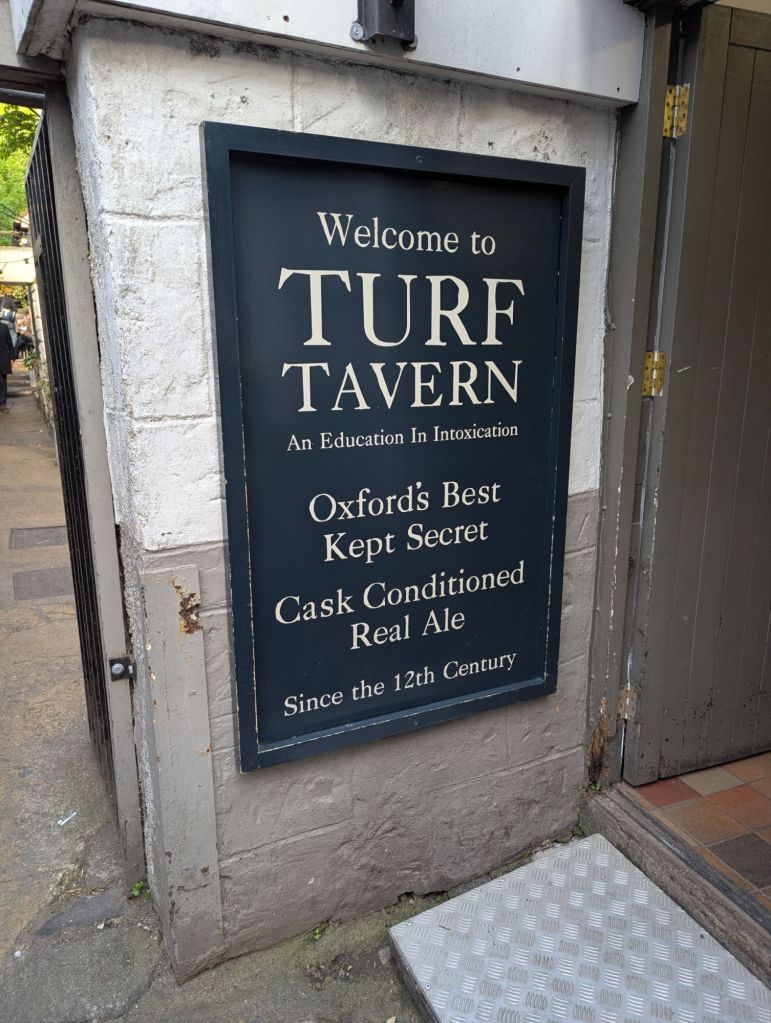
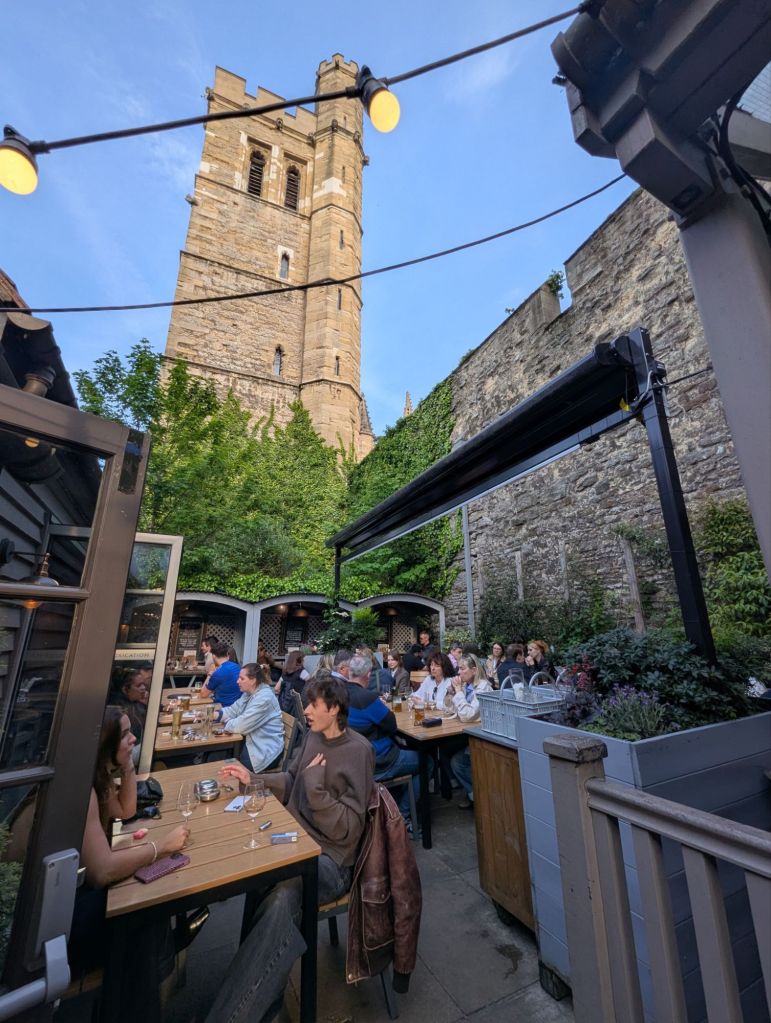
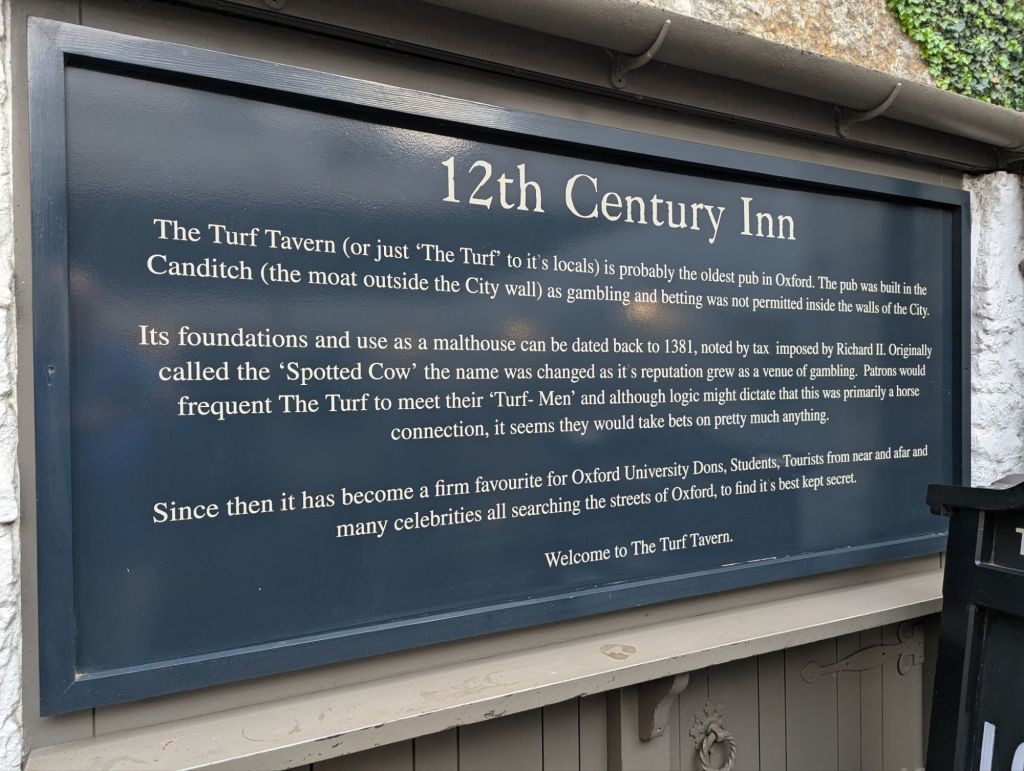
By late afternoon, our feet informed us that it was time for a break. We found a riverside bar and enjoyed a drink in the sunshine. Eventually, we wandered back into town for dinner at the famous Turf Tavern, a hidden pub tucked down a narrow alleyway that has been serving students, professors, locals, and tourists for centuries. Its secluded location makes it feel like you have stumbled upon a secret gathering place that somehow everyone already knows about.

After dinner, we made the quick walk back to the train station and caught the 7:45 train to Moreton-in-Marsh. Once back at the hotel, we got organized for the next day and headed to bed early to rest up for our first 10-mile walk through the Cotswolds.

Categories: 2026 England Adventure | Tags: , , , , , , , , , | Leave a comment

Blog at WordPress.com.