Posts Tagged With: Cotswolds hiking

Day 11 in England – From Chipping Campden to Moreton-in-Marsh: Full Circle in the Cotswolds

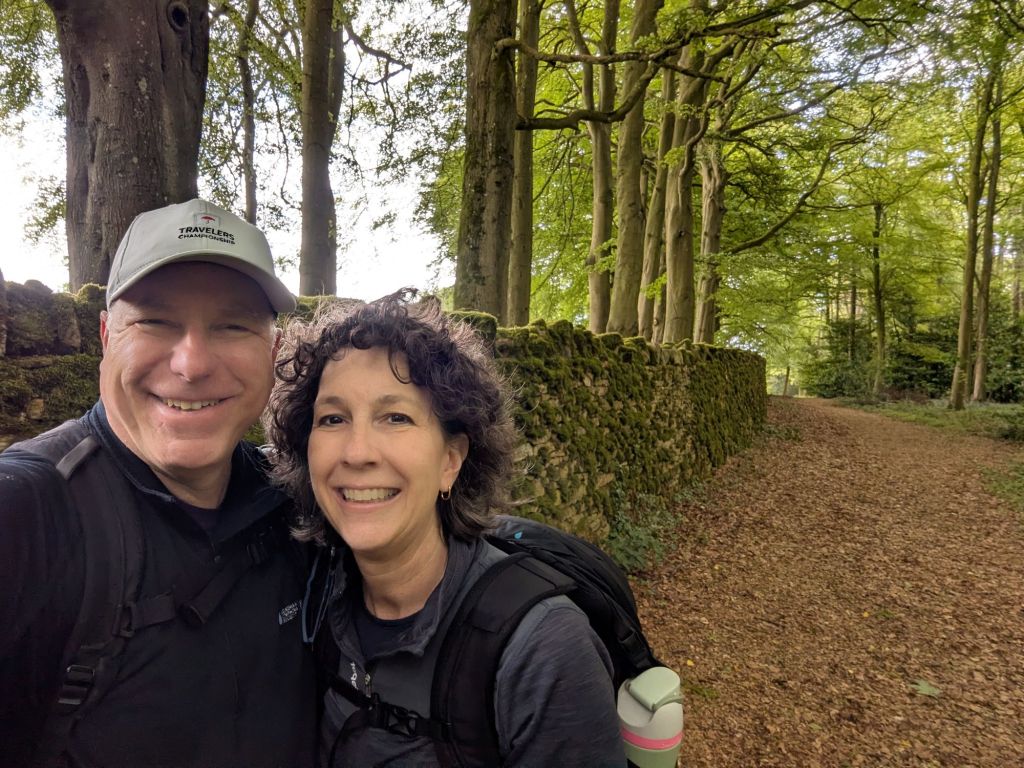
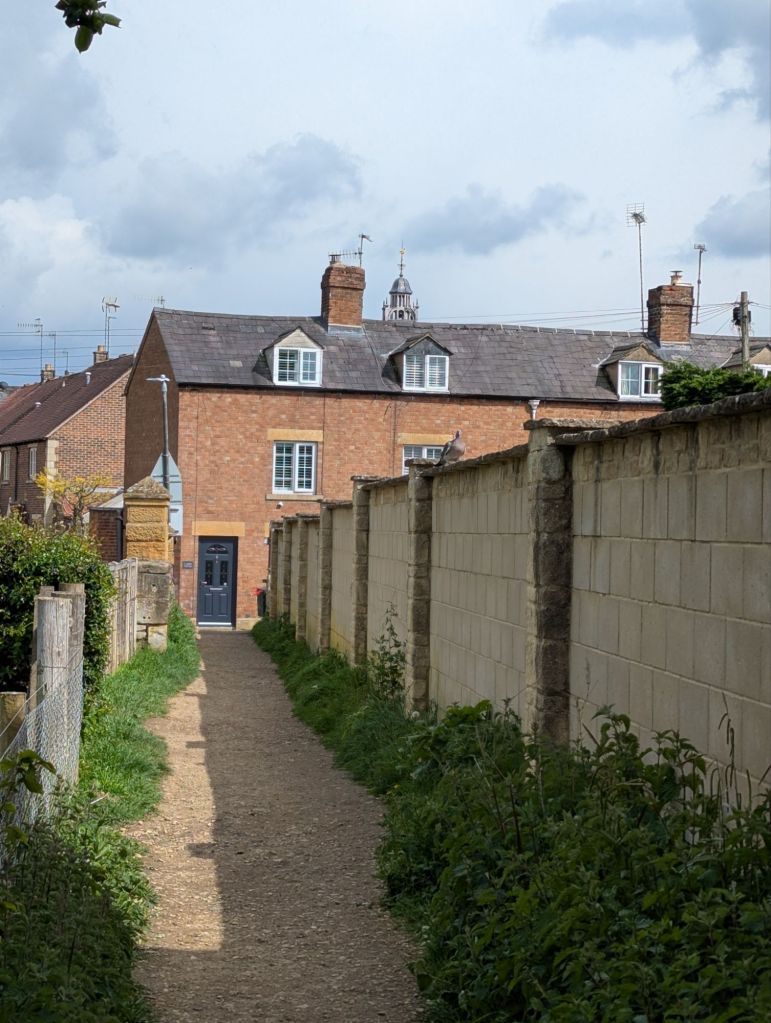
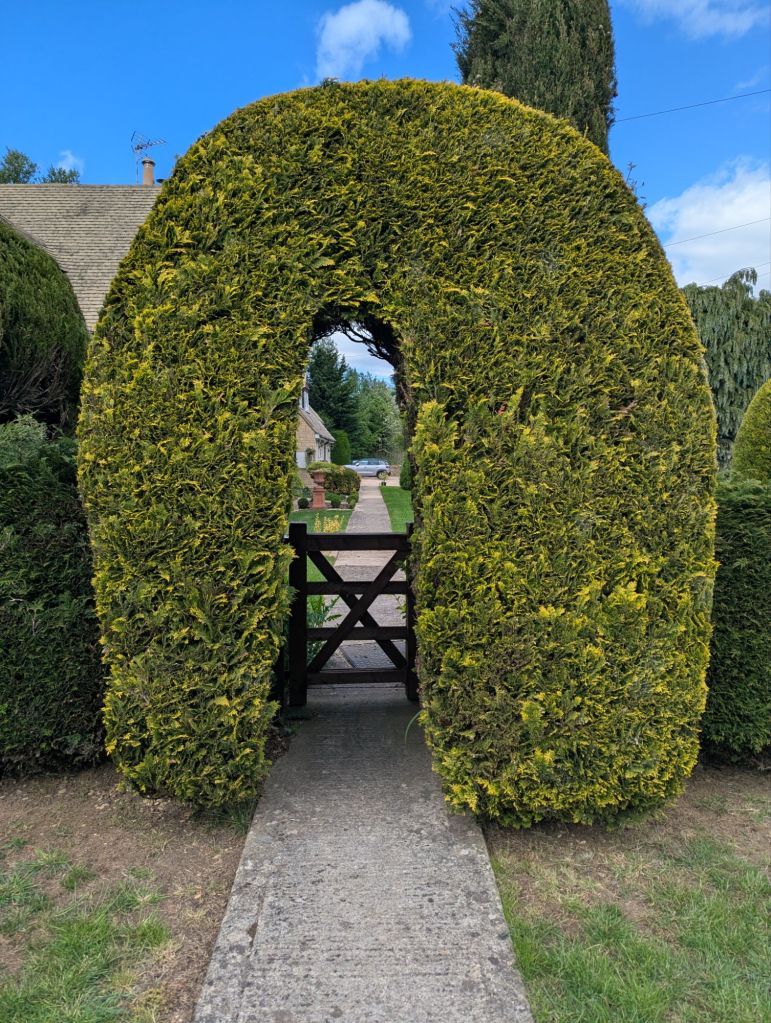
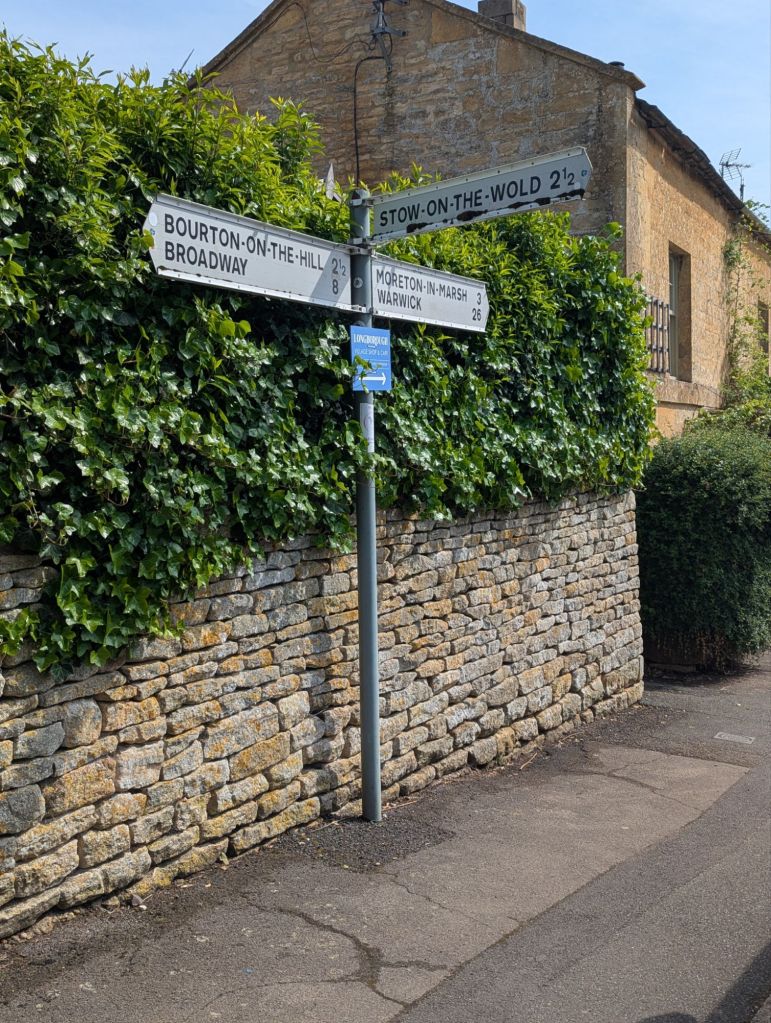
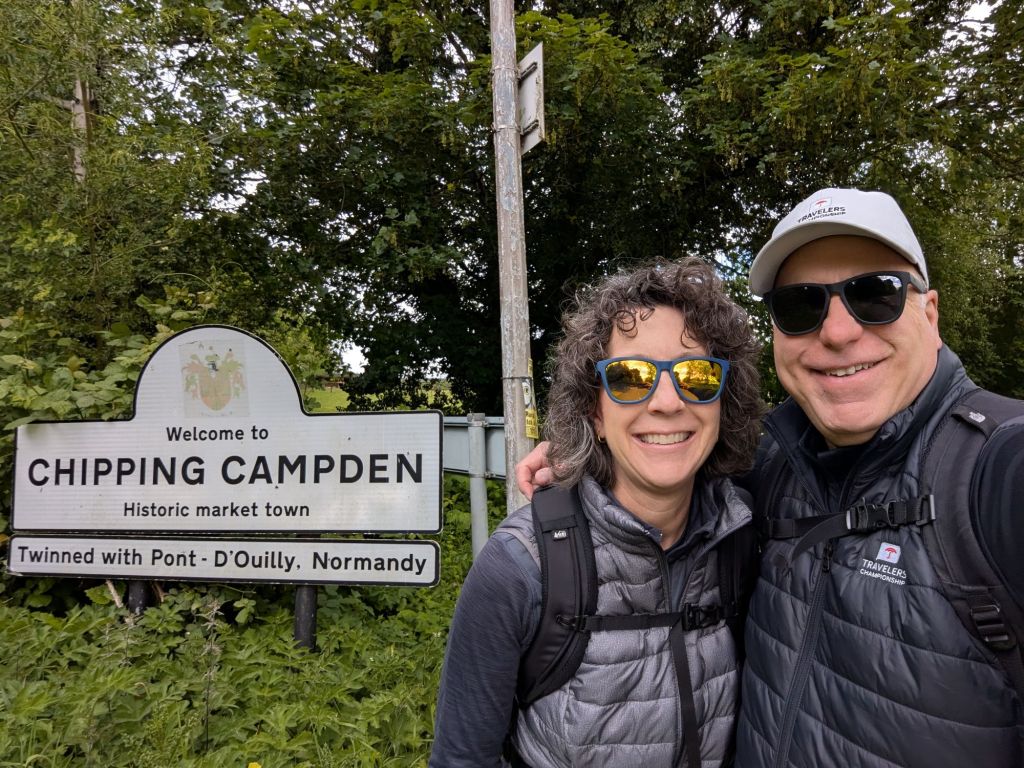
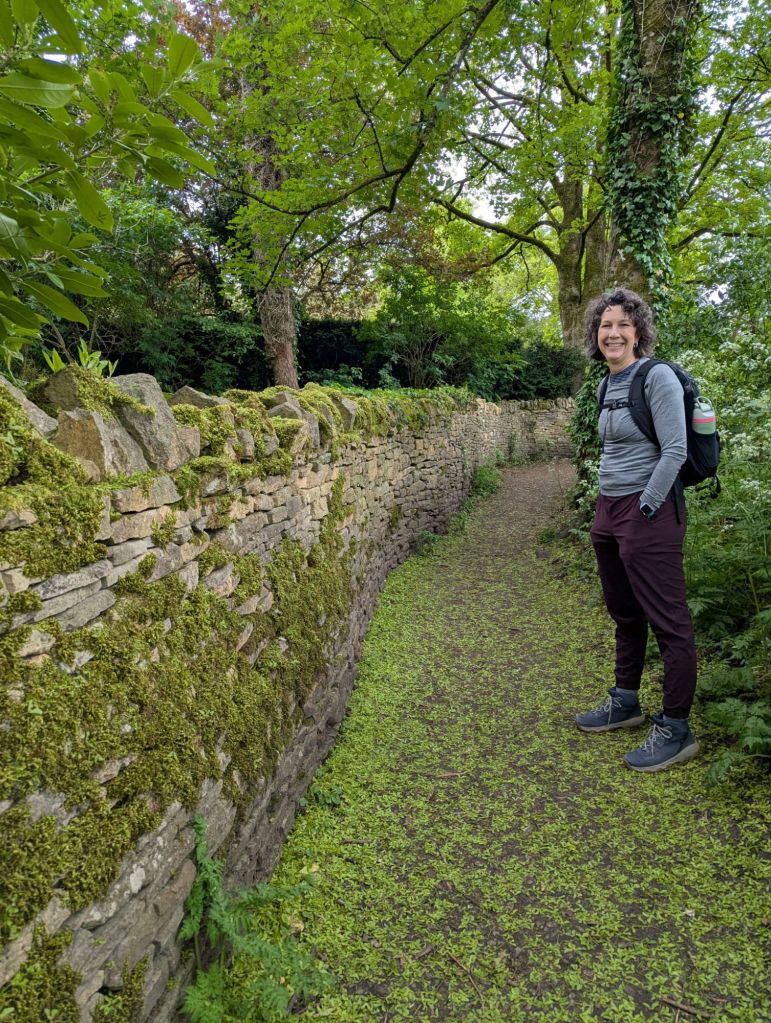
Photo on our way out of Chipping Campden

DAY 11 – THURSDAY, MAY 14, 2026

Today was our final day of hiking! While we absolutely loved exploring this stunning part of England, we were also looking forward to being done with the daily routine of “bags fully packed and out the door by 8:30 AM.”

Since today’s walk was only a little over seven miles, which now somehow felt “short” to us, we enjoyed a more leisurely breakfast and spent some extra time exploring Chipping Campden before heading out on the trail.

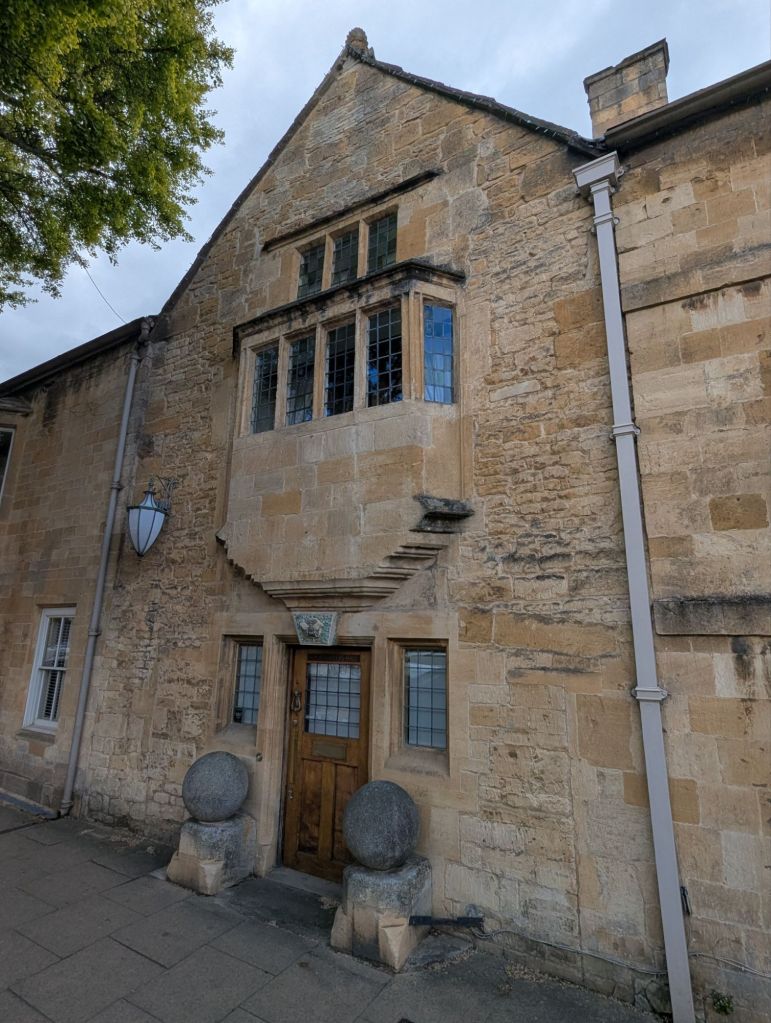
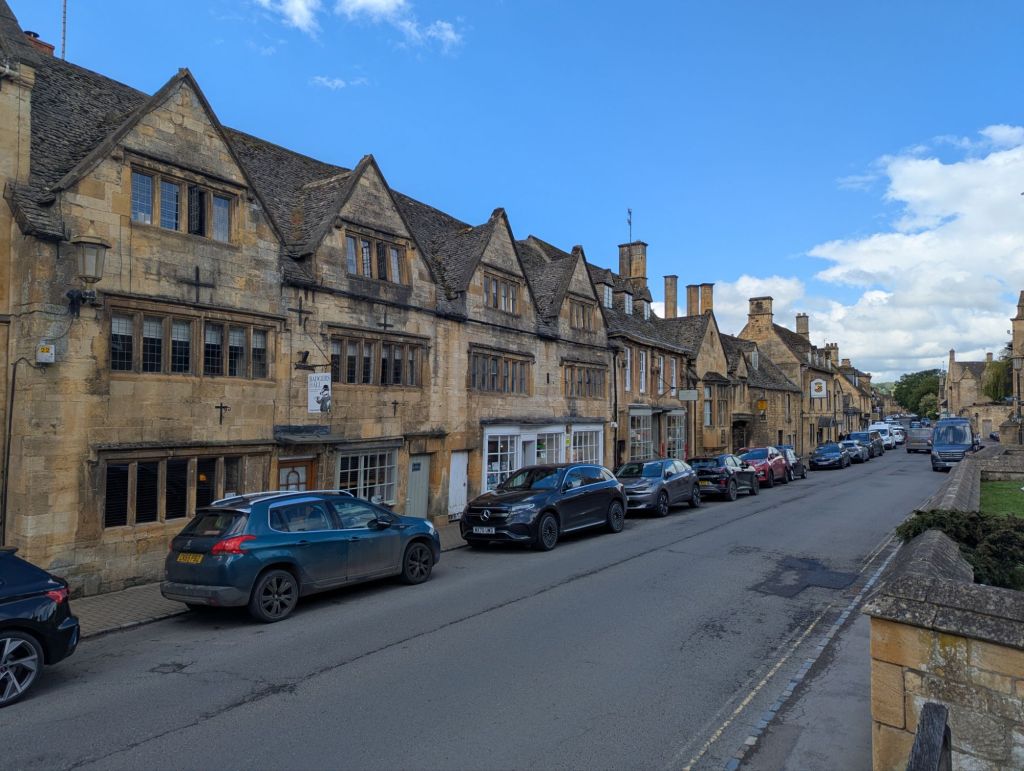
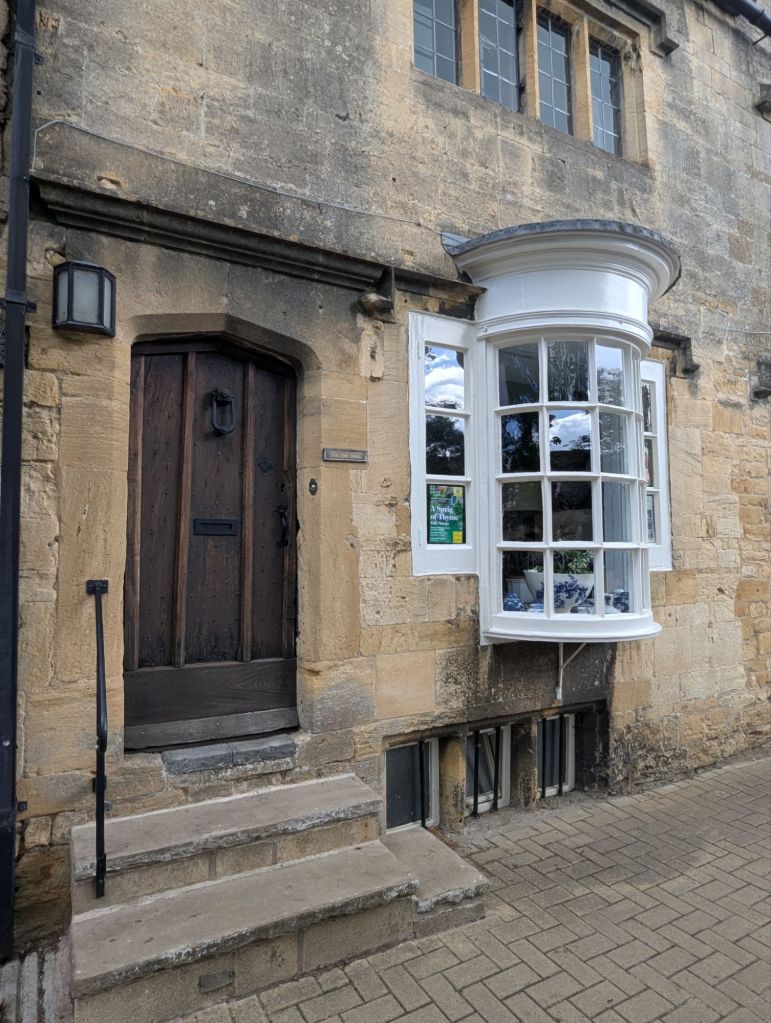
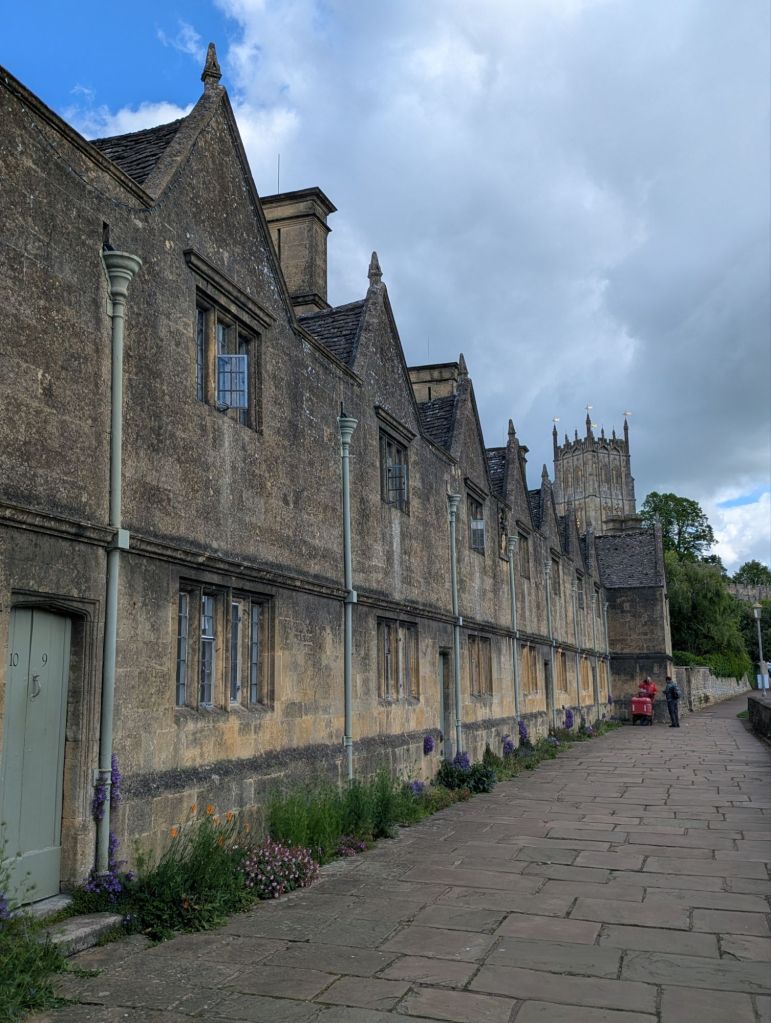
Chipping Campden turned out to be one of our favorite towns in the Cotswolds. The town became wealthy during the Middle Ages because of the wool trade, and many of the beautiful honey-colored limestone buildings still standing today were built with wool money hundreds of years ago. The broad High Street is lined with historic homes, inns, and shops, and it honestly felt like walking through a movie set.
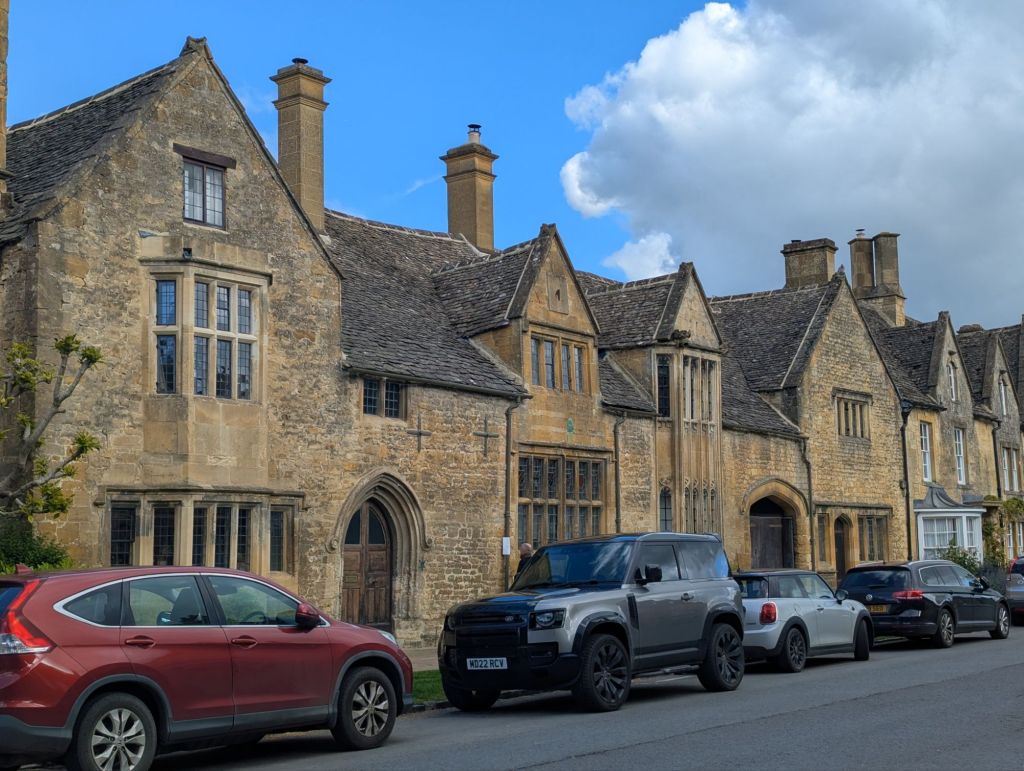
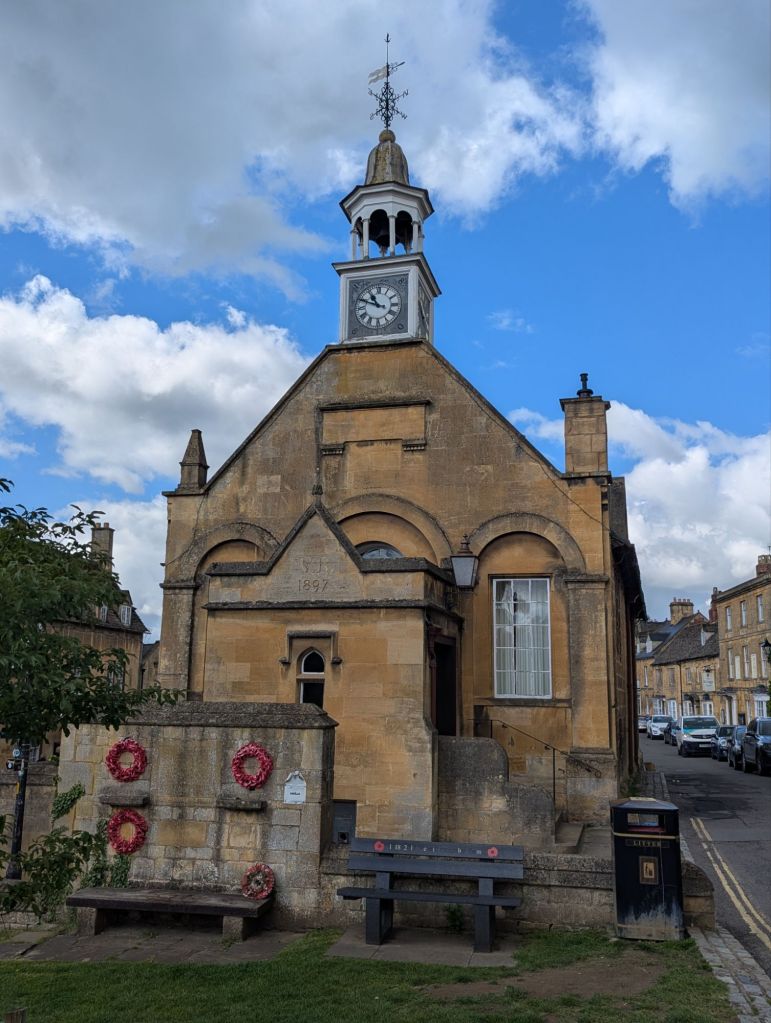
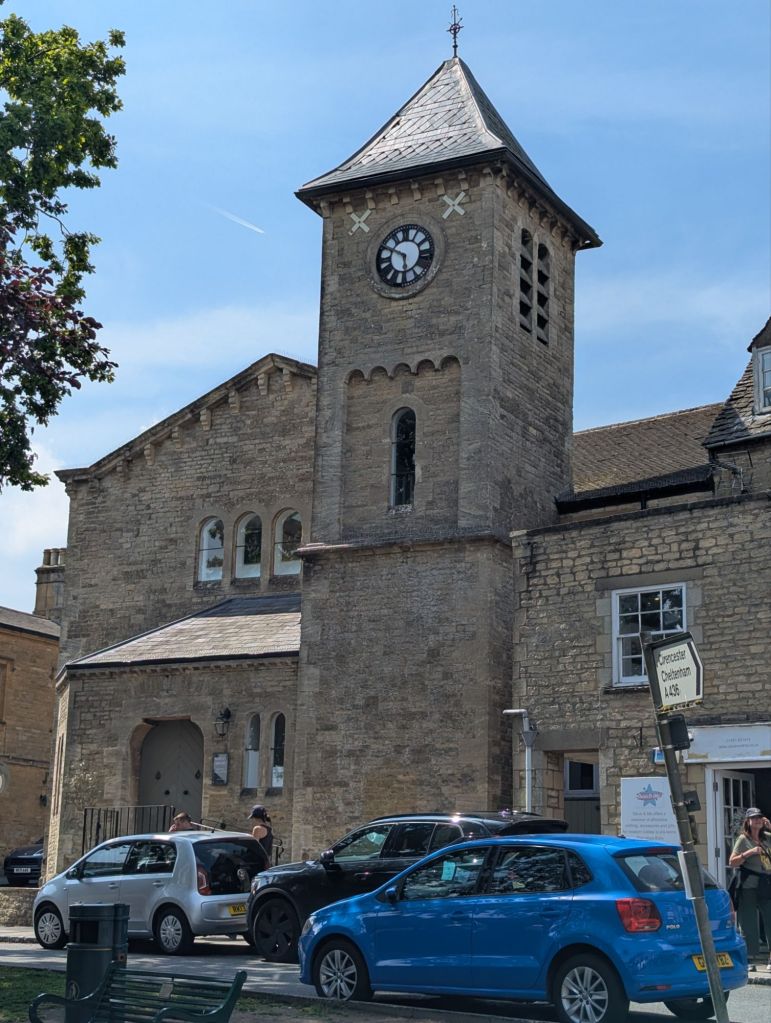
We had read about free walking tours led by the village wardens, so we headed to the old Market Hall to meet the guide. The Market Hall, built in 1627, sits right in the center of town and once served as a covered marketplace where traders sold butter, poultry, cheese, and wool beneath its stone arches while staying dry from the English weather above. It is one of the most recognizable landmarks in Chipping Campden.
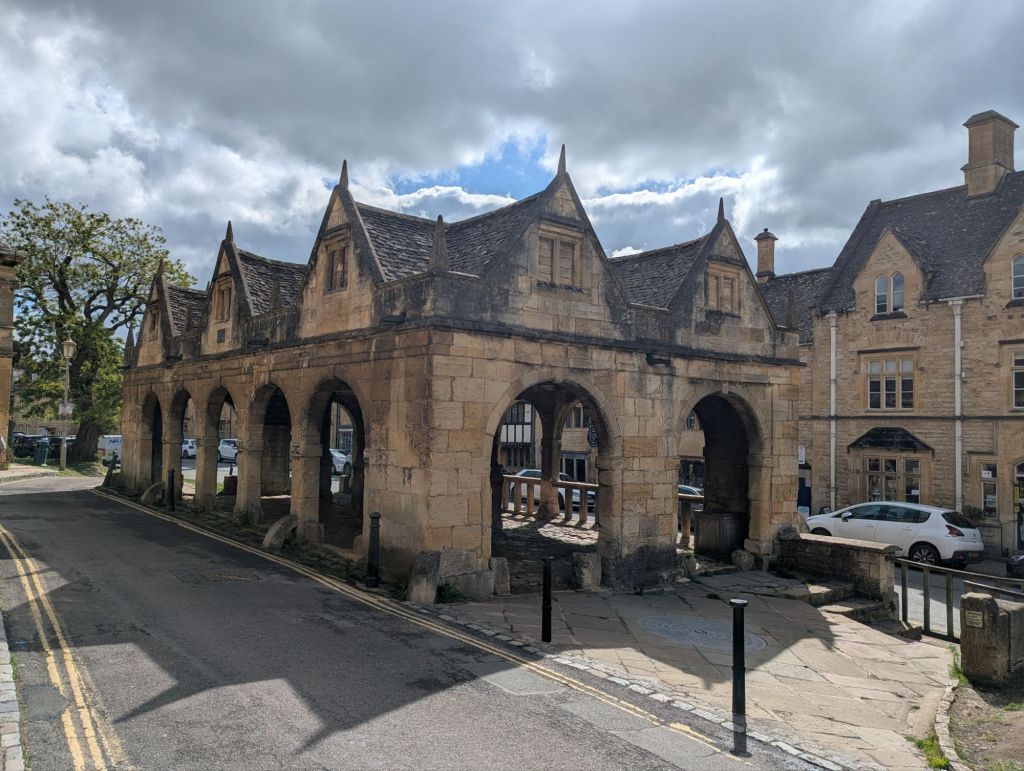
Chipping Campden Market Hall

After waiting there for a while with no guide in sight, we eventually learned that the tours do not begin until late May. Fortunately, the tourist information center was directly across the street and provided a self-guided walking tour booklet instead.

We spent the next hour wandering through town learning about the history behind many of the buildings. One interesting thing we saw was a cartwash, one of only a few remaining in England. This stone-lined trench was filled with water so wagon wheels could roll through it. The water helped keep wooden wheels from drying out and shrinking, while also washing off mud during wet seasons. It was basically the medieval version of a car wash.

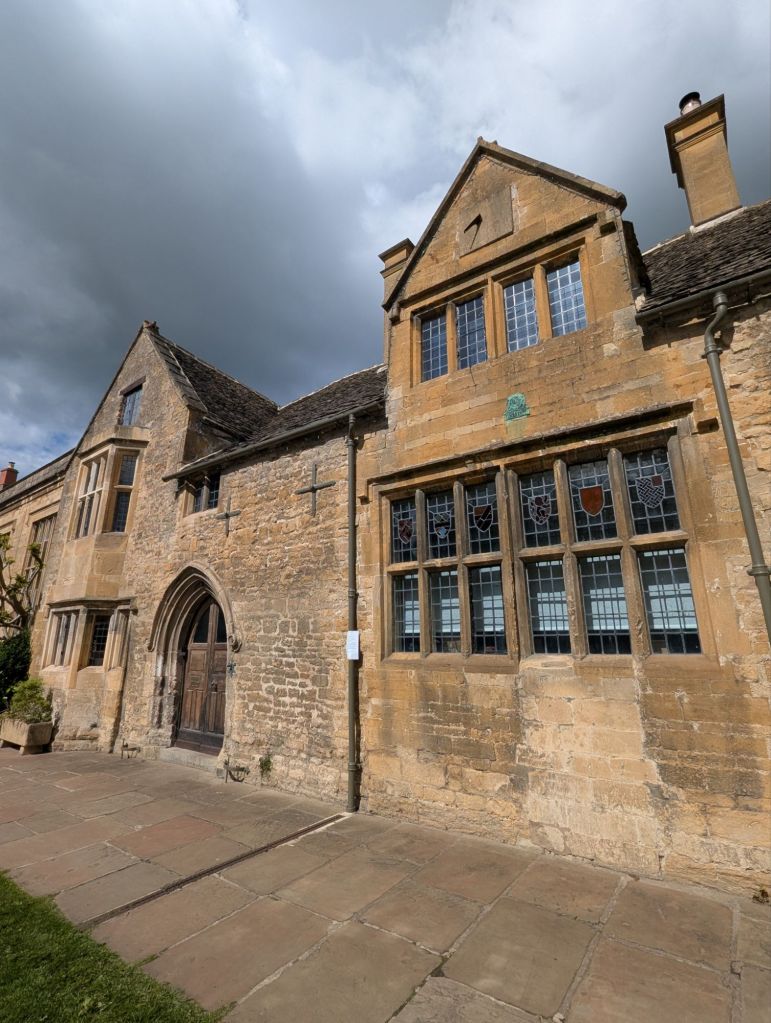
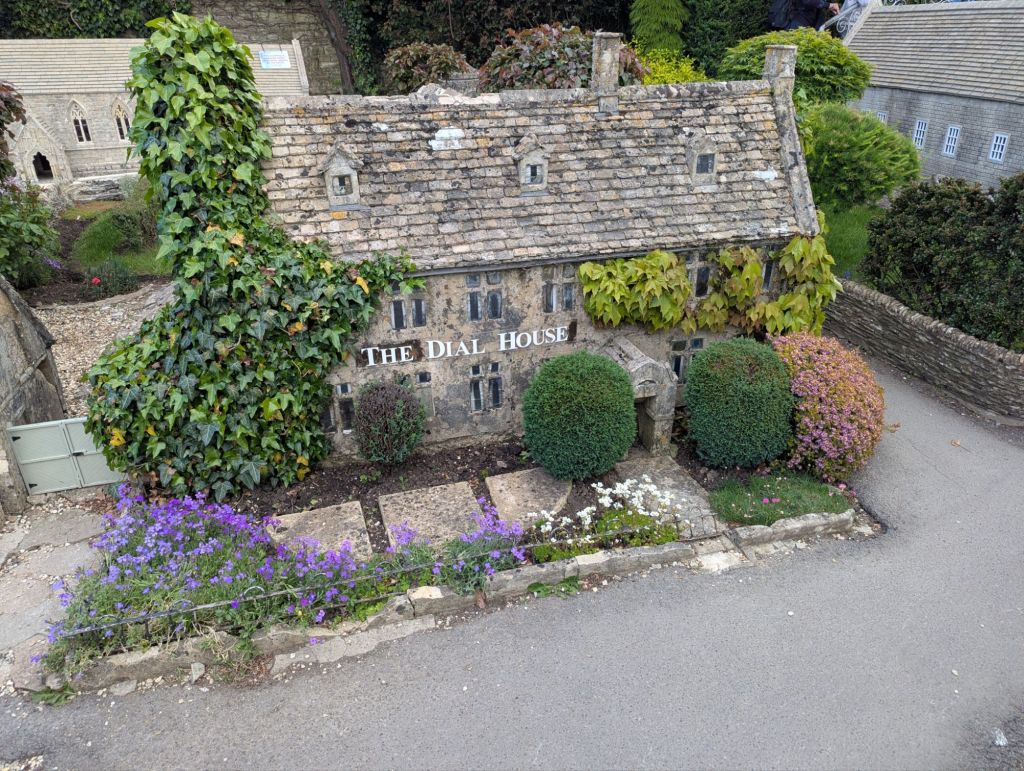
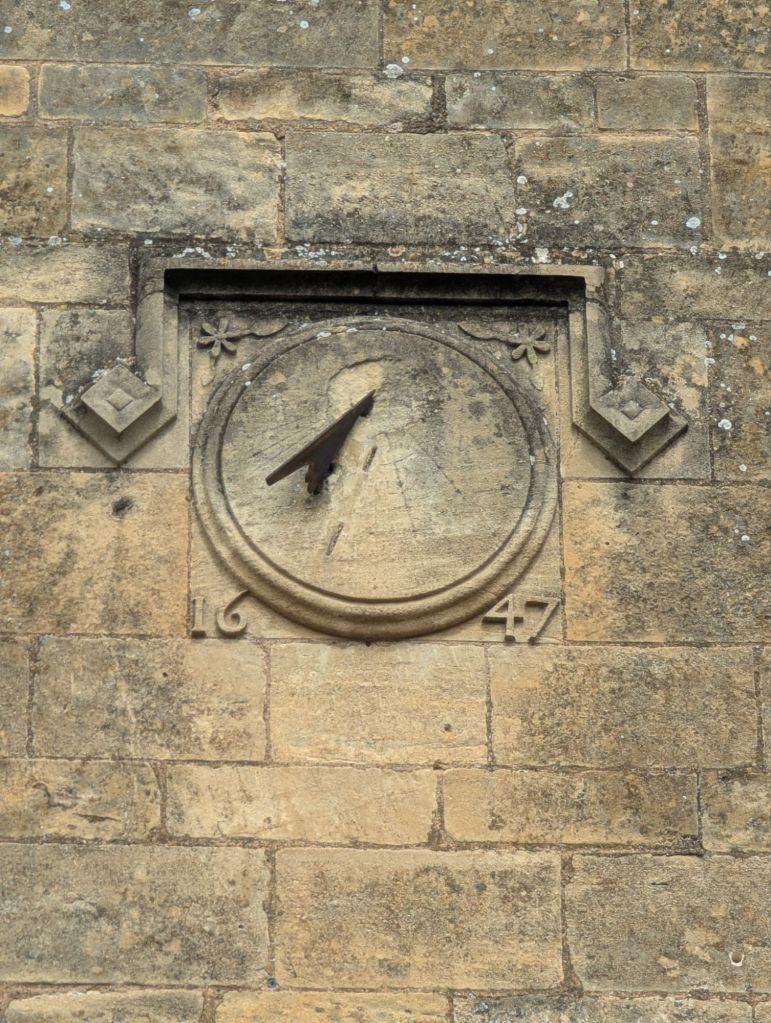
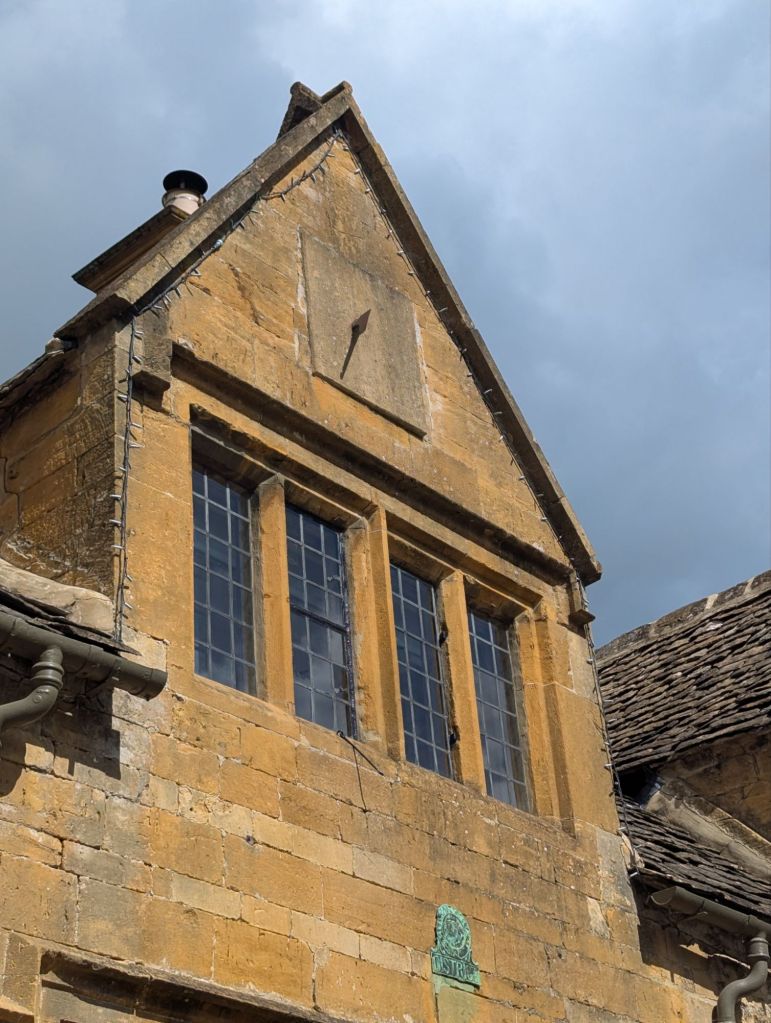
As we explored the town we also noticed several homes with sundials mounted high on the front walls. Before modern clocks became common, sundials were an important way for people to track the time using the position of the sun. Many homes in the Cotswolds still proudly display them, often with decorative inscriptions or family mottos. The one we photographed looked especially striking against the golden stone of the building, and it was another reminder of just how old many of these homes really are. It is funny to think that a house can casually have a centuries-old timepiece built into the front wall.
We also learned that William Oughtred, the inventor of the slide rule, was born in Chipping Campden. Long before calculators and smartphones, slide rules were used for complex calculations by engineers, scientists, and students. It is funny to think that something once considered cutting-edge technology is now mostly a museum piece.

Nearby we also saw the historic silk mill, a reminder that Chipping Campden became an important center for arts and crafts during the late 1800s and early 1900s. Even today the town still has a strong artisan culture with galleries, studios, and craft shops throughout the village.

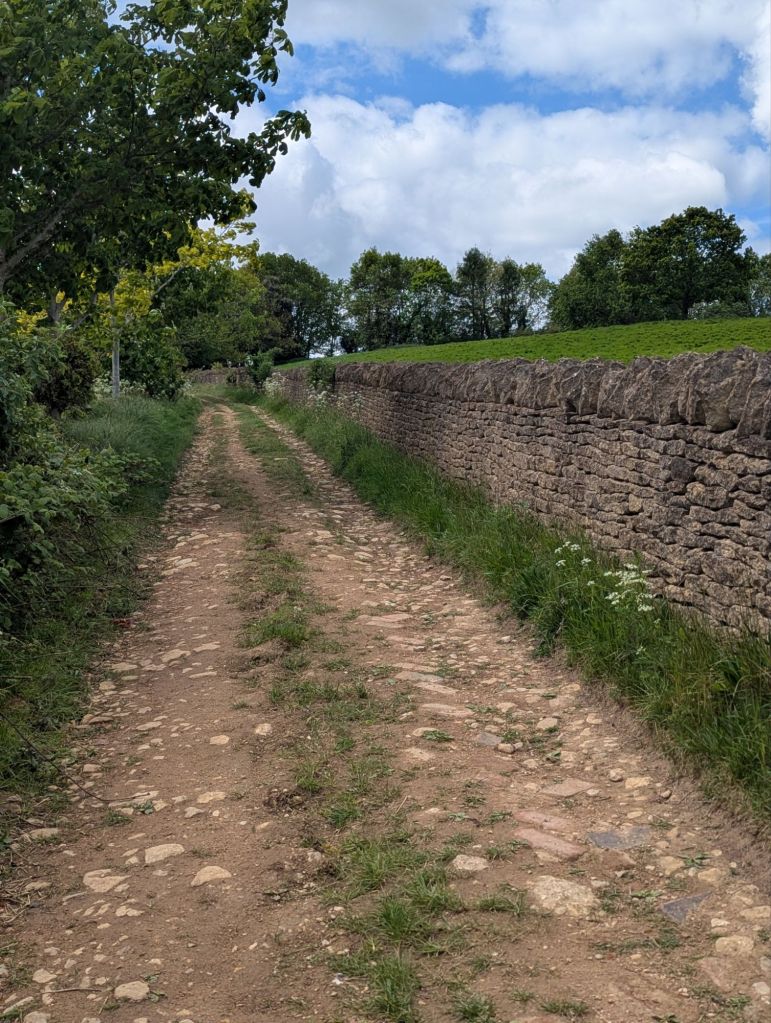
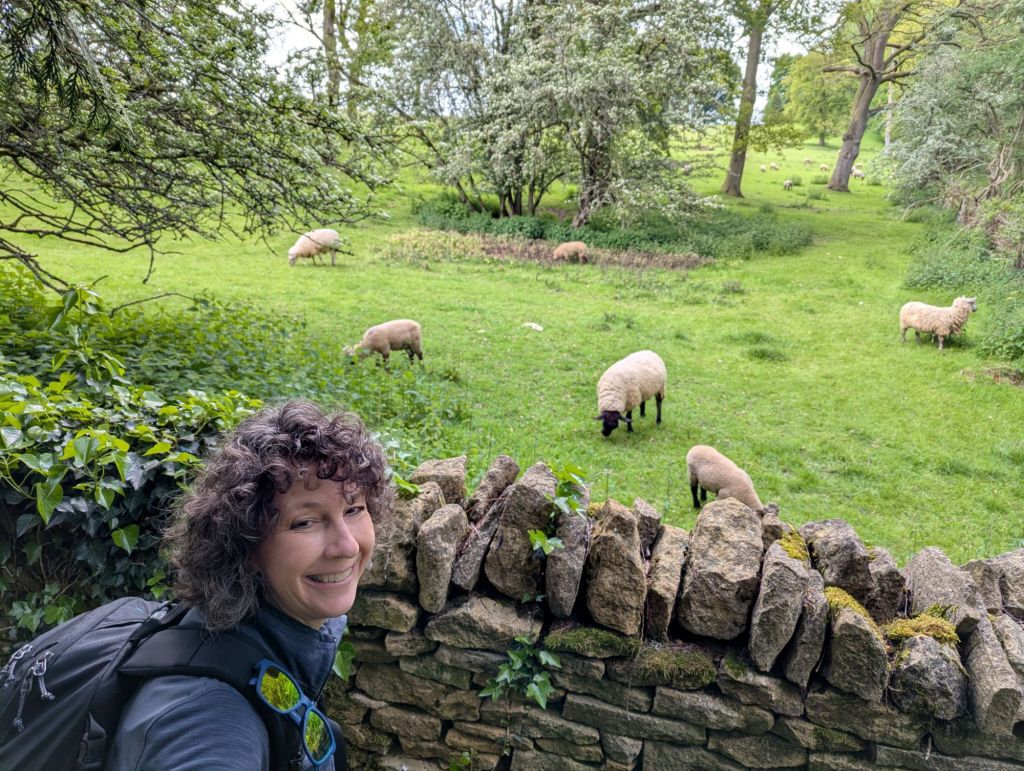
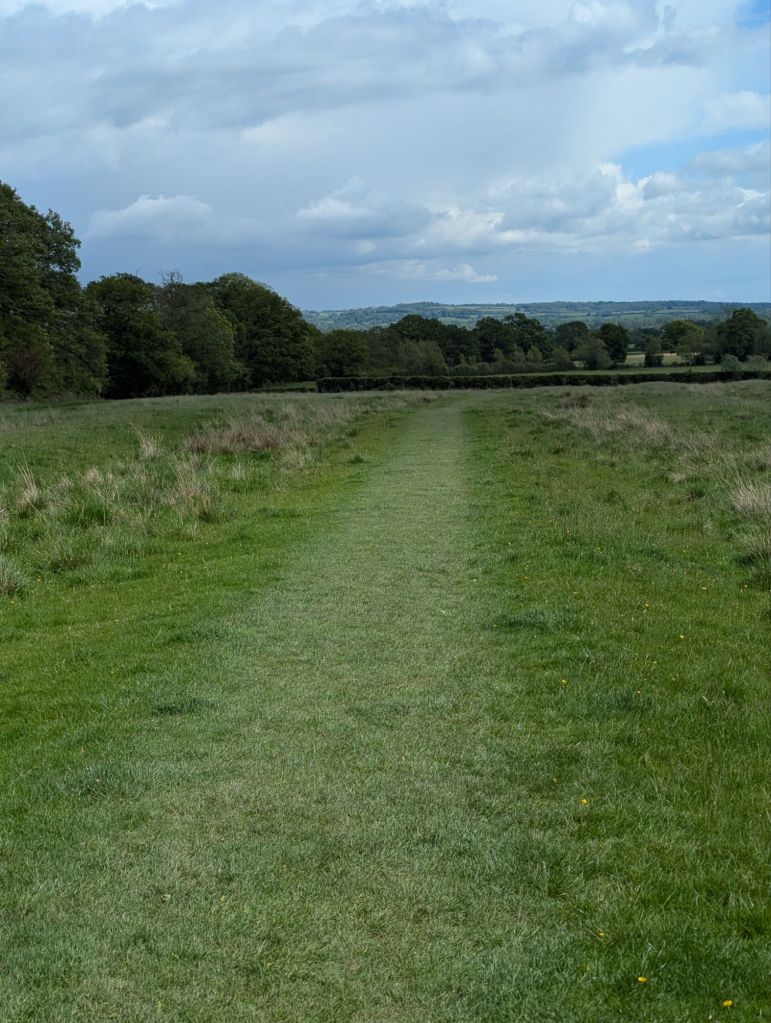
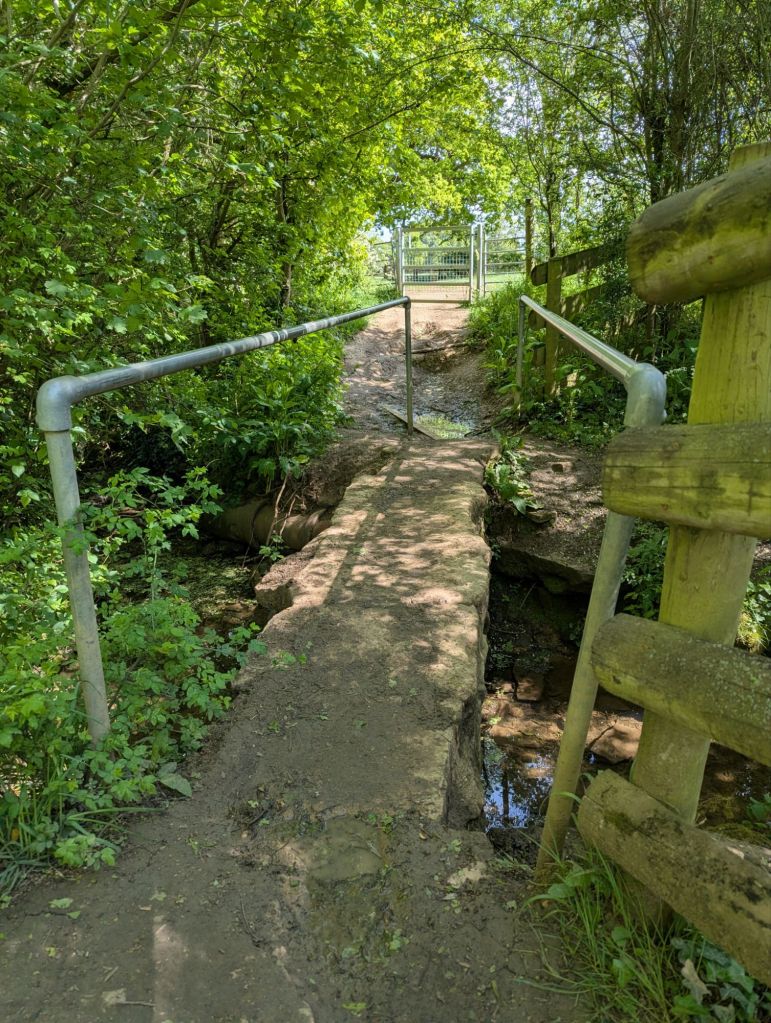
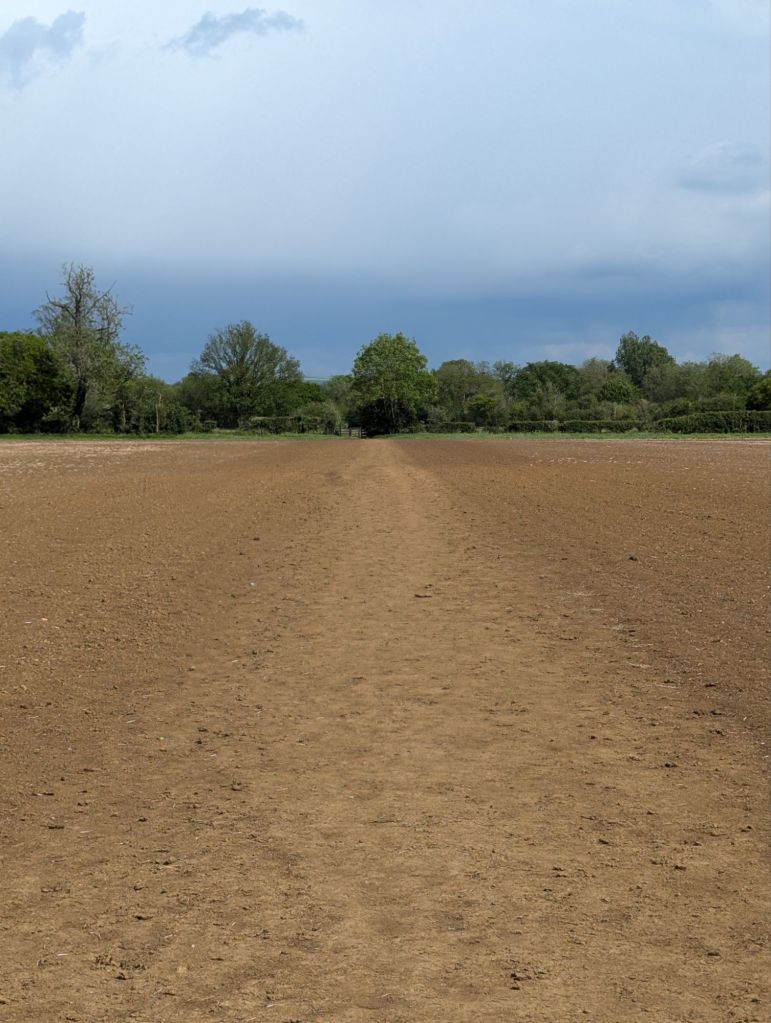
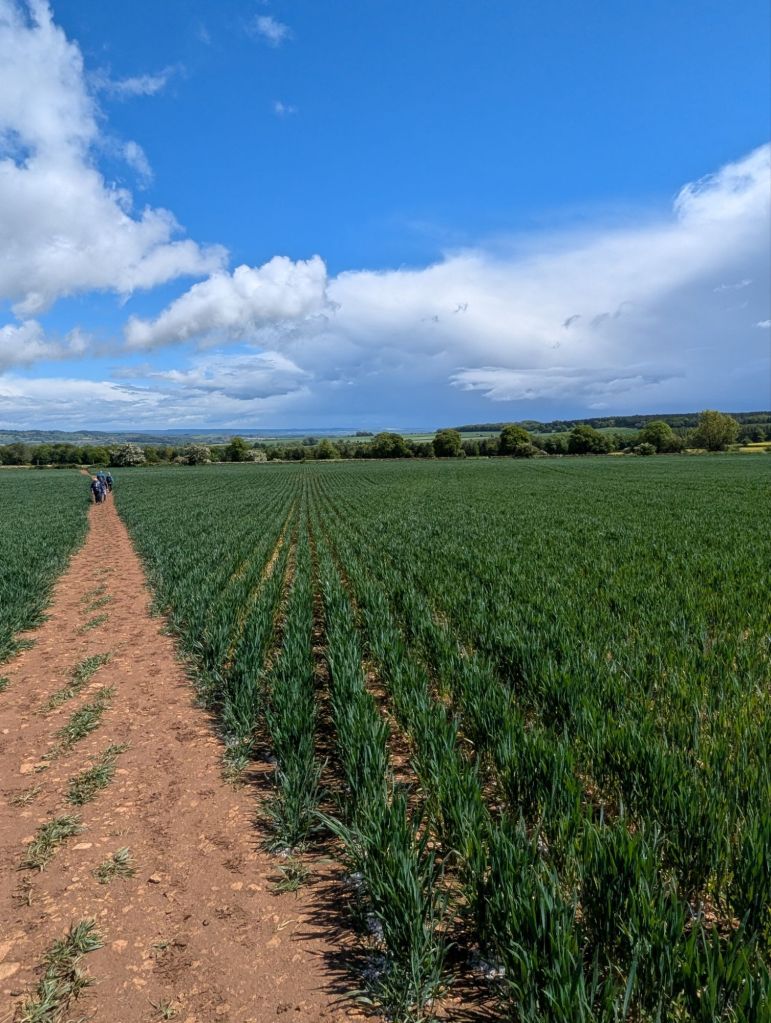
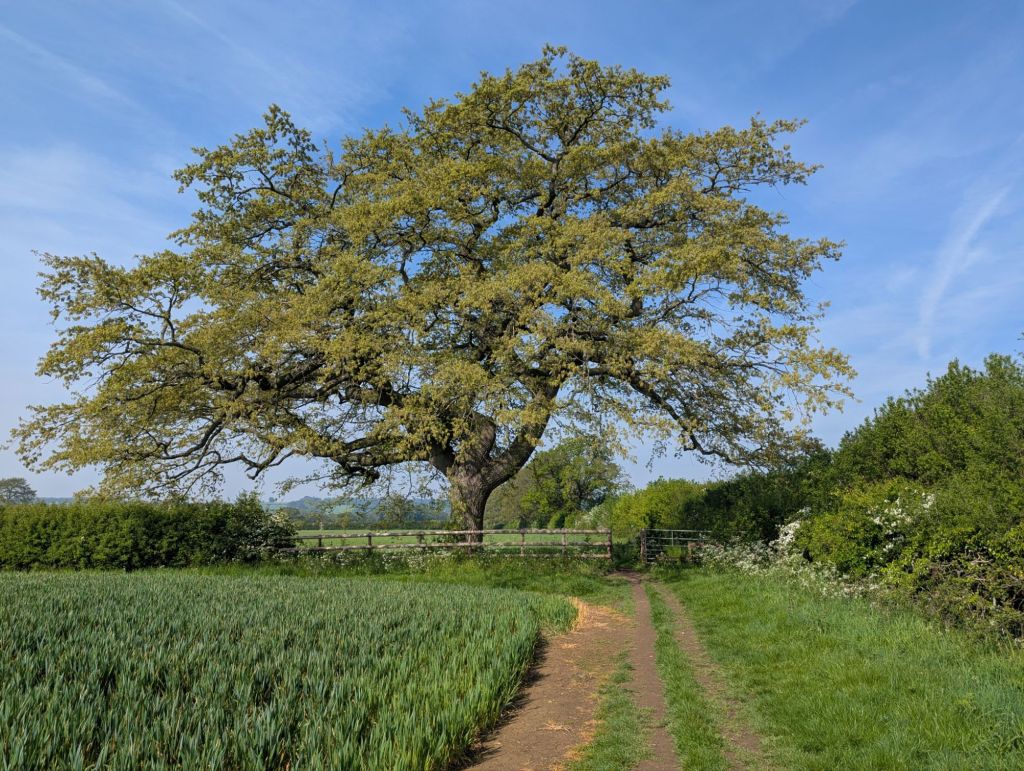
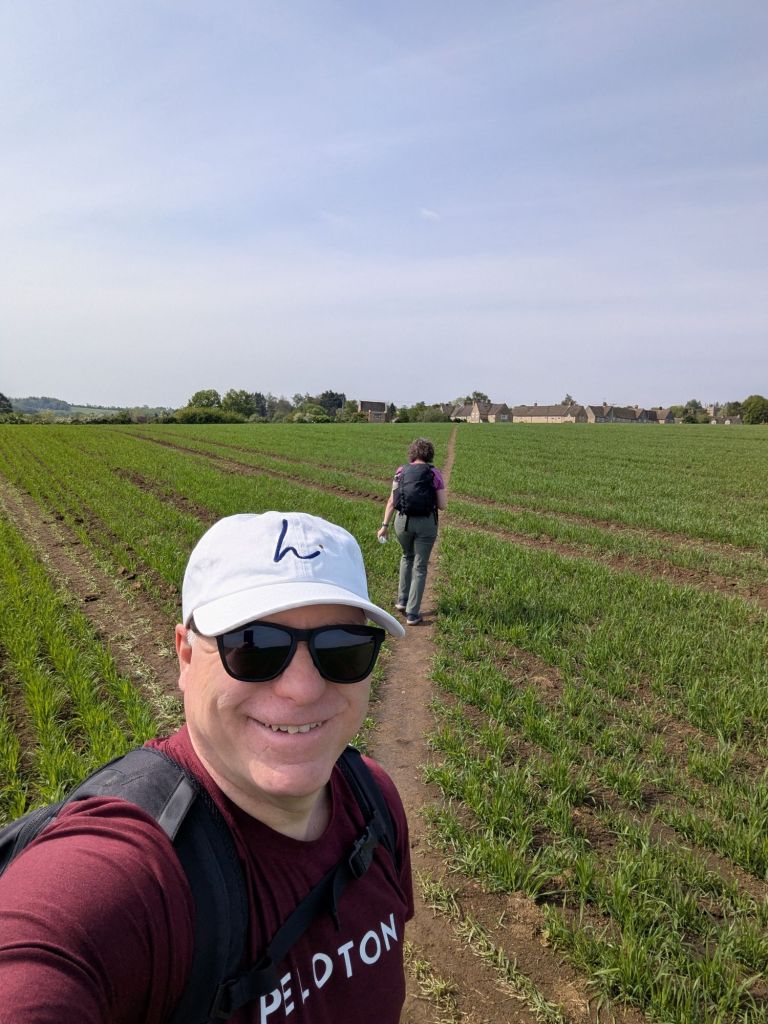
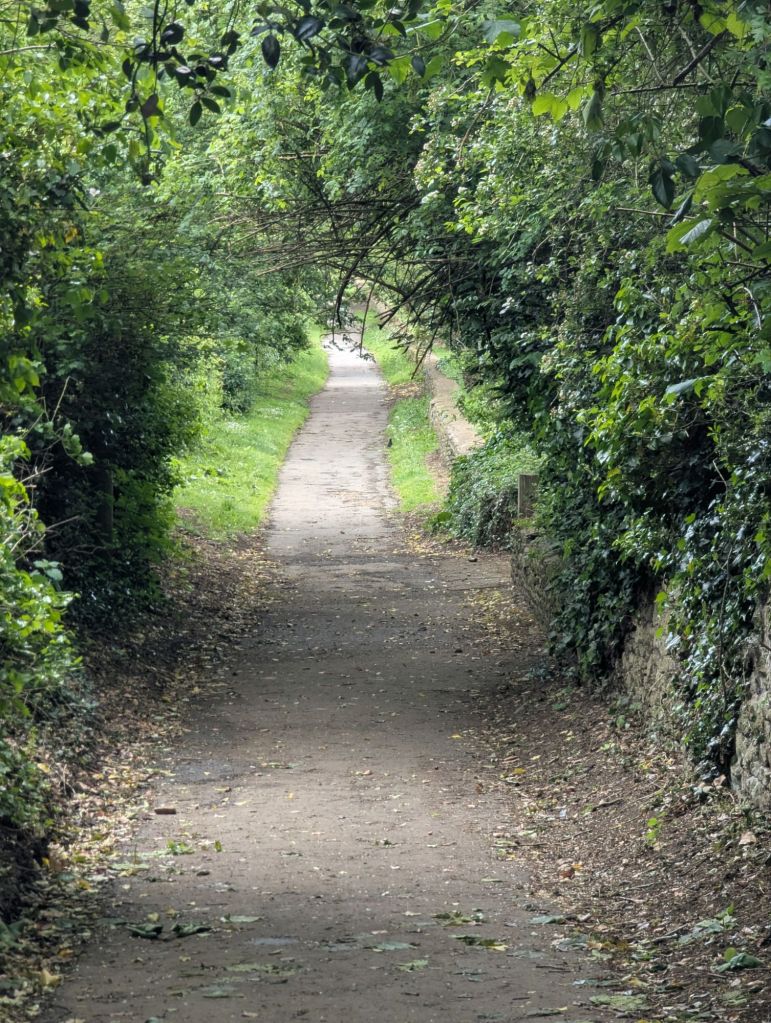
After our tour around town, it was finally time to hit the trail again. Today’s route immediately began with a long uphill climb across open fields. It was a solid workout with very few sheep or gates available to distract us from the incline.
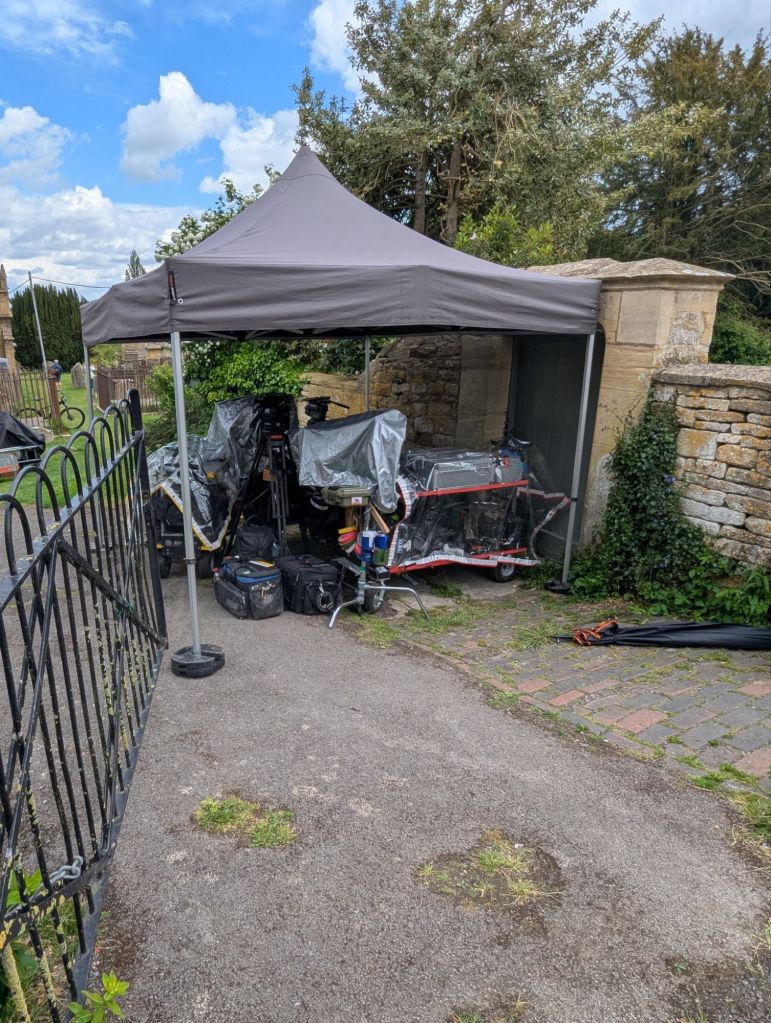
About three miles into the walk we arrived in the tiny village of Blockley. Almost immediately we noticed a lot of activity around the church. It looked like something was being filmed. We stopped into Blockley Café for lunch and learned that Blockley is one of the primary filming locations for the BBC series Father Brown.
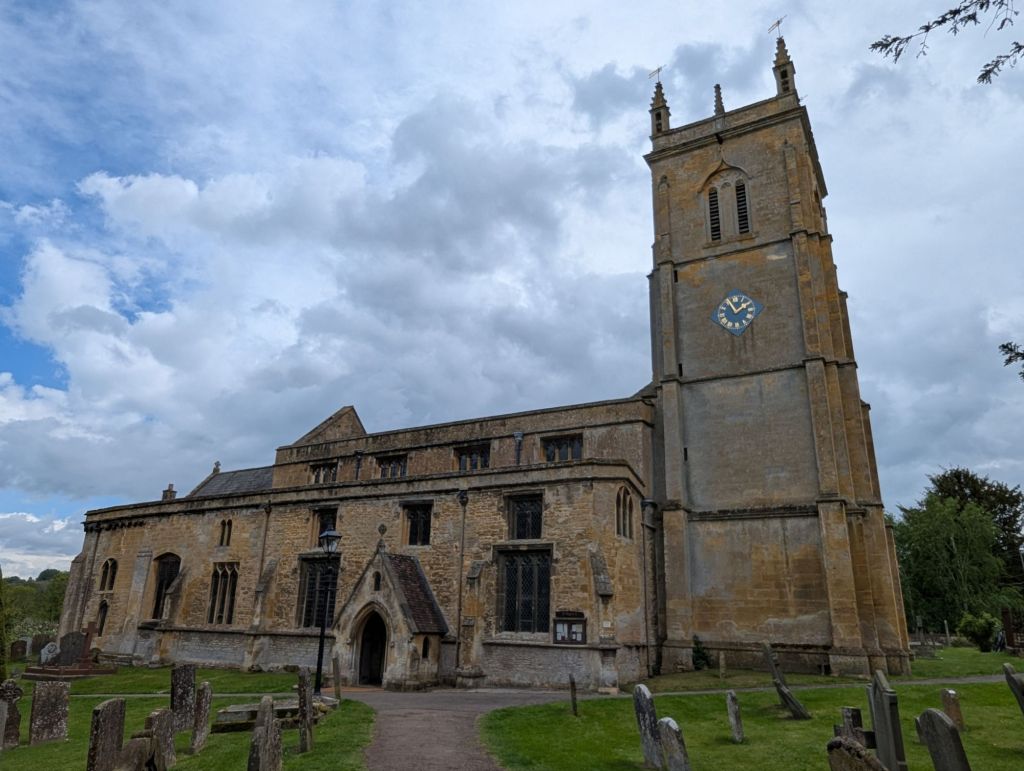
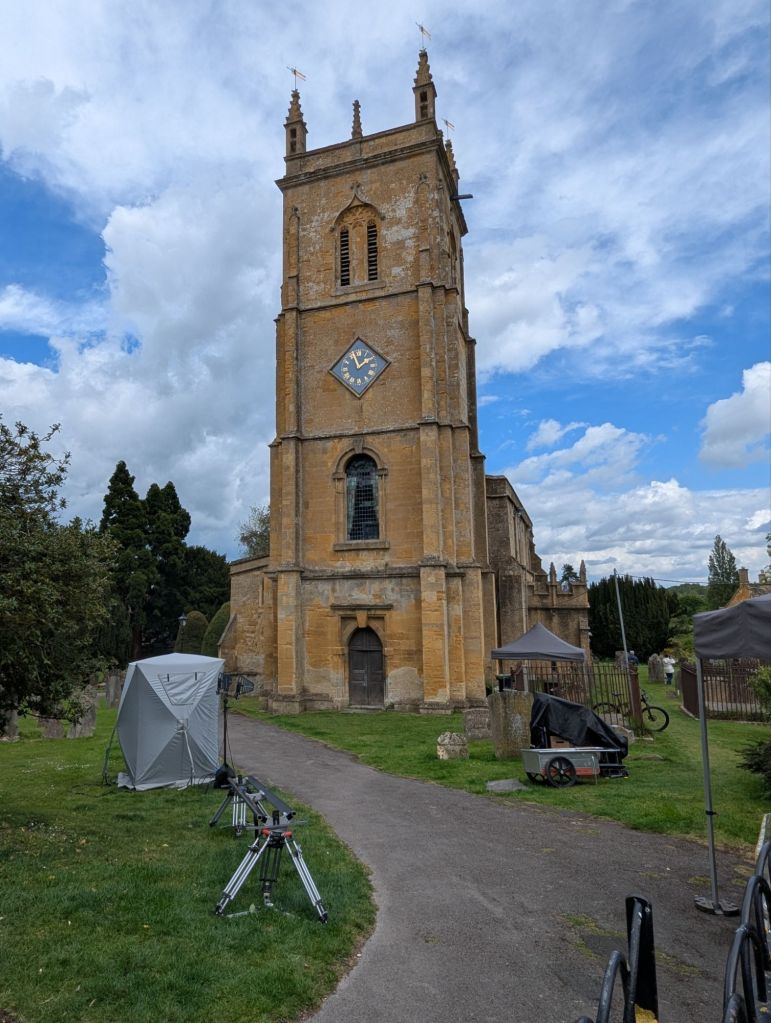
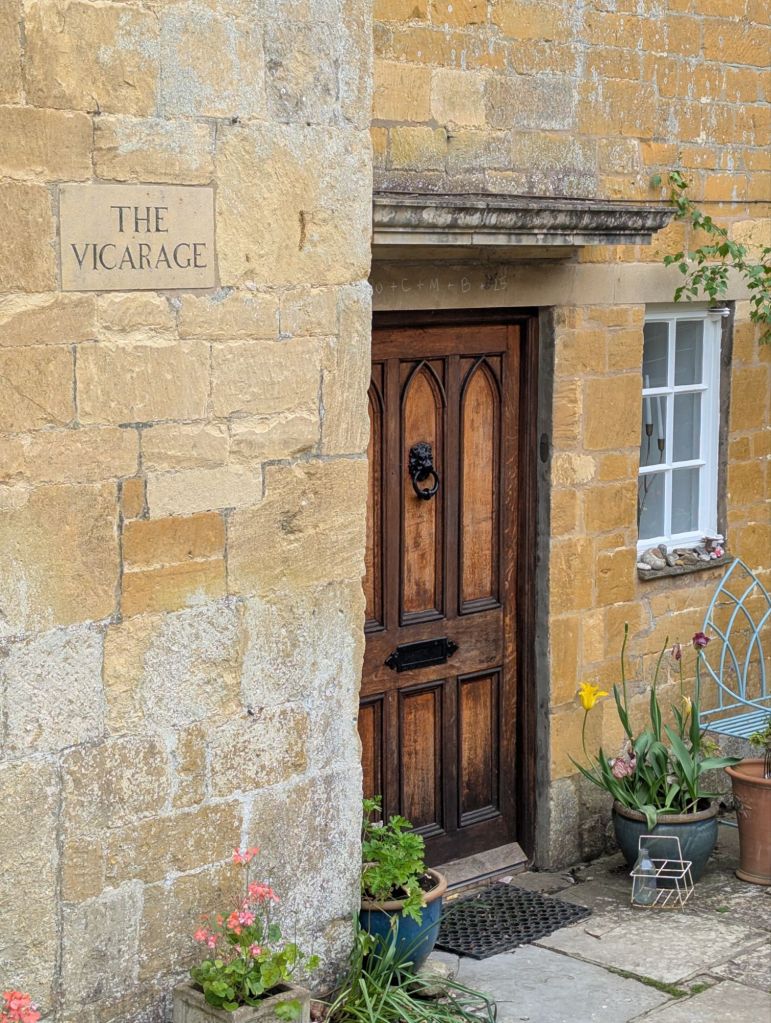
For those unfamiliar with the show, Father Brown is a long-running British mystery series based loosely on stories by G.K. Chesterton. The main character is a Catholic priest with an uncanny ability to solve crimes in small English villages during the 1950s. Blockley serves as the fictional village of Kembleford in the series, and the church is regularly featured as “St. Mary’s.” The production team has even changed some of the signage around the church to match the fictional setting. Apparently filming in the village is common enough that locals are fairly unfazed by camera crews showing up.

Now, of course, we have another British series to add to our watch list.

While in the café we stopped for lunch, which was also our only real food option along today’s route. Thankfully, this was not just a fine lunch. It was an absolutely delicious lunch and exactly what we needed before the second half of the hike.

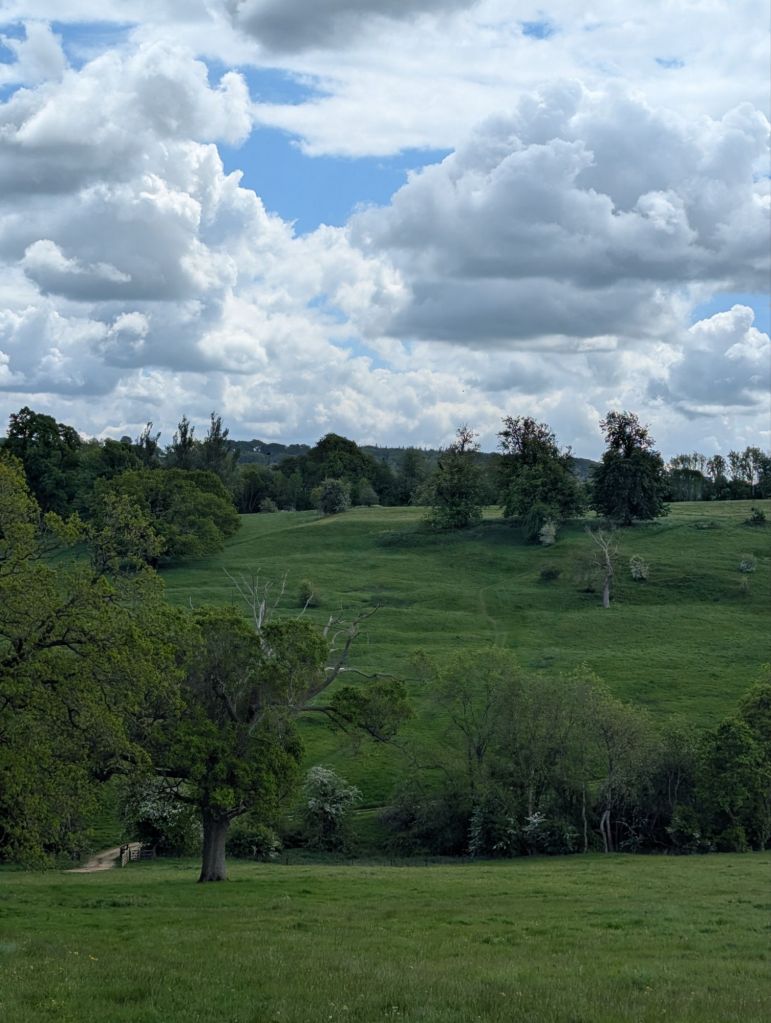
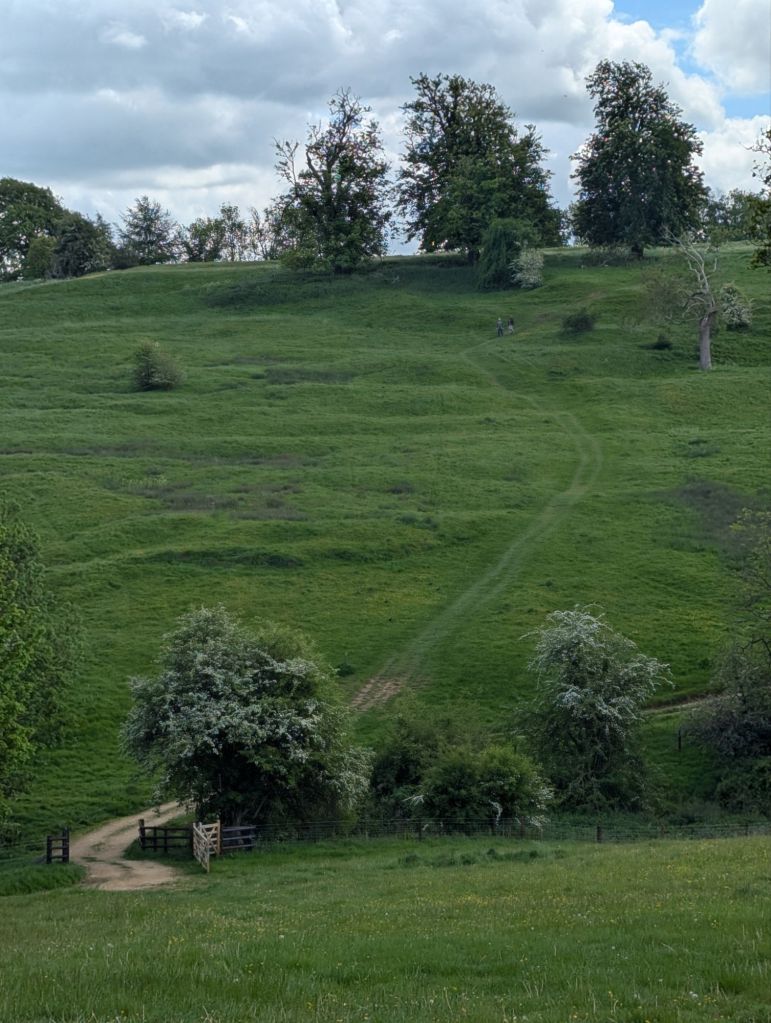
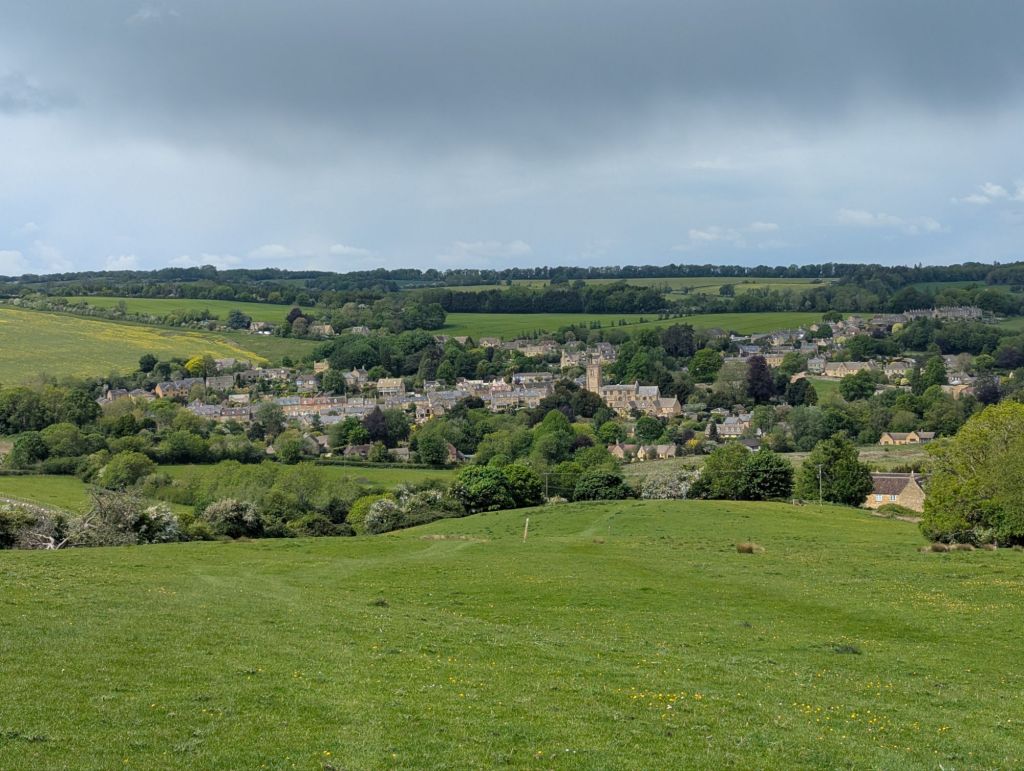
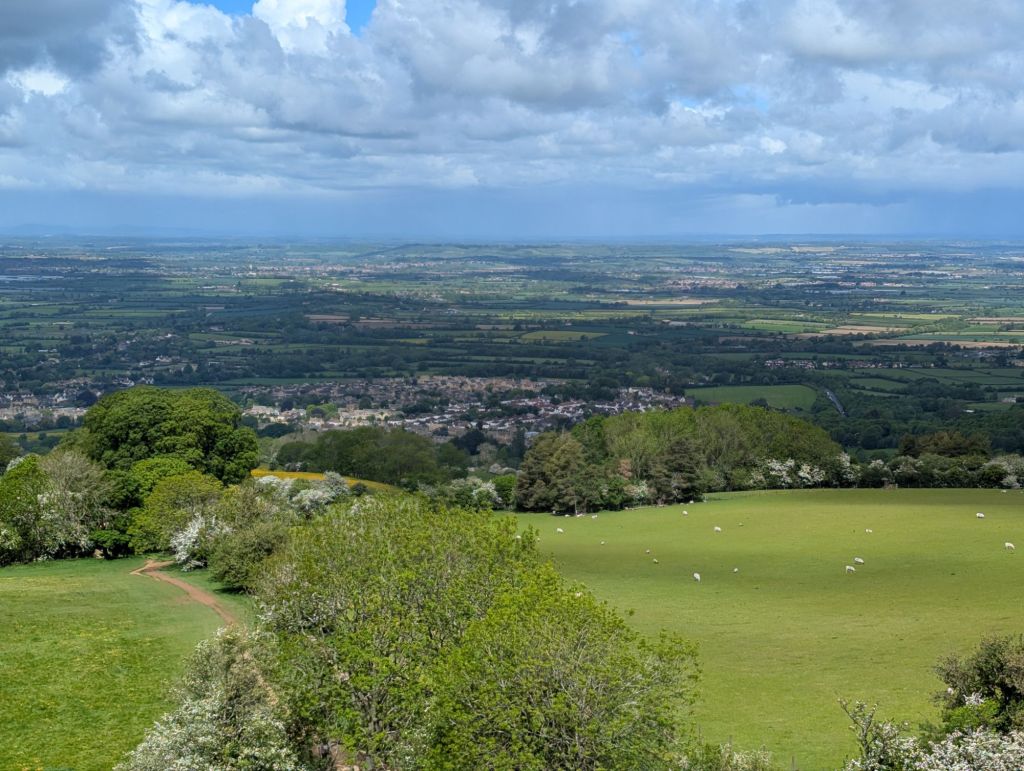
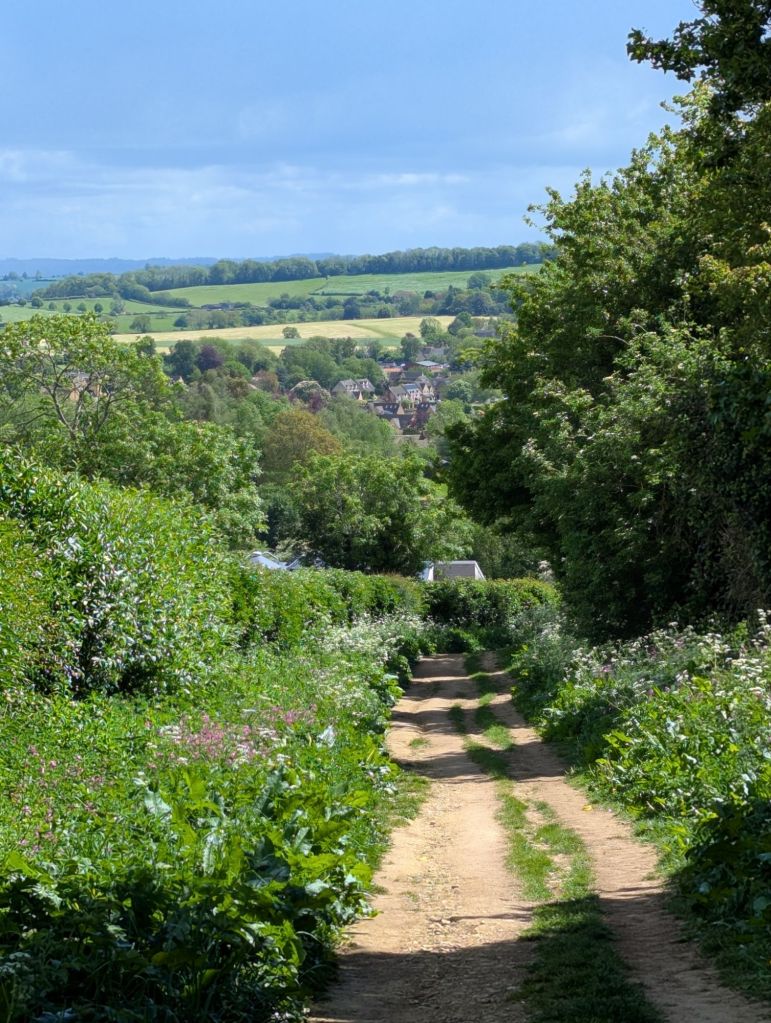
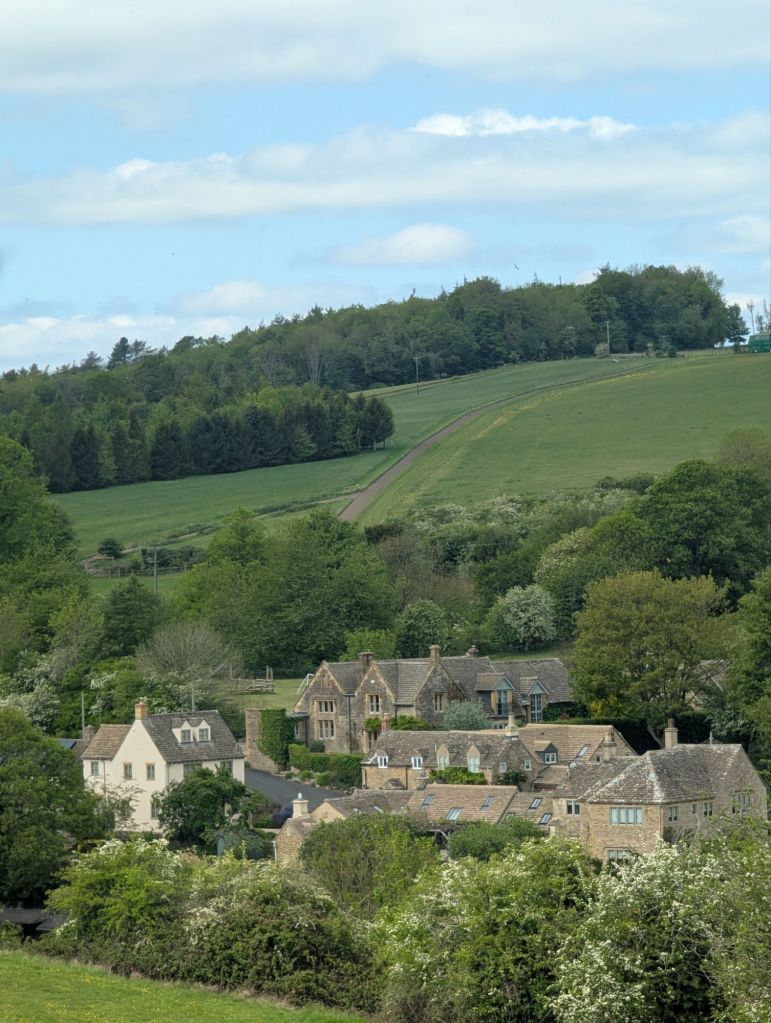
Back on the trail we were immediately greeted by another steep uphill climb through a pasture. We were so focused on leaning forward into the incline and trying not to step in the seemingly endless sheep poop that we almost forgot to turn around and enjoy the view behind us. Thankfully we did, because looking back revealed beautiful panoramic views over Blockley and the surrounding countryside.
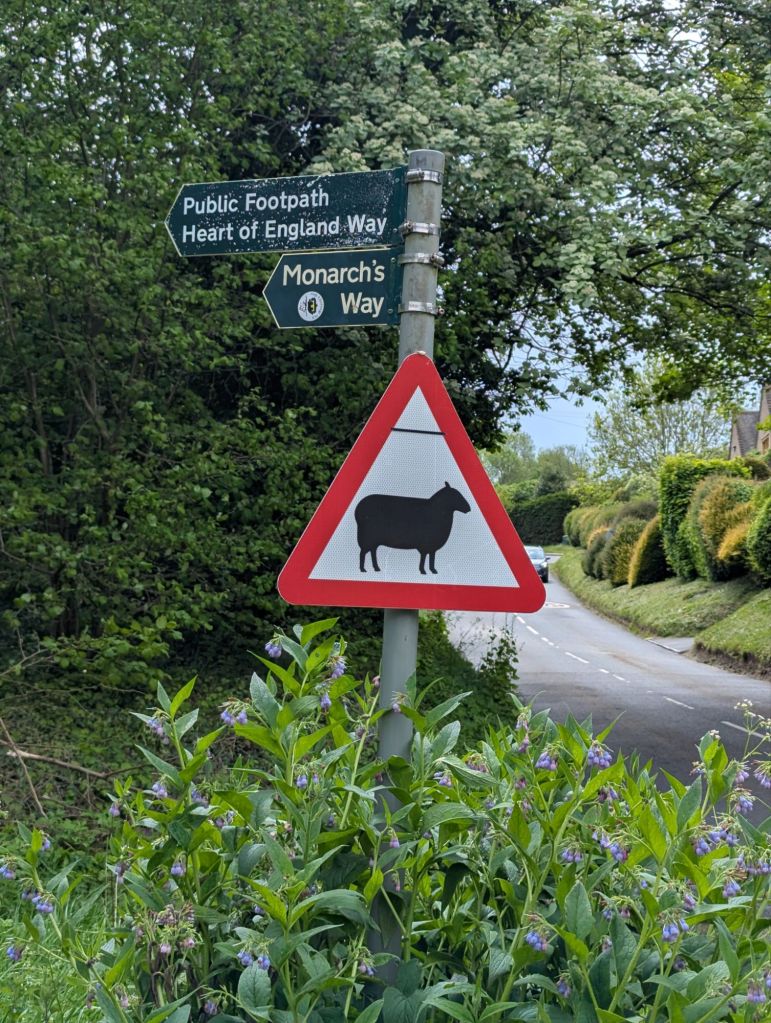
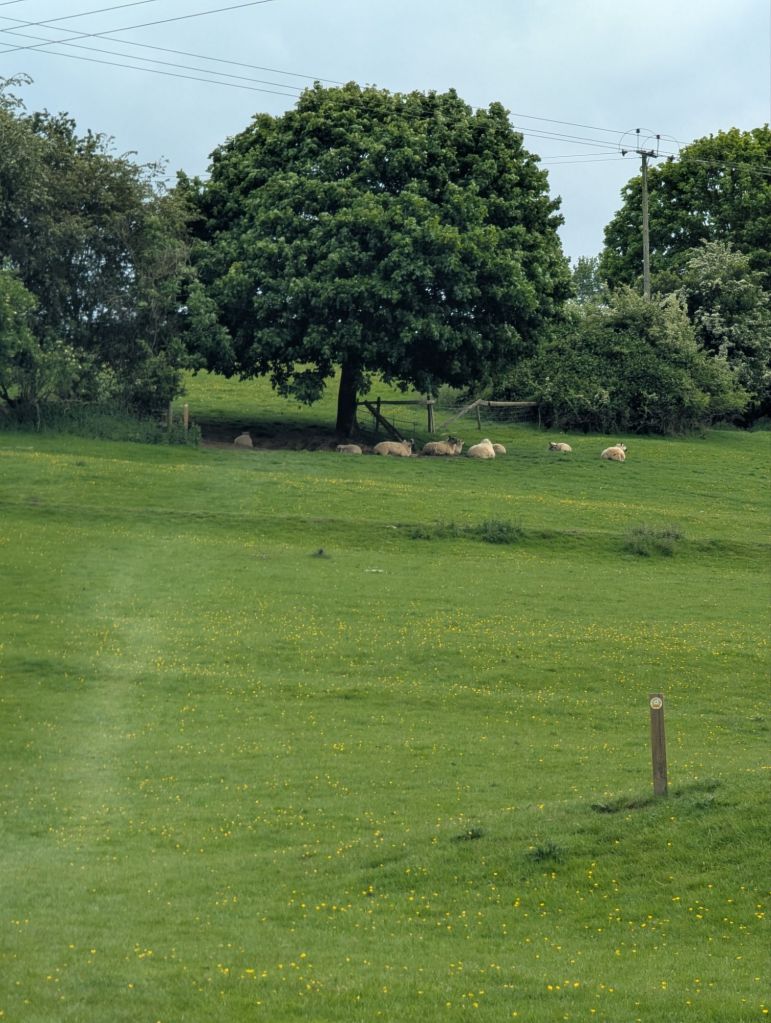
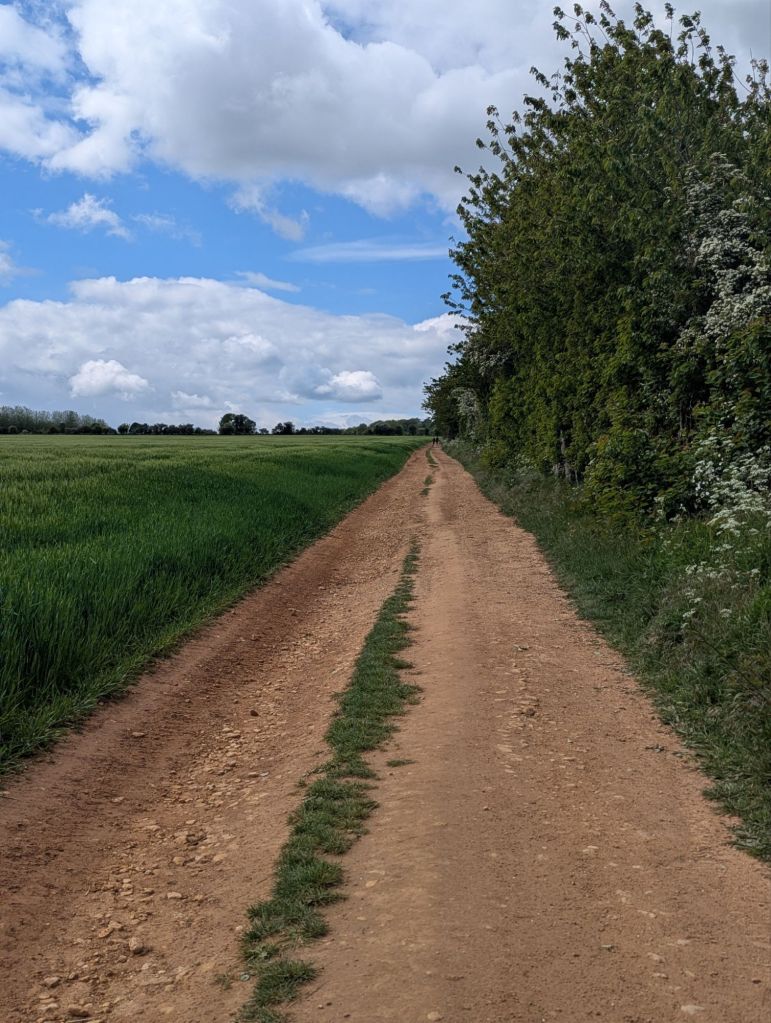
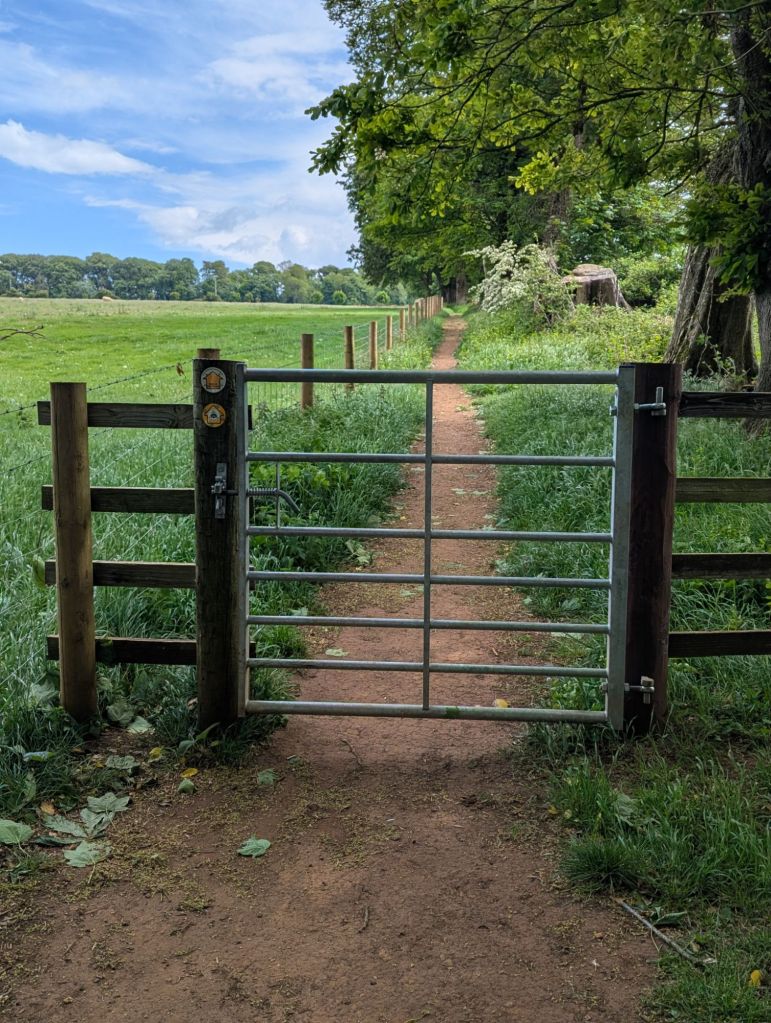
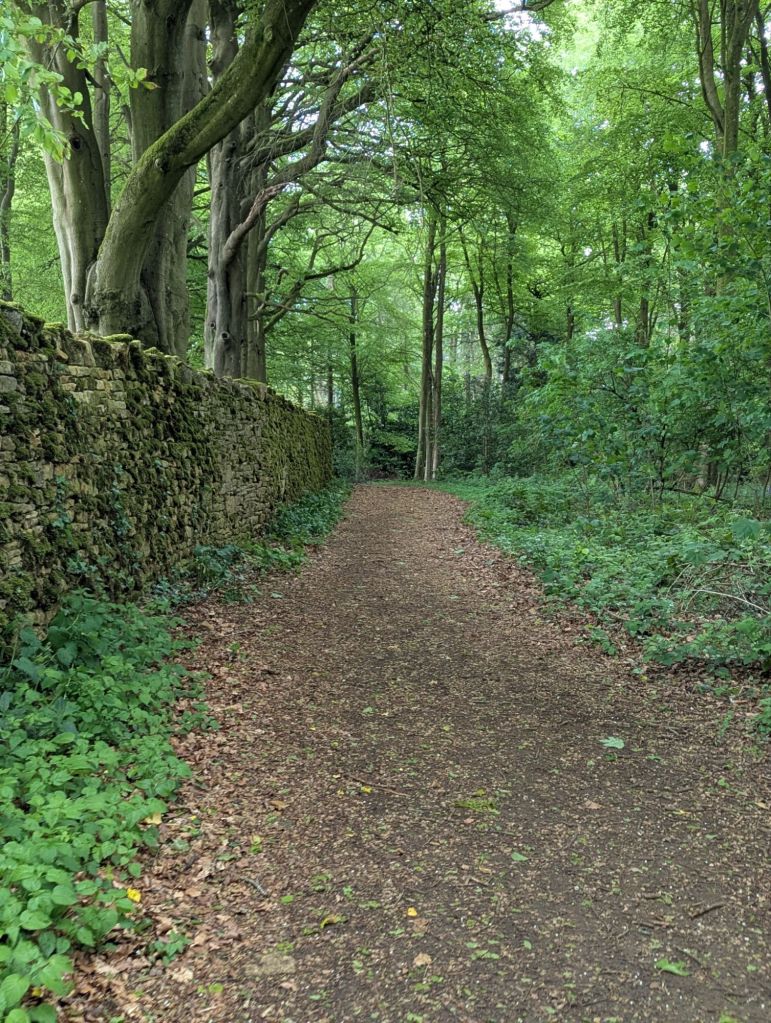
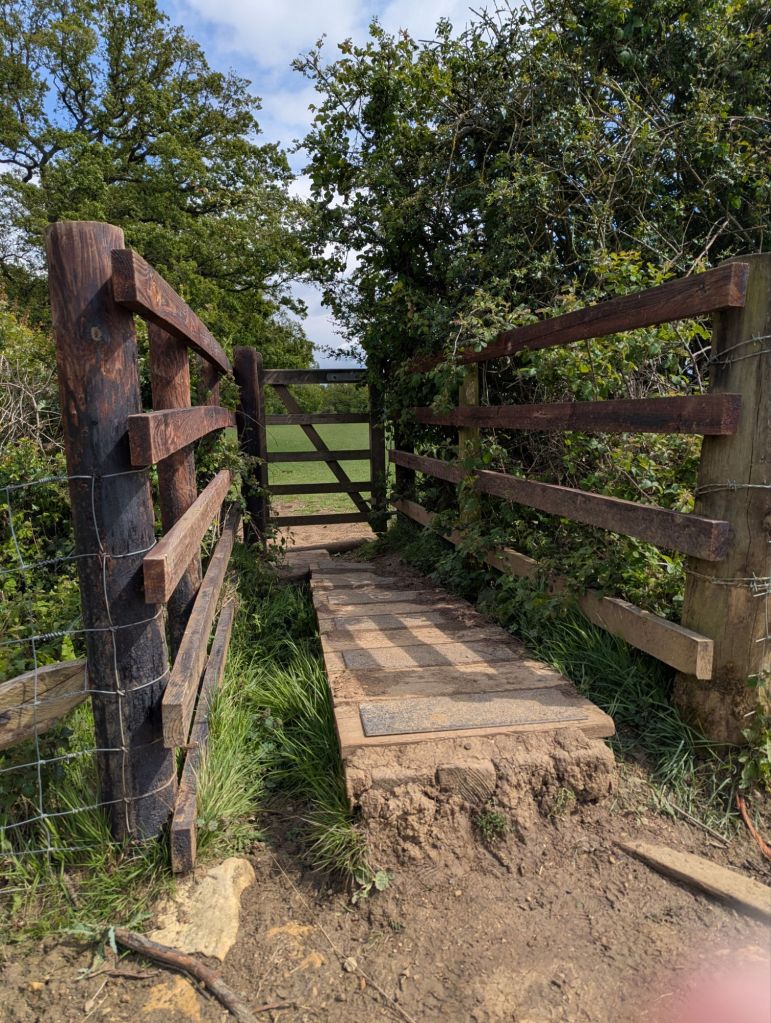
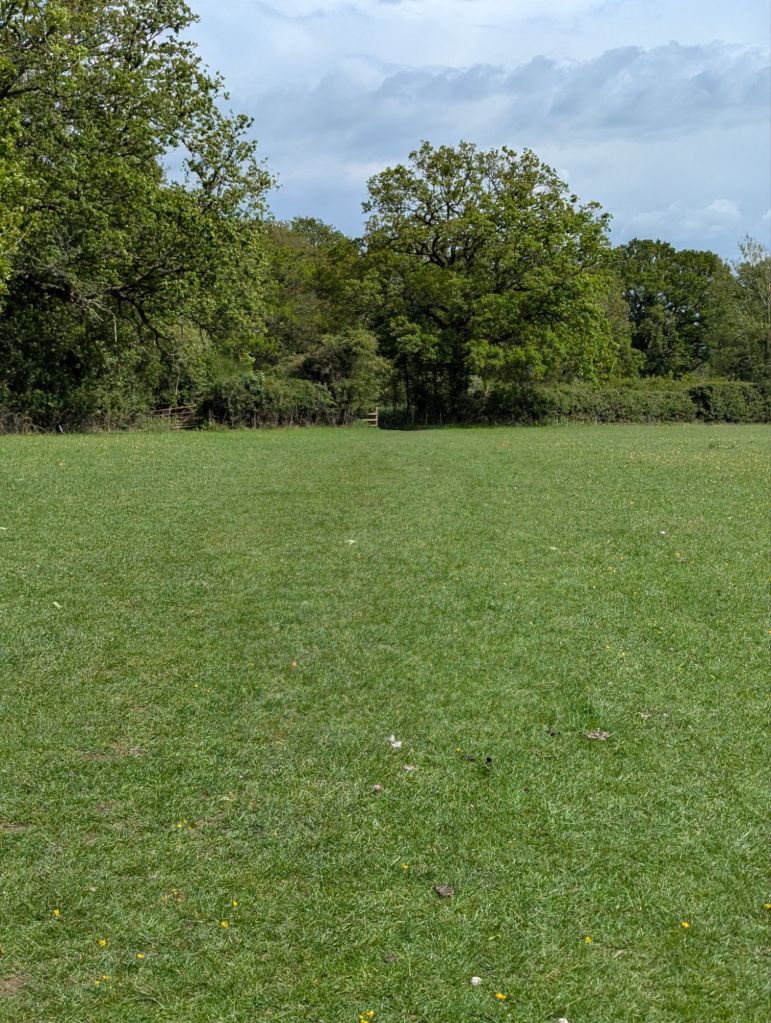
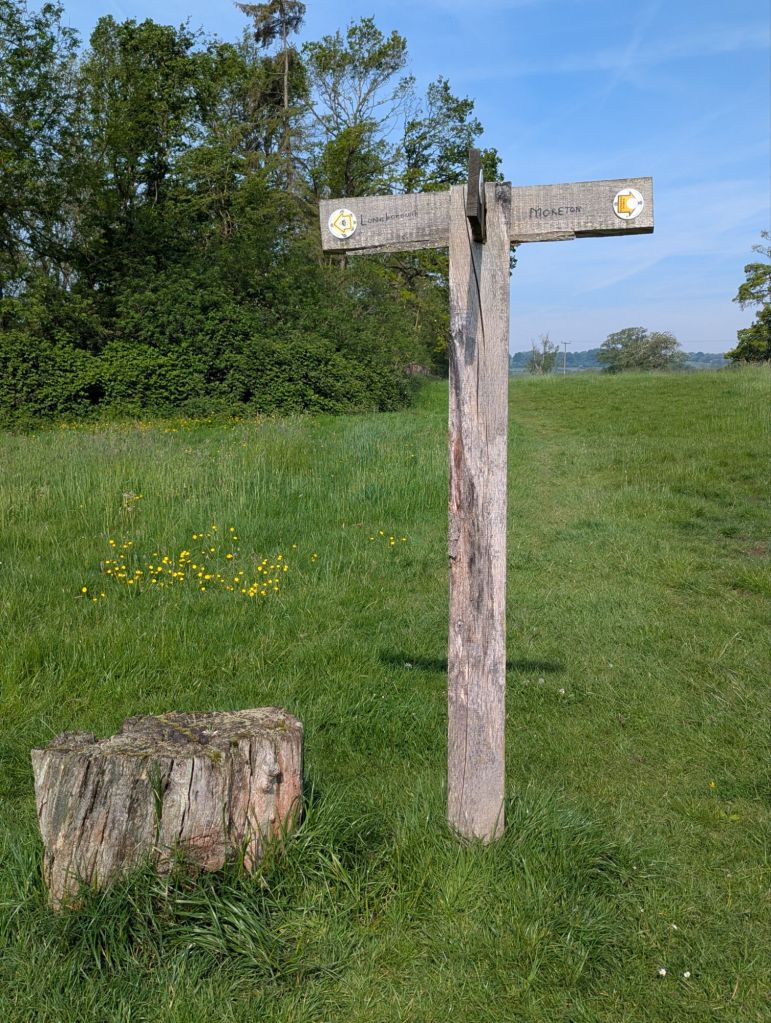
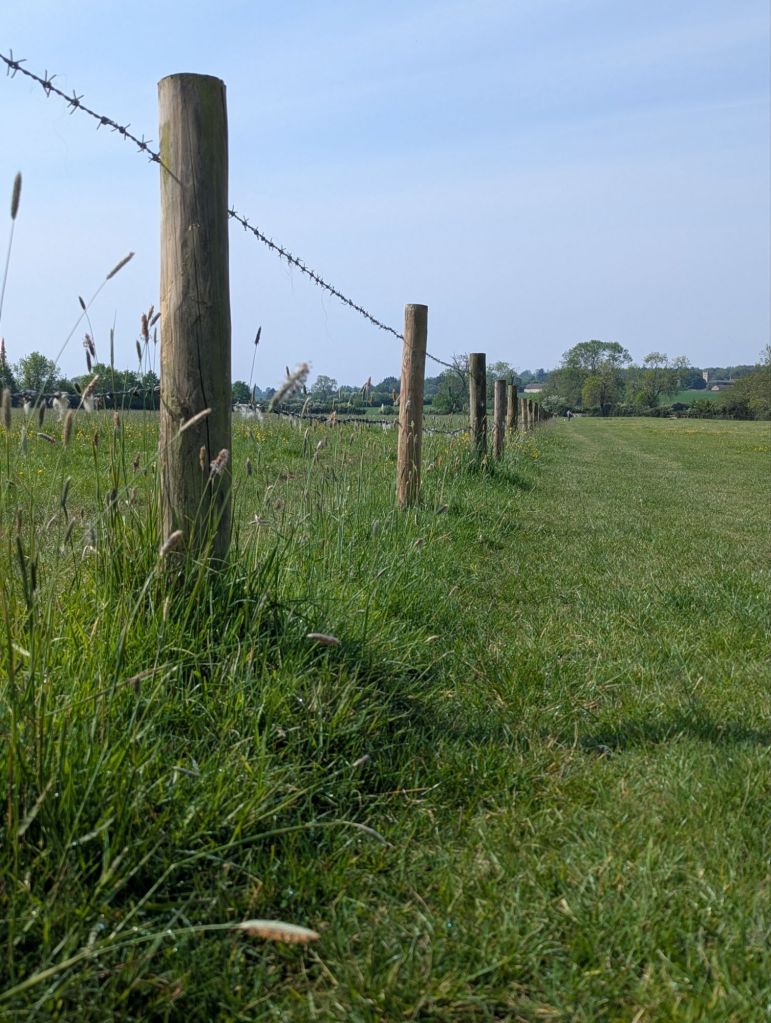
From there we pressed onward as the trail gradually descended and flattened out. After woods, farmland, sheep, rolling fields, and a grand total of 22 gates, we suddenly found ourselves back in Moreton-in-Marsh, the same town where our walking tour had begun a week earlier. Our journey had officially come full circle.

Our first stop back in town was, naturally, a tea room. We had fully embraced the tradition of a cream tea each afternoon and saw no reason to stop now. After tea we spent a little more time walking through town since we had not explored much during our first stay there, and then we headed to our hotel.
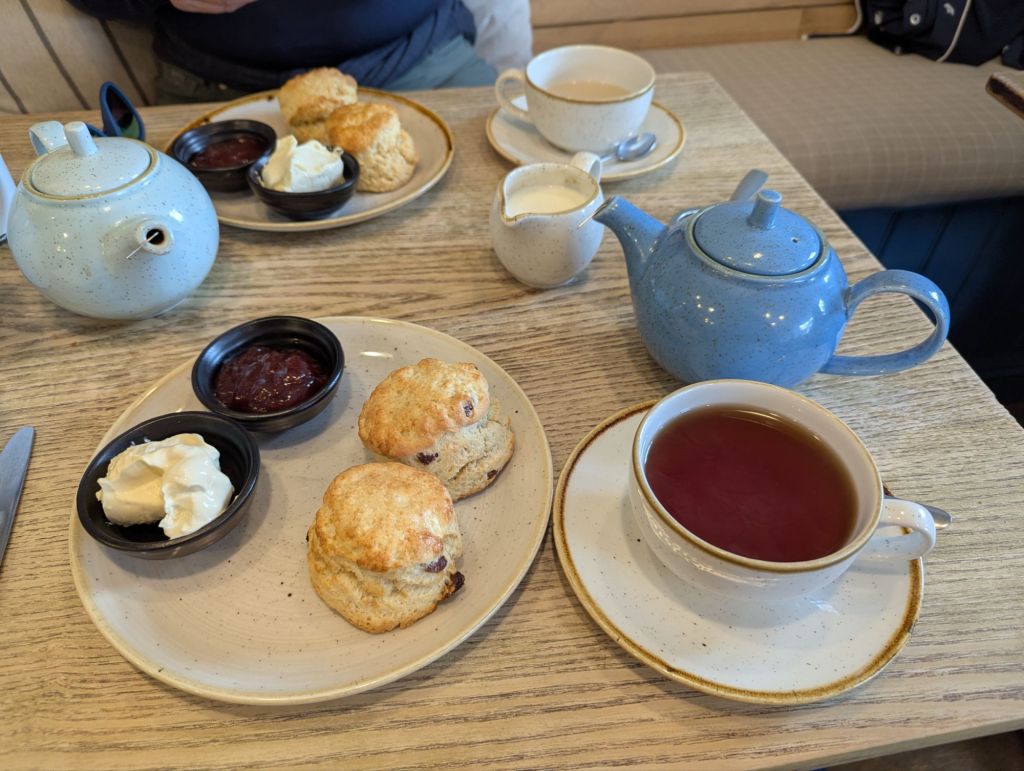
English Cream Tea

As it turned out, we were assigned the exact same room we had stayed in a week earlier, although it somehow felt like we had been gone much longer than that. The moment we opened the door, Karen immediately stretched out on the bed for a very well-earned 45-minute nap.

After showers, stretching, and a little recovery time, we walked down the street to the Black Bear Inn for dinner. One thing we have really enjoyed throughout this trip is the atmosphere at the local inns and pubs. Every evening they seem to fill up with locals and travelers alike gathering for a pint before dinner. There is just something cozy and welcoming about it.

Tonight, though, a quiet evening sounded perfect. So after dinner we headed back to our room to relax and enjoy the fact that tomorrow’s travel adventure would involve something very different from hiking boots.

Tomorrow: onward by taxi!
Categories: 2026 England Adventure | Tags: , , , , , , , , , | Leave a comment

Day 10 in England – Hail, Hills, and Cream Tea: A Wild Day in the Cotswolds

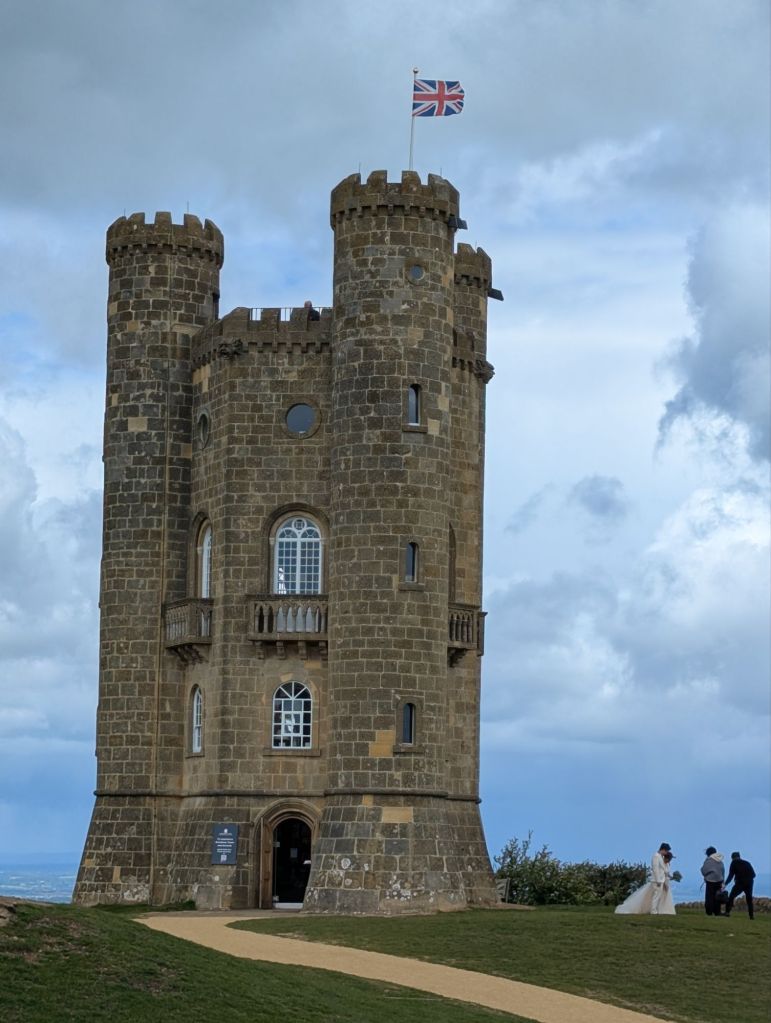
Broadway Tower

DAY 10 – WEDNESDAY, MAY 13, 2026

We woke up a little stiff, but reasonably rested after yesterday’s long hike. Our bags had to be out by 8:30 AM, but knowing today’s walk was a bit shorter, we did not feel quite as rushed getting out the door.

After breakfast at our inn, we packed up our backpacks and headed out into the very cute village of Broadway. It really is a delightful little place. Some tour books even call it the “Jewel of the Cotswolds,” and honestly, that feels pretty accurate. We poked into a couple of shops, mailed some postcards, and then officially started the day’s hike.

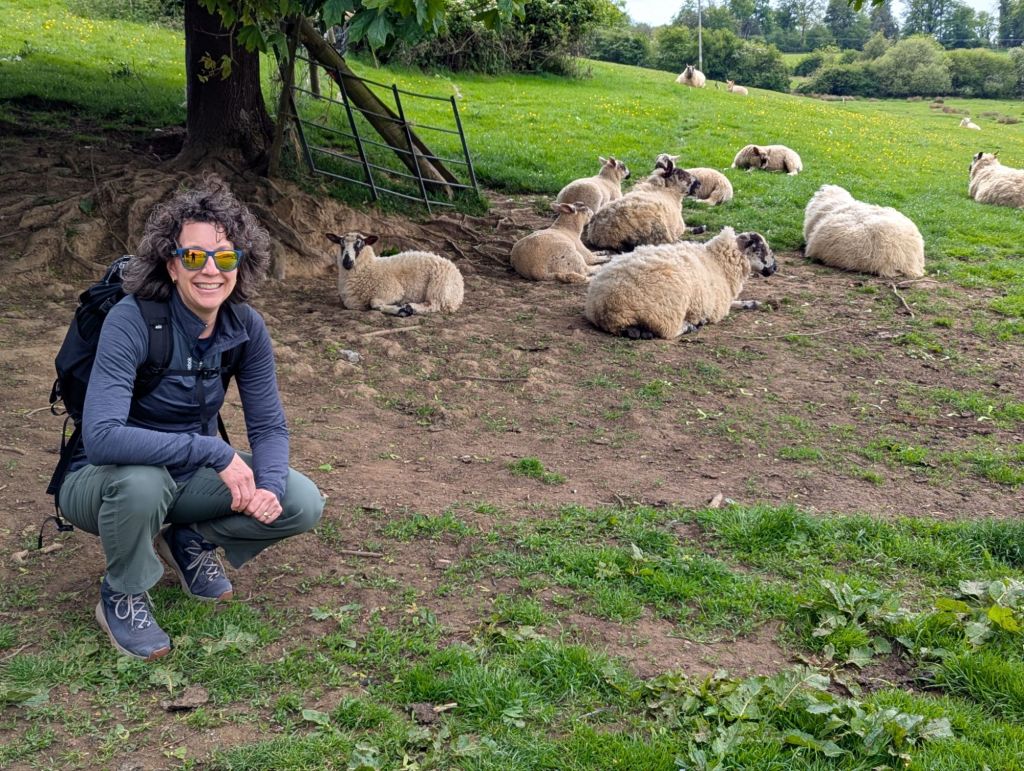
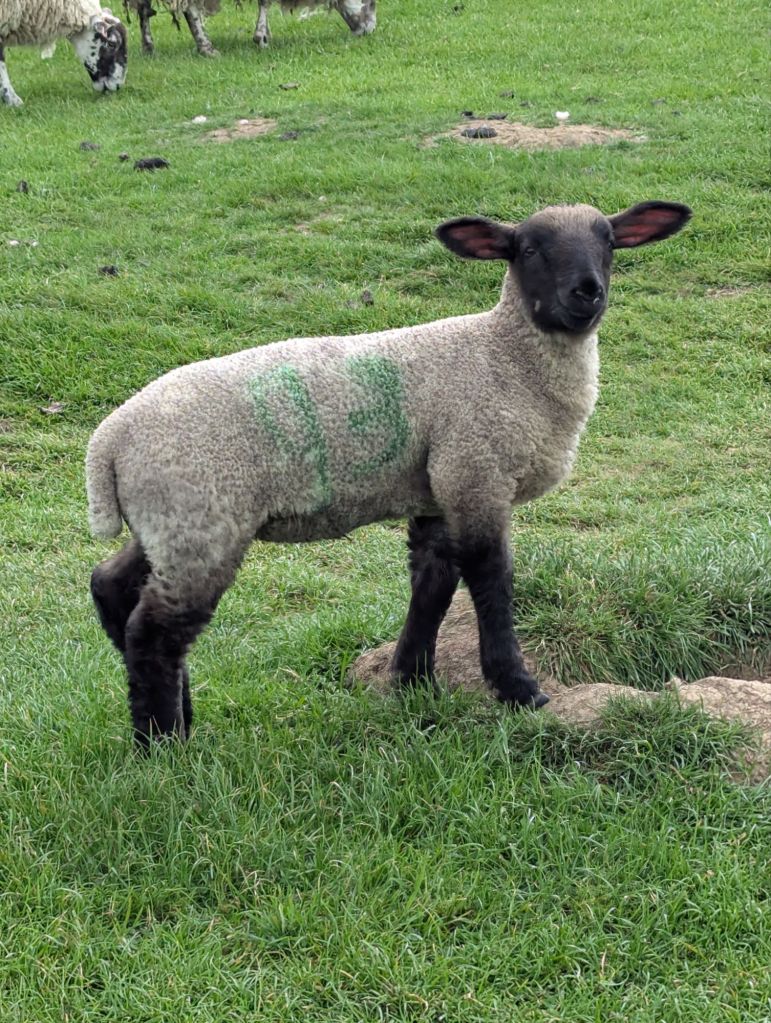
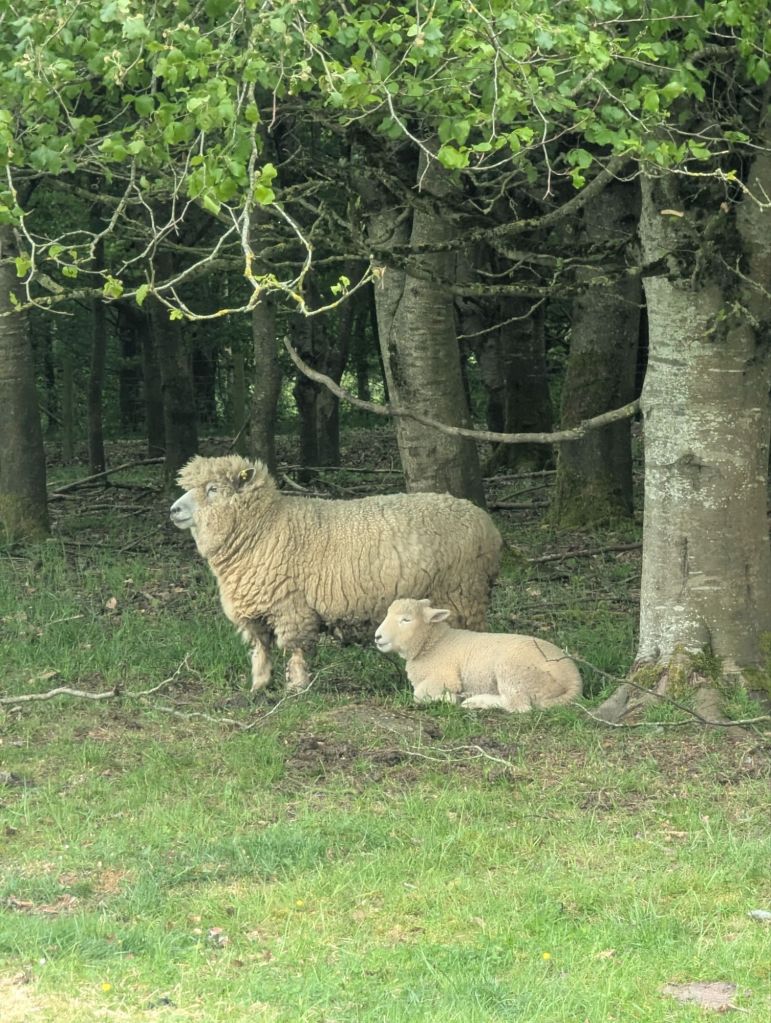
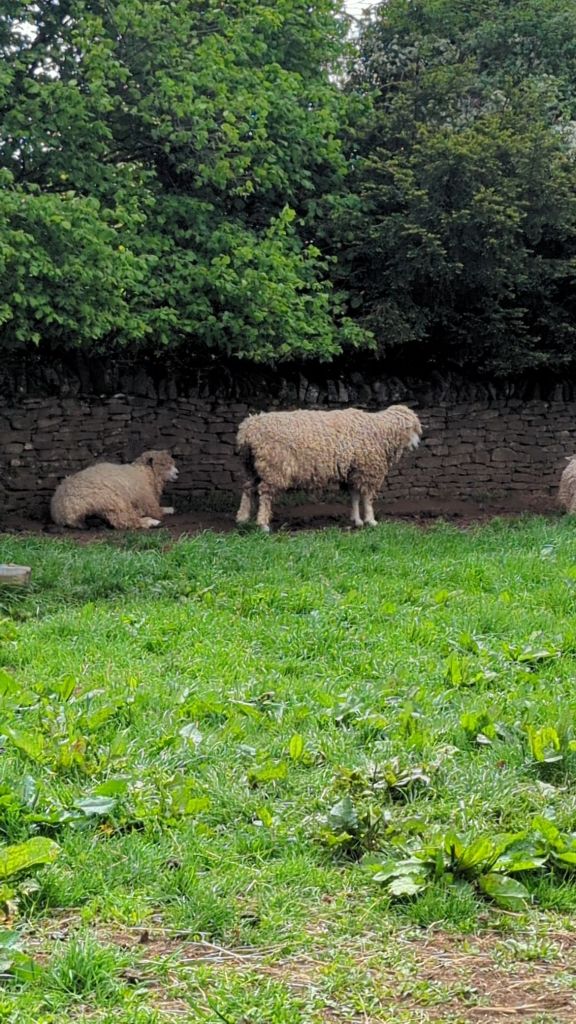
Almost immediately after leaving town, we began a steady uphill climb with plenty of sheep along the way to wish us a  good morning.

We also noticed far more hikers than we had seen on previous days, although most seemed to be heading downhill while we climbed upward. Our guess was that many were simply making the trek out to Broadway Tower, our first major stop of the day.

As we climbed, the wind picked up and a light rain started to fall, though it was nothing dramatic. We easily pulled our raincoats out of our backpacks and kept going.

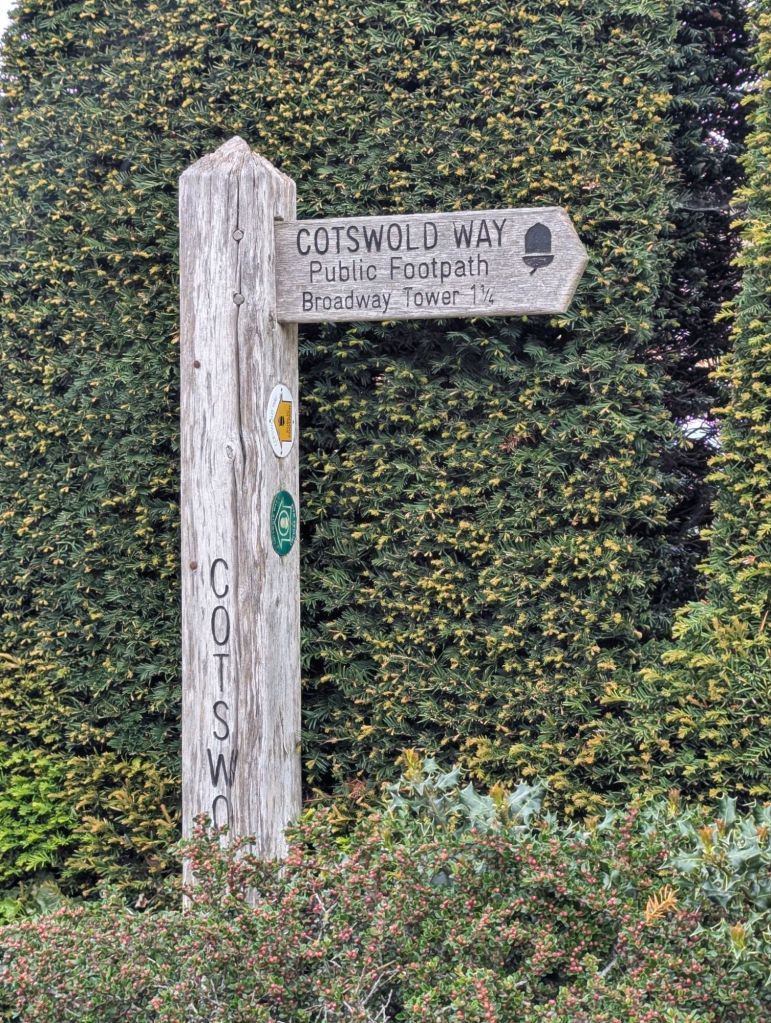
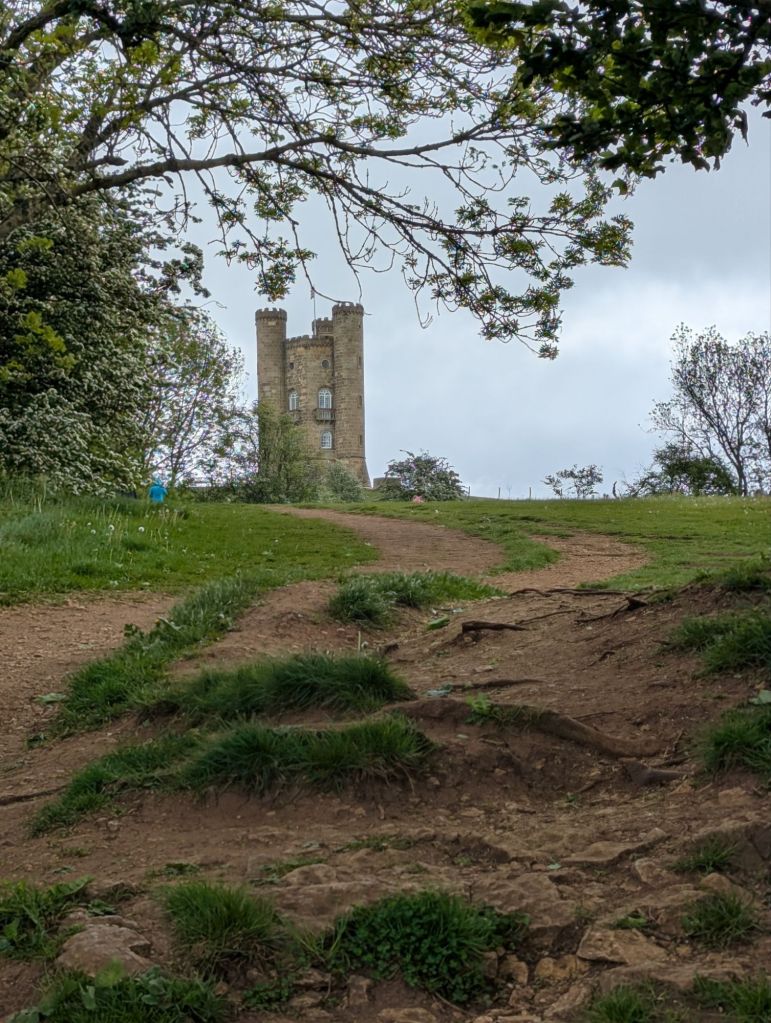
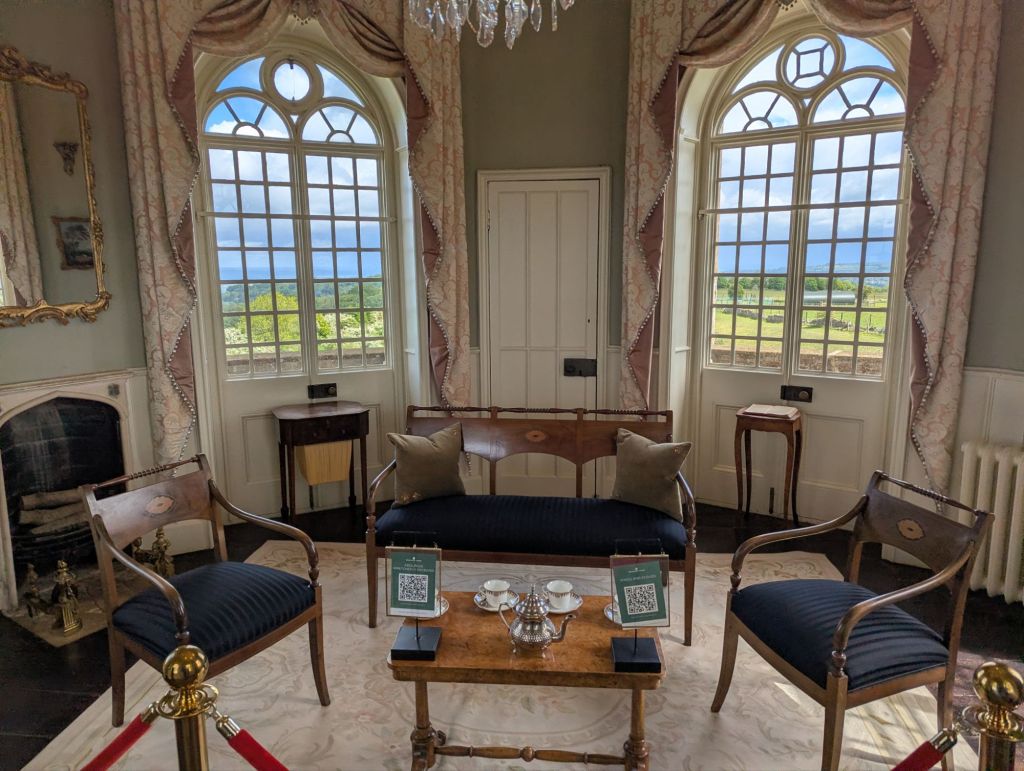
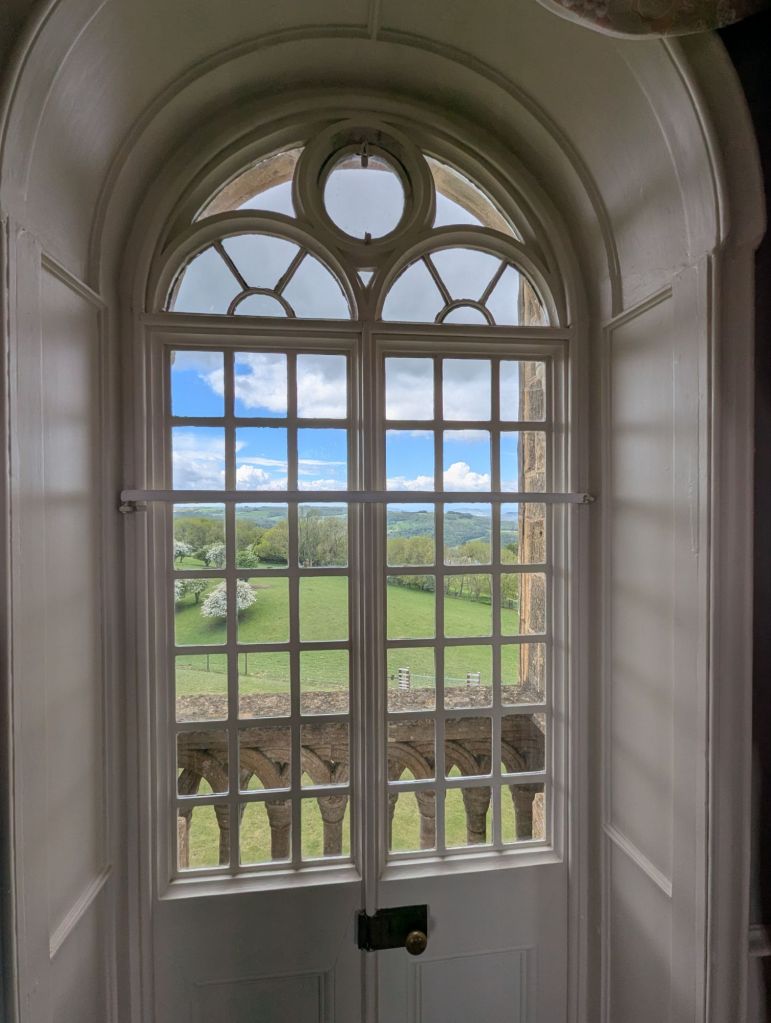
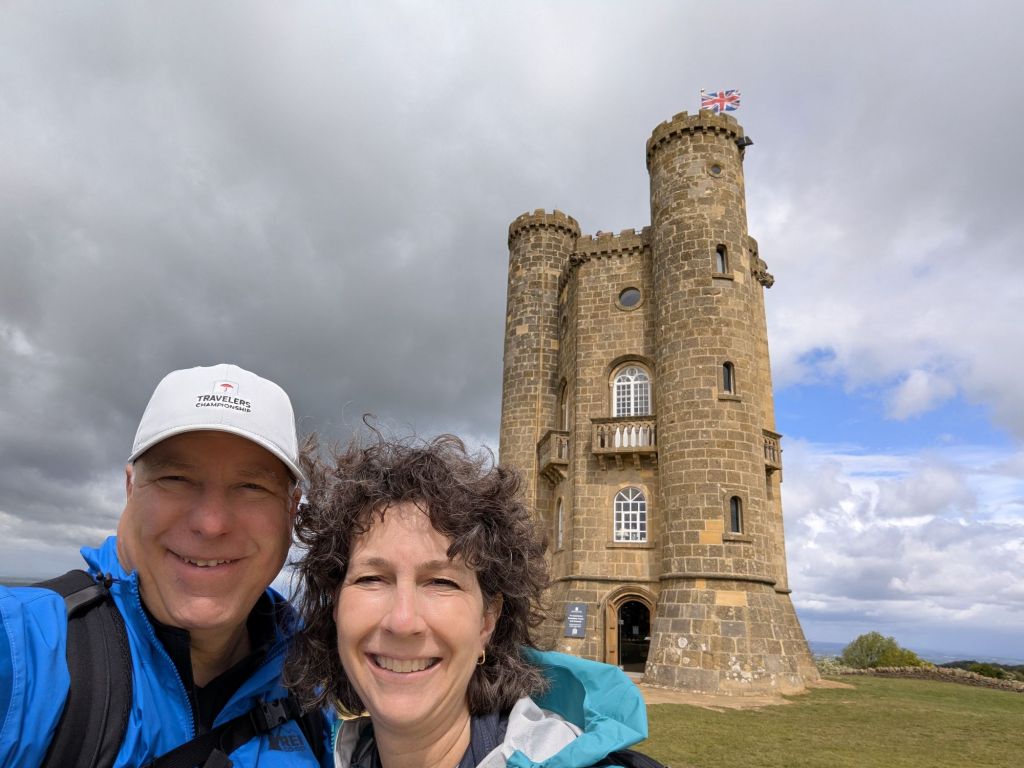
After about 1.5 miles of fairly continuous uphill climbing, we reached Broadway Tower. We decided to pay the admission fee to tour it, and we are glad we did. The tower is what is known as a “folly,” meaning it was originally built purely as an ornamental structure with no real practical purpose. According to the story, the owner built it because his wife wondered whether something on top of this hill could be seen from their home. Apparently, it could.

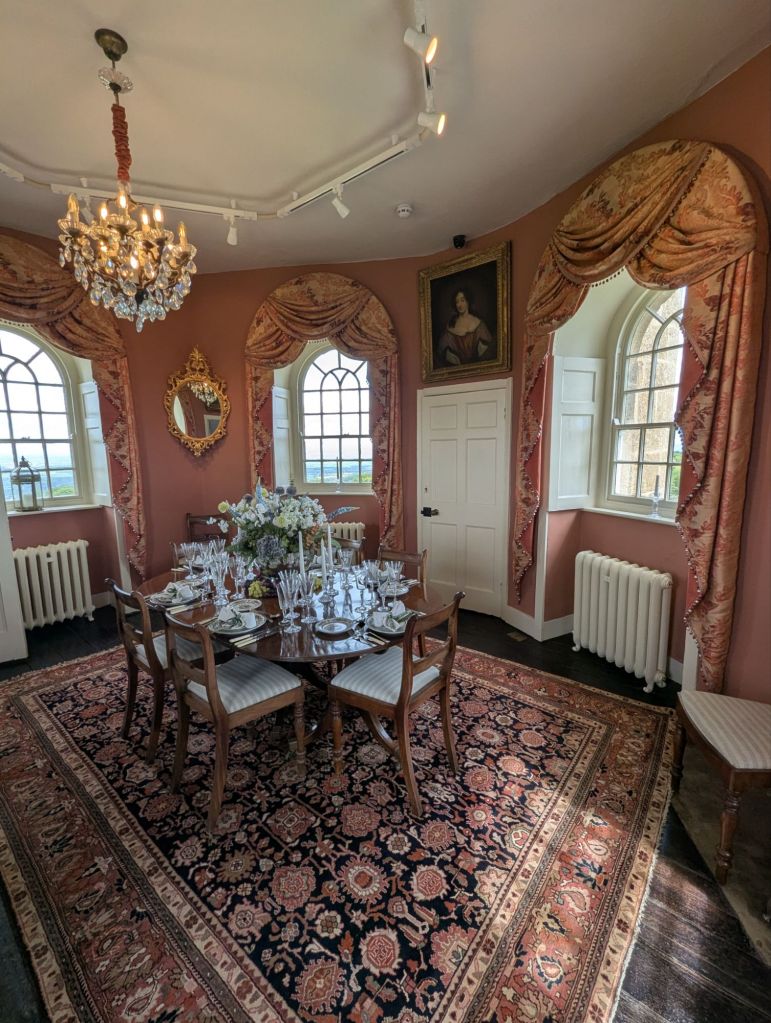
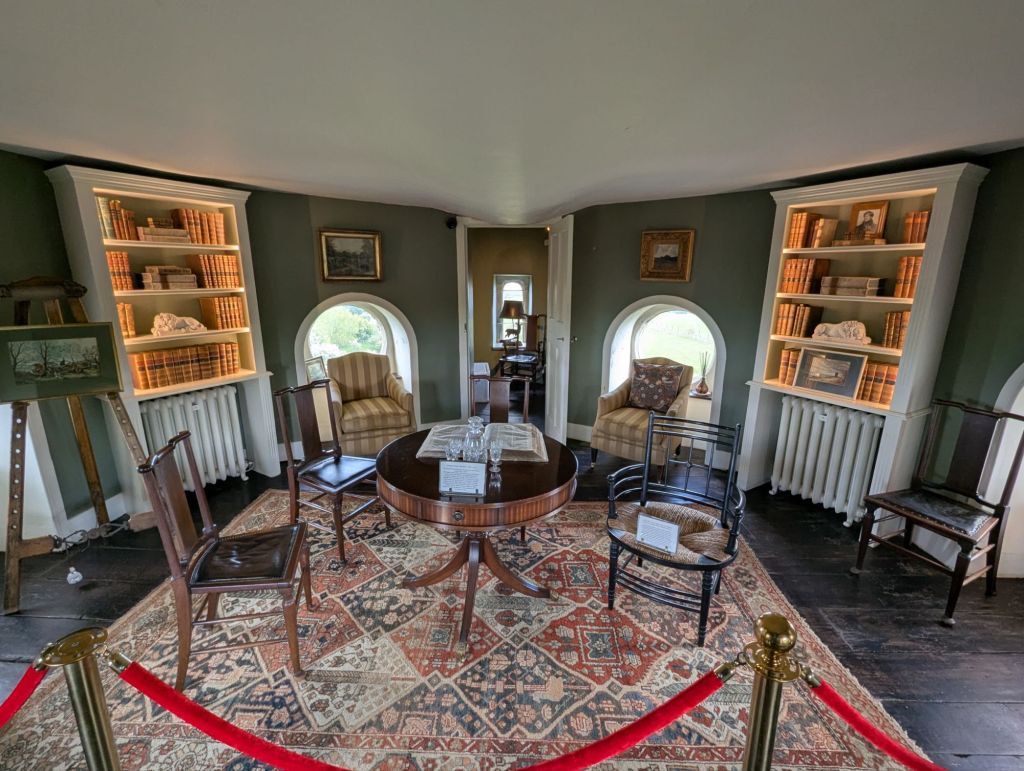
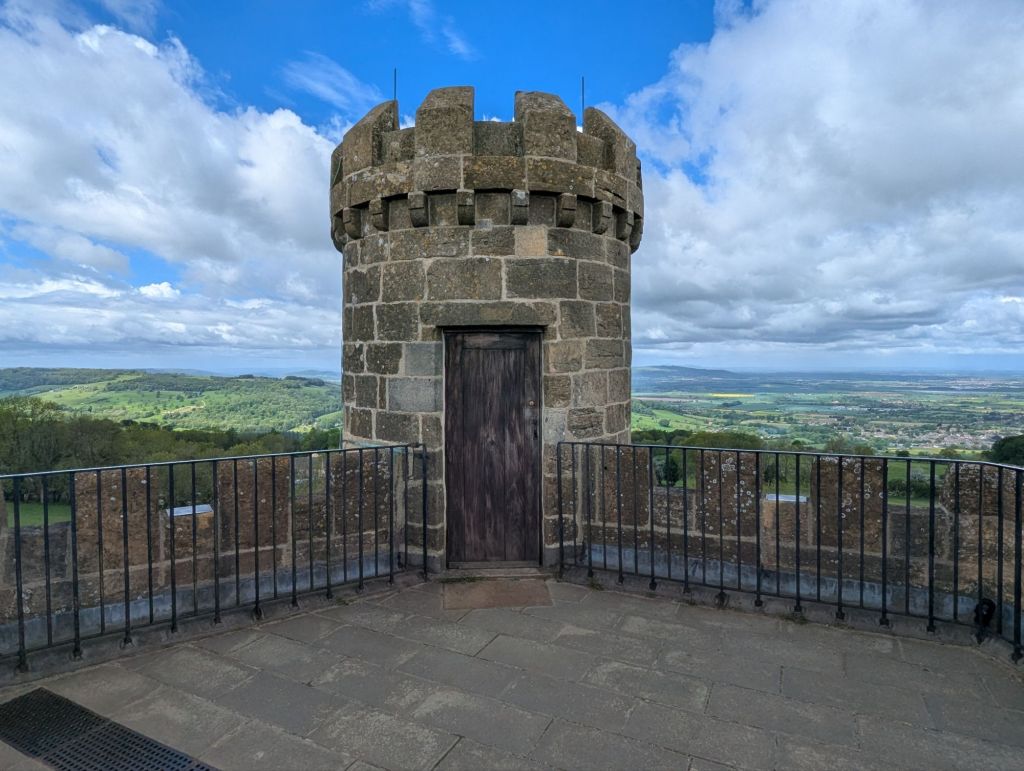
The tower itself is wonderfully quirky with three turrets, each with a spiral staircase. It has rounded sides, three floors, and a rooftop terrace. Early owners simply admired it from afar, though later it was actually lived in by a writer, his wife, a painter friend, and a caretaker couple. That must have made for some very close quarters.

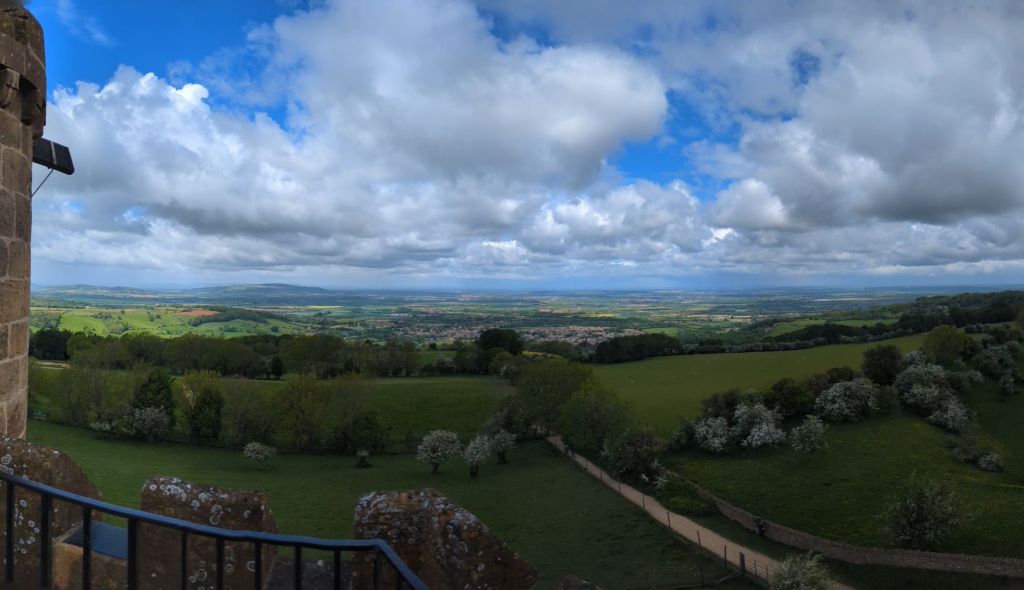
We enjoyed climbing through the tower and listening to the audio tour. By the time we reached the rooftop terrace, the sun had returned, though the wind was still fierce. We even got to watch a couple taking wedding photos with the tower as their backdrop, which felt appropriately dramatic given the weather.

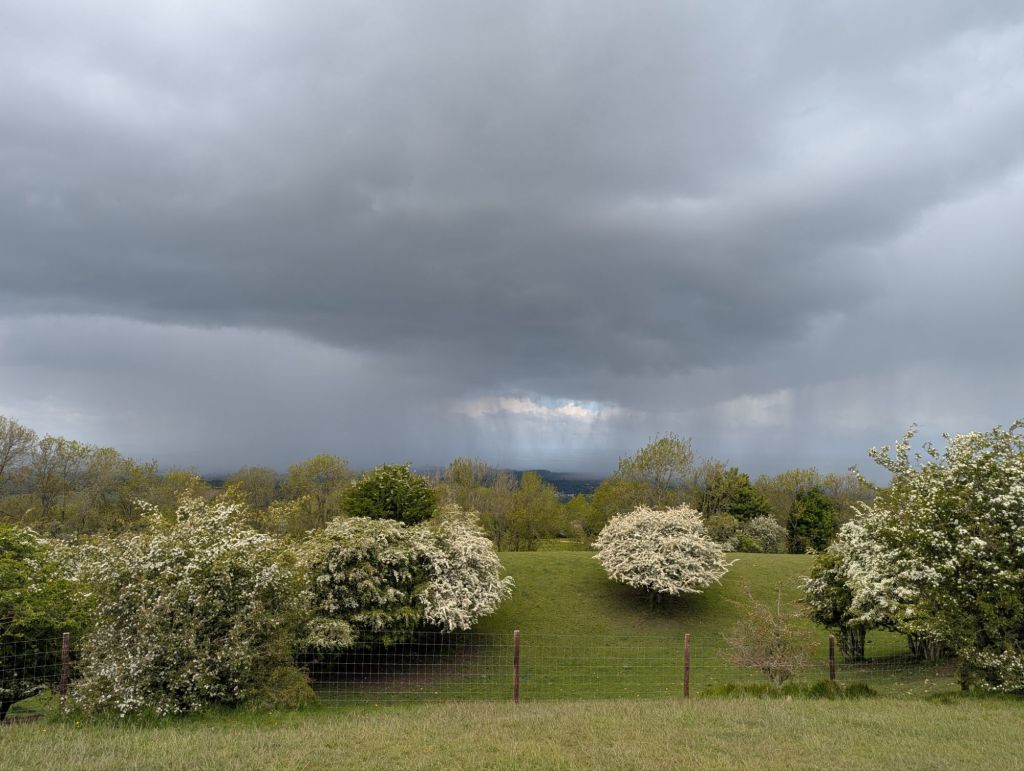
As we descended from the tower, we decided to stop at the café for a quick lunch since there were no other food stops along today’s route. When we came back outside, we noticed dark clouds and falling rain in the distance. A few minutes later we heard thunder and decided it was probably wise to prepare for whatever might be coming our way.

We put on raincoats, rain pants, and backpack covers and headed out. Five minutes later, while walking across a wide open ridge, it started hailing. Not tiny little hailstones either. This was pea-sized hail that quickly upgraded itself to garbanzo bean status.

Walking through the hail storm

We turned our bodies sideways to protect our faces, but it turns out that hail mixed with strong wind really stings when it smacks into you repeatedly. We half laughed in disbelief and half questioned our choice to continue, but with no trees or shelter nearby, the only real option was to keep walking.

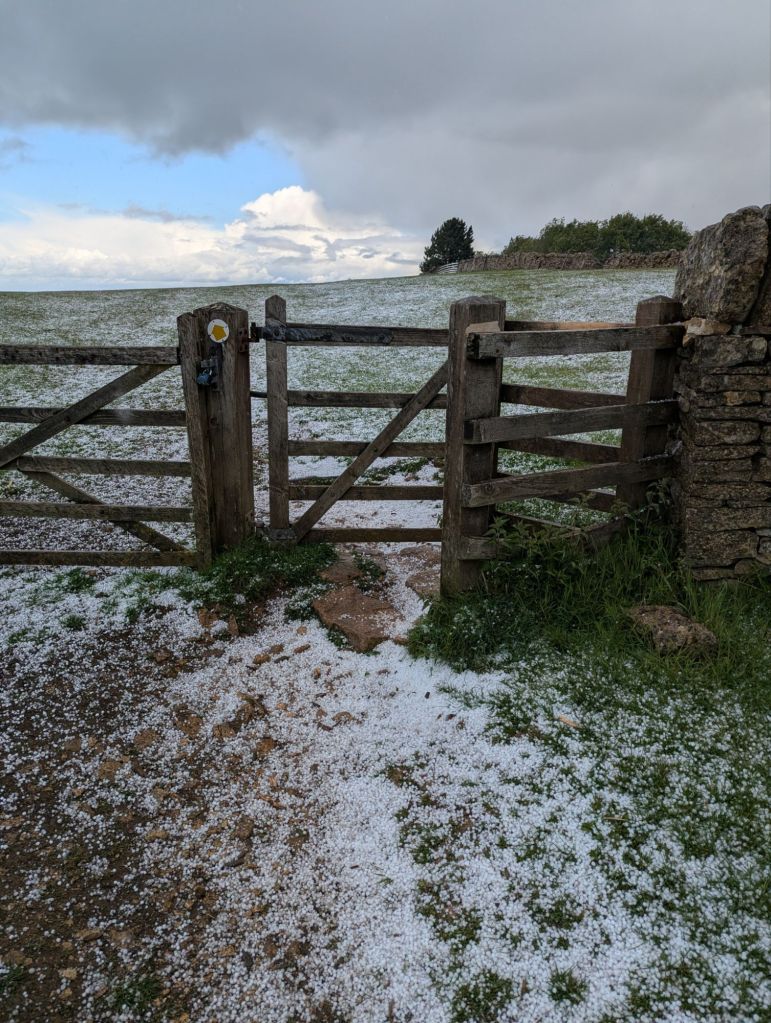
Then, almost as quickly as it started, the hail stopped. Fifteen minutes later the sun was shining brightly again as though none of it had happened.

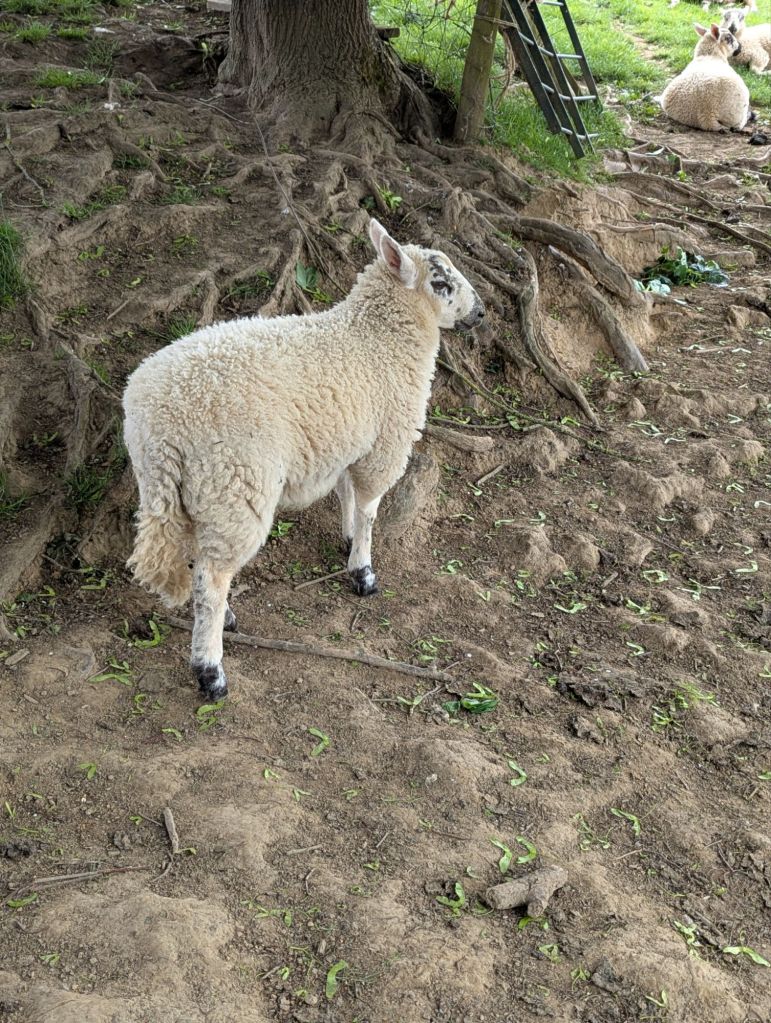
Nearby, we noticed a herd of sheep sheltering under a tree during the storm. Once it cleared, they began crossing our path toward a wooded area, perhaps wisely deciding they were done trusting the weather forecast for the day. Our pace slowed behind them as we carefully picked our way across a layer of hail covering the trail. The last thing we wanted at that point was to slip and fall into something unpleasant.

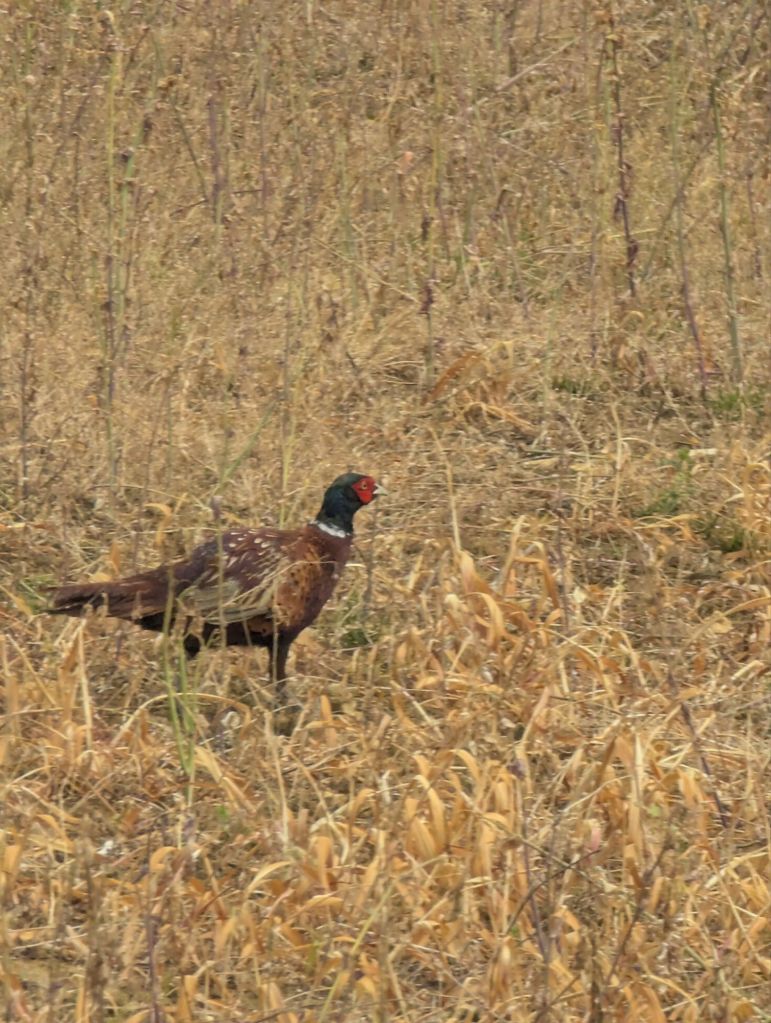
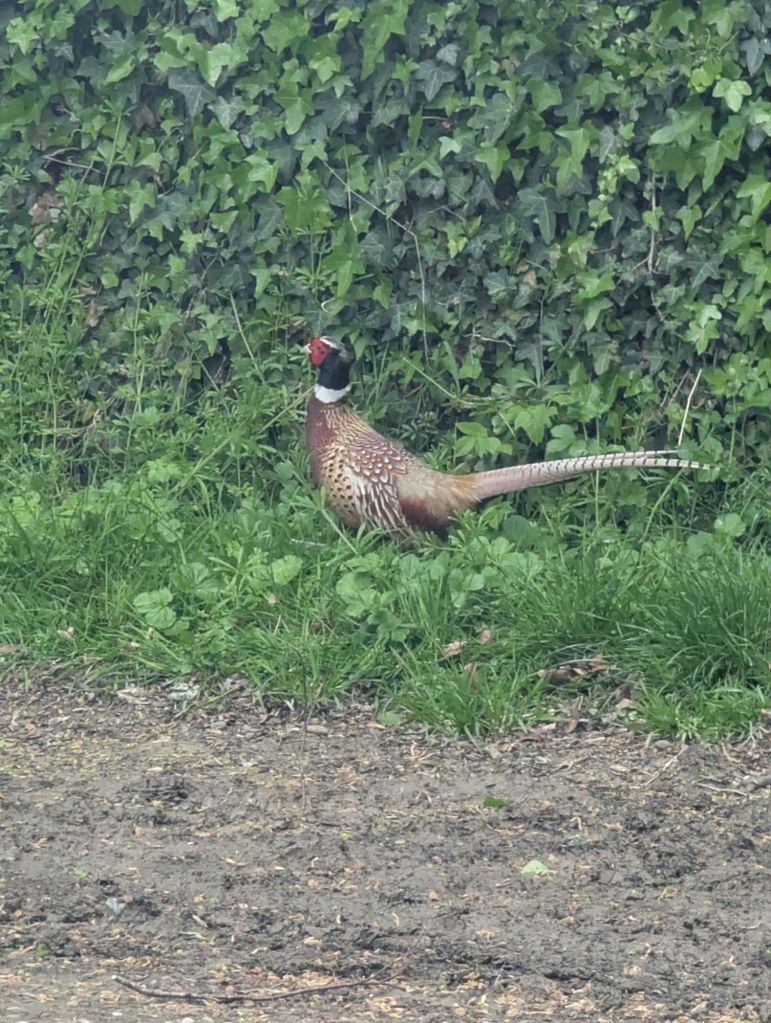
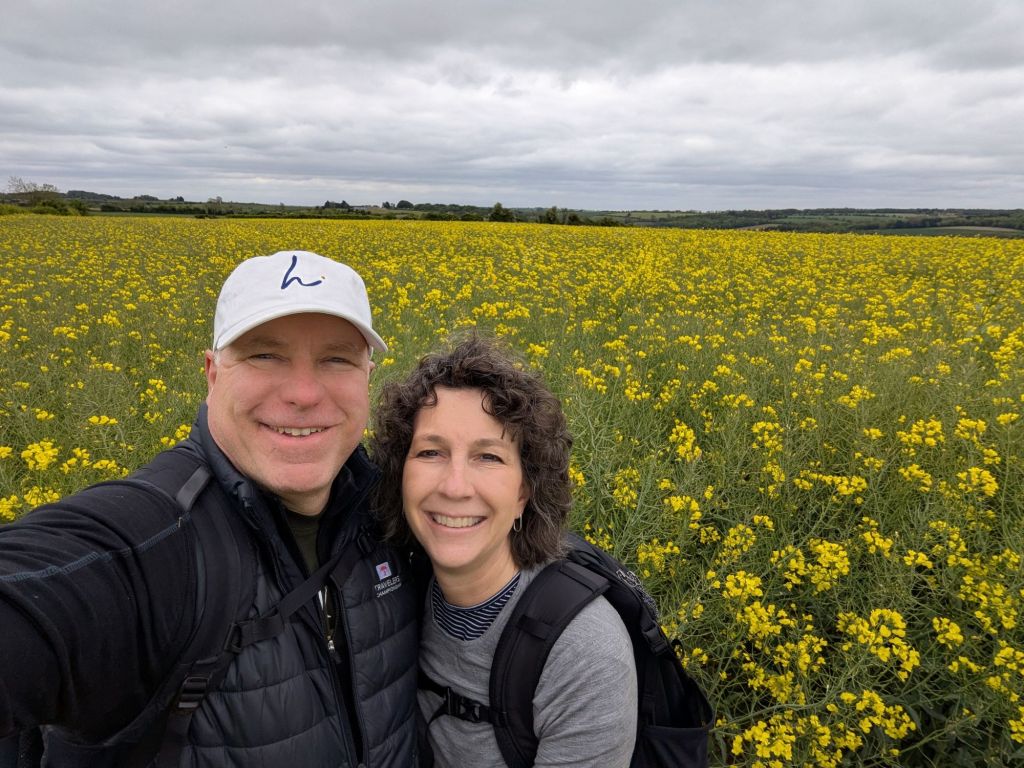
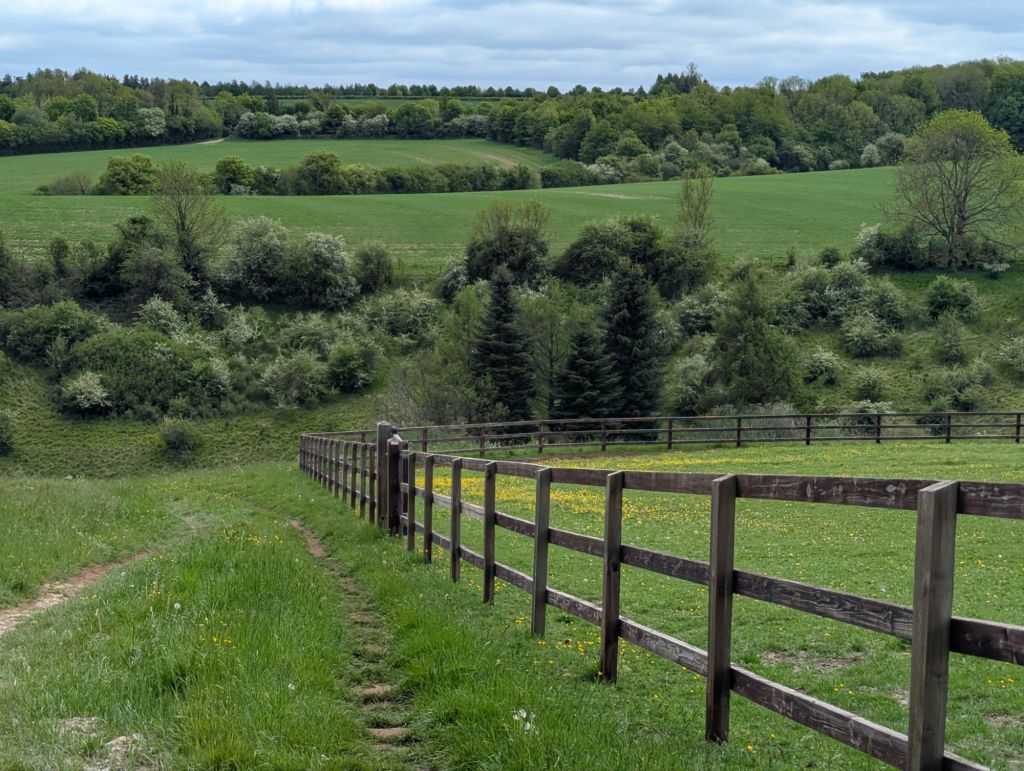
The rest of the afternoon took us through more fields of bright yellow rapeseed and barley, wooded stretches, and open pastures. We passed through 19 gates, saw countless sheep, and spotted several pheasants along the way. Although the sun appeared fairly often, we kept our rain gear on because brief showers continued to pop up throughout the afternoon.

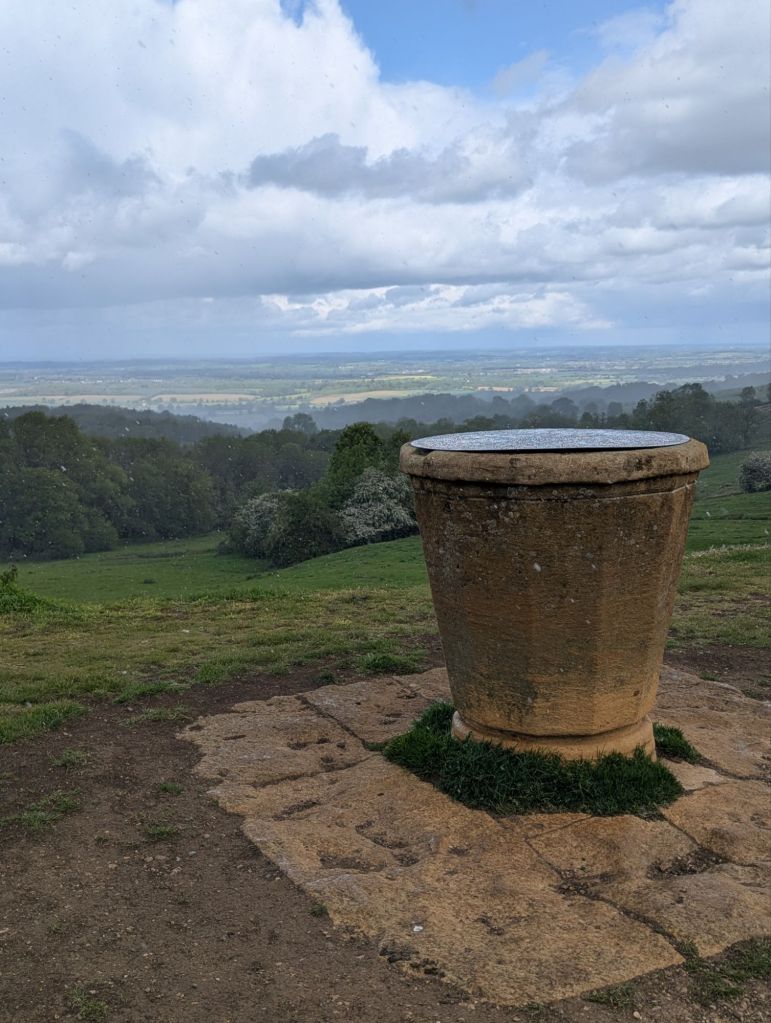
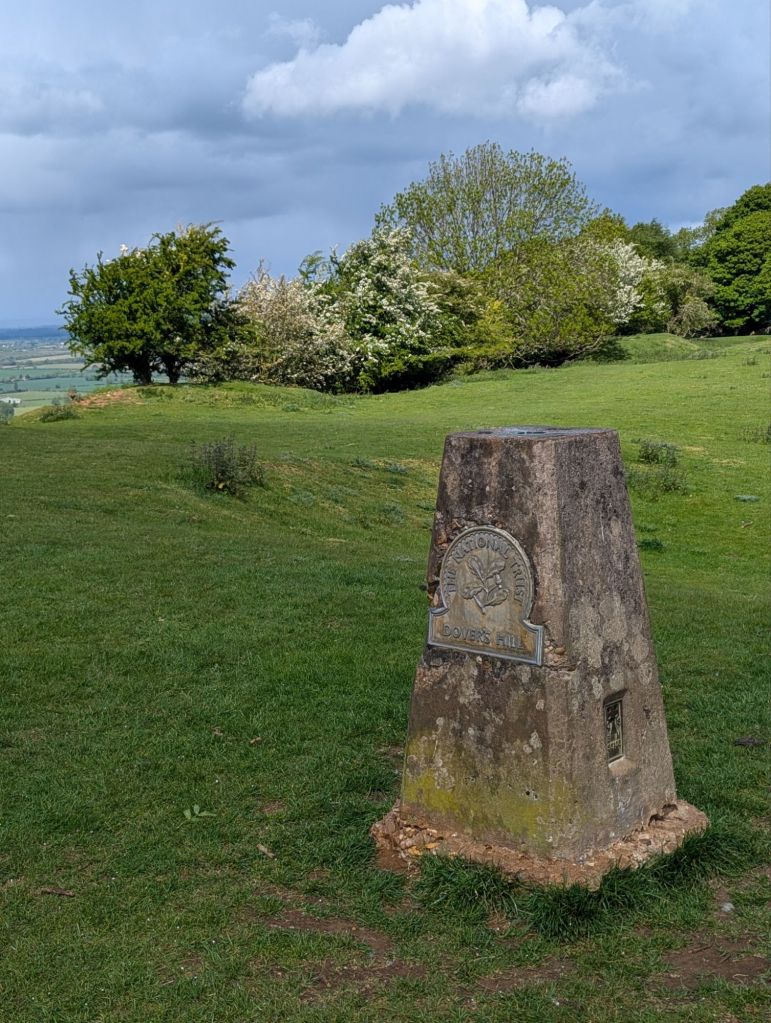
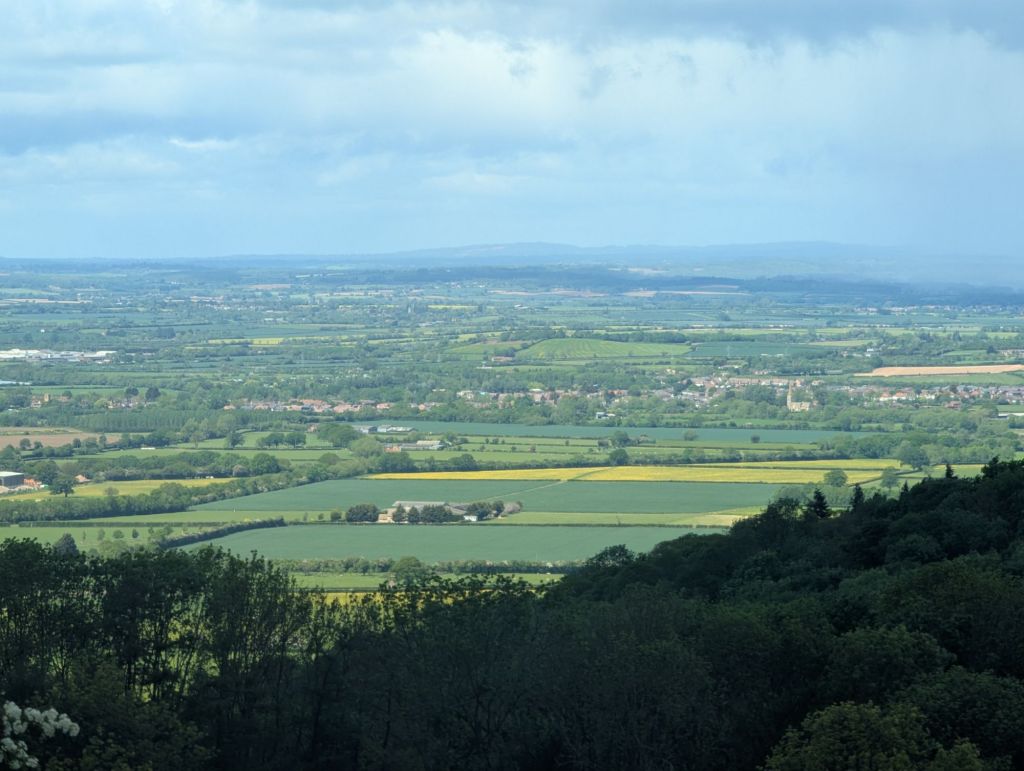
Near the end of the hike, our route detoured slightly so we could walk across the ridge at Dover’s Hill for more panoramic views. Sure enough, just as we stepped out into the wide open space, we heard an eerily familiar tap tap tap against our raincoats.

Hail. Again.

Apparently lightning may not strike twice, but hail certainly can.

Thankfully, this second round was much shorter and less aggressive than the first. Soon enough, the skies cleared and we finished our walk in sunshine as we arrived in the lovely village of Chipping Campden. Fun fact: the prefix “Chipping” indicates that it was historically a market town.

We found our hotel, though it was still too early to check in and our luggage had not yet arrived. Naturally, with time to spare, we found a local café and ordered a cream tea. This turned out to be an excellent decision, partly because we have grown very fond of scones, and partly because it started raining again while we sat inside enjoying them.

Once the rain eased up, we made our way to the spa at our hotel. Thinking ahead, we had booked treatments to help with recovery after several long hiking days. It was the perfect place to relax sore muscles, rest, and wait out the off-and-on rain showers.

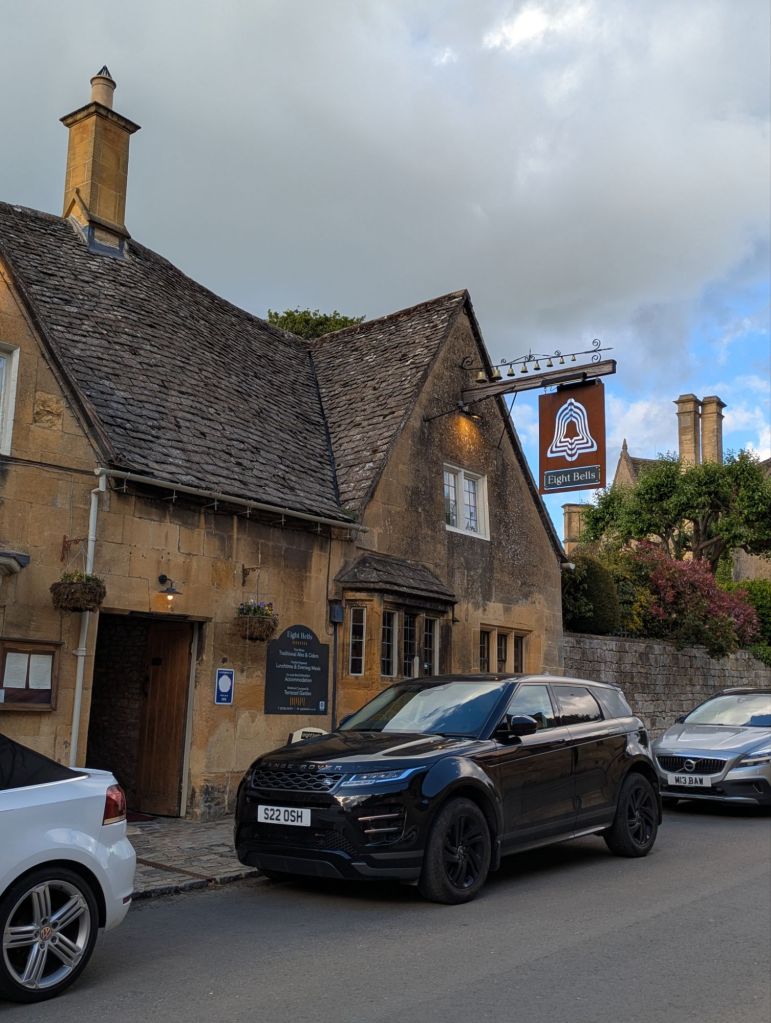
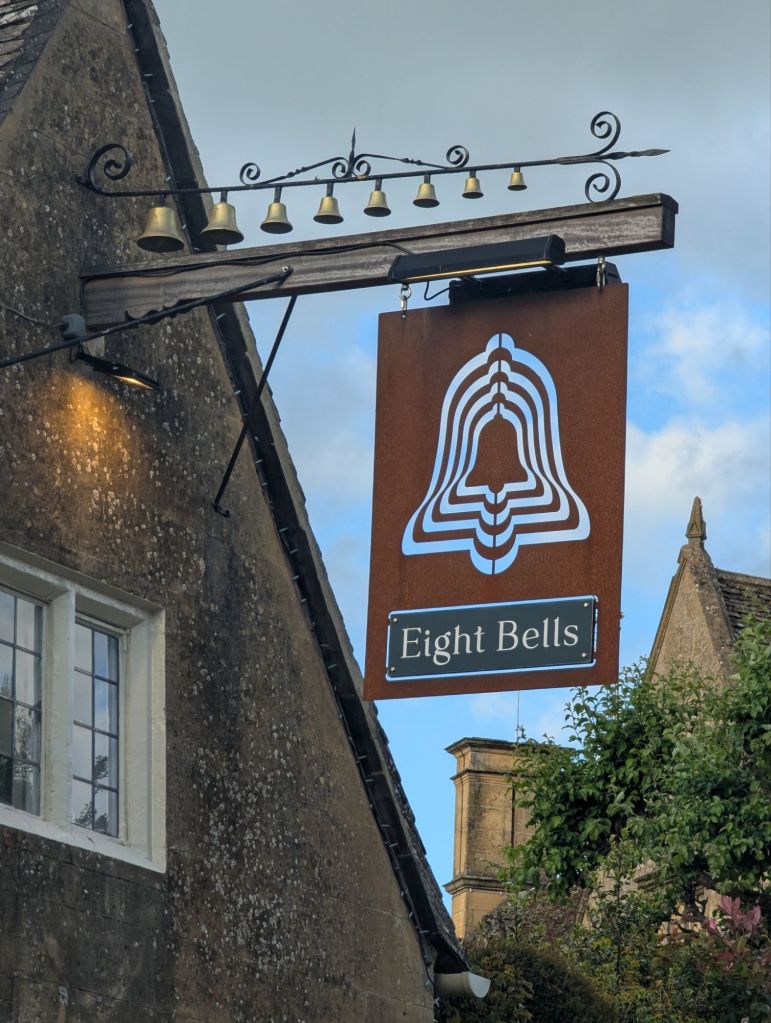
Eventually we checked into our hotel, showered, changed clothes, and headed out to dinner at the Eight Bells Inn. It is the oldest public house in Chipping Campden and appears on many lists of the “Best Pubs in the Cotswolds.” It absolutely lived up to the reputation as we had a truly delicious dinner.

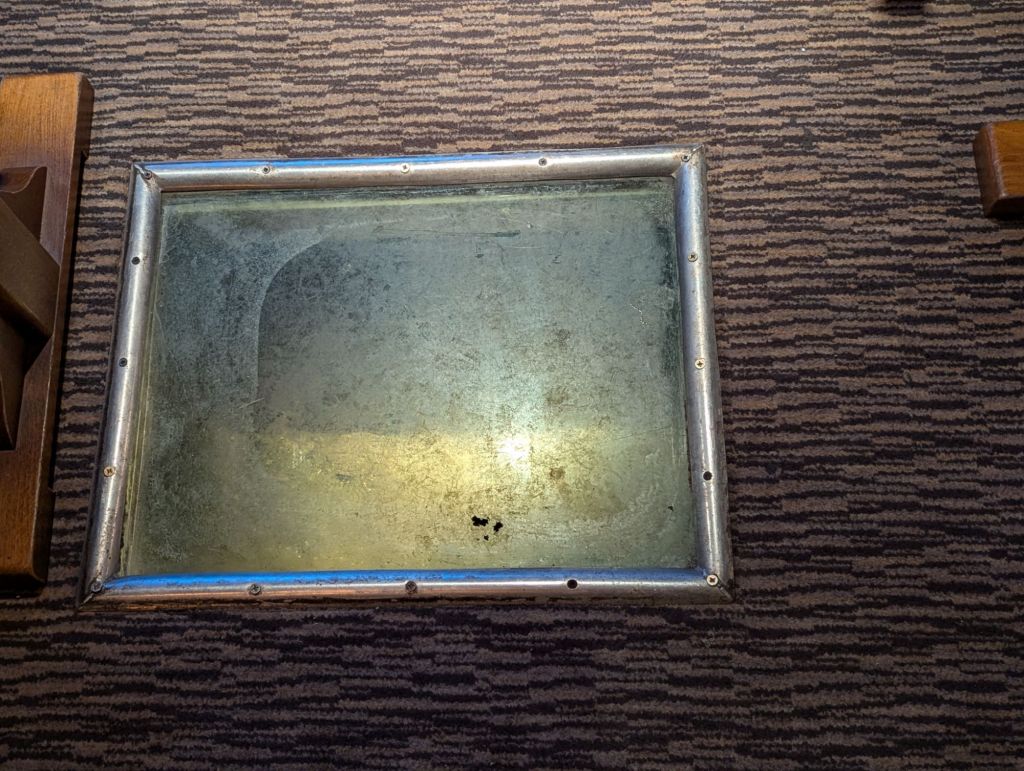
One especially interesting feature of the pub is a priest hole located right in the middle of the dining room floor, covered with plexiglass and softly illuminated below. During the reign of Henry VIII and the dissolution of the Catholic Church, priests often feared for their lives. Hidden spaces like these were built into homes and buildings so clergy could hide during searches.

After dinner, we made the short five-minute walk back to our hotel and settled into our now traditional evening routine of stretching and a hot bath.

Only one more day of hiking to go!
Categories: 2026 England Adventure | Tags: , , , , , , , , , , | Leave a comment

Day 7 in England – Gates, Sheep, and Cream Tea: A Day on the Warden’s Way in the Cotswolds

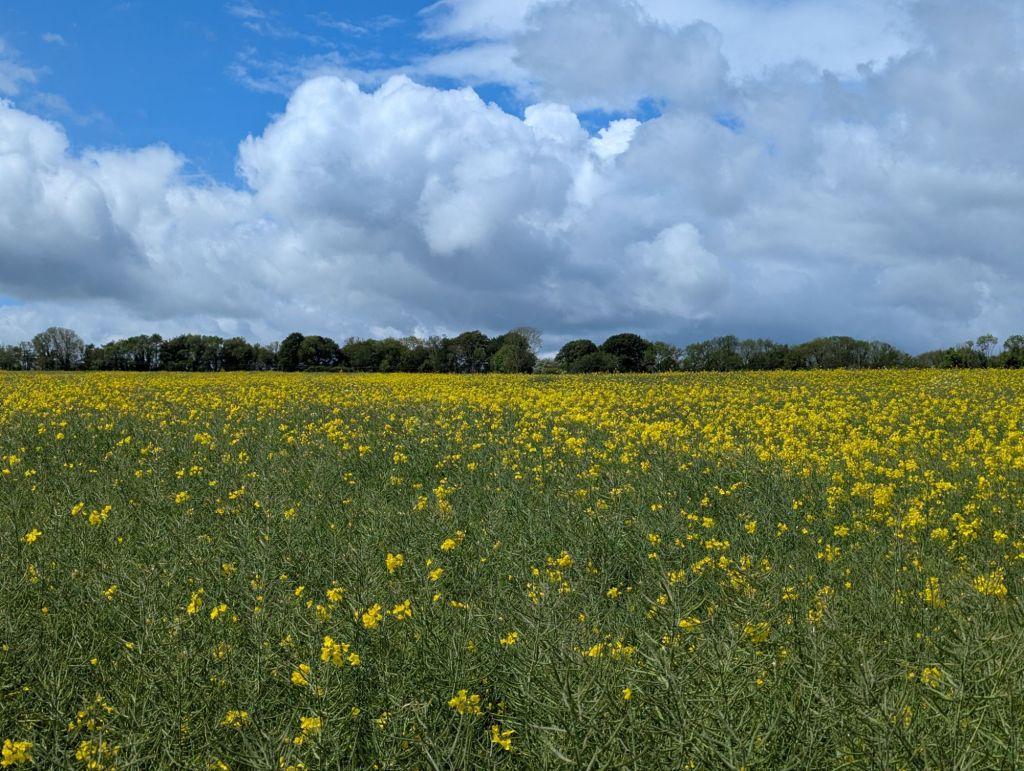
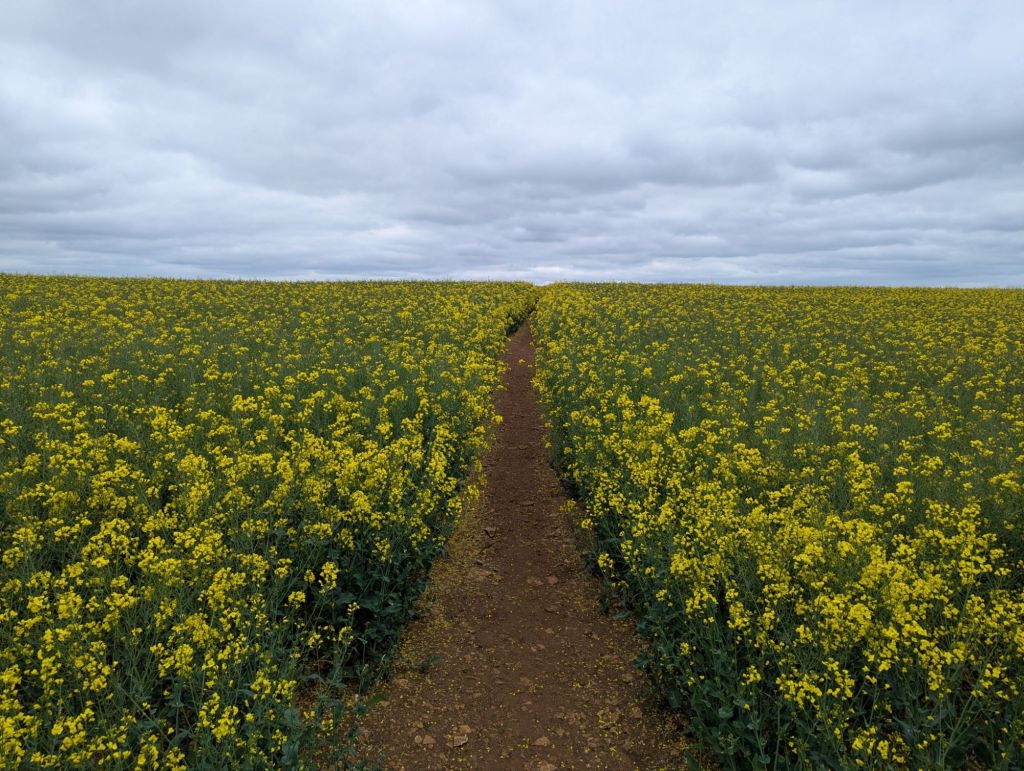
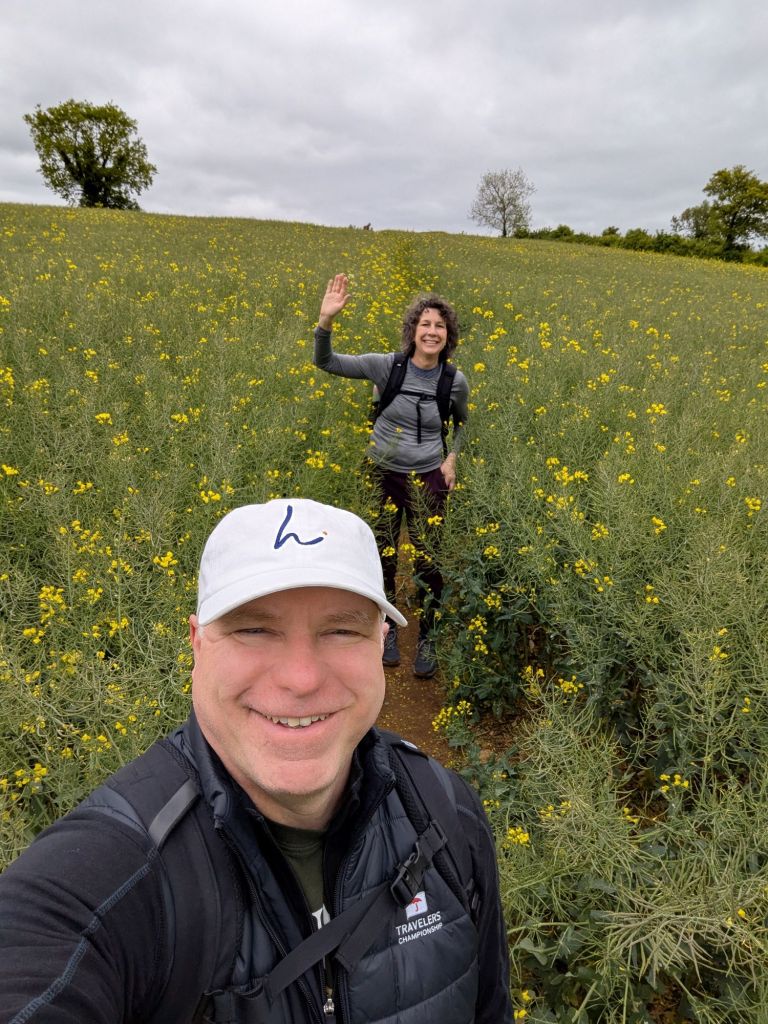
Walking across a rapeseed field

DAY 7 – SUNDAY, MAY 10, 2026

For this part of the trip we were staying at the same hotel for a second night, which felt like a luxury. Since we did not need to have our bags packed and ready for transport, we took advantage of the opportunity to sleep in a little later. After another big breakfast at the hotel, we reviewed the options for the day in our trip app: spend the day exploring a new village about 30 minutes away or tackle a 10-mile circular walk. You can probably guess which option we chose.

Our route out of Lower Slaughter first brought us to Upper Slaughter, a village only about a 15-minute walk away. It was every bit as charming as Lower Slaughter, though even smaller. Essentially one beautiful inn with a Michelin-rated restaurant, a handful of stone cottages.

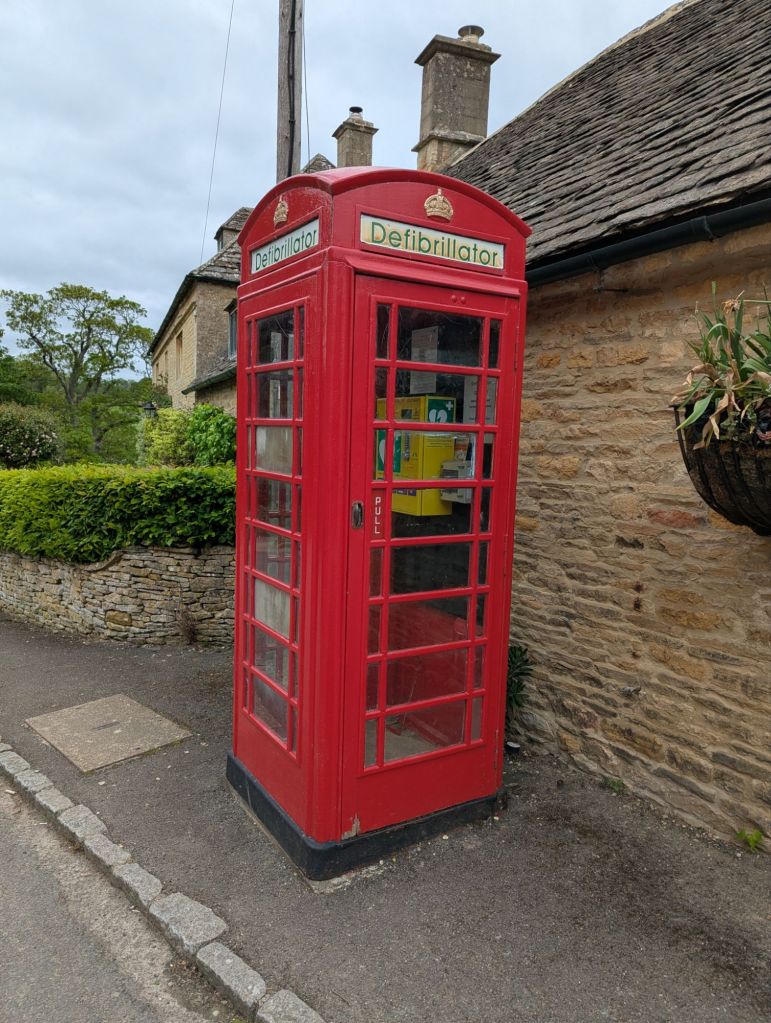
One interesting thing we noticed while leaving Lower Slaughter was how many of the iconic red British telephone booths had been repurposed. Rather than removing them, several villages have converted them into emergency defibrillator stations. With a quick call to 999, you can receive a code to unlock the machine. It was a clever and practical way to preserve a bit of British history.

New defibrillator booth

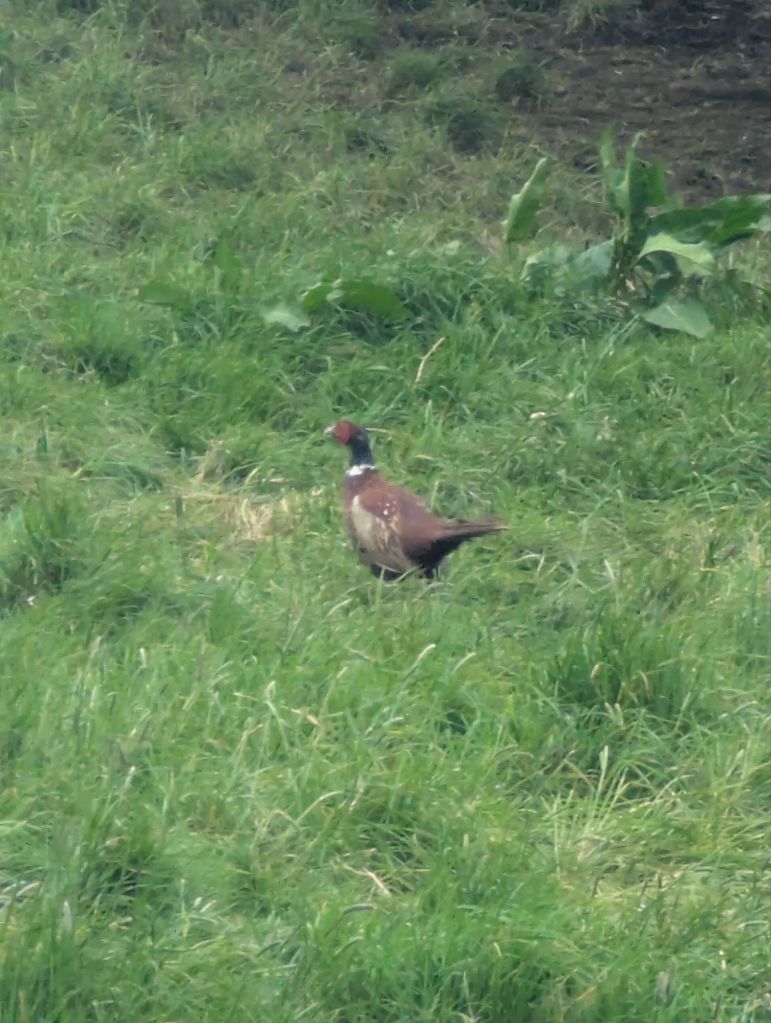
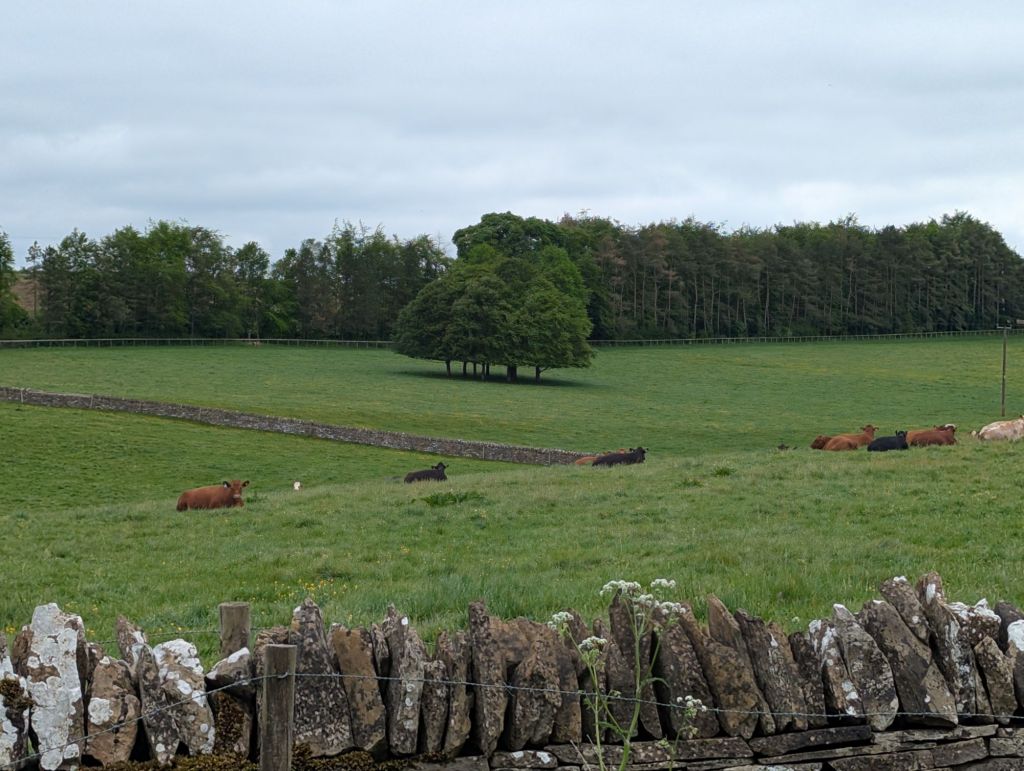
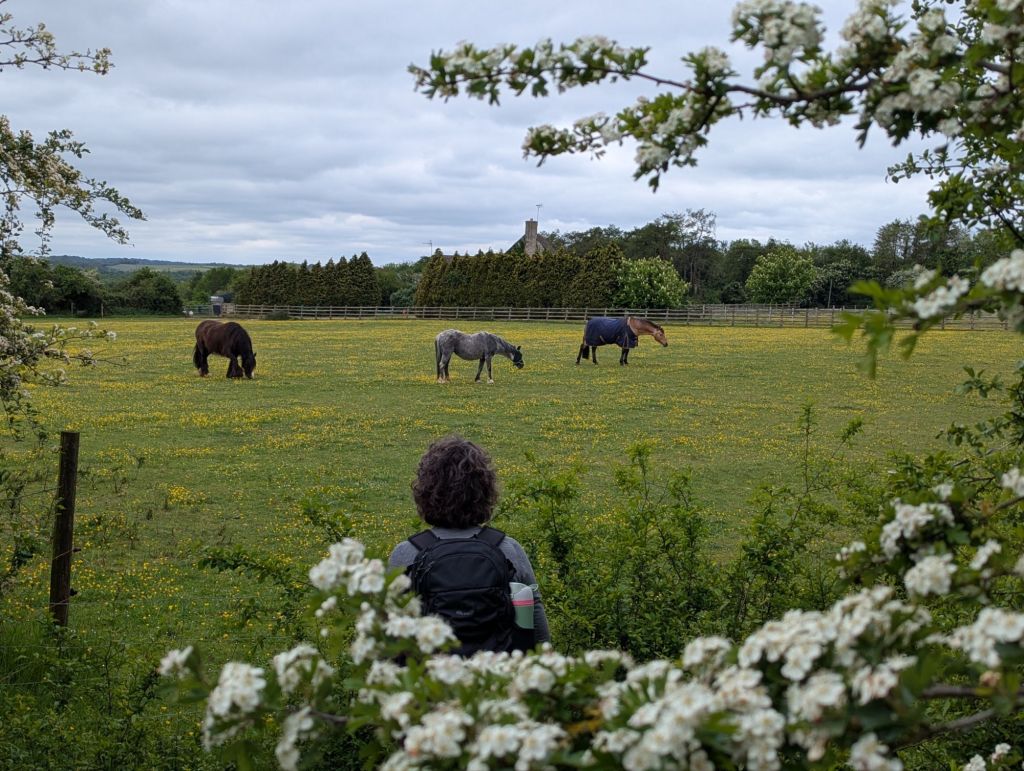
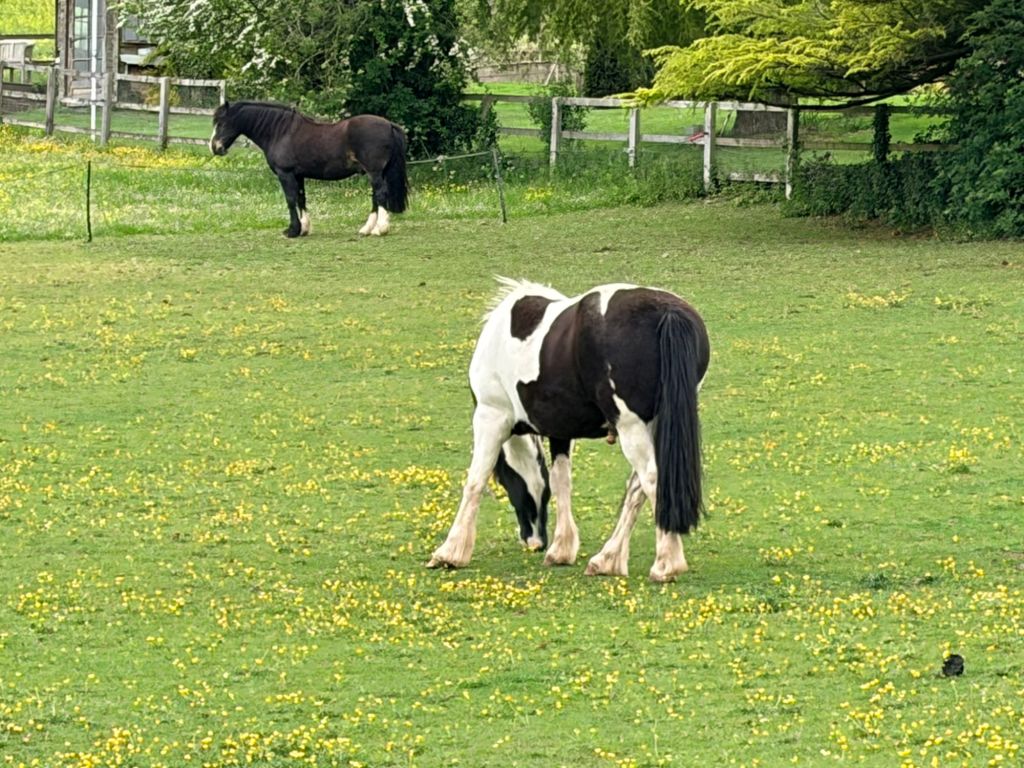
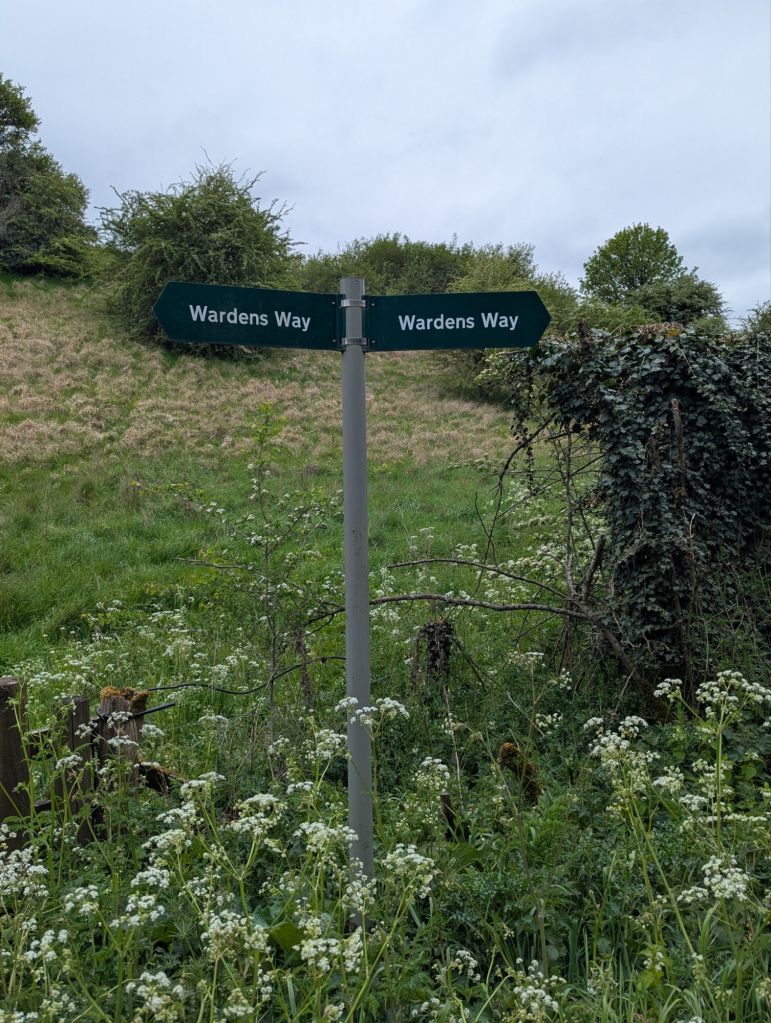
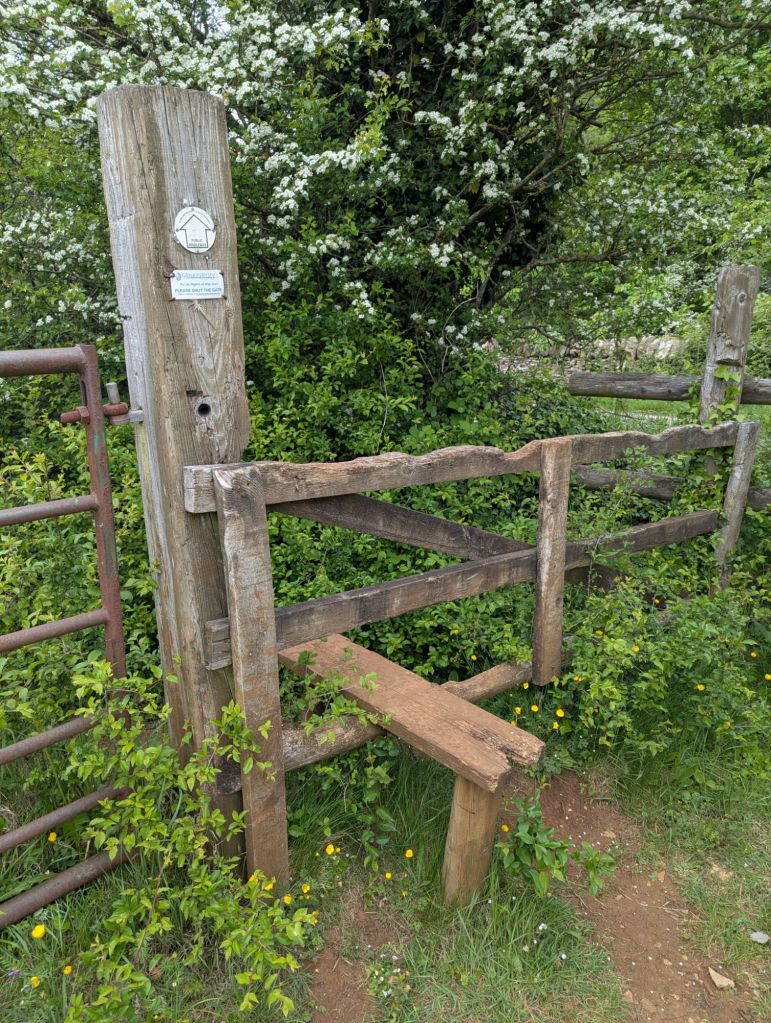
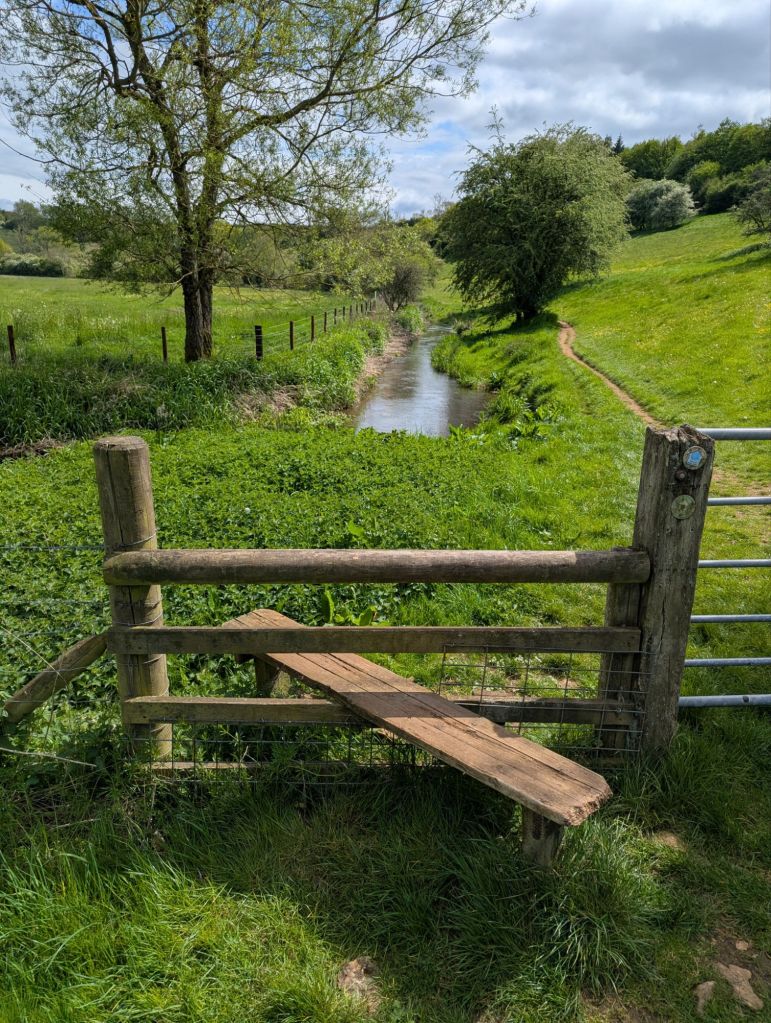
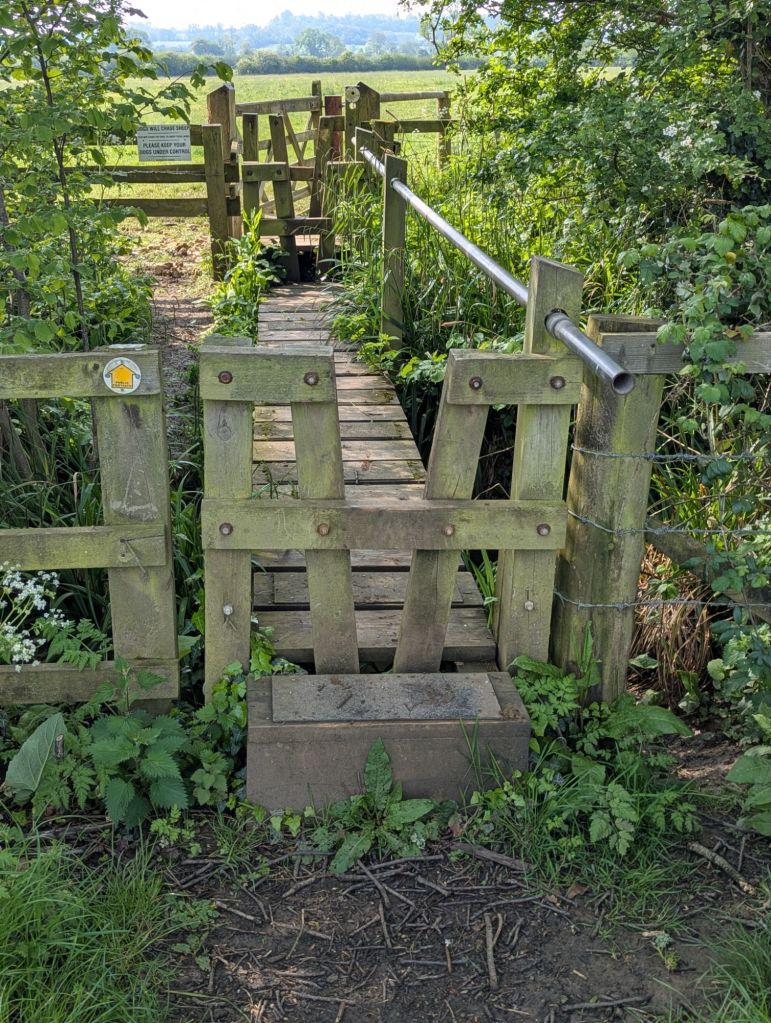
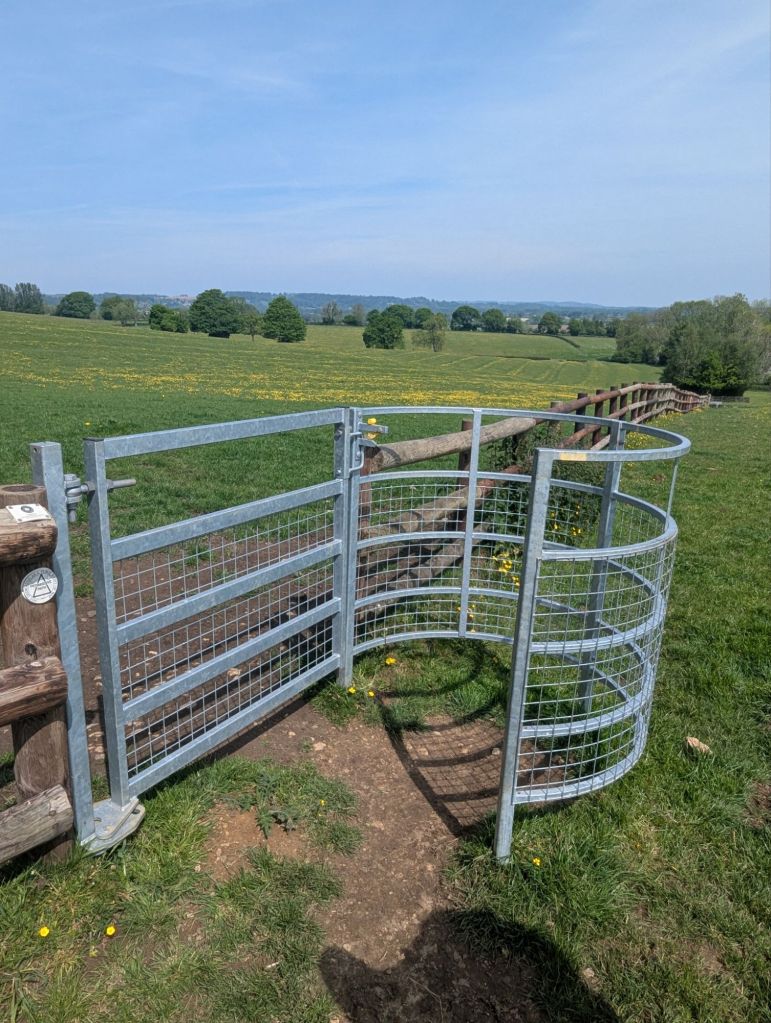
For most of the day we followed the Warden’s Way trail. Along the route we again encountered plenty of sheep, cows, and horses, along with a swan, a pheasant, and lots of doves (which sounds better than pigeons). We also passed through what felt like an endless number of gates, each apparently designed by a different engineer with a completely different philosophy on latches and steps.

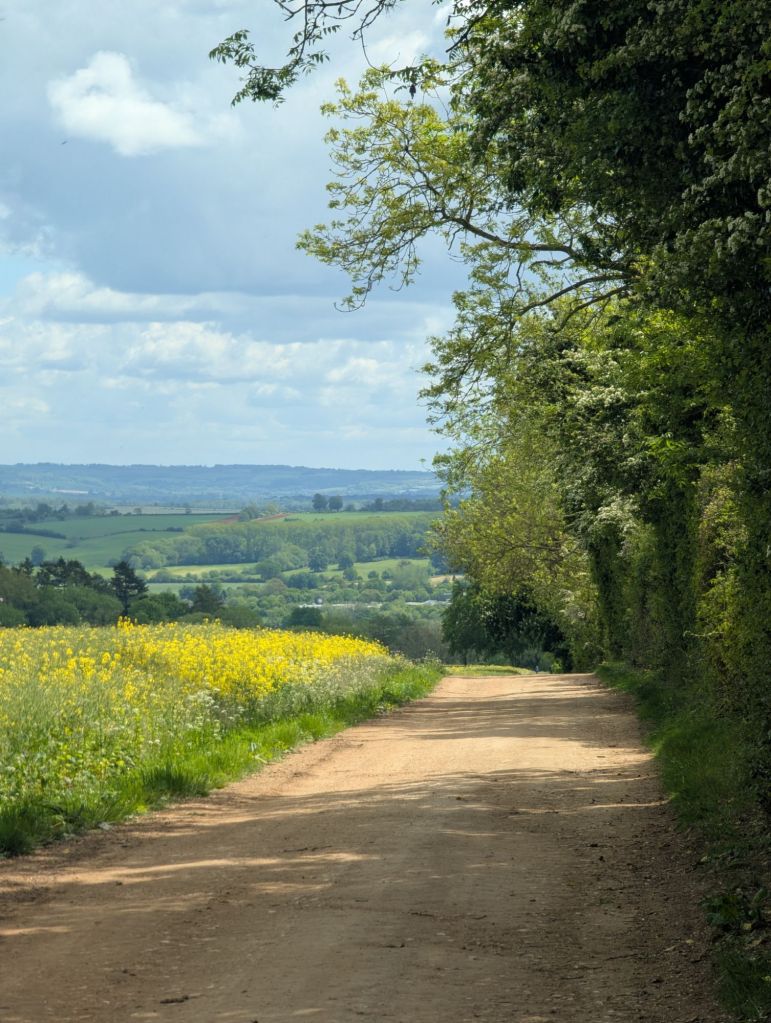
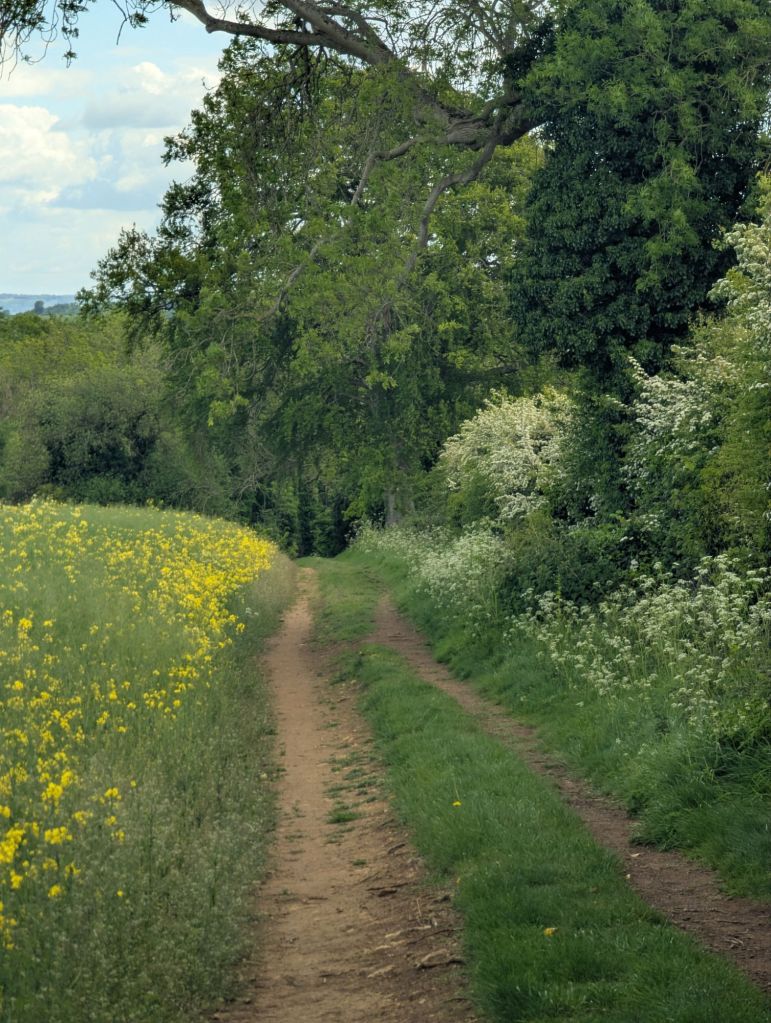
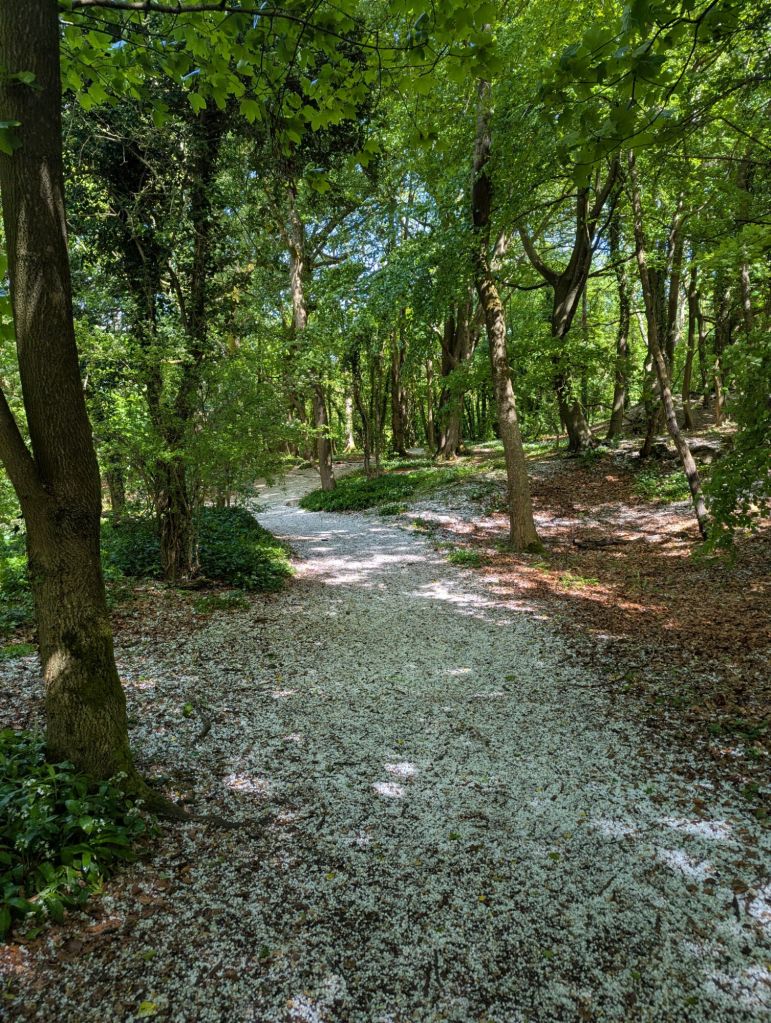
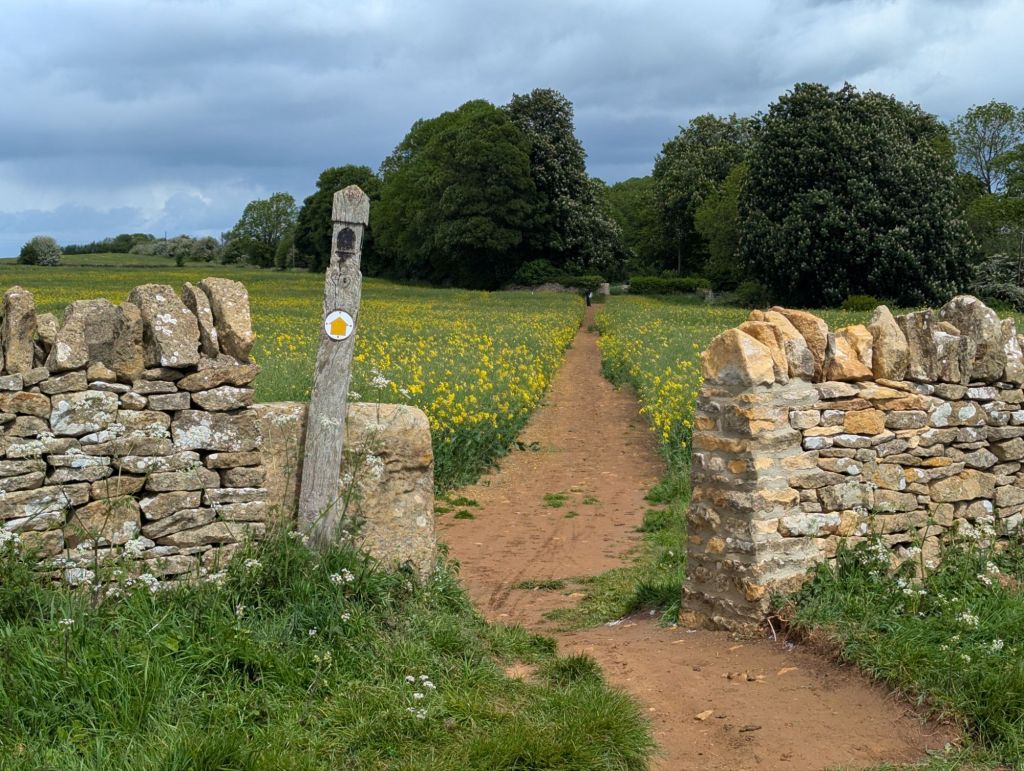
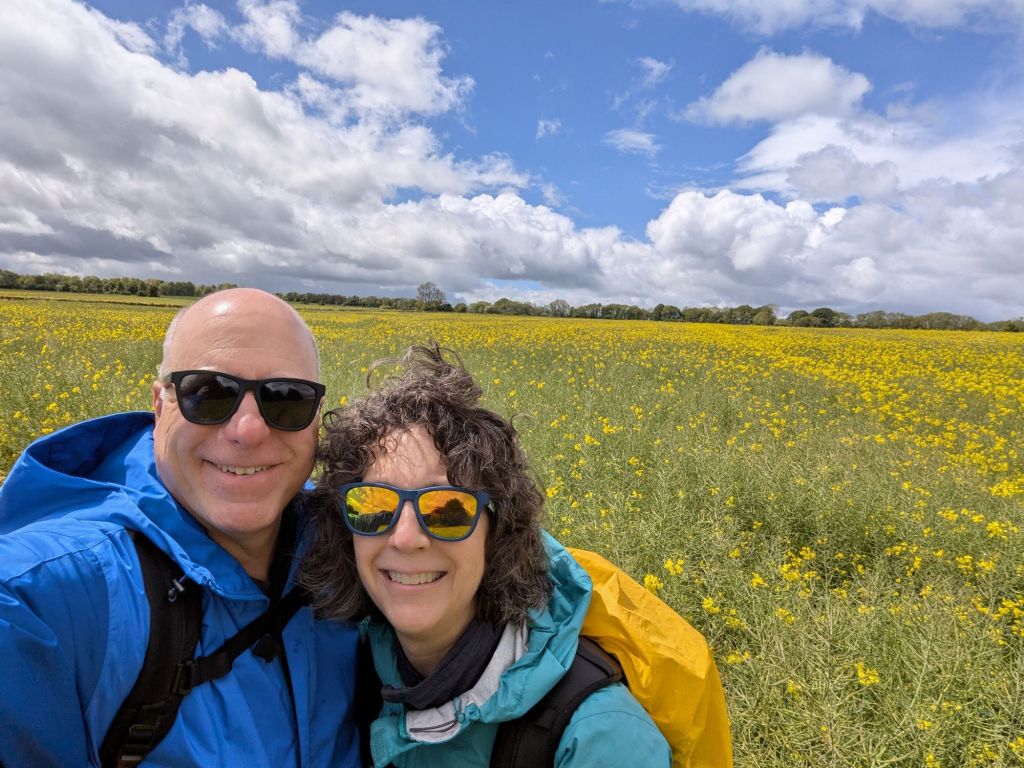
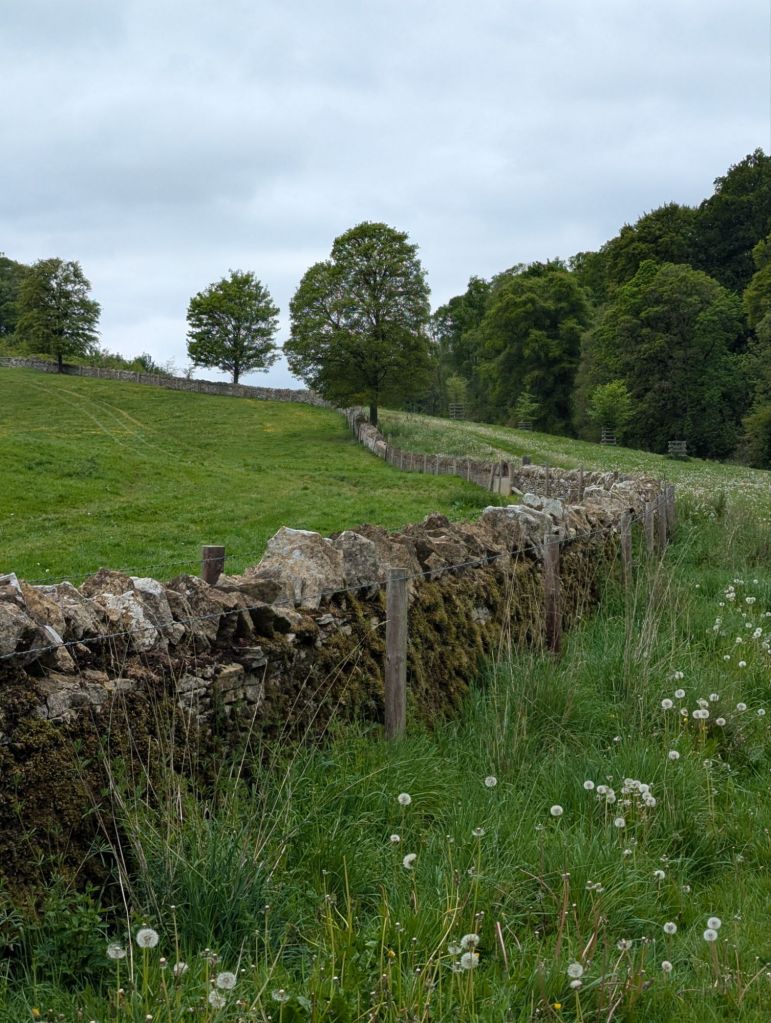
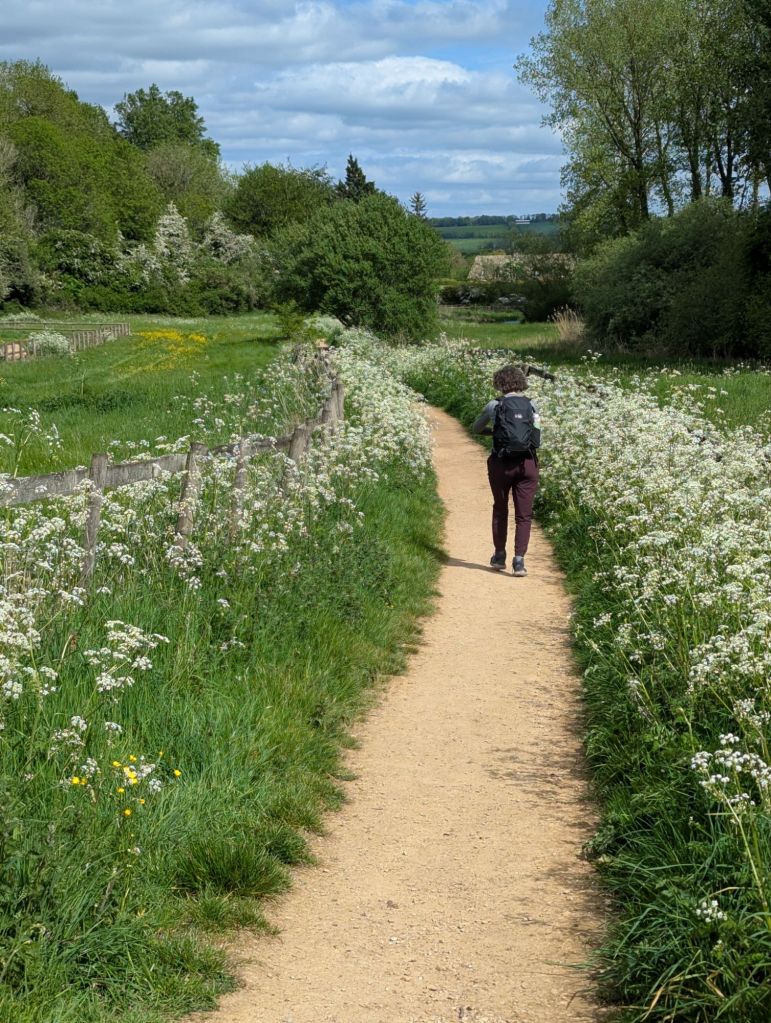
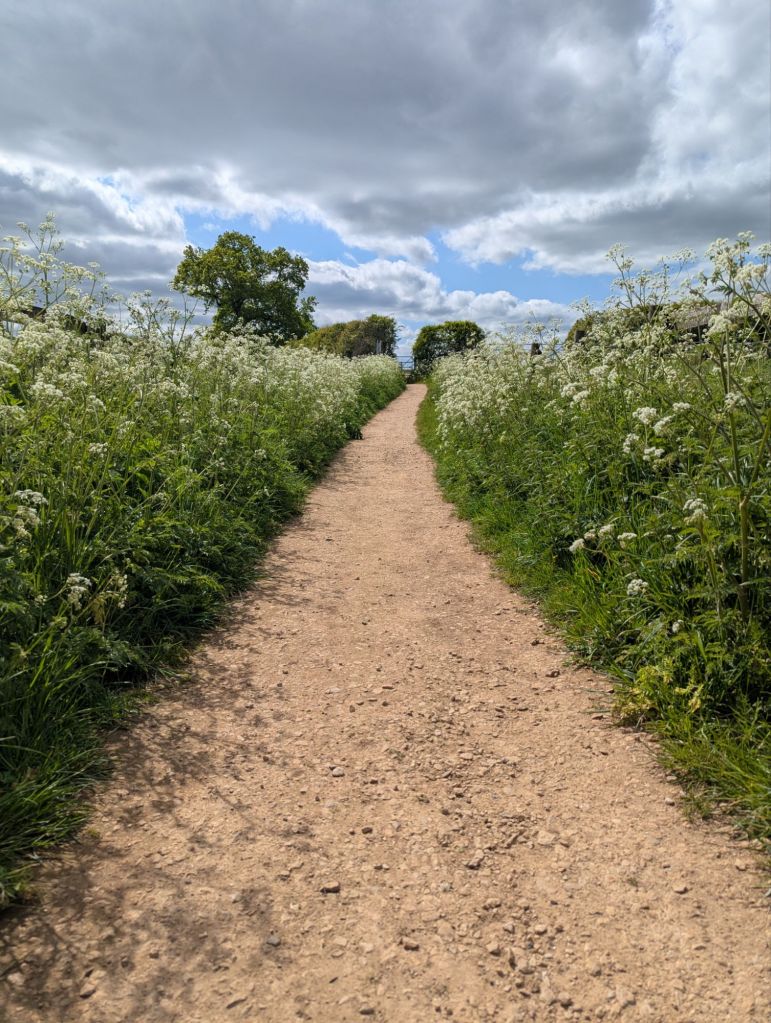
The scenery changed constantly throughout the day. We crossed farms and open fields bordered by hedges, rows of bridal wreath, and fences ranging from neat wooden rails to ancient stone walls and basic wire barriers. At one point we walked through a wooded area that felt surprisingly similar to hiking in New England back home. Some of the highlights included a narrow path lined with Queen Anne’s Lace and a massive field of bright yellow rapeseed flowers stretching across the landscape. We were proud that we recognized the crop thanks to watching Clarkson’s Farm.

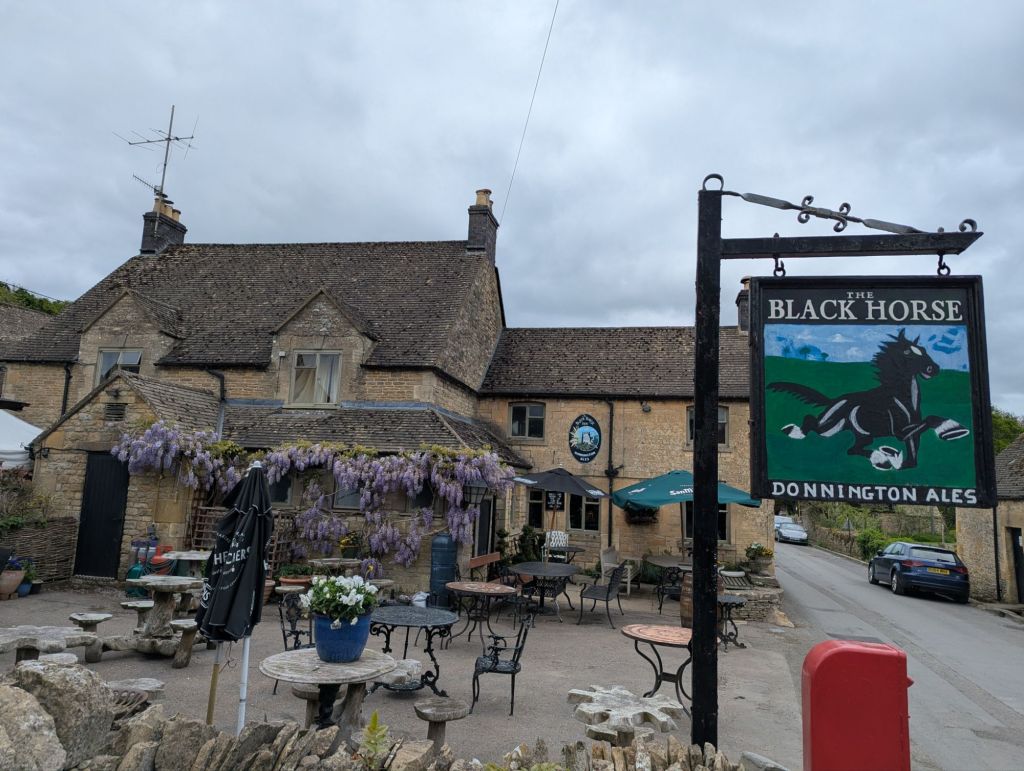
A little less than five miles into the walk, we reached the village of Naunton and stopped at the Black Horse Inn for lunch. It was exactly what you hope to find on a long countryside walk: a cozy pub serving sandwiches and chips (fries), with tired hikers gratefully resting their feet.

The Black Horse Inn

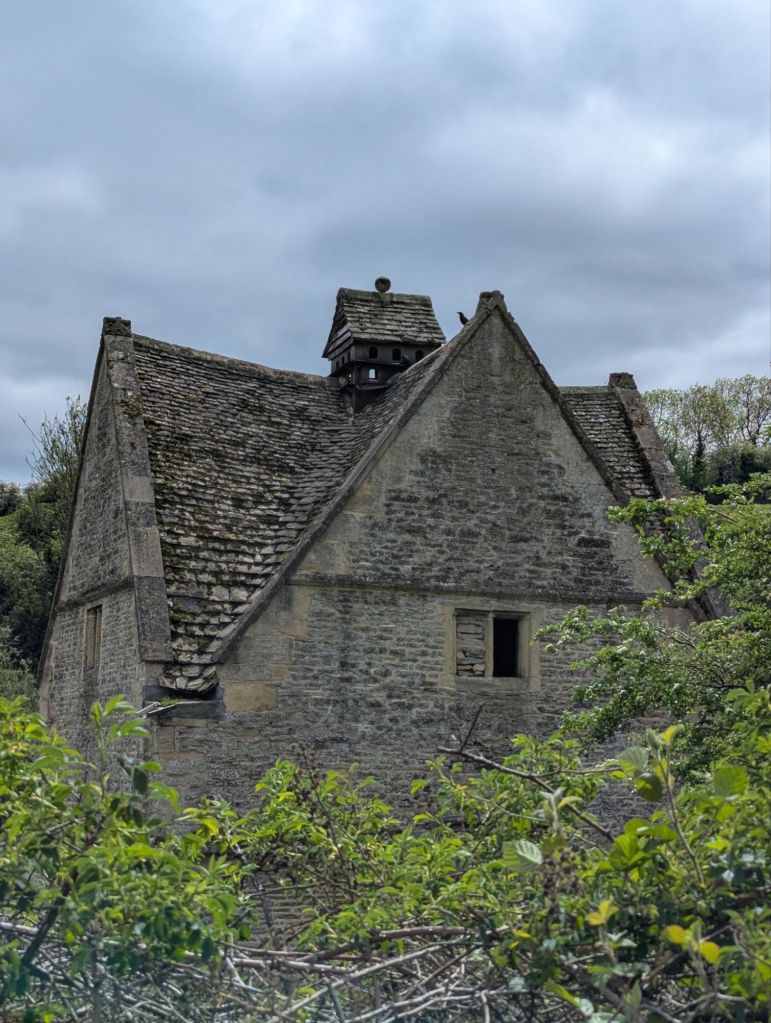
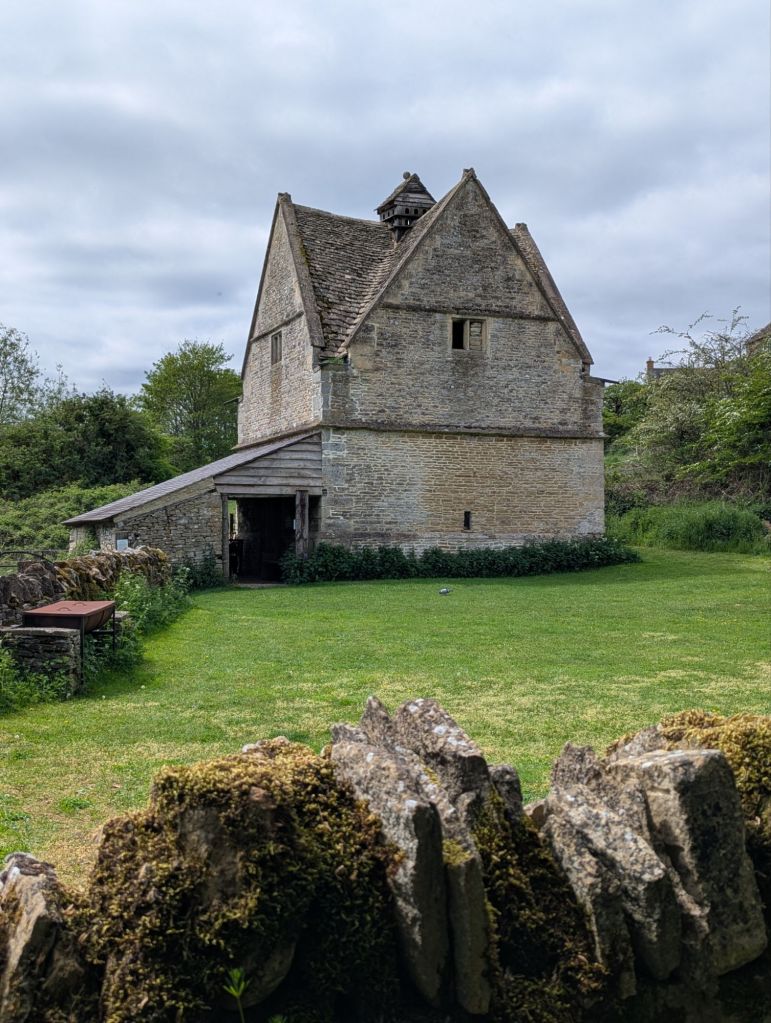
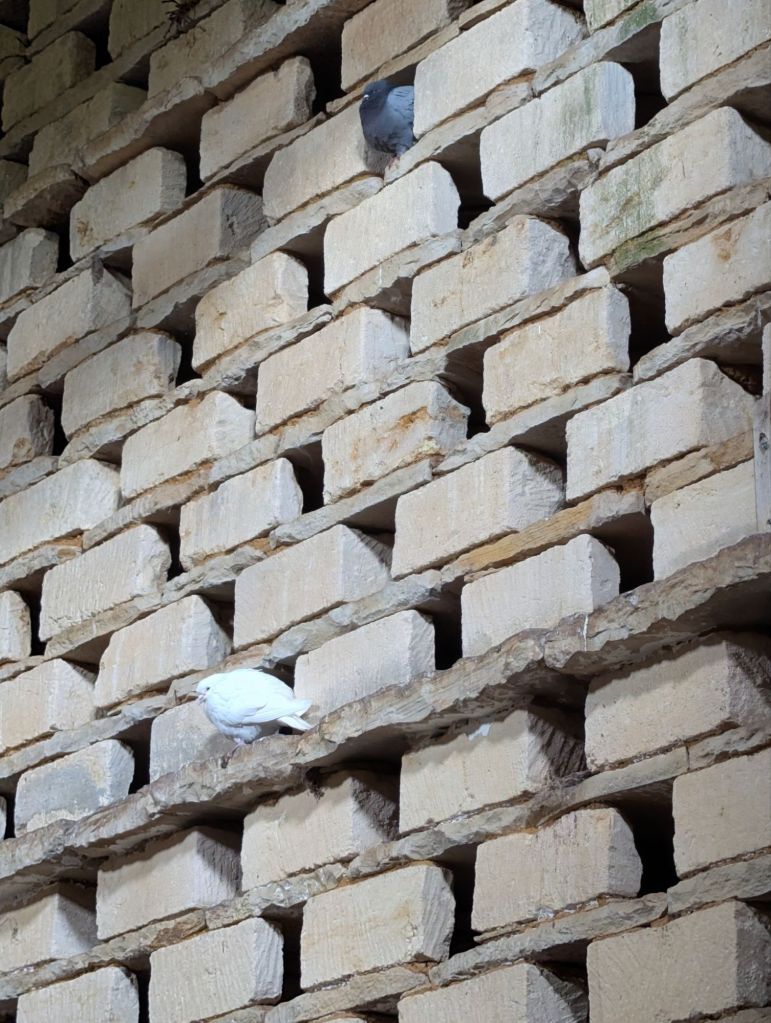
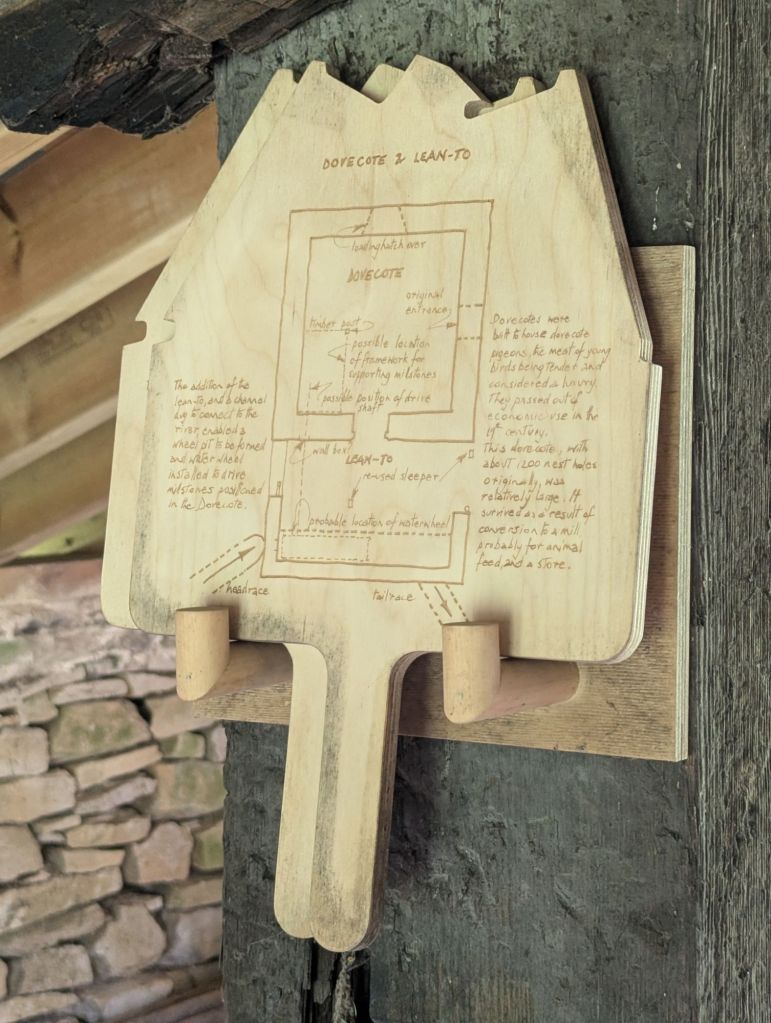
Just outside Naunton we came across a restored medieval dovecote. The structure was built centuries ago to house doves, which were once used as a supplemental food source. The dovecote is open to visitors, so we stepped inside and immediately noticed a couple of doves staring at us suspiciously, as though we were interrupting an important meeting. The design was fascinating. Openings at the top allowed the birds to enter while helping keep predators, such as hawks, out.

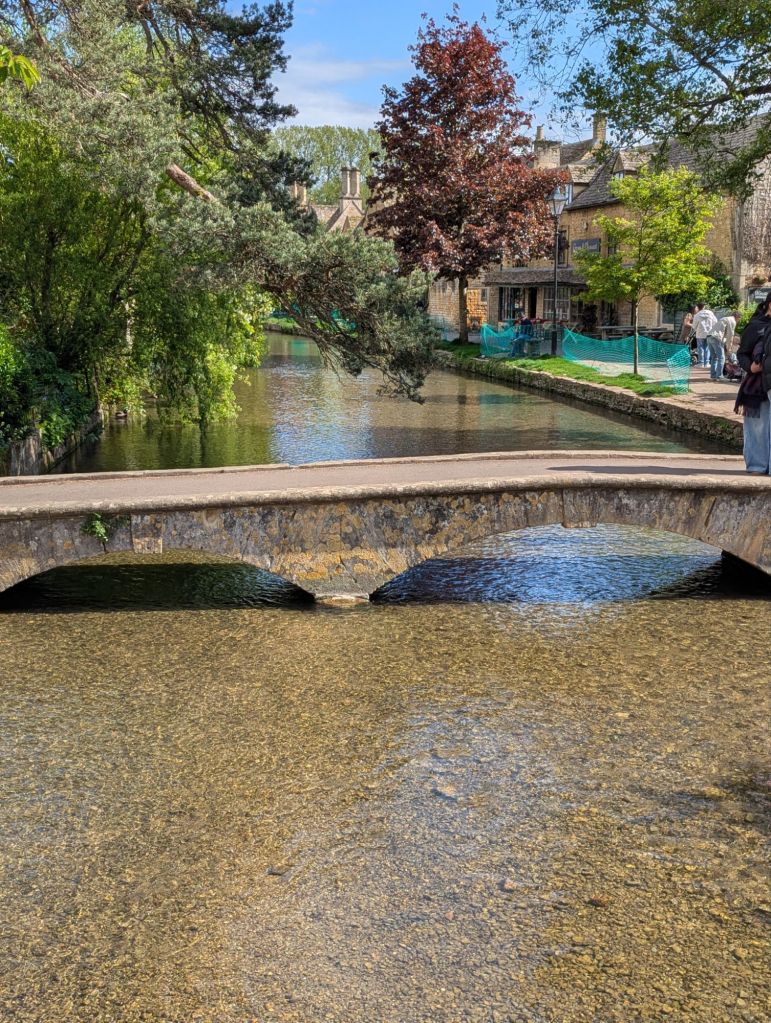
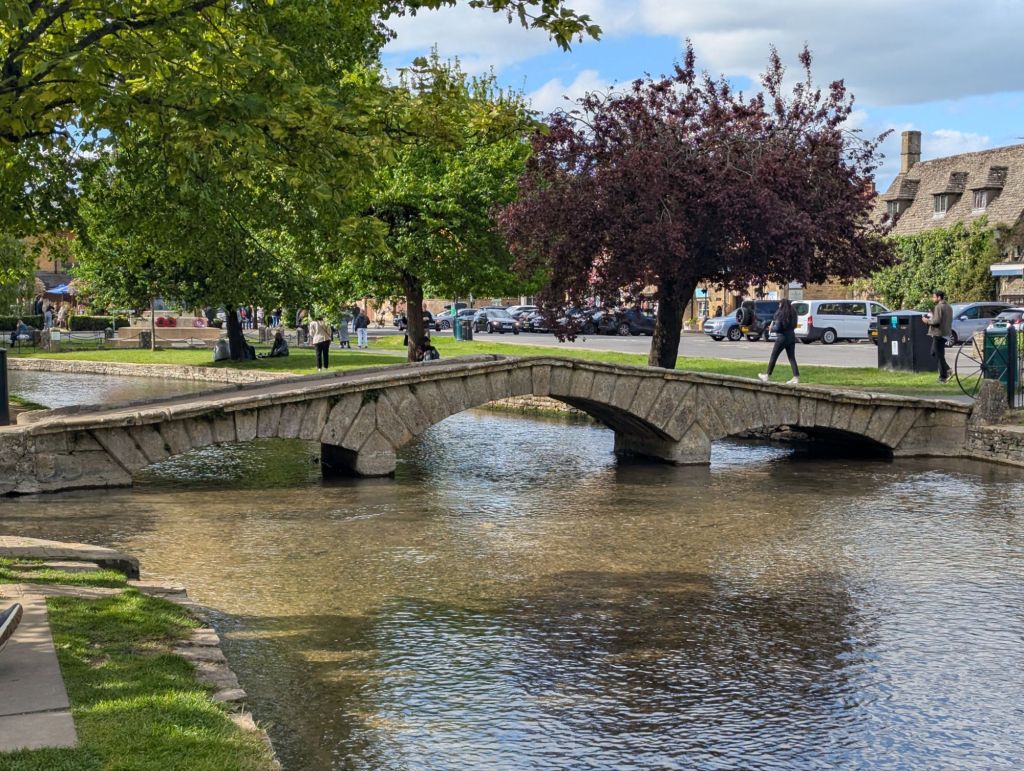
Several miles later, nearing the end of the route, we arrived in Bourton-on-the-Water, often called the “Venice of the Cotswolds.” Personally, we thought this title might be one of the greatest marketing achievements in tourism history. The Windrush River, while pretty, is really more of a shallow stream winding through the center of town, crossed by five small stone bridges. Not exactly Venice, but definitely picturesque. On a sunny Sunday afternoon, however, it was absolutely packed with tourists and tour buses.

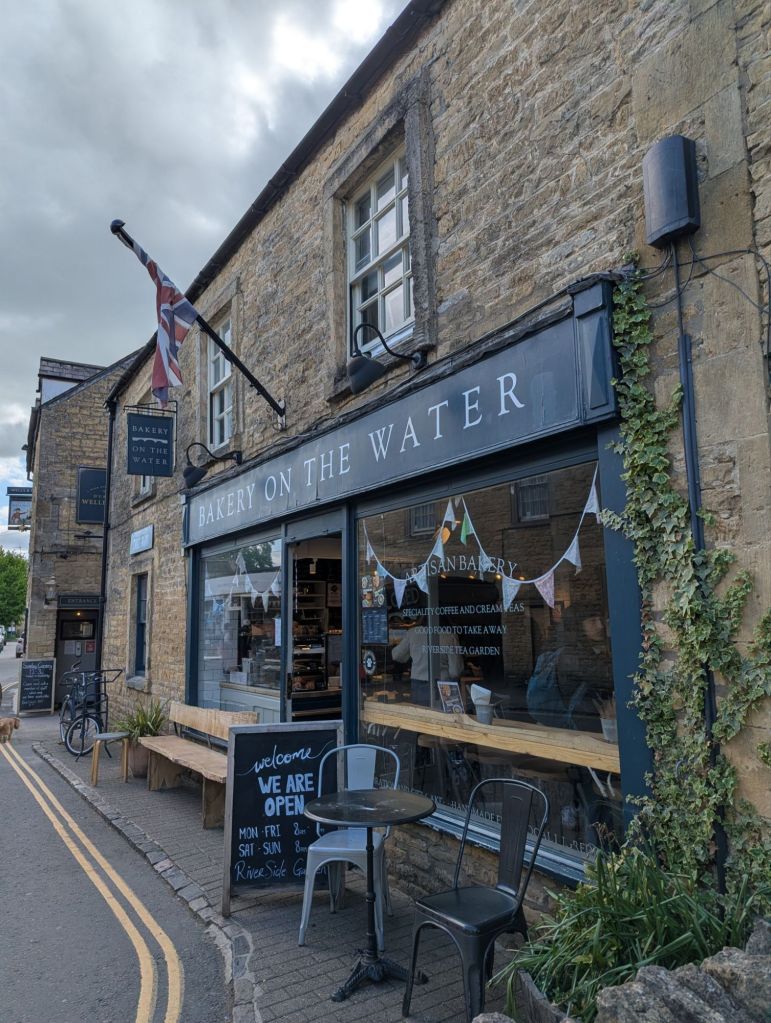
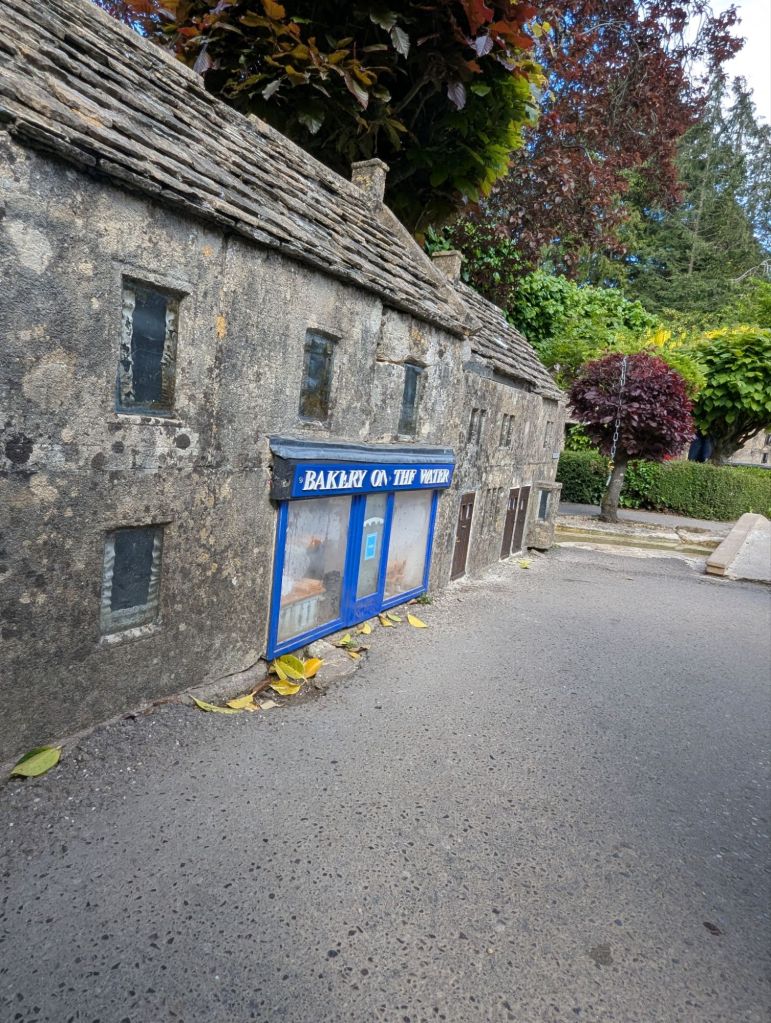
As we entered town, we stopped at Bakery on the Water for afternoon tea, which is rapidly becoming part of our daily routine. Karen enjoyed a traditional cream tea with a scone, clotted cream, and jam, while Greg opted for a Bakewell slice, an almond cake with raspberry filling, along with an iced tea.

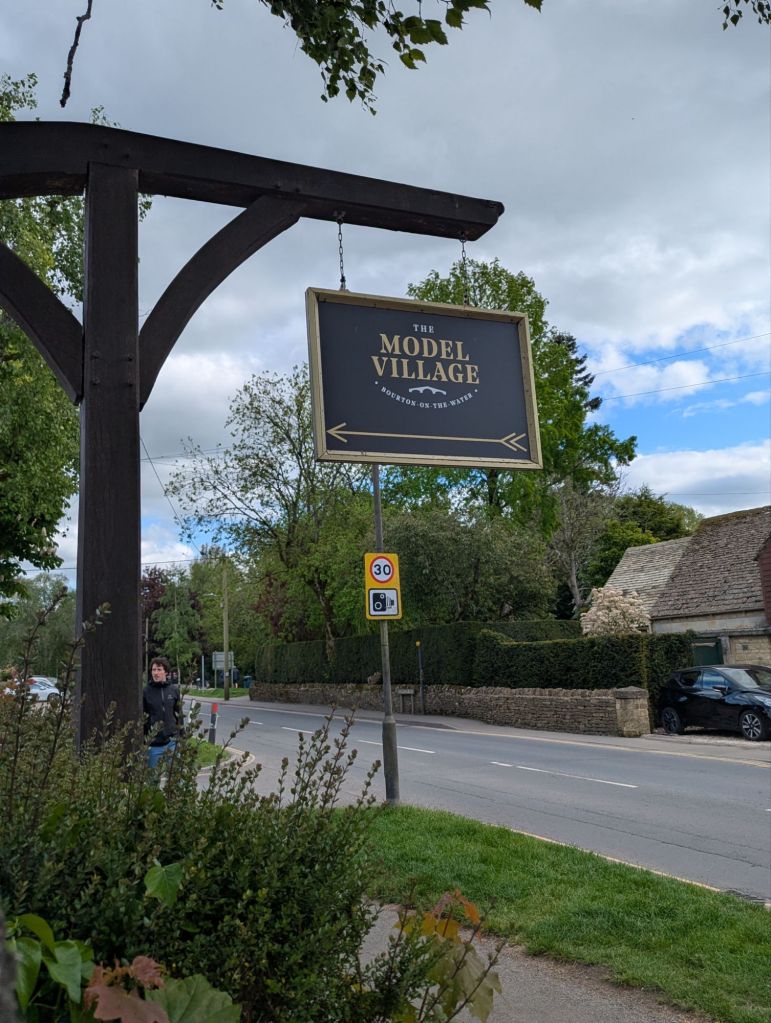
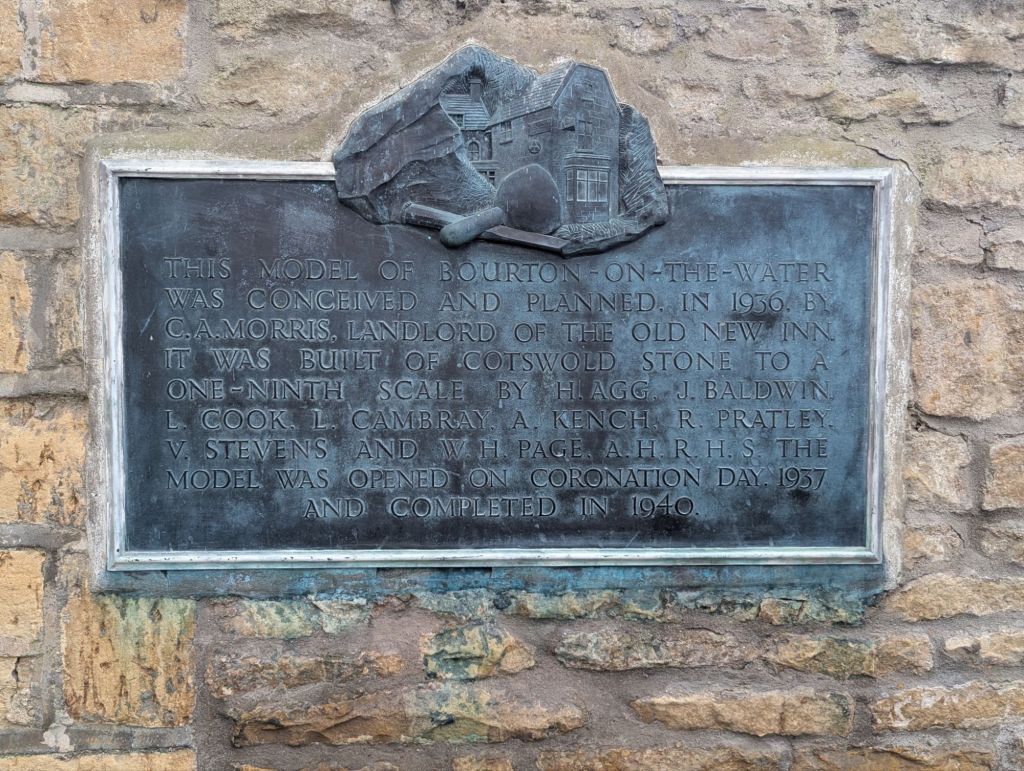
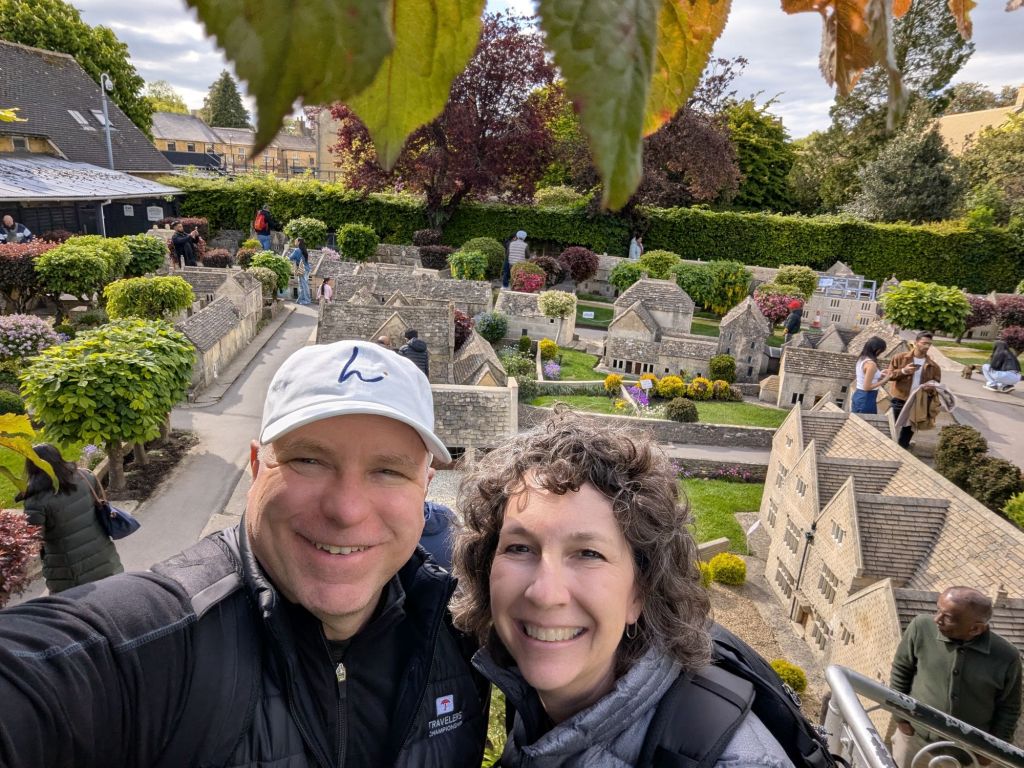
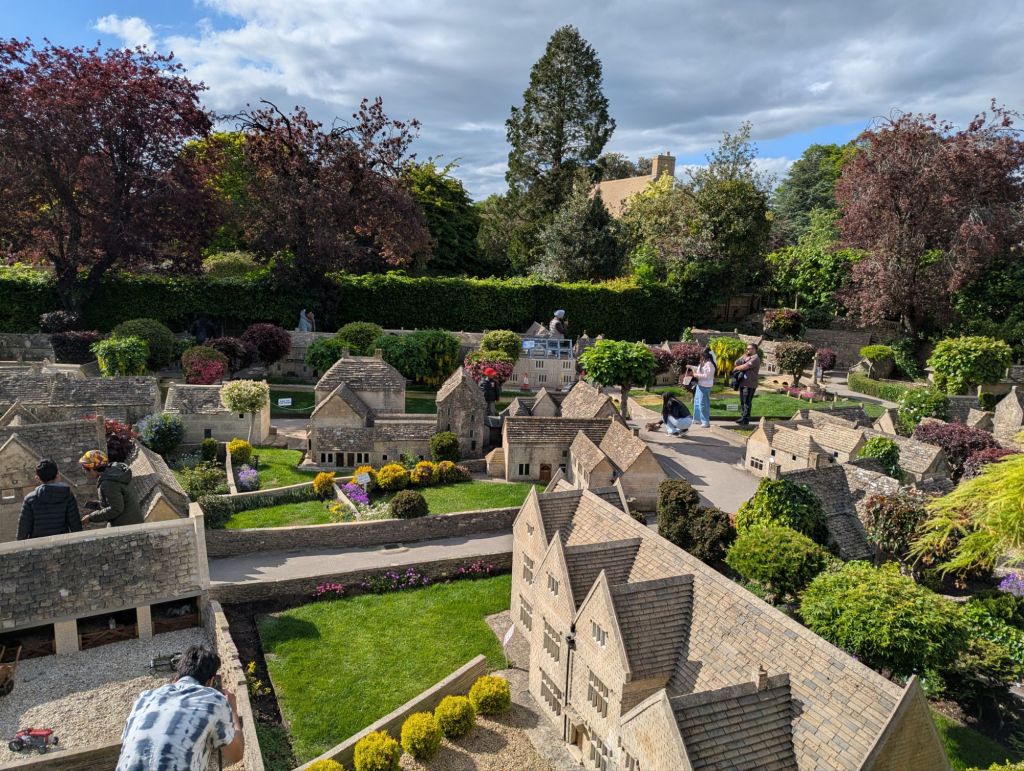
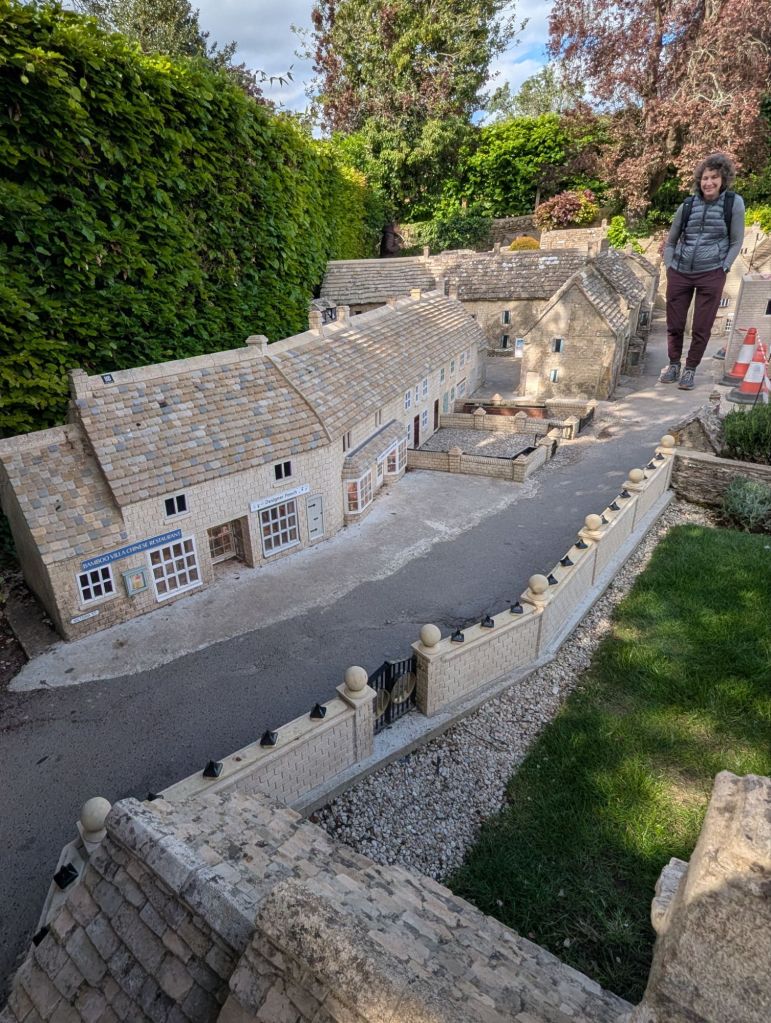
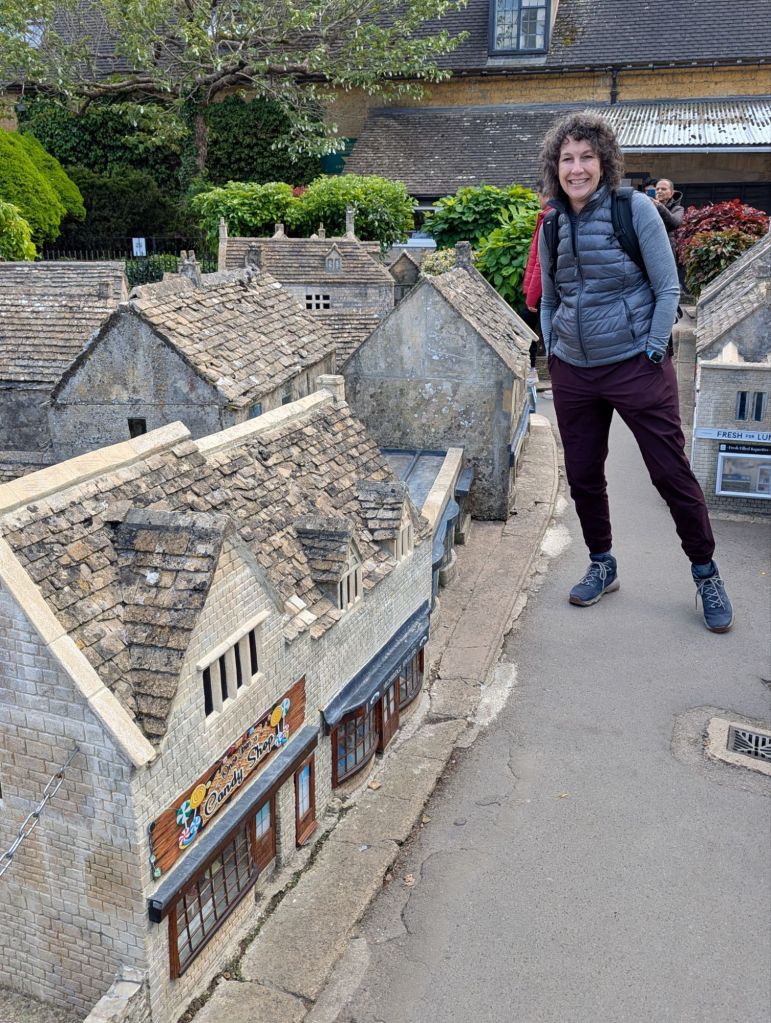
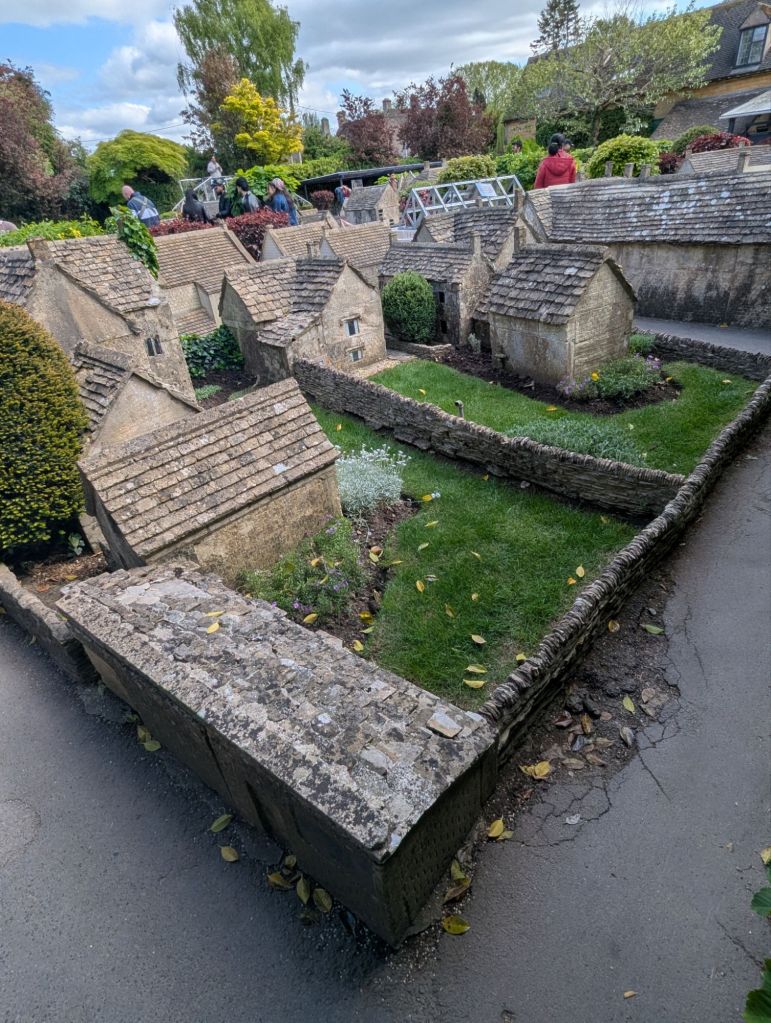
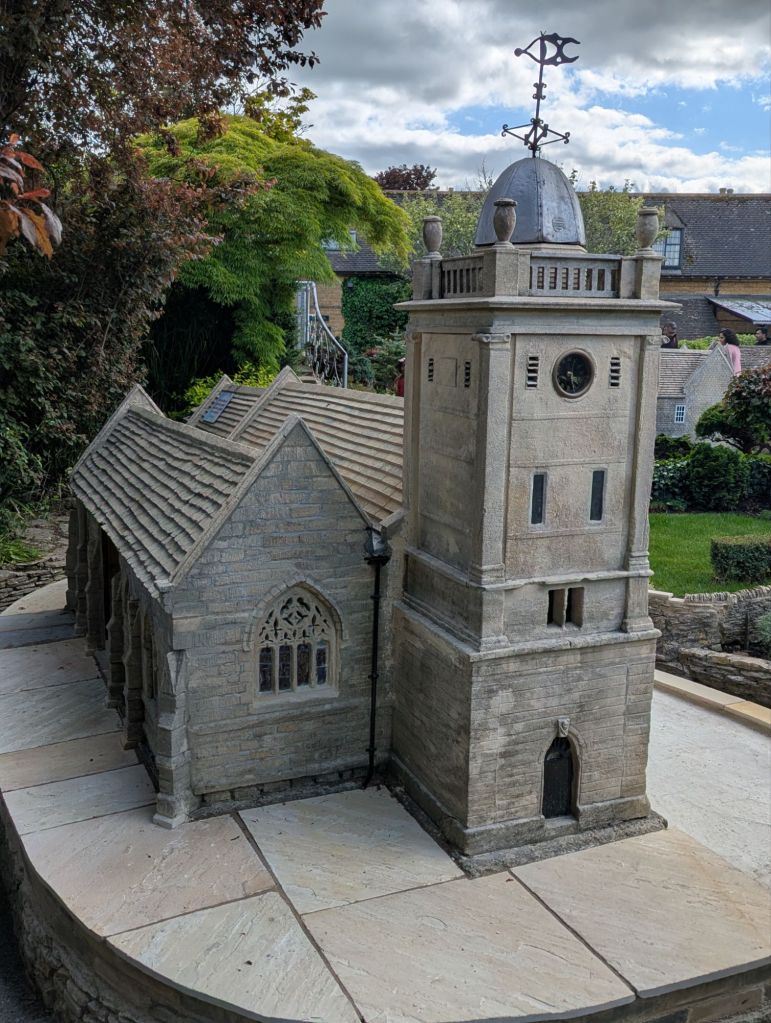
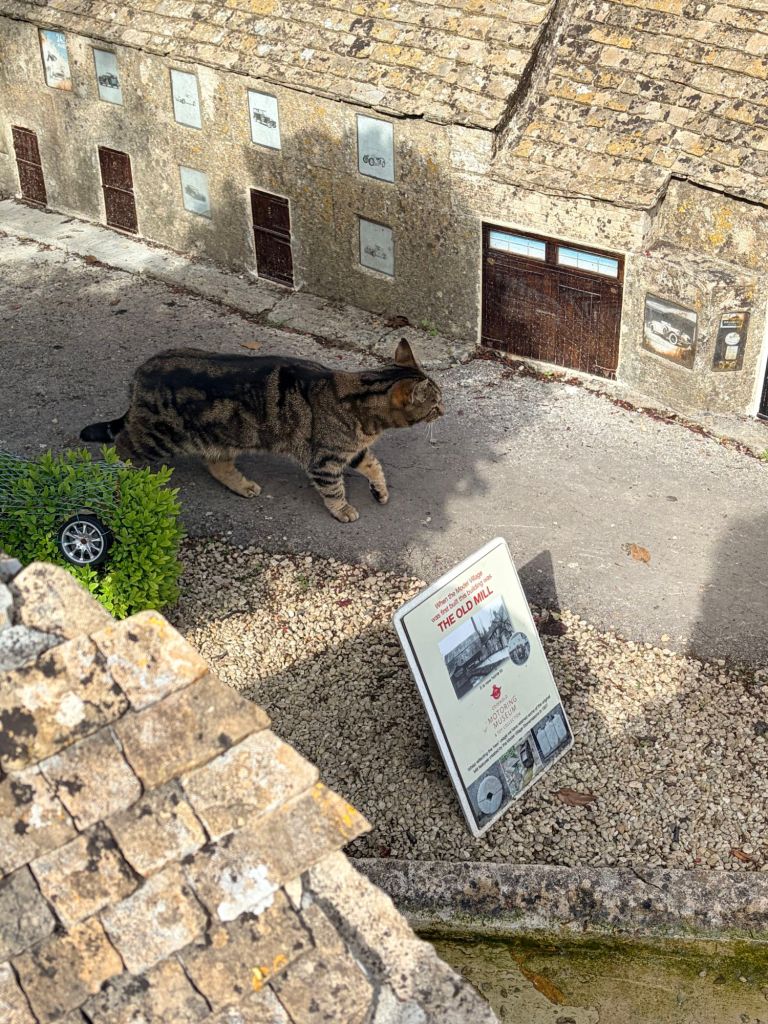
Nearby is the famous Model Village. In 1936, the owner of the Old New Inn commissioned the construction of a detailed scale model of Bourton-on-the-Water at one-ninth the size of the actual town. Completed in 1940, it remains one of the area’s most popular attractions. Despite the crowds, we enjoyed wandering through it. One of the funniest moments was watching a cat stroll through the tiny streets looking like a giant movie monster towering over the buildings. The creators also included an even smaller version of the model village within the model itself, which gave the whole thing a fun sense of humor. While Bourton-on-the-Water felt a little touristy for our taste, the Model Village was an interesting stop.

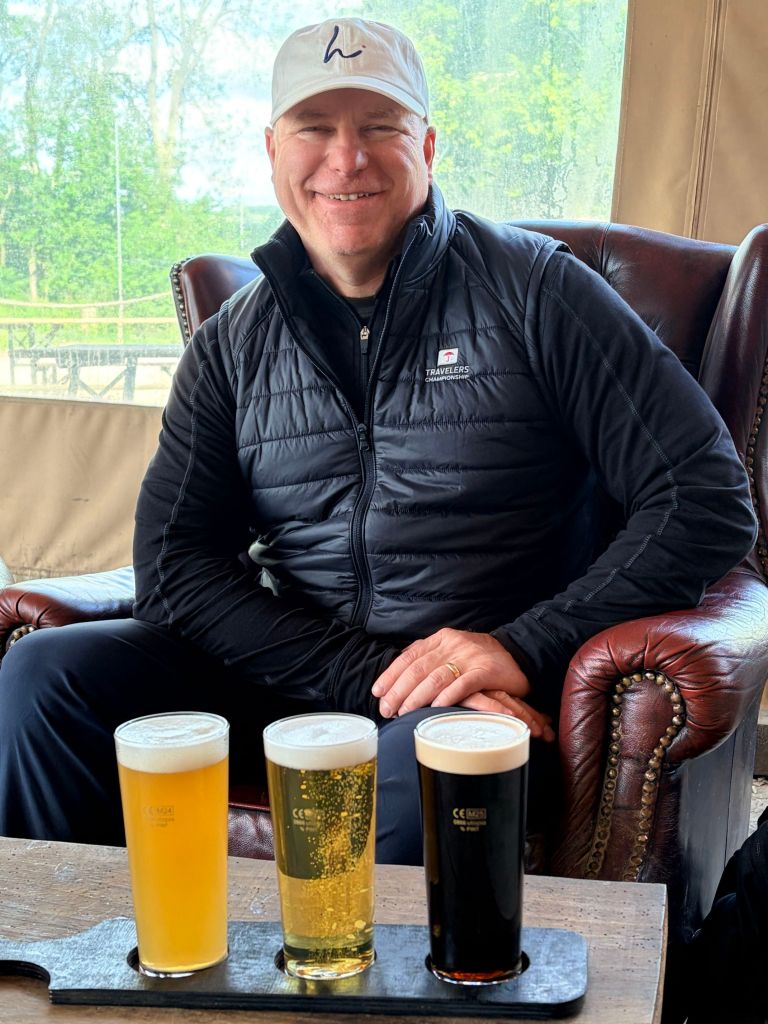
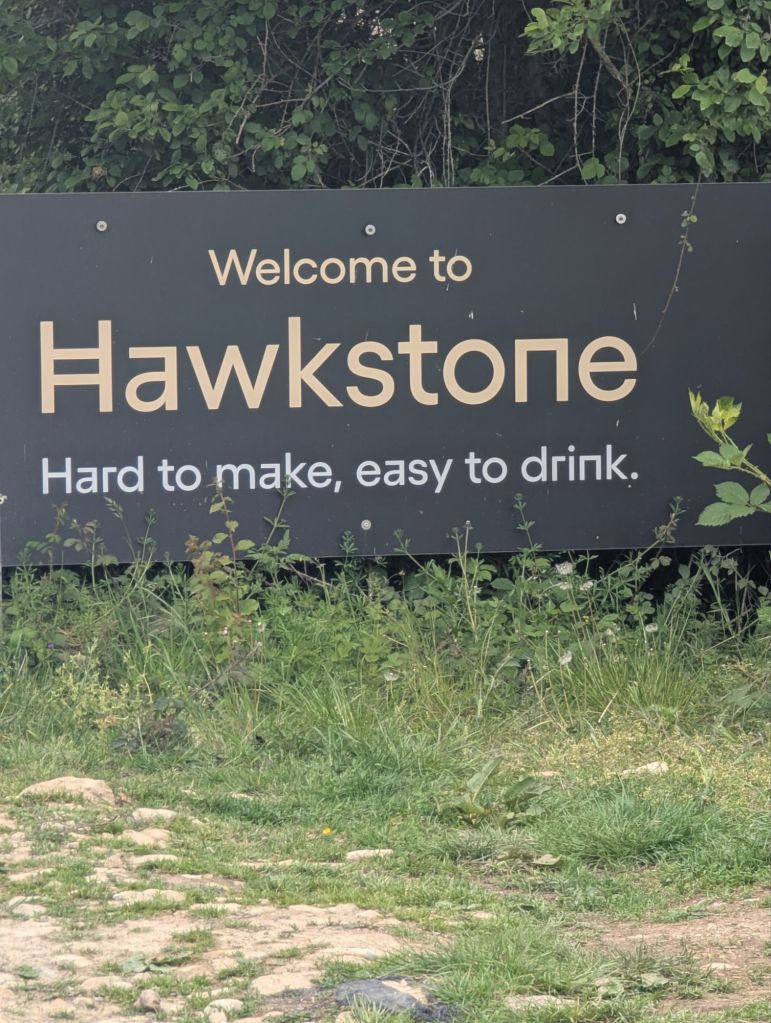
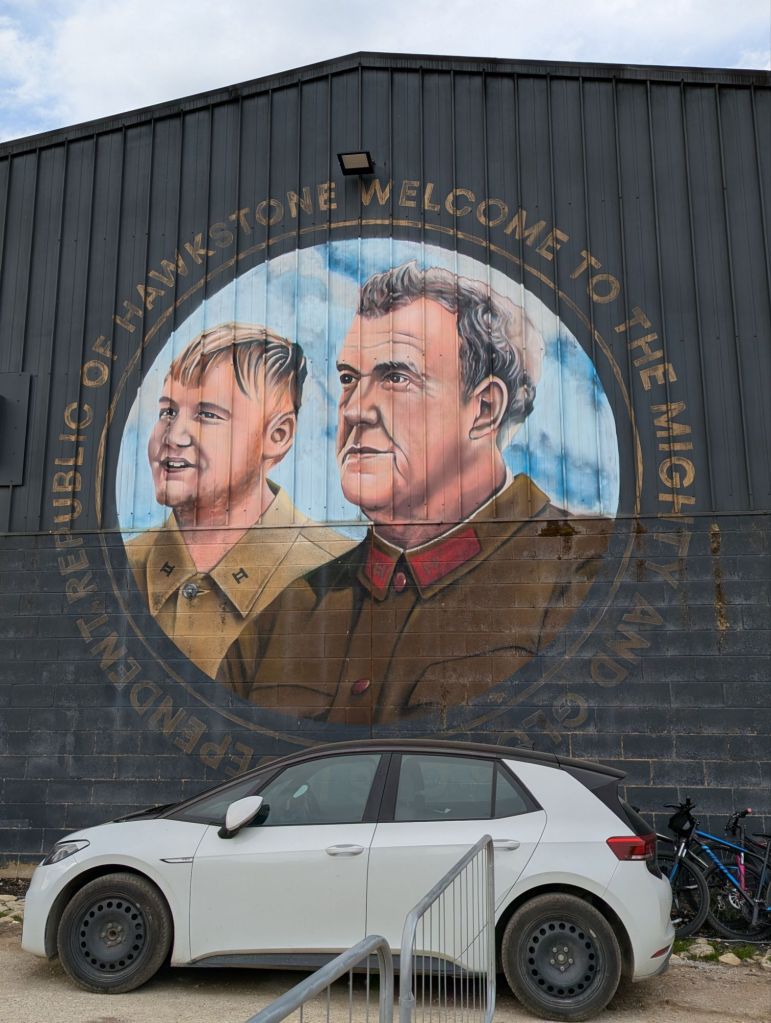
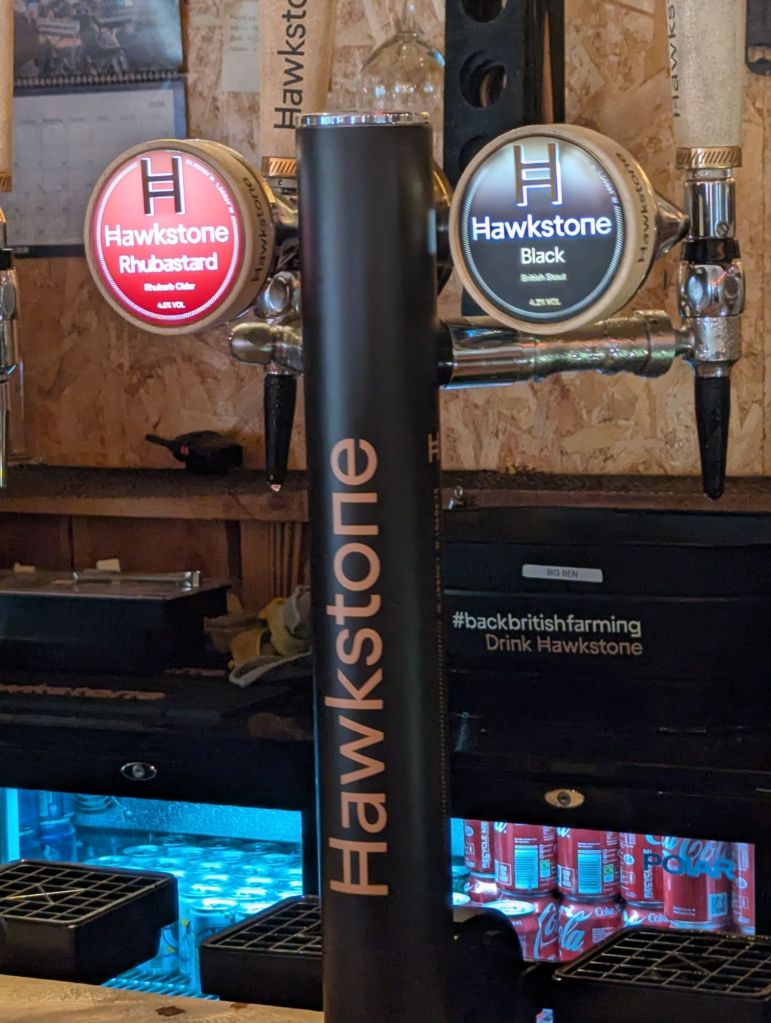
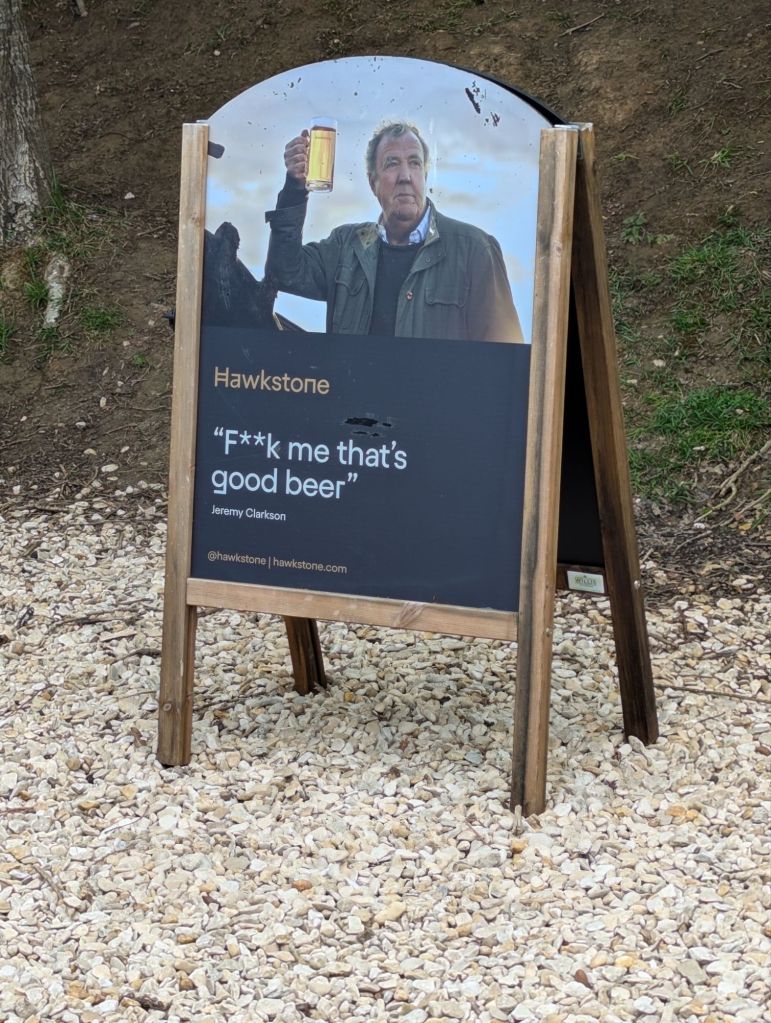
By this point we were ready for the final mile back to our hotel. Conveniently, our route passed directly by Hawkstone Arms and Brewery, Jeremy Clarkson’s pub and brewery. Since we had enjoyed it the night before, we decided an 11-mile walk had earned us another visit. Greg ordered a beer flight to sample more of the Hawkstone offerings, while Karen happily tried the berry cider. It is safe to say she has become a fan of Hawkstone ciders.

With only a short 15-minute walk remaining, we made it back to the hotel with just enough time to shower before our dinner reservation at The Slaughters Country Inn. After a great meal, we returned to our room for some stretching, a hot bath, and an early collapse into bed. Another long walking day awaits tomorrow.

Categories: 2026 England Adventure | Tags: , , , , , , , , , , | Leave a comment

Day 6 in England – From Moreton-in-Marsh to Lower Slaughter: A Cotswolds Adventure

DAY 6 – SATURDAY, MAY 9, 2026

Today was the first official day of our walking adventure through the Cotswolds. We were up early to get organized, eat breakfast, and have our luggage packed and ready for pickup by 8:30 AM. Since we’re combining time in London with a multi-day walking trip, fitting everything into one suitcase each was a challenge. Anything that didn’t fit would have to be carried on our backs for the day, so we packed very carefully.

After another hearty breakfast at the hotel, we grabbed our backpacks and headed out. The tour we booked is “self-guided,” meaning there’s no group and no tour guide. Instead, the tour company provides a smartphone app with the daily itinerary, route descriptions, historical highlights, and an interactive GPS map that shows exactly where you are on the trail. Thankfully, it also alerts you if you wander off course (yes, we did test this feature on our first day).

We started our walk from Moreton-in-Marsh and spent the day crossing fields, farmland, wooded trails, and quiet country lanes. Along the way we passed countless sheep, a few cows and horses, two deer, and more birds than we could possibly identify. What we really should have counted, though, was the number of gates we opened and closed throughout the day. There were a lot.

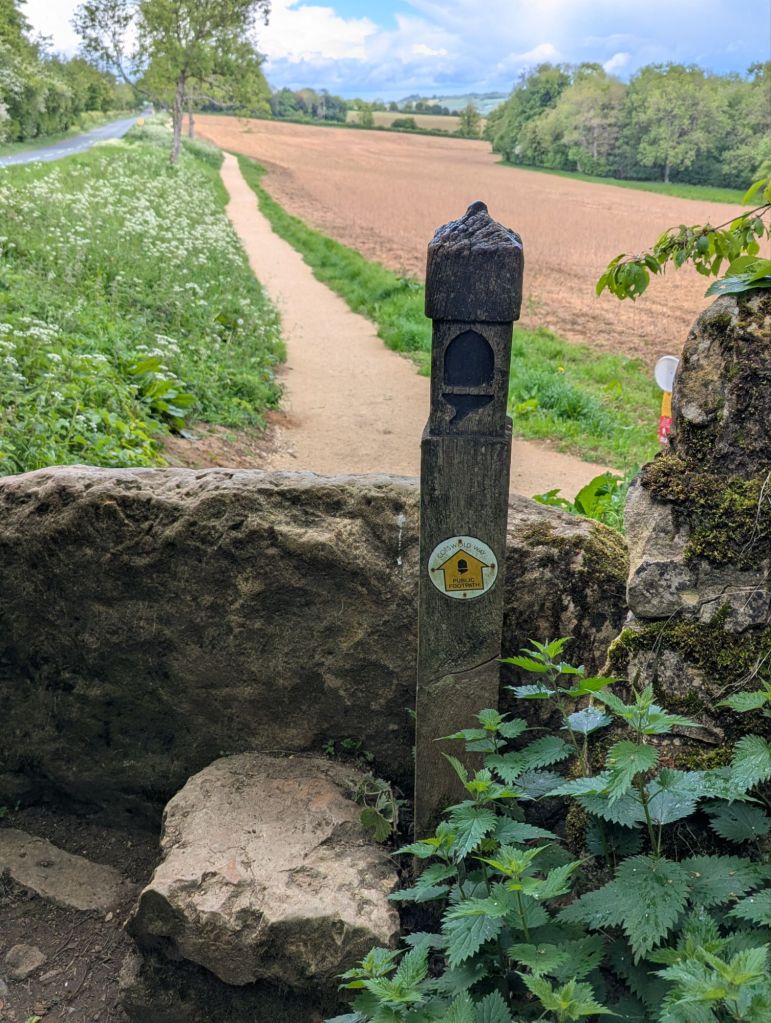
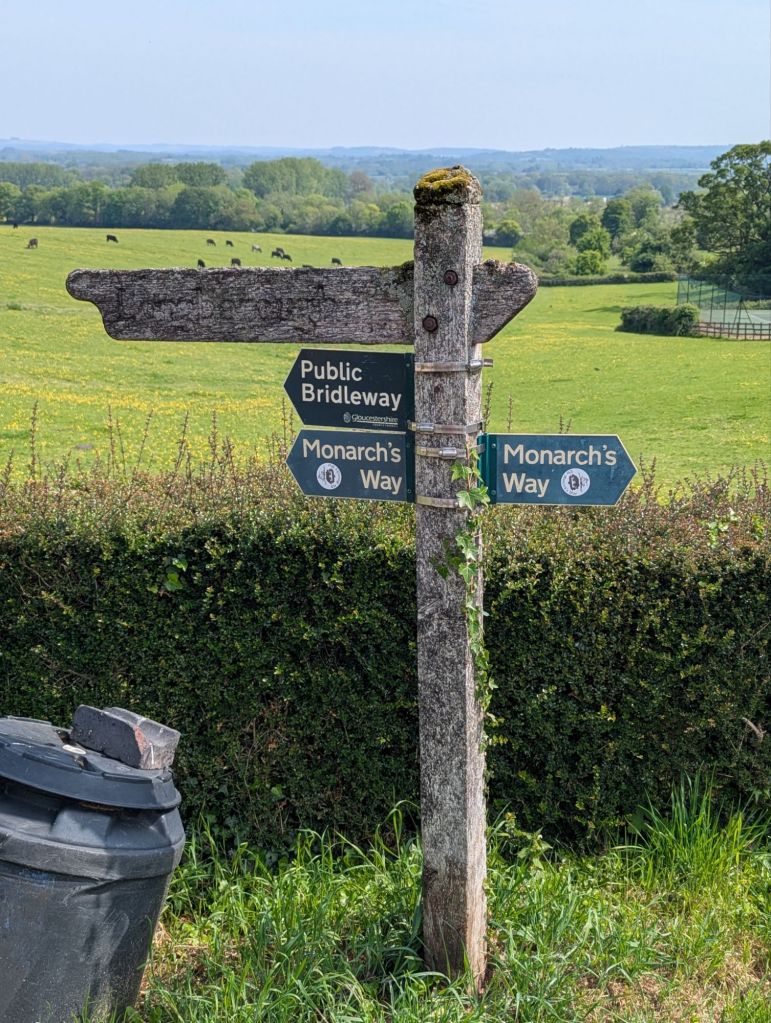
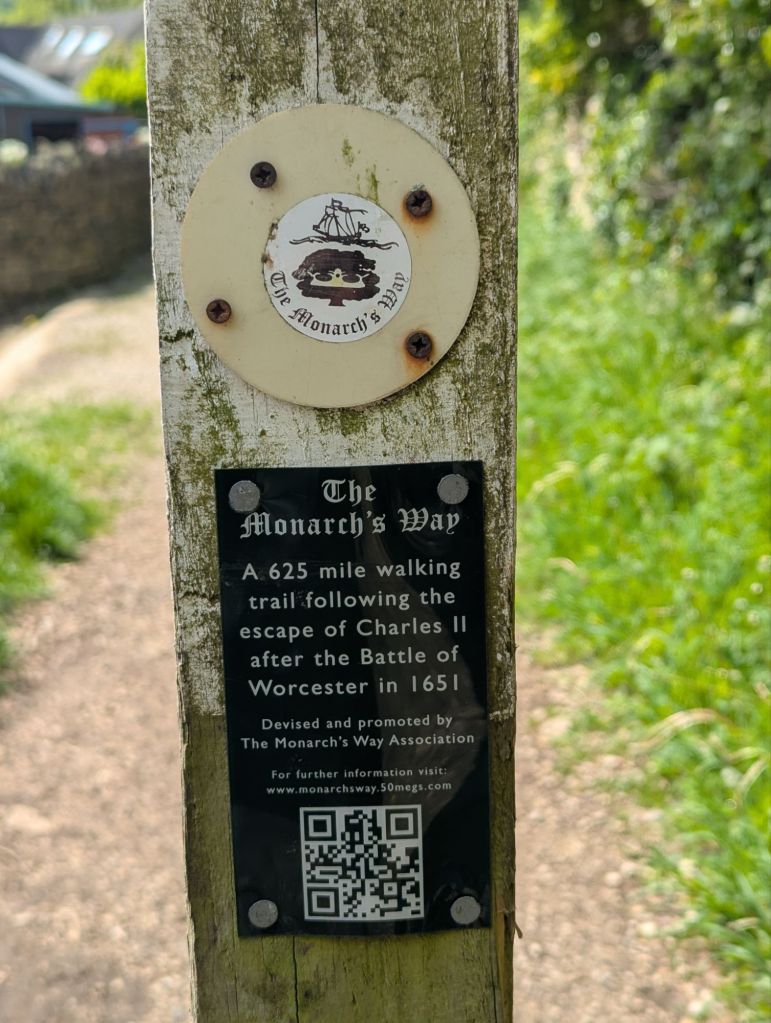
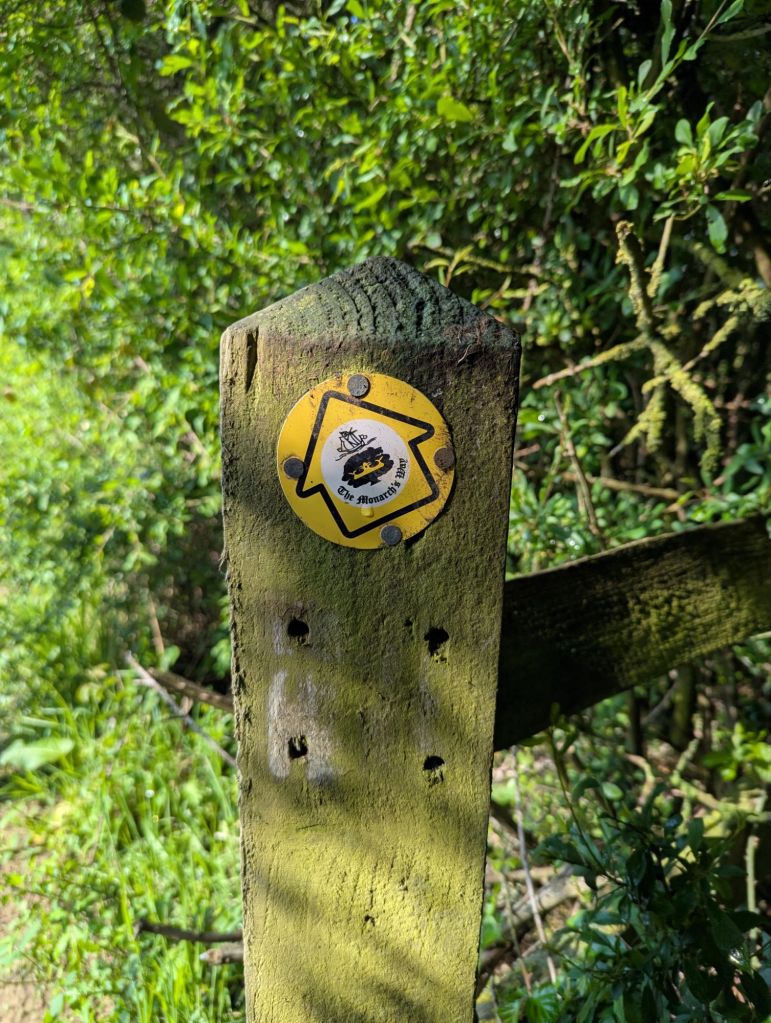
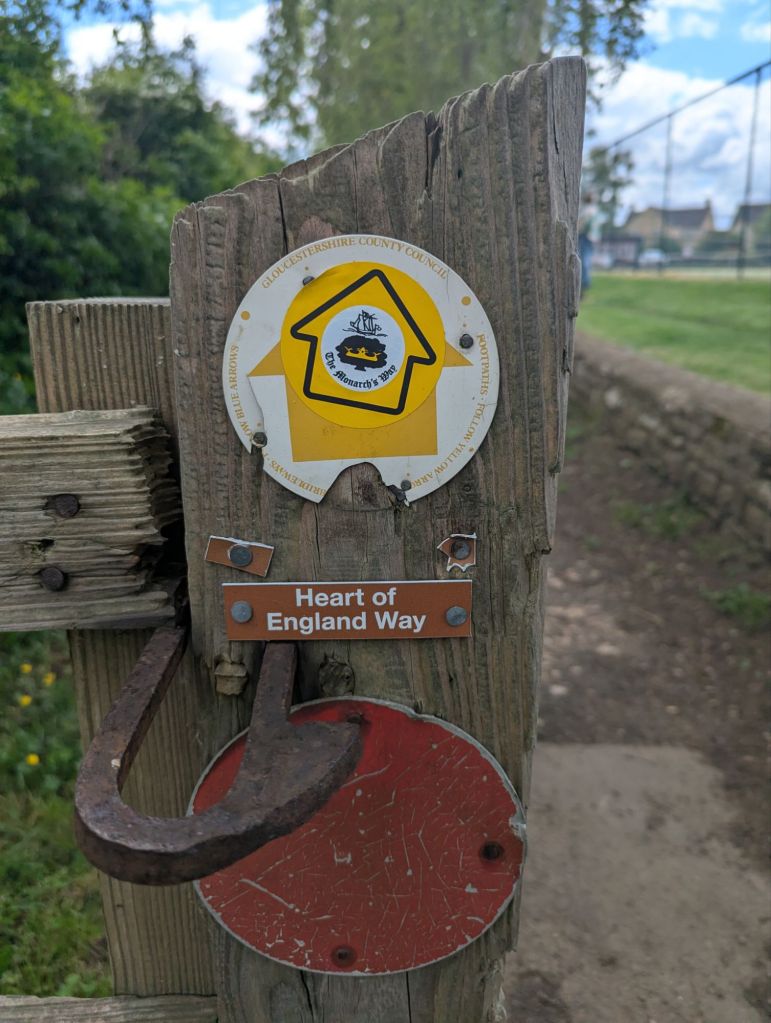
Most of today’s route followed part of The Monarch’s Way, a 625-mile footpath that traces the escape route of King Charles II after his defeat at the Battle of Worcester in 1651. Fortunately for us, we could take our time to take in the scenic countryside.

One of the things that surprised us most was the variety of landscapes we traveled through.

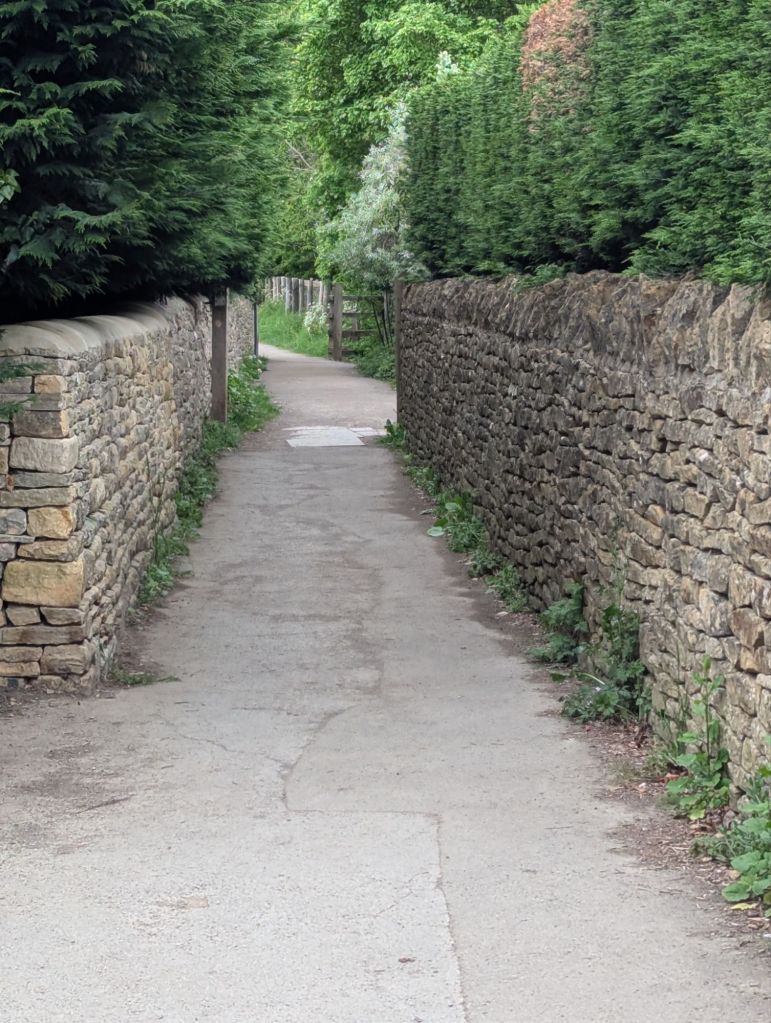
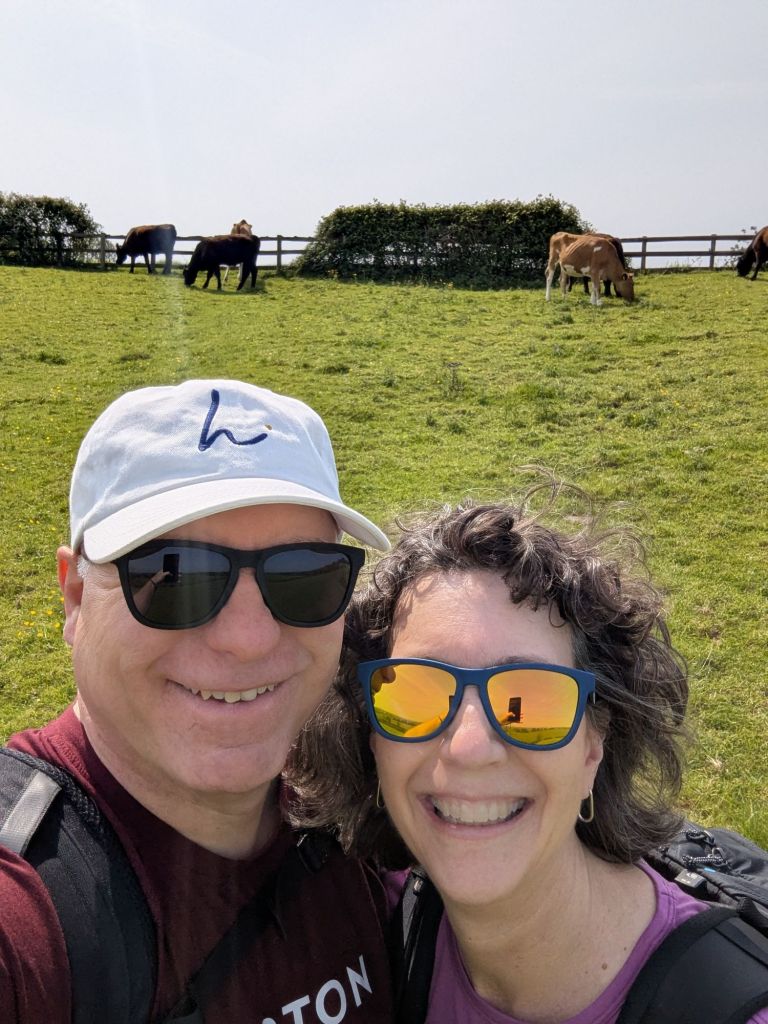
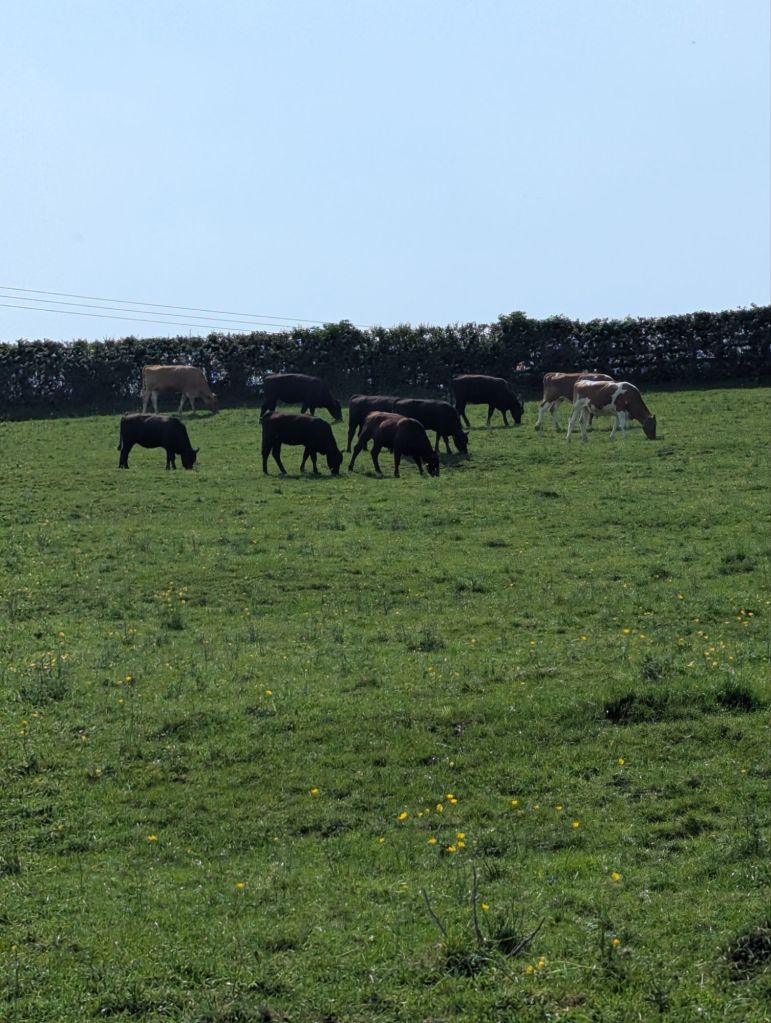
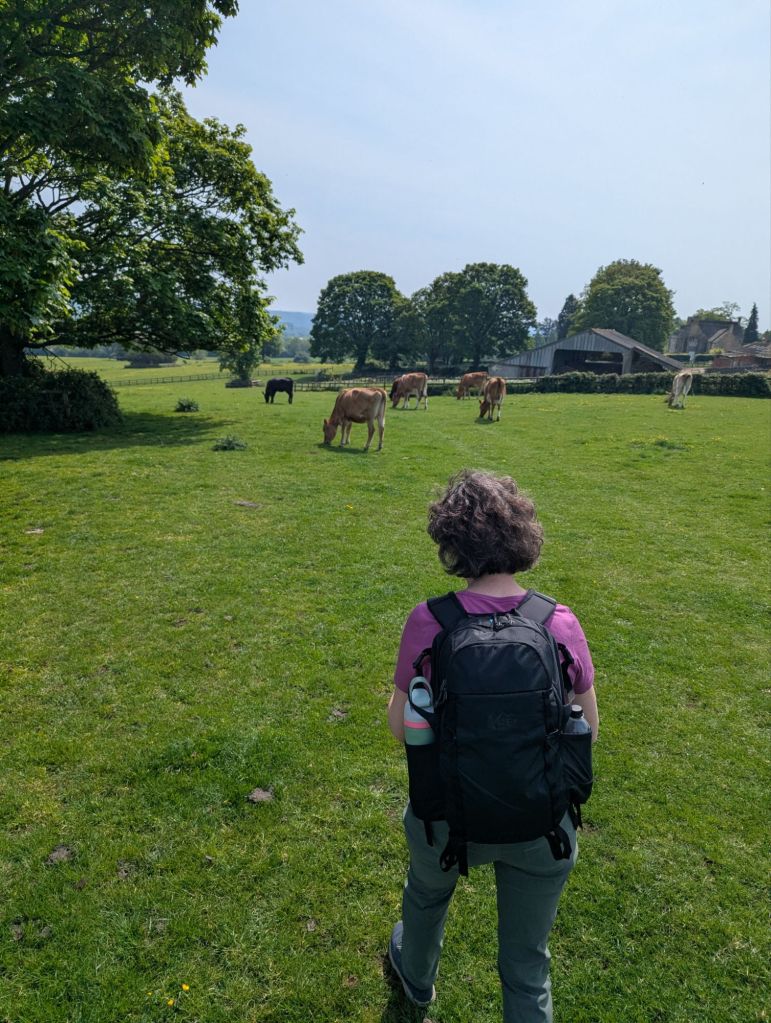
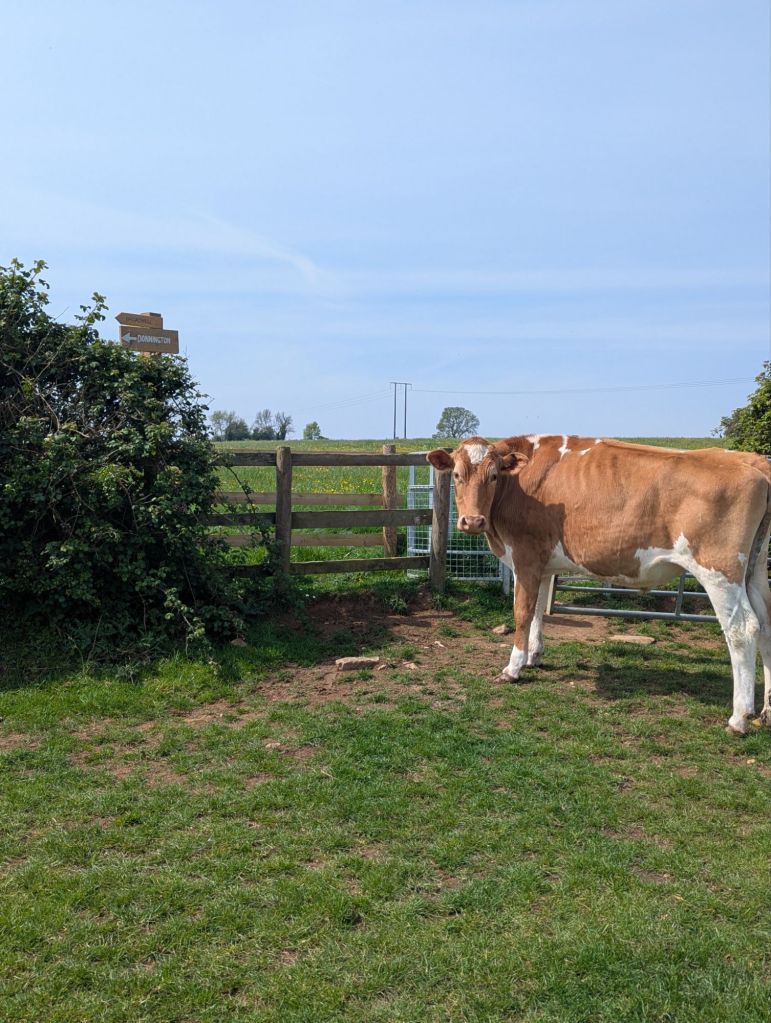
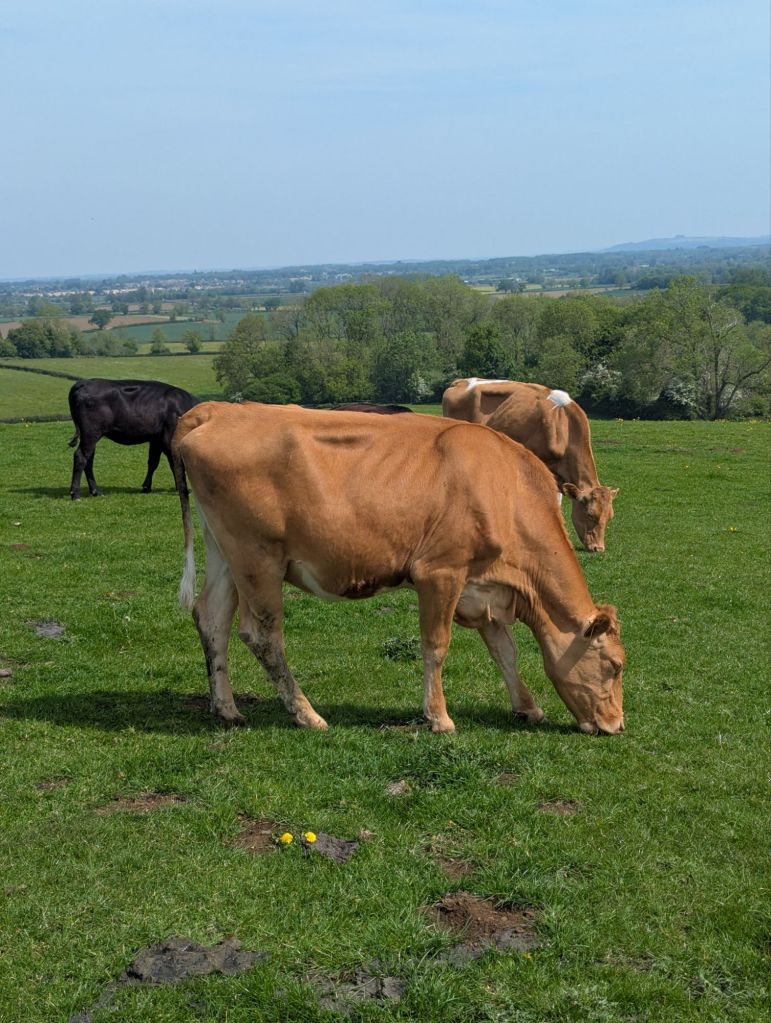
England has long-standing public footpath laws that allow walking routes to cross private land, so throughout the day we found ourselves hiking through open meadows, narrow hedge-lined paths, farmland, churchyards, wooded areas, driveways, and even directly through active cow pastures. There were a couple of moments where the cows seemed just as curious about us as we were cautious of them.

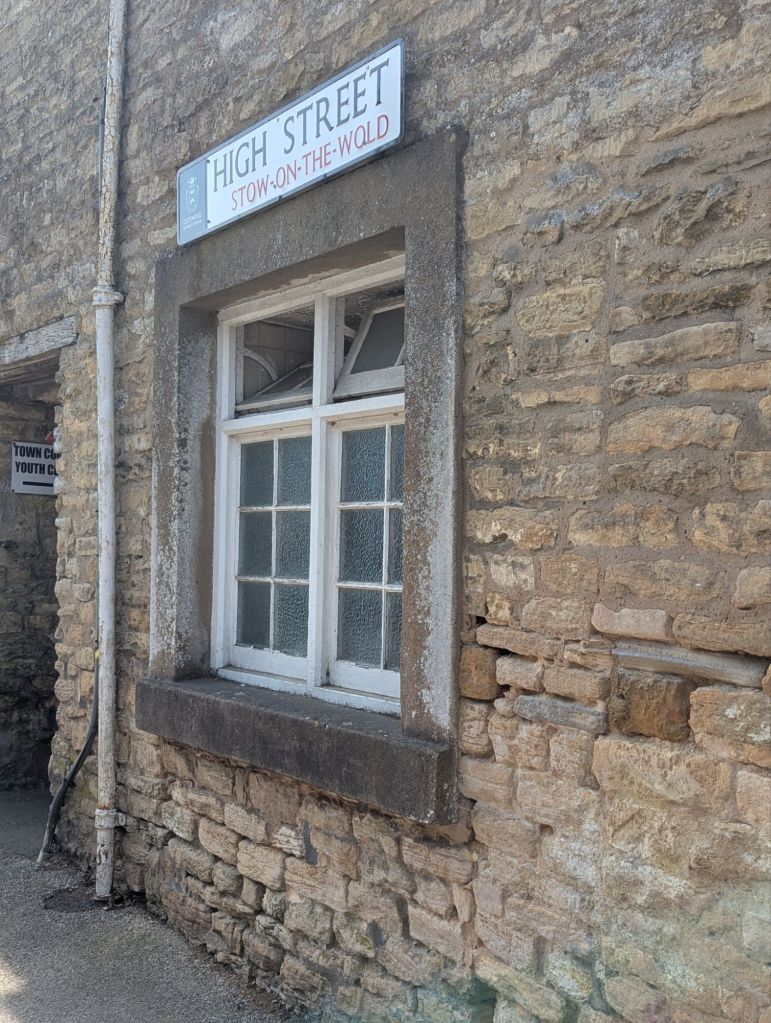
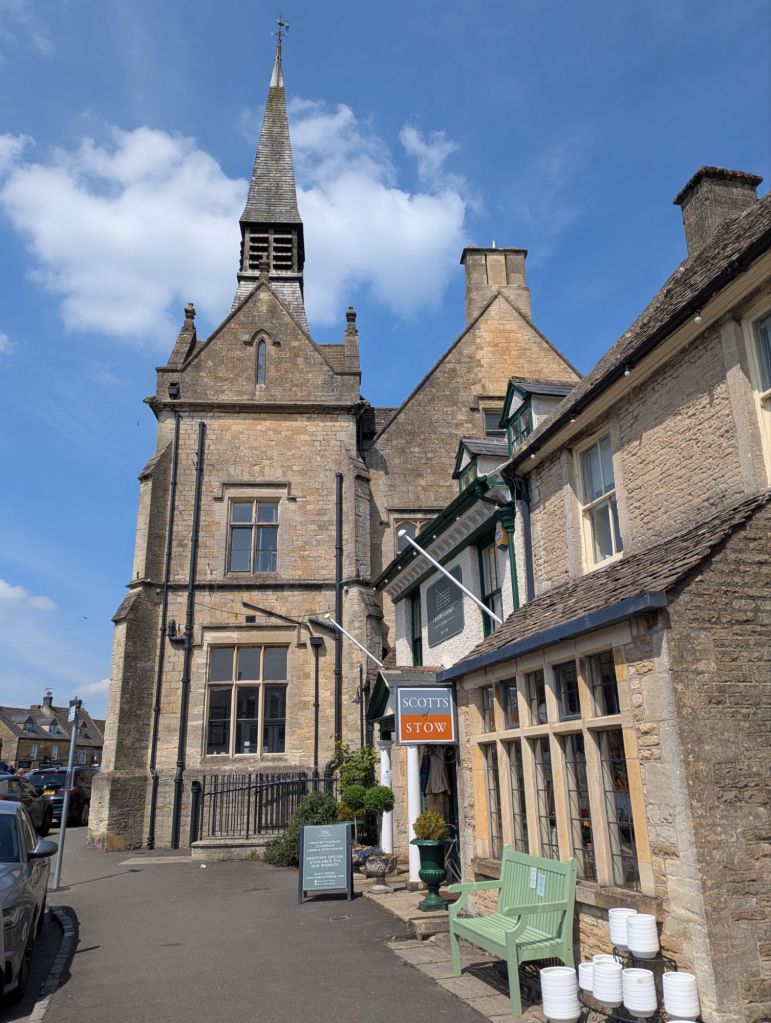
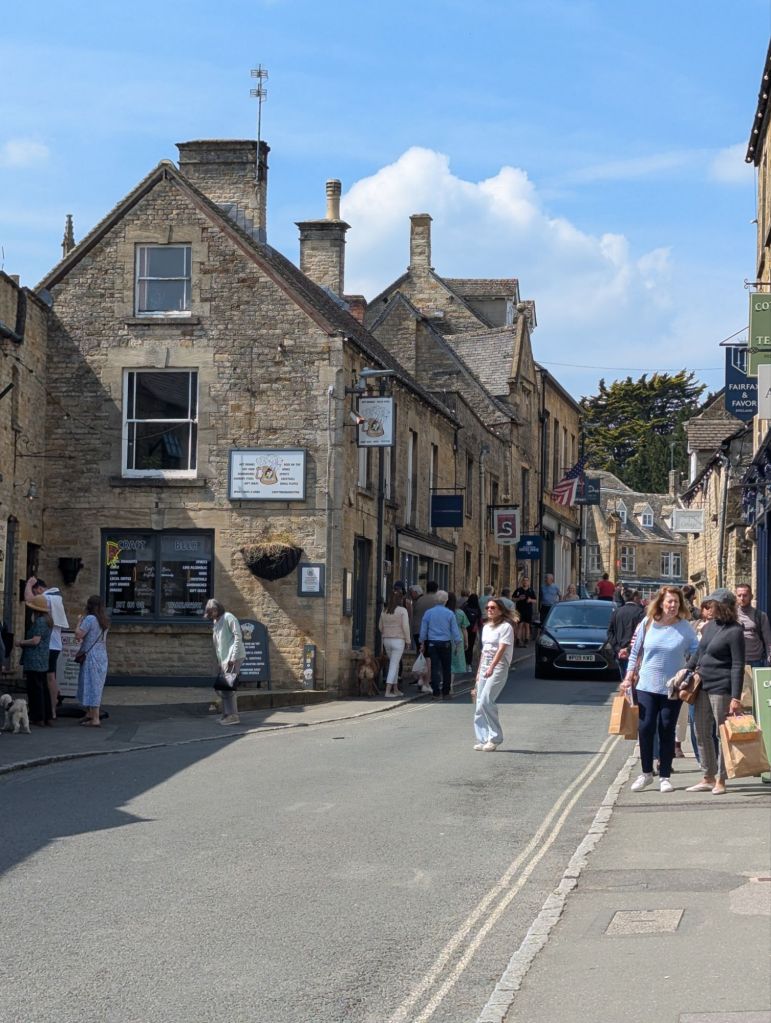
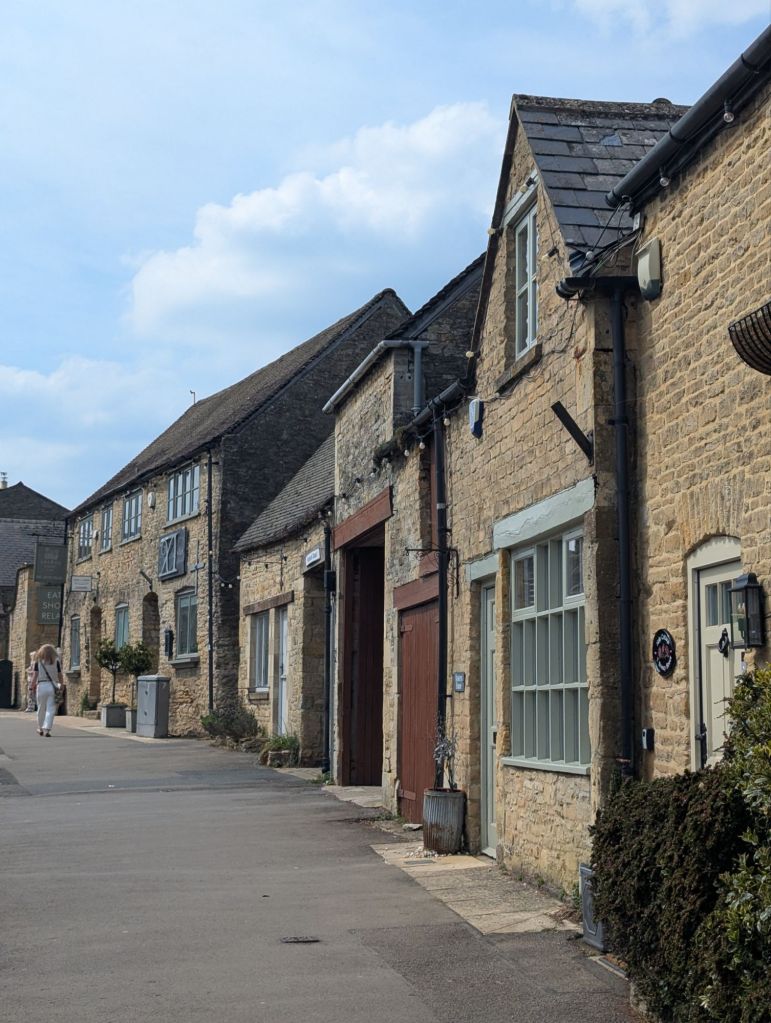
We passed through two tiny villages that seemed to consist of a handful of stone cottages and a church before eventually arriving at Stow-on-the-Wold about three hours into the walk. This was by far the busiest place we had seen all day. The town center was packed with visitors enjoying the gorgeous sunny Saturday weather, and the streets were lined with small shops, pubs, tea rooms, and restaurants.

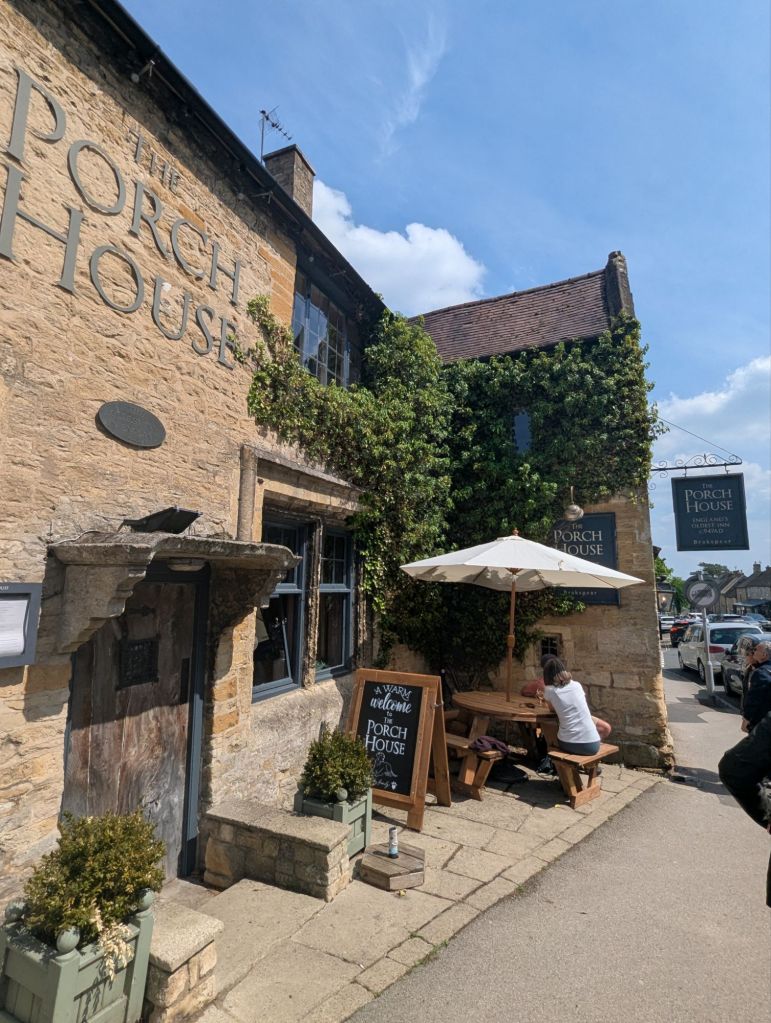
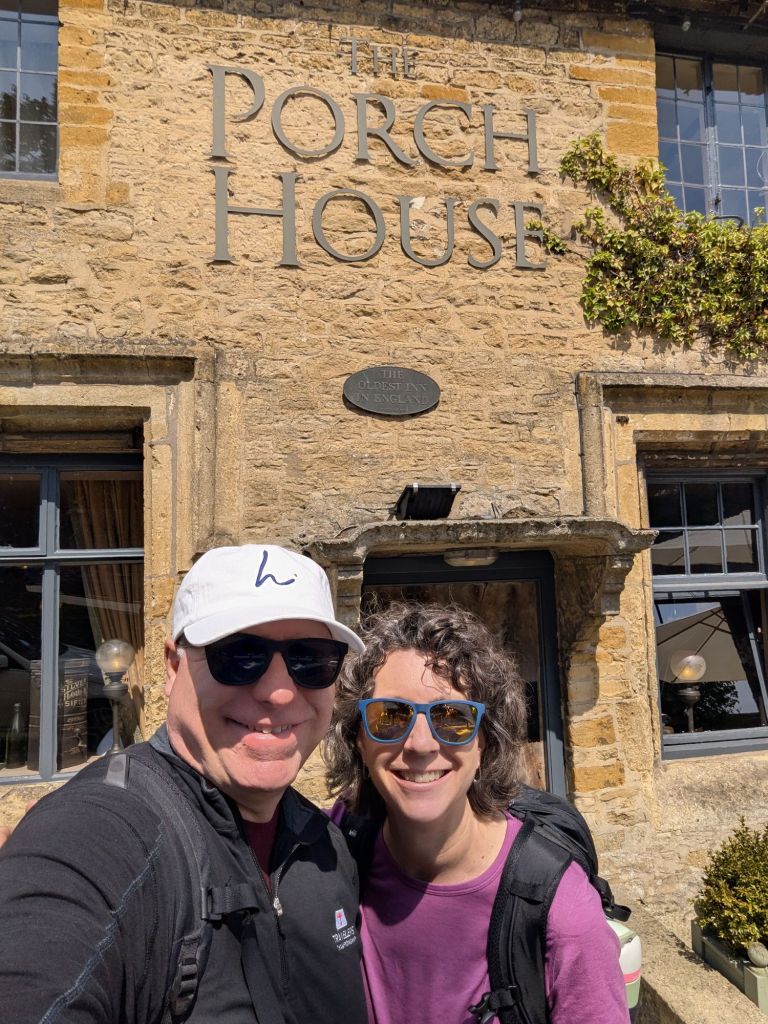
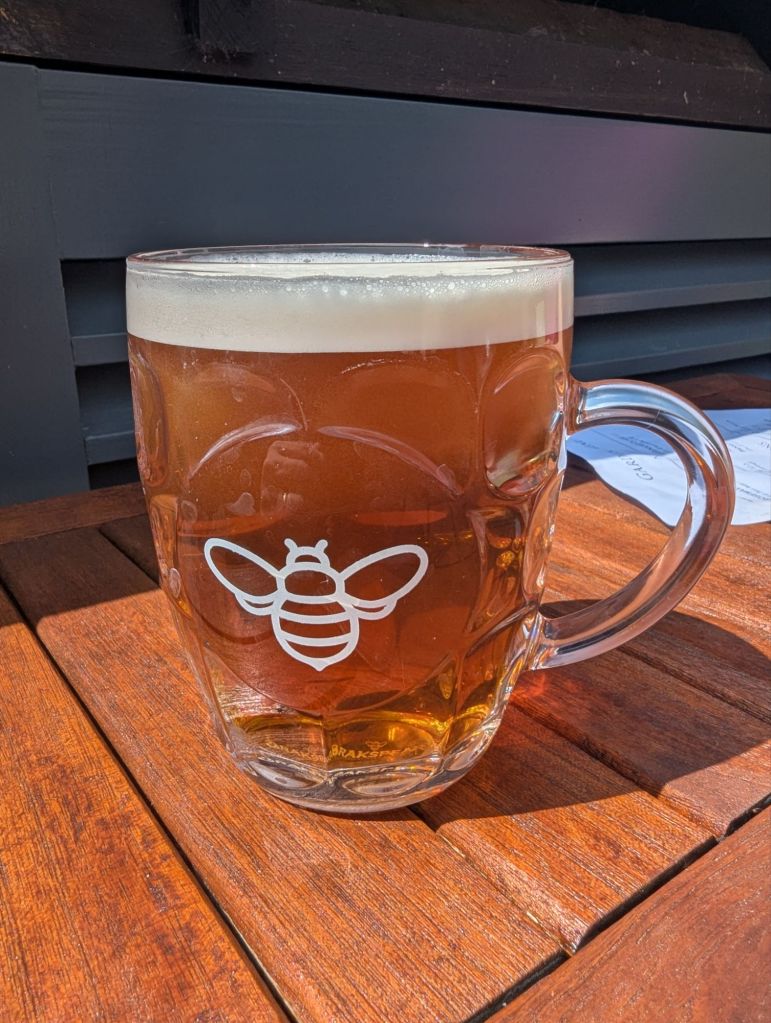
We picked up sandwiches from a small shop and enjoyed lunch outside on a bench while doing some excellent people watching and appreciating the chance to rest our legs for a bit. After lunch we wandered through a few shops and stopped by The Porch House, which claims to be the oldest inn in England, dating back to the 10th century. It only seemed appropriate to honor that history with a beer for Greg and a cider for Karen.

After our break it was time to get moving again. We continued following The Monarch’s Way for the next couple of hours as we made our way toward Lower Slaughter, where we’ll be staying for the next two nights.

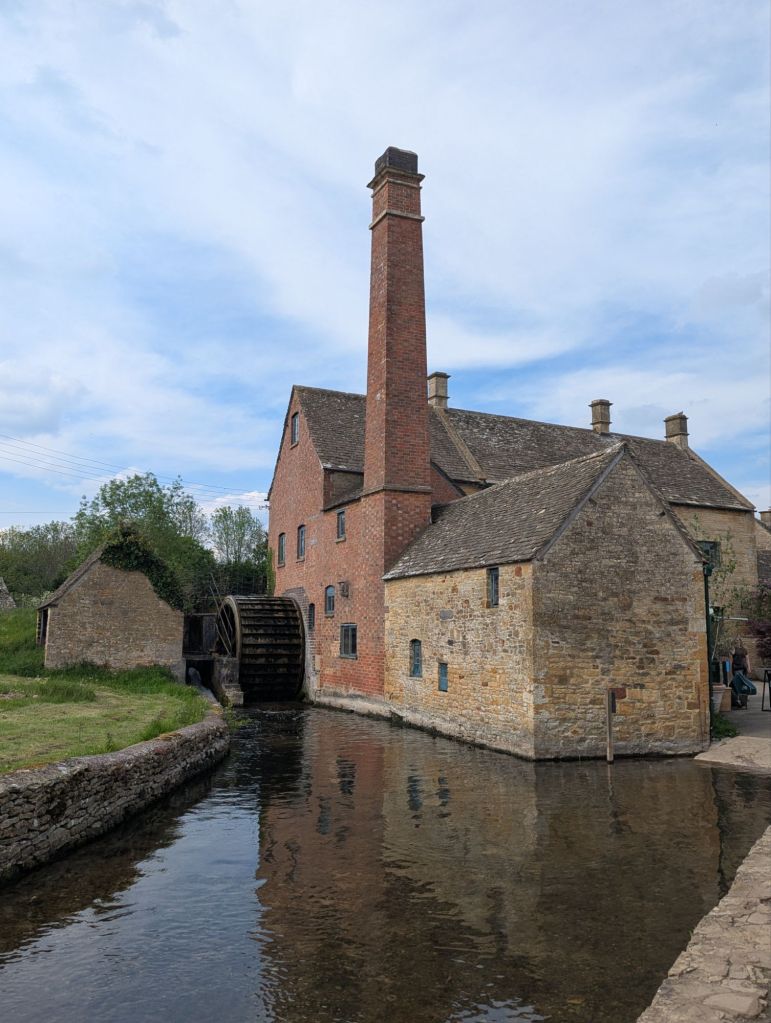
As we entered Lower Slaughter we passed the village’s famous old mill along the River Eye, one of the most photographed spots in the Cotswolds and easy to see why. We also wandered through a small arts and crafts show taking place at the village hall before finally arriving at our hotel, relieved to see that our luggage had successfully beaten us there.

The Old Mill in Lower Slaughter

After checking in, we explored the hotel grounds, which included a food truck that seemed like the perfect place for a snack after a long day of walking. Unfortunately, we quickly learned that everyone else had the exact same idea. The food truck had already sold out and closed early. Apparently a warm, sunny Saturday in England is treated as a major public event.

A quick Google search revealed that we were only about a 15-minute walk from the Hawkstone Arms, a large covered tent pub next to the Hawkstone Brewery. Both are owned by Jeremy Clarkson, whose farm shop we had visited earlier in the week. It seemed wrong not to go, so we headed over for another well-earned beer for Greg and a delicious rhubarb cider for Karen.

We made it back to the hotel with just enough time to shower and change before dinner across the street. Lower Slaughter is beautiful, but tiny. There are essentially two inns with restaurants, and that’s your dining scene. We enjoyed a very nice, somewhat fancy dinner at The Slaughters Manor House before returning to our hotel for a glass of wine and a smartphone card game (Play Nine) to end the evening.

Before bed, we wisely took time to stretch out sore muscles, while Karen opted for the even wiser strategy of a hot bath. After nearly 12 miles of walking, sleep came pretty easily.

Categories: 2026 England Adventure | Tags: , , , , , , , , , | 1 Comment

Blog at WordPress.com.