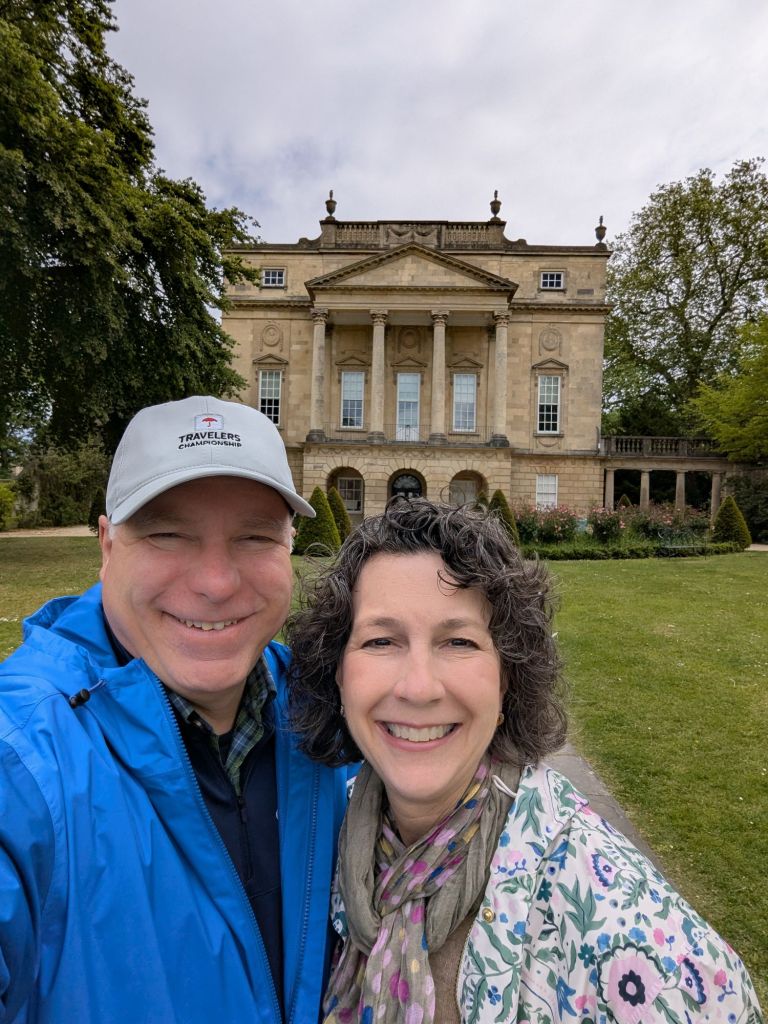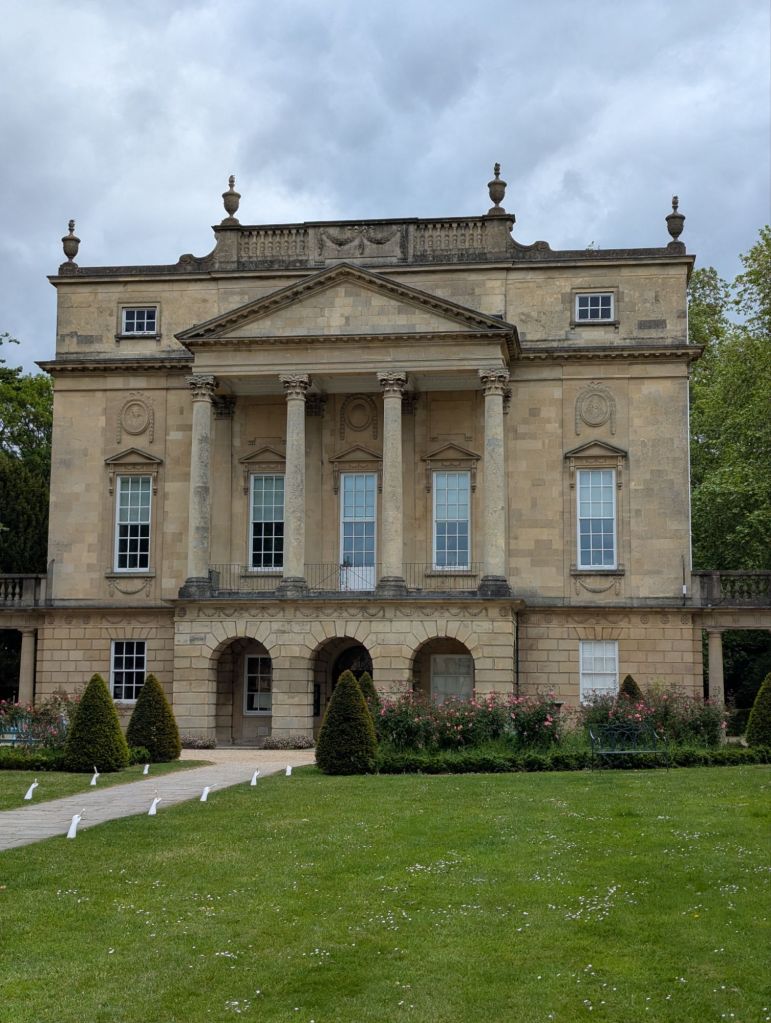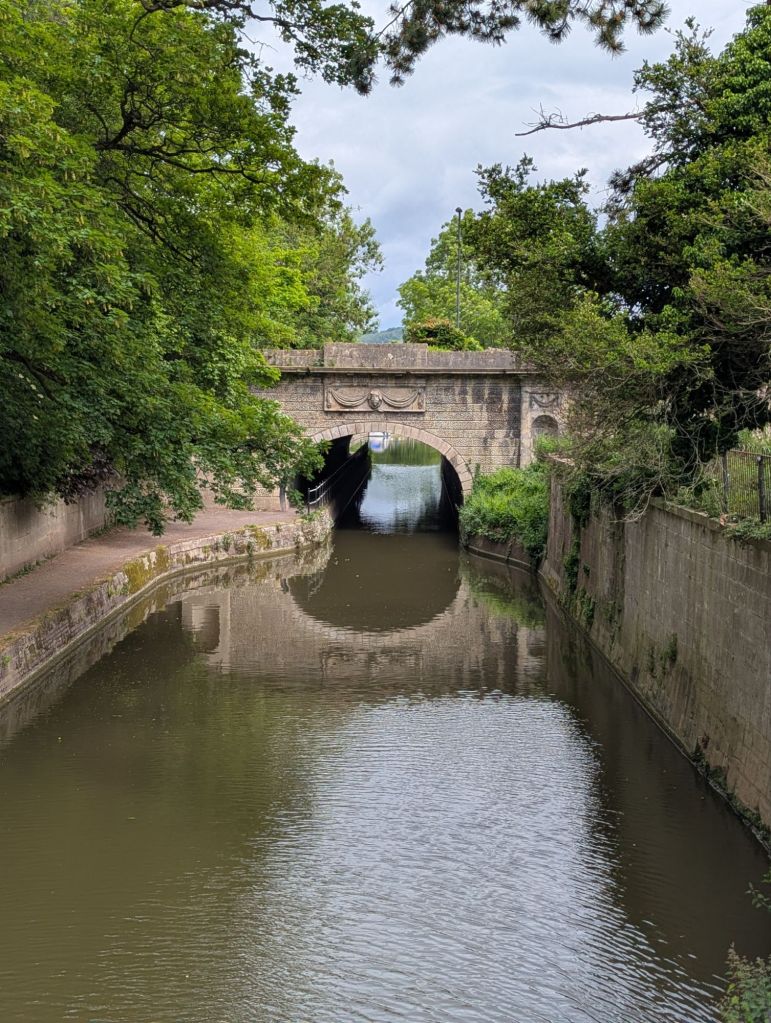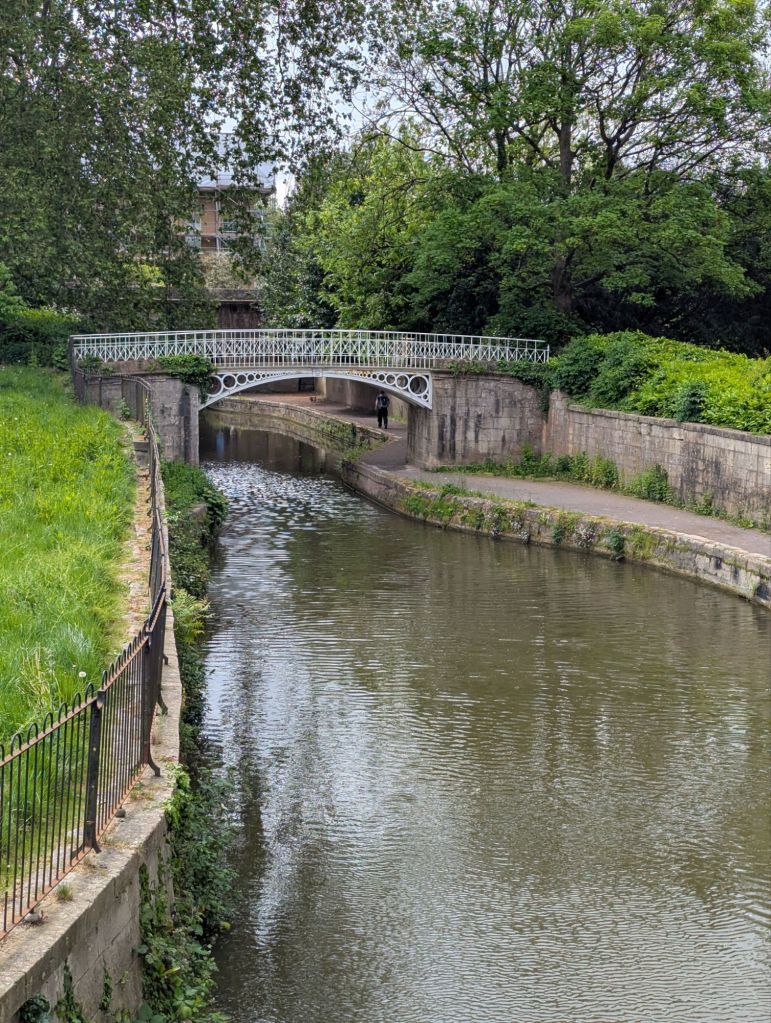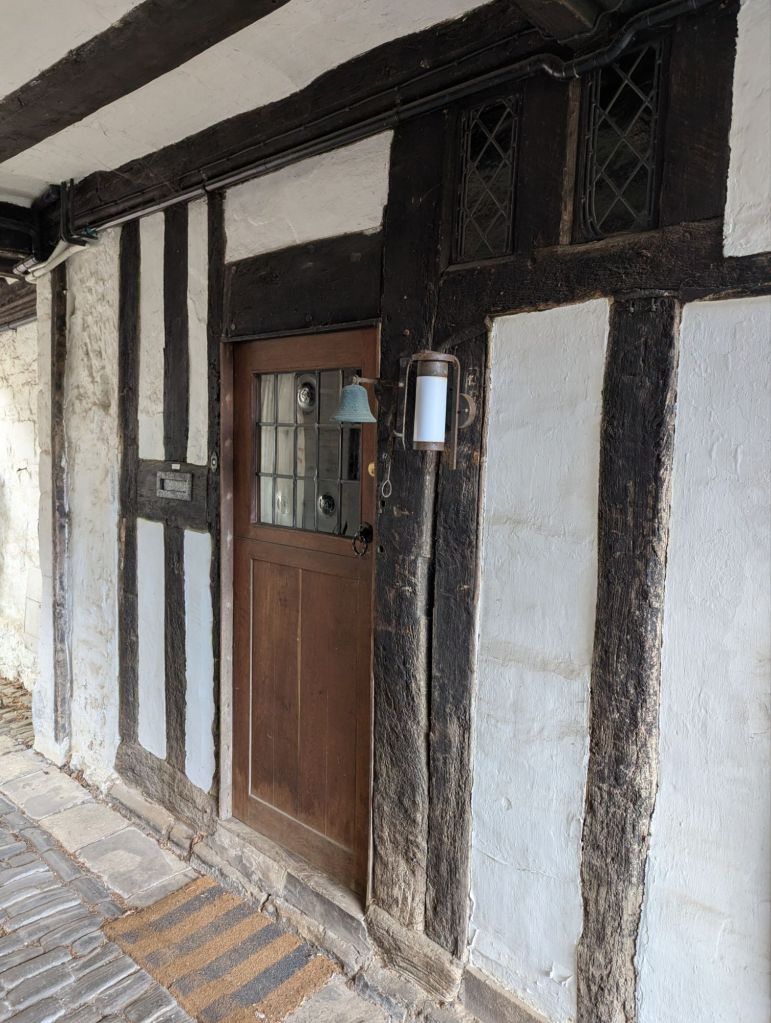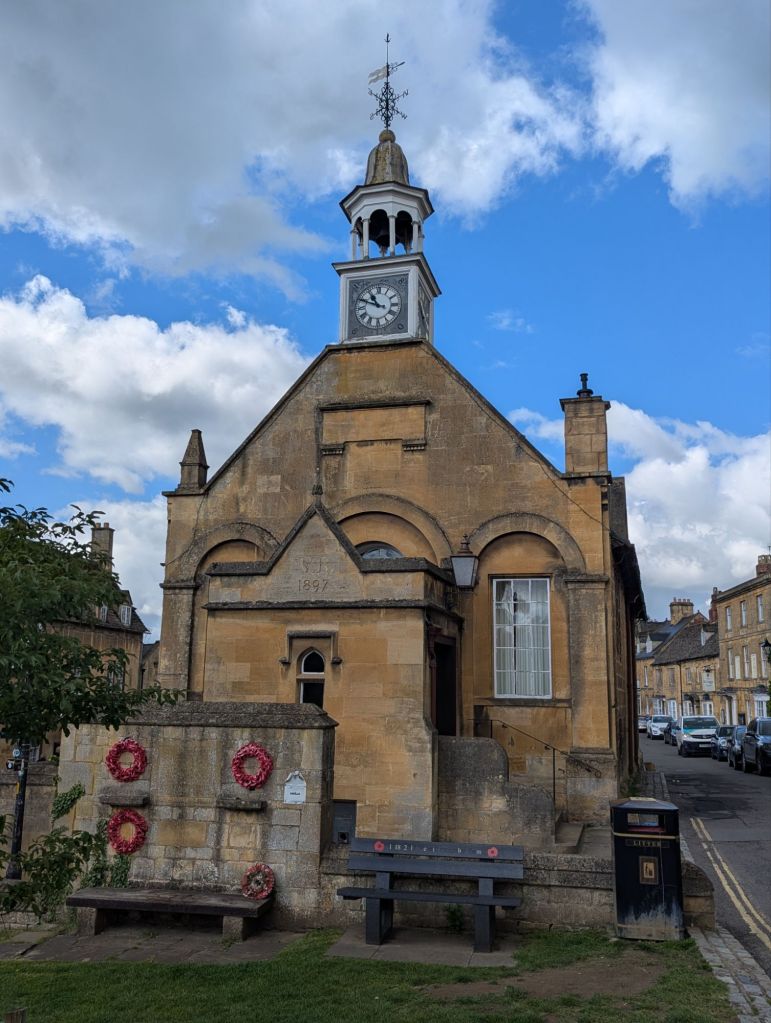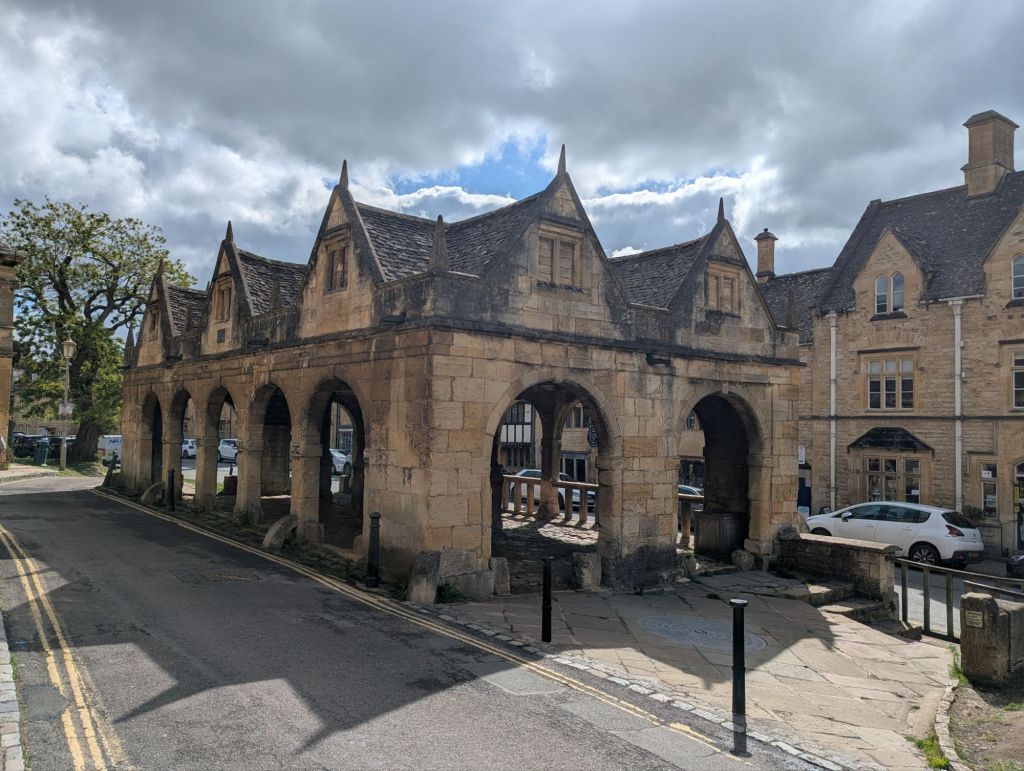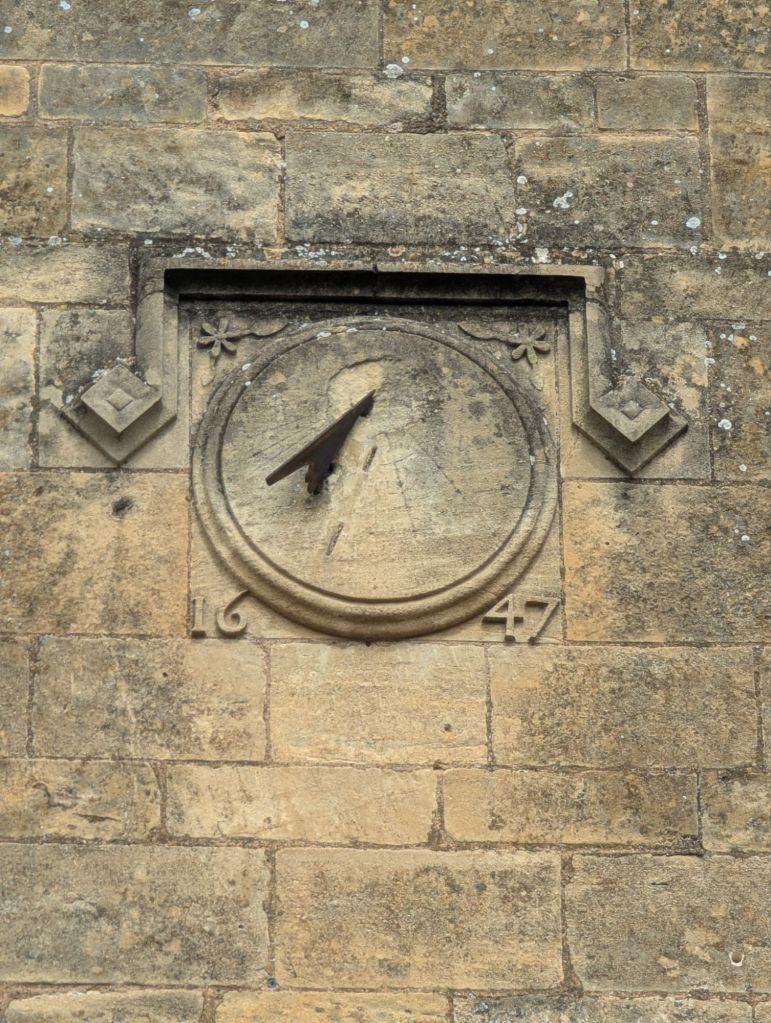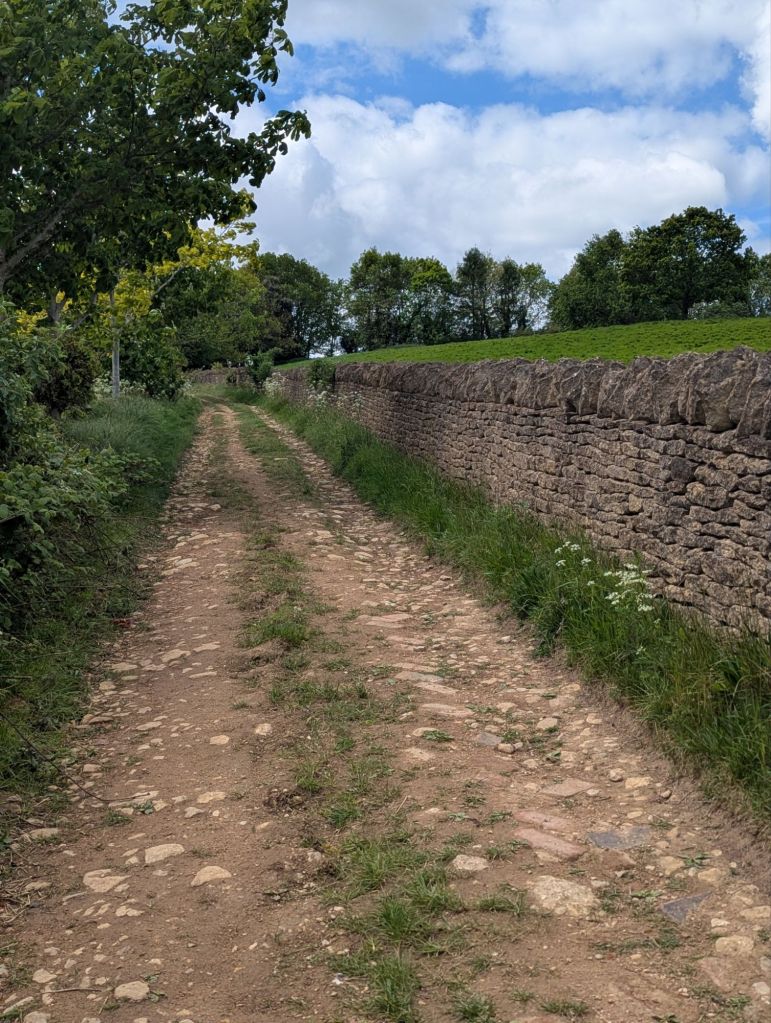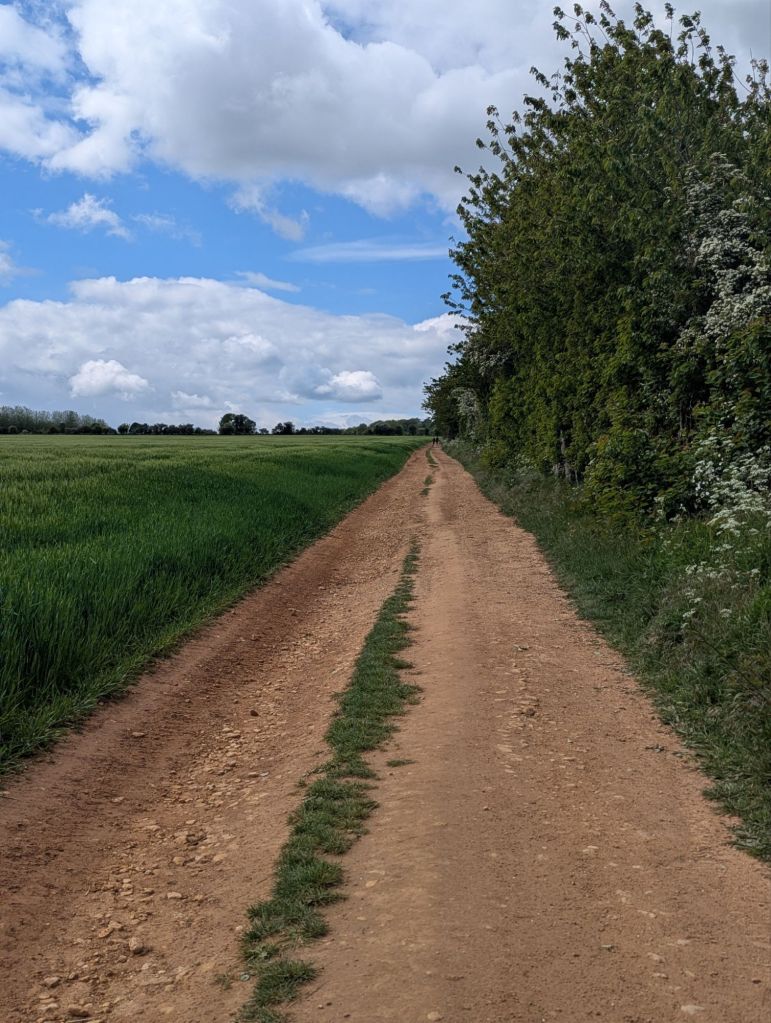
Day 10 in England – Hail, Hills, and Cream Tea: A Wild Day in the Cotswolds

Broadway Tower

DAY 10 – WEDNESDAY, MAY 13, 2026

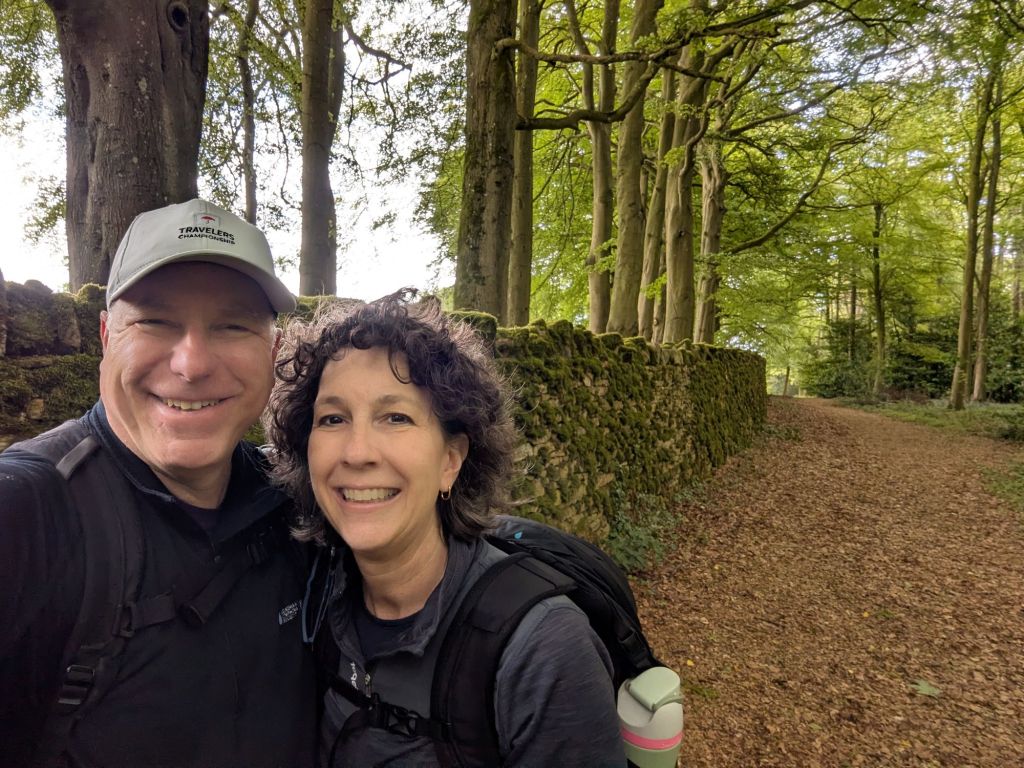
We woke up a little stiff, but reasonably rested after yesterday’s long hike. Our bags had to be out by 8:30 AM, but knowing today’s walk was a bit shorter, we did not feel quite as rushed getting out the door.

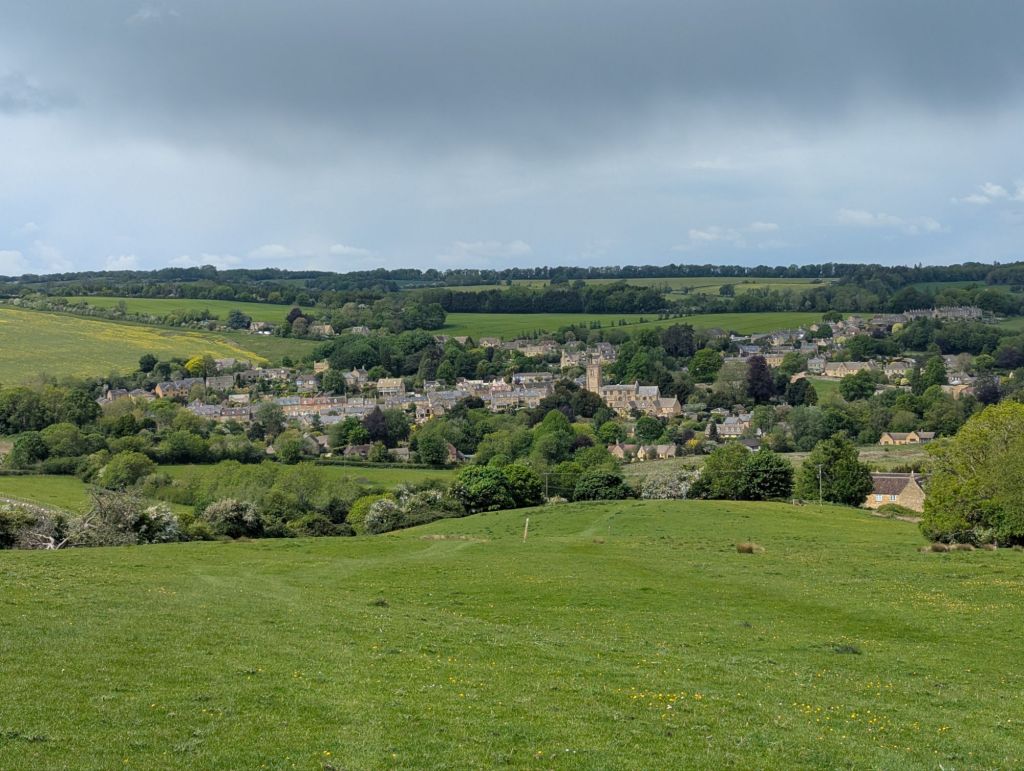
After breakfast at our inn, we packed up our backpacks and headed out into the very cute village of Broadway. It really is a delightful little place. Some tour books even call it the “Jewel of the Cotswolds,” and honestly, that feels pretty accurate. We poked into a couple of shops, mailed some postcards, and then officially started the day’s hike.

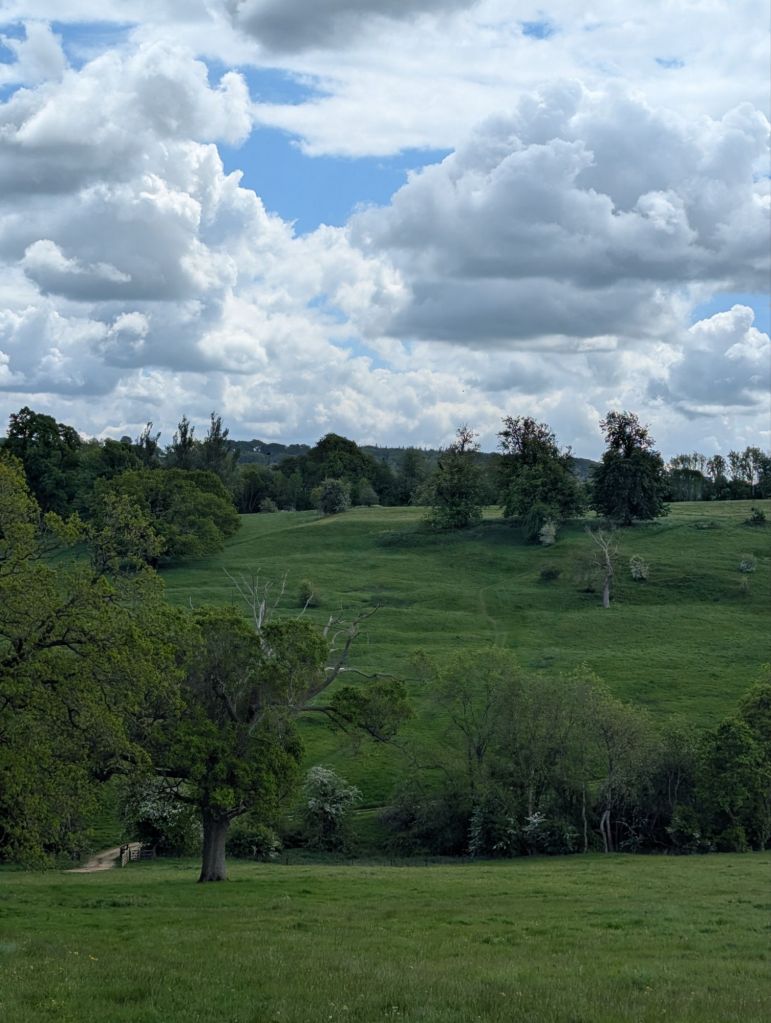
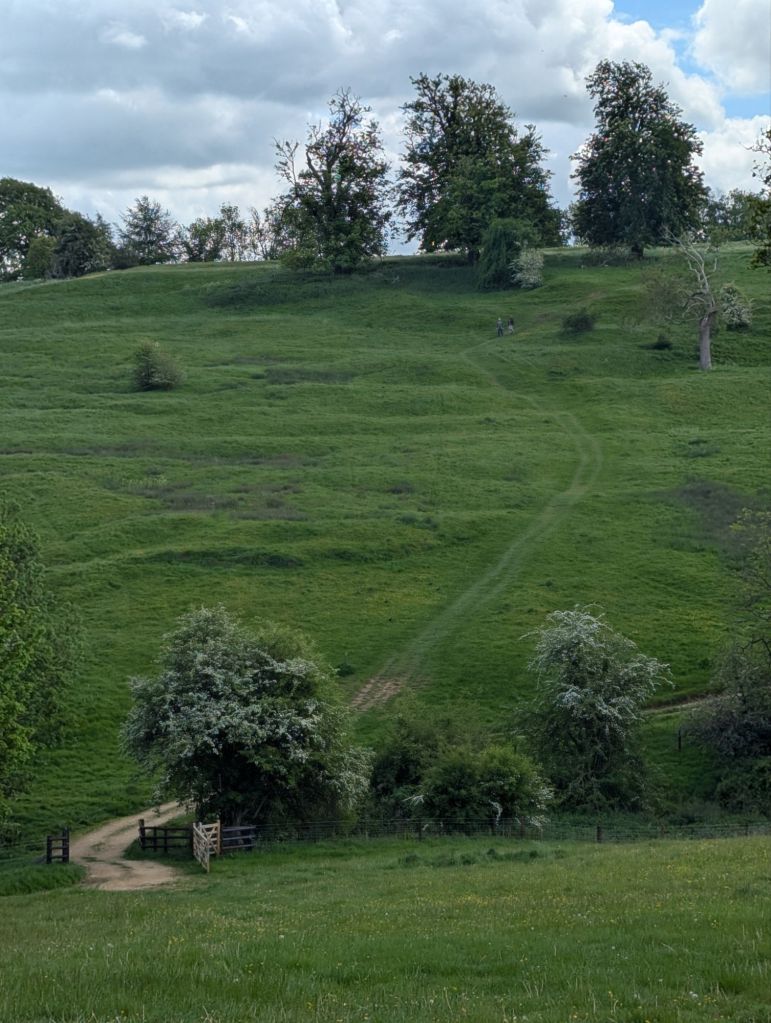
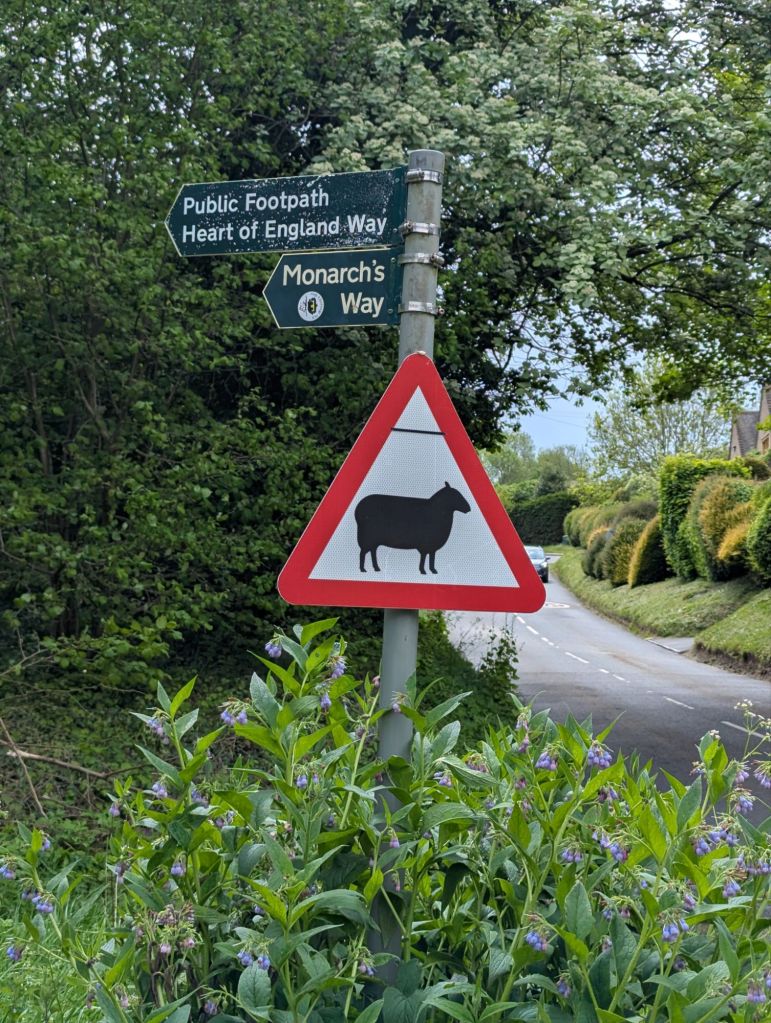
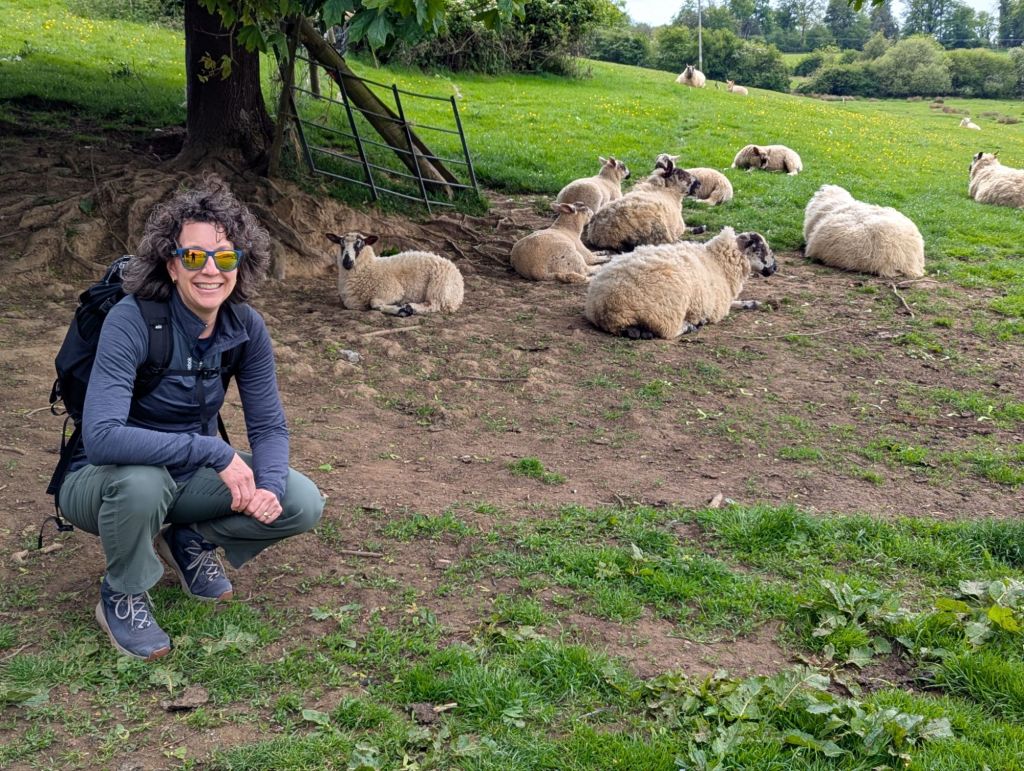
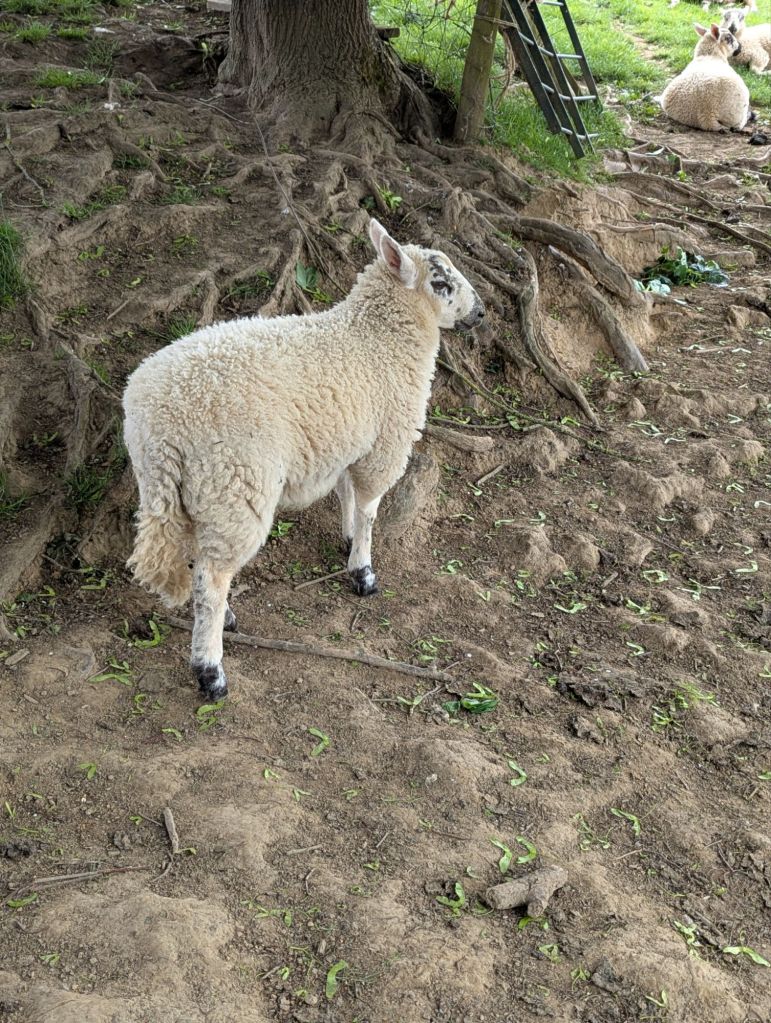
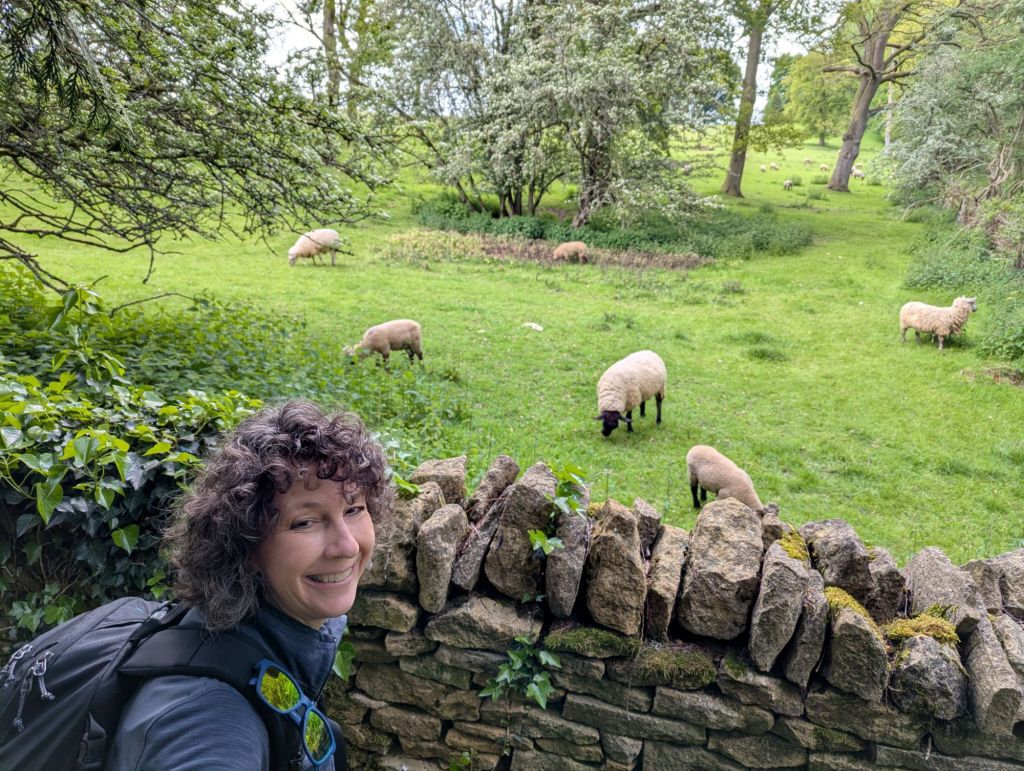
Almost immediately after leaving town, we began a steady uphill climb with plenty of sheep along the way to wish us a  good morning.

We also noticed far more hikers than we had seen on previous days, although most seemed to be heading downhill while we climbed upward. Our guess was that many were simply making the trek out to Broadway Tower, our first major stop of the day.

As we climbed, the wind picked up and a light rain started to fall, though it was nothing dramatic. We easily pulled our raincoats out of our backpacks and kept going.

After about 1.5 miles of fairly continuous uphill climbing, we reached Broadway Tower. We decided to pay the admission fee to tour it, and we are glad we did. The tower is what is known as a “folly,” meaning it was originally built purely as an ornamental structure with no real practical purpose. According to the story, the owner built it because his wife wondered whether something on top of this hill could be seen from their home. Apparently, it could.

The tower itself is wonderfully quirky with three turrets, each with a spiral staircase. It has rounded sides, three floors, and a rooftop terrace. Early owners simply admired it from afar, though later it was actually lived in by a writer, his wife, a painter friend, and a caretaker couple. That must have made for some very close quarters.

We enjoyed climbing through the tower and listening to the audio tour. By the time we reached the rooftop terrace, the sun had returned, though the wind was still fierce. We even got to watch a couple taking wedding photos with the tower as their backdrop, which felt appropriately dramatic given the weather.

As we descended from the tower, we decided to stop at the café for a quick lunch since there were no other food stops along today’s route. When we came back outside, we noticed dark clouds and falling rain in the distance. A few minutes later we heard thunder and decided it was probably wise to prepare for whatever might be coming our way.

We put on raincoats, rain pants, and backpack covers and headed out. Five minutes later, while walking across a wide open ridge, it started hailing. Not tiny little hailstones either. This was pea-sized hail that quickly upgraded itself to garbanzo bean status.

Walking through the hail storm

We turned our bodies sideways to protect our faces, but it turns out that hail mixed with strong wind really stings when it smacks into you repeatedly. We half laughed in disbelief and half questioned our choice to continue, but with no trees or shelter nearby, the only real option was to keep walking.

Then, almost as quickly as it started, the hail stopped. Fifteen minutes later the sun was shining brightly again as though none of it had happened.

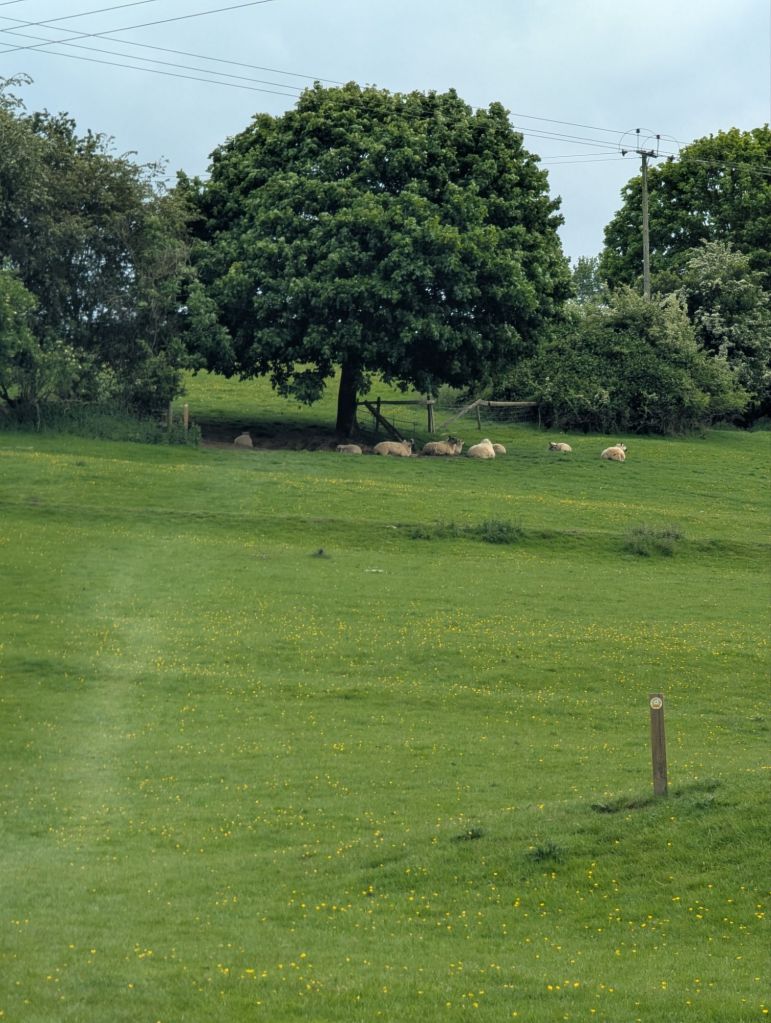
Nearby, we noticed a herd of sheep sheltering under a tree during the storm. Once it cleared, they began crossing our path toward a wooded area, perhaps wisely deciding they were done trusting the weather forecast for the day. Our pace slowed behind them as we carefully picked our way across a layer of hail covering the trail. The last thing we wanted at that point was to slip and fall into something unpleasant.

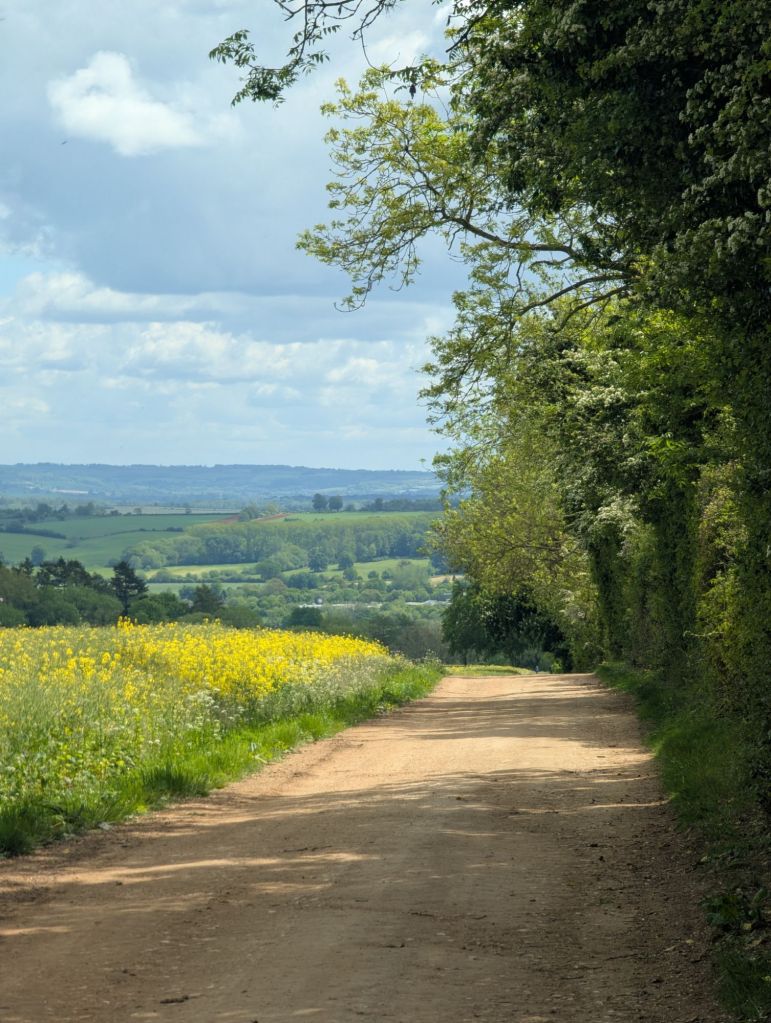
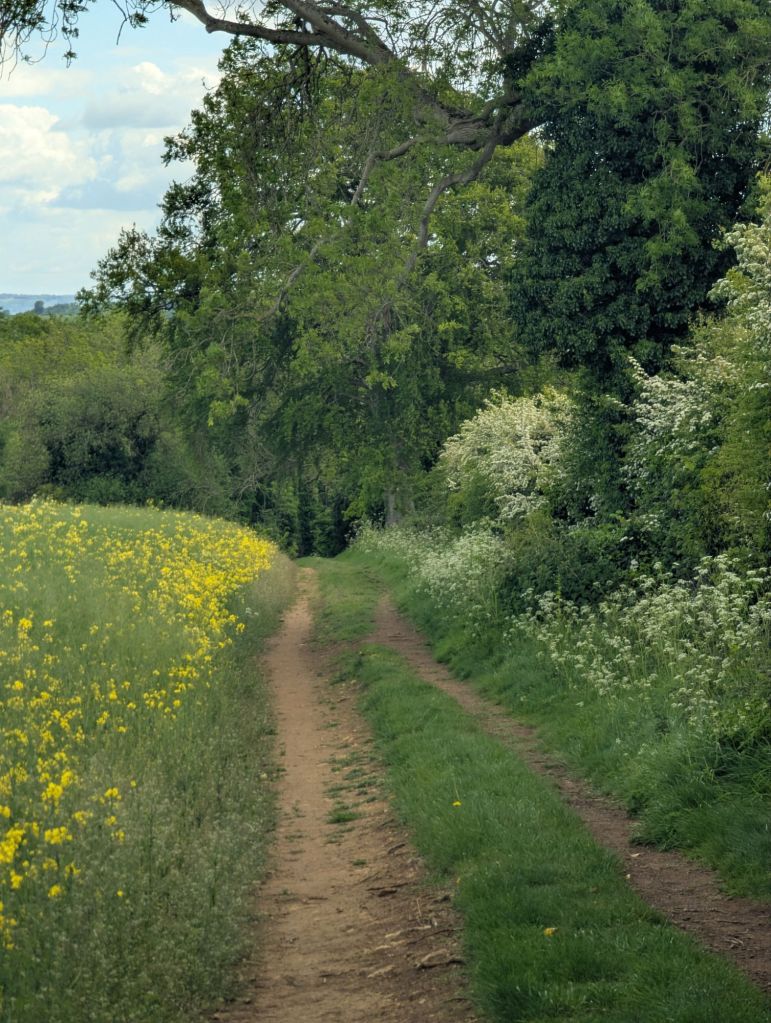
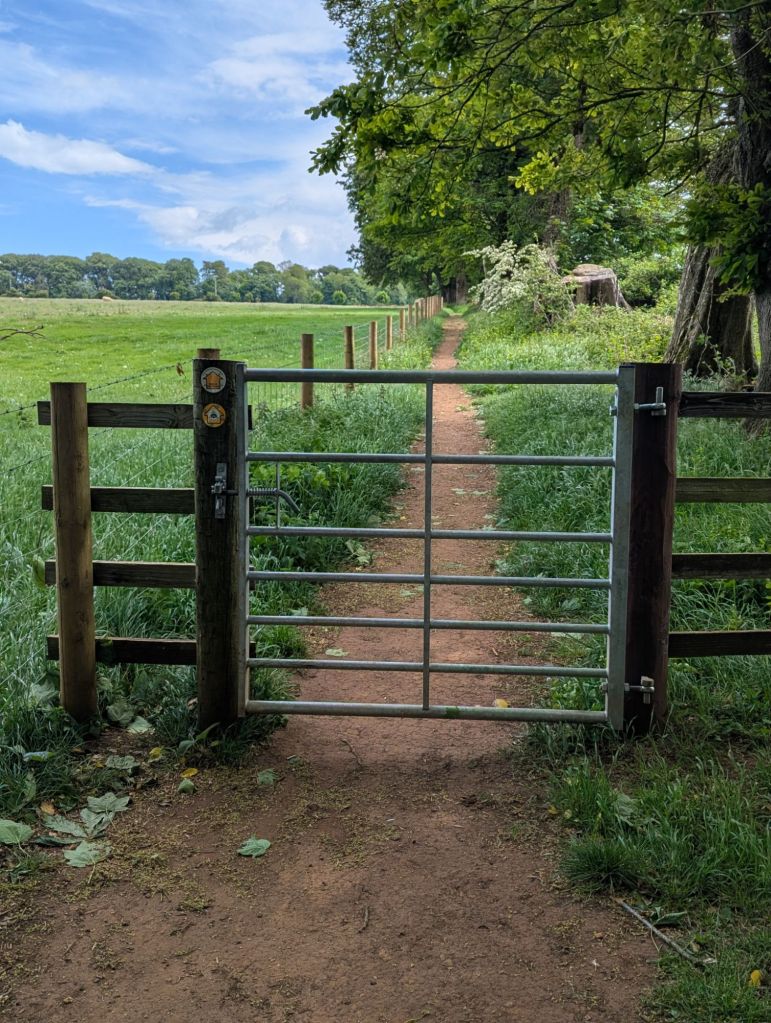
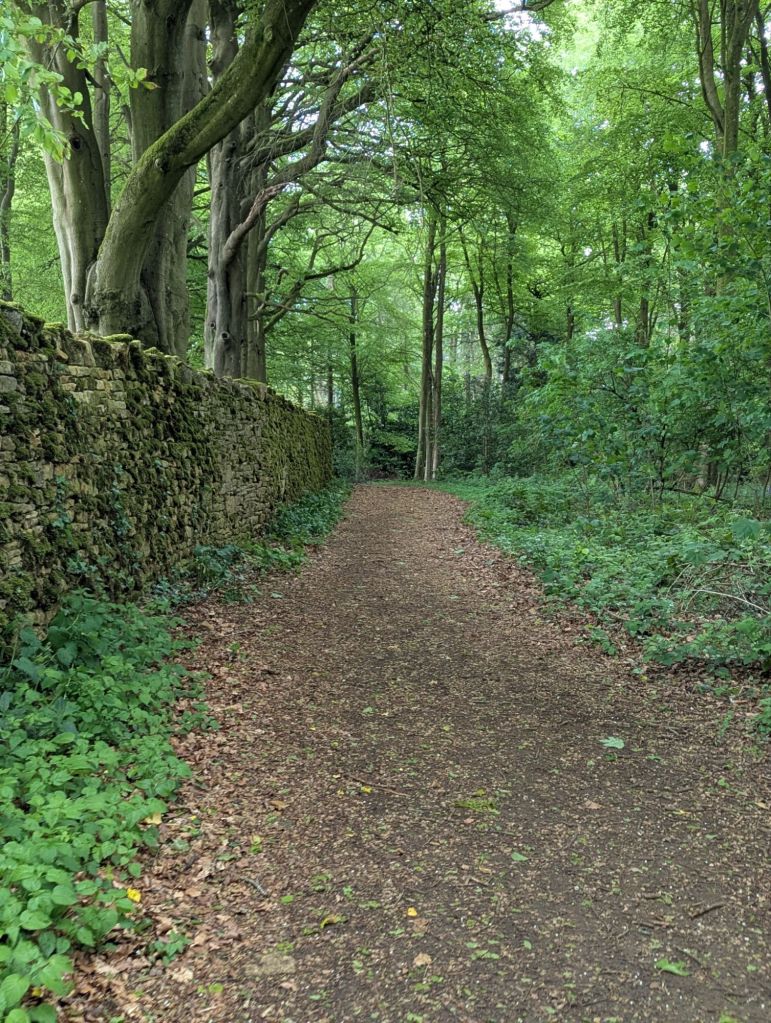
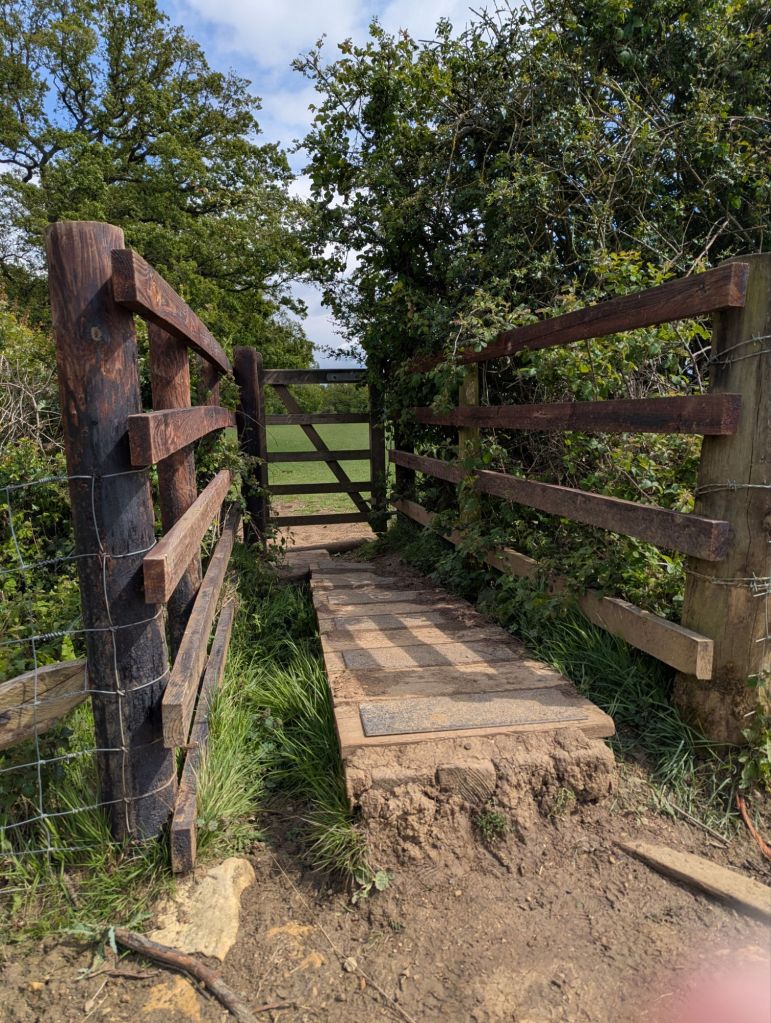
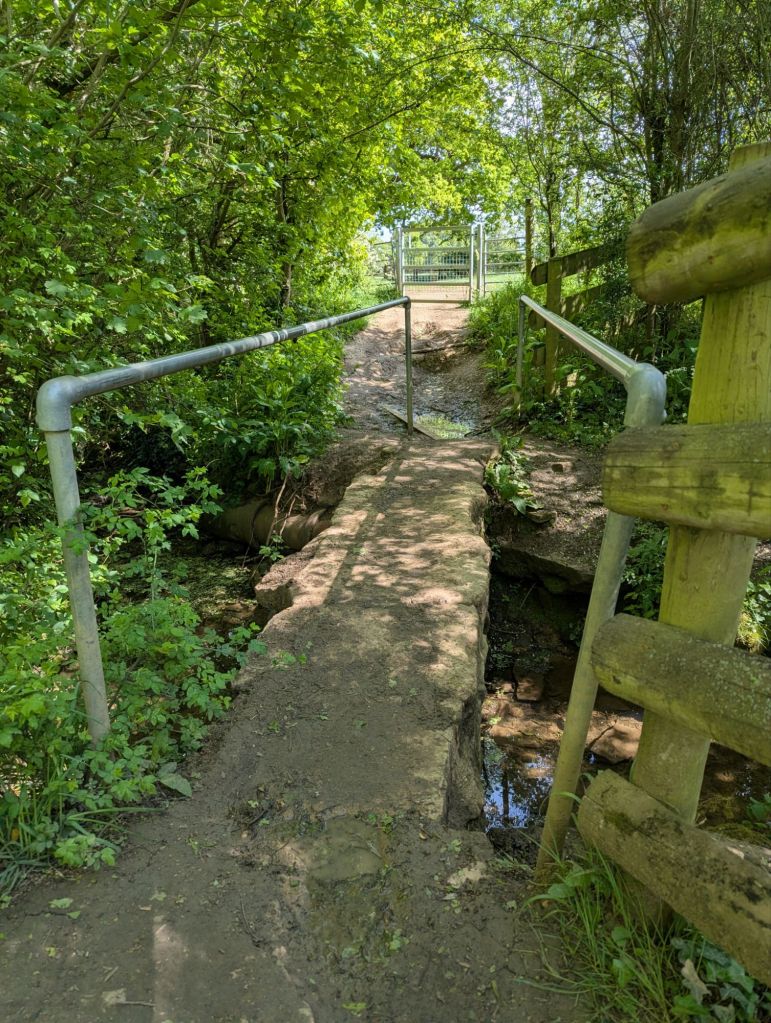
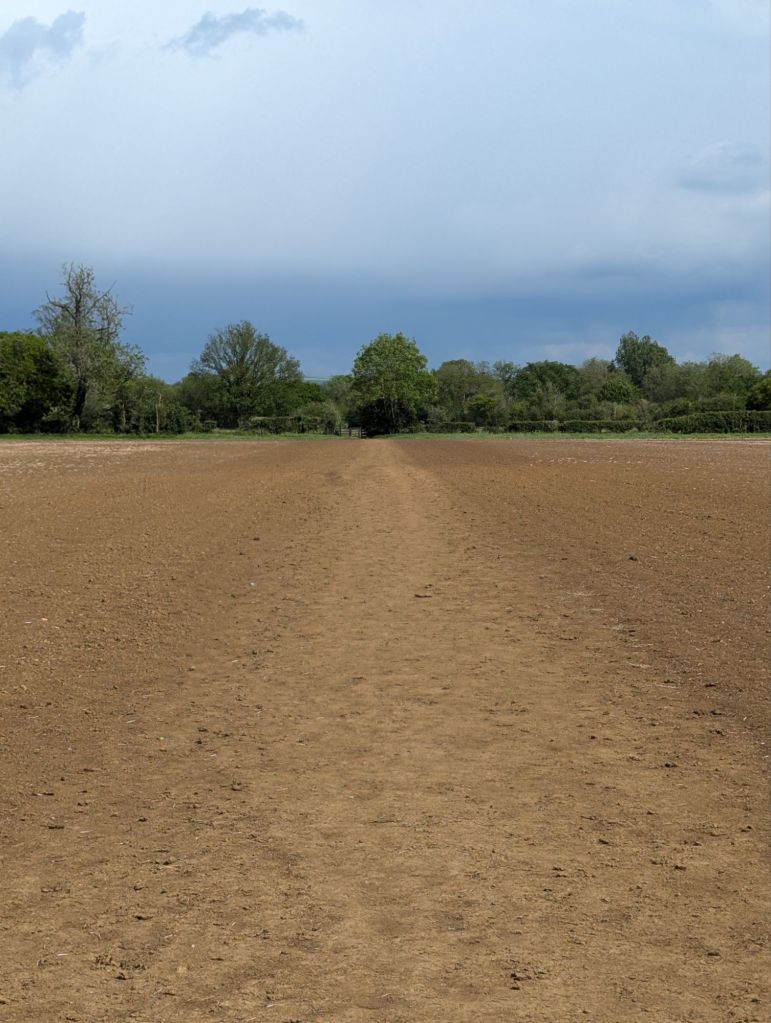
The rest of the afternoon took us through more fields of bright yellow rapeseed and barley, wooded stretches, and open pastures. We passed through 19 gates, saw countless sheep, and spotted several pheasants along the way. Although the sun appeared fairly often, we kept our rain gear on because brief showers continued to pop up throughout the afternoon.

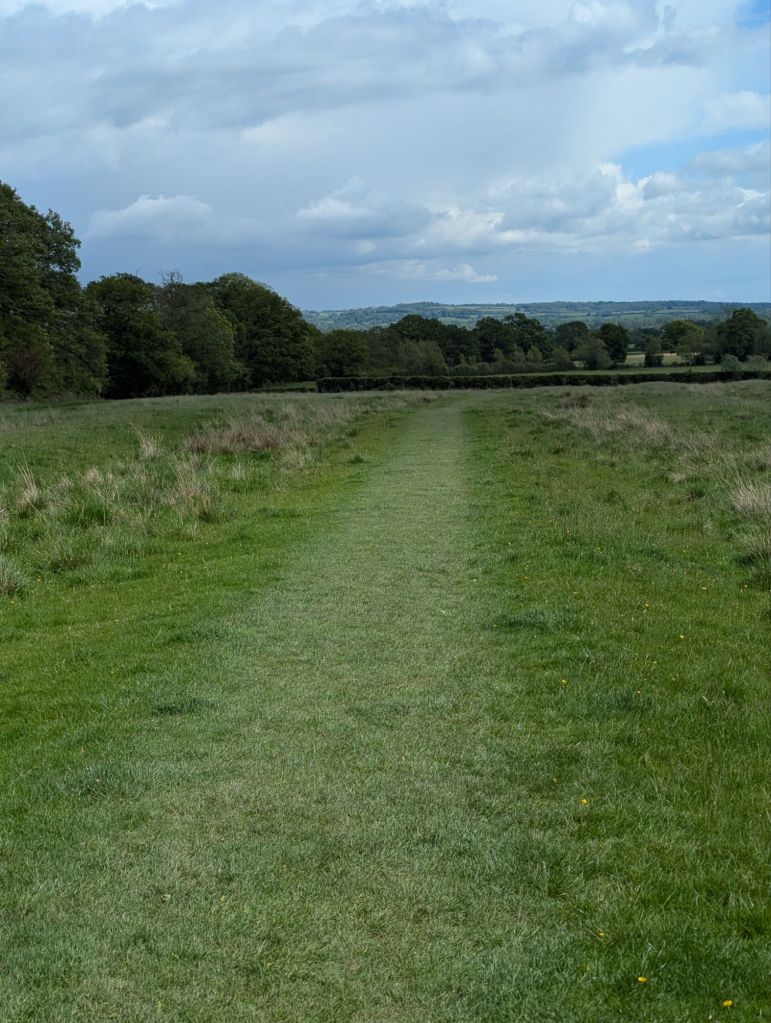
Near the end of the hike, our route detoured slightly so we could walk across the ridge at Dover’s Hill for more panoramic views. Sure enough, just as we stepped out into the wide open space, we heard an eerily familiar tap tap tap against our raincoats.

Hail. Again.

Apparently lightning may not strike twice, but hail certainly can.

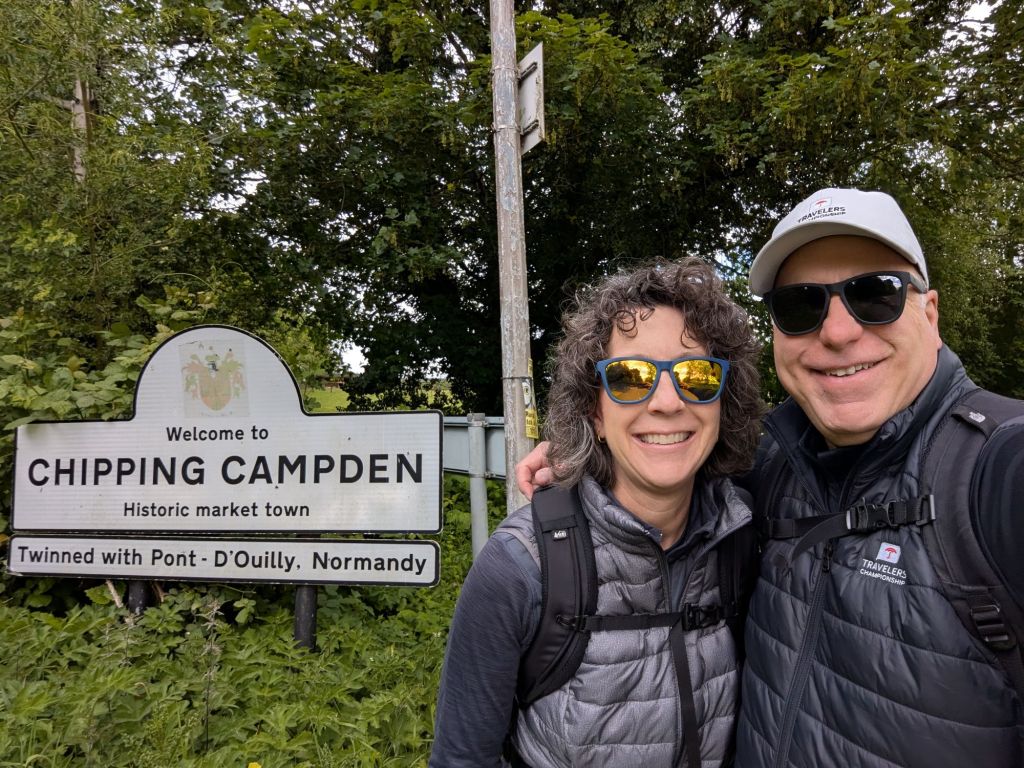
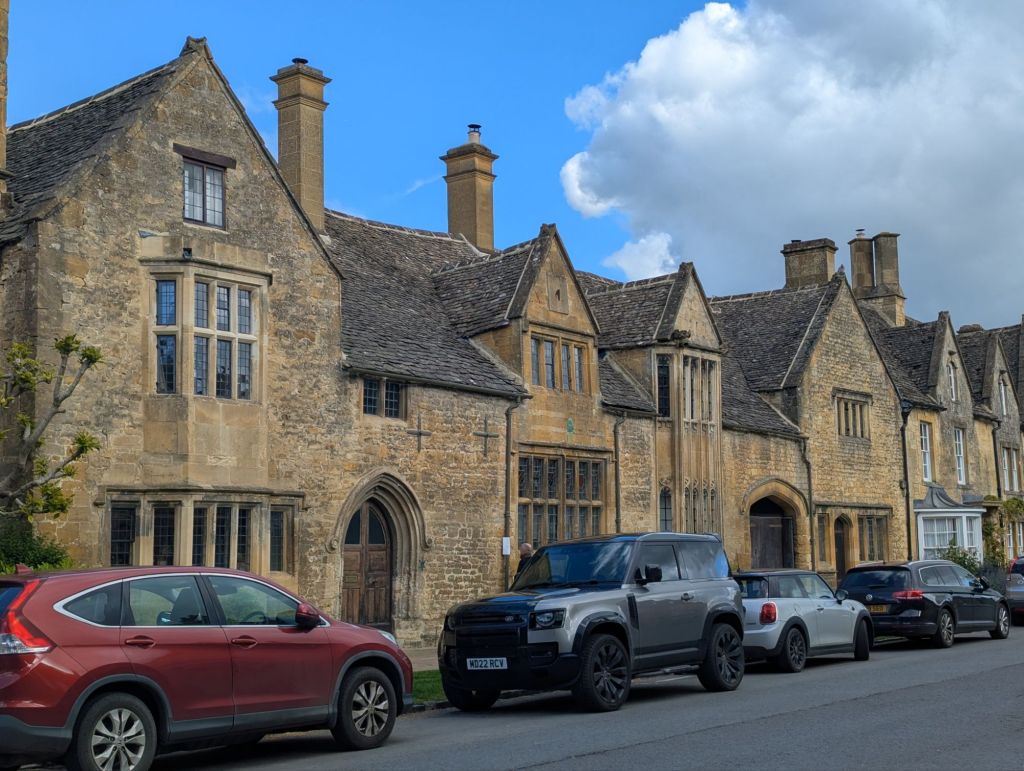
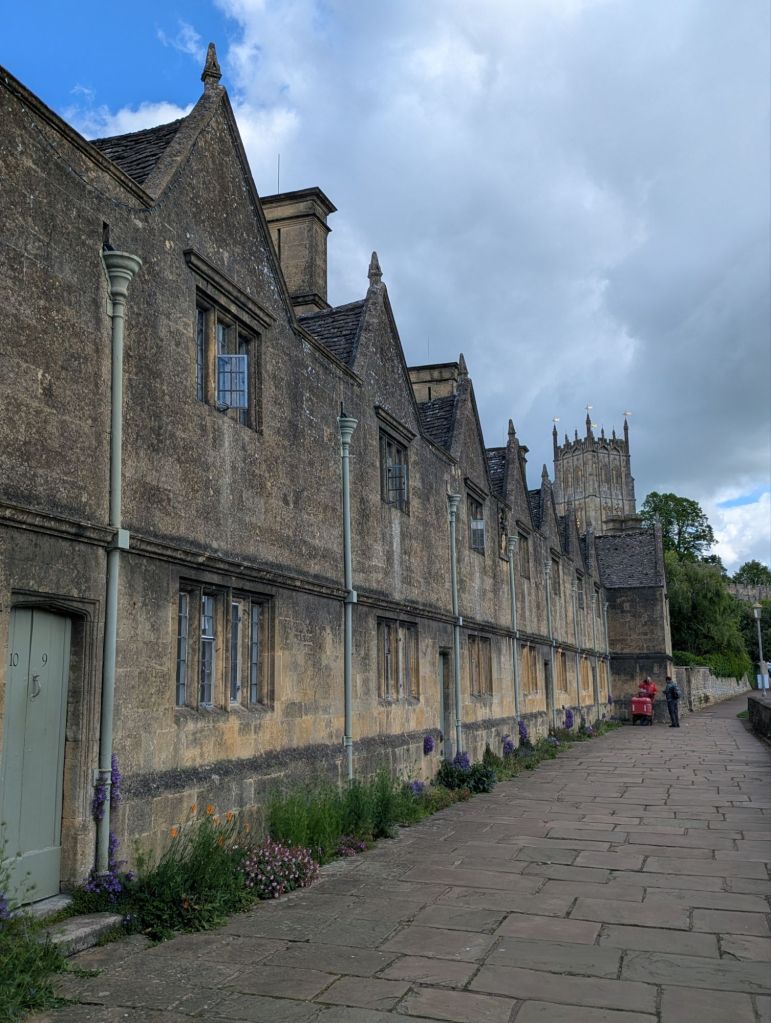
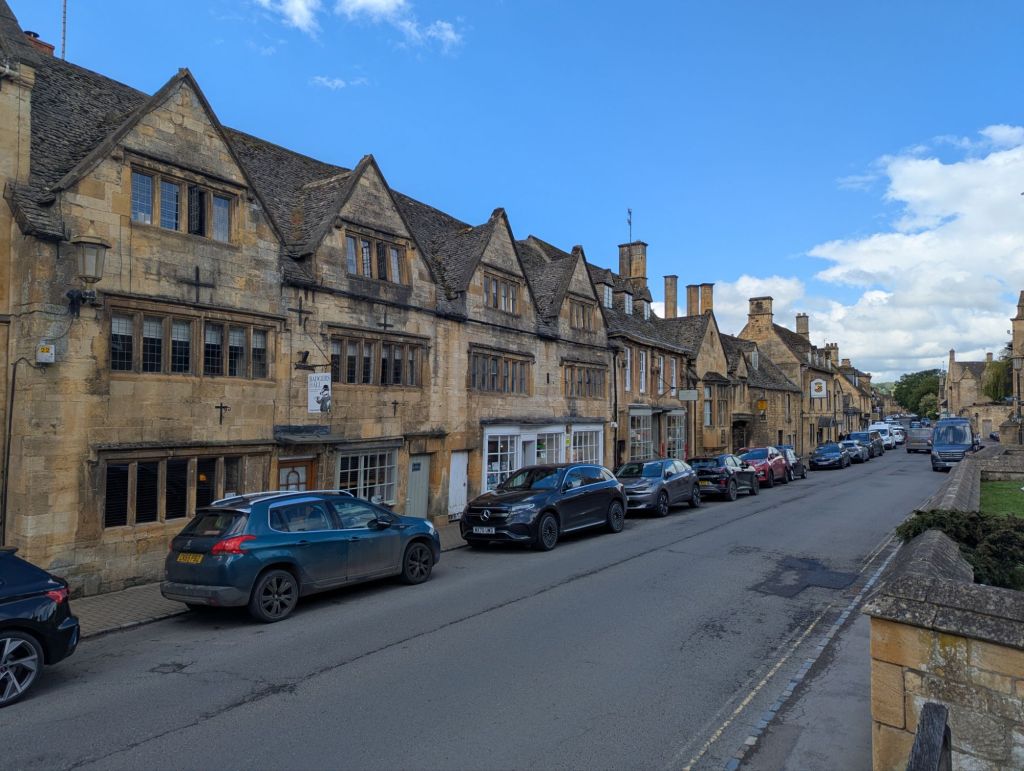
Thankfully, this second round was much shorter and less aggressive than the first. Soon enough, the skies cleared and we finished our walk in sunshine as we arrived in the lovely village of Chipping Campden. Fun fact: the prefix “Chipping” indicates that it was historically a market town.

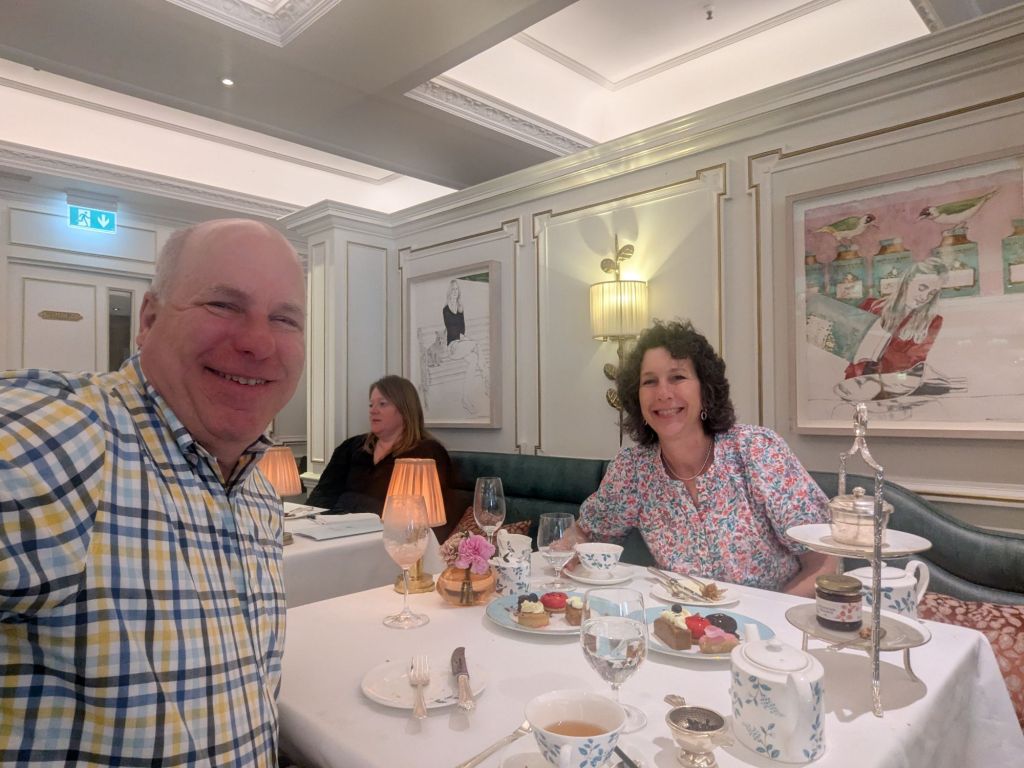
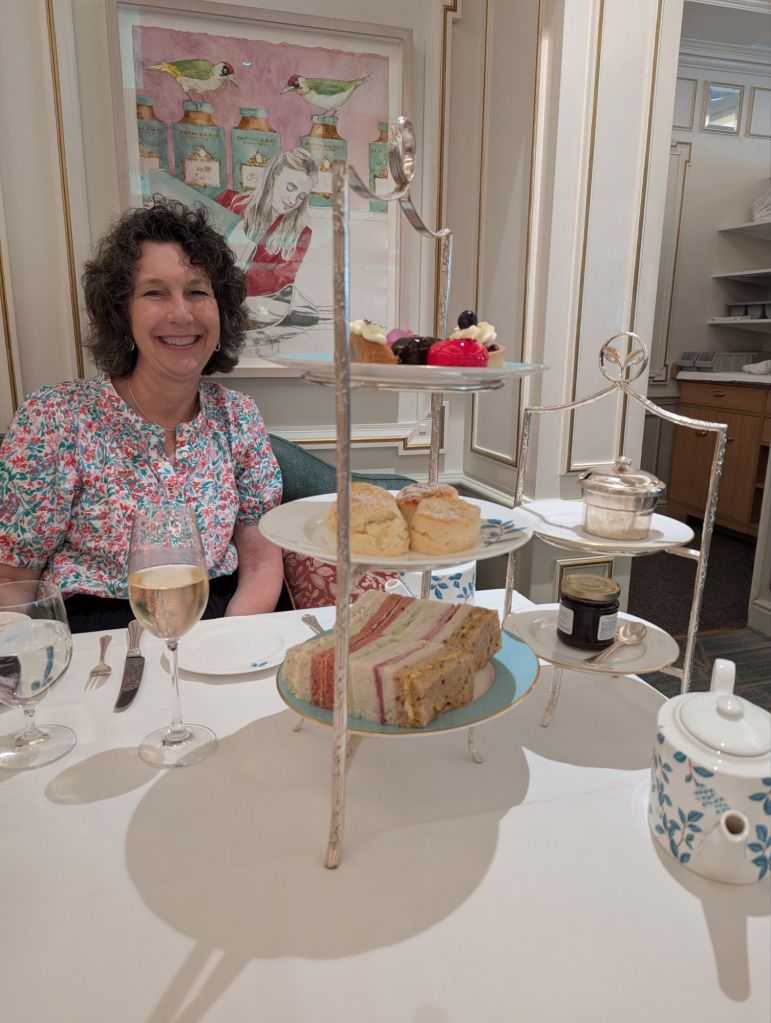
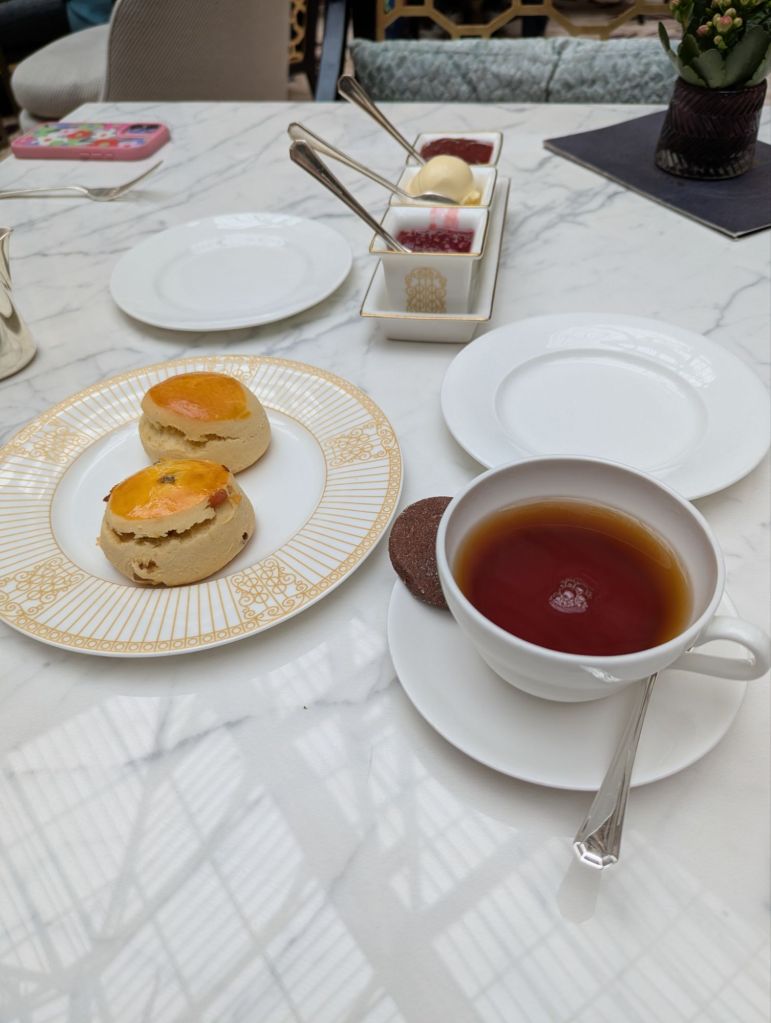
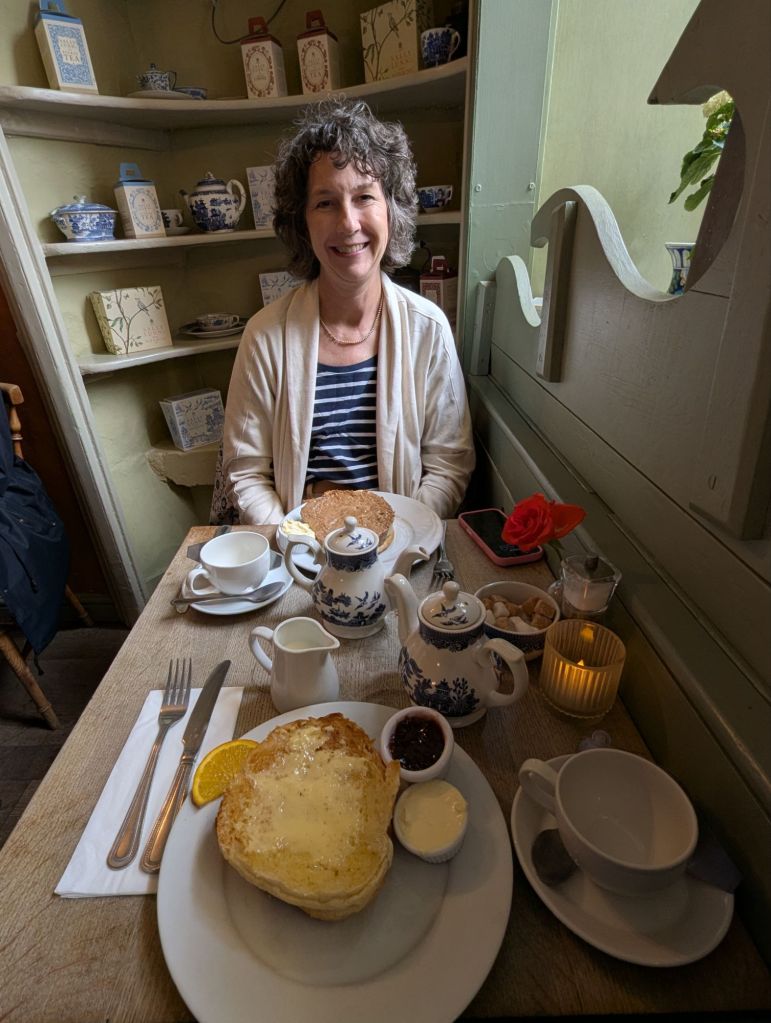
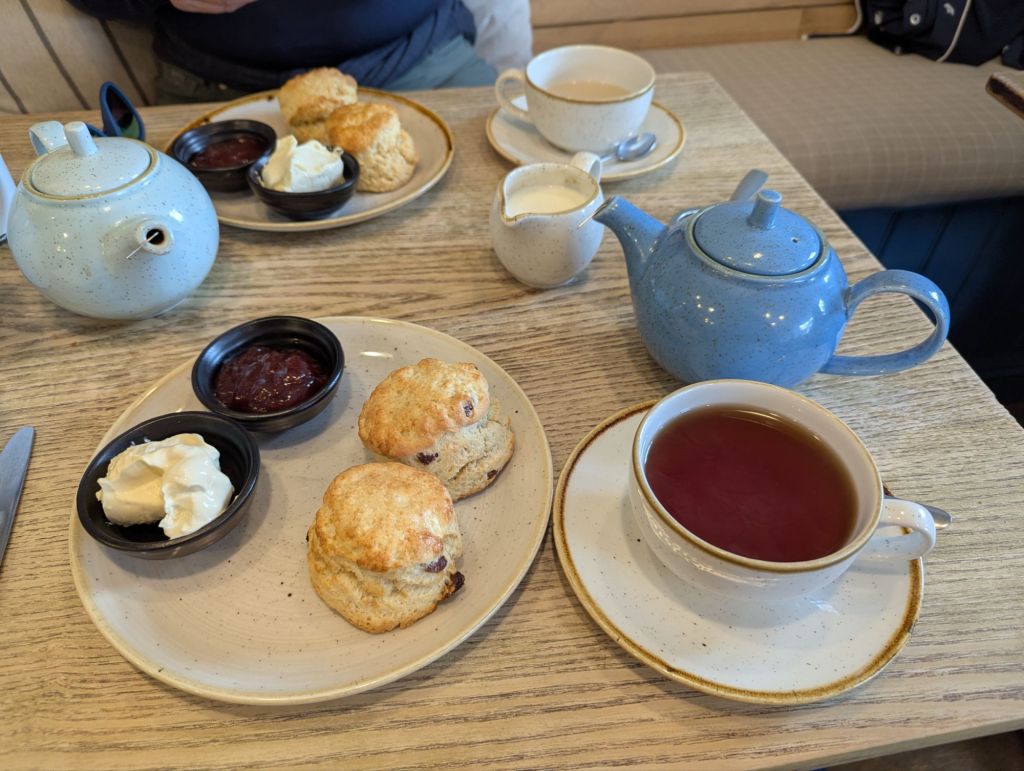
We found our hotel, though it was still too early to check in and our luggage had not yet arrived. Naturally, with time to spare, we found a local café and ordered a cream tea. This turned out to be an excellent decision, partly because we have grown very fond of scones, and partly because it started raining again while we sat inside enjoying them.

Once the rain eased up, we made our way to the spa at our hotel. Thinking ahead, we had booked treatments to help with recovery after several long hiking days. It was the perfect place to relax sore muscles, rest, and wait out the off-and-on rain showers.

Eventually we checked into our hotel, showered, changed clothes, and headed out to dinner at the Eight Bells Inn. It is the oldest public house in Chipping Campden and appears on many lists of the “Best Pubs in the Cotswolds.” It absolutely lived up to the reputation as we had a truly delicious dinner.

One especially interesting feature of the pub is a priest hole located right in the middle of the dining room floor, covered with plexiglass and softly illuminated below. During the reign of Henry VIII and the dissolution of the Catholic Church, priests often feared for their lives. Hidden spaces like these were built into homes and buildings so clergy could hide during searches.

After dinner, we made the short five-minute walk back to our hotel and settled into our now traditional evening routine of stretching and a hot bath.

Only one more day of hiking to go!

Categories: 2026 England Adventure | Tags: , , , , , , , , , , | Leave a comment

Day 9 in England – 12 Miles, 49 Gates, and One Missed Lunch in the Cotswolds

DAY 9 – TUESDAY, MAY 12, 2026

Today was another early start. Continuing with our now well-established routine, our luggage was out by 8:30 AM, followed by a big breakfast at our inn while we made the major decision of the day. Our tour company offered two options for today’s walk, both ending in the same destination:

Choice 1: a challenging 12-mile route along The Cotswold Way with two major climbs and sweeping ridge-top views.
Choice 2: an easier 9-mile walk through the valley with far less climbing, but without the scenic overlooks.

If you know us, or have been following this trip, you already know which route we chose.

We headed out feeling energized and ready for the challenge. We also left promptly after breakfast because the route notes warned us there was exactly one lunch option along the way and they only served food from 12:00 to 2:00 PM. Based on our pace, we estimated it would take us four to five hours to get there, so there was definitely some extra motivation in our step.

As we left the town of Winchcombe, we passed the ruins of Hailes Abbey, a once-prominent monastery that was largely destroyed during Henry VIII’s dissolution of the monasteries in the 1500s. A short while later we climbed up to Cromwell’s Seat, a plateau where Thomas Cromwell, Henry VIII’s infamous right-hand man, is said to have watched the abbey’s destruction. History in England really has a way of casually appearing along a walking trail.

The pep in our steps started to fade as we reached the first major incline, a climb of roughly 900 feet. Still, we steadily pushed upward through beautiful rolling fields, quiet pastures, and plenty of sheep for company.

With lunch still firmly on our minds, we continued on as the trail gently descended into the hamlet of Stanway, home to a remarkable Jacobean manor house that has reportedly only changed family ownership once in more than 1,300 years. About a mile farther down the trail we reached Stanton, our planned lunch stop.

Unfortunately, there was one final obstacle: the restaurant sat at the top of yet another hill.

We arrived at 1:10 PM feeling triumphant, hungry, and very ready to sit down. But when we stepped inside, the lone and very overwhelmed waiter informed us they could not accommodate any more lunch guests.

Not exactly the ending we had envisioned.

So, slightly defeated, we pulled out the protein bars we had thankfully packed and headed back to the trail. It was at about this moment we discovered we were beginning climb ascent number two and this one was steeper than the first.

Somewhere in the middle of that rocky, wooded ascent, surrounded by trees and heavy breathing, we started to question our choice. But after shedding a couple of layers and a large amount of effort, we reached the high point of the day at 973 feet and were rewarded with beautiful panoramic views across the countryside.

Thankfully, the remaining miles were mostly downhill as we wandered through more fields and pastures filled with cows, sheep, and horses. And after passing through our 49th gate of the day, yes, we counted, we finally arrived in the village of Broadway.

With the sun shining on the picturesque town center, we immediately agreed that Broadway was probably our favorite Cotswolds village so far. Since lunch had never materialized, our first priority was finding a tea room where we could gratefully sit down and enjoy an afternoon cream tea. We did manage to stop for a couple of postcards on the way to the hotel, but by that point our enthusiasm for additional sightseeing had faded right along with our leg strength.

Back at the hotel, we peeled off our hiking boots, stretched, showered, and enjoyed a few precious minutes of doing absolutely nothing.

Then it was time for dinner.

We’ve been especially grateful that our friend Bob, who had originally planned to join us on this trip, made dinner reservations for us throughout the Cotswolds. Most of them have been right at the hotels where we are staying, which after days like this has felt like a brilliant strategy.

Tonight’s dinner did not disappoint. A gin and tonic and a delicious meal felt very well earned after twelve miles and two major climbs. We were seated next to a friendly older couple who struck up a conversation after hearing our American accents. They shared that they had both held prominent federal government positions in Washington, DC, before retiring to Palm Beach, Florida. For the past 25 years they’ve spent two to three months every summer in the Cotswolds and prefer crossing the Atlantic by ship rather than flying. It was fascinating hearing their stories and honestly, a welcome distraction from our increasingly sore muscles.

The night ended with a hot bath for Karen and absolutely no trouble falling asleep.

Categories: 2026 England Adventure | Tags: , , , , , , , , , | Leave a comment

Day 8 in England – Walking Through Sheep Fields and Castles in the Cotswolds

DAY 8 – MONDAY, MAY 11, 2026

We were up bright and early and had our bags out by 8:15 AM. After another big breakfast at our hotel (one of the many things we are appreciating about these inns is that breakfast is always included), we packed up and got ready for the day ahead.

The tour company provided a van transfer from Lower Slaughter to Guiting Power, a tiny village about 15 minutes away. We are assuming this section was either not especially scenic, not walker-friendly, or would have turned the day into a marathon rather than a pleasant hike.

During our walks so far, we really have not encountered anyone else clearly doing the same tour as us. There was one other couple in the van this morning who we suspect are following the same route, but for reasons unknown they did not seem especially interested in making new American friends before 10:00 AM.

The driver dropped us off in a small village square with the very detailed instruction: “Go that way.”

Guiting Power itself was tiny but charming. We poked our heads into a small farm shop and a cozy coffee shop that appeared to be the village’s entire commercial district. One interesting feature at the coffee shop was a raised side door for customers arriving on horseback. Sure enough, while we were there, two riders actually showed up and ordered drinks. Apparently “grabbing coffee on the way” means something a little different in the Cotswolds.

Coffee Shop in Guiting Power

After our quick survey of the village square, we headed off on today’s 6.1-mile walk along the Wardens’ Way.

Not long into the walk we found ourselves crossing through a sheep farm filled with adorable lambs. The mothers each had large numbers spray-painted on their sides, and the lambs had matching numbers so they could easily stay paired together. It was surprisingly entertaining to watch the little lambs follow their mothers everywhere while a shepherd cruised around the fields on an ATV keeping an eye on the flock.

One of the things that continues to amaze us is how many public walking paths run directly through active farmland and livestock fields. We regularly find ourselves just a few feet away from sheep, cows, horses, and other animals. Signs frequently remind walkers that these are working farms and the animals are not pets, which is probably wise advice considering how tempting it is to stop and interact with every animal we see. The bigger challenge, however, is balancing the urge to admire the scenery and livestock while also paying close attention to where you are stepping.

We passed bright yellow rapeseed fields, several barley fields, and eventually entered a wooded area just as rain began to fall. For the first time on the trip we had to break out our raincoats and backpack covers. Thankfully the rain stayed fairly light and only lasted about an hour, so it really did not slow us down much.

The walk then continued through two large estates, much of it beneath a canopy of deciduous forest. At times it honestly felt very similar to hiking back home in New England. We finally remembered to count the gates we passed through during the day. Since today involved fewer open farm fields, our official gate count for the day was only 11.

Toward the end of our walk we arrived at Sudeley Castle. We stopped first for a quick lunch at the café before deciding to tour the castle itself.

Originally established as a manor in the 11th century, the castle evolved over hundreds of years into an important Tudor estate. It hosted several English monarchs over the centuries and was heavily damaged during the English Civil War before sitting abandoned for roughly 200 years. In the 1800s it was purchased and gradually restored by a wealthy family, descendants of whom still own and occasionally live at the estate today. Opening the property to visitors, we learned, helps offset the rather significant expense of maintaining a castle. Apparently castle ownership comes with slightly higher upkeep costs than your average suburban home.

We especially enjoyed learning about the castle’s royal history and exploring the ruins of the massive Tithe Barn, where a portion of crops and estate income would historically have been stored for the church. On the grounds is St. Mary’s Chapel, the burial place of Katherine Parr, the sixth and final wife of Henry VIII. After Henry VIII’s death, Katherine lived at Sudeley Castle with her new husband. Her tomb there is believed to be the only resting place of an English queen located on private property.

After spending about 90 minutes exploring the castle and grounds, we walked the final half mile into the village of Winchcombe, our home for the night. We stopped at a pub for an afternoon cream tea before heading to our inn to check in. Winchcombe is small enough that our short walk between the pub and hotel essentially covered the entire downtown area.

The Lion Inn in Winchcombe

Once settled in, we stretched, showered, and headed downstairs for dinner at the inn restaurant. Over dinner we debated tomorrow’s choices: an “easy” 9-mile walk or a “moderate” 12-mile walk.

By now you can probably guess which option we were leaning toward. Stay tuned.

Categories: 2026 England Adventure | Tags: , , , , , , , , , , | Leave a comment

Day 3 in Malta – Day Trip to Gozo

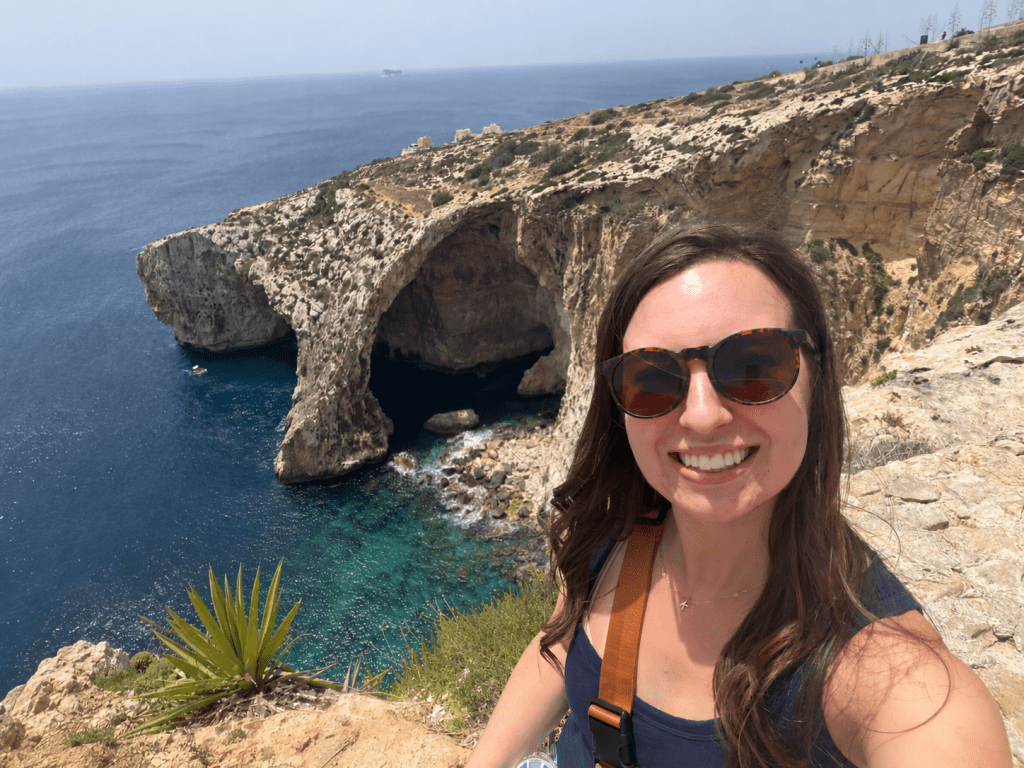
On Thursday, May 7, I had booked a full day tour of Gozo, the second largest island that makes up the country of Malta. It was a great way to get to see a lot of the island, but it was definitely a long day, so buckle up!

I got picked up at 8:15 from outside a nearby hotel and driven up north to the very top of the island of Malta (only about 45 minutes away). There, we met up with several other vans of people who also got picked up from around the country. Because it was a bit windy that morning the tour company opted for us to take the ferry over, rather than the smaller boat they usually do. It was a bit chaotic as they tried to round everyone up, as it was a pretty large group and there were a couple other tour companies doing the same thing. We eventually all got in the line to get on the ferry and made our way on board. It was a short 15 minute ferry ride, and we could see Comino, another smaller island that is between Malta and Gozo. Comino only has two inhabitants, but has the Blue Lagoon, a popular swimming spot that supposedly gets very crowded in the summer.

Gozo ferry
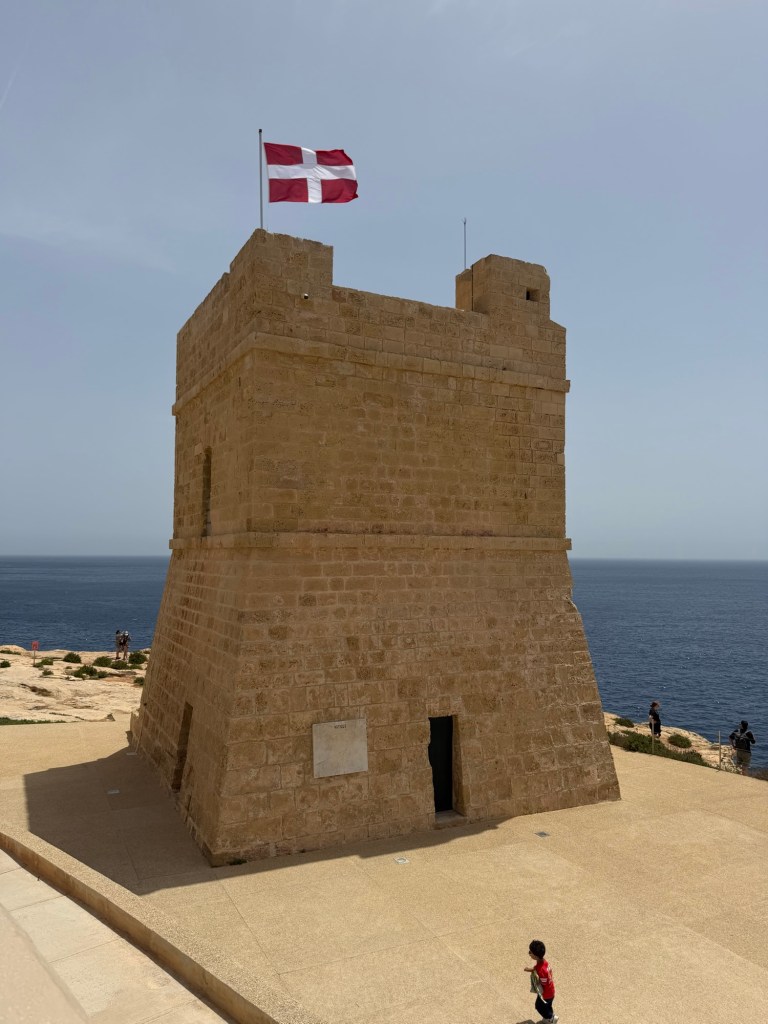
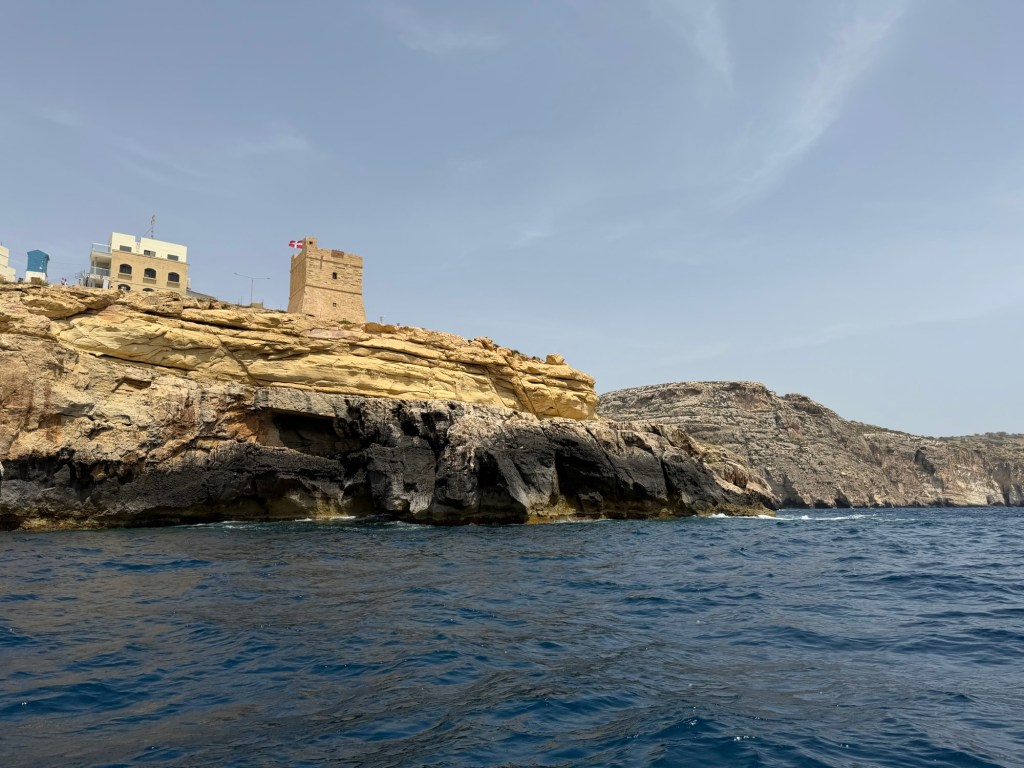
These towers can be found all over the coastline of Malta
Arriving in Gozo

After we got off the ferry in Gozo we were met with a group of tour guides and their Jeep buggies. Every tour guide had a sign with the names of the four or five people in their group, so we had to all go find which group we belonged in. Luckily, I found Sam, my tour guide, right away. There were already two people in the buggy, who I later found out were Jason and Emily from Syracuse, NY, and we were also joined by a couple from Latvia who had come over on the ferry with me. Jason and Emily had come to Gozo to run a half marathon trail run in a couple days, and as we traveled around the island we saw some of the areas marked out for the run and it looked like it would be beautiful, but very hilly.

Our buggy

Once we all got into the buggy, Sam sped off and we began the tour. I quickly found out that this little vehicle can get very loud, especially when going up hills, so it was a little difficult to hear his commentary from the back seat while we were driving. Sam explained to us that we had some options of where we could go throughout the day, so it could be a little customizable, although we mostly deferred to what he thought would be best. He first quickly stopped at an overlook to show us the view and some local plants, including the Prickly Pear!

Our first stop was at Ramla Bay. We pulled up to a beautiful sandy beach with large hills on either side, and Sam told us that you can hike up to the top of one to a cave called Calypso’s Cave, which is supposedly where Calypso kept Odysseus a prisoner in the Odyssey. He told us that the hike would take 20 minutes, although we were a little doubtful of this time estimate by how far away it looked, and opted not to do the hike. Nonetheless, we had a few minutes to enjoy the beach before heading back to the buggy.

We then drove to the Ggantija Temples, which I was very interested in seeing. These are known as the oldest freestanding structures in the world. It was interesting to see after just having been to some other Neolithic sites the day before. The museum showed some artifacts found at the site, and some seemed similar to what I had seen at the other sites. But what I thought was most interesting was that the stones looked a bit different. The Hypogeum and Tarxien Temples were made of the yellow limestone that is seen all over Malta as a primary building material. A lot of Ggantija, however, was made with a harder, different type of limestone and had a more gray look to it.

After taking in these ancient structures, we got back in the buggy to go back to the busier city of Victoria and visit the Cittadella. This is a small, fortified city from the 15th century on top of a hill complete with a church, small alleys between tall stone buildings, and fortress walls that you can walk on top of. We had only a half hour here (longer would have been nice, but I knew that some things would feel rushed since we were trying to see as much as possible in one day), so we did a quick walk around the walls and through some of the streets, taking in the beautiful views of the island. On the way back to meet our driver, we saw there was a small doorway at the base of one of the walls, where there were WWII shelters dug out underneath. Malta was bombed significantly during WWII, so several of the places I visited had shelters dug out below that you can still visit.

We then drove a little way to a restaurant where our lunch was being served. It was an interesting buffet that had nothing labeled, so I got a few little snacks, but was not too adventurous. We were laughing that that’s why Sam asked us if we were allergic to anything before we went in. They had a delicious pound cake for dessert though, so I definitely enjoyed that!
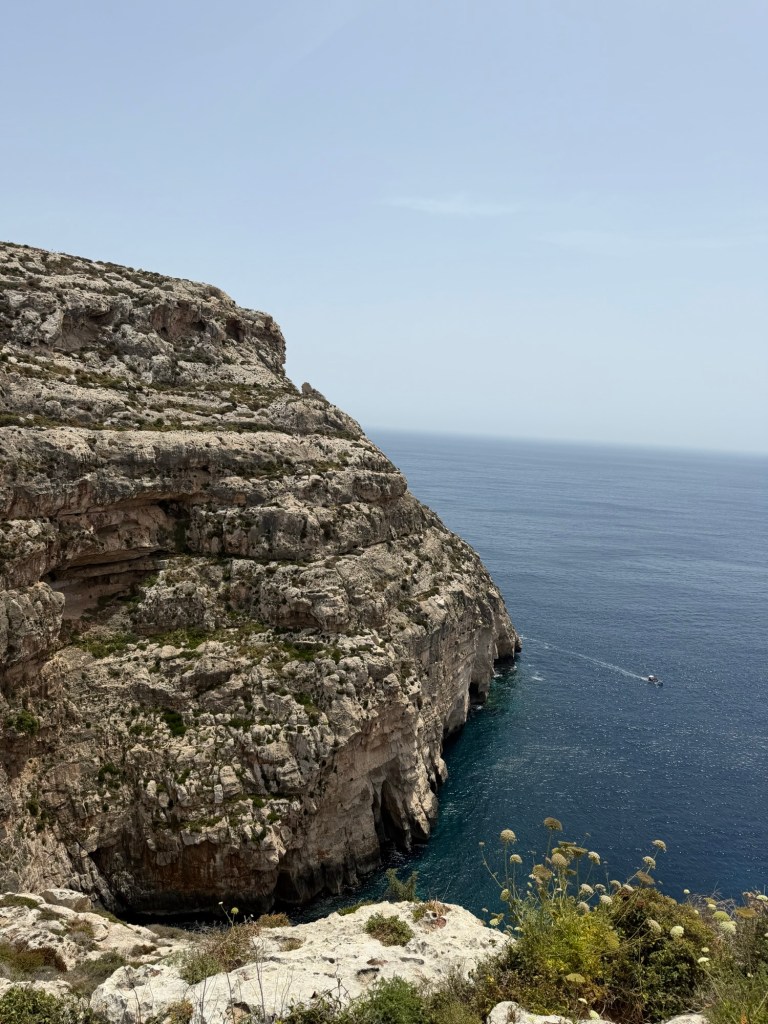
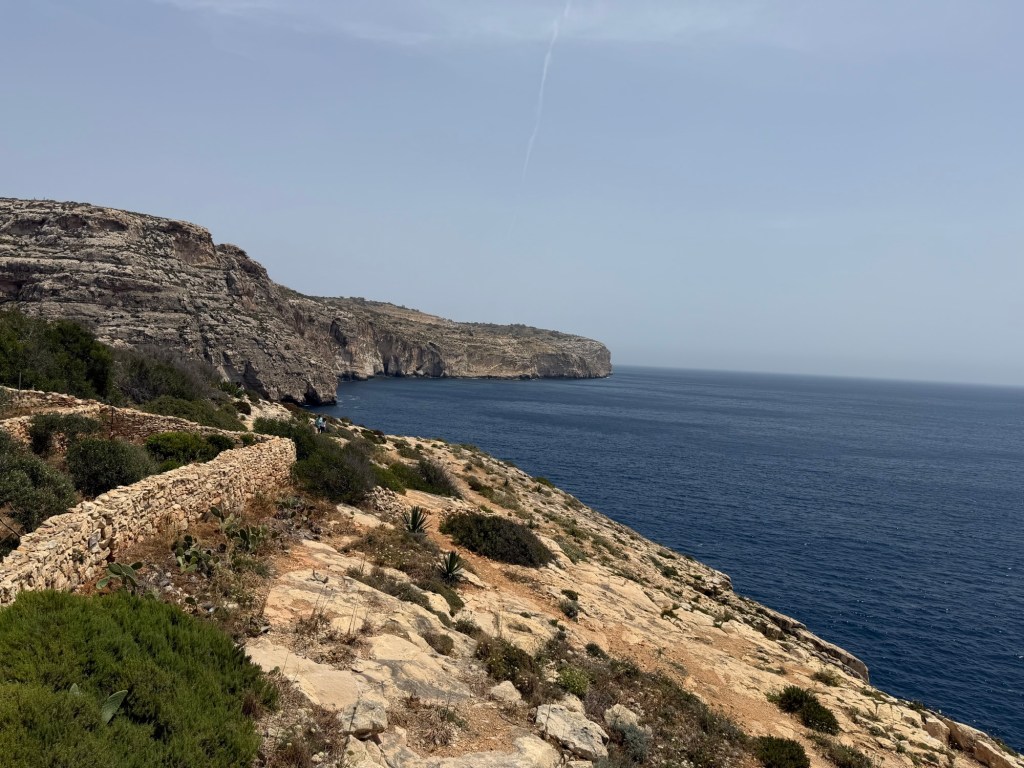
The next stop was the Munxar Path, where we had incredible views of the sea cliffs, and even a little stone bridge. Sam dropped us off and showed us the path to walk, so we got a little hike around to the next village where he drove to pick us up. It was a very scenic walk, and we saw that the marathon was going to going through this area, which seems like it would be quite challenging!

Sam got us back in the buggy and drove us down winding roads and through many small villages. It was interesting to see all the houses, and you could tell that by the names many were owned by people from other countries. Sam explained how when he was growing up there were a lot more local people in Gozo, but over time it has become a lot more mixed with people immigrating from other countries and Maltese people moving abroad.

Our next stop was quick but very cool to see. Sam pulled over on the side of the road and we could look down into a limestone quarry, where we could see the people working to cut those yellow stones that are everywhere in Malta. Because the limestone is such a soft stone, it wears away in the sun and wind, and buildings need to have their stones replaced every so often, so obviously this is still a very necessary process. It was really cool to see where all of this material is coming from and the process they use today.

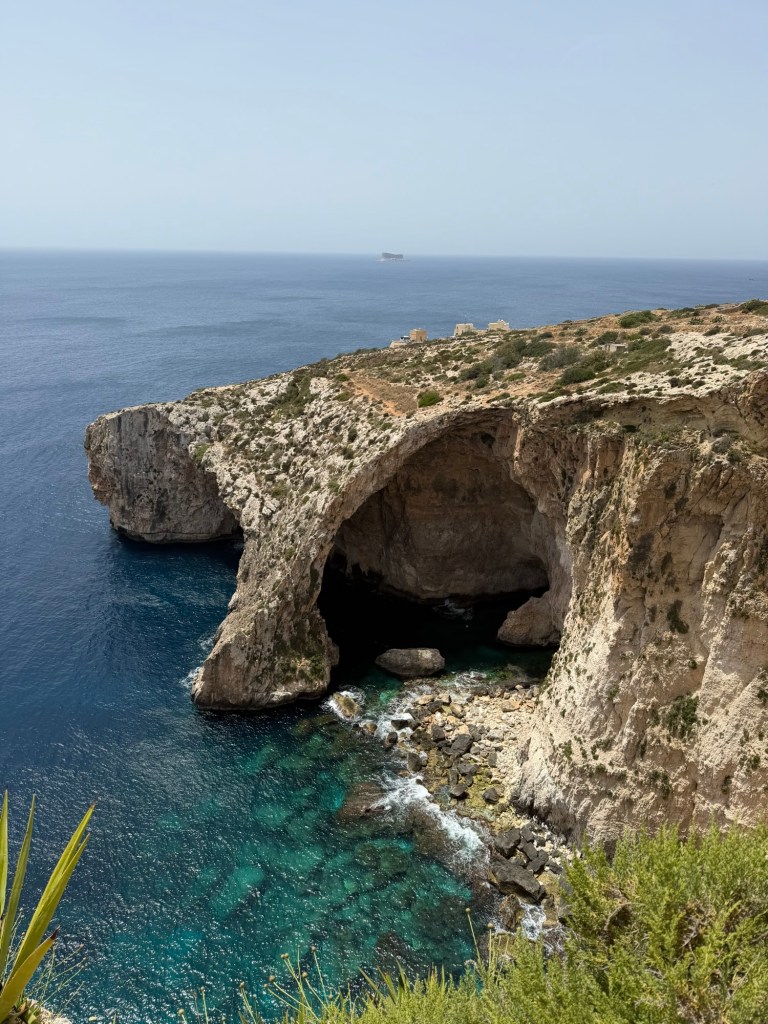
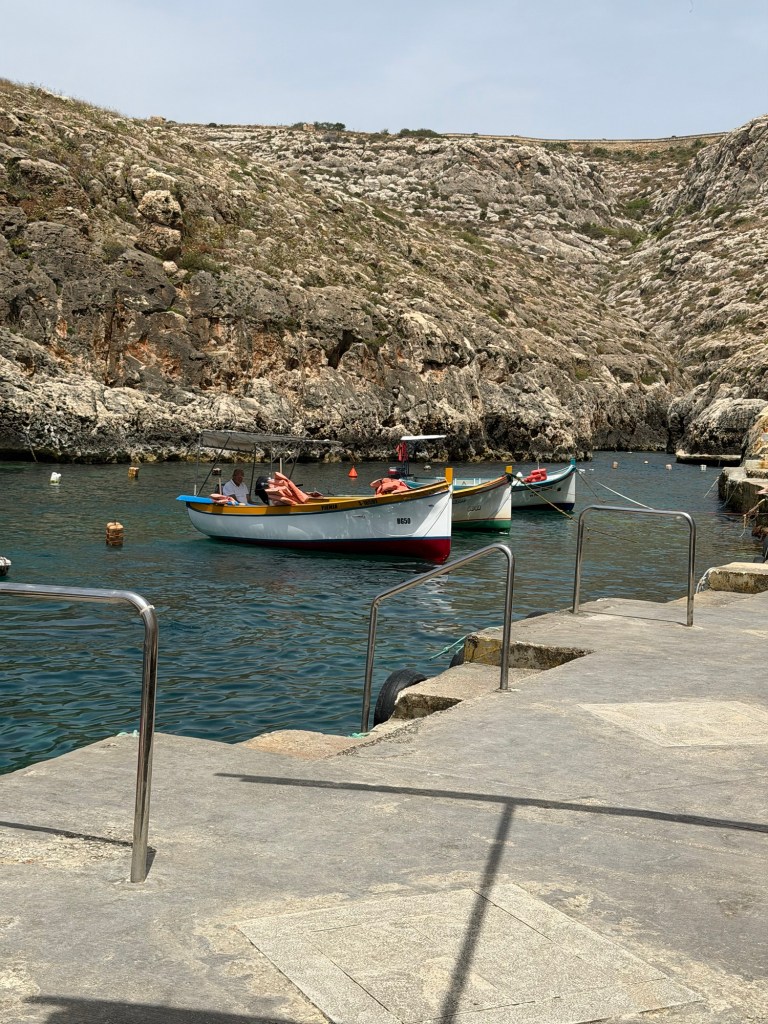
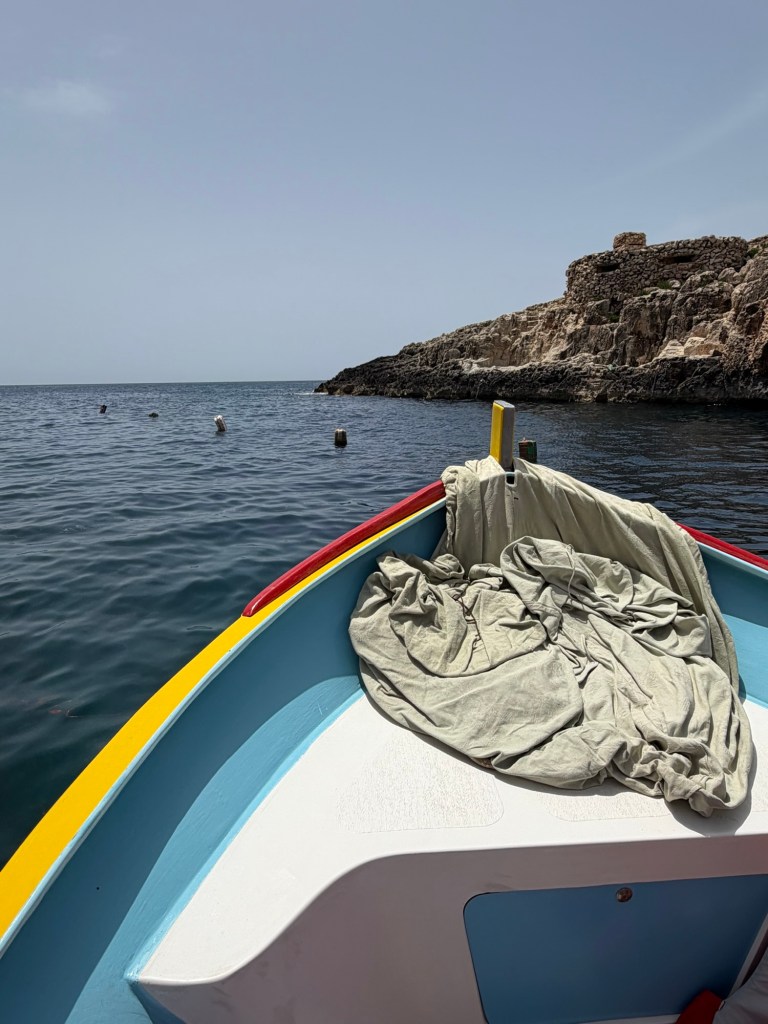
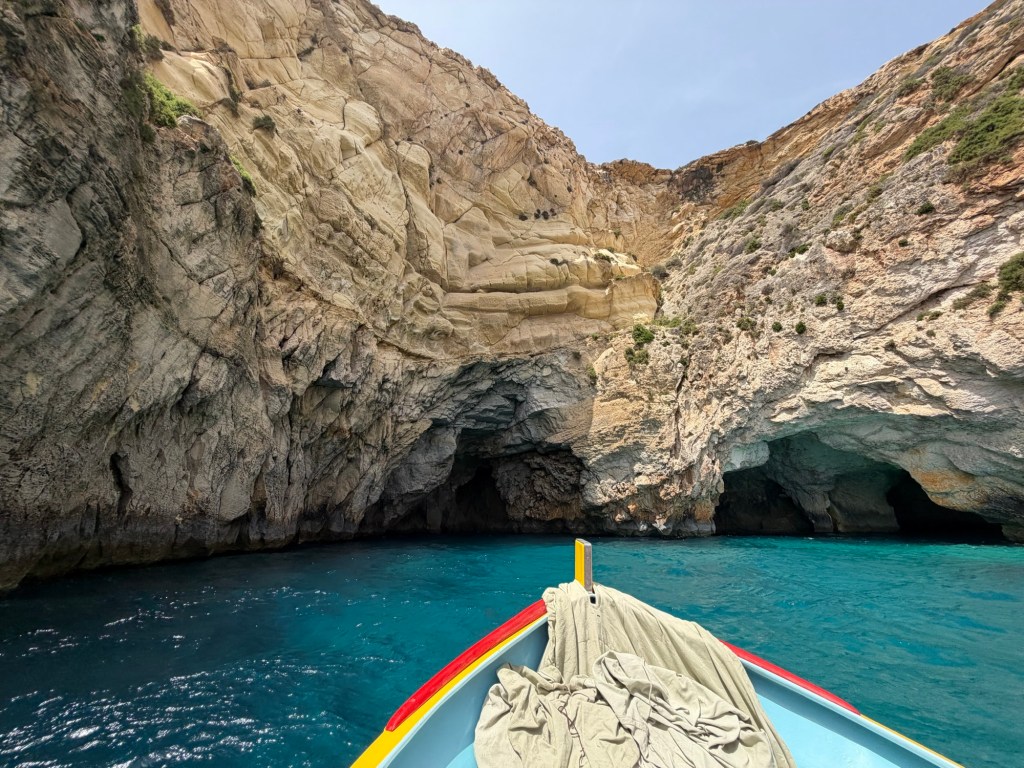
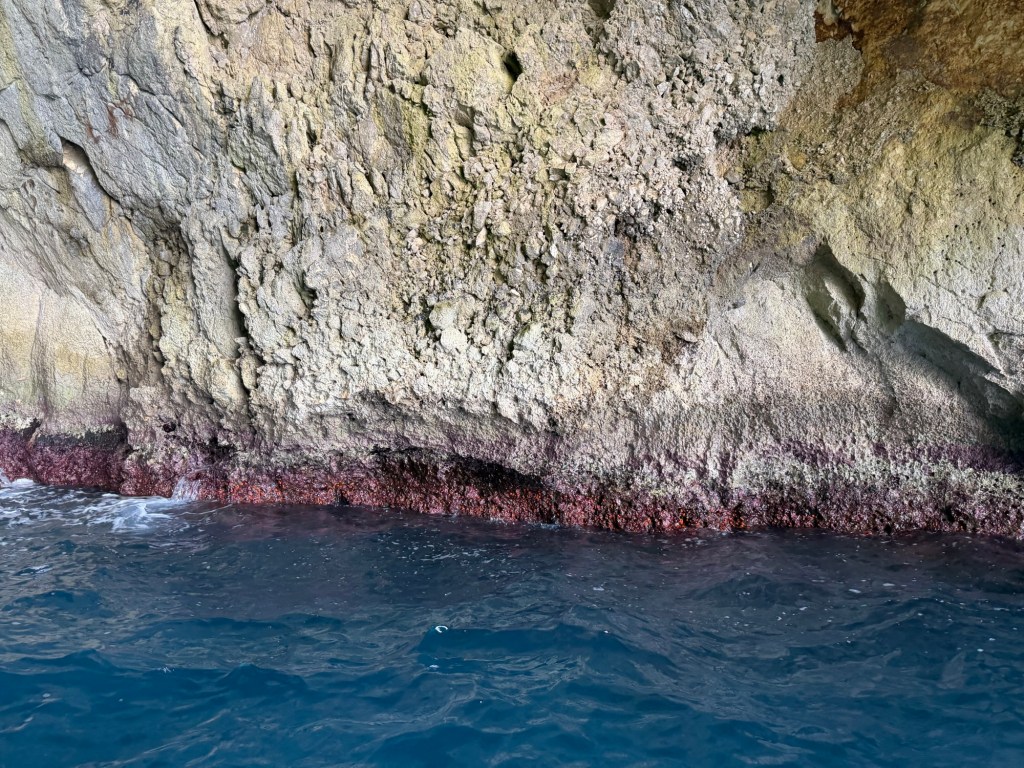
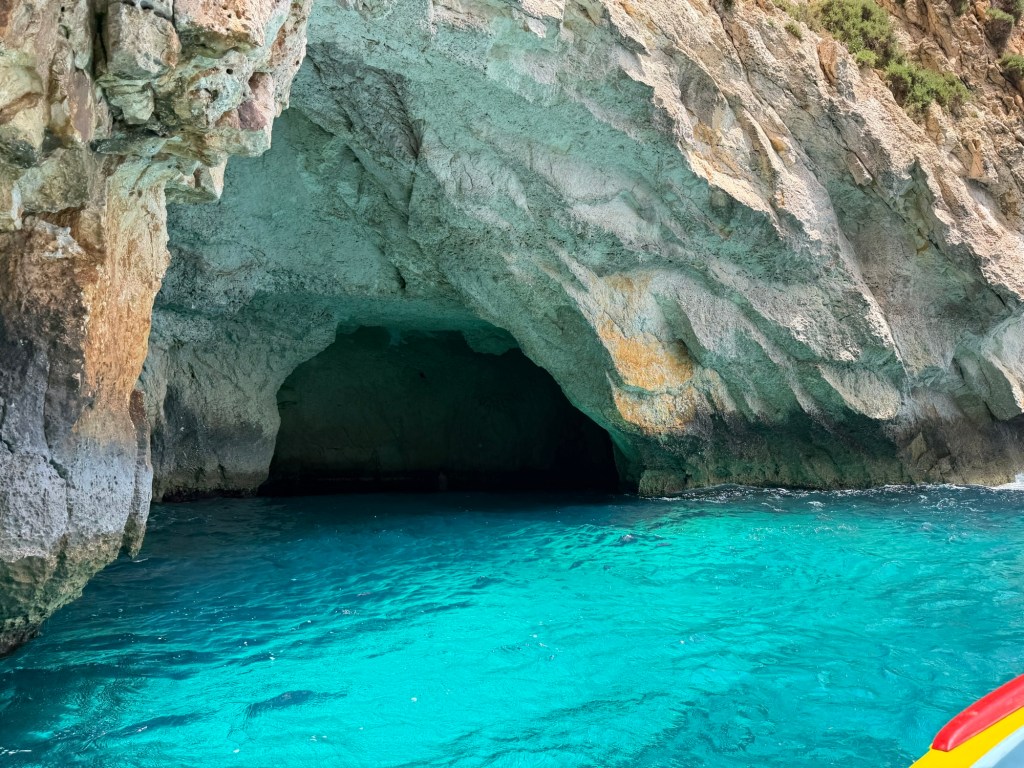
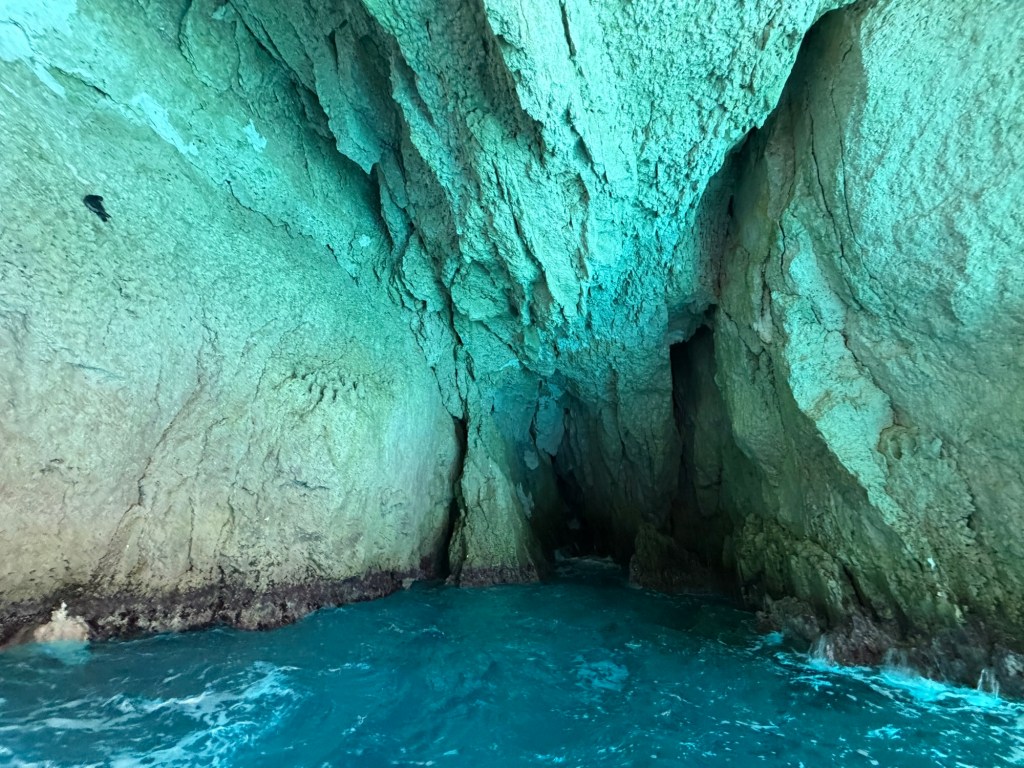
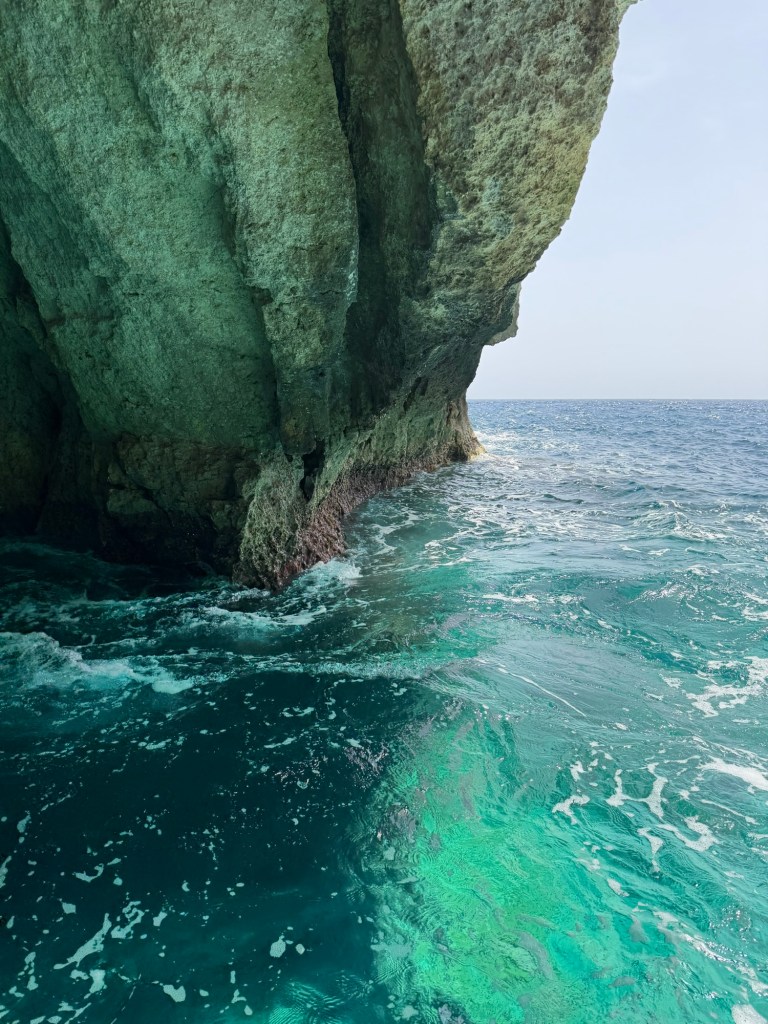
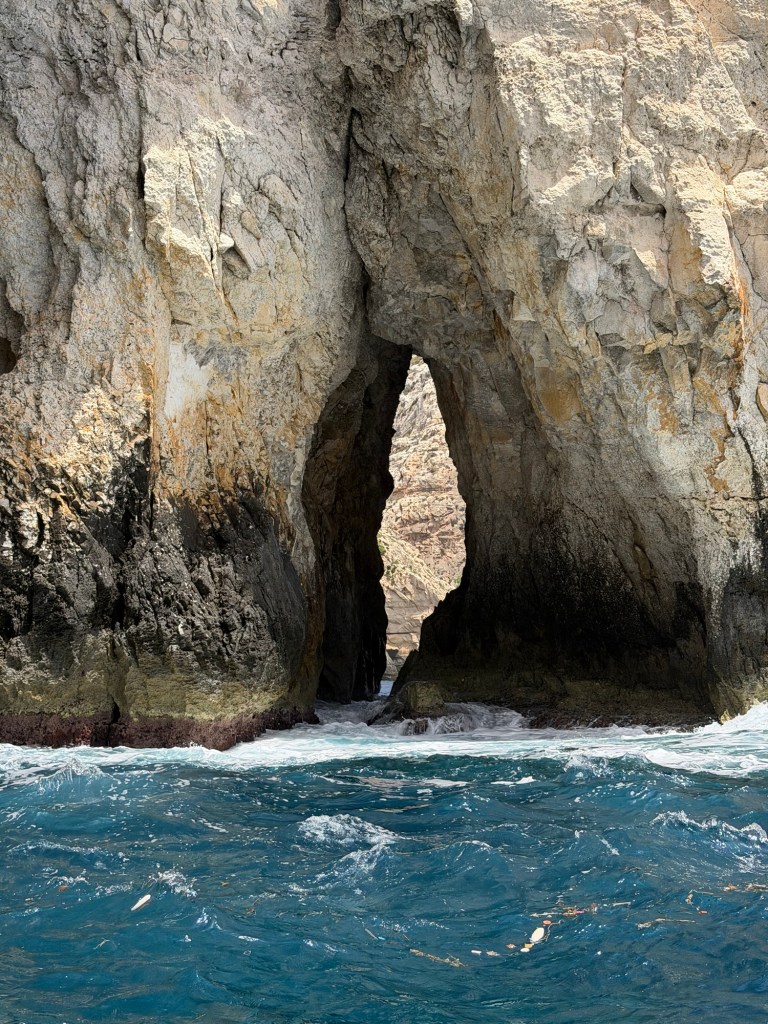
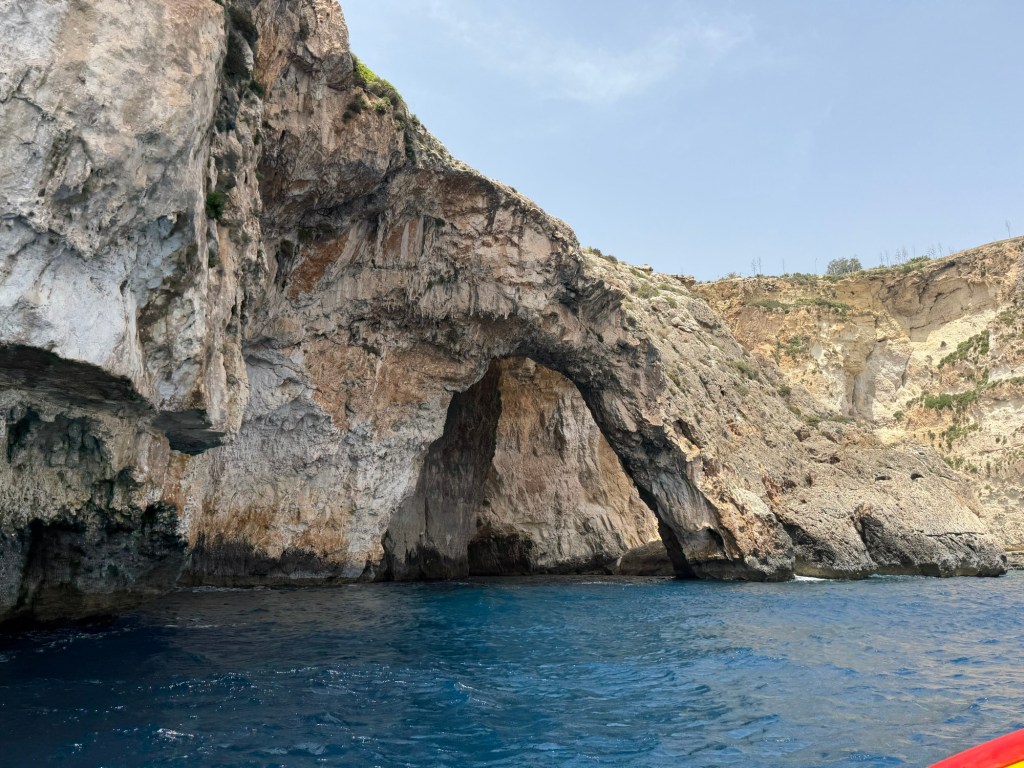
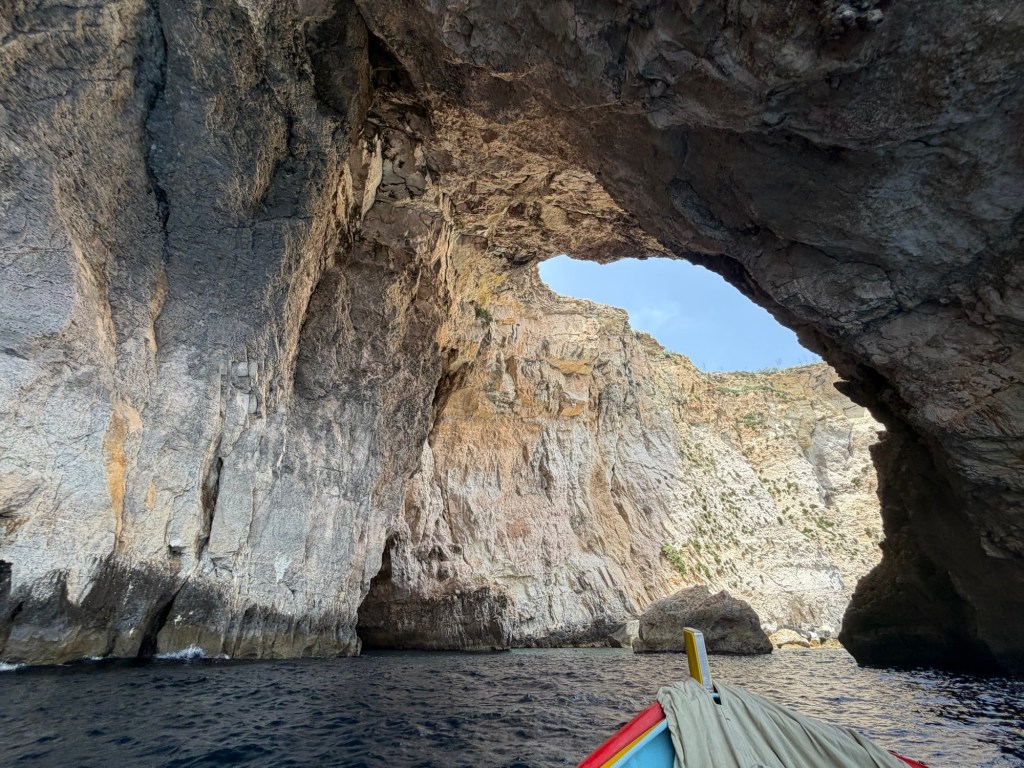
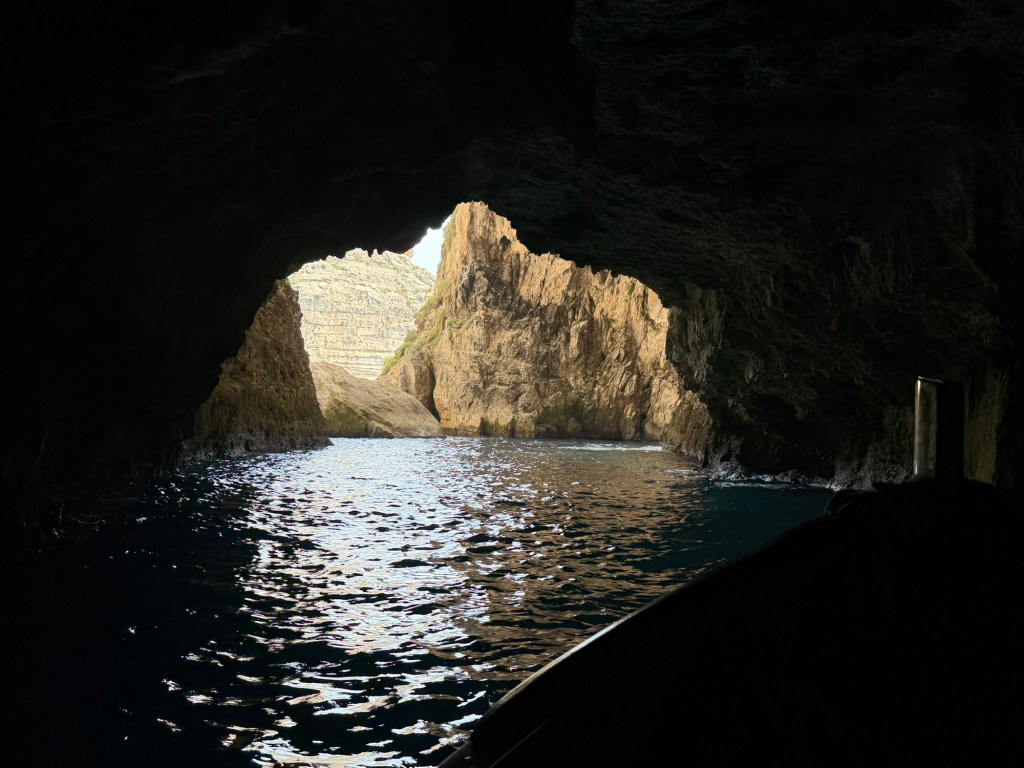
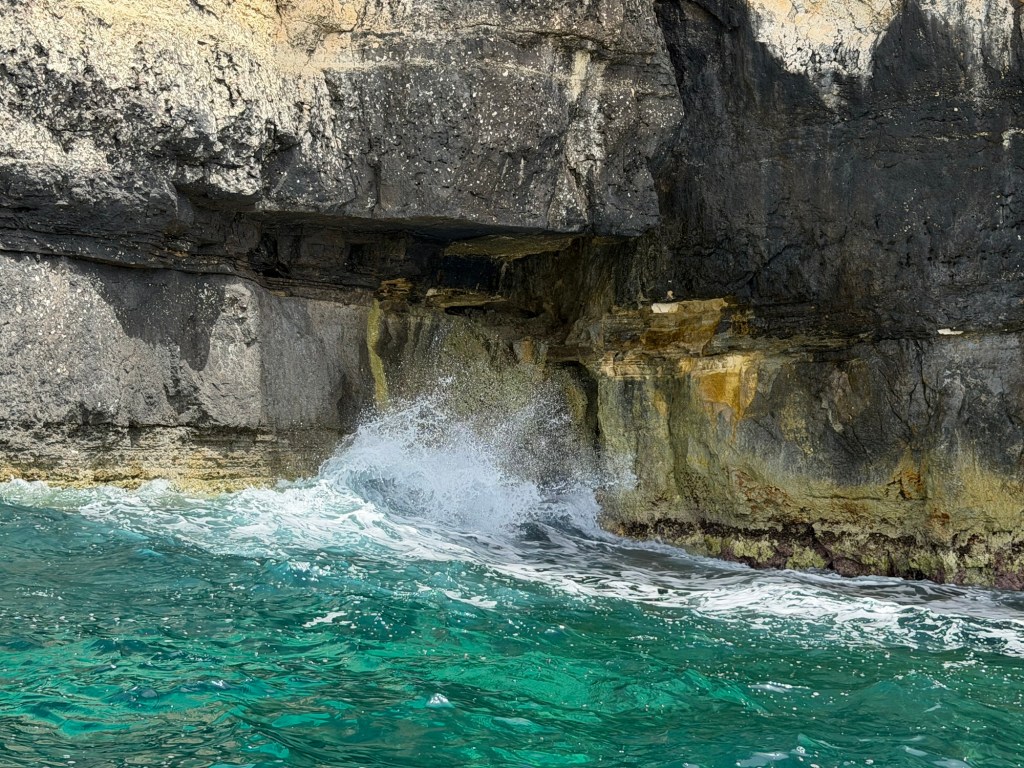
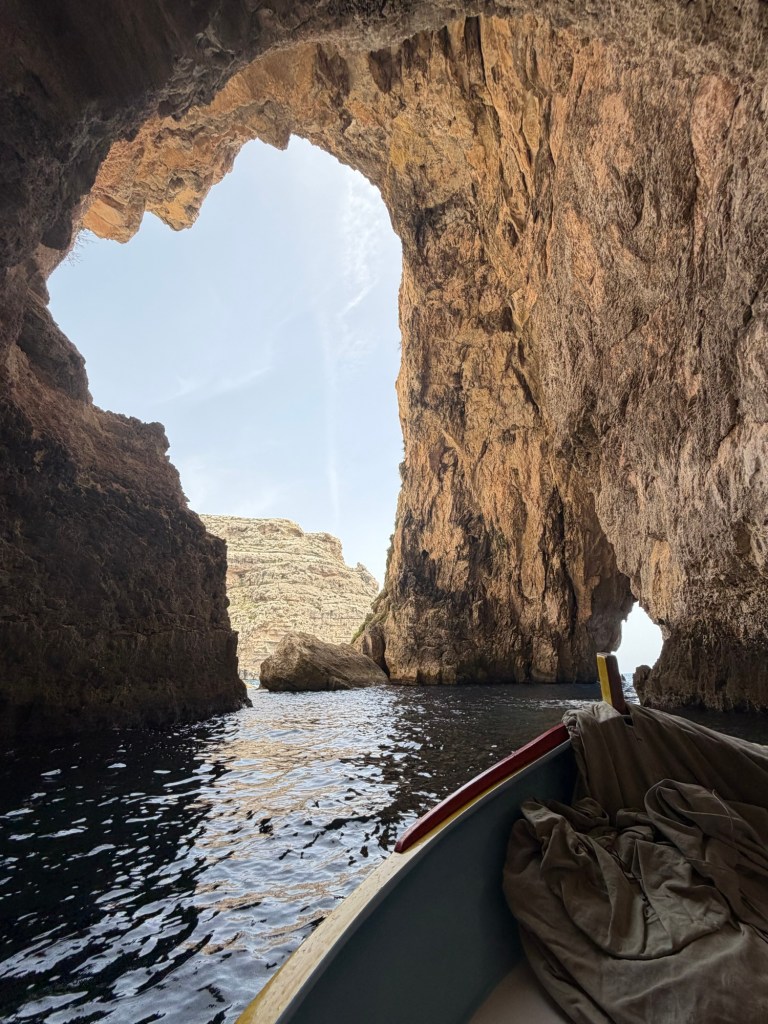
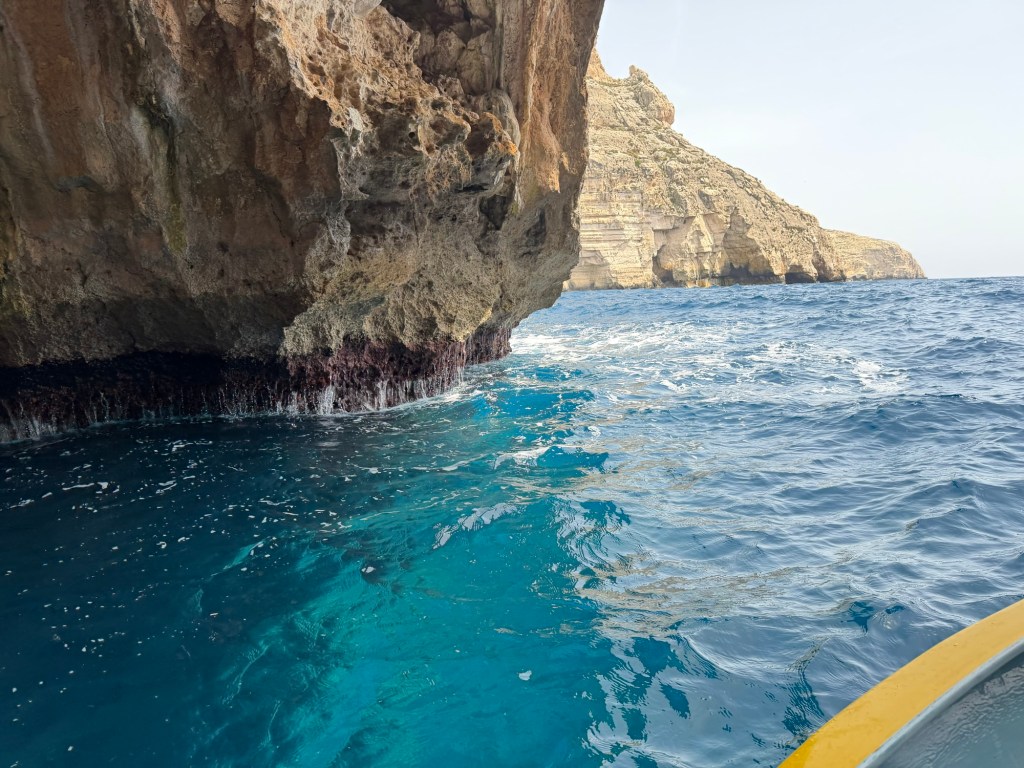
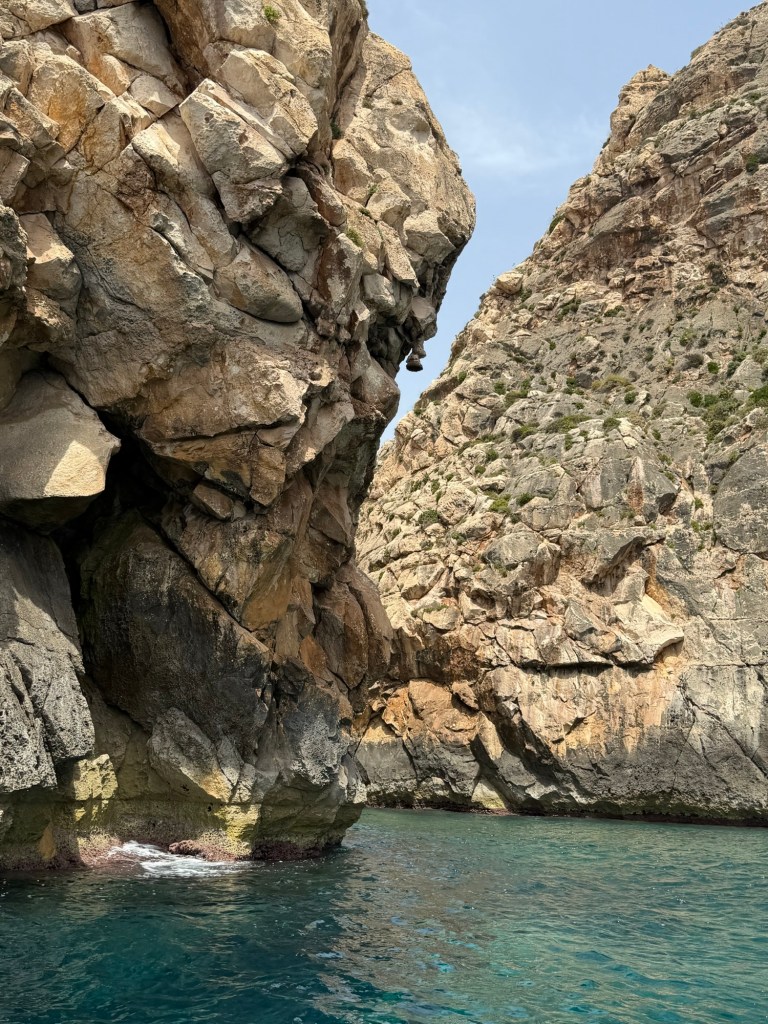
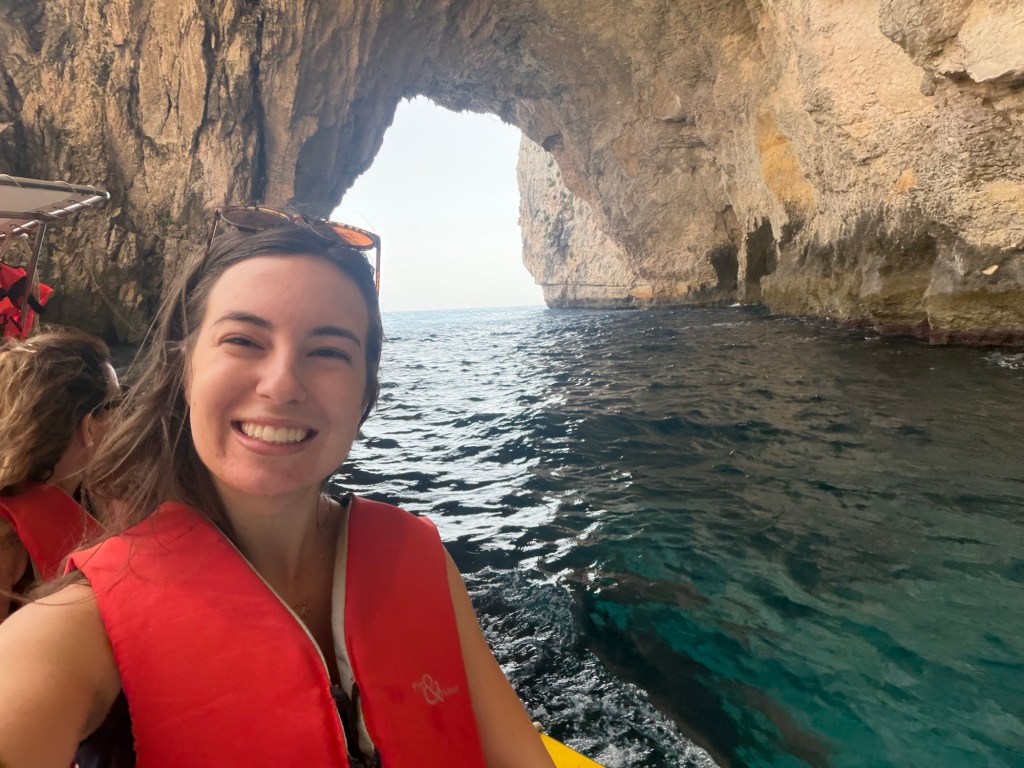
Next, we drove to the Dwejra Inland Sea, which was another of my favorite stops of the day. Here, you walk down to a little cove where you can get on a boat and they will take you completely through a cave out to the other side where you are back out in the Mediterranean. They took us into a few other sea caves and we could see the beautiful blue water (although I’m sure it would be nicer if it wasn’t so hazy out) and even coral growing on the side of the rocks. I love a boat ride, and this was one of my highlights of the day!

Our last stop of the day was at the Xwejni Salt Pans. This is an area right on the coast of the island where there are shallow shapes cut out of the rock. During the summer months salt water is left to evaporate and the remaining salt is harvested. This tradition has been happening for 350 years, and still continues today, so when we arrived we were able to sample and buy salt that came from right where we were standing!

We then had just a short drive back to the ferry terminal, but instead of taking the ferry back we were informed that the wind had calmed enough that we could take the smaller boat trip ride back. We all got on board a wooden boat and were off back past Comino to Malta. The wind may have calmed, but it was still a pretty rocky ride, so I was glad we hadn’t gone in the morning if it would have been worse. The views were pretty even though it was a bit of a hazy day, and we made it back safely to the island of Malta, where we found our vans to drive us back down to where we had been picked up in the morning.

I made it back to my apartment around 6, went out to a local pizza restaurant that was highly recommended, and then finished the night with a walk on the Sliema promenade with some gelato and views of the sea. I definitely slept well after this long day of adventure!

Categories: Malta - May 2026 | Tags: , , , , , , , | Leave a comment

Day 7 in England – Gates, Sheep, and Cream Tea: A Day on the Warden’s Way in the Cotswolds

Walking across a rapeseed field

DAY 7 – SUNDAY, MAY 10, 2026

For this part of the trip we were staying at the same hotel for a second night, which felt like a luxury. Since we did not need to have our bags packed and ready for transport, we took advantage of the opportunity to sleep in a little later. After another big breakfast at the hotel, we reviewed the options for the day in our trip app: spend the day exploring a new village about 30 minutes away or tackle a 10-mile circular walk. You can probably guess which option we chose.

Our route out of Lower Slaughter first brought us to Upper Slaughter, a village only about a 15-minute walk away. It was every bit as charming as Lower Slaughter, though even smaller. Essentially one beautiful inn with a Michelin-rated restaurant, a handful of stone cottages.

One interesting thing we noticed while leaving Lower Slaughter was how many of the iconic red British telephone booths had been repurposed. Rather than removing them, several villages have converted them into emergency defibrillator stations. With a quick call to 999, you can receive a code to unlock the machine. It was a clever and practical way to preserve a bit of British history.

New defibrillator booth

For most of the day we followed the Warden’s Way trail. Along the route we again encountered plenty of sheep, cows, and horses, along with a swan, a pheasant, and lots of doves (which sounds better than pigeons). We also passed through what felt like an endless number of gates, each apparently designed by a different engineer with a completely different philosophy on latches and steps.

The scenery changed constantly throughout the day. We crossed farms and open fields bordered by hedges, rows of bridal wreath, and fences ranging from neat wooden rails to ancient stone walls and basic wire barriers. At one point we walked through a wooded area that felt surprisingly similar to hiking in New England back home. Some of the highlights included a narrow path lined with Queen Anne’s Lace and a massive field of bright yellow rapeseed flowers stretching across the landscape. We were proud that we recognized the crop thanks to watching Clarkson’s Farm.

A little less than five miles into the walk, we reached the village of Naunton and stopped at the Black Horse Inn for lunch. It was exactly what you hope to find on a long countryside walk: a cozy pub serving sandwiches and chips (fries), with tired hikers gratefully resting their feet.

The Black Horse Inn

Just outside Naunton we came across a restored medieval dovecote. The structure was built centuries ago to house doves, which were once used as a supplemental food source. The dovecote is open to visitors, so we stepped inside and immediately noticed a couple of doves staring at us suspiciously, as though we were interrupting an important meeting. The design was fascinating. Openings at the top allowed the birds to enter while helping keep predators, such as hawks, out.

Several miles later, nearing the end of the route, we arrived in Bourton-on-the-Water, often called the “Venice of the Cotswolds.” Personally, we thought this title might be one of the greatest marketing achievements in tourism history. The Windrush River, while pretty, is really more of a shallow stream winding through the center of town, crossed by five small stone bridges. Not exactly Venice, but definitely picturesque. On a sunny Sunday afternoon, however, it was absolutely packed with tourists and tour buses.

As we entered town, we stopped at Bakery on the Water for afternoon tea, which is rapidly becoming part of our daily routine. Karen enjoyed a traditional cream tea with a scone, clotted cream, and jam, while Greg opted for a Bakewell slice, an almond cake with raspberry filling, along with an iced tea.

Nearby is the famous Model Village. In 1936, the owner of the Old New Inn commissioned the construction of a detailed scale model of Bourton-on-the-Water at one-ninth the size of the actual town. Completed in 1940, it remains one of the area’s most popular attractions. Despite the crowds, we enjoyed wandering through it. One of the funniest moments was watching a cat stroll through the tiny streets looking like a giant movie monster towering over the buildings. The creators also included an even smaller version of the model village within the model itself, which gave the whole thing a fun sense of humor. While Bourton-on-the-Water felt a little touristy for our taste, the Model Village was an interesting stop.

By this point we were ready for the final mile back to our hotel. Conveniently, our route passed directly by Hawkstone Arms and Brewery, Jeremy Clarkson’s pub and brewery. Since we had enjoyed it the night before, we decided an 11-mile walk had earned us another visit. Greg ordered a beer flight to sample more of the Hawkstone offerings, while Karen happily tried the berry cider. It is safe to say she has become a fan of Hawkstone ciders.

With only a short 15-minute walk remaining, we made it back to the hotel with just enough time to shower before our dinner reservation at The Slaughters Country Inn. After a great meal, we returned to our room for some stretching, a hot bath, and an early collapse into bed. Another long walking day awaits tomorrow.

Categories: 2026 England Adventure | Tags: , , , , , , , , , , | Leave a comment

Day 6 in England – From Moreton-in-Marsh to Lower Slaughter: A Cotswolds Adventure

DAY 6 – SATURDAY, MAY 9, 2026

Today was the first official day of our walking adventure through the Cotswolds. We were up early to get organized, eat breakfast, and have our luggage packed and ready for pickup by 8:30 AM. Since we’re combining time in London with a multi-day walking trip, fitting everything into one suitcase each was a challenge. Anything that didn’t fit would have to be carried on our backs for the day, so we packed very carefully.

After another hearty breakfast at the hotel, we grabbed our backpacks and headed out. The tour we booked is “self-guided,” meaning there’s no group and no tour guide. Instead, the tour company provides a smartphone app with the daily itinerary, route descriptions, historical highlights, and an interactive GPS map that shows exactly where you are on the trail. Thankfully, it also alerts you if you wander off course (yes, we did test this feature on our first day).

We started our walk from Moreton-in-Marsh and spent the day crossing fields, farmland, wooded trails, and quiet country lanes. Along the way we passed countless sheep, a few cows and horses, two deer, and more birds than we could possibly identify. What we really should have counted, though, was the number of gates we opened and closed throughout the day. There were a lot.

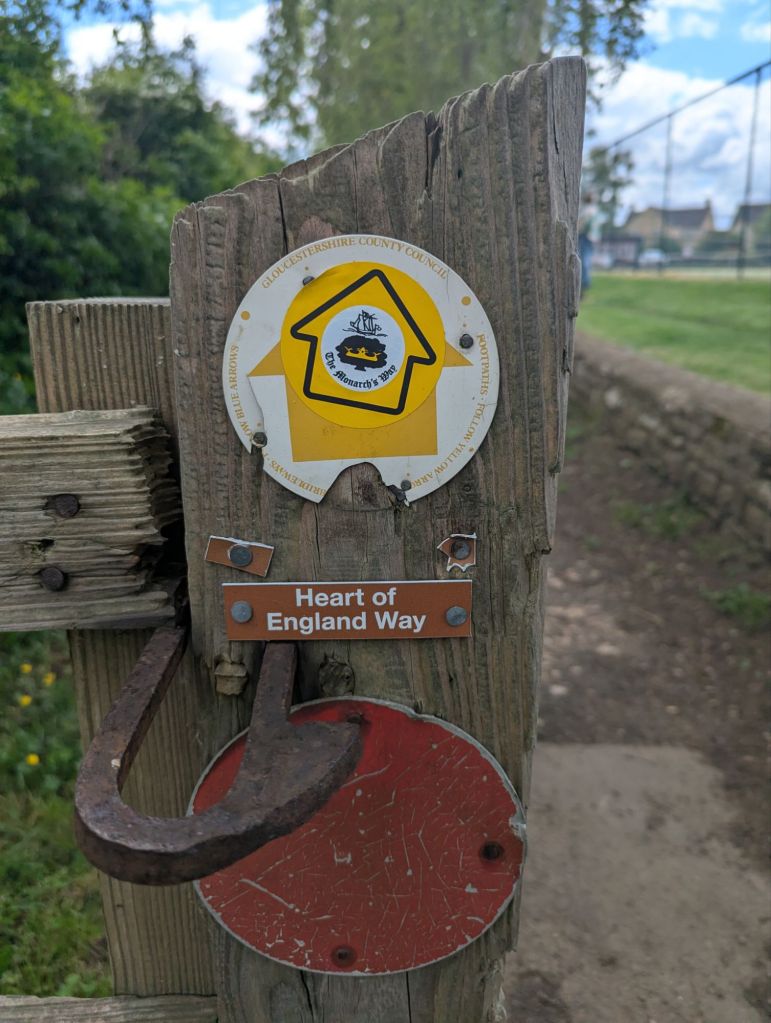
Most of today’s route followed part of The Monarch’s Way, a 625-mile footpath that traces the escape route of King Charles II after his defeat at the Battle of Worcester in 1651. Fortunately for us, we could take our time to take in the scenic countryside.

One of the things that surprised us most was the variety of landscapes we traveled through.

England has long-standing public footpath laws that allow walking routes to cross private land, so throughout the day we found ourselves hiking through open meadows, narrow hedge-lined paths, farmland, churchyards, wooded areas, driveways, and even directly through active cow pastures. There were a couple of moments where the cows seemed just as curious about us as we were cautious of them.

We passed through two tiny villages that seemed to consist of a handful of stone cottages and a church before eventually arriving at Stow-on-the-Wold about three hours into the walk. This was by far the busiest place we had seen all day. The town center was packed with visitors enjoying the gorgeous sunny Saturday weather, and the streets were lined with small shops, pubs, tea rooms, and restaurants.

We picked up sandwiches from a small shop and enjoyed lunch outside on a bench while doing some excellent people watching and appreciating the chance to rest our legs for a bit. After lunch we wandered through a few shops and stopped by The Porch House, which claims to be the oldest inn in England, dating back to the 10th century. It only seemed appropriate to honor that history with a beer for Greg and a cider for Karen.

After our break it was time to get moving again. We continued following The Monarch’s Way for the next couple of hours as we made our way toward Lower Slaughter, where we’ll be staying for the next two nights.

As we entered Lower Slaughter we passed the village’s famous old mill along the River Eye, one of the most photographed spots in the Cotswolds and easy to see why. We also wandered through a small arts and crafts show taking place at the village hall before finally arriving at our hotel, relieved to see that our luggage had successfully beaten us there.

The Old Mill in Lower Slaughter

After checking in, we explored the hotel grounds, which included a food truck that seemed like the perfect place for a snack after a long day of walking. Unfortunately, we quickly learned that everyone else had the exact same idea. The food truck had already sold out and closed early. Apparently a warm, sunny Saturday in England is treated as a major public event.

A quick Google search revealed that we were only about a 15-minute walk from the Hawkstone Arms, a large covered tent pub next to the Hawkstone Brewery. Both are owned by Jeremy Clarkson, whose farm shop we had visited earlier in the week. It seemed wrong not to go, so we headed over for another well-earned beer for Greg and a delicious rhubarb cider for Karen.

We made it back to the hotel with just enough time to shower and change before dinner across the street. Lower Slaughter is beautiful, but tiny. There are essentially two inns with restaurants, and that’s your dining scene. We enjoyed a very nice, somewhat fancy dinner at The Slaughters Manor House before returning to our hotel for a glass of wine and a smartphone card game (Play Nine) to end the evening.

Before bed, we wisely took time to stretch out sore muscles, while Karen opted for the even wiser strategy of a hot bath. After nearly 12 miles of walking, sleep came pretty easily.

Categories: 2026 England Adventure | Tags: , , , , , , , , , | 1 Comment

Day 5 in England – From Einstein to Scones: Exploring Oxford in a Day

DAY 5 – FRIDAY, MAY 8, 2026

We learned an important lesson during our first night in the “stable room” at the inn: old stone buildings may look charming in photos, but with windows that don’t easily open, they can also double as a medieval sauna. After a somewhat restless night of tossing, turning, we headed to the dining room for breakfast.

Neither of us was quite brave enough to tackle the full English breakfast complete with eggs, sausage, bacon, mushrooms, tomatoes, baked beans, black pudding, and toast. We did, however, enjoy a hearty meal that gave us plenty of fuel for the day ahead.

After breakfast, we walked about 10 minutes to the train station and boarded an easy 30-minute ride to Oxford. From there, it was about a 15-minute walk into the city center where we joined a free walking tour that turned out to be one of the highlights of the day.

Over the next two hours, we learned how Oxford University is actually made up of 39 individual colleges, each with its own traditions, rivalries, dining halls, and personalities. Our guide shared stories of legendary student pranks between the colleges, many of which sounded exactly like what would happen if brilliant academics had too much free time.

If you are not familiar with free walking tours, we highly recommend them. We have used them in several cities during our travels. The tours are led by knowledgeable local guides who work for tips, so you simply pay what you think the tour was worth or what fits your budget. We’ve found they are one of the best ways to get oriented in a city and figure out where you want to spend more time exploring later.

After the tour, we stopped for lunch before revisiting some of the sites that had caught our attention. One of the highlights was the Divinity School at University of Oxford. Despite the name, it is not a modern classroom building but a spectacular medieval hall completed in 1483 with an intricately carved stone ceiling that somehow looks both impossibly delicate and incredibly heavy at the same time. Originally used for oral examinations and lectures, it is now perhaps best known to many visitors as the filming location for Hogwarts’ infirmary in several Harry Potter movies.

We also spent time wandering through Blackwell’s Bookshop, which first opened in 1879. Beneath the bookstore is the famous Norrington Room, a massive underground space containing more than three miles of shelving. It once held the Guinness World Record for the world’s largest single room devoted to selling books. For people who love bookstores, this place feels a little dangerous. You walk in thinking, “We’ll browse for a few minutes,” and suddenly you’re contemplating how many books can fit in a suitcase.

Norrington Room at Blackwell’s Bookshop

Sir Christopher Wren, whose work we had already admired throughout London, also left his mark on Oxford by designing the Sheldonian Theatre. Completed in 1669, it was one of Wren’s earliest major projects. The theater’s unusual roof design allowed for a large open interior without support pillars blocking the audience’s view, an impressive engineering achievement for the time. As a small signature detail, a tiny carved wren bird can still be spotted hidden on one of the decorative heads near the entrance.

We also made a quick stop at the History of Science Museum to see one of its most famous artifacts: the blackboard used by Albert Einstein during a 1931 lecture at Oxford. Amazingly, the equations he wrote remain preserved exactly as he left them. While we could not begin to understand the mathematics, it was still fascinating to stand in front of something personally used by one of history’s greatest scientific minds. We stared at the equations just long enough to confirm that we were definitely not theoretical physicists.

Einstein’s Blackboard

When we emerged from the museum, the sun had finally decided to make an appearance, so we revisited a few spots for better photos before stopping for one of Britain’s finest traditions: afternoon cream tea. We enjoyed tea, warm scones with jam and clotted cream, and a slice of Victoria sponge cake. Honestly, the British may be onto something with this daily pause for tea and cake. Productivity might actually improve if every afternoon included baked goods.

Reenergized, we continued exploring Oxford, including the historic Oxford Covered Market. Established in 1774, the market was originally created to move messy butcher stalls and street vendors off the city’s main roads. Today, it houses everything from bakeries and coffee shops to florists, butchers, and specialty stores. Walking through it, it was hard to believe this bustling space has been serving shoppers continuously for more than 250 years.

By late afternoon, our feet informed us that it was time for a break. We found a riverside bar and enjoyed a drink in the sunshine. Eventually, we wandered back into town for dinner at the famous Turf Tavern, a hidden pub tucked down a narrow alleyway that has been serving students, professors, locals, and tourists for centuries. Its secluded location makes it feel like you have stumbled upon a secret gathering place that somehow everyone already knows about.

After dinner, we made the quick walk back to the train station and caught the 7:45 train to Moreton-in-Marsh. Once back at the hotel, we got organized for the next day and headed to bed early to rest up for our first 10-mile walk through the Cotswolds.

Categories: 2026 England Adventure | Tags: , , , , , , , , , | Leave a comment

Day 2 in Malta – St. John’s Co-Cathedral and Neolithic Structures

On Wednesday I started the day in Malta by taking the ferry back to Valletta and going to St. John’s Co-Cathedral. This was one of the “must see” buildings and it certainly was impressive. When I went inside it was pretty crowded with lots of tour groups, but I really enjoyed the in depth audio tour.

The building was built by the Knights of St. John in the 16th century, and was initially very plain, but over time they added much more decoration to the interior once that was the style of the time. This created a mismatched look between the plain exterior and ornate interior that is pretty unique among many other cathedrals. Going around to all the chapels I learned that each one was dedicated to a different division of the Order of St. John. There was a French area, a German area, an Italian area, etc., and each was decorated with symbols representing the country, as well as monuments for various Grand Masters of the Order. You can also see the eight pointed cross many places, which is the symbol of the Knights of St. John.

In addition to the beautiful architecture and decoration, the co-cathedral is also well known for having a couple Caravaggio paintings, including the Beheading of Saint John the Baptist, which was his only work that he signed. There was a whole section set up more like a museum with an exhibit and video about Caravaggio which was really interesting. He had quite a temper and killed a man in Italy, so was sentenced to death in Rome, but once the Knights of St. John heard about his amazing painting they offered for him to come live there (and pardon him) if he would paint for them. However, he soon got in another fight and was arrested and expelled. But, he did leave behind some amazing works of art!
Caravaggio’s Beheading of Saint John the Baptist

After leaving the co-cathedral I needed to make my way to the Hypogeum for my tour that I had booked the day before. It was only a short drive away, and the building was hidden amongst normal shops and houses. I really had no idea what to expect, and they did not allow any photos inside so you’ll have to trust my description. They only take about 10 people into the tour at a time, several times a day, which is why it sells out so quickly. When we got inside they had us put on shoe covers and we watched a short introduction video about when the Hypogeum was discovered. There were houses built on top and when a worker was cutting down into the ground below he found a large network of underground rooms and caves that were built over 5000 years ago (older than the pyramids)!
They explained that when it was discovered the archeologists found lots of human remains and bones that showed that parts of it were most likely used for some sort of burial rituals. Now those have been taken out, but we could walk on elevated walkways through multiple levels of the caverns, looking at some remaining paintings, carvings, and structure that was created so long ago. There was an audio tour that played as we were ushered from room to room and it pointed out some of the unique features that we were seeing and gave some possible explanations for what the structure was used for, but of course no one knows for sure. One of the things that I found most interesting was that they created doorways and ceilings completely underground that are similar to other Neotlithic structures, but much better preserved. They also did not have metal tools at the time, so it is even more impressive to understand how much skill and time it would have taken to create these structures. There was also a room that was designed to resonate at a certain frequency, which was very interesting and also gives more possible context as to what these types of structures were used for.

A photo from their website showing one of the rooms with doors and ceilings carved into the stone

After this tour I walked to a nearby cafe for a quick lunch with a view of the local church, then I walked to the nearby Tarxien Temples, which is another Neolithic site built around 3400 BC. This time it was completely outdoors but covered with large tents. This also had an audio tour, so I walked around the site and listened to that which was also fascinating.

After finishing up there I took the bus back to Sliema, did some souvenir shopping, and of course got a bubble tea! At night I found a local restaurant that served fried shrimp and had a delicious dinner to round out day 2 in Malta.

Categories: Malta - May 2026 | Tags: , , , , , , , , | Leave a comment

Day 4 in England – From Hampstead Heath to Diddly Squat

Exploring Hampstead

DAY 4 – THURSDAY, MAY 7, 2026

We decided to spend the final morning of our first stay in London exploring a different side of the city. We left our hotel and hopped on the Tube for a 45-minute journey north to Hampstead, an area that feels worlds away from the bustle of Central London.

After grabbing coffee and croissants, we began exploring this lovely neighborhood using another walking tour from @ALadyinLondon, the same guide whose Soho tour we really enjoyed earlier in the week. Once again, she did not disappoint.

Hampstead immediately felt quieter and more relaxed than the areas we had visited earlier in the trip. We wandered through beautiful residential streets lined with charming homes that probably cost somewhere between “a lot” and “we shouldn’t even look.” The commercial areas were filled with cozy cafes, bookstores, bakeries, and independent shops that made us wish we had a little more time to linger.

Along the way, we also passed homes connected to a couple of famous residents from the past. One was the former home of Jim Henson, creator of the Muppets, and another belonged to Robert Louis Stevenson, author of classics such as Treasure Island and Dr. Jekyll and Mr. Hyde. It’s always fun in London to turn a corner and suddenly realize that history, literature, or pop culture somehow happened right there.


One of the highlights was walking through Hampstead Heath, a massive green space that seemed to be equal parts park, nature preserve, and unofficial London dog convention. Everywhere we looked there were happy dogs sprinting across fields while their owners somehow managed to remain perfectly calm and sophisticated despite the chaos around them. Unfortunately, we didn’t have enough time to stop at the Affordable Art Show, which had just opened for the week.

Before heading back, we grabbed a quick lunch at a bookstore cafe, which feels like exactly the kind of place you should eat lunch in Hampstead. After a little more wandering past architecturally interesting homes and quiet side streets, we made our way back to the Tube station. It was a really enjoyable morning and gave us a chance to experience a very different side of London that felt far more suburban and local.


On our way back to the hotel, we squeezed in one final London essential: bubble tea for the road. Shortly afterward, our driver arrived right on time and we were officially off to the Cotswolds!

Along the way, we asked if he could make one very important detour that was only a few minutes out of the way: the famous Diddly Squat Farm Shop from the Amazon Prime series Clarkson’s Farm.

If you haven’t watched the show, we highly recommend it.

The series follows Jeremy Clarkson, best known for car-related television shows, as he attempts to personally run his large farm in the Cotswolds starting in 2019. What follows is a mix of farming, weather disasters, livestock chaos, financial stress, questionable decisions, and genuinely hilarious moments. Over time, the show also gives you a real appreciation for how difficult farming life can be.

Our friends Bob and Stacy recommended the series as “research” before visiting the Cotswolds, and now we’re completely hooked. It was great fun seeing the actual farm shop in person after watching it come together on the show. Sadly, Jeremy and the rest of the cast were nowhere to be found, although we half expected Kaleb to come flying through the parking lot on a tractor at any moment.

Our final destination for the day was the White Hart Royal Hotel in Moreton-in-Marsh, our first stop in the Cotswolds. The inn is located right in the middle of a charming little town filled with classic stone buildings and small local shops. Our room was located in what used to be the old stable building, which thankfully now includes modern plumbing and Wi-Fi.

After dropping off our bags, we spent some time wandering around town, including an obligatory pub stop, before returning to the inn for a very nice dinner.

As our first evening in the Cotswolds came to an end, we looked over our itinerary and talked with anticipation about the next day’s adventure: a day trip to Oxford.

Categories: 2026 England Adventure | Tags: , , , , , , , , | Leave a comment

Day 1 in Malta – Exploring Valletta and Crafting

At the same time that Mom and Dad left for England, I went on my own trip to Malta. I’m a little behind but now that I’m back home I’m going to try and get my blog posts up too and hopefully it’s not too confusing!

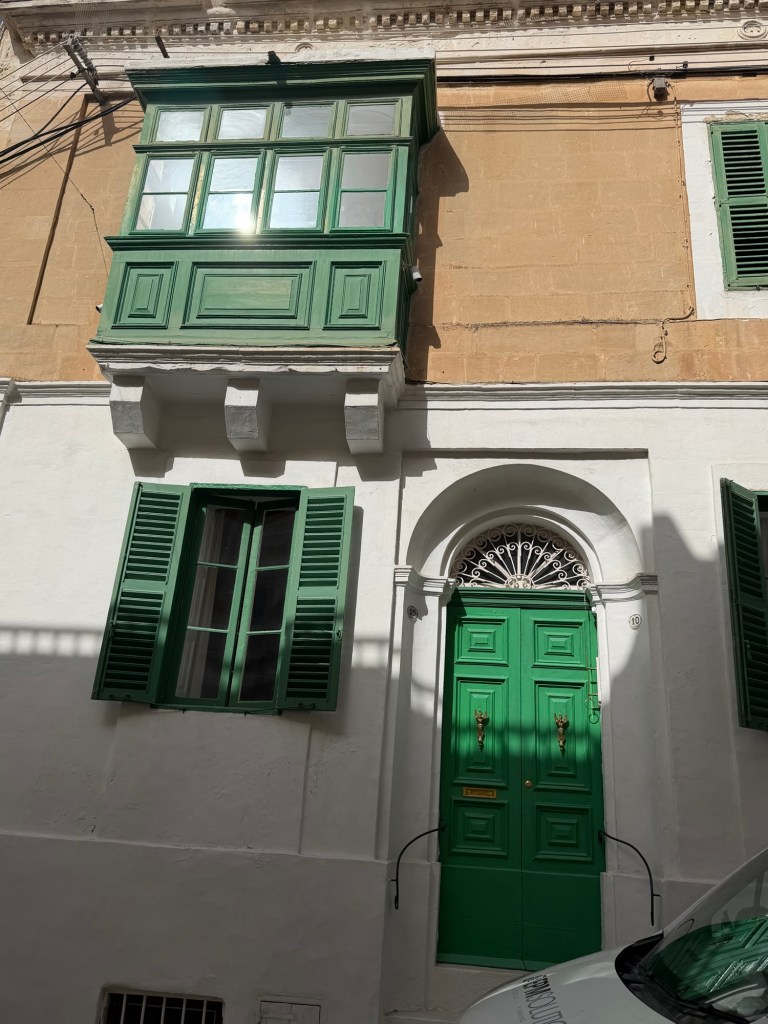
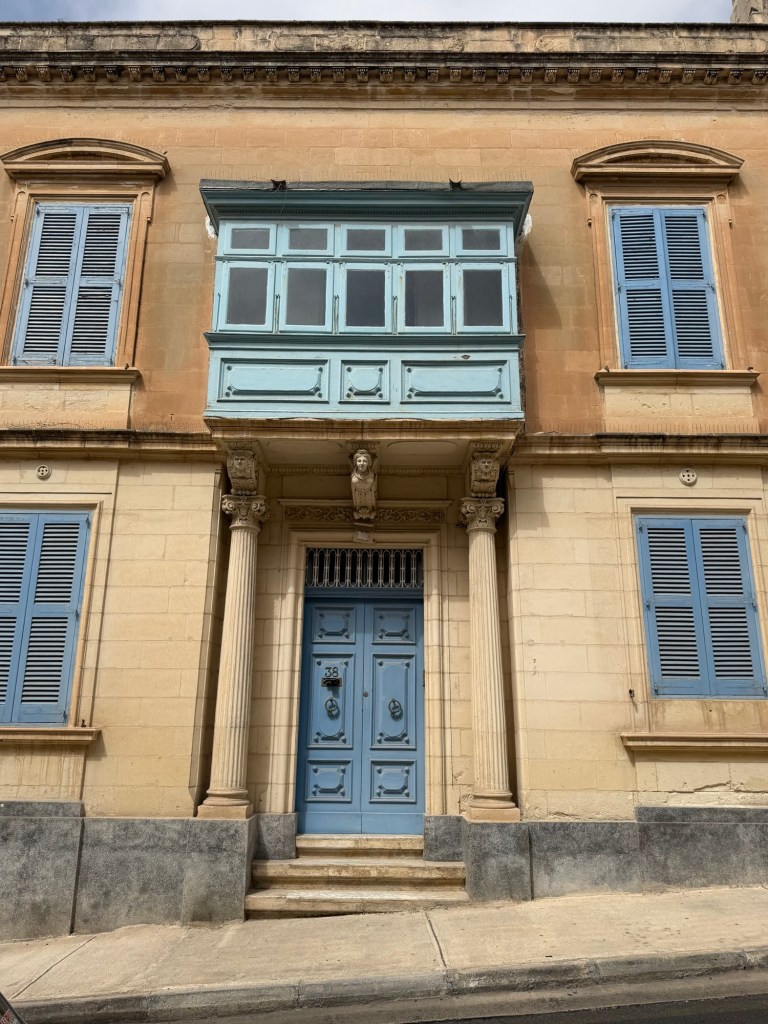
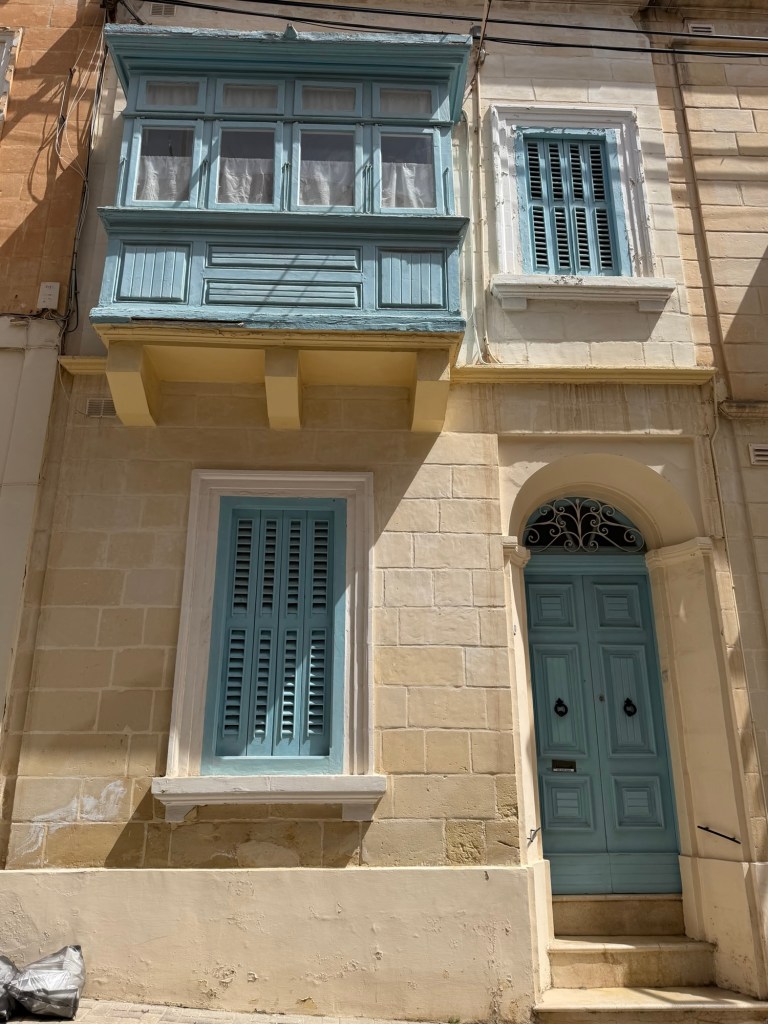
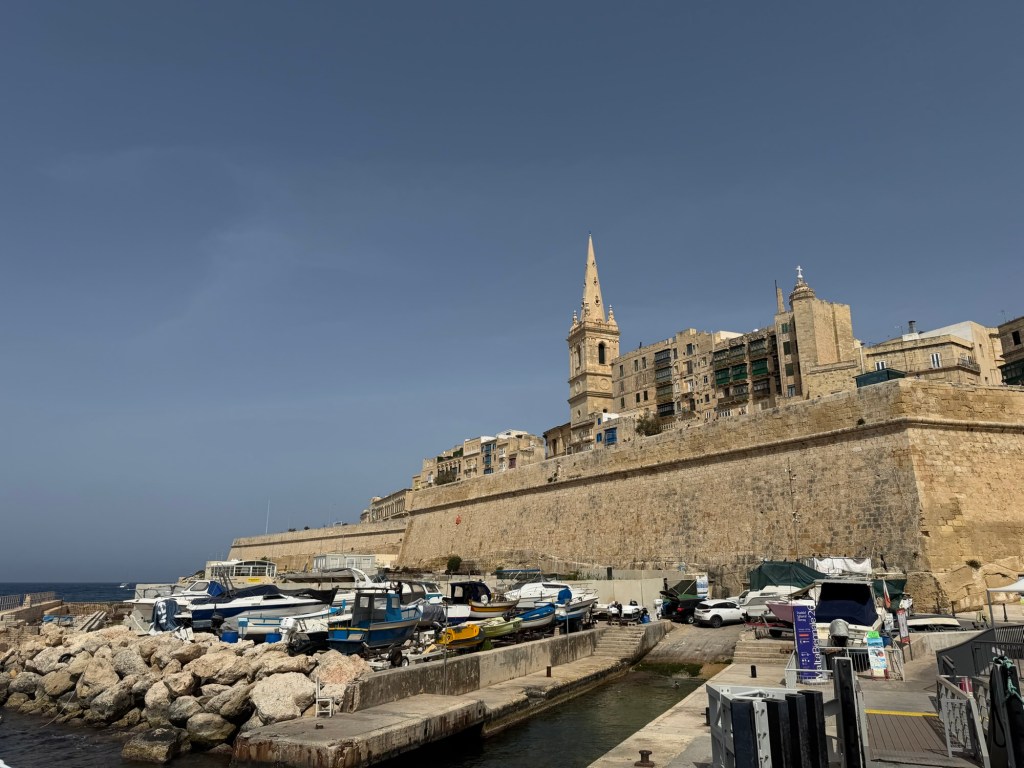
After a long travel day (Atlanta to Copenhagen to Malta) I got to the apartment I was staying in Monday evening. It was the top floor of a traditional Maltese building, complete with one of their iconic covered balconies and a rooftop with amazing views of the sea. I went out on a short walk to explore Sliema, the town I was staying in, and got a great initial view of Valletta, the capital, across the harbor. I was pretty tired, so I went to sleep with plans to get up early and really start sightseeing the next day.

I stayed at the top floor where the light is on!
The view from my apartment

On Tuesday I got up and took the ferry from Sliema to Valletta, which is just a short 10 minute journey. I always enjoy being out on the water, so I was excited that this is the easiest and fastest way to get there from where I was staying. Once in Valletta I walked to Fort St. Elmo, at the far end of the peninsula where Valletta is located. Here, I waited to get tickets to the Hypogeum, which are extremely limited and sold out online months in advance. But, you can go to this location to buy next day tickets first thing in the morning if they are available. Luckily, I was successful so I will share more about my visit to the Hypogeum in the next post.

I then strolled through the city and grabbed an iced tea and pastry to eat while I killed a little time before my walking tour. I found a square where there was a really nice temporary installation of tons of flowers and trees and sat on a bench to enjoy this pseudo botanical garden. I learned later on that historically plants were not allowed in Valletta as they have a problem with getting enough water. It rarely rains in Malta and their only source of fresh water is groundwater from that rain. Now, they also desalinate sea water to supplement that. At 10:30 it was time to meet my free walking tour to get my introduction to Valletta.

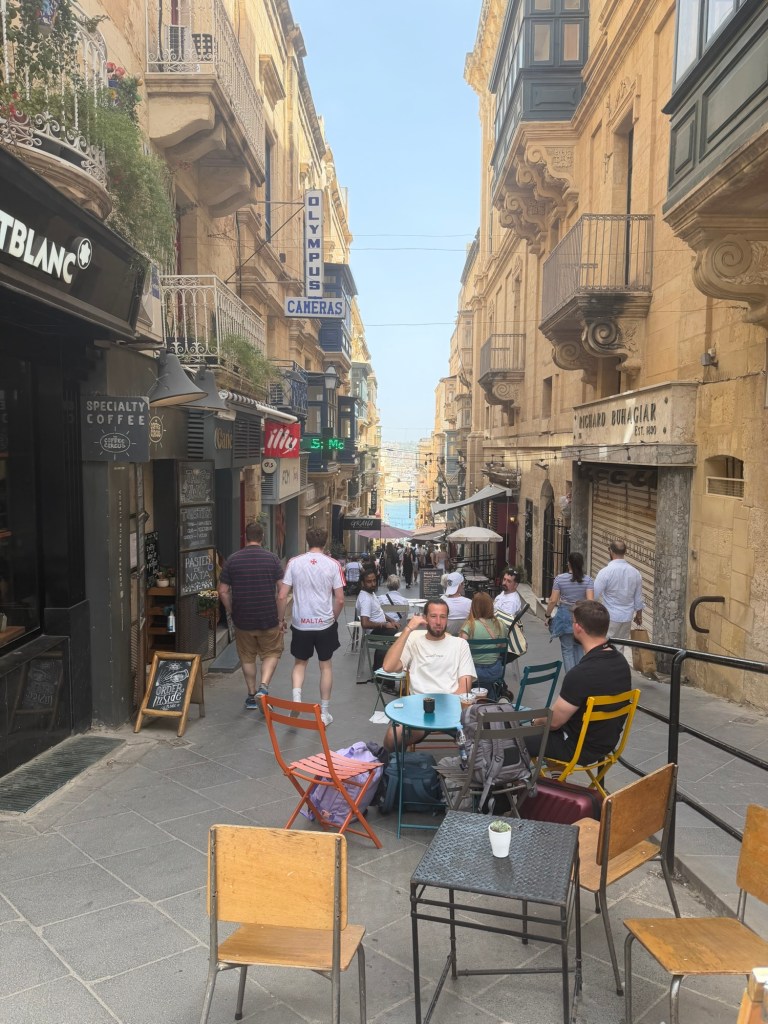
Walking towards the tour I was shocked by how many more people there were. I clearly had found the busy tourist area, and quickly learned that Valletta sees up to 50,000 people a day (cruise ships dock here as well as it just becoming a more popular travel destination in the last few years). This is particularly impactful once you learn how small the city is. The entire city is only 0.6 miles long and 0.4 miles wide, making it the smallest capital city in Europe. There are only about 5,000 residents, so 50,000 people coming in every day is quite a lot!
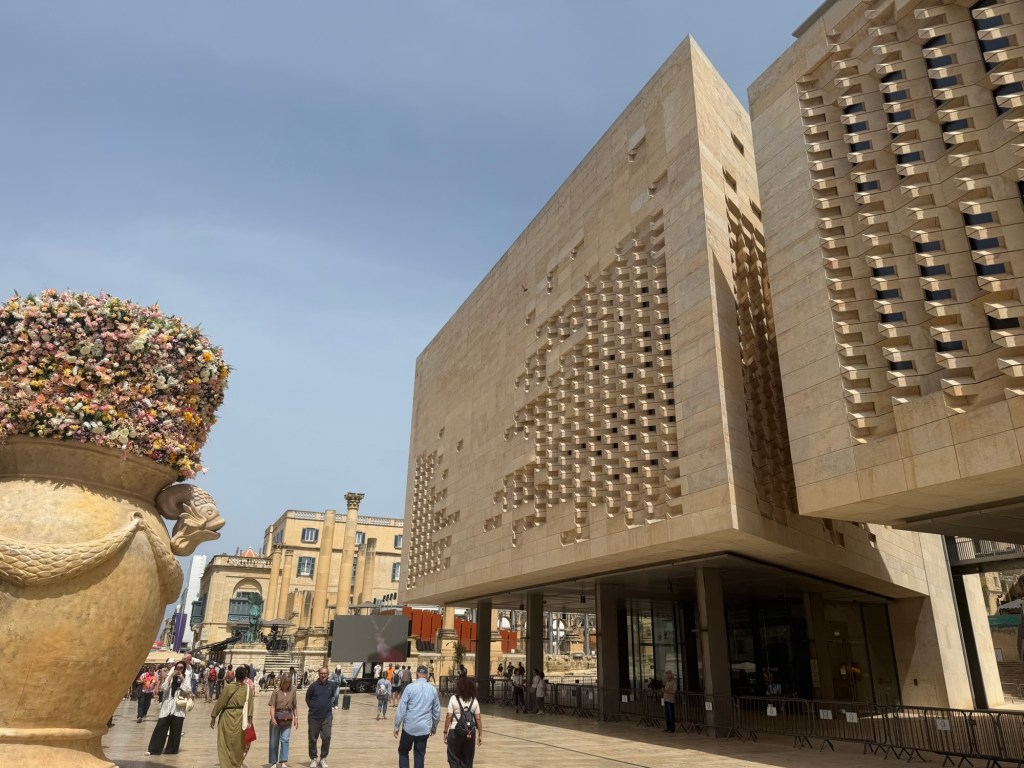
The walking tour was great and I learned a lot of context about the history and culture of Malta. Valletta was built by the Knights of Saint John, who created the fortified city in order to protect the island that they called home. The city has a grid layout and a lot of the buildings we saw could be attributed to the Knights. We started the tour at the new Parliament building, which was made in the same yellow limestone that most buildings in Malta are made out of, but with an interesting texture to represent how these stones wear away over time. Next to it was the opera house, which was mostly destroyed during WWII, but now has been reopened as an open-air theater. We ended the tour with a view of the Upper Barrakka Gardens, where they fire a canon twice a day. Our tour guide had timed it so that we could watch the canon go off, and it was a little underwhelming.

The tour also gave some great information about what Malta is like today. It has two official languages, Maltese and English, and both have equal importance, so most signs would have both. The tour guide also explained that Maltese is a mix from several other languages, primarily Arabic with some Italian, French, and English thrown in, which makes a lot of sense based on Malta’s location between Sicily and Africa. She also told us how before 2018 Valletta really run down, but was then designated as a European Capital of Culture, which gave a lot more funding and led to a huge resurgence of development and tourism. Now, the real estate in the city is super expensive, many of the buildings have been restored, and they see millions of tourists each year.

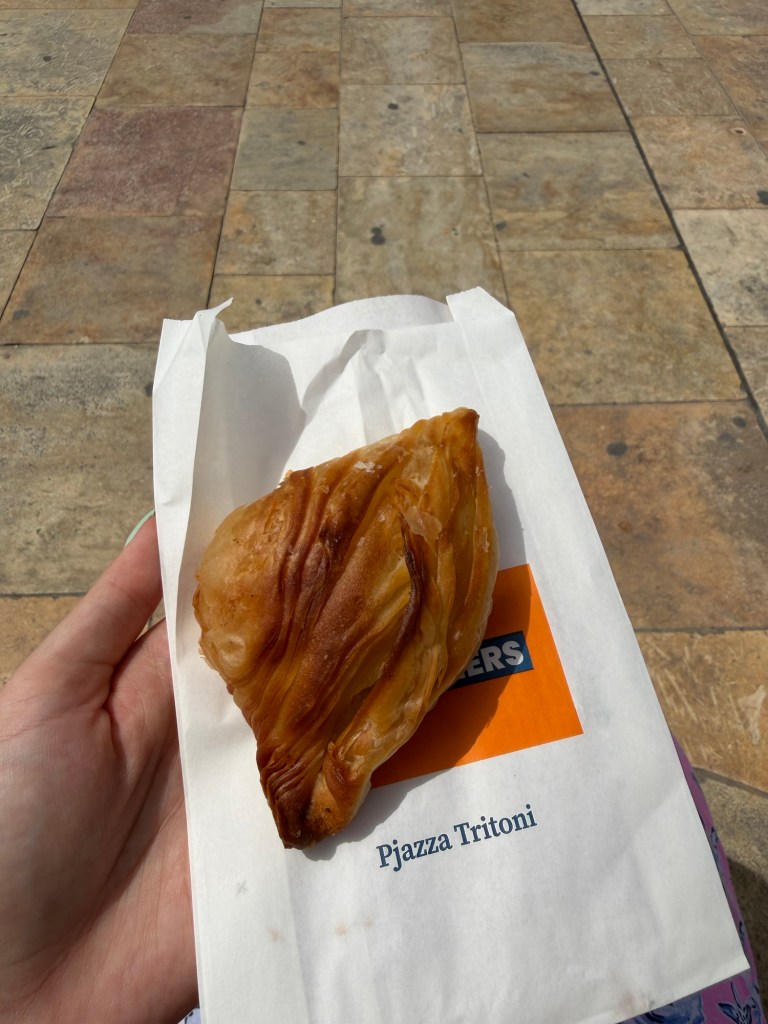
After the walking tour I needed a snack so decided to try a pastizzi, one of the traditional Maltese pastries recommended by the tour guide. They are filled with either ricotta or mushy peas, so I definitely went with the ricotta. I don’t know that I’d want to eat it every day, but for a quick and cheap snack it was pretty good. Then I quickly stopped to get a bubble tea before catching another ferry to the Three Cities, which are located on the harbor on the other side of Valletta.

The Three Cities are known for being quieter, more residential areas and the streets I walked down were definitely that. I made my way to a crafting class, which I had booked through Airbnb Experiences. It sounded like a fun way to spend an afternoon and make a souvenir in the process. I met Dilara, the host of the class, at her apartment and she showed me to her balcony with an amazing view of Valletta, where she had laid out all the supplies needed for our drawing and embroidery class. It turns out I was the only one signed up that day, so I had a private class and it was nice to chat and get to go at my own pace. Dilara had printed out pictures of different Maltese flowers to use as inspiration, and I was able to trace and color, and then embroider over the image to add some texture. I asked her which one she thought I would most likely see while I was there and she recommended the Prickly Pear, since they are everywhere (I can confirm this!). I had a great afternoon working on the project and was happy with the finished product that I could take home and frame.

After I finished that up it was getting towards evening, so I took the ferry back to Valleta, walked through the Upper Barrakka Gardens and back through to the ferry to Sliema, which I took back to where I was staying. Overall, a great first day out getting the lay of the land and seeing what Malta is all about!
Categories: Malta - May 2026 | Tags: , , , , , , , , | Leave a comment

Blog at WordPress.com.